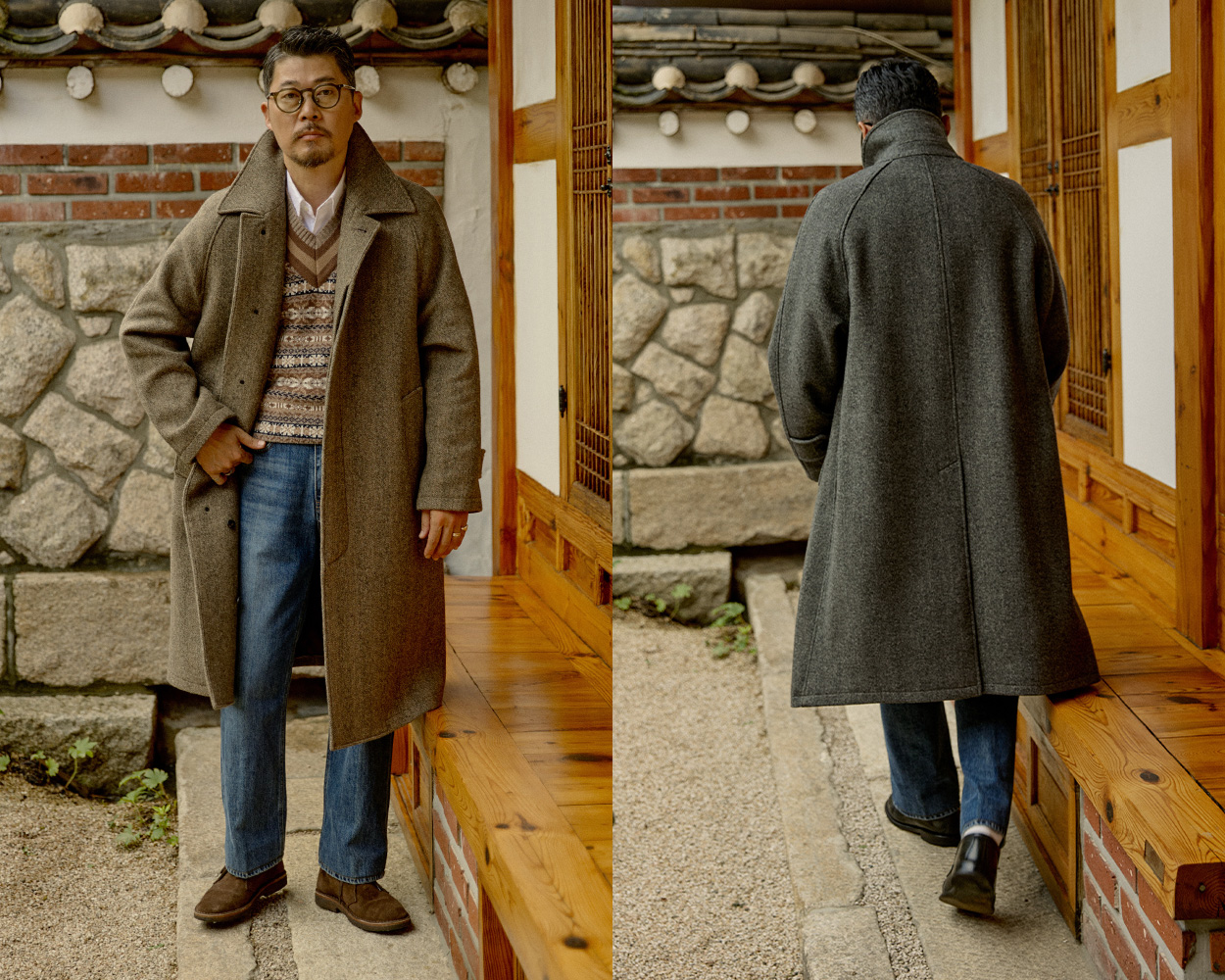
Balmacaan overcoat featuring raglan sleeves and relaxed Ivy Style silhouette
1. Balmacaan Coat — The Essence of Relaxed Elegance
The Balmacaan coat is recognized by its raglan sleeves, clean front, and softly draped silhouette. Originating in Scotland, this style prioritizes comfort and freedom of movement over rigid structure. Its minimal construction allows it to adapt easily to both tailored and casual outfits. Within Ivy and American Trad aesthetics, the Balmacaan coat is valued for its quiet elegance. It offers warmth without visual heaviness and works naturally with suits, denim, or knitwear, making it ideal for everyday winter wear.
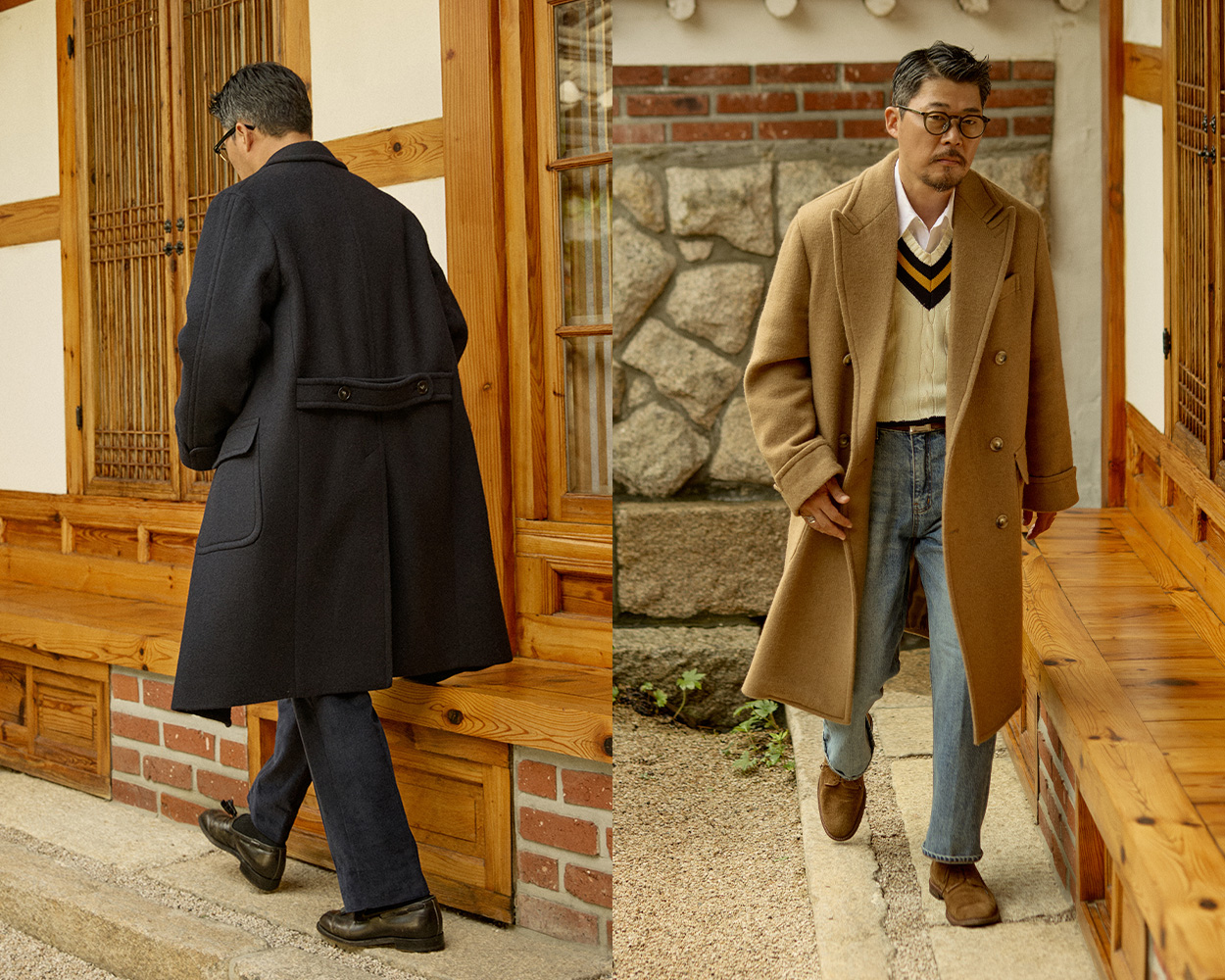
Camel Polo overcoat styled as a classic Ivy Style outerwear piece
2. Polo Coat — The Icon of Ivy Style Overcoats
The Polo coat became widely known through Ivy League culture and American professional life. Traditionally made from camel hair or wool blends, it features broad lapels and a commanding silhouette that conveys confidence and maturity. This coat gained popularity because it balanced formality with approachability. Over time, it evolved into a symbol of classic American style. Worn over suits or layered casually, the Polo coat represents authority without stiffness, which explains its lasting appeal in both traditional and modern wardrobes.
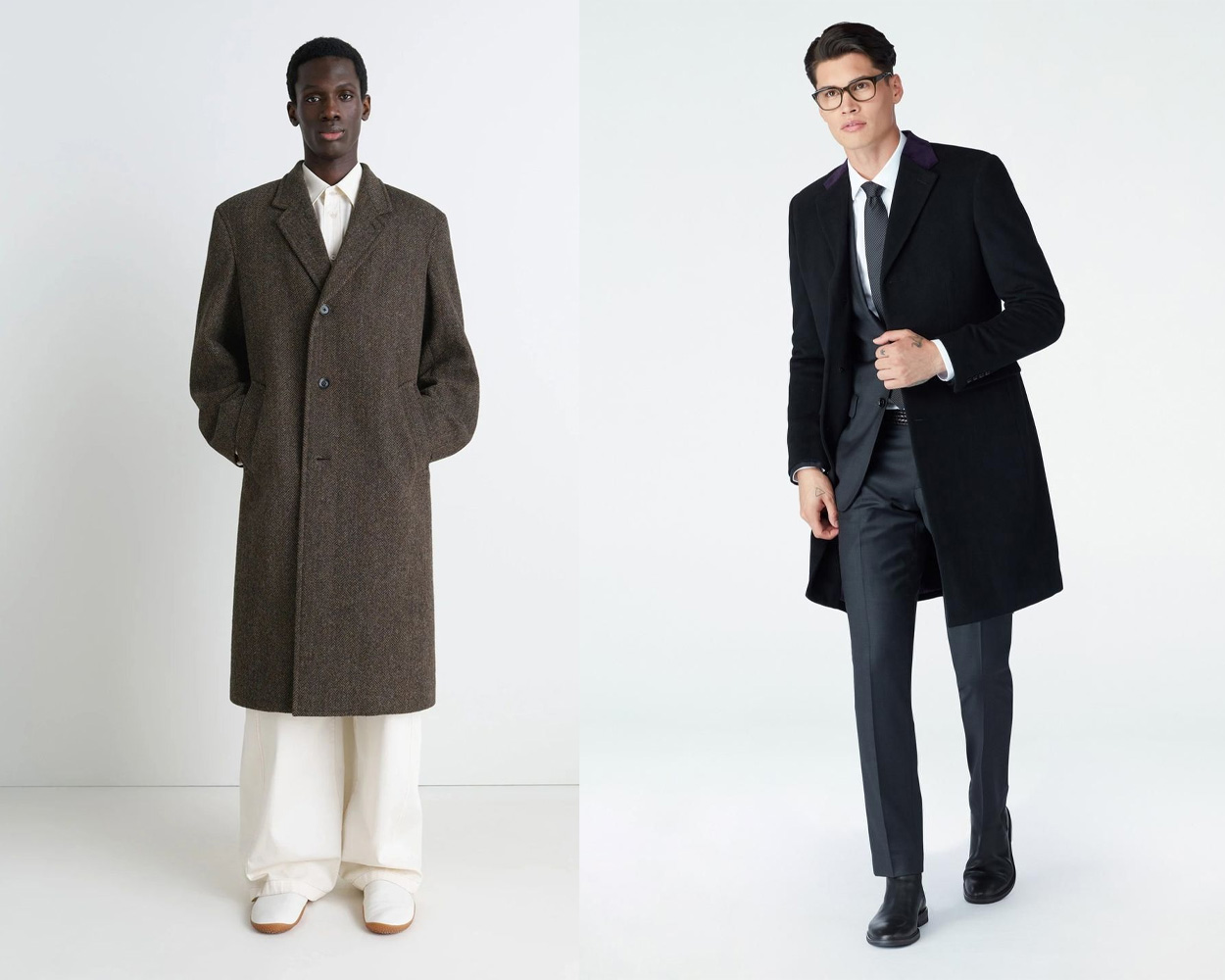
Chesterfield overcoat worn over a tailored suit for formal menswear
3. Chesterfield Coat — Classic Formal Overcoat
The Chesterfield coat is defined by its tailored shape, notched lapels, and understated detailing. Often associated with business attire, it maintains a clean and refined appearance that complements suits and formal trousers. This design reflects a more traditional approach to outerwear. Because of its simplicity, the Chesterfield remains relevant despite changing trends. It serves as a reliable option for formal settings while offering subtle elegance that does not overpower the outfit beneath.
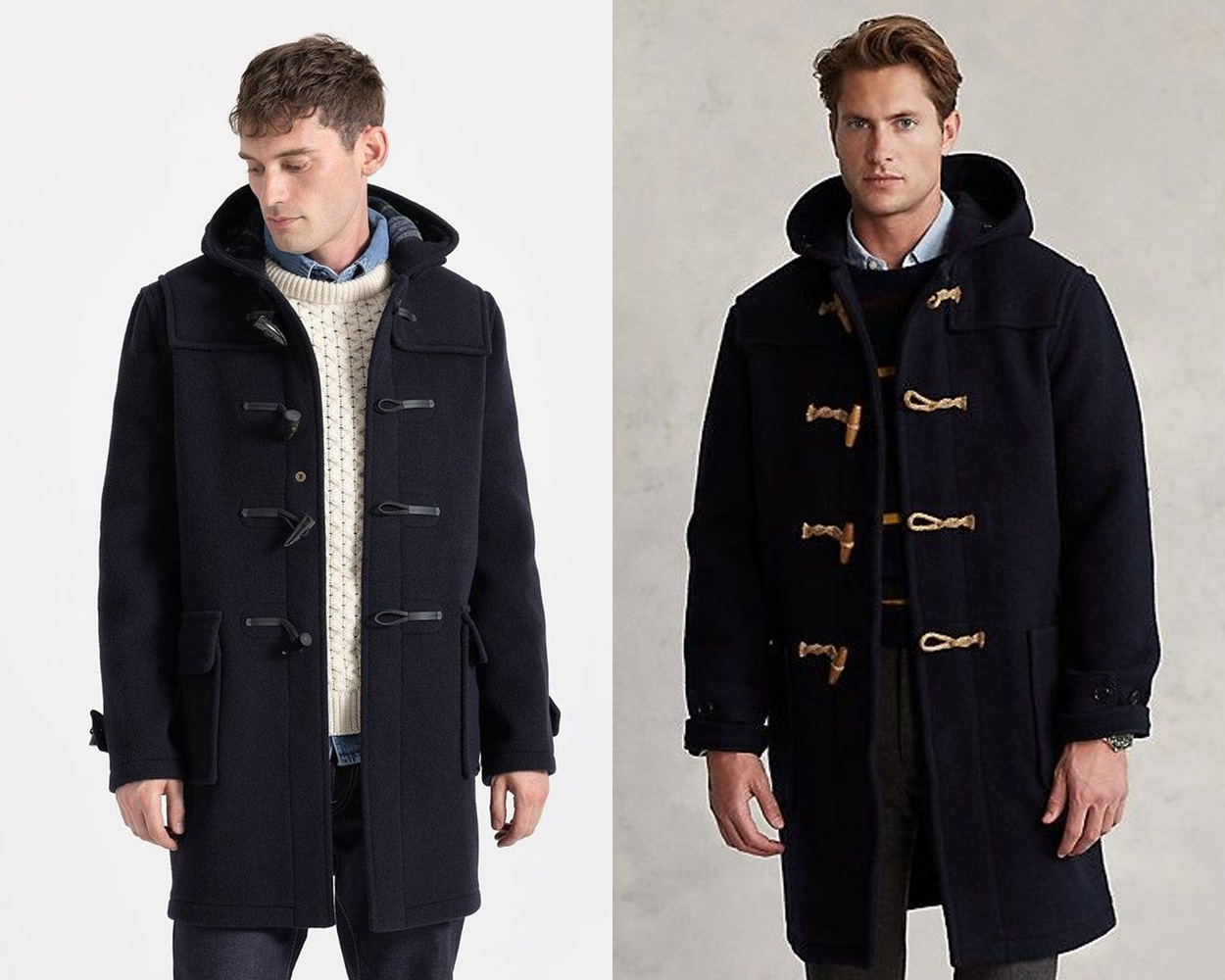
Navy duffle overcoat styled in a classic student Ivy look
4. Duffle Coat — Functional and Youthful Overcoat
The Duffle coat originated as military outerwear and later became associated with academic and student culture. Its toggle closures and hooded design prioritize warmth and ease of wear, making it suitable for colder climates and casual environments. Over time, it gained popularity among younger generations. In classic menswear contexts, the Duffle coat introduces a relaxed and approachable character. It pairs naturally with knitwear and casual trousers, adding warmth without sacrificing personality.
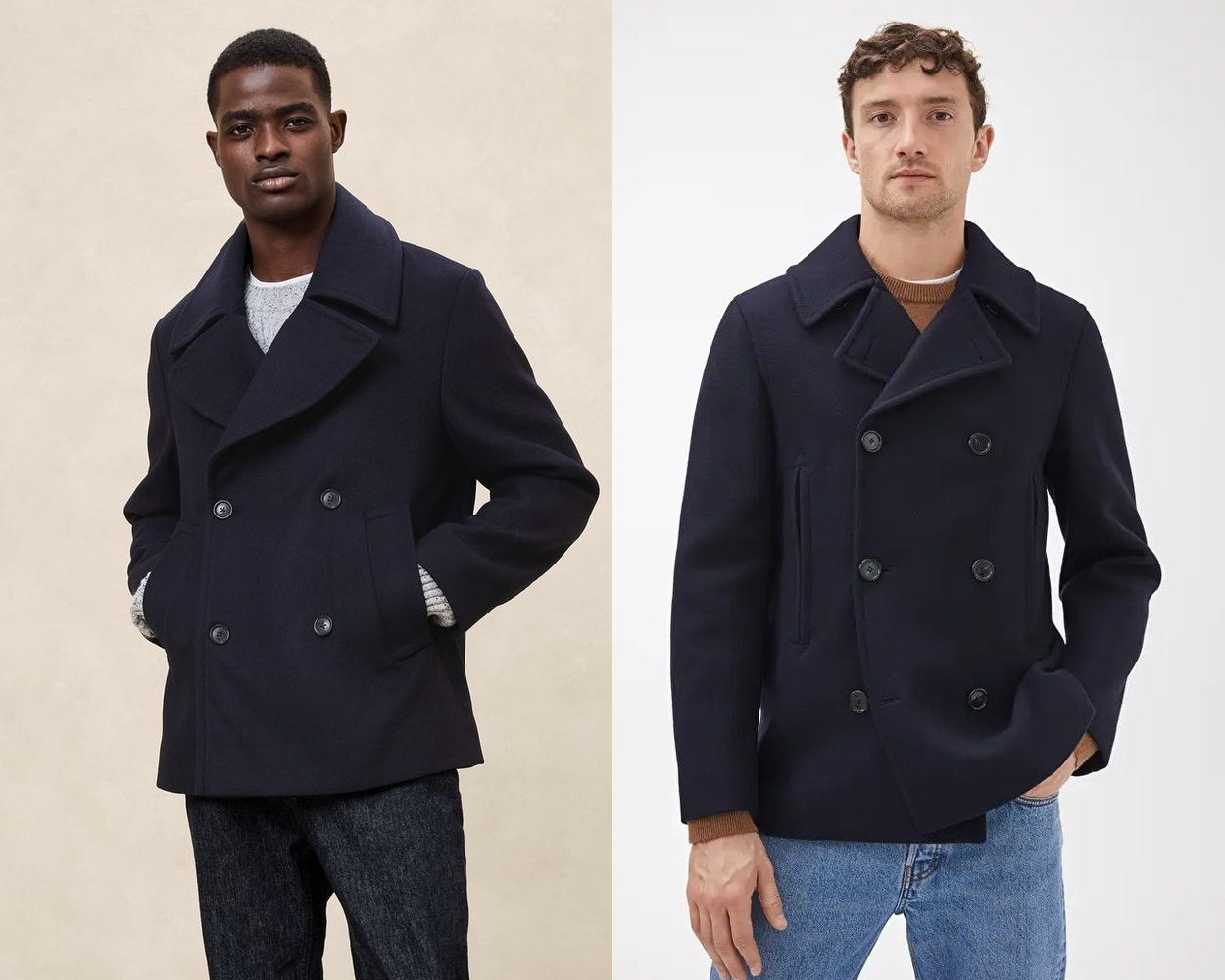
Navy peacoat styled with denim for American casual menswear
5. Peacoat — Naval Roots in American Style
The Peacoat has its roots in naval uniforms, designed to protect sailors from harsh weather at sea. Its double-breasted front and heavy wool fabric provide insulation and durability, while its shorter length allows greater mobility. These qualities made it practical beyond military use. In American casual style, the Peacoat became a versatile outer layer. It bridges function and style, working equally well with denim or tailored trousers, which explains its enduring popularity.
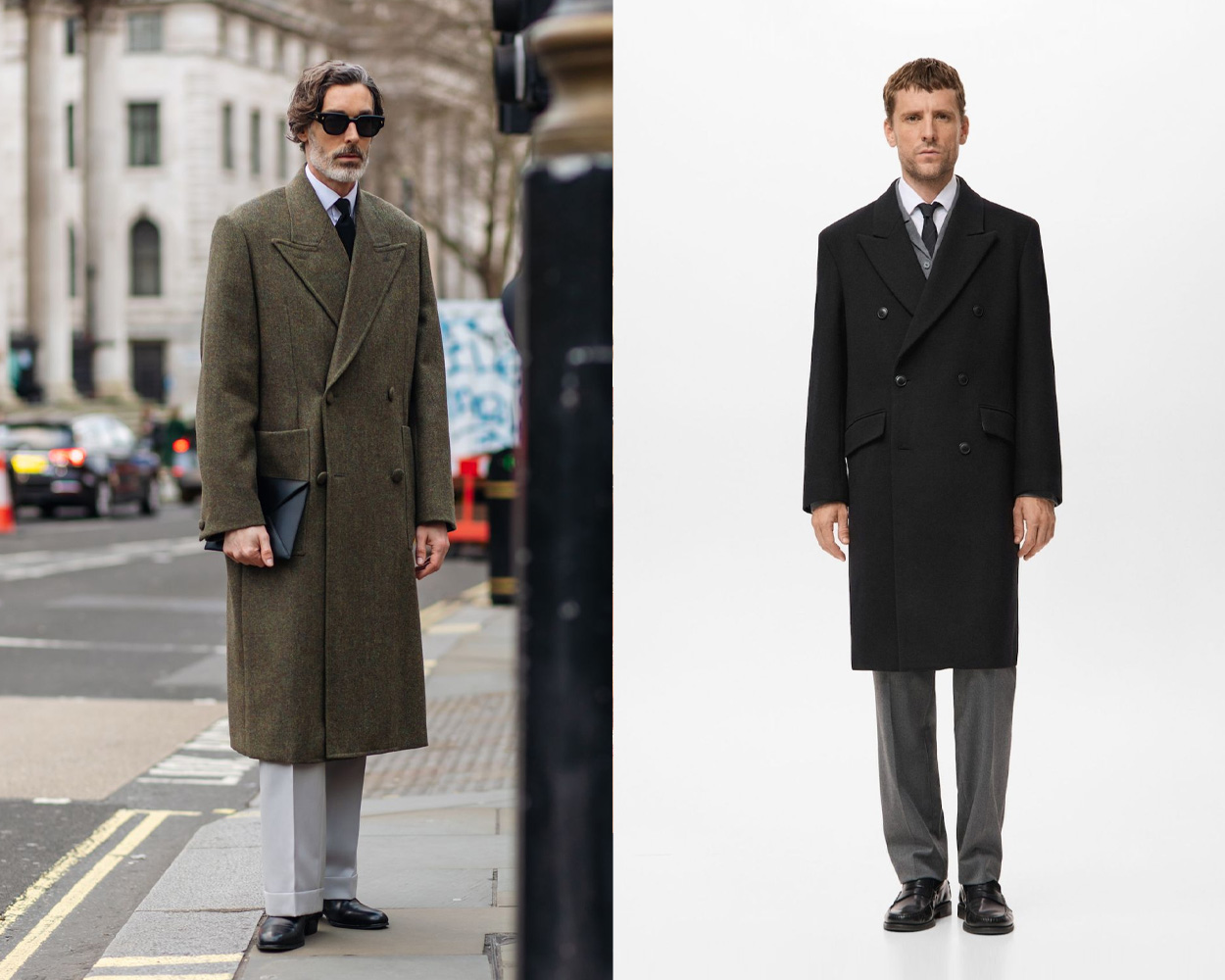
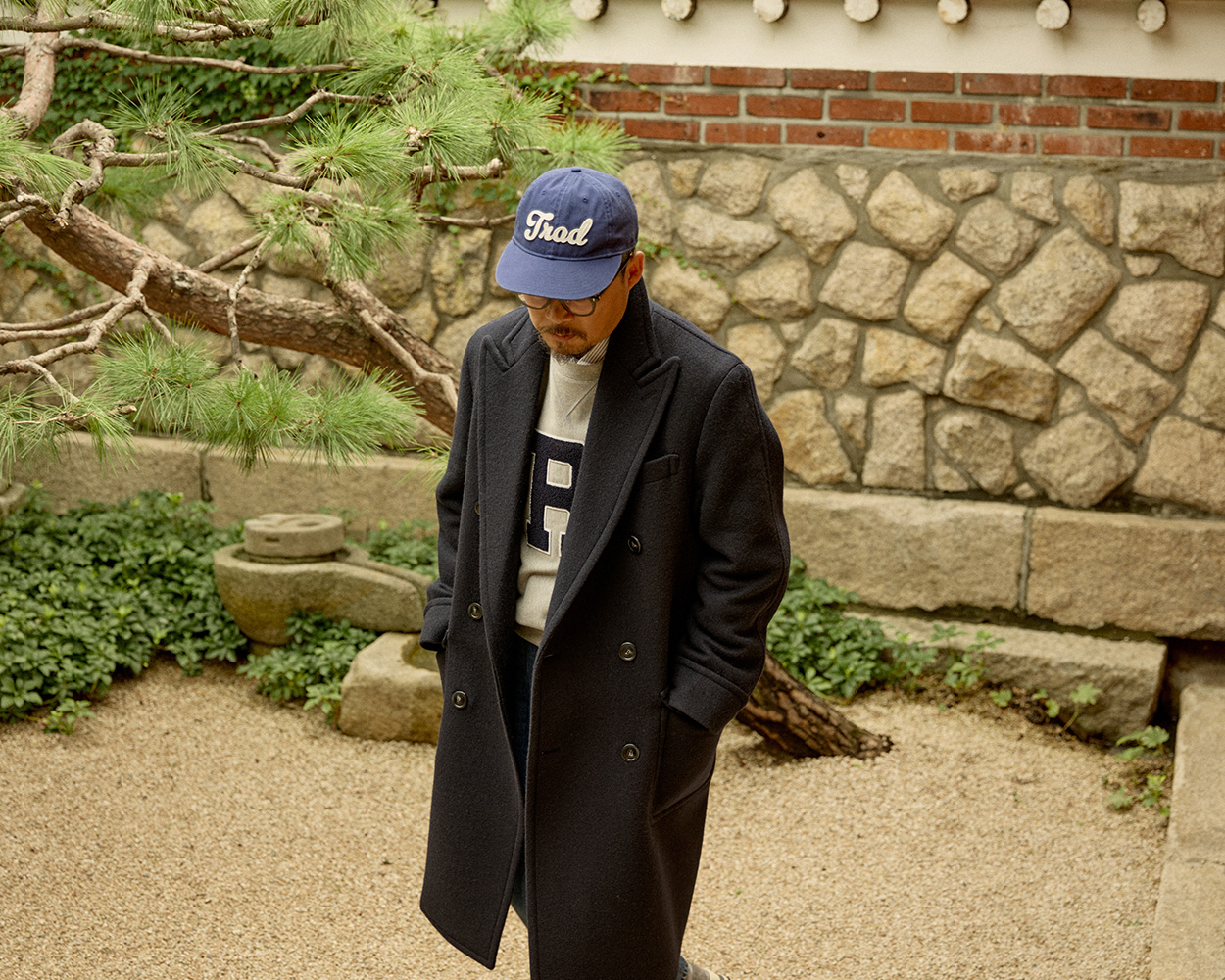
Double-breasted overcoat showcasing a structured and classic silhouette
6. Double-Breasted Overcoat — Structured Classic
The double-breasted overcoat is characterized by overlapping front panels and a bold silhouette. This structure creates a strong visual impact and offers additional warmth through layered fabric. It has traditionally been associated with authority and formality. Despite its formal origins, modern styling allows this coat to be worn more casually. When paired thoughtfully, it can add refinement without appearing excessive, making it suitable for contemporary wardrobes.
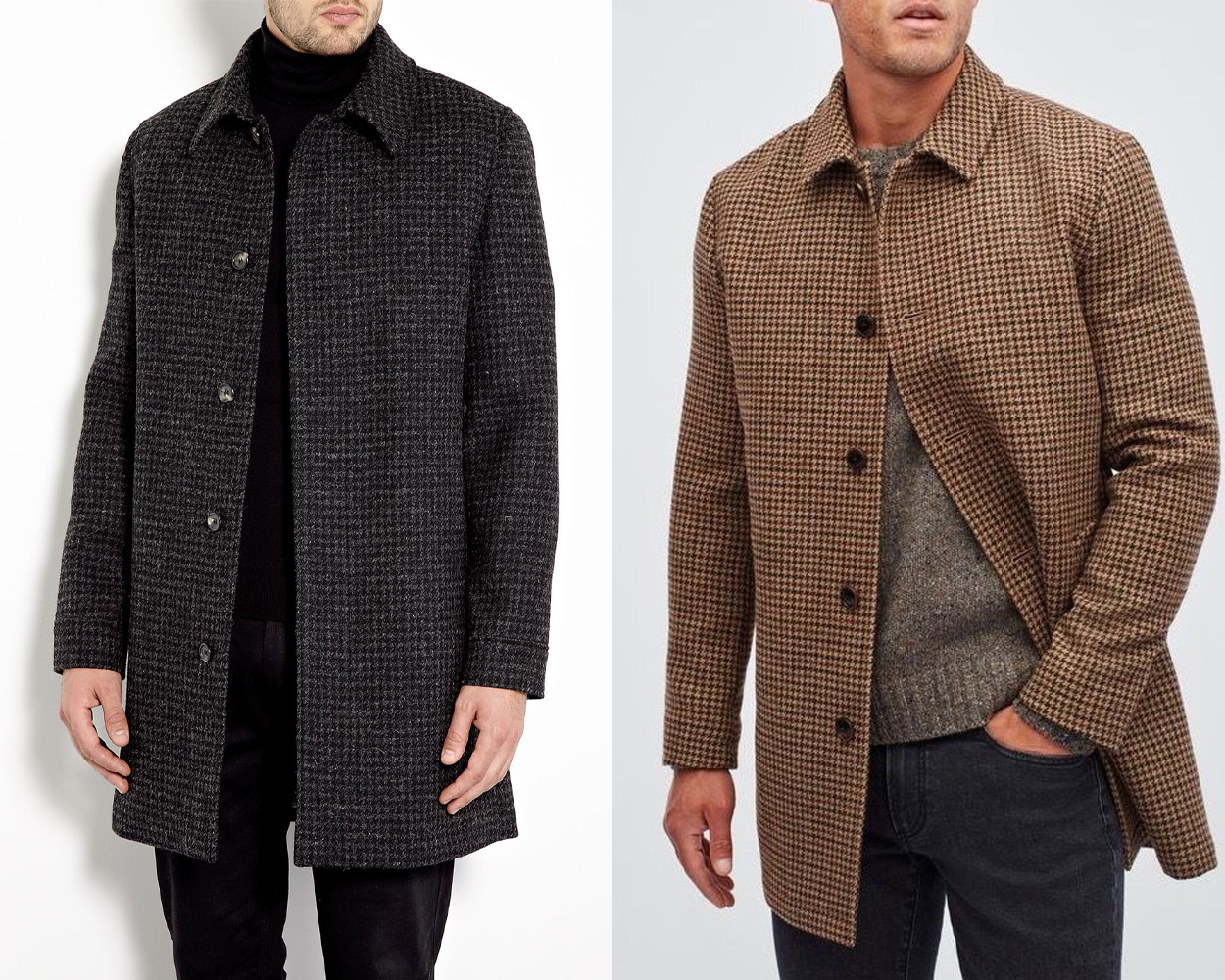
Raglan sleeve overcoat highlighting relaxed shoulders and comfortable fit
7. Mac Coat (Macintosh Coat) — Practical British-Origin Overcoat
The Mac coat, also known as the Macintosh coat, originated in the United Kingdom as a functional raincoat designed for wet climates. Characterized by its clean single-breasted front, minimal detailing, and straight silhouette, the Mac coat prioritizes practicality and weather protection. Unlike more decorative overcoats, its design focuses on utility and durability. Over time, the Mac coat was adopted into Ivy and American Trad wardrobes for its understated elegance. Its simplicity allows it to pair easily with suits, knitwear, or casual outfits, making it a versatile choice for transitional seasons. In menswear, the Mac coat represents quiet refinement built on function rather than ornament.
Various men’s overcoat styles illustrating classic and Ivy menswear options
The Mac coat, also known as the Macintosh coat, originated in the United Kingdom as a functional raincoat designed for wet climates. Characterized by its clean single-breasted front, minimal detailing, and straight silhouette, the Mac coat prioritizes practicality and weather protection. Unlike more decorative overcoats, its design focuses on utility and durability. Over time, the Mac coat was adopted into Ivy and American Trad wardrobes for its understated elegance. Its simplicity allows it to pair easily with suits, knitwear, or casual outfits, making it a versatile choice for transitional seasons. In menswear, the Mac coat represents quiet refinement built on function rather than ornament.
Each coat style serves a different purpose, shaped by history, function, and design philosophy. Understanding these differences helps men make informed choices based on lifestyle rather than trends. A well-chosen coat enhances not only warmth but also confidence and personal expression. By selecting outerwear that aligns with both form and function, men can create wardrobes that feel intentional and timeless. In this sense, outer layers are not merely seasonal items but essential components of enduring style.

You May Also Like