How to Wear a Knit Tie: Casual & Smart Outfit Ideas
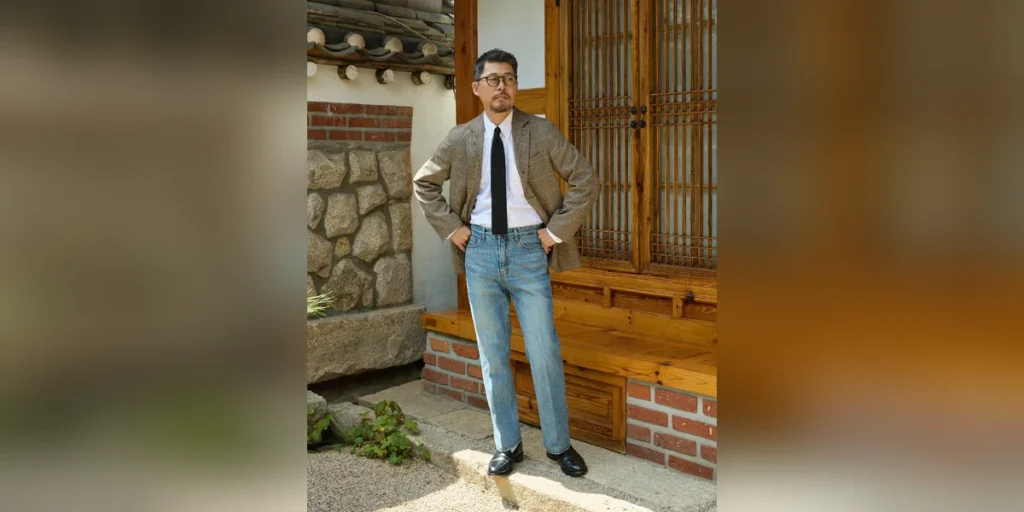
The knit tie is the one accessory that makes you look more dressed up and more relaxed at the same time. That sounds contradictory. It isn’t.
A silk knit tie softens a blazer-and-OCBD combination that might otherwise feel stiff. It adds structure to a lone button-down that feels too bare. If you’ve been searching for knit tie outfit ideas, this guide breaks down the pairings that actually work — from weekend casual to sharp office looks, filtered through how we dress in Seoul.
What Makes a Knit Tie Different
Forget everything you know about regular ties for a moment. A knit tie has a flat, square-cut bottom instead of a pointed tip. It’s knitted rather than cut from woven cloth, which gives it visible texture — tiny rows of interlocking loops you can actually see.
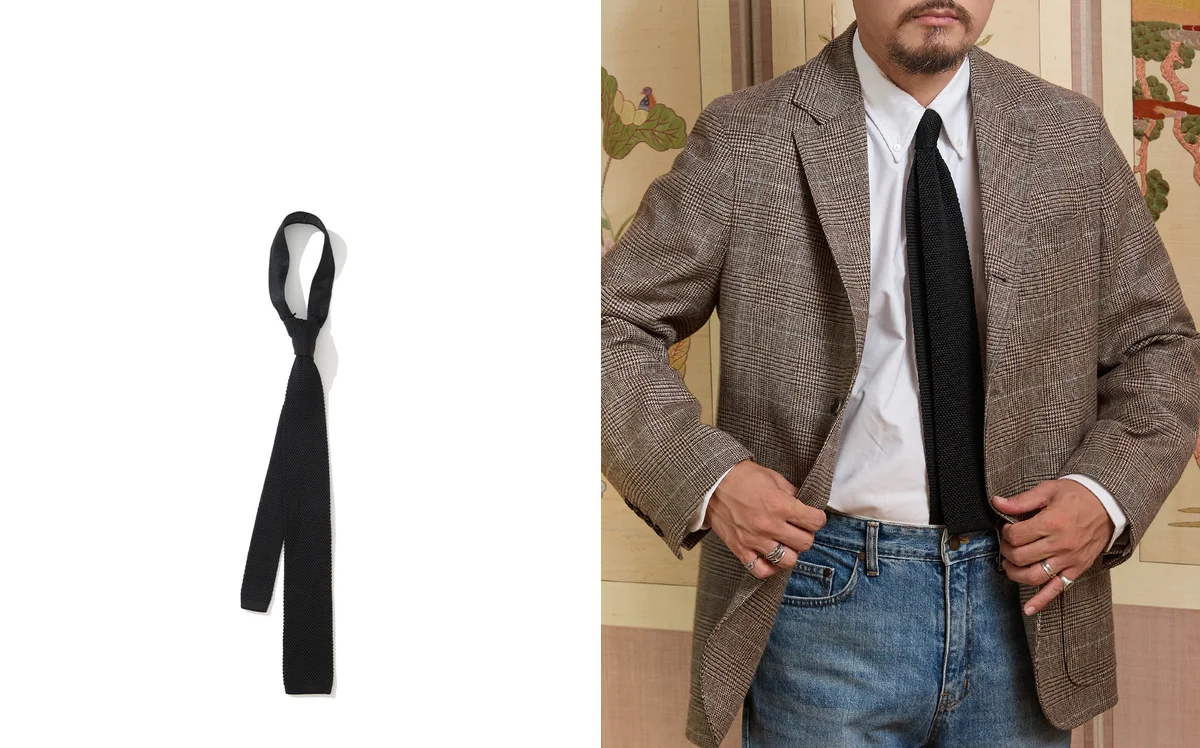
That texture is everything. A smooth silk repp tie screams “quarterly review.” A knit tie whispers “I actually know what I’m doing.” The distinction is subtle but it’s the difference between looking dressed and looking dressed well.
Most knit ties are silk, though you’ll find cotton and wool versions for colder months. Silk knit is the only way to go — enough sheen to look intentional, enough texture to stay relaxed. Width matters too — stick to 6 to 7 centimetres, roughly 2.25 to 2.75 inches. Go wider and you’ll look like you’re wearing your dad’s tie from 1987.
Weave, Width and Fabric
Three specifications decide how a knit tie behaves. Most people never look at any of them.
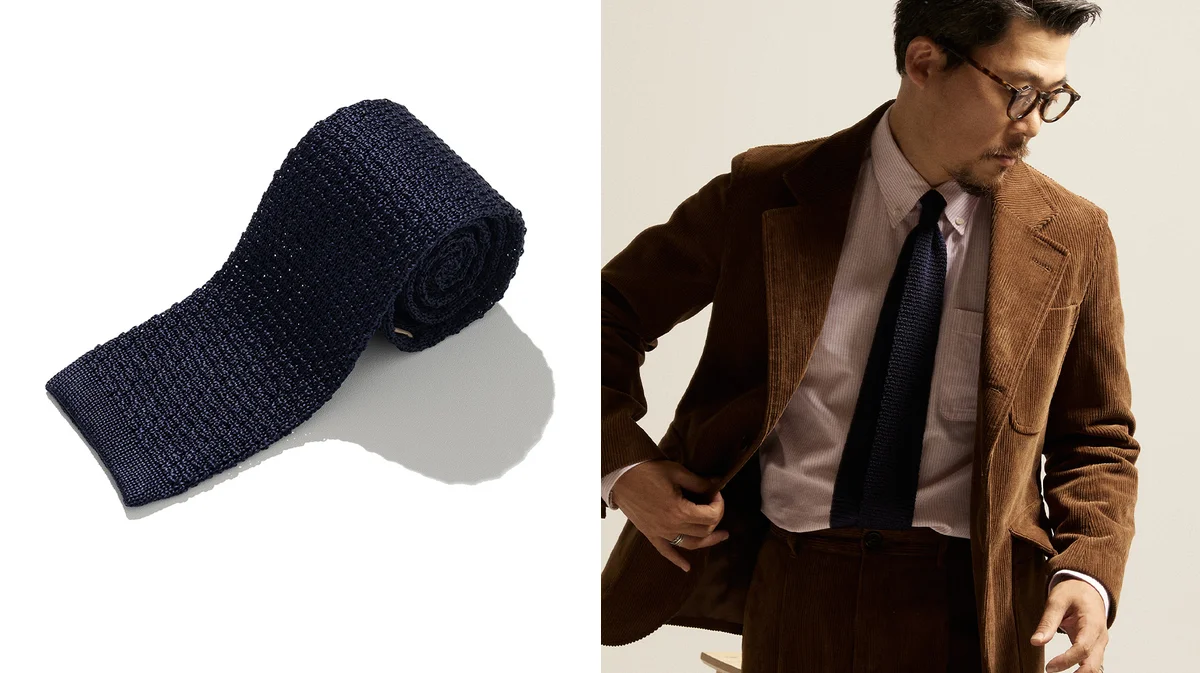
Weave. Flat knit is the everyday one — smooth, fine gauge, no bulk under a jacket, and the right first purchase. Pointelle has small deliberate holes that read cooler and slightly more casual, which suits spring and summer. Crochet is thicker and more three-dimensional, best against heavier cloth.
Width. The range is 6 to 7 centimetres, roughly 2.25 to 2.75 inches. That sits correctly against an OCBD collar and modern lapels. Below 5 cm it looks dated; above 8 cm the width fights the texture and you may as well wear a woven silk.
| Fabric | Character | Season |
|---|---|---|
| Silk | Enough lustre to read as a real tie, enough texture to stay casual. Holds its shape and resists creasing. | All year — the one to own first |
| Wool | Thicker and completely matte. Excellent under tweed. | Autumn and winter, too warm above 20°C |
| Cotton | Slightly rough, reads as a summer accessory. | Warm weather |
The Foundation Pairing: Knit Tie and OCBD
Here’s the thing — if you own one Oxford cloth button-down and one knit tie, you already have a complete outfit from the neck up. The slightly rumpled texture of oxford cloth pairs with knitted silk like they were designed in the same room. Both are dressy materials that refuse to take themselves too seriously.
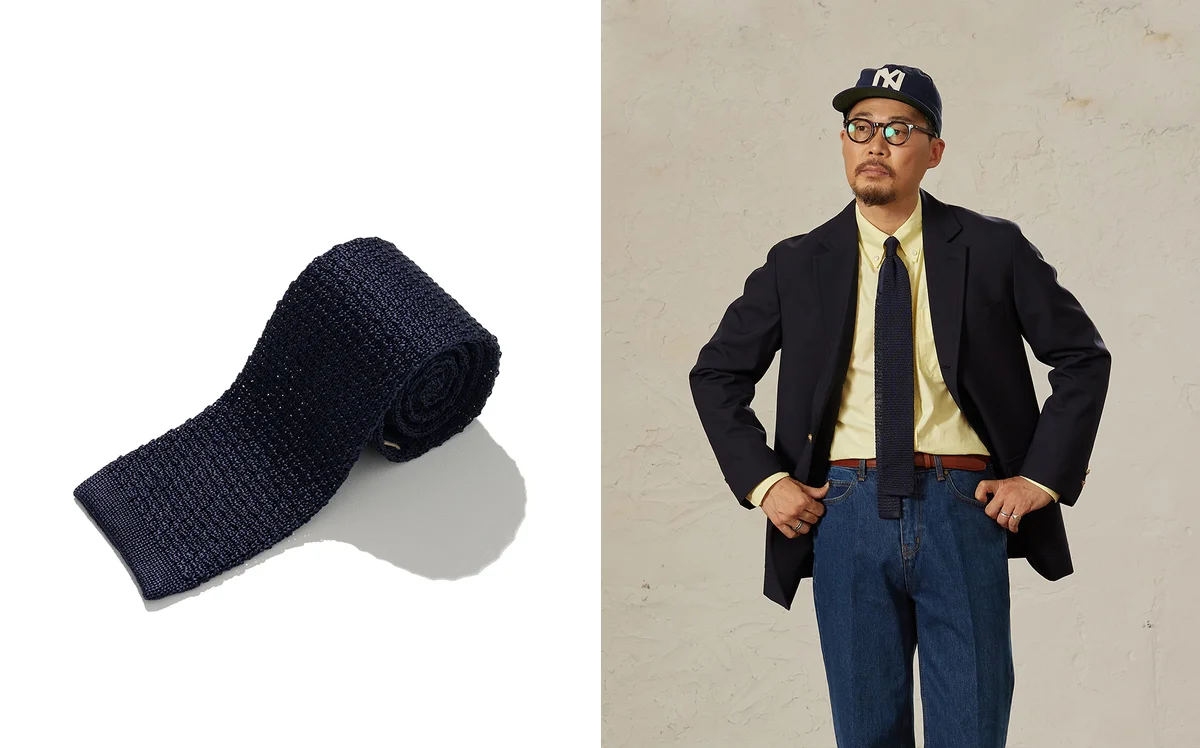
Button the collar down — always. Let the tie sit a little loose at the neck. Don’t overthink the knot — a four-in-hand is perfect, and the square tip should hit right around your belt line. Any shorter and you look like you borrowed someone else’s tie.
A white or blue OCBD with a navy knit tie is bulletproof. It works tucked into chinos for client calls, and untucked with rolled sleeves for weekend coffee runs in Seongsu-dong. The pairing scales up and down without breaking a sweat.
Knit Tie with a Blazer: The Smart Combination
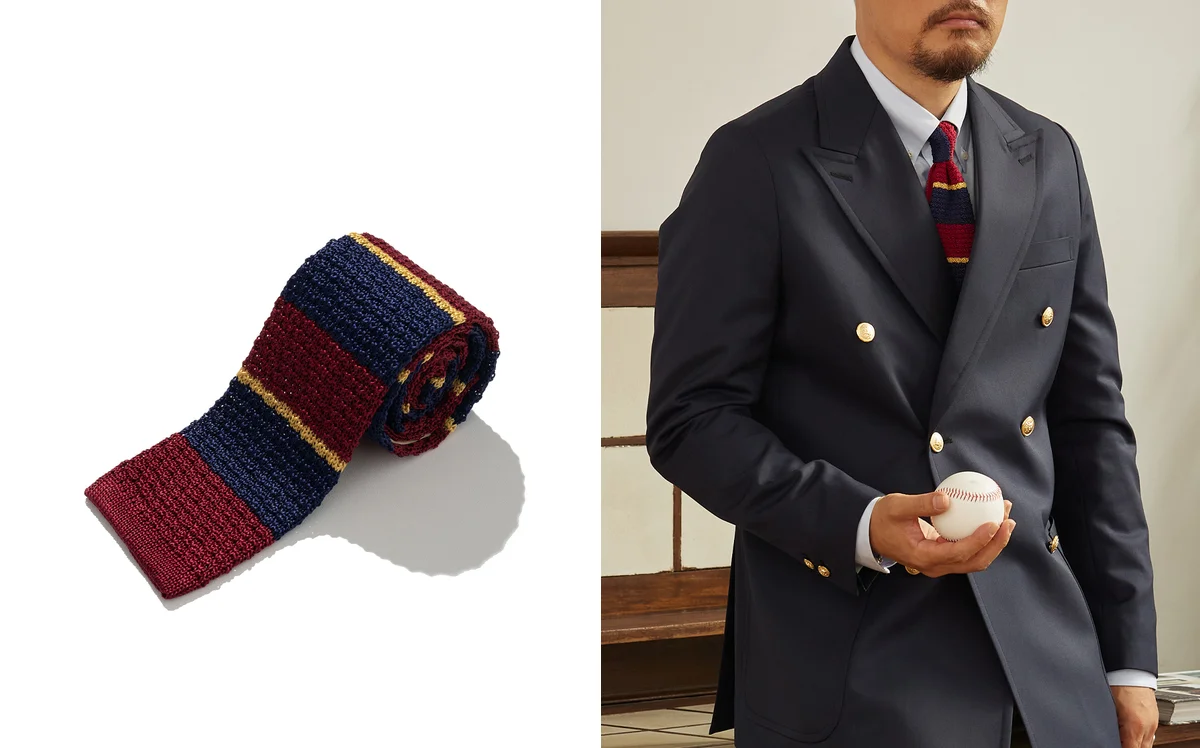
A navy blazer, white OCBD, and knit tie is basically the Seoul uniform — and honestly, it should be everyone’s uniform. The blazer brings the structure. The knit tie brings the soul. Together, they nail that sweet spot between a full suit and just throwing on a shirt.
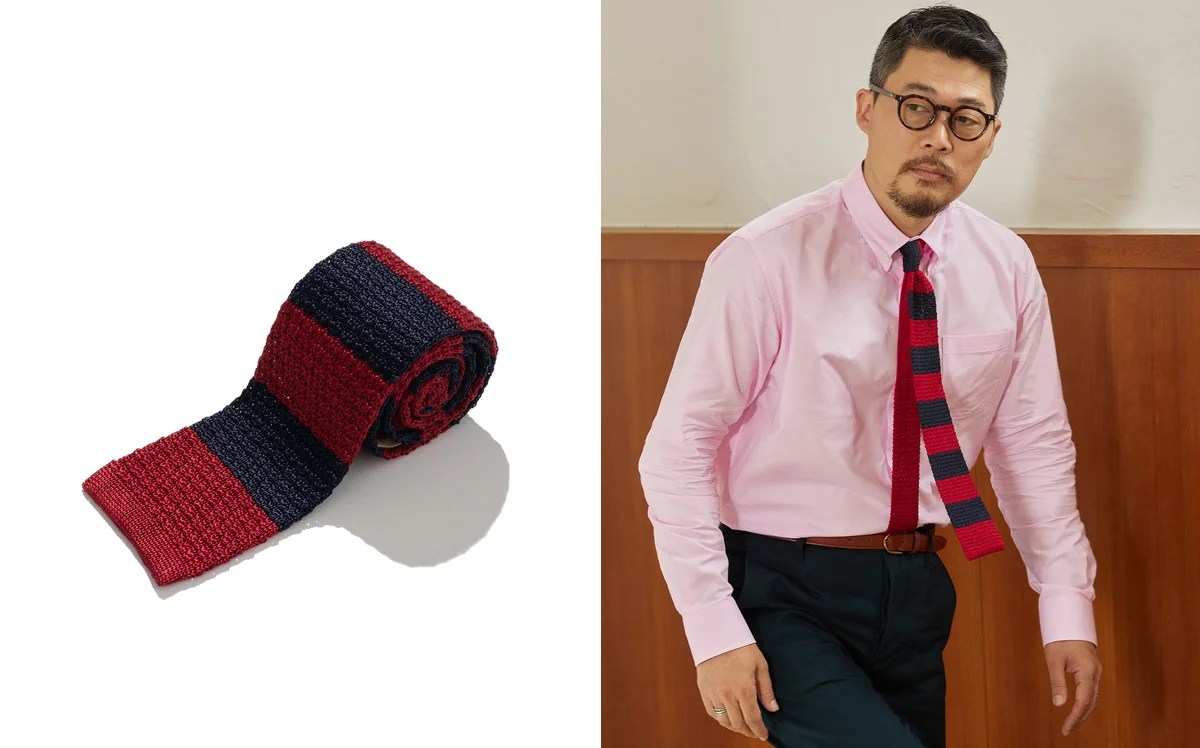
You could walk into a client meeting in Gangnam or a dinner reservation in Hannam and own the room at both. That kind of versatility is rare — most outfits work in one setting and bomb in another.
Color coordination is crucial here. Navy blazer plus navy knit tie creates a tonal column that’s effortlessly sharp. Want more punch? Go burgundy or forest green against the navy. And please — skip the matching pocket square. That coordinated look died in 2015 and it’s not coming back.
The Crewneck Sweater Layer
Seoul weather demands layering about eight months of the year. A crewneck sweater over your shirt-and-tie combo is one of the best cold-weather knit tie outfit ideas you’ll find.
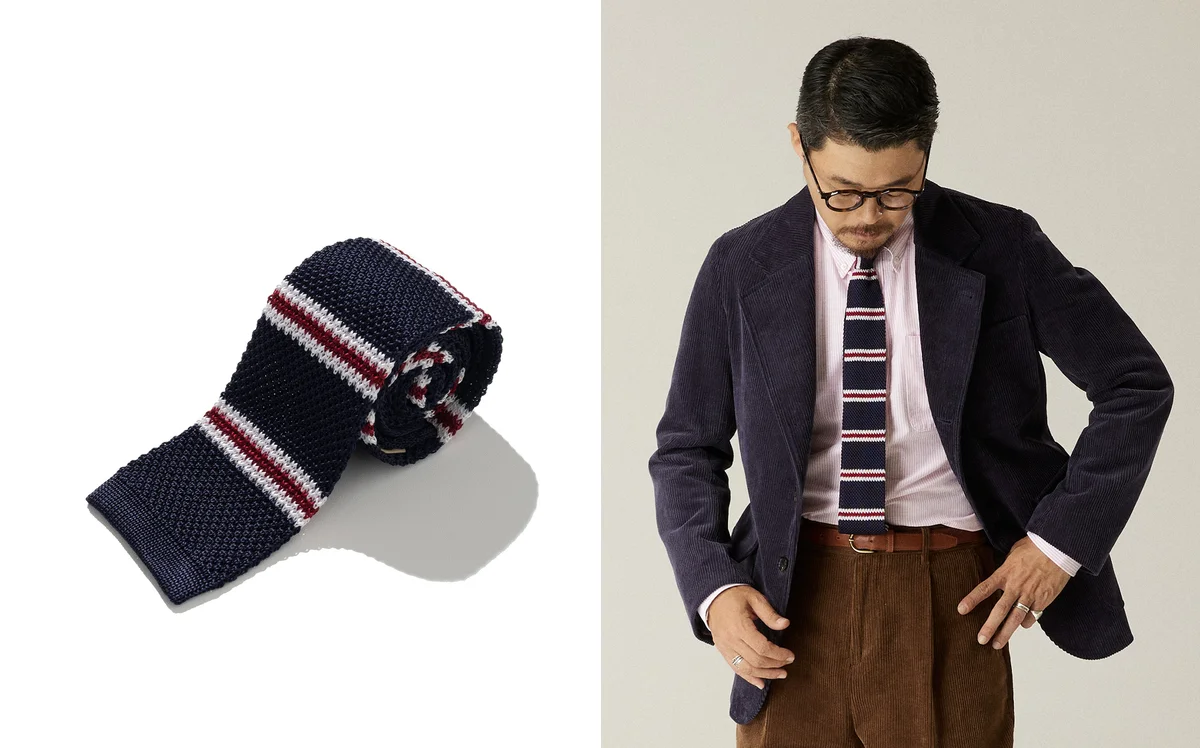
The key: let just the knot and a triangle of tie peek out above the crew neckline. It’s a small detail that signals real thought went into the outfit without screaming for attention.
Grey lambswool sweater, white OCBD, dark knit tie. That’s the combination. Navy sweater works too, but grey gives you more contrast to play with. The tie knot should sit snug against the collar — you don’t want fabric bunching under the sweater.
Going Full Casual: Knit Tie Without a Jacket
This is where most guys hesitate. A tie without a jacket? Doesn’t that look like you forgot something?
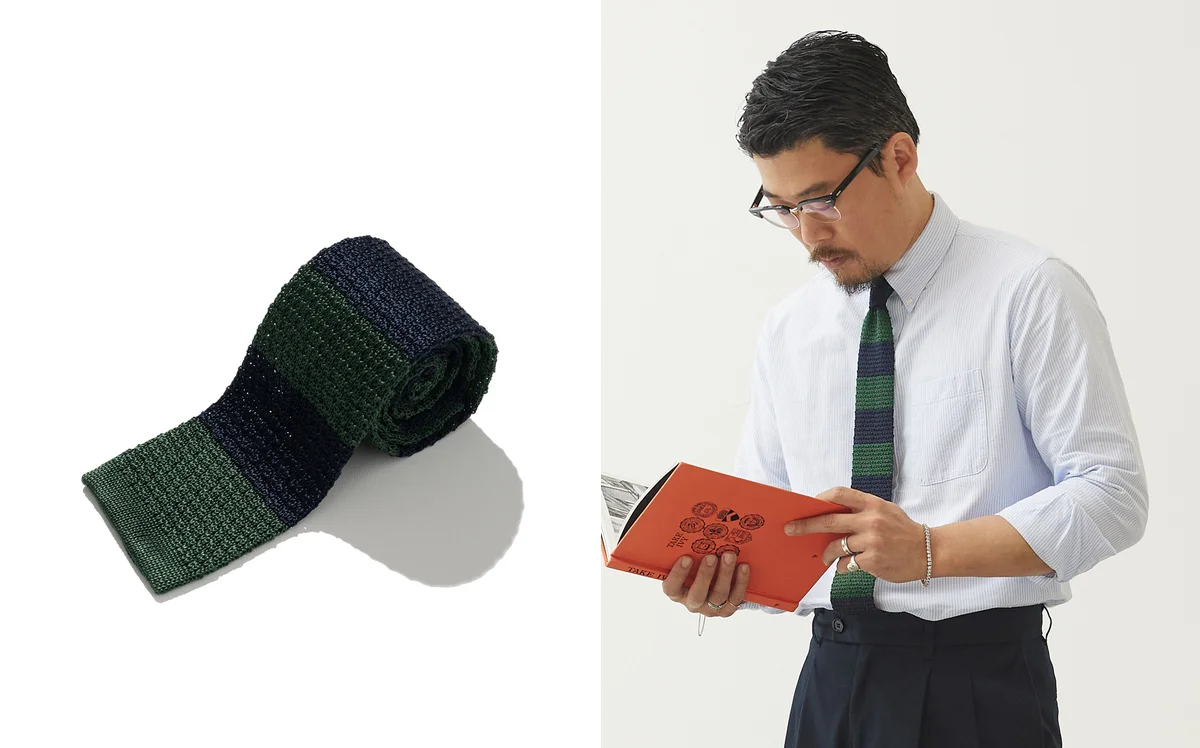
Not with a knit tie. The texture reads casual enough to stand alone. Pair it with an OCBD — sleeves rolled to the forearm, top button fastened, tie pulled slightly loose. Add chinos and loafers. You’ll look like a guy who knows what he’s doing, not a guy who lost his blazer.
This is one of the most Seoul-appropriate knit tie looks. The city runs on a dress code that hovers between casual and smart, and a knit tie with rolled sleeves nails that exact register. You’ll see variations of this around Bukchon and the university districts — on guys who’ve figured out that dressing well doesn’t require dressing formally.
Color and Pattern: What to Choose
Start with solid navy. If you buy one knit tie, make it navy silk. It goes with everything — white shirt, blue shirt, grey flannel trousers, khaki chinos. Navy is the foundation.

After that, build out:
Burgundy/wine — The second knit tie you should own. Adds warmth to grey and navy outfits without being loud. Perfect for autumn layering.
Forest green — Underrated. Pairs beautifully with brown tones and earth-colored chinos. This one gets compliments.
Grey — Subtle and sophisticated. Best with navy blazers and white shirts when you want to tone everything down a notch. Skip if you tend toward monochrome outfits already.
Stripe knits — Horizontal stripes on a knit tie add visual interest but raise the difficulty level. Keep the rest of the outfit solid if you go this route.
The Knot and the Details
Four-in-hand. Always. A knit tie’s texture makes a Windsor knot look bulky and overworked. The four-in-hand produces a slim, slightly asymmetric knot that suits the casual nature of the tie.
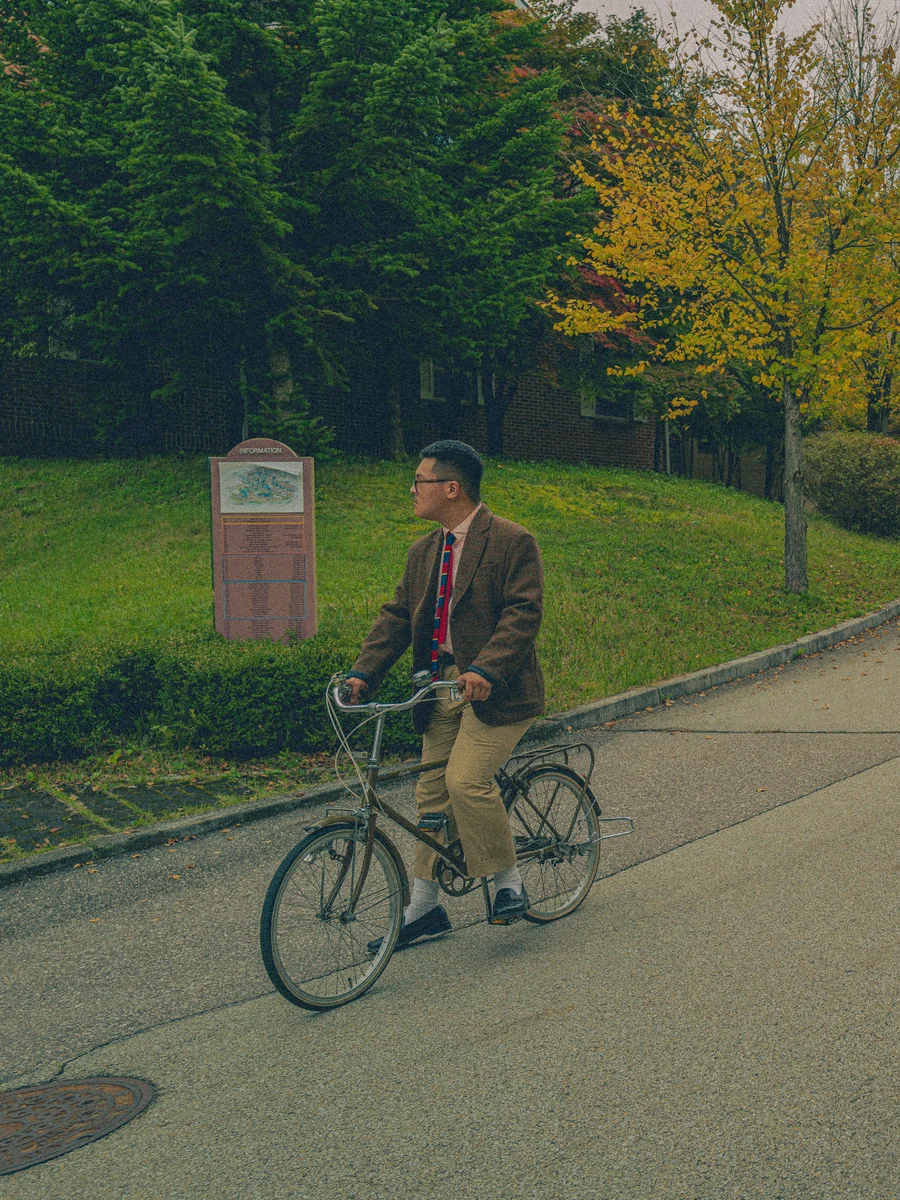
One detail people miss: knit ties are usually shorter than regular ties. If yours hangs past your belt buckle, adjust your knot or look for a shorter length. The square tip should end right at your waistband — an inch above or below is fine.
Tie bars work well with knit ties but aren’t necessary. If you use one, place it between the third and fourth shirt buttons. A simple silver bar is enough. Anything ornate fights the tie’s understated character.
Seasonal Knit Tie Outfit Ideas for Seoul
Spring (March–May): Navy knit tie, light blue OCBD, unstructured blazer, khaki chinos, penny loafers. Light enough for warming days, pulled-together enough for after-work plans along the Han River.
Summer (June–August): Fair warning — Seoul summers are brutal. A knit tie in linen or lightweight cotton works, but only in air-conditioned spaces. Pair with a lightweight white OCBD and skip the blazer entirely.
Autumn (September–November): Peak knit tie season. Burgundy knit tie, grey crewneck sweater, white OCBD, dark chinos, derby shoes. Layer an anorak on top when the wind picks up around Namsan. The tie adds a visible point of intention underneath all those layers.
Winter (December–February): Wool knit ties come into play here. Pair with heavier knitwear and a substantial coat. Wool-on-wool creates a rich, tactile outfit that photographs well and feels right in Seoul’s dry cold.
Three Mistakes to Avoid
Don’t pair a knit tie with a spread collar dress shirt. The formality mismatch is jarring — you’re mixing boardroom shirt with weekend tie. Button-down collars are your best bet. Point collars work in a pinch.
Don’t tie a double Windsor. Already mentioned it. Worth repeating because it’s the most common mistake.
And don’t treat a knit tie like a statement piece. It’s not a conversation starter — it’s a quiet signal of good taste. The outfit should look easy, like you grabbed the tie without thinking. Even if you spent ten minutes choosing it.
Building a Knit Tie Rotation: Start with Three
You don’t need ten knit ties. You need three.
First: navy. It goes with everything — white shirt, blue shirt, grey blazer, navy blazer. Navy is the foundation and it’ll get worn twice a week. Second: burgundy or wine. This is your personality tie; it adds warmth to earth-toned outfits and pops against lighter shirts. Third: charcoal grey. The underrated workhorse. Grey reads neutral without being boring, and it’s the only knit tie that works equally well with both warm and cool color palettes.
Fair warning — once you nail these three, you’ll start finding excuses to buy more. A forest green for autumn. An ivory cotton for summer. A brown silk for weekends. But start with the three. They’ll cover 90% of situations.
For how to wear a knit tie, Renacts offers silk knit ties in several of these core colors, and at their price point, building a three-tie rotation is realistic rather than aspirational. The square-cut tip and slim width pair naturally with the brand’s OCBD collars — which makes sense, since both are designed with the same Ivy proportions in mind.