How to Wear an Overcoat Casually: Jeans, Knitwear, and a Balmacaan
In this guide
- How to wear an overcoat casually: the starting point
- 1. Navy Balmacaan + straight-leg jeans
- 2. Open the coat over a cricket sweater
- 3. Change the trousers before the coat
- 4. Brown herringbone + one patterned layer
- Check the whole silhouette, front and back
- Choose navy or brown by what you already wear
How to wear an overcoat casually: the starting point
Learning how to wear an overcoat casually starts with clothes you already own. Put a relaxed coat over straight-leg jeans or chinos, add knitwear, and finish with loafers or derbies. Keep enough room through the thigh to balance the coat. You don’t need to make every layer look casual.
Our starting point is a Balmacaan: a coat with a quiet front and raglan sleeves that run toward the collar. The two coats photographed here come from Renacts, a Seoul-based label featured throughout this journal. Their shape gives a familiar shirt-and-trouser combination a different outline.
This is an outfit guide, not another lesson in coat history. For the differences in construction, read our Balmacaan and polo coat comparison. Here, the useful question is simpler: what goes underneath on an ordinary day?
1. Navy Balmacaan + straight-leg jeans
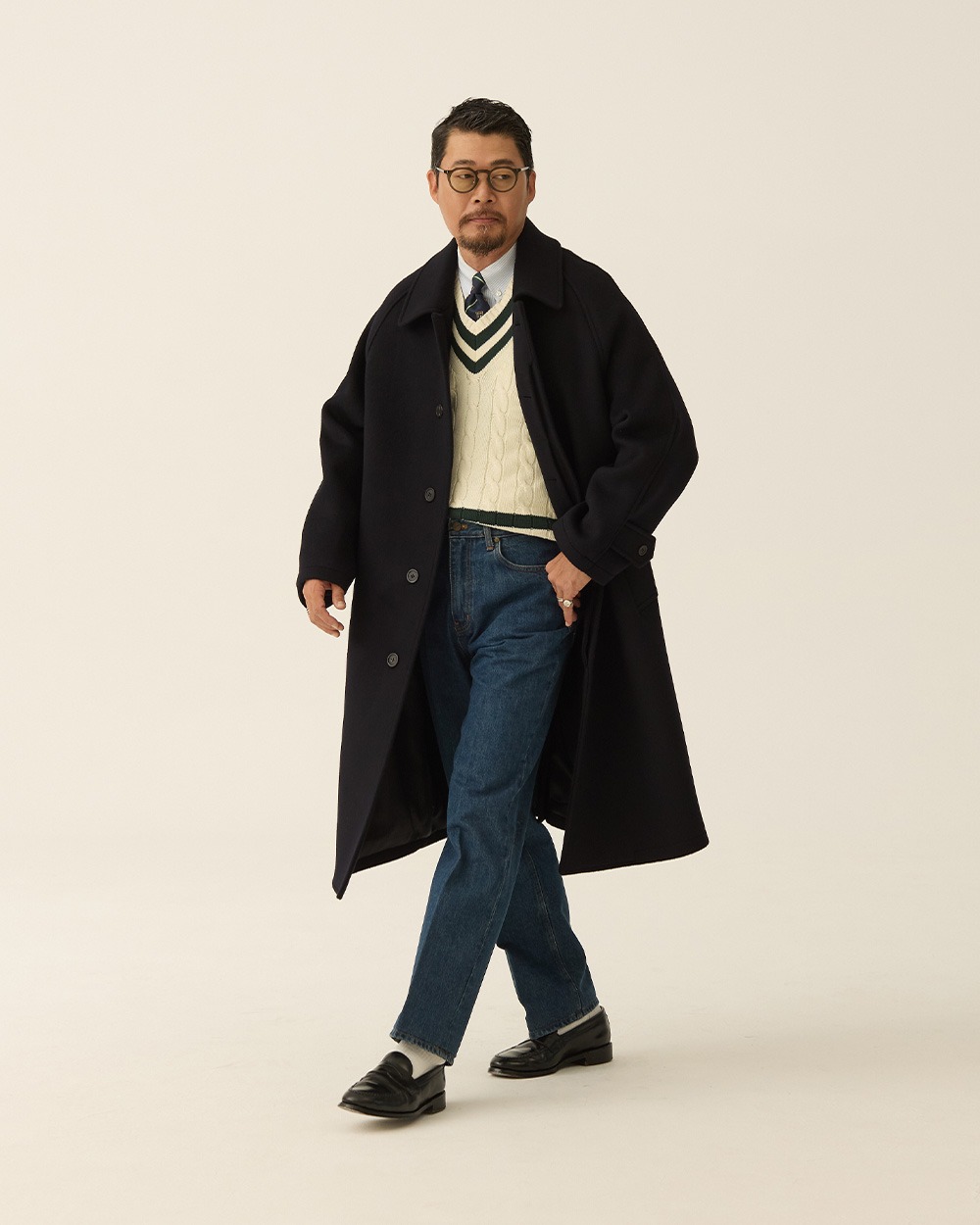
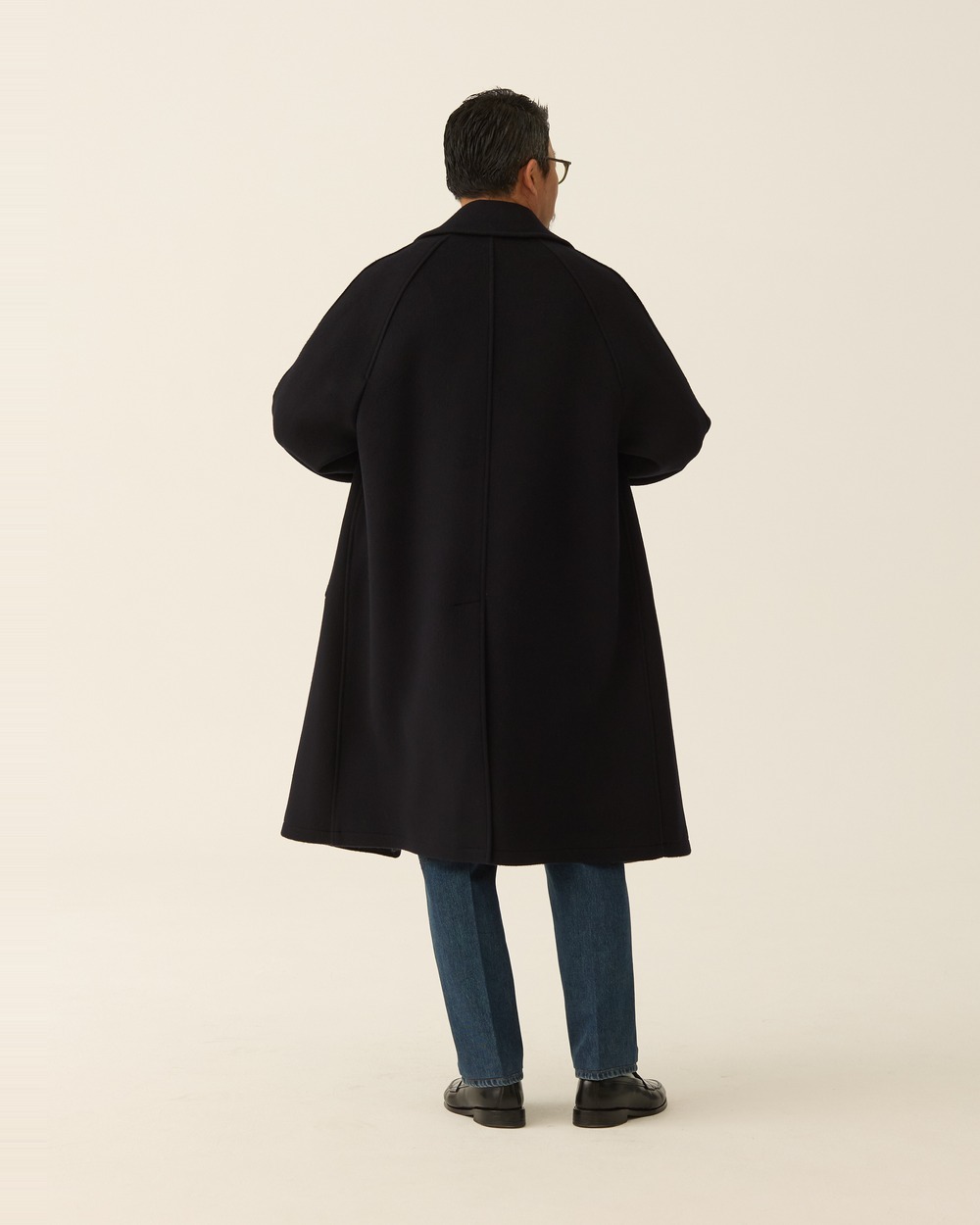
Start here if a long coat feels too dressed up. The navy Balmacaan and blue jeans share a color family, while their surfaces stay distinct. Black loafers give the bottom of the outfit a clear finish.
In the photograph, the coat is buttoned and the denim remains visible below the hem. That strip of blue matters: it tells you this isn’t a suit hidden under an overcoat. You can keep the upper layers quiet and let the trousers do that work.
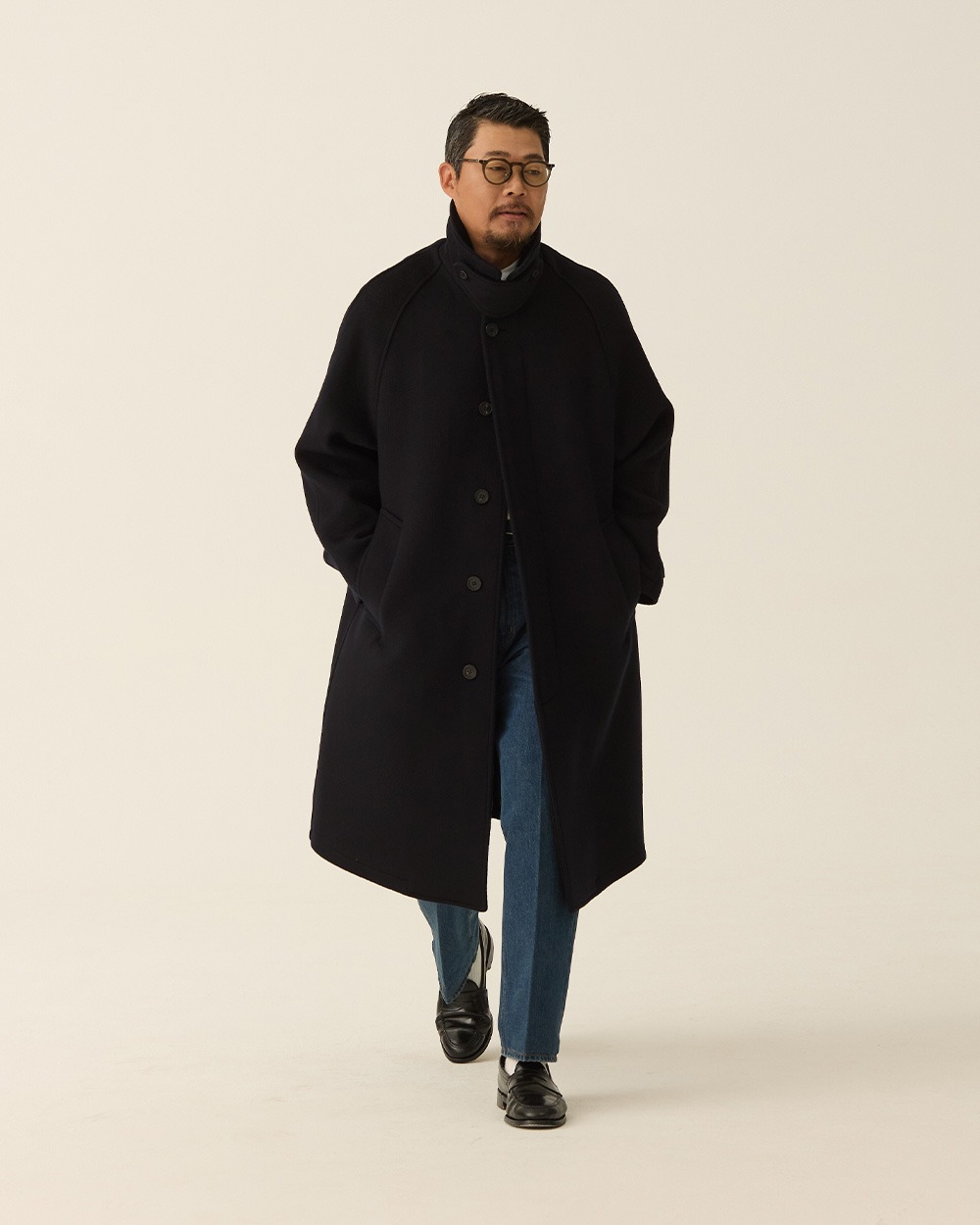
Choose jeans with room at the thigh and a leg that falls without gripping the calf. Very narrow jeans make the coat look heavier by comparison. An excessively long hem creates a different problem: a pile of denim competing with the long outer layer.
For a first attempt, use jeans that meet the shoe with a small break. If you turn up the hem, keep the fold modest. Check the full outfit in a mirror, from collar to shoes, rather than judging the coat in isolation.
2. Open the coat over a cricket sweater
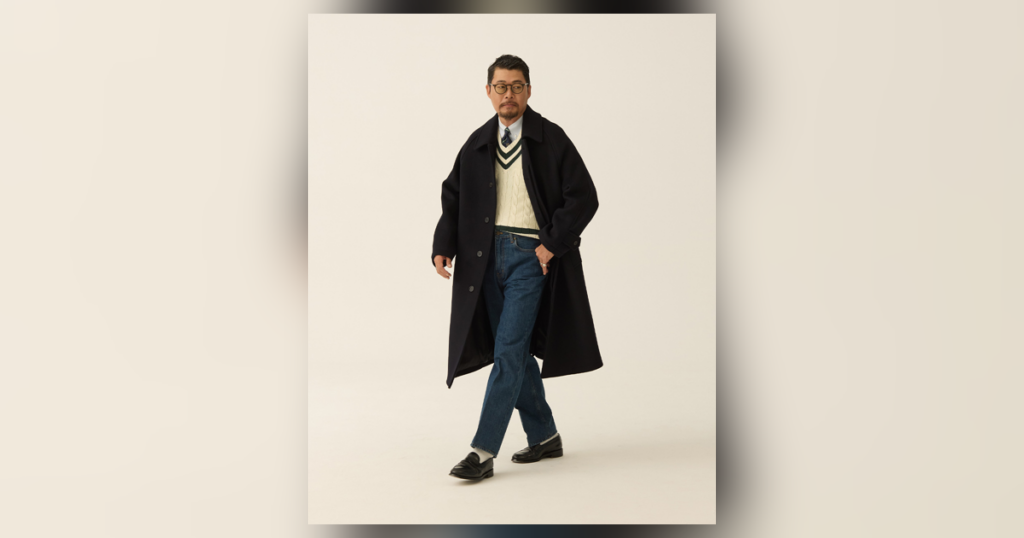
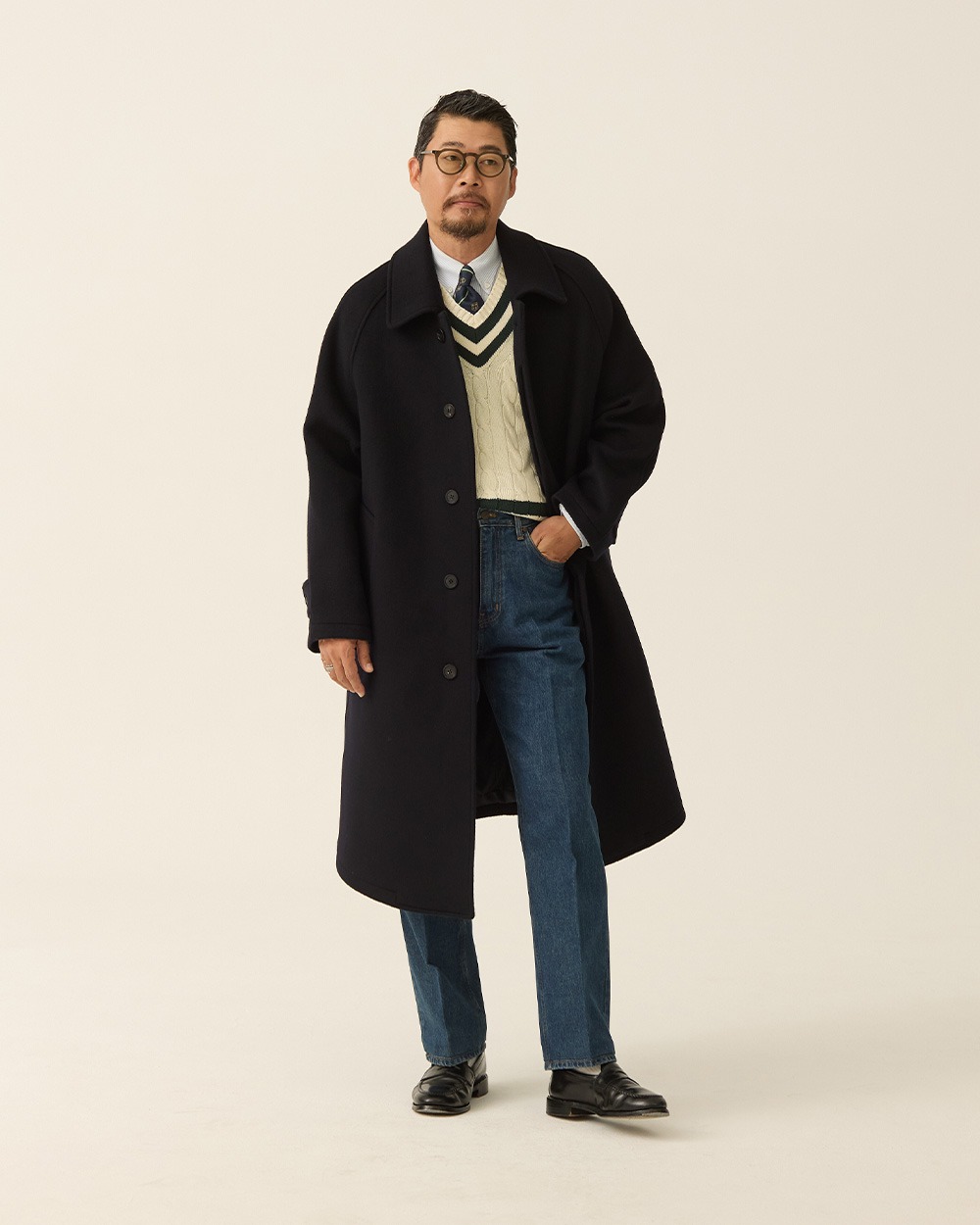
Opening the same navy coat changes the proportions. An ivory cricket sweater brings a lighter area into the center, while the coat frames it on both sides. With blue jeans, the result feels less uniform than navy from neck to ankle.
The striped V-neck already supplies a point of interest. Keep the rest restrained: a tucked shirt, plain denim, and dark loafers. The photographed outfit includes a tie; leave it out if you want a quieter version.
Don’t copy every layer just because it appears in an editorial photograph. The repeatable idea is the contrast between a dark outer frame and a light knit. A plain crewneck can do the same job with fewer lines around the neck.
Watch the sweater hem. If it bunches over the waistband, straighten the layers before adding the coat. If the chest pulls when you close the coat, try a thinner knit or a roomier coat. An open front shouldn’t be a workaround for a fit problem.
3. Change the trousers before the coat
Swap the jeans for light khaki trousers and the navy coat feels more composed. The photograph pairs that combination with an ivory cricket knit and brown shoes. Most of the contrast sits between the dark coat and the pale lower half.
The generous trouser leg is doing useful work here. It continues the volume of the coat instead of narrowing abruptly below it. A crease can sharpen this outline without turning the outfit into office uniform.
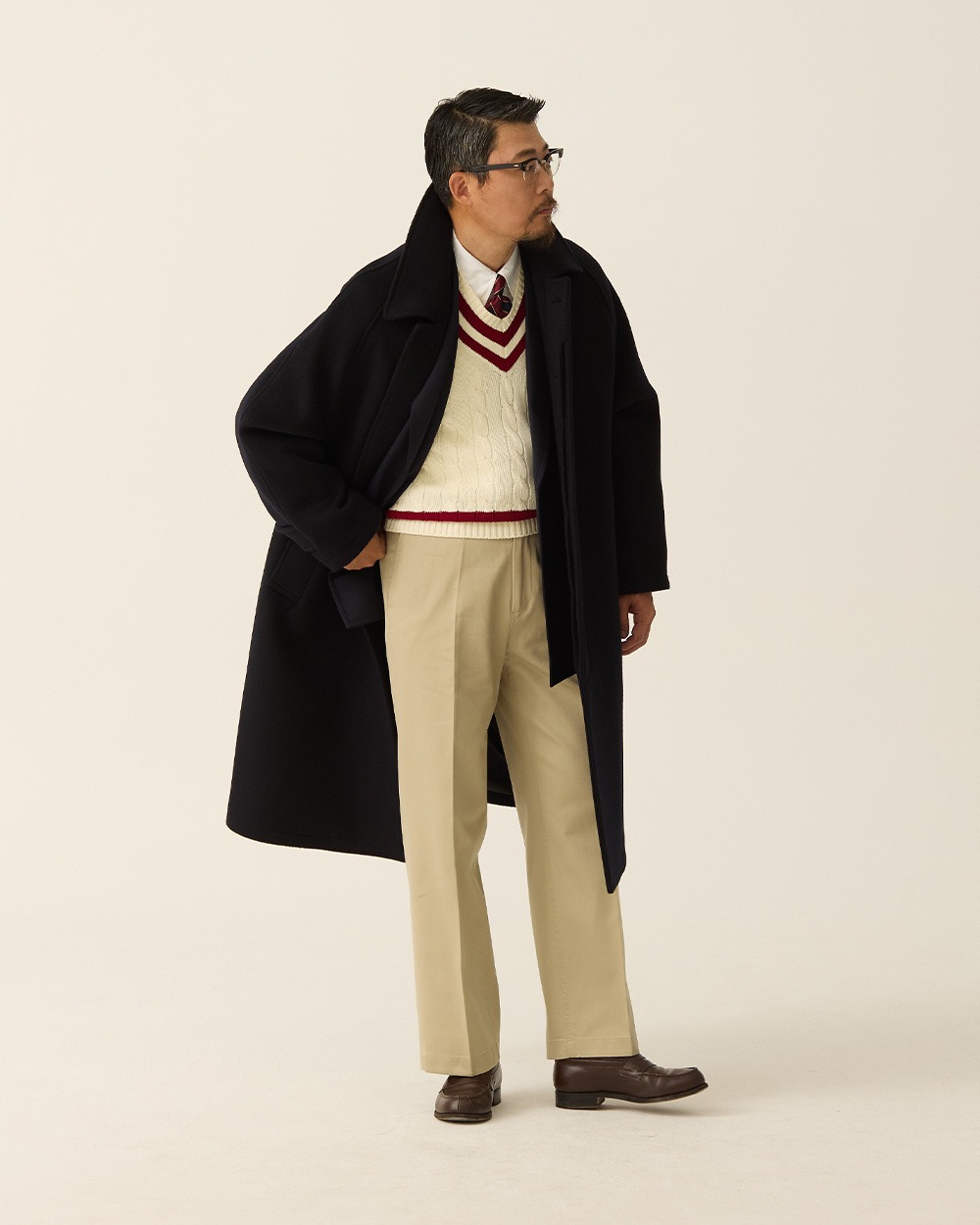
This is the combination we’d choose for a lunch that may become an afternoon across town. Keep the shirt tucked and let the knit sit naturally at the waist. You don’t need a matching belt, bag, and shoe story; one clear relationship between the coat and trousers is enough.
If light trousers feel conspicuous, move a shade darker toward khaki. Keep some separation from the navy. Buying another coat is a much larger change than the outfit needs.
4. Brown herringbone + one patterned layer
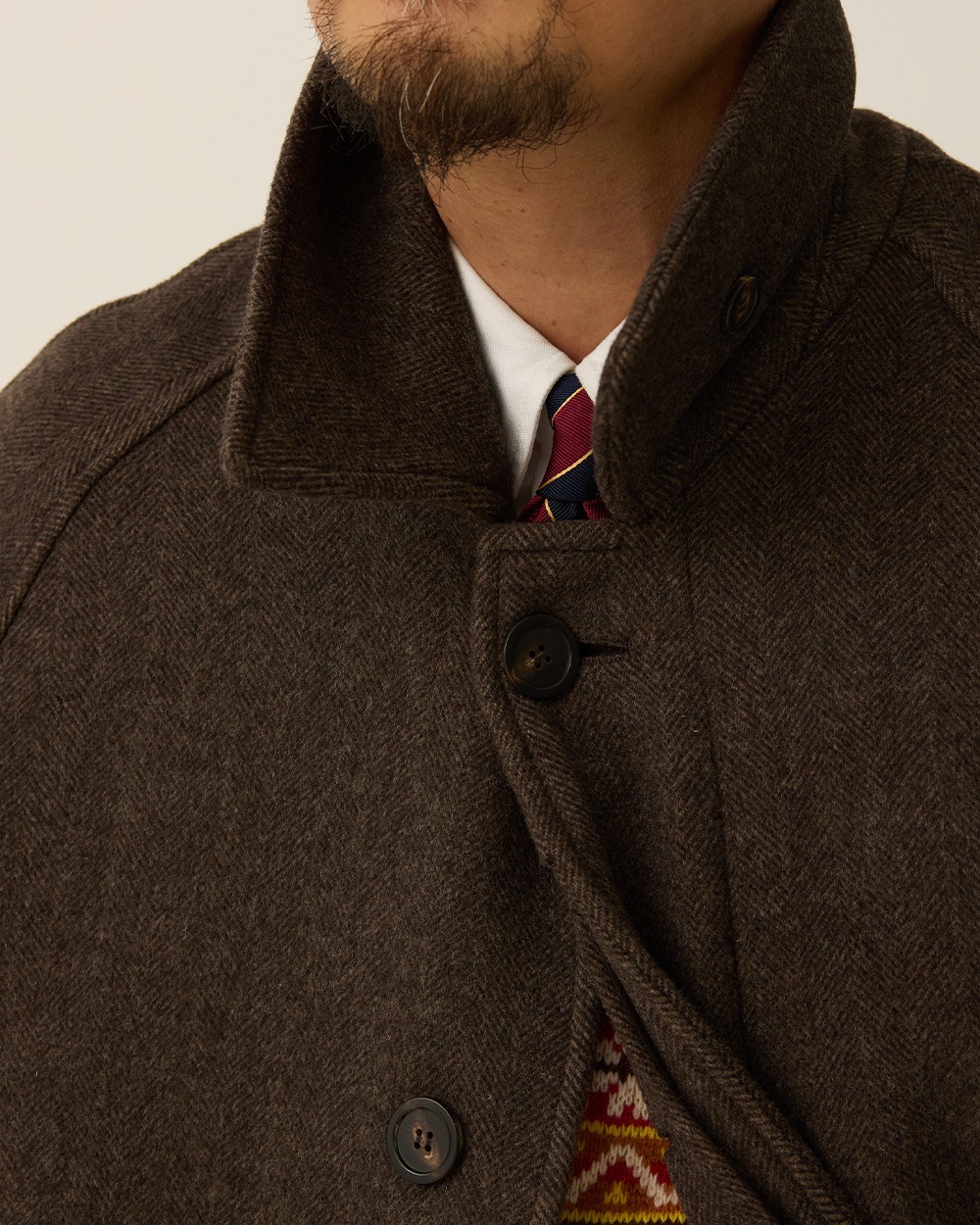
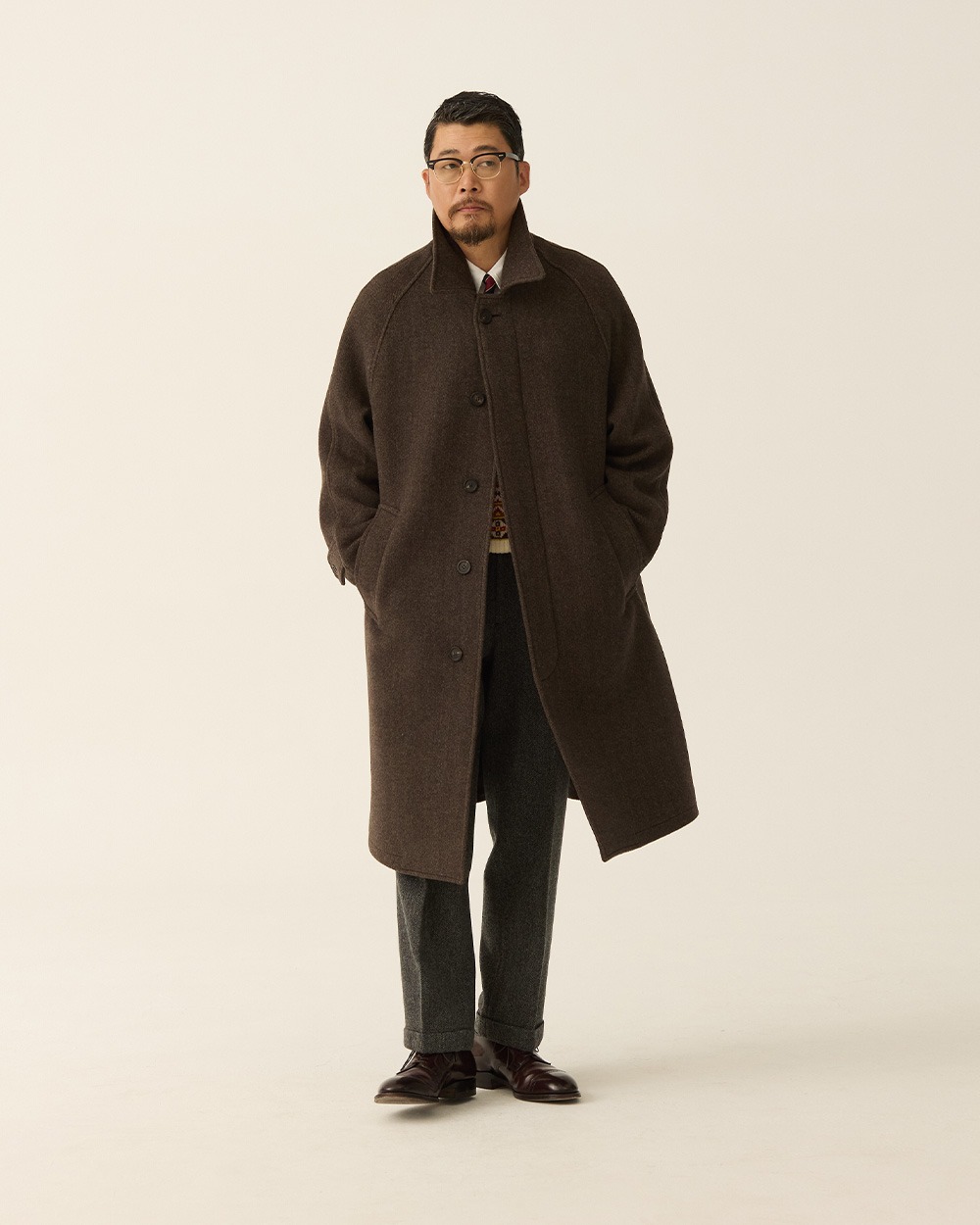
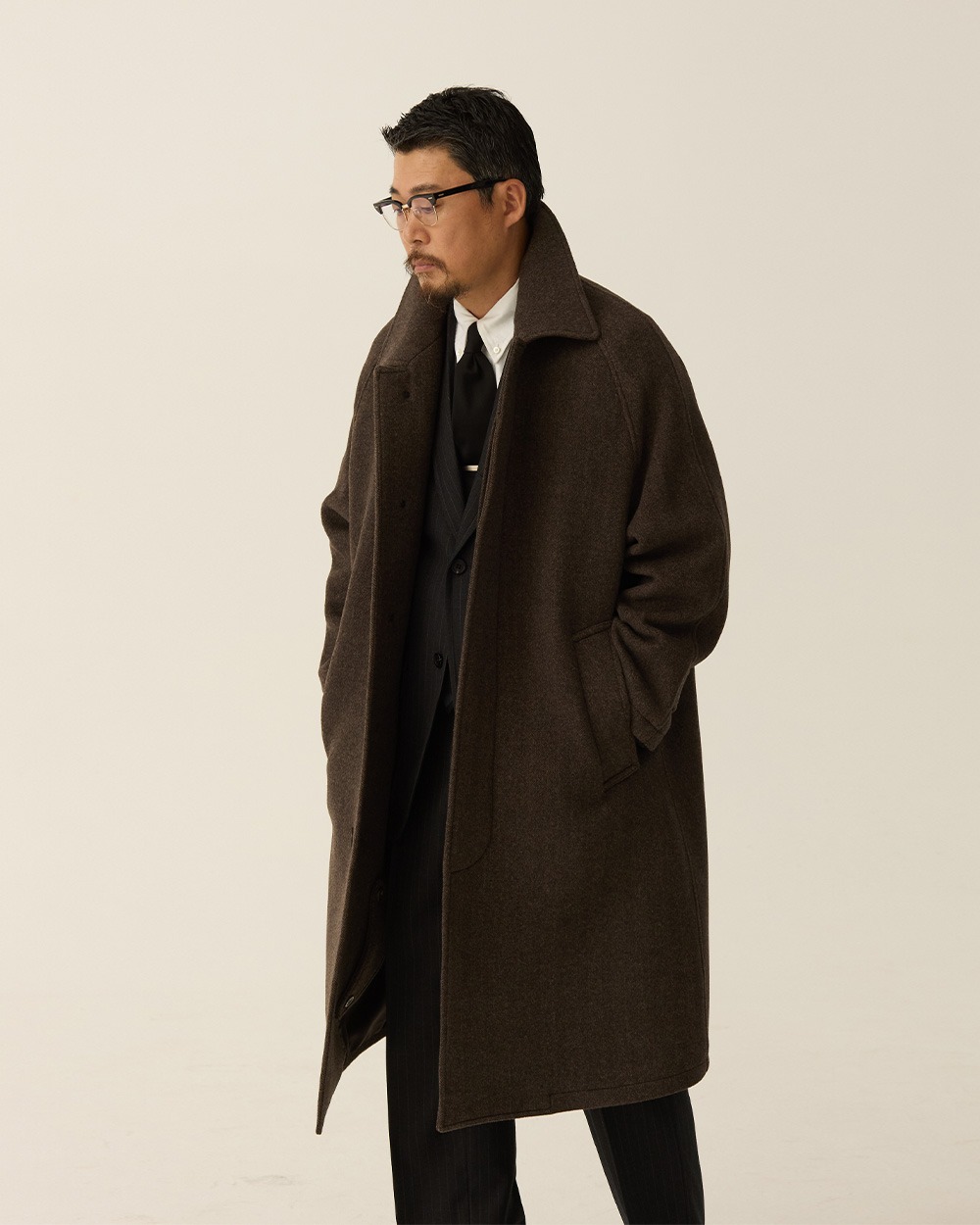
A brown herringbone coat gives you texture before you add anything underneath. In this outfit, a Fair Isle vest adds a smaller, more concentrated pattern. The plain shirt and khaki trousers keep those two surfaces from competing everywhere at once.
Notice how little of the vest is visible. The coat contains the pattern, so the outfit reads as brown outerwear first and patterned knitwear second. That is a useful way to wear a knit you find too busy on its own.
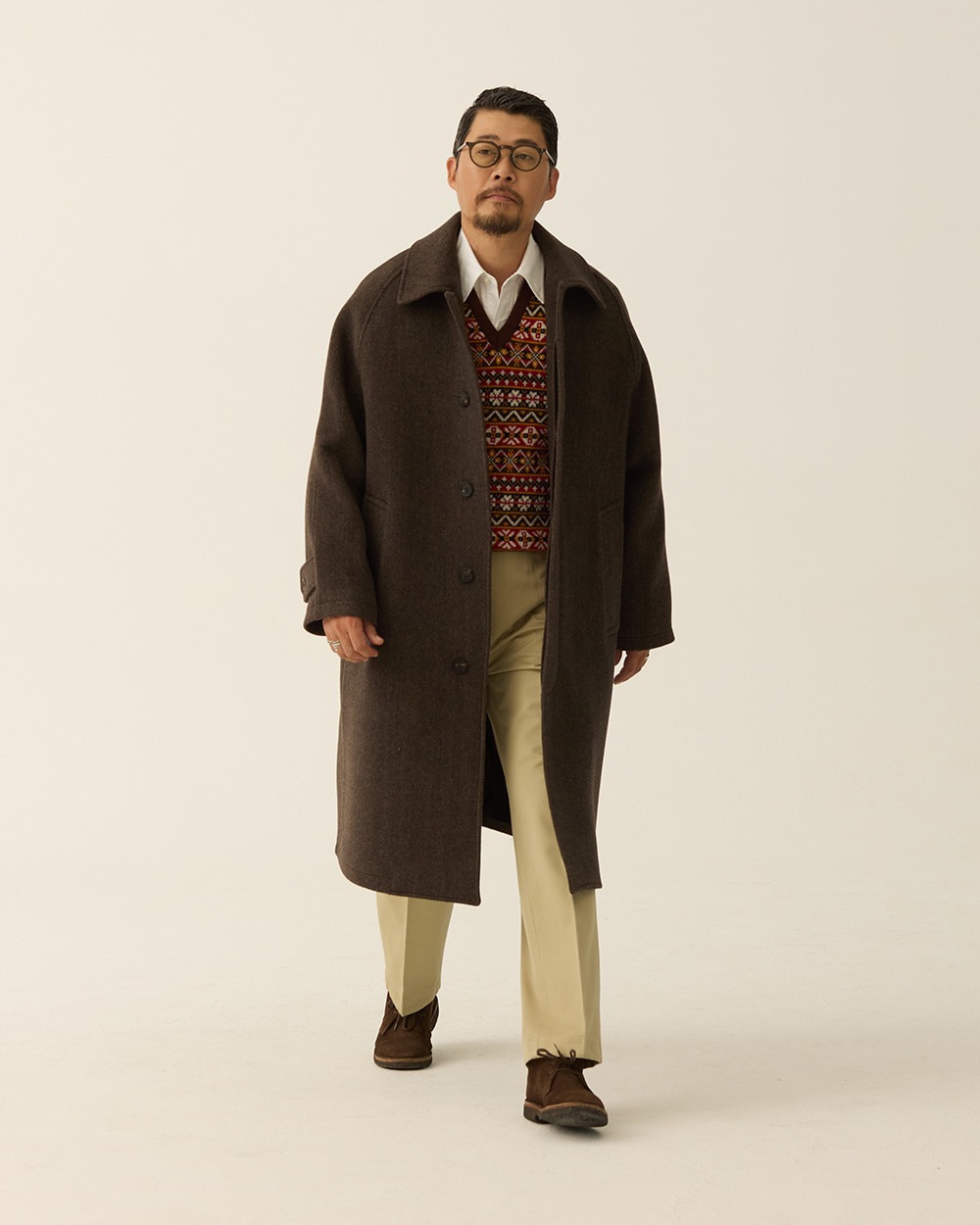
Keep the shirt plain for your first version. Skip a patterned scarf until you know you want another element around the face. If the vest feels like too much, replace it with a solid knit and keep the rest.
The Fair Isle vest is an optional reference, not a reason to force a size that doesn’t fit. At our October 26 check, its product page showed only size 2 without a sold-out label. Use a knit you own if that isn’t your size.
Check the whole silhouette, front and back
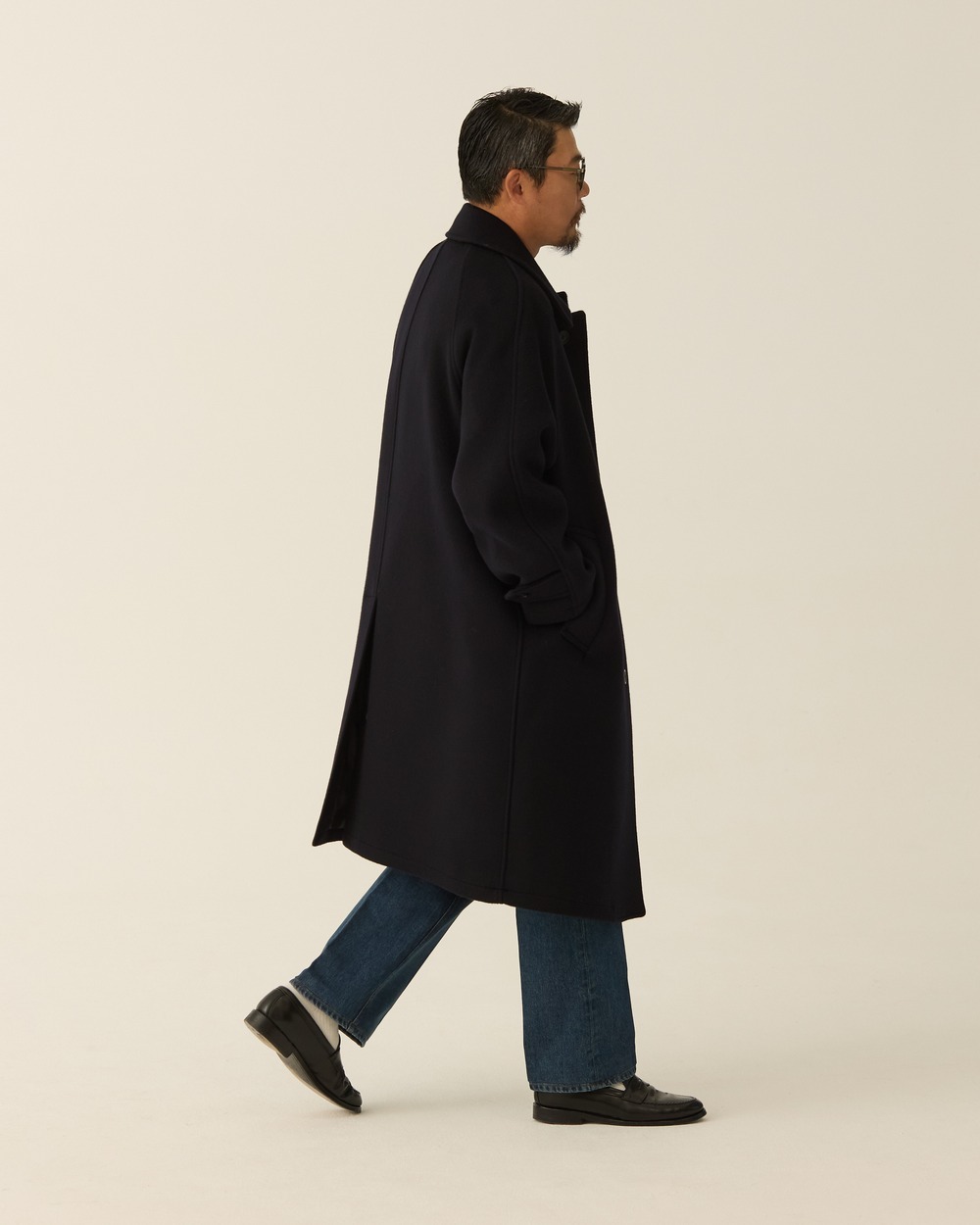
A long coat needs room to move, but “roomy” doesn’t mean choosing a larger label automatically. Try it over the thickest layer you actually expect to wear. Fasten it, reach forward, and sit down.
Look for pulling across the upper back and uncomfortable pressure at the upper arms. GQ’s coat-fitting guide makes the same practical point: test the coat with real layers and ordinary movements. The principle applies just as well to knitwear as to tailoring.
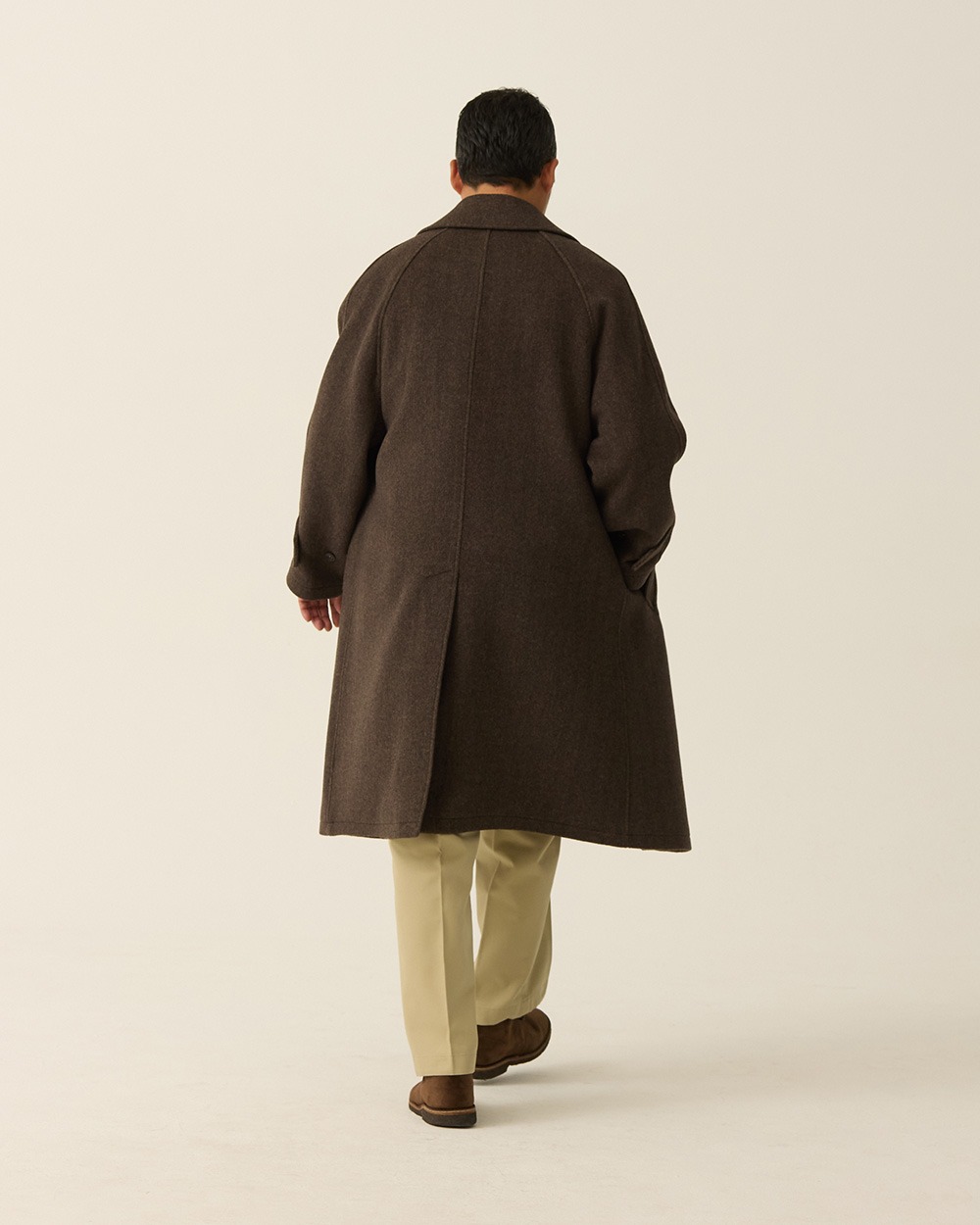
Then check the back. In this photograph, the brown coat falls over the trousers without tracing the waist. That relaxed line is part of the appeal; don’t remove it simply to make the coat fit like a blazer.
There isn’t a universal hem length for every height. Start near the knee, then judge the balance with your actual trousers and shoes. A photograph of someone else’s coat cannot replace checking where yours falls on you.
Choose navy or brown by what you already wear
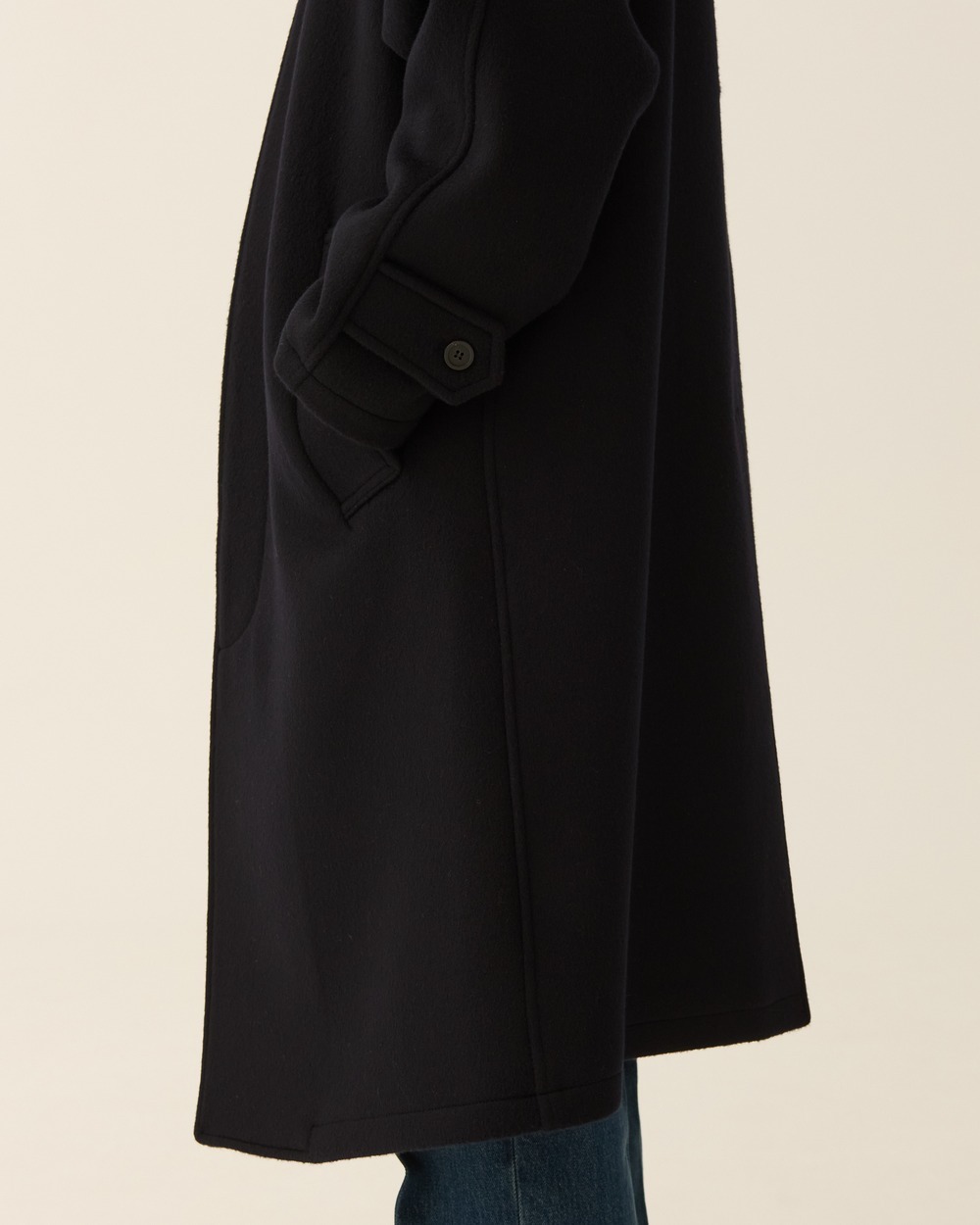
Choose navy if blue denim, grey knits, and dark shoes already form your everyday wardrobe. Choose brown herringbone if you reach more often for khaki, cream, and earthy knitwear. These are starting points, not restrictions.
The navy brushed-wool Balmacaan and brown herringbone Balmacaan were each listed at US $503 when checked on October 26, 2026. Both product pages offered sizes 1, 2, and 3 without sold-out labels. Prices and available options can change; check the current page and measurements before ordering.
For a simpler inner layer, the cable-knit sweater guide covers ways to build around knitwear. If you want a more pronounced lapel and a different front, see how to wear a polo coat.
If you are deciding how to wear an overcoat casually in Seoul, start with an outfit that still makes sense when the coat comes off indoors: tucked shirt, knit, comfortable trousers, familiar shoes. Put the coat on last. Walk a few steps, close it, open it, and check the trouser hem once more.