Rugby Shirt Guide: Ivy’s Latecomer, and 4 Ways to Wear It
Most rugby shirt guides open the same way: heavy cotton, white collar, rubber buttons, stripes called hoops, then “pair it with jeans.” All true, and all beside the point if you dress Ivy.
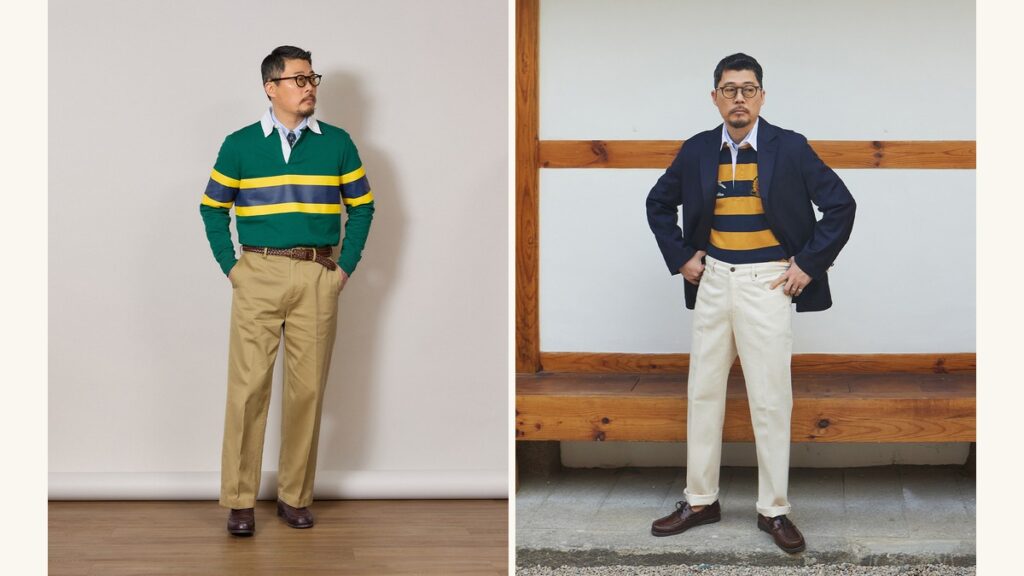
The rugby shirt is the one preppy staple that wasn’t there at the start. It missed the 1950s and ’60s almost entirely and came in through the side door in the 1980s. That matters, because it tells you how to wear one: give it the Ivy frame — a button-down collar underneath, a navy blazer on top — and it stops looking like a costume.
This guide covers where the rugby shirt came from, what makes one, the three Renacts rugby shirts and two rugby collar sweatshirts we photographed, and four ways to wear them.
Where the rugby shirt came from
The shirt is named for the game, and the game is named for Rugby School in Warwickshire, England, where it took shape in the 1830s. The earliest kit was whatever the boys owned. Team colours came later, and so did a jersey built to survive the game.
That jersey started as wool and moved to heavy cotton. Wool held water and tore; thick cotton jersey took a grabbing hand and a wet pitch, then went in the wash. The collar was cut from woven twill rather than knit, so it kept its shape when pulled. The buttons were rubber, so they wouldn’t snap off or cut anyone in a tackle. Heddels’ history of the rugby shirt walks through the sequence, with a photograph of Scotland’s 1871 side in the early version.
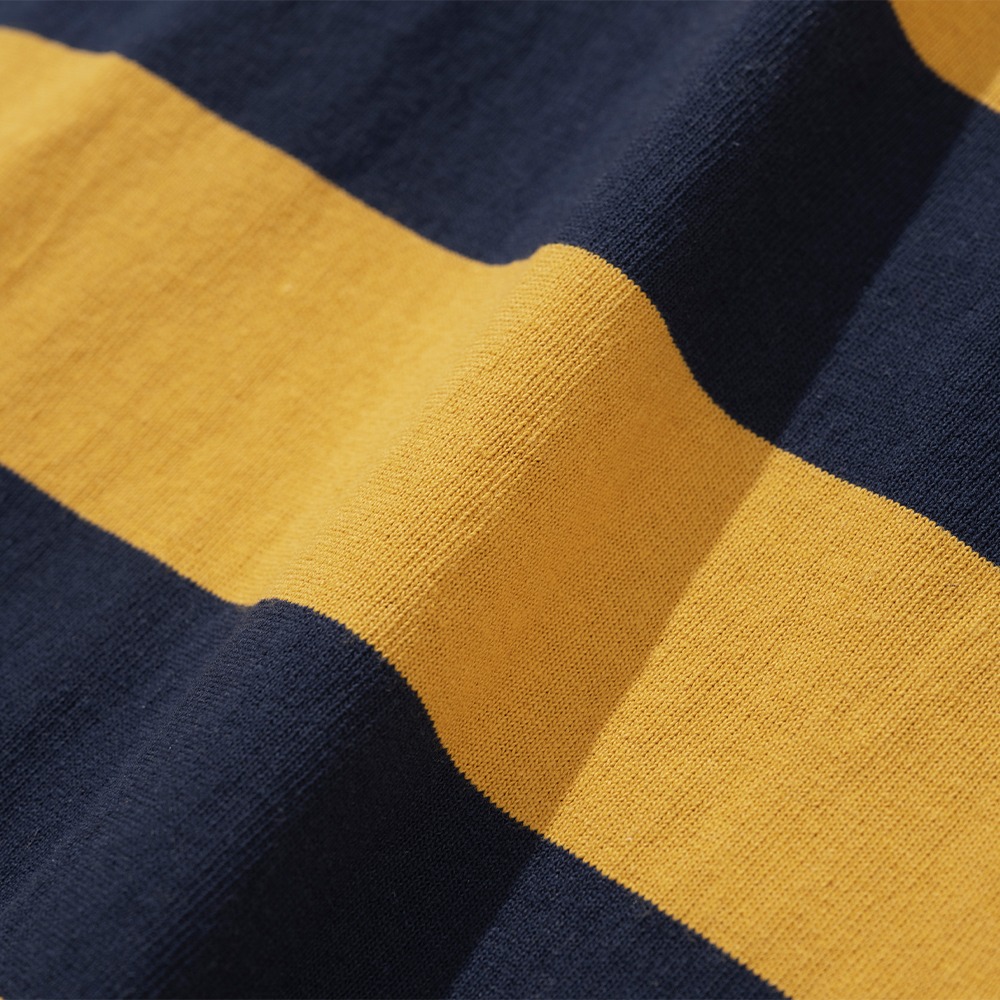
Horizontal stripes, the hoops, were the easy way to tell sides apart from a distance. Everything about the shirt is a solution to being pulled, tackled and washed, which is why it still feels solid in a way a polo never does.
The preppy staple that came late to Ivy
Here’s the part most guides get wrong. They’ll tell you Ivy League students adopted the rugby shirt in the mid-20th century and it has been a campus staple ever since. The record says otherwise.
Ivy-Style.com went looking for it in the usual places and came up short: the 1973 Esquire encyclopedia of men’s fashion has no entry for the rugby, and Bruce Boyer, on campus in the early 1960s, doesn’t remember seeing one. Richard Press recalls them at Dartmouth in the late ’50s, but only because his roommate played for the rugby club. J. Press was importing them from Britain for exactly that crowd.
So it was there, at the edge, for the men who played. It became a wardrobe item in the 1980s, when the preppy boom put Ralph Lauren’s hooped rugbies on everyone, player or not. Lauren later built a whole label on the shirt: Rugby, 2004 to 2013.
Renacts says the same thing on its own product page, which is rare candour from a brand selling you the shirt: in the golden era of Ivy, blazers, oxford shirts and chinos took centre stage, and the rugby came back with the 1980s. The Center Block shirts below are drawn from that decade, not from Take Ivy.

Why does the date matter? Because a 1980s garment worn with 1980s styling — collar popped, sleeves shoved up, nothing underneath — reads as costume now. Worn inside the Ivy wardrobe that came before it, it reads as a sport shirt. That’s the whole method below.
What makes a rugby shirt a rugby shirt
Five things, and you can check every one of them with your hands.
- Heavy cotton jersey. Heavier than a polo, lighter than a sweatshirt. The Renacts cloth is 100% cotton, cut to the substantial 1980s weight and then finished to soften the hand.
- A woven twill collar, usually white. It stands on its own and keeps a clean edge. This is the single biggest difference from a polo, whose collar is knit rib.
- A short buttoned placket. The originals used rubber buttons; these use plain white ones on a reinforced placket. Either way it’s a short, strong opening, not a full button front.
- Stripes with a system. Hoops all the way down, or a single band across the chest (the “center block”), or a crest on a hooped ground.
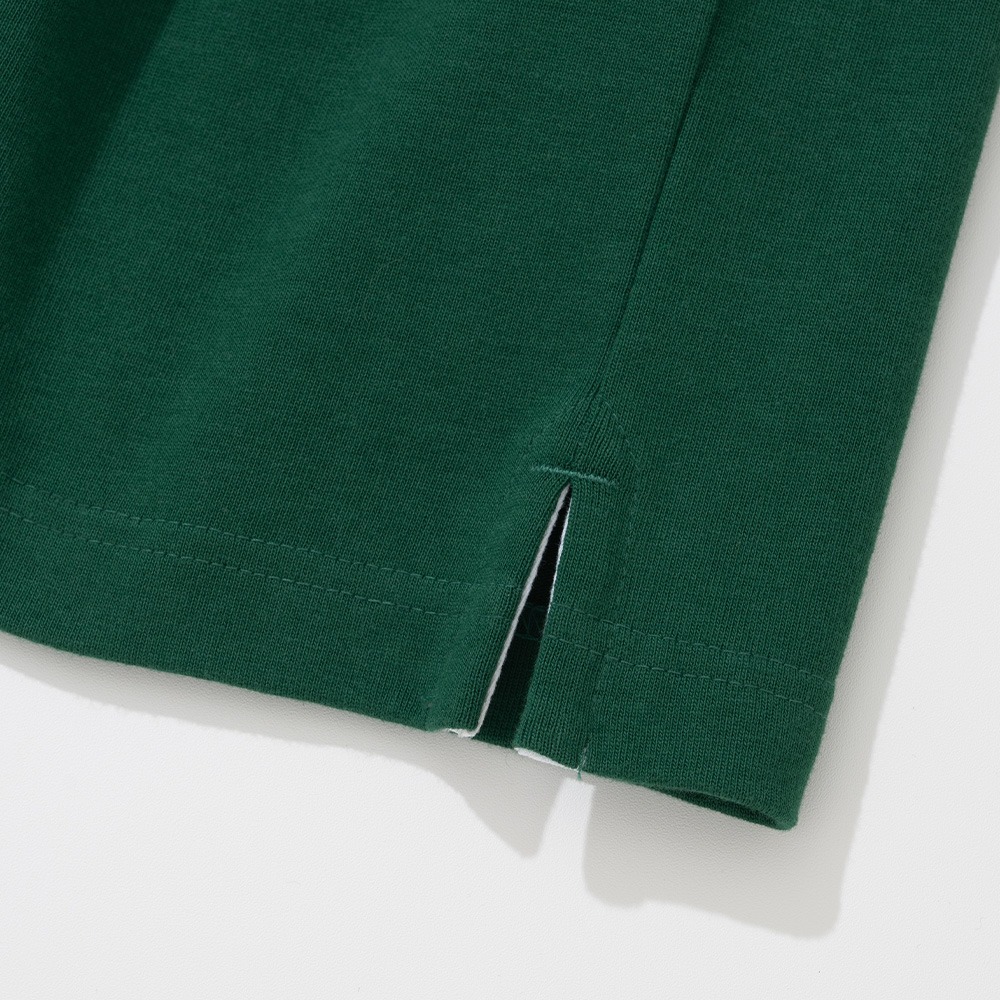
- Long sleeves, ribbed cuffs and side vents. The vents at the hem are a Renacts addition for movement; the ribbed cuffs are standard issue.

Renacts adds one thing a photo won’t show you. The V-zone, the opening between the collar and the placket, is built so the collar doesn’t collapse when the shirt goes over an oxford and a tie, and the armhole is cut to sit under a blazer. That’s a design decision, and it tells you how the brand expects you to wear it. The same collar goes onto a sweatshirt body too, which gets its own section in Way 4.
Three rugby shirts, two sweatshirts
We photographed three shirts. Two are the 2026 Center Block Rugby Shirts, in green and in navy. One is the Crest Rugby Shirt, in yellow and navy hoops. All three are $107. Alongside them are two Rugby Collar Sweatshirts, grey and navy, which put the same collar on a heavyweight sweatshirt body; they get Way 4 to themselves.
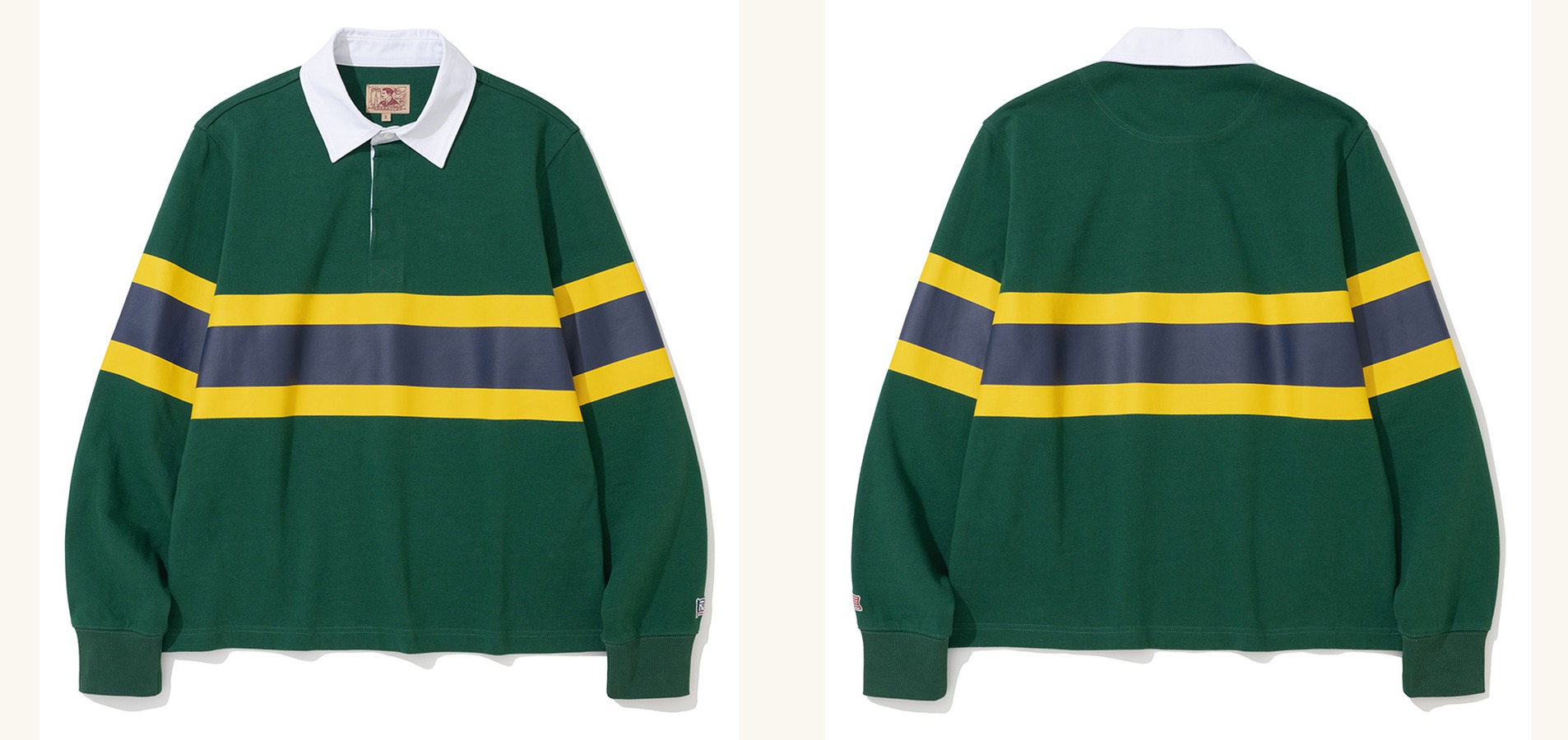
Green. Bottle green ground with a yellow-and-slate band. The green takes a tie most easily of the three, because the band sits low enough to leave the knot alone and the colours are dark enough to let the tie win.
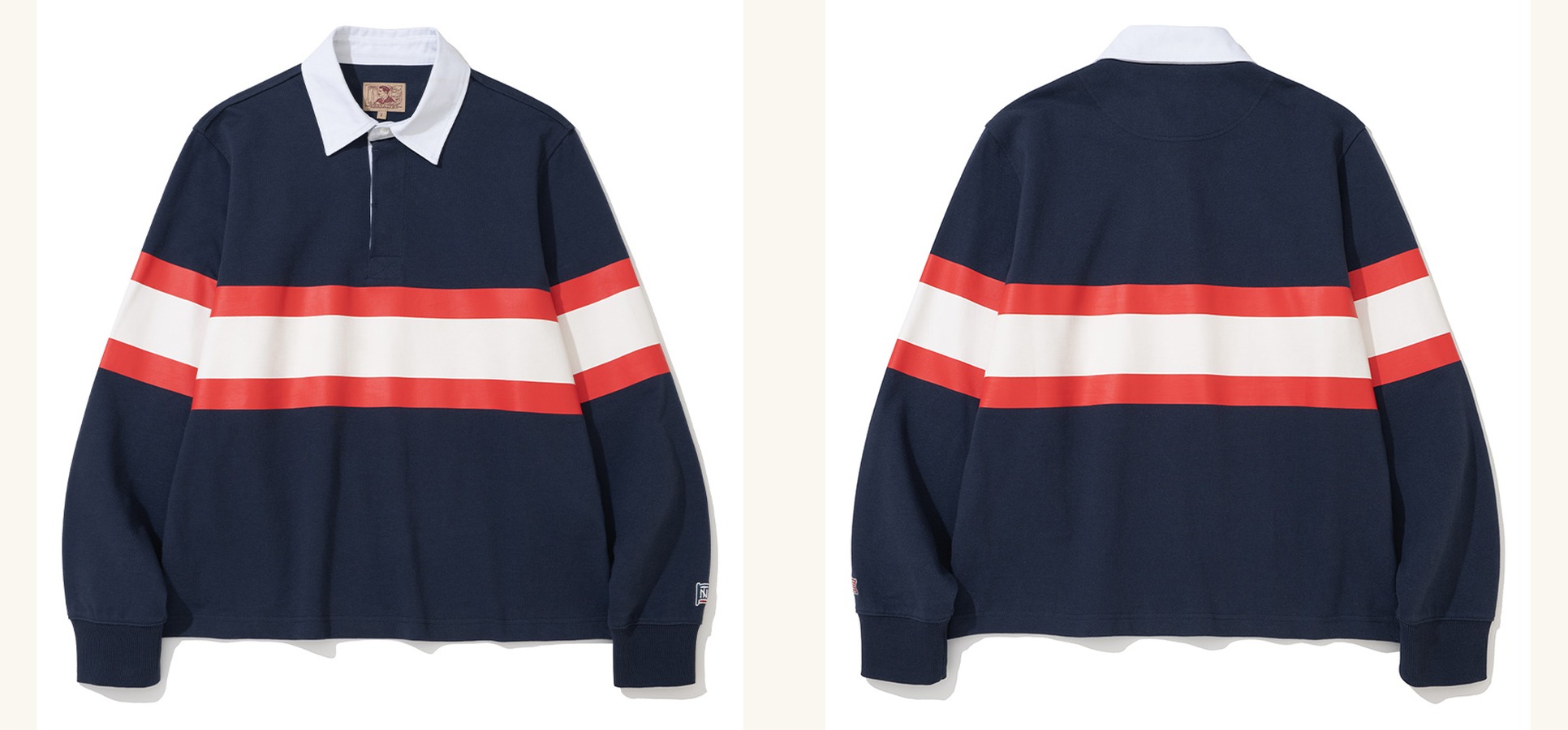
Navy. Navy ground, red-white-red band. It’s the one closest to a plain navy sweater, so it goes under a blazer and over jeans without a second thought.
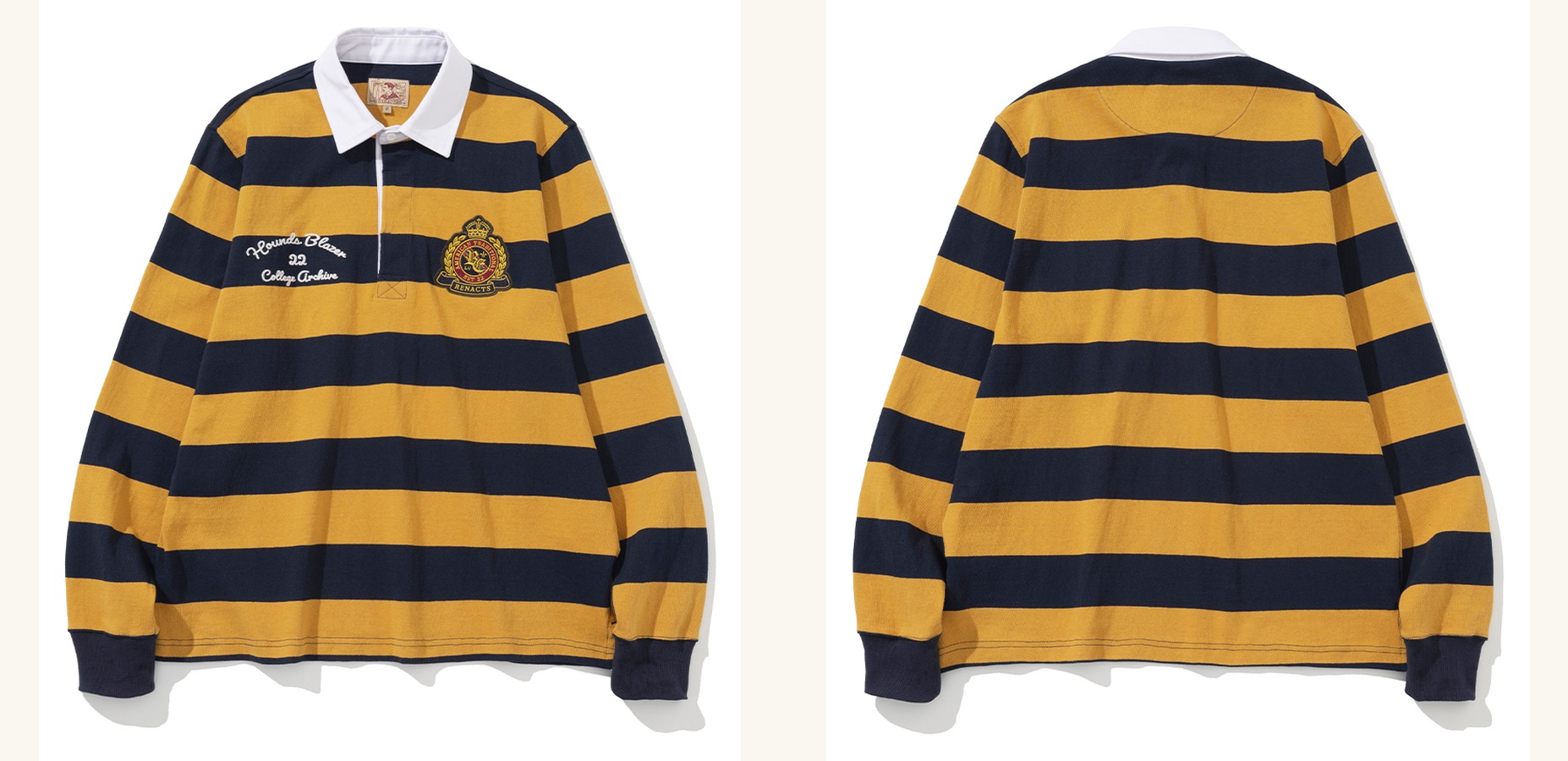
Yellow hoops with a crest. The loudest of the three and the most “rugby”: full hoops, an embroidered crest, script across the chest. It wants plain everything else.
Buy the navy first if you’ve never owned one. Buy the green if you’ll wear a tie with it. Buy the hoops when you know you’ll wear them.
Way 1: Over an oxford button-down and a tie
This is the Ivy way to wear a rugby shirt, and it’s the way almost no guide shows. Shirt, tie, rugby on top, collar out. Tuck it in and wear a belt.
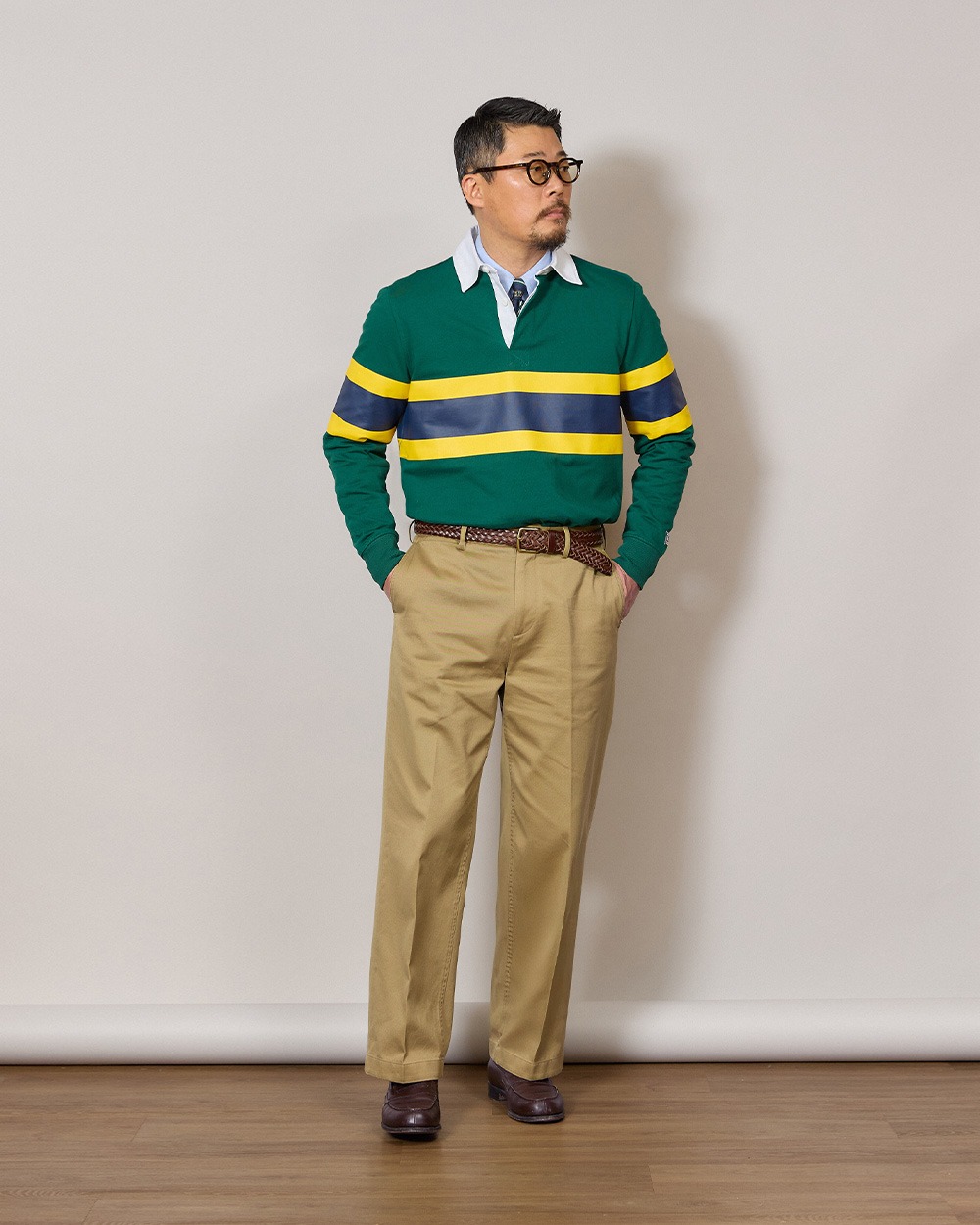
The reason it works is the collar. A rugby collar is wide and woven, so it lies flat over a button-down collar instead of fighting it, and the placket leaves exactly enough room for a tie knot. The tie does the job a V-neck does on a cricket sweater: it gives the eye a centre.
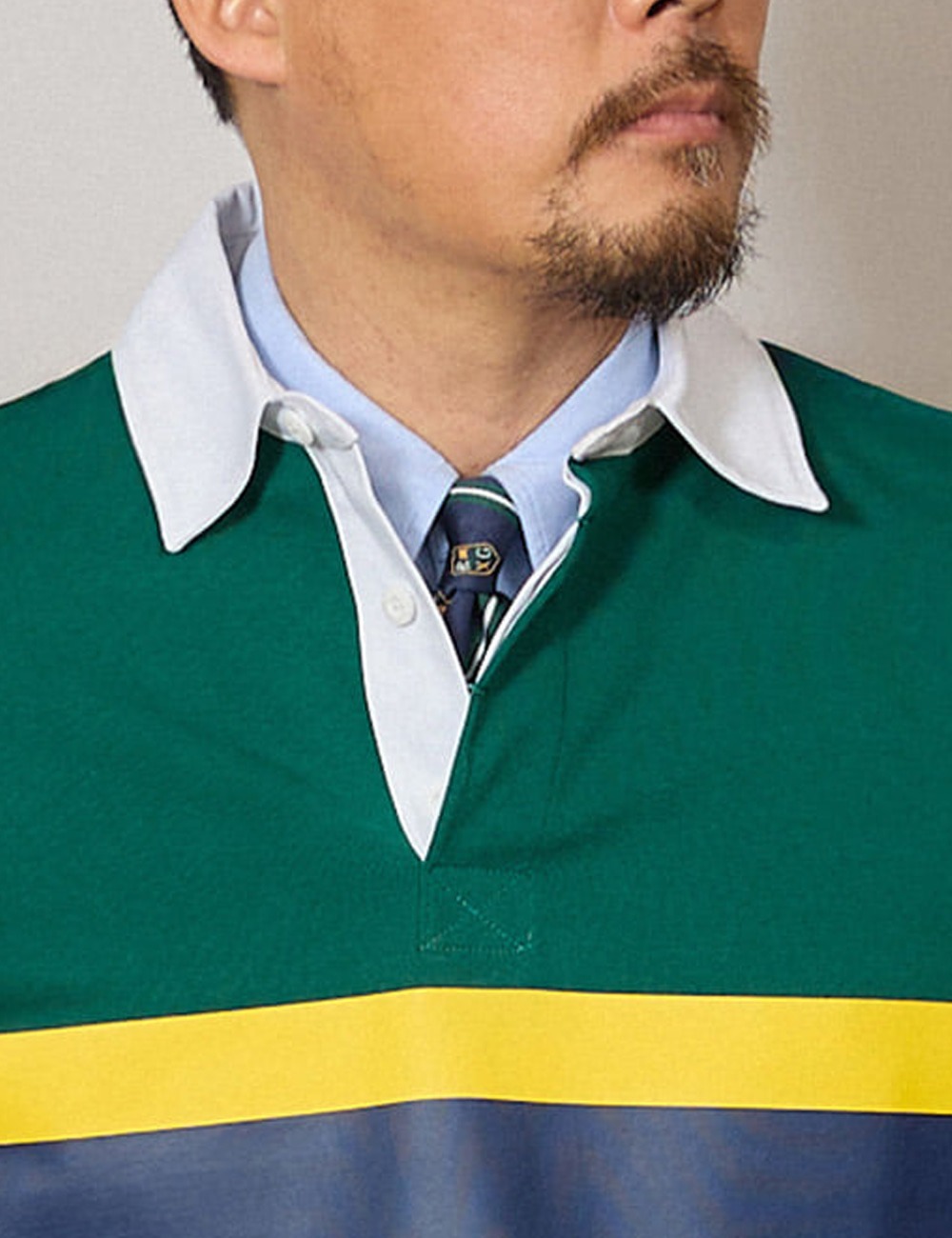
Keep the tie quiet. A club tie, a block stripe or a solid knit. Anything with a fine pattern disappears against the stripes. On the hoops, a yellow-and-navy block stripe picks up the shirt without copying it.
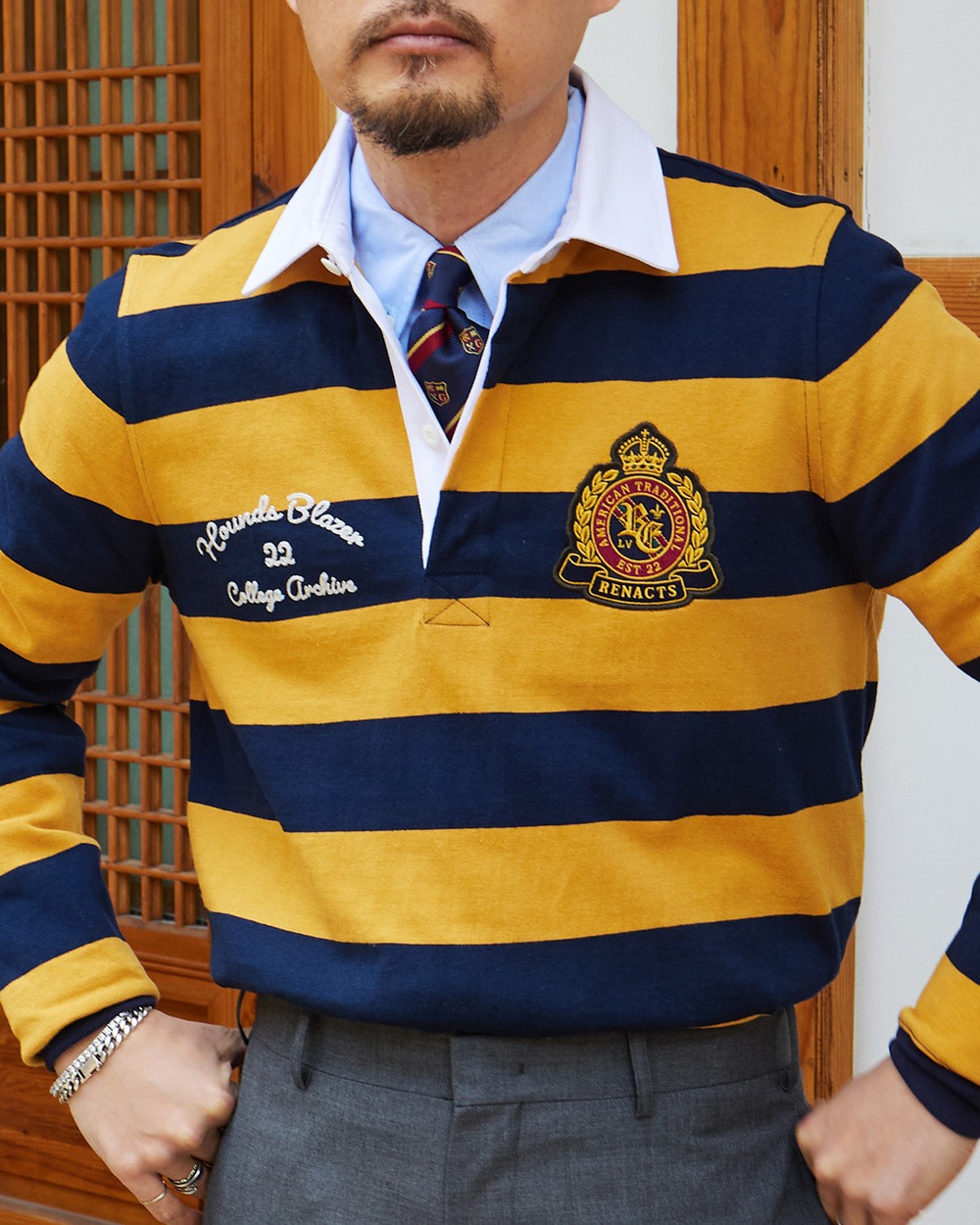
Below the shirt: khaki chinos, grey wool or navy trousers, and loafers. Our oxford button-down guide covers the shirt underneath; any OCBD in the collection does the job.
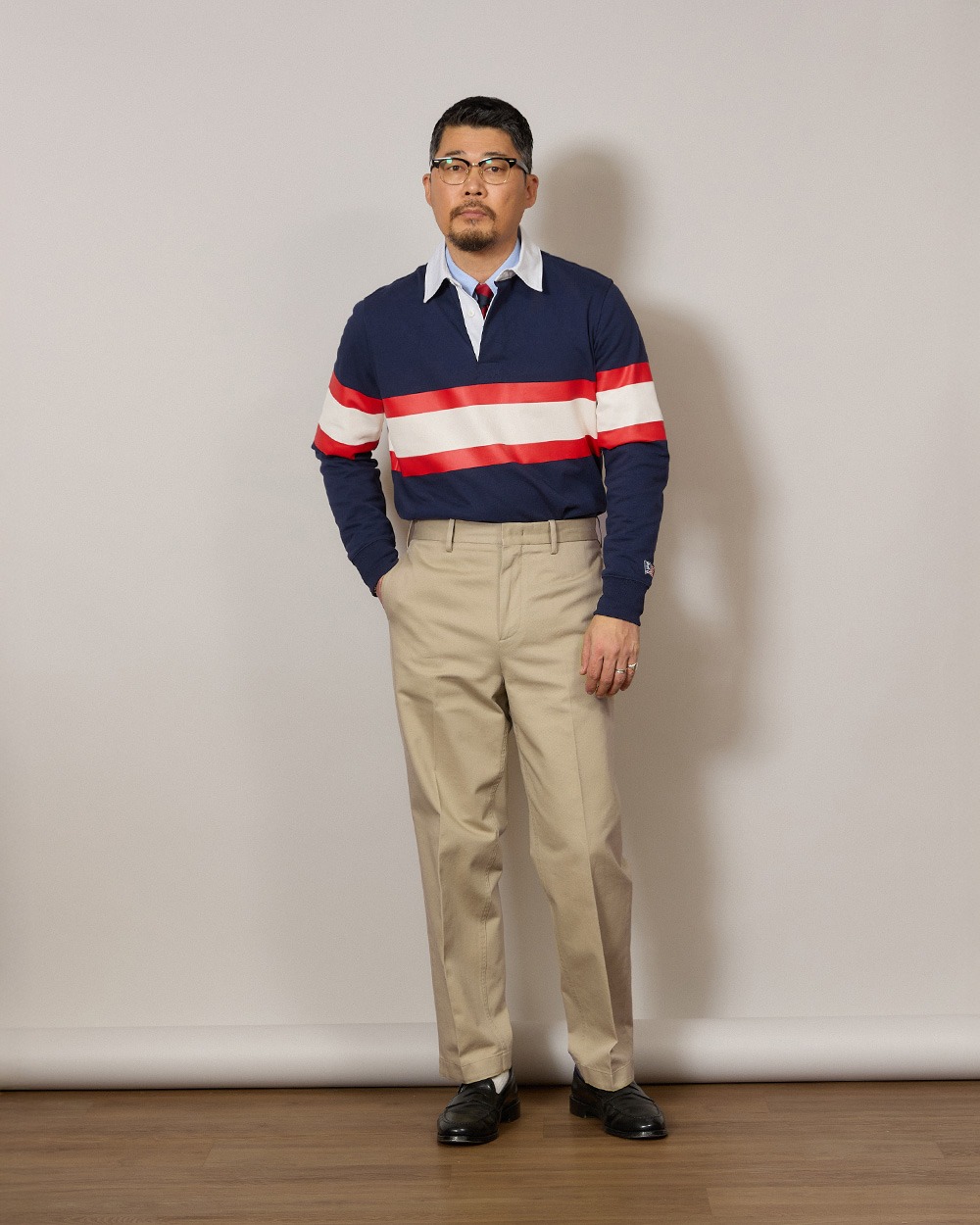
Way 2: Under a navy blazer
Put a navy blazer over Way 1 and the rugby shirt becomes a sweater. This is the trick the 1980s mostly missed: the blazer frames the stripes and cuts them down to a band of colour inside the lapels.

A sack blazer with a soft shoulder works better than a structured one, because the rugby adds bulk at the chest and a padded shoulder on top of it looks stiff. Our navy blazer guide covers which one to buy. Let the rugby collar sit outside the lapels, the way a shirt collar would.

Trousers go anywhere: white, khaki, olive, jeans. The crest version under a blazer is the most “club” of the lot, a crest under a crest, so keep the trousers plain and skip the tie.
Way 3: On its own, the weekend version
Worn as the shirt itself, the rugby comes untucked, the collar goes over whatever is underneath, and the trousers get rougher.
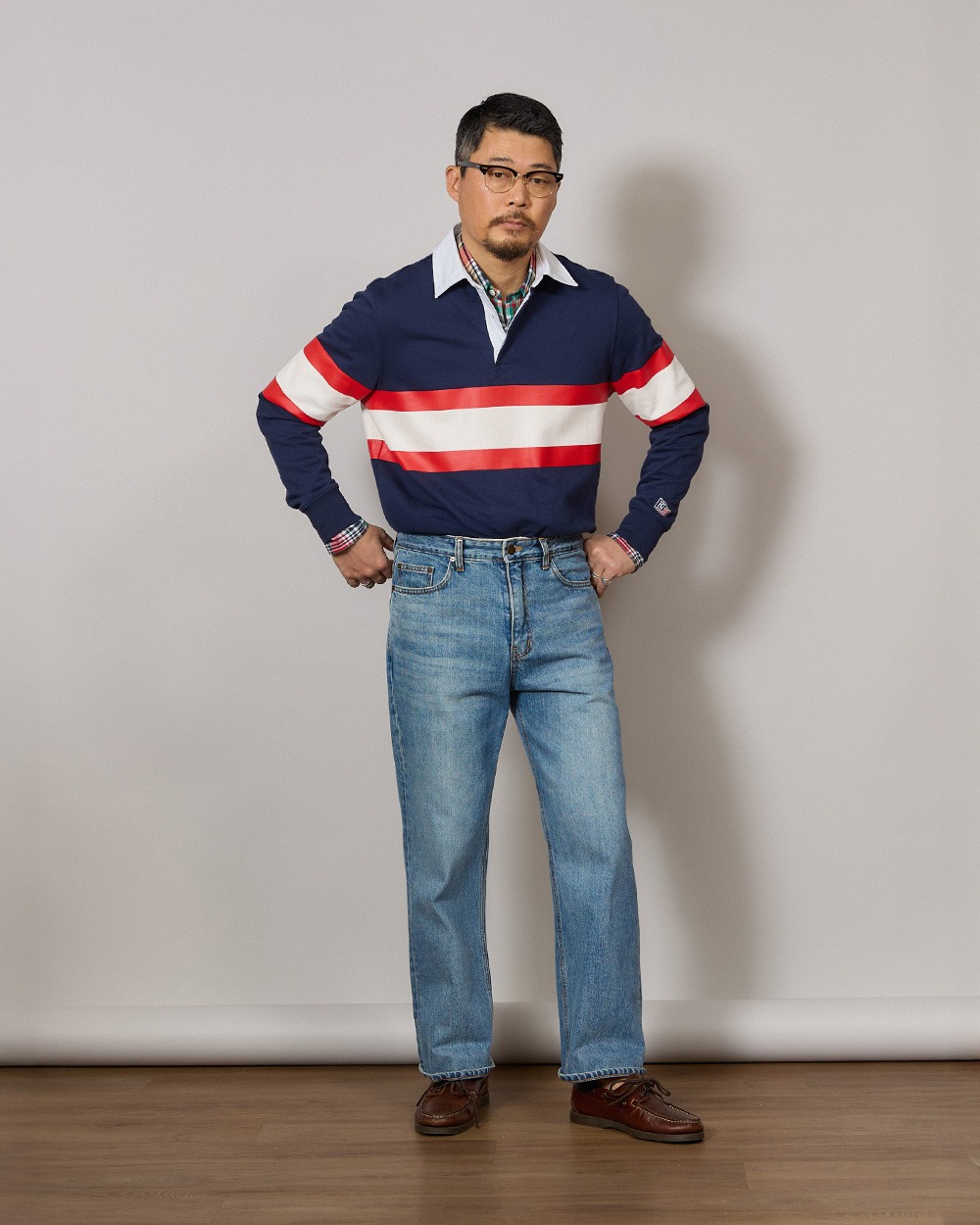
Over a madras shirt or a chambray, collar out, the rugby does what a crewneck sweatshirt does, with more colour. Light jeans, white jeans or olive fatigues, and either penny loafers or canvas sneakers.
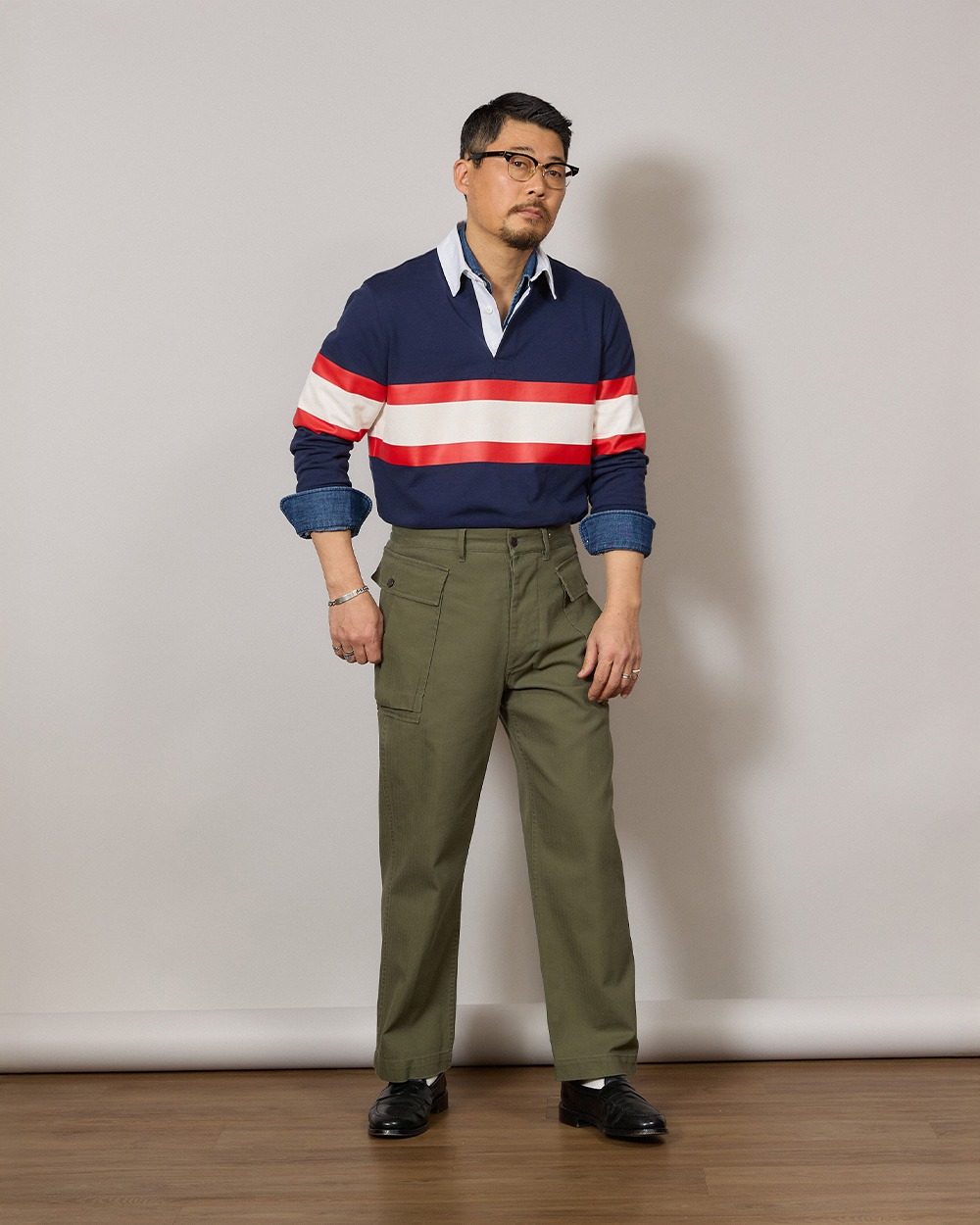
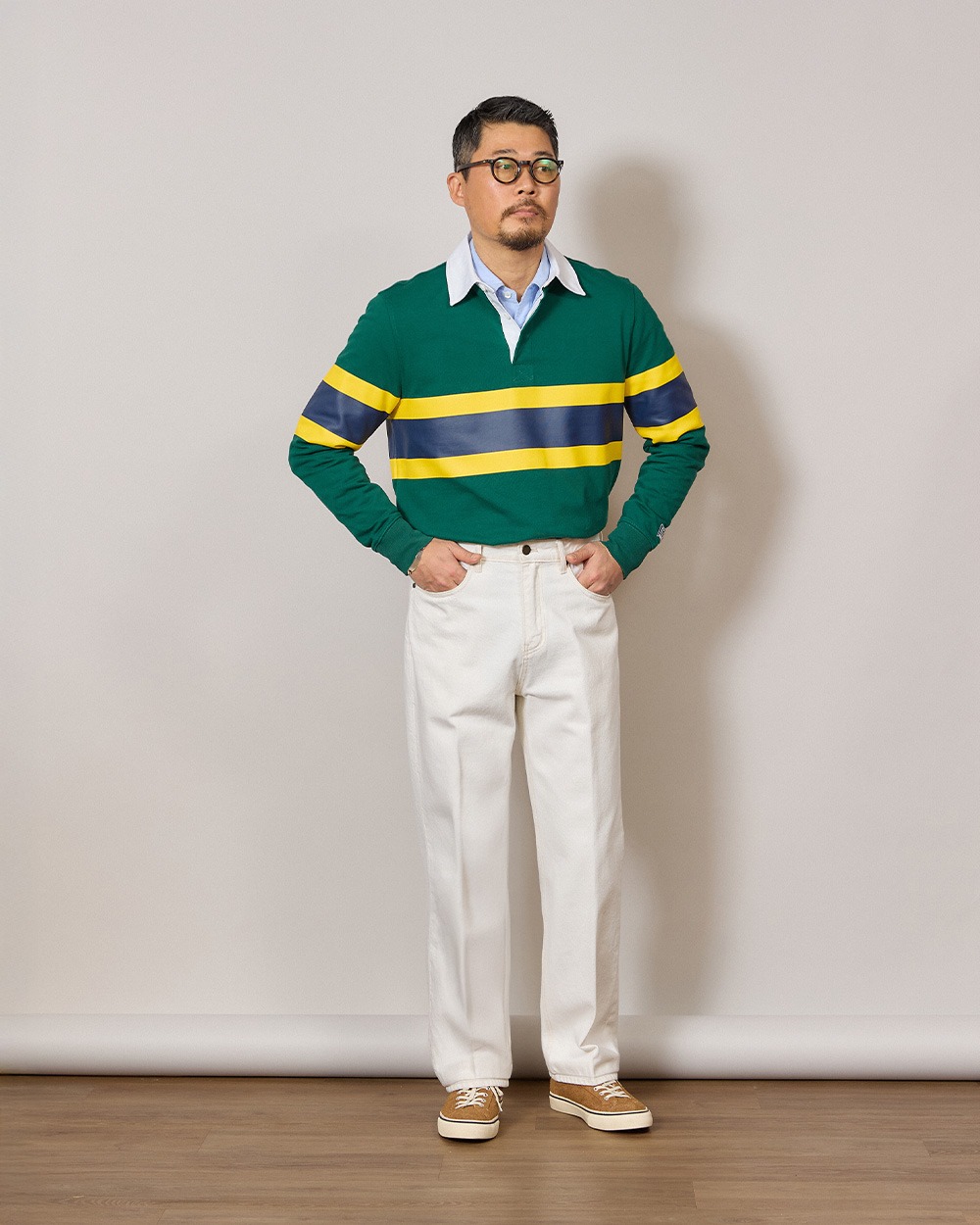
The hoops take a cap and a canvas tote without blinking.

Way 4: The rugby collar sweatshirt, in grey and navy
Renacts also makes the collar without the stripes. The Rugby Collar Sweatshirt puts the same white twill collar and short placket on a heavyweight sweatshirt body, adds a kangaroo pocket, and comes in grey marl and navy. Both are $113, 100% cotton.
The brand describes it as three pieces of sportswear history in one garment: the 1950s heavyweight sweatshirt (the body is built the reverse-weave way, with the thick 1950s ribs), the collar that survived the rugby pitch, and the kangaroo pocket early sportswear used for gloves. What it’s really about is the moment on American campuses when the line between a shirt collar and a sweatshirt stopped mattering. The chest print reads RENACTS 2022 NEWTRAD; this is the brand’s New Trad line, its “what if Ivy were being invented now” experiment.
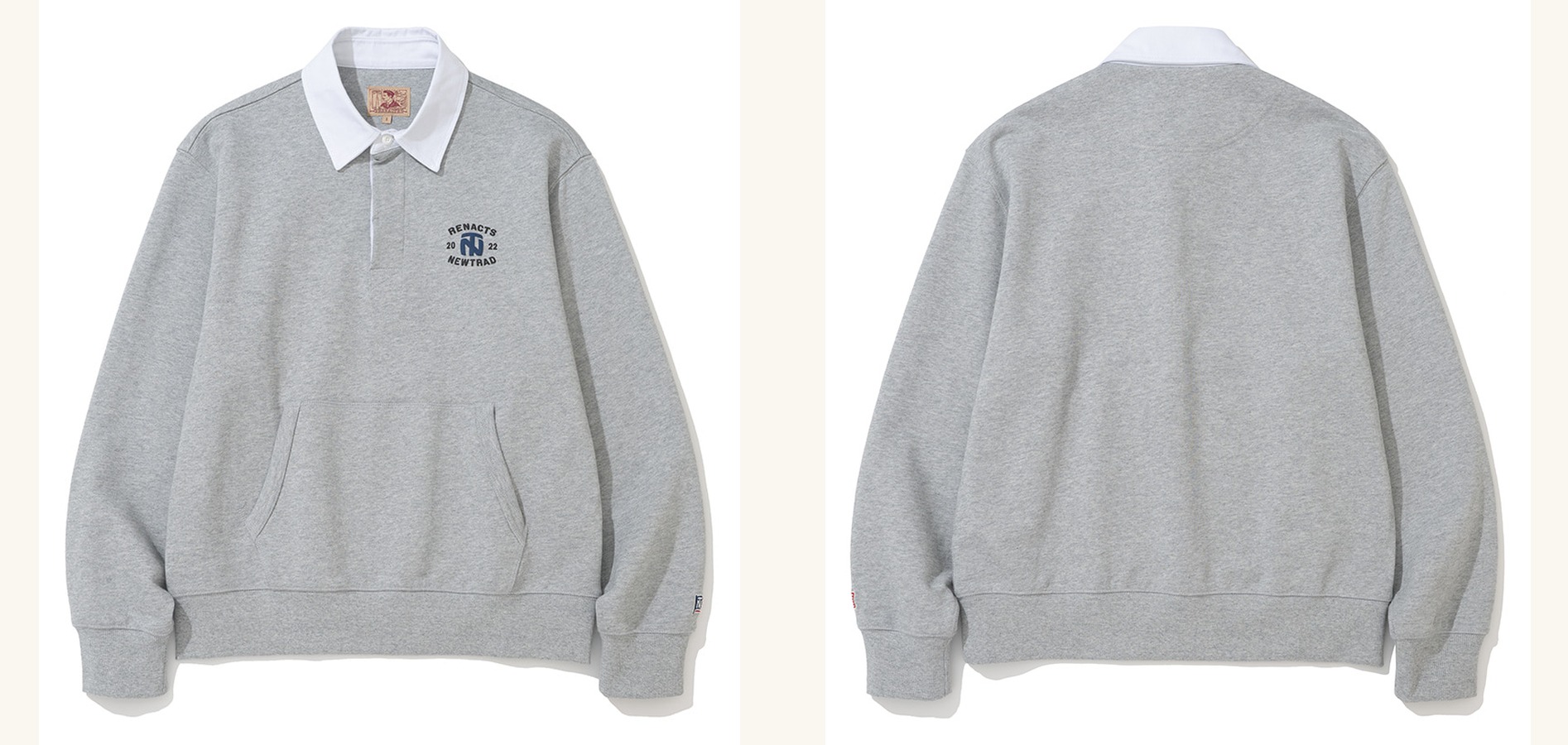
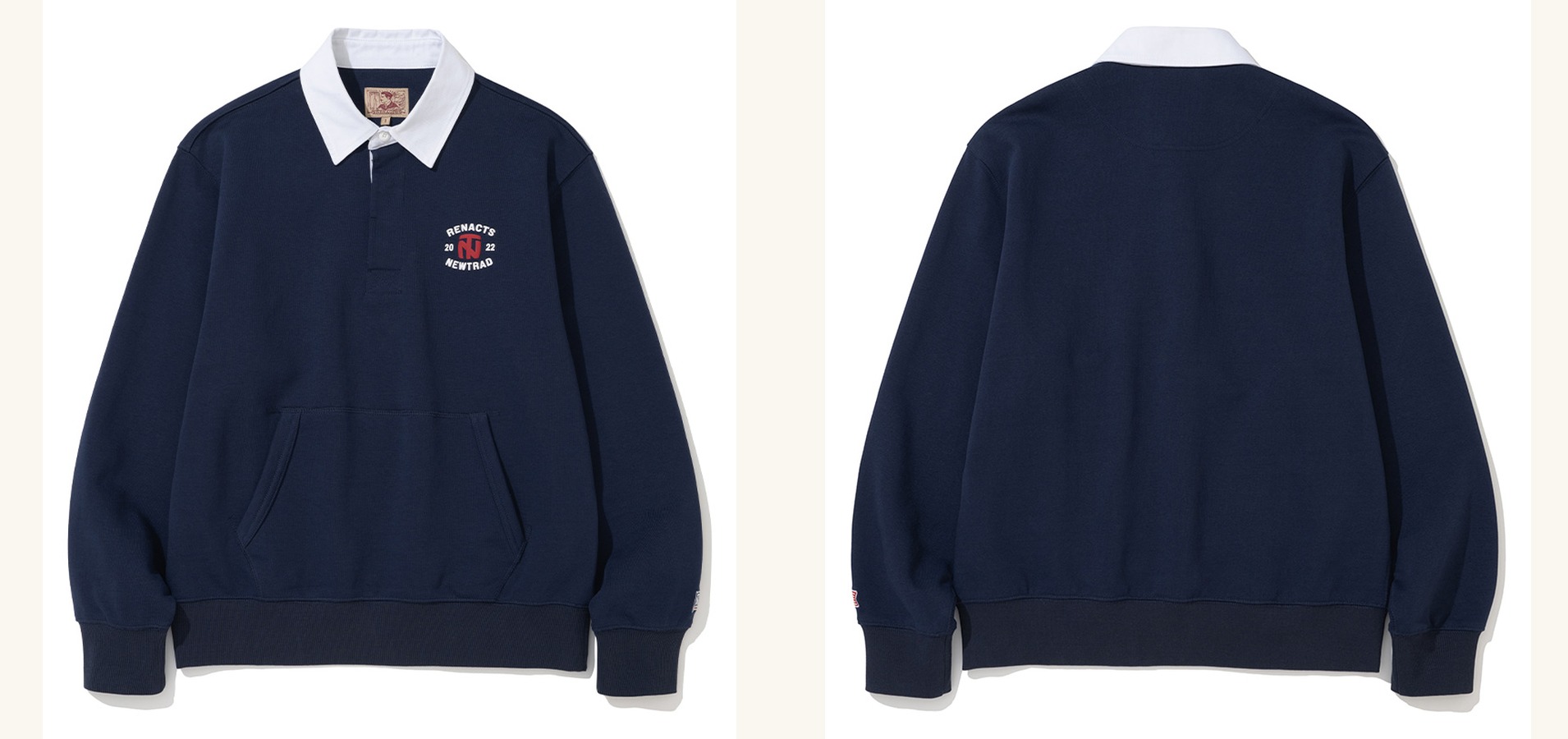
It wears the same three ways as the shirts, and the collar is cut to the same rule: the V-zone holds over an oxford and a tie.
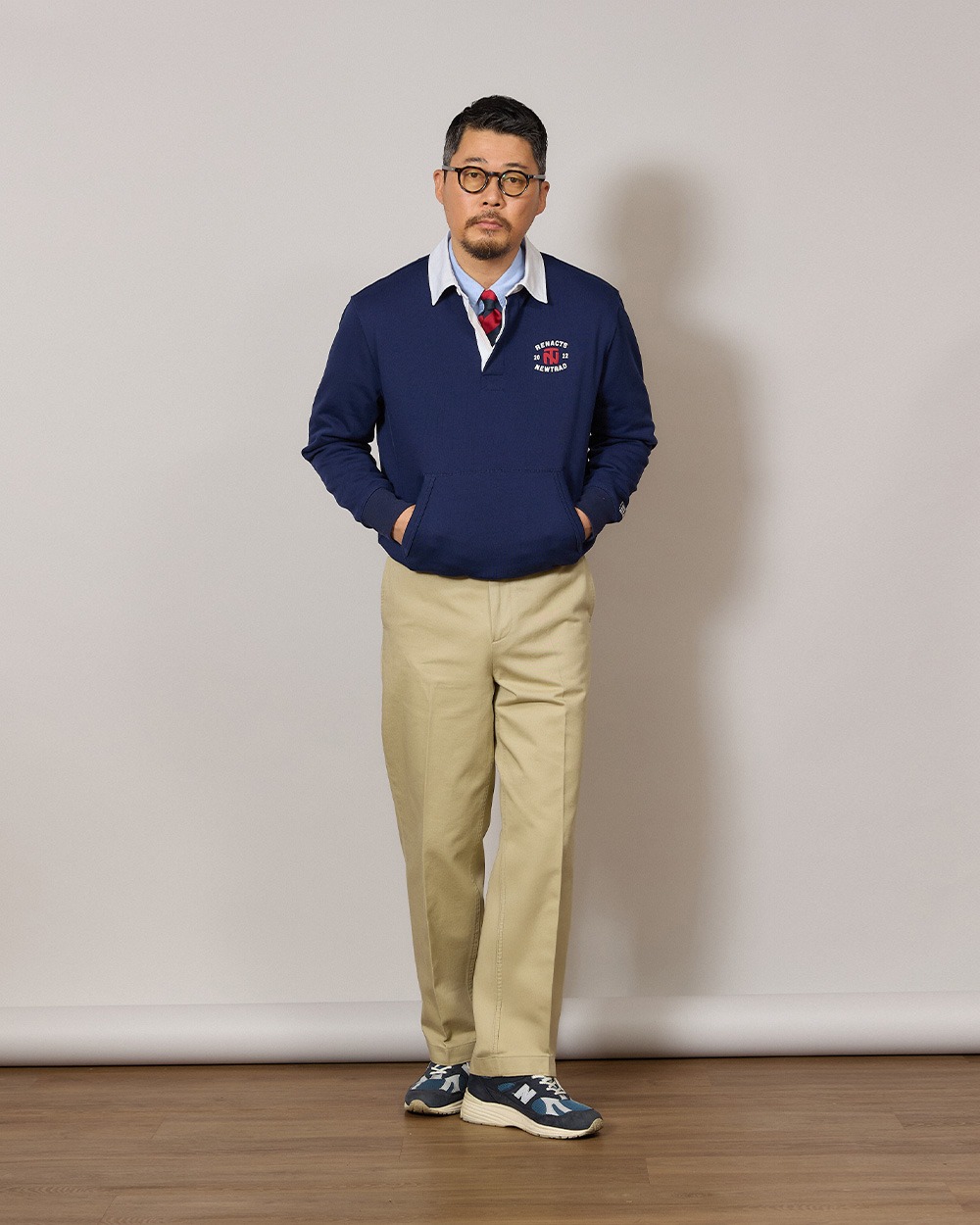
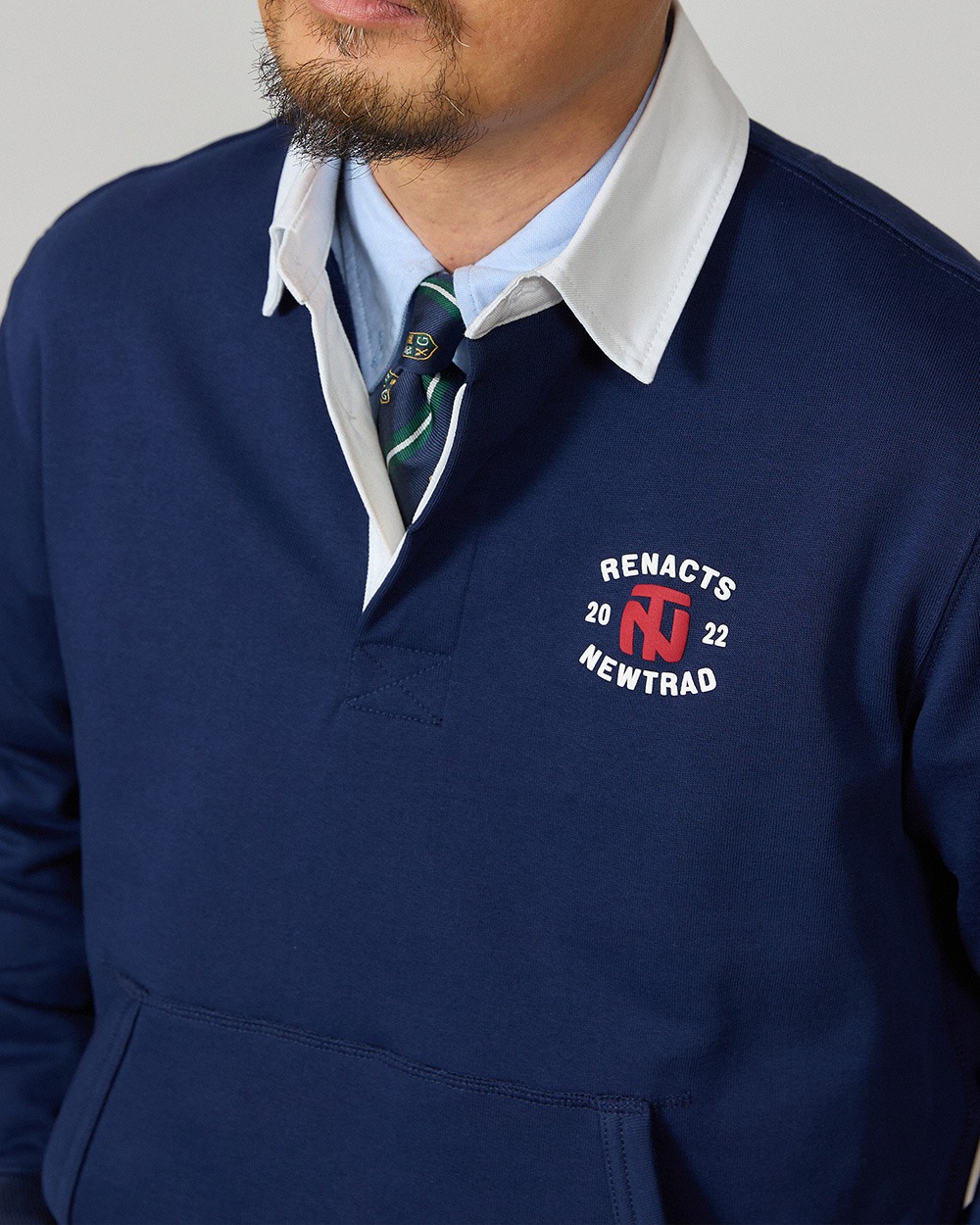
Under a blazer, the grey is the easier of the two. Grey marl under navy is the oldest combination in the Ivy wardrobe, and we’ve already built two outfits around it: with a corduroy blazer and over a stripe oxford and a tie.

Untucked over a madras shirt, the sweatshirt is the weekend version, and the kangaroo pocket is what makes it one. Hands go in; the collar stays out.
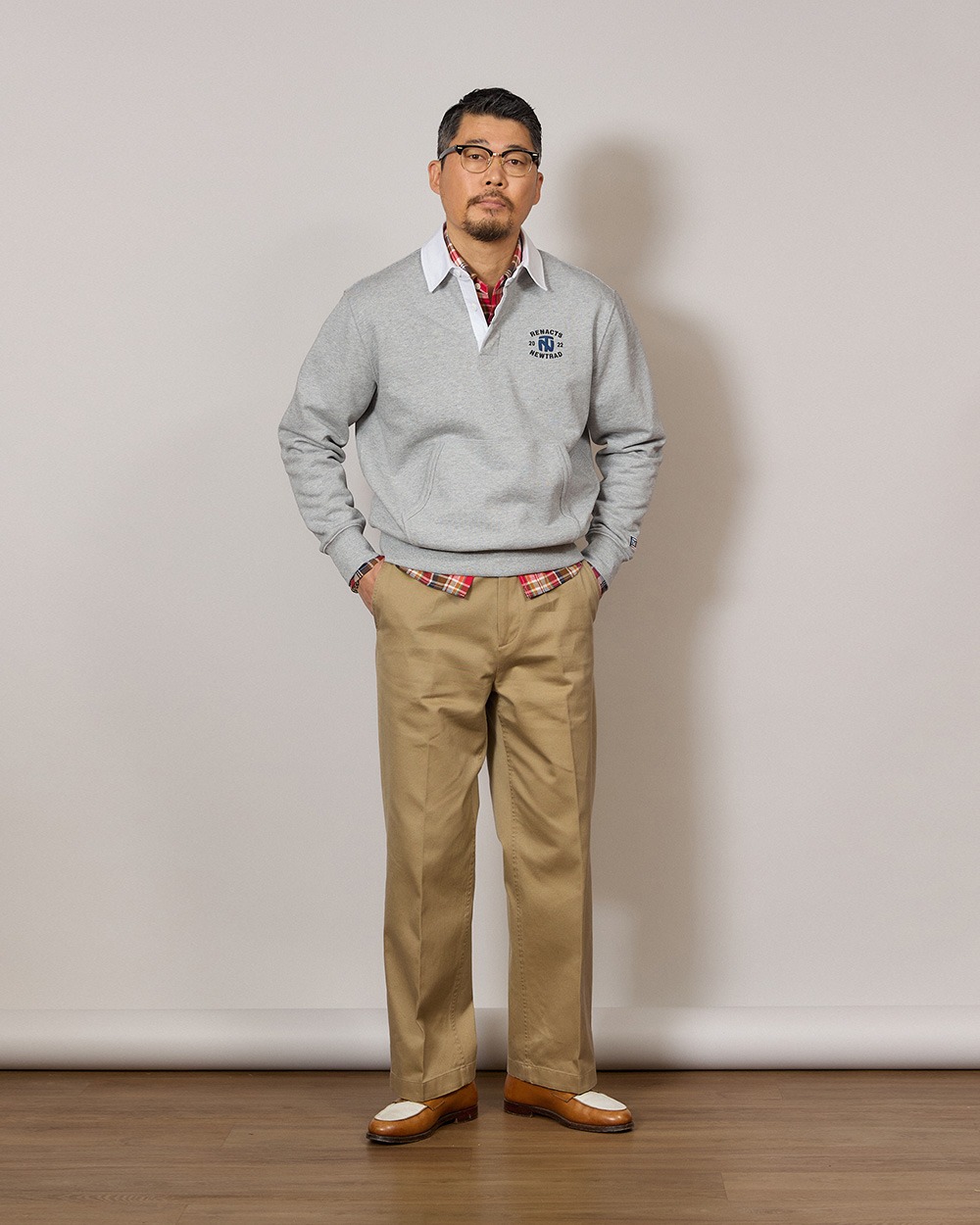
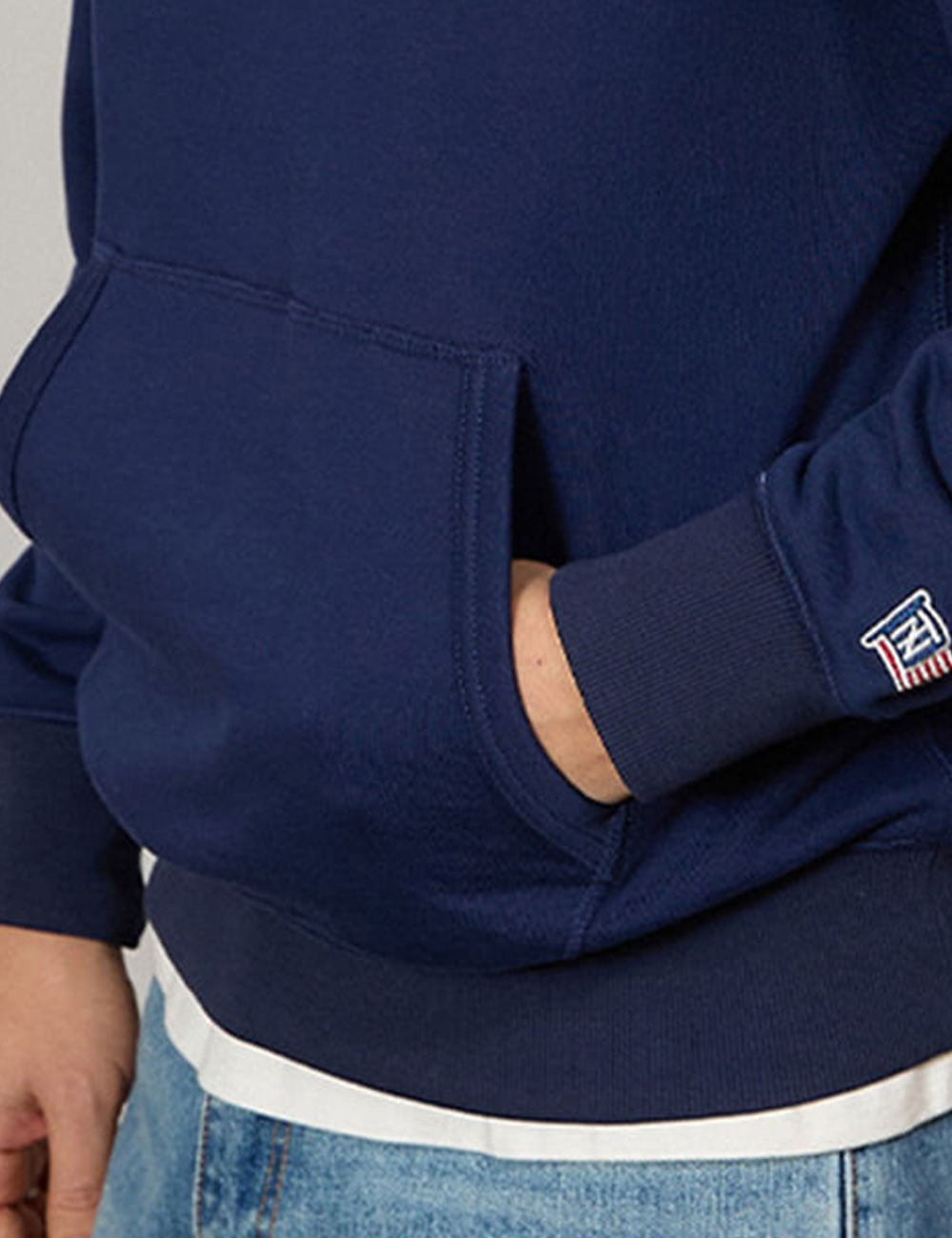
Which one first? The grey if you already own a navy sweater. The navy if you don’t, because it does the sweater’s job and takes a tie.
Fit, tuck and collar
Three small decisions.
Fit. Room through the body, shoulder seam on the shoulder, sleeve to the wrist bone. A rugby shirt that’s tight across the chest looks like a sports jersey, which is the one thing you’re trying to avoid.
Tuck. With a tie, tuck it and wear a belt; a shirt with a tie is a shirt. Without a tie, untuck it; the side vents are there for that. Same rule as our oxford tuck guide.

Collar. Flat. Over a shirt collar, the rugby collar goes on the outside. Never popped; that’s the 1980s move that dates the look instantly.
One more. Don’t put a sweater over a rugby shirt. Two collars and two sets of cuffs is one too many. If you want a layer, it’s the blazer.
Rugby shirt FAQ
What’s the difference between a rugby shirt and a polo shirt?
Weight and collar. A rugby shirt is heavy cotton jersey with a woven twill collar and long sleeves. A polo is lighter piqué or jersey with a knit rib collar, usually short-sleeved. The rugby collar holds its shape; a polo collar curls.
Can you wear a rugby shirt with a tie?
Yes, and it’s the most Ivy way to wear one. Oxford button-down, a quiet tie, rugby over both with the collar out, tucked in. The Renacts V-zone is cut for exactly this.
Should a rugby shirt be tucked in?
Tucked with a tie, or under a blazer with trousers. Untucked when it’s the shirt itself, over a madras or chambray with jeans or fatigues.
What do you wear under a rugby shirt?
An oxford button-down is the default. A madras or chambray shirt at the weekend. Nothing at all is fine in warm weather, but the collar looks better with another collar under it.
When is a rugby shirt in season?
Spring and autumn on its own, winter under a blazer or a coat. In a Seoul October it’s the layer between the oxford and the blazer.
Are rugby shirts in style?
They’ve come back every ten years or so since the 1980s, and they’re back now. Worn the Ivy way, they never looked out.
Rugby shirt or rugby collar sweatshirt?
The shirt if you want the stripes. The sweatshirt if you want the collar with a quieter chest. The sweatshirt is heavier and warmer, so it takes over from the shirt once Seoul gets to November.
How do you wash a rugby shirt?
Cold, inside out, and hang it to dry. The twill collar wants a hand-smooth while damp or a quick press; the cotton body wants nothing. Heavy cotton shrinks in a hot dryer, so skip it.
Start with the navy Center Block over an oxford, under a blazer, and wear it to the office once. If nobody says “rugby shirt,” you’ve worn it right.
In the photos
- Center Block Rugby Shirt [Green] — $107, 100% cotton
- Center Block Rugby Shirt [Navy] — $107, 100% cotton
- Crest Rugby Shirt [Yellow] — $107
- Rugby Collar Sweatshirt [Grey] — $113, 100% cotton
- Rugby Collar Sweatshirt [Navy] — $113, 100% cotton
International shipping is $25, free on orders over $250.
Related reading: Cable Knit Sweater: How to Wear 3 Essential Ivy Styles · Balmacaan Coat vs Polo Coat: The Complete Trad Winter Guide