How to Wear

Polo Coat: How to Wear the Ivy Classic, 6 Essential Outfits

A polo coat is the long, double-breasted camel overcoat that Ivy campuses adopted in the late 1920s and never gave back. This guide covers what makes a polo coat, where it came from, and six ways to wear one, from a suit to jeans. I’ve worn both colors in Seoul, so some of what follows is opinion.

What is a polo coat?

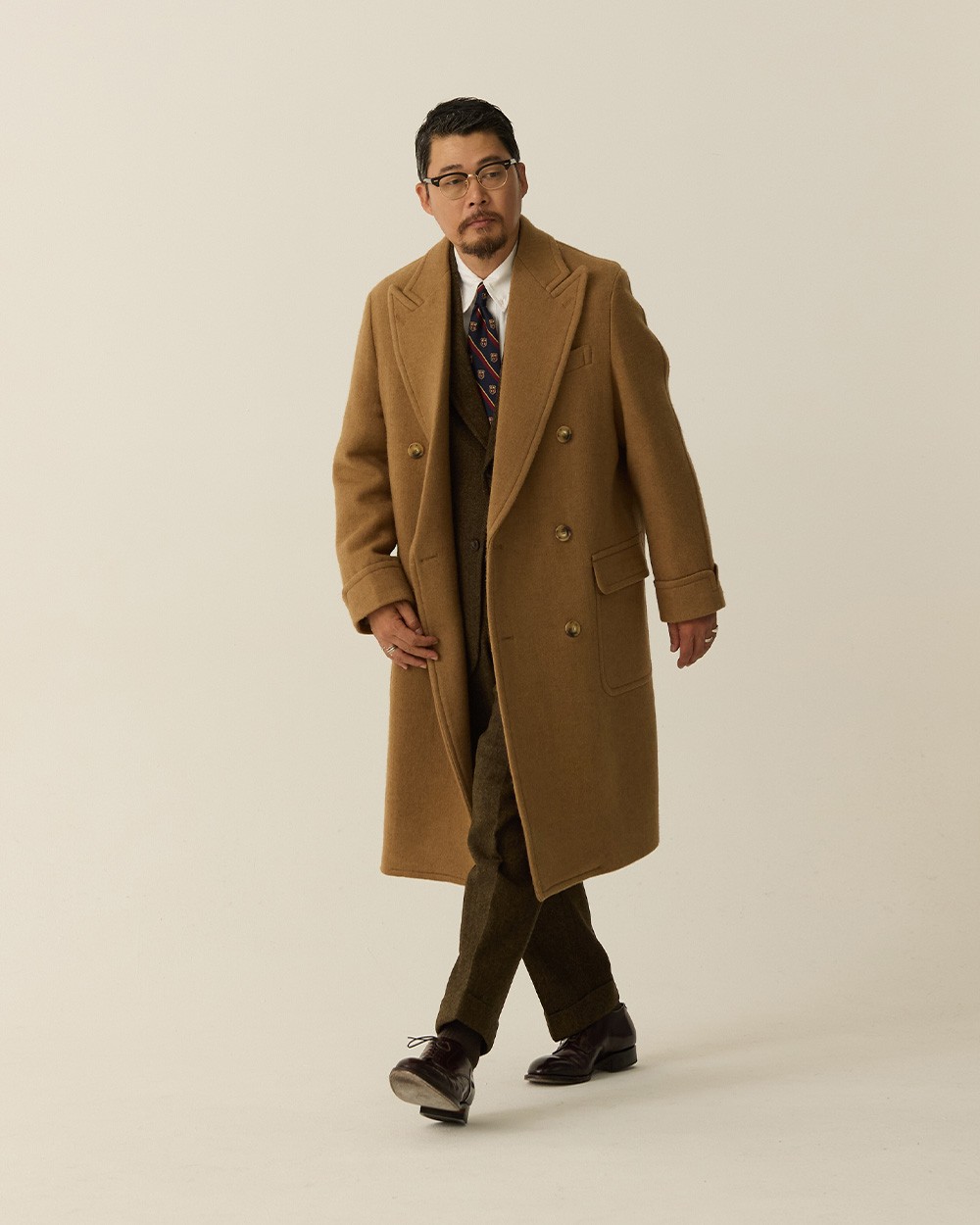
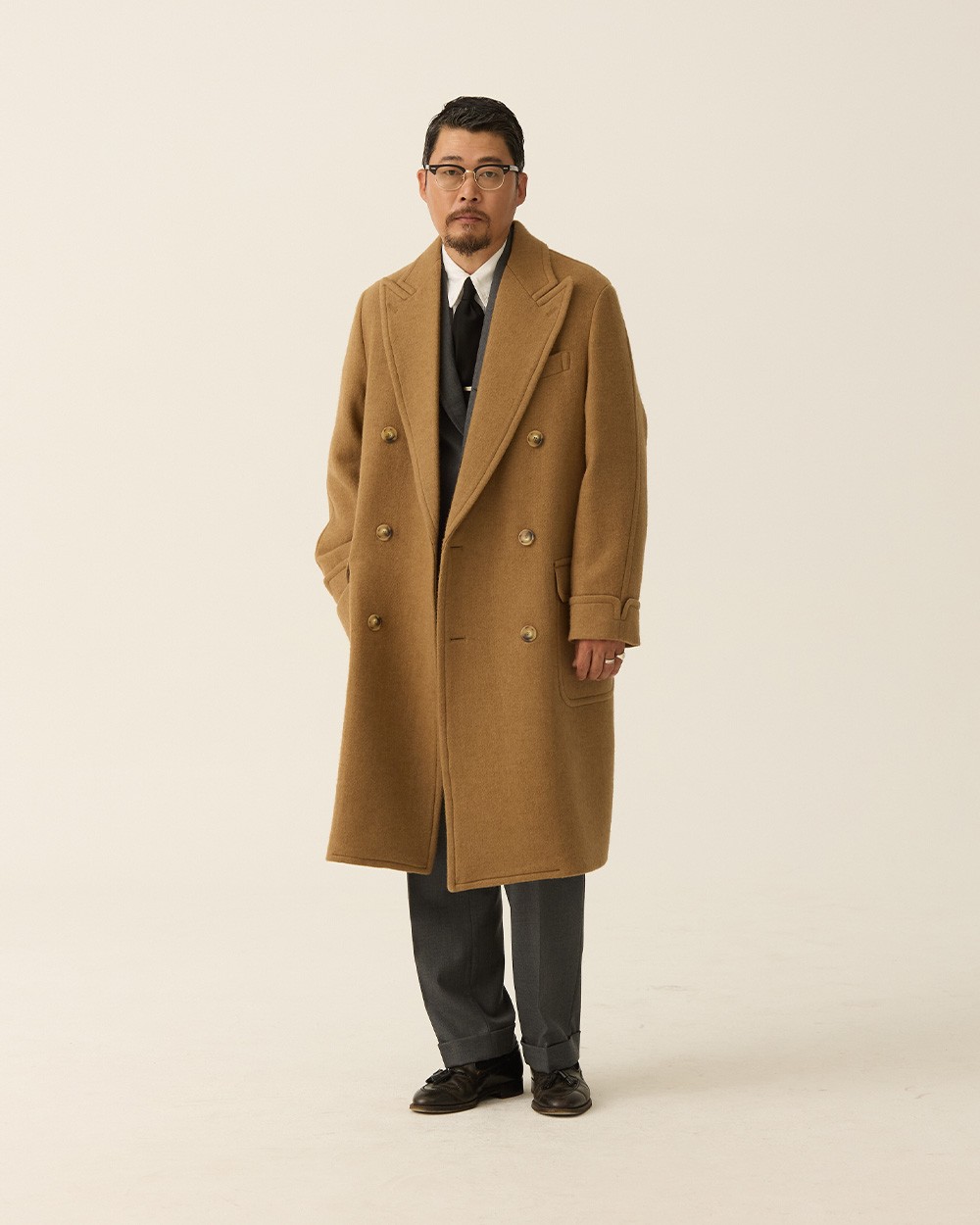
A polo coat is a double-breasted overcoat in camel hair or a camel-and-wool blend. It’s cut long and full, with patch pockets, turn-back cuffs and a half belt across the back. Everything else, from the peaked lapels to the six buttons, is detail.

The name is literal. English polo players threw a camel “wait coat” over their kit between chukkers, and the coat kept the sport’s name when it moved into town. Americans then turned it into a campus uniform, which is why it sits at the center of Ivy style rather than at the edge.
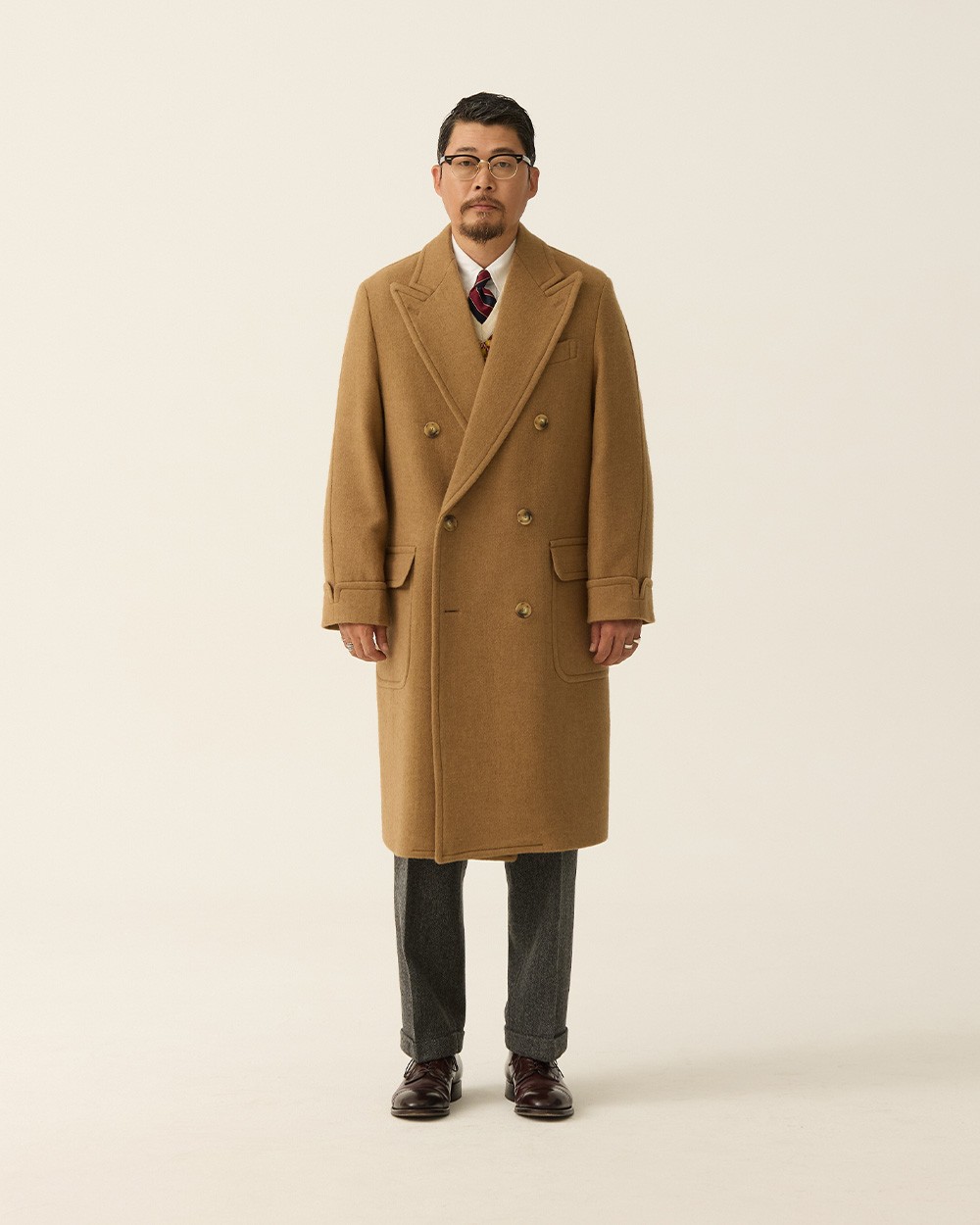
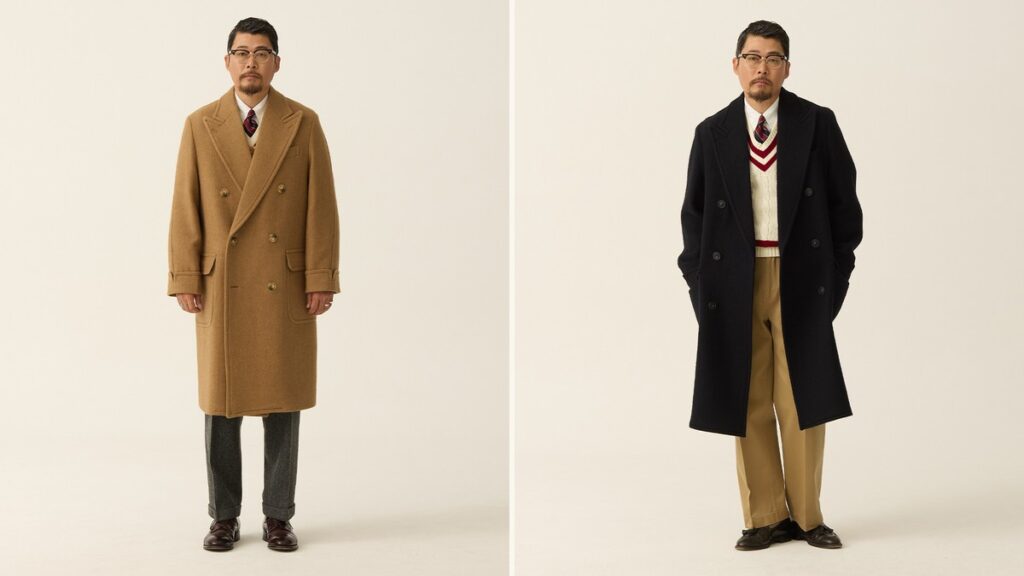
Man in a camel polo coat worn buttoned over a white shirt and striped tie, with grey flannel trousers and burgundy loafers, against a plain studio background
The camel polo coat, buttoned: six buttons, peaked lapels, patch pockets, turn-back cuffs. Renacts, October 2026 studio shot.
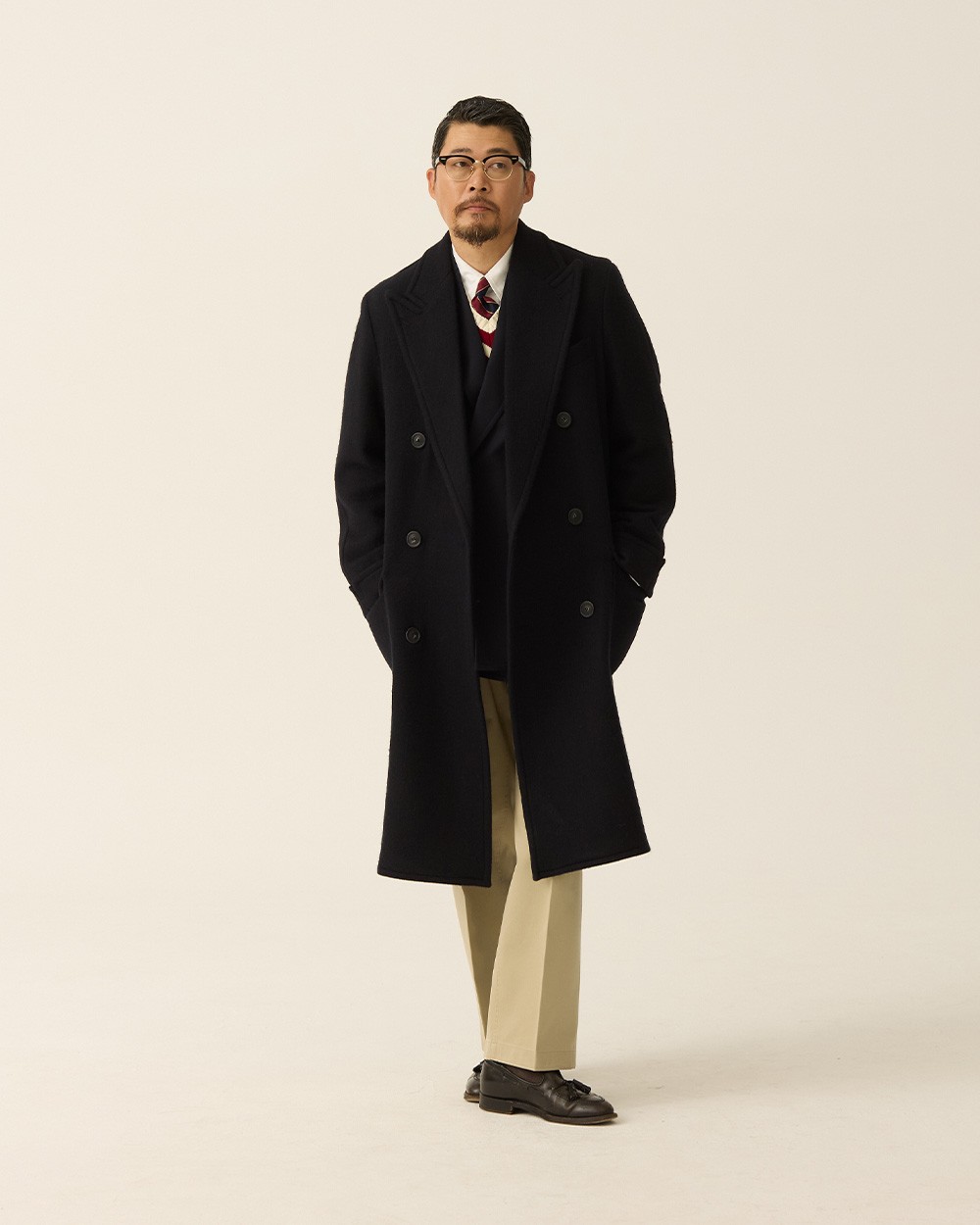
Man in a navy polo coat worn buttoned over a white shirt and green striped tie, with navy trousers and black loafers
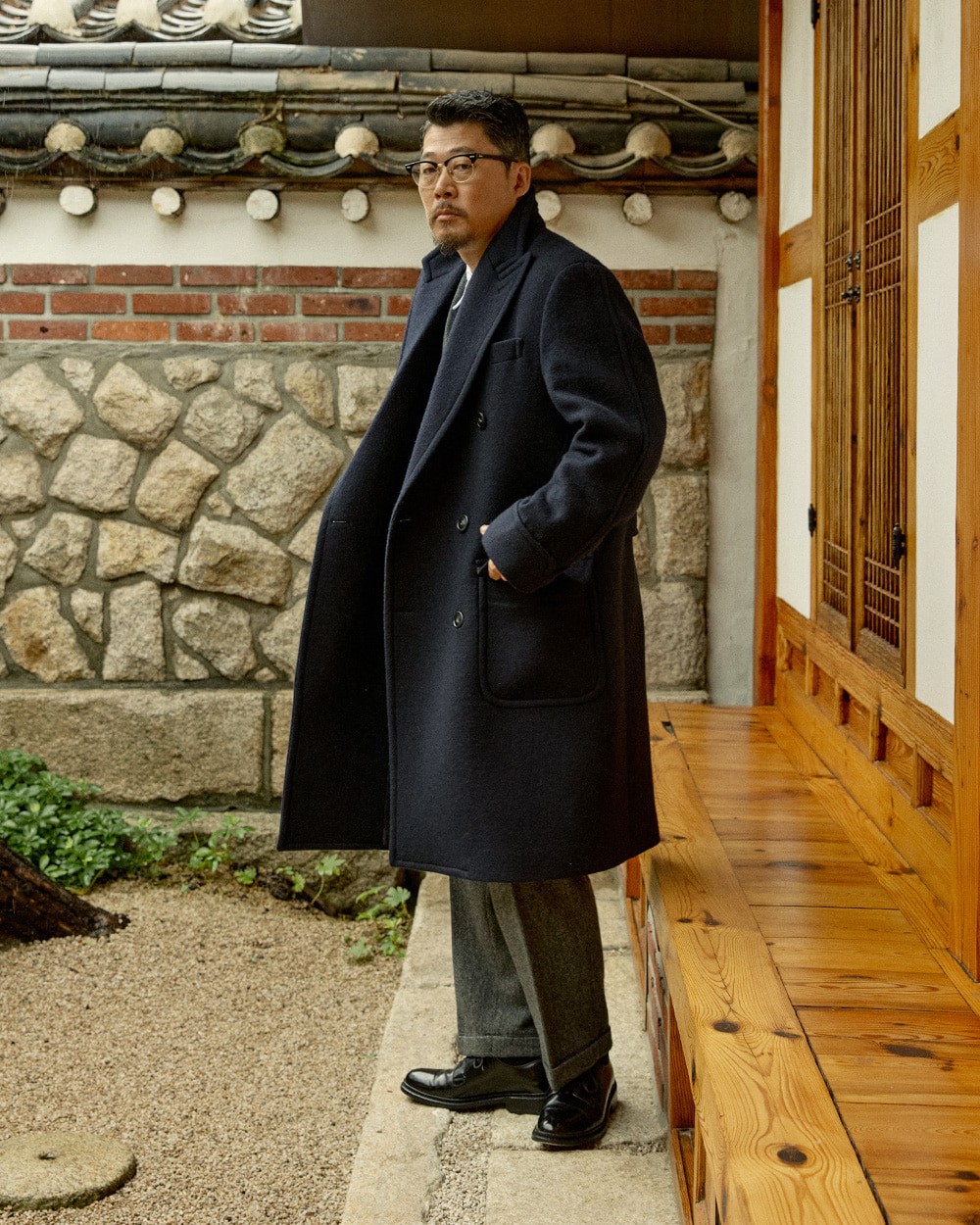
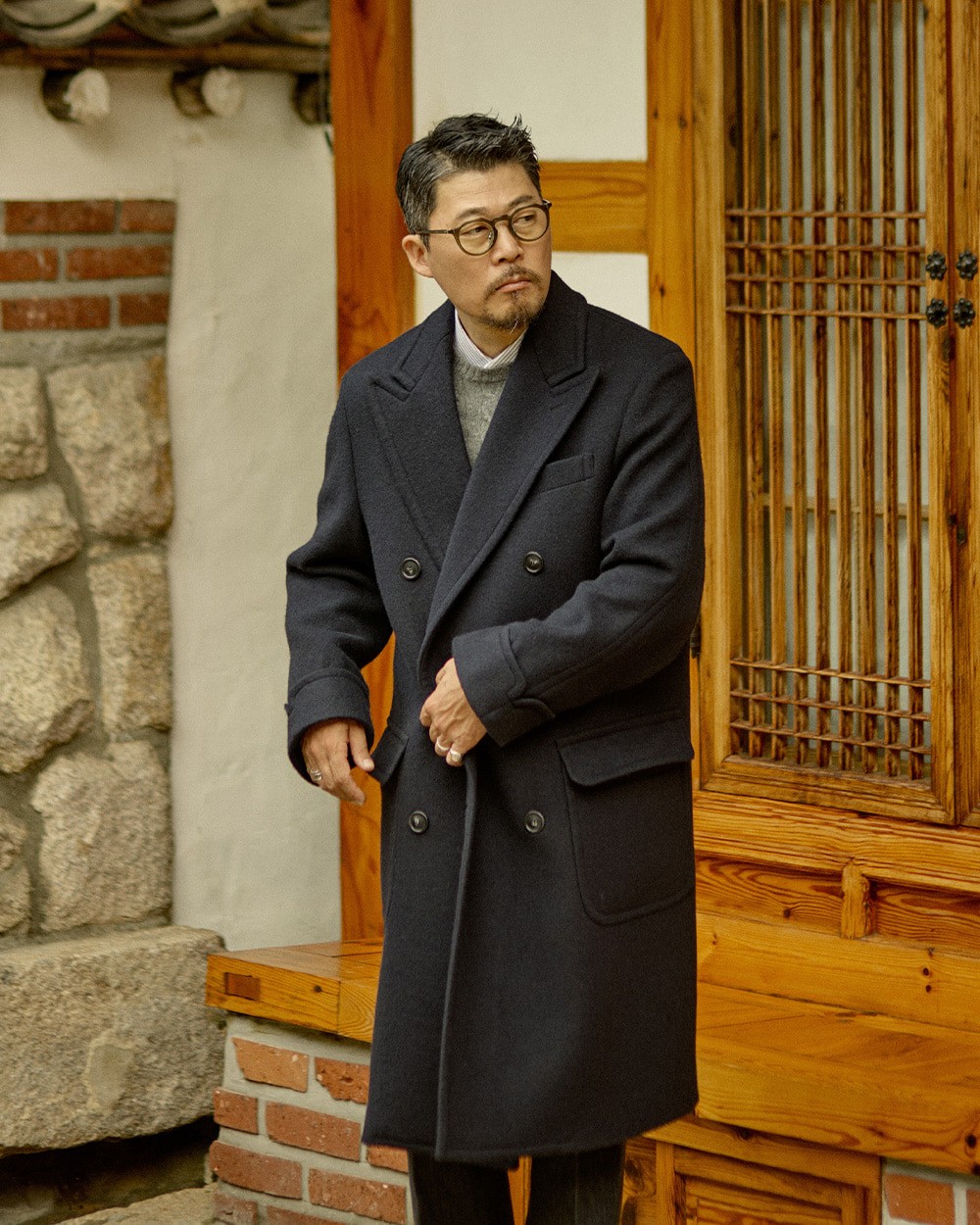
The same polo coat in navy. Same cut, same details, a quieter mood.

I’ll say it plainly: if you dress Ivy and own one overcoat, this should be it. A polo coat goes over a sack suit, a blazer, a Shetland or a cricket sweater without changing anything underneath.

Where the polo coat came from

The polo coat started in England at the end of the 19th century. It was a robe-like camel wrap, belted, that players wore between chukkers to stay warm. English tailors called it a wait coat, and it had no buttons yet; it was closer to a dressing gown than to an overcoat.
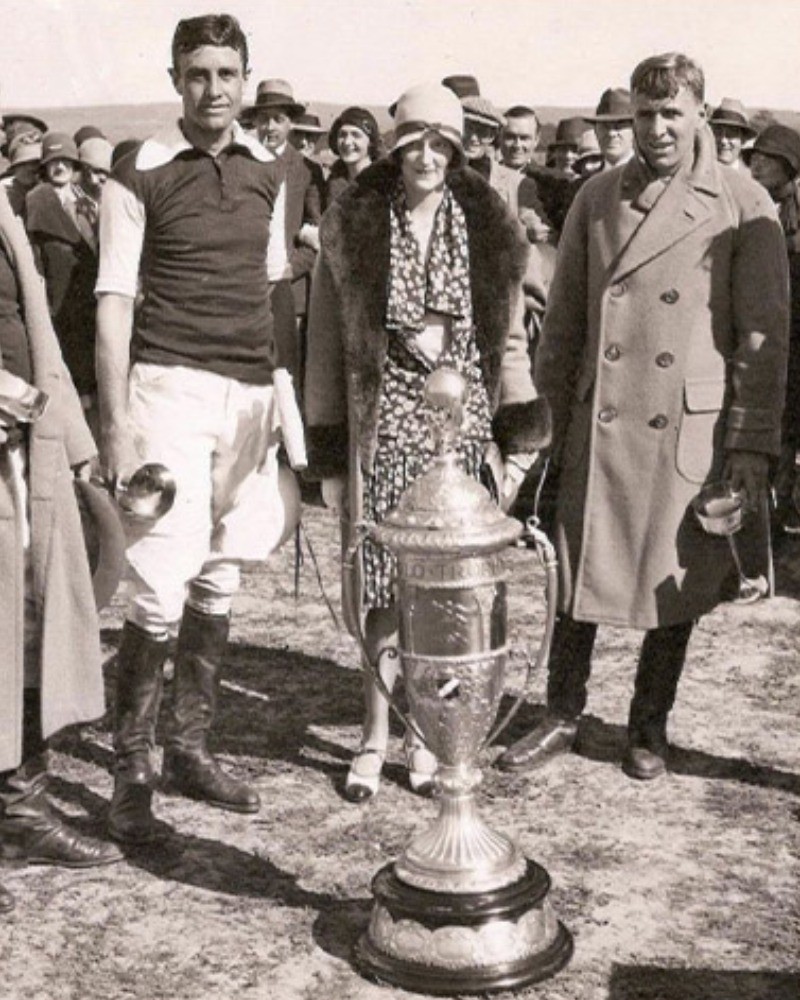
Black-and-white archive photograph of a polo player in a dark jersey and white breeches standing beside a large trophy cup, with a woman in a cloche hat and a man in a double-breasted overcoat behind him
Archive photograph from the Renacts polo coat page: a player, a trophy, and a double-breasted overcoat on the man at the right. Date and place unknown.

Polo crossed the Atlantic before the First World War, and the coat crossed with it. The international matches on Long Island in the 1920s put it in front of American spectators, who wanted the coat more than the game. Brooks Brothers is usually credited with the first American versions; the exact year is disputed, so I won’t give you one.
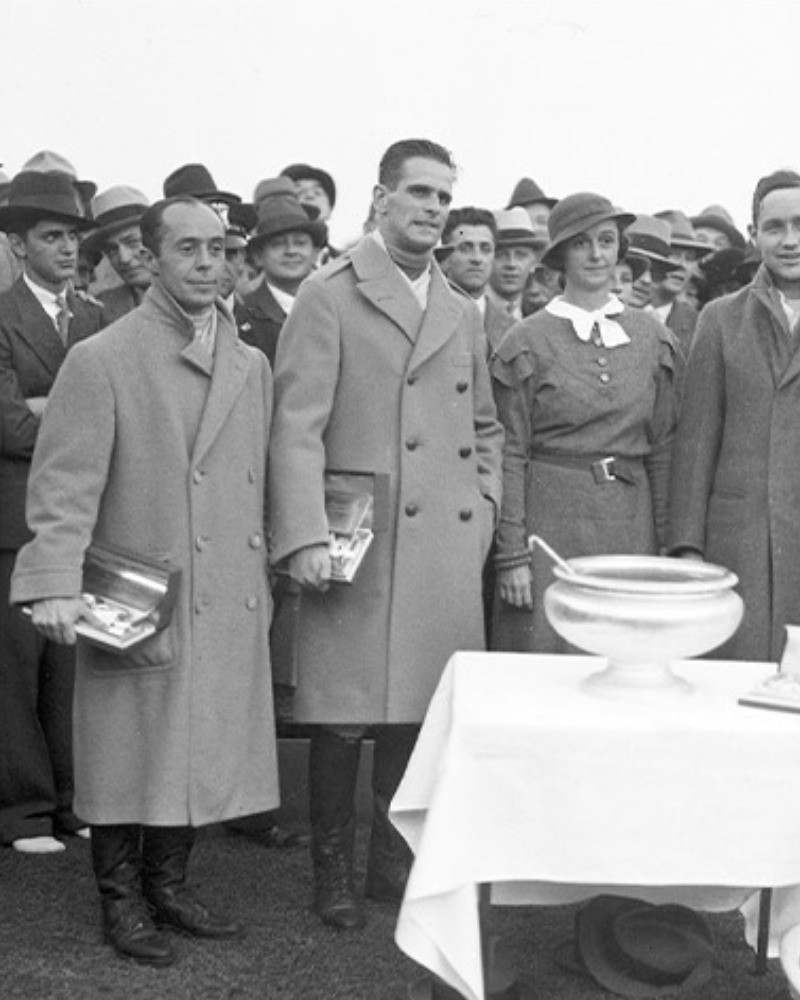
Black-and-white archive photograph of a crowd at an outdoor event, with a man in a light double-breasted overcoat in front and a silver trophy bowl on a white-clothed table
Spectators and a trophy bowl. The light double-breasted coat in front has the polo coat silhouette: long, full, buttoned high.

Then the campuses took over. By 1926 the polo coat was common at Princeton and Yale. At the 1929 Yale–Princeton game, camel coats reportedly outnumbered raccoon coats in the stands, according to Gentleman’s Gazette’s history of the coat.

That’s the moment it stopped being a sporting coat and became the Ivy overcoat. The Museum at FIT’s Ivy Style exhibition told the same story with a 1951 J.C. Wells camel hair coat and a 1940 Brooks Brothers photograph.
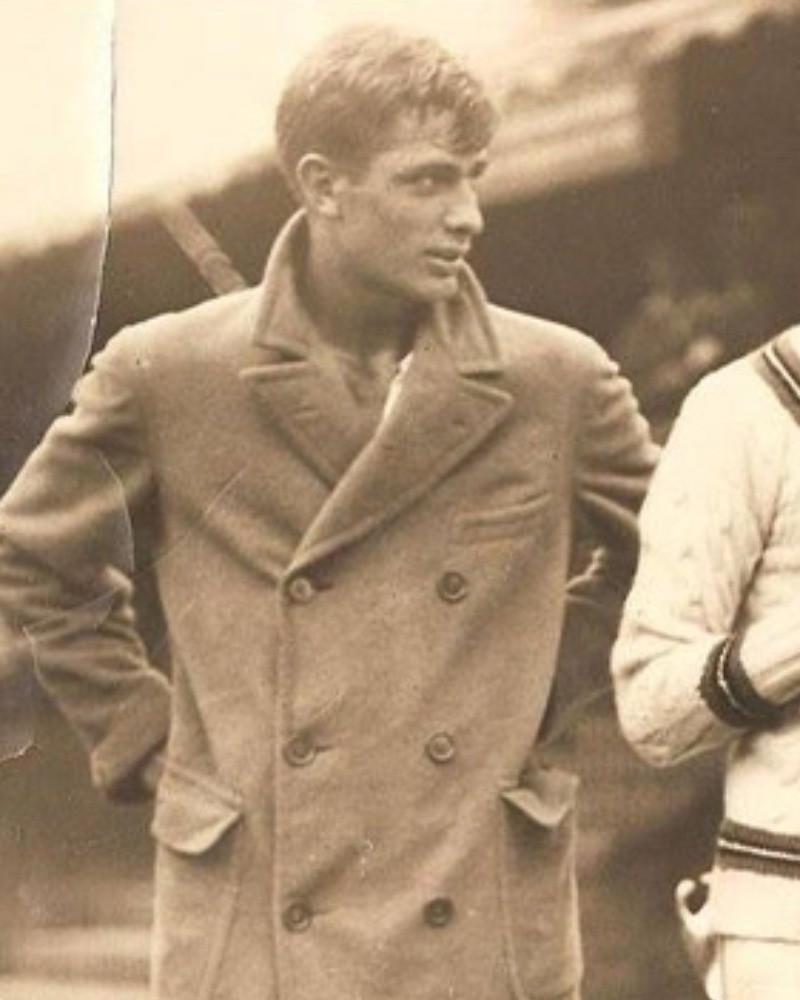
Sepia archive photograph of a young man in a double-breasted coat with wide lapels, standing outdoors with figures in white sweaters behind him
A young man in a double-breasted coat, figures in white sweaters behind him. The polo coat was a student’s coat early on.

The details that make a polo coat

Nearly every polo coat since the 1920s shares the same eight details. The Renacts Camel Wool Polo Coat keeps all of them, so here they are, one photo each. Check any polo coat you’re considering against this list.

1. Peaked lapels. The lapels are wide and peaked, with the points reaching toward the shoulder. The Brooks classic had an Ulster collar; peaked lapels are the dressier variation, and they’re what make the coat sit right over a suit.

Close-up of the wide peaked lapel of a camel polo coat, with the welt chest pocket and one horn button visible
Wide peaked lapels. The welt chest pocket sits just below the point.

2. Six buttons, three to fasten. The six-by-three double-breasted front is the polo coat’s signature. The buttons here are buffalo horn, which matters, because a polo coat lives on its buttons.

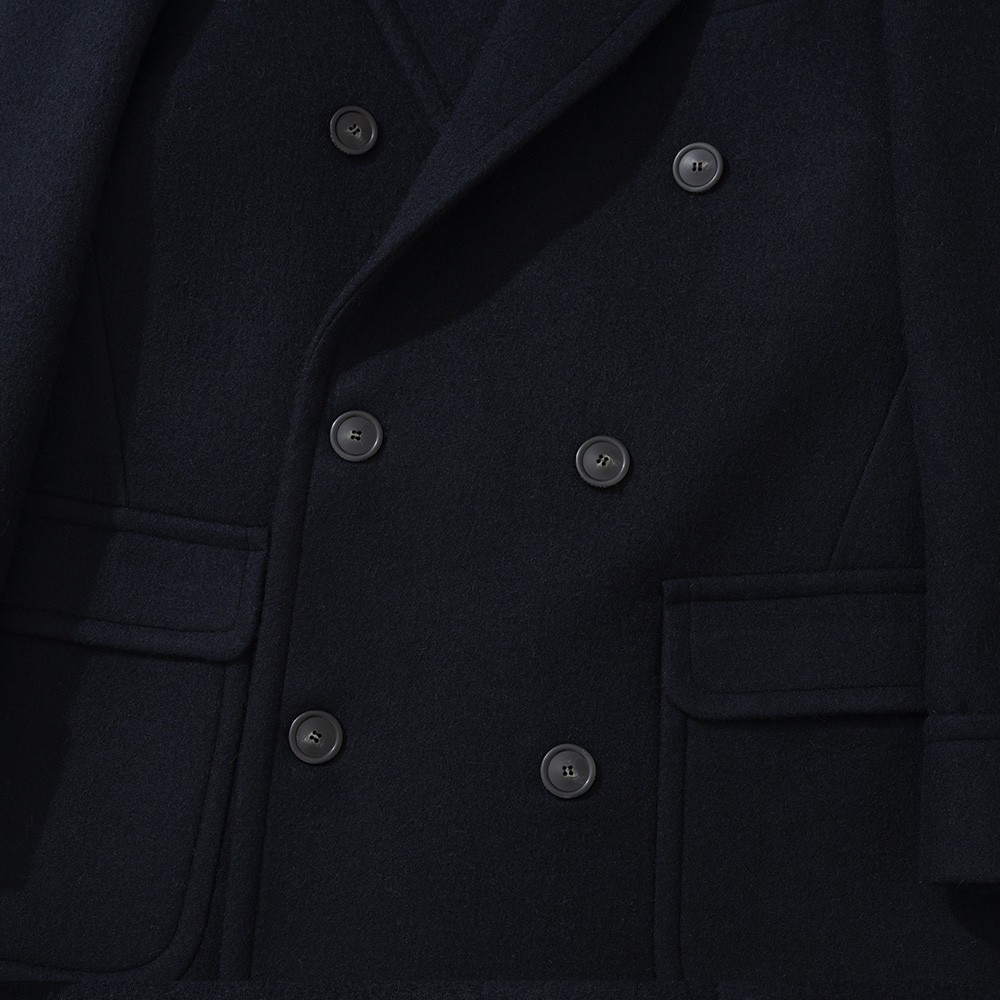
Six buffalo horn buttons on the double-breasted front of a camel polo coat, with the flap patch pockets below
Six horn buttons on the camel coat, flap patch pockets below.
Six-button double-breasted front of a navy polo coat with flap patch pockets, photographed flat
The same six-button front in navy, where the dark horn buttons nearly disappear.

3. A welt chest pocket. Clean, no flap. It’s the one quiet detail on a coat full of loud ones.
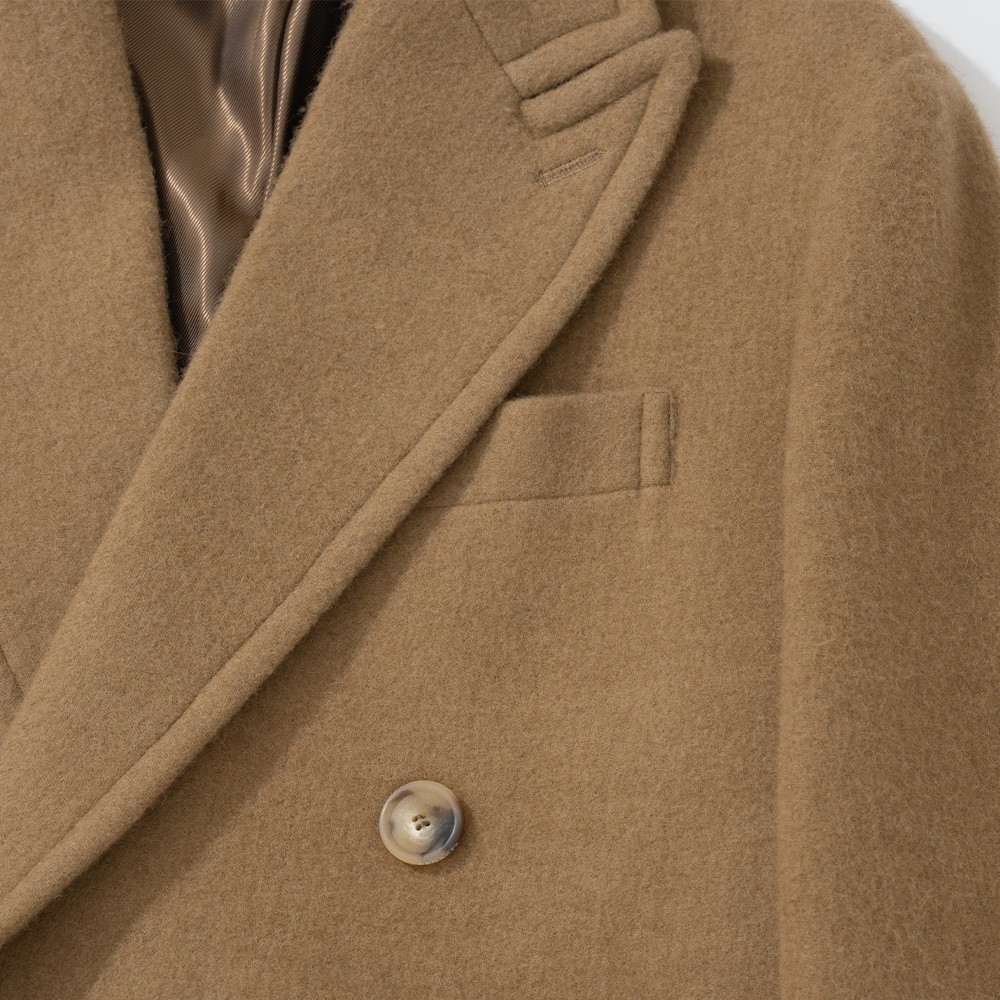
Close-up of the welt chest pocket on a camel polo coat, with the edge of the peaked lapel beside it
The welt chest pocket, with the lapel edge running past it.

4. Flap patch pockets and turn-back cuffs. The hip pockets are patch pockets with flaps, sewn onto the outside of the coat, and the sleeves end in buttoned turn-back cuffs. Both came from the sporting original, where a coat had to be practical before it was anything else.

Flap patch pocket and buttoned turn-back cuff on a camel polo coat, photographed flat
Flap patch pocket and turn-back cuff, side by side.

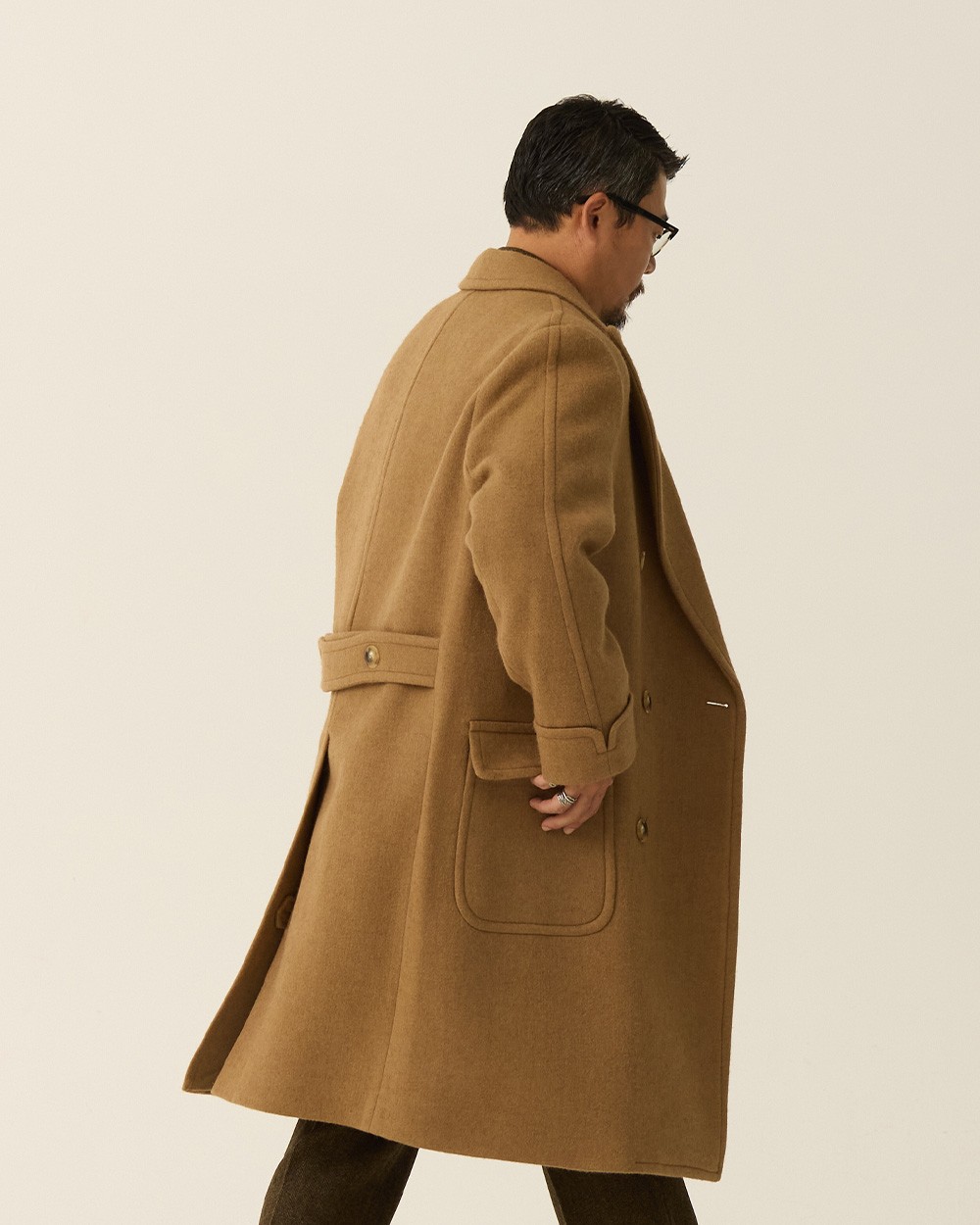
5. A half belt. At the back, a half belt with two buttons pulls the waist in and lets the skirt flare. It’s the detail that tells a polo coat from a plain double-breasted overcoat at twenty paces.
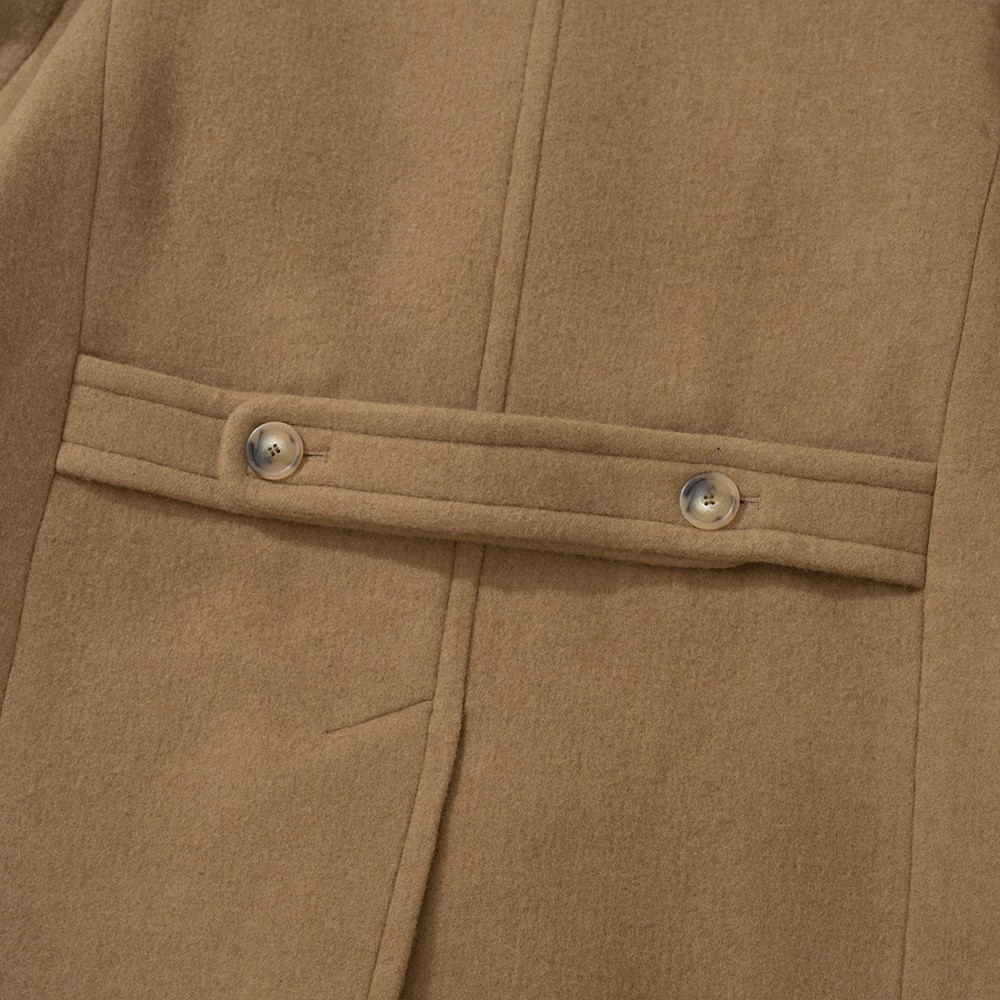
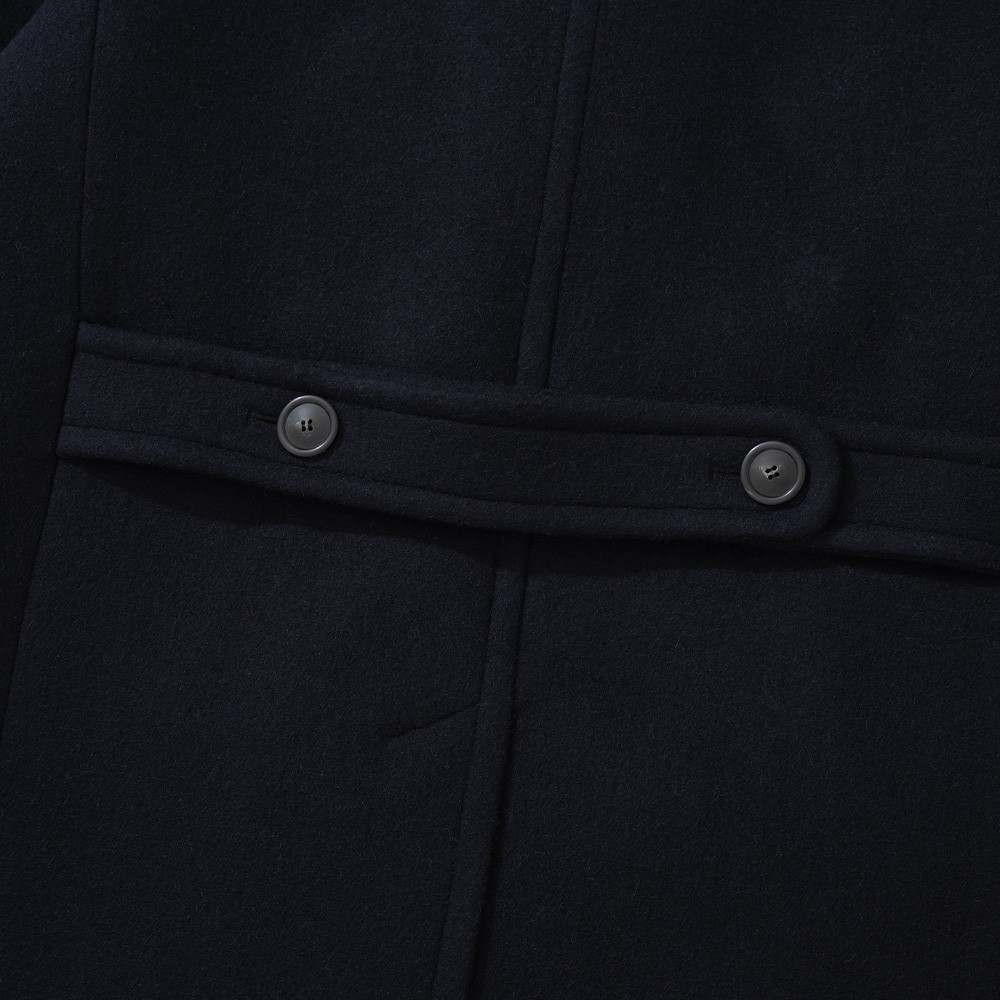
Half belt with two horn buttons across the back of a camel polo coat
The half belt, camel.
Half belt with two buttons across the back of a navy polo coat
The half belt, navy.
Back view of a man walking in a camel polo coat, showing the half belt, a patch pocket and the vent, with dark trousers
What the half belt does when the coat is worn: it holds the waist and lets the skirt move.

6. A hook vent. The back vent is a hook vent, the kind that steps sideways at the top, closed with a button. It keeps the vent from gaping when you sit.

Hook vent at the back hem of a camel polo coat, with the lining visible inside and a vent button
The hook vent and its button, lining visible inside.

7. The cloth. The original was camel hair; the practical version is a blend, because pure camel hair wears through at the collar, cuffs and buttonholes. G. Bruce Boyer recommended roughly half camel and half lambswool. The Renacts cloth is 40% camel and 60% wool at 22 oz, which is heavy, and that weight is why the coat hangs straight.
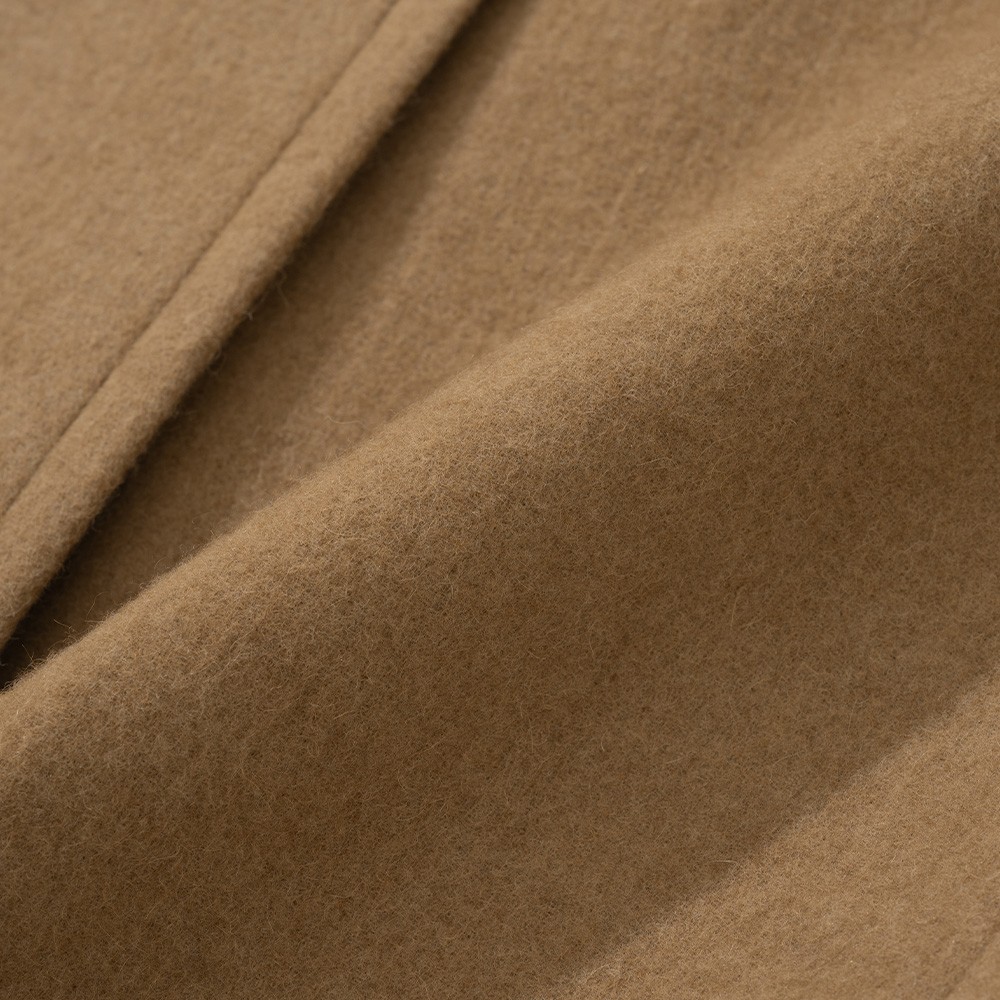
Close-up of the camel and wool cloth of a polo coat, showing its brushed, slightly hairy surface
The 22 oz camel and wool cloth, camel. The surface has a short nap.
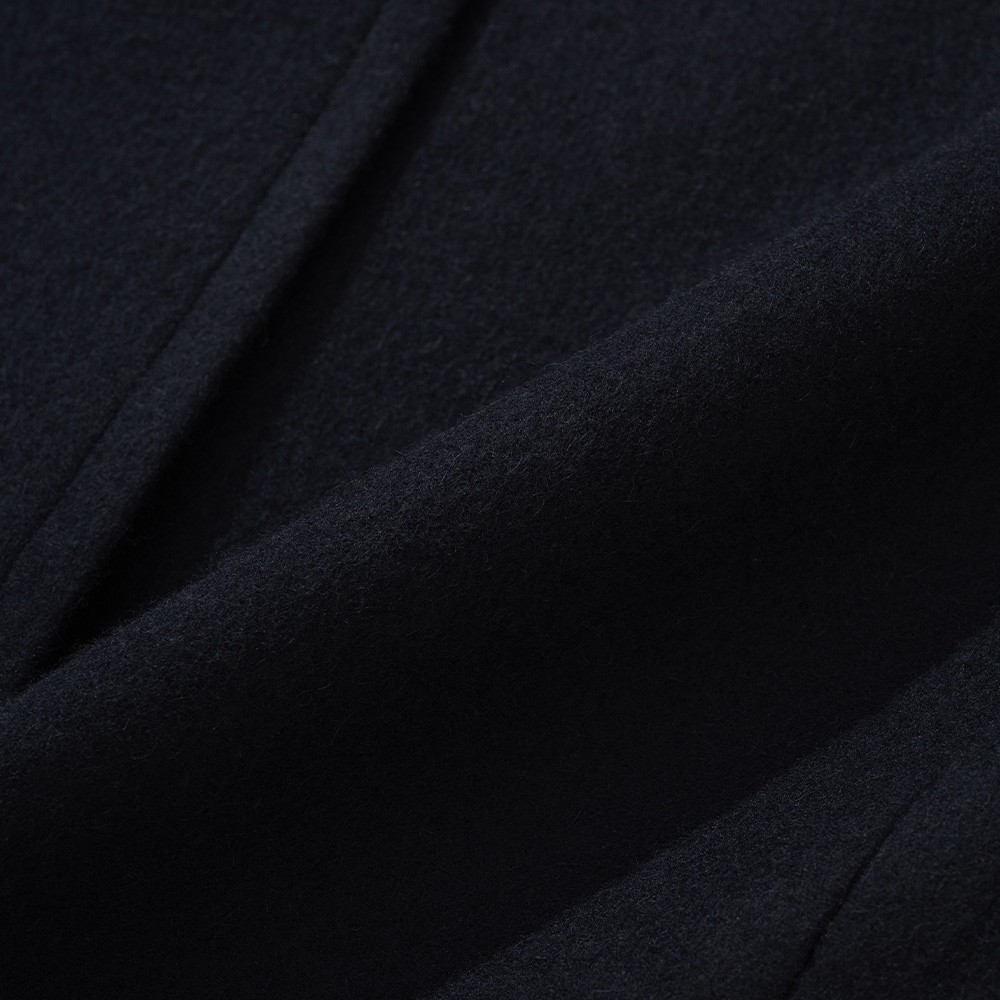
Close-up of the navy camel and wool cloth of a polo coat
The same cloth in navy.

8. The inside. A full lining, a woven label, and seams sewn with core-spun thread. None of it shows, and all of it is why the coat lasts.
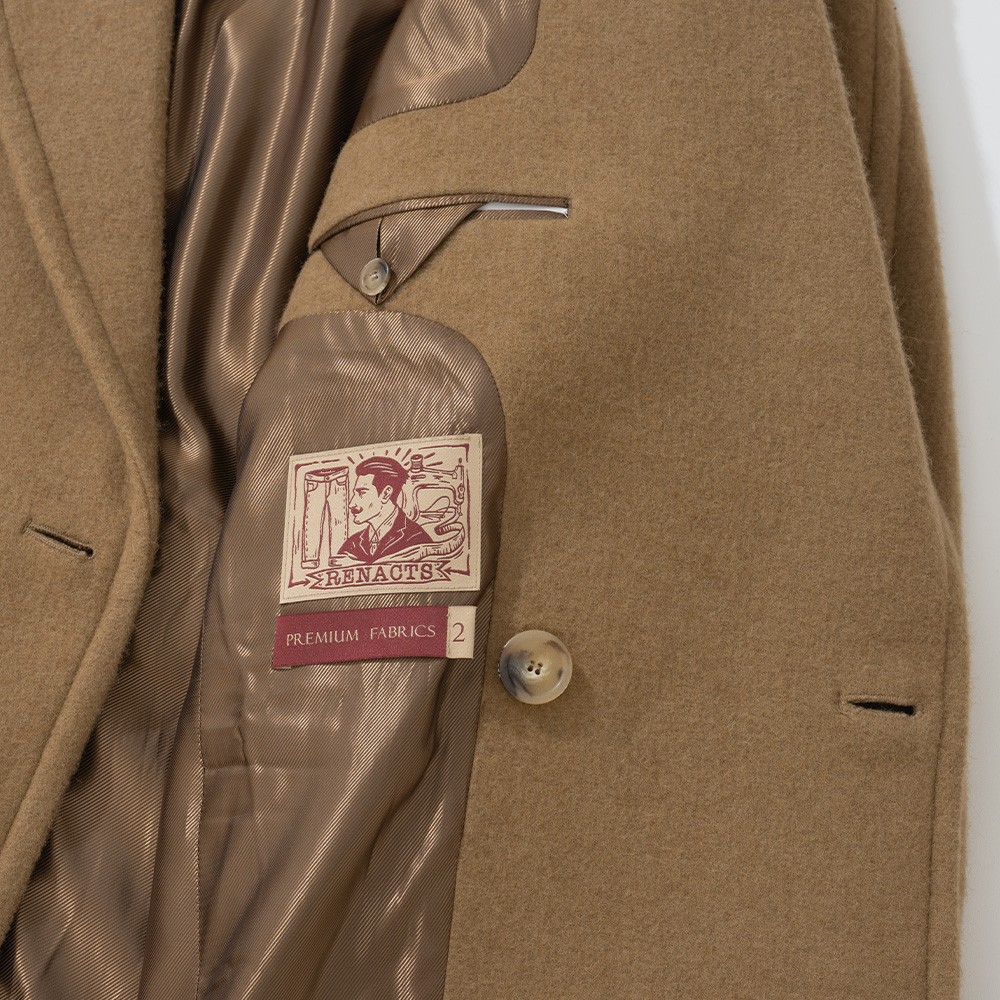
Inside of a camel polo coat showing the light brown lining, a woven label and a horn button
Inside the camel coat: lining, label, and one of the horn buttons.

Six polo coat outfits, from a suit to jeans

A polo coat is cut full, so it goes over tailoring without a fight. These six outfits cover a winter. Each one is photographed in camel and navy where I had both.

Style 1: Over a suit

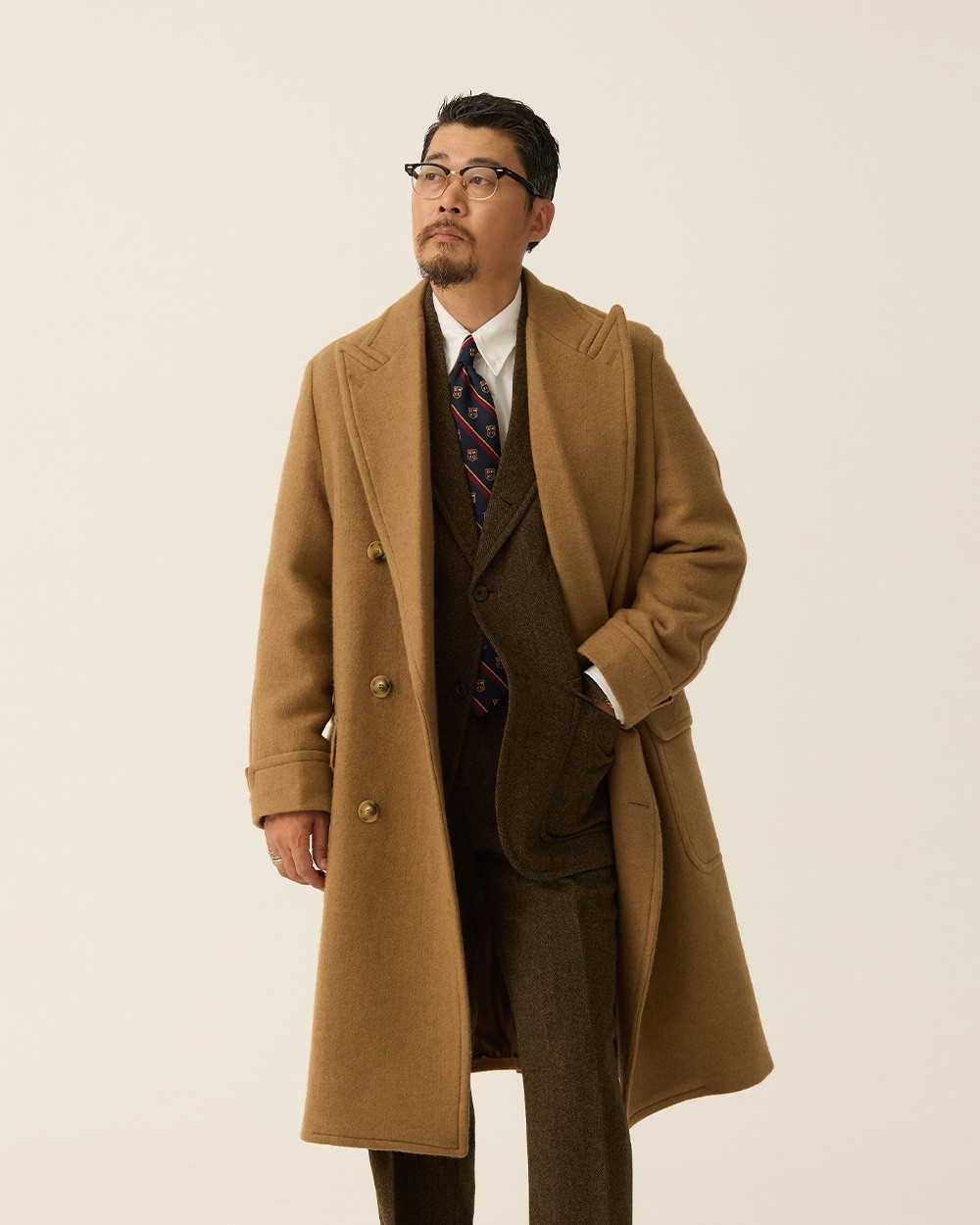
This is the polo coat’s home ground. Over a navy or grey sack suit, the camel coat is the only soft color in the picture, which is the point. Keep the tie darker than the coat and let the coat’s lapels overlap the jacket’s.
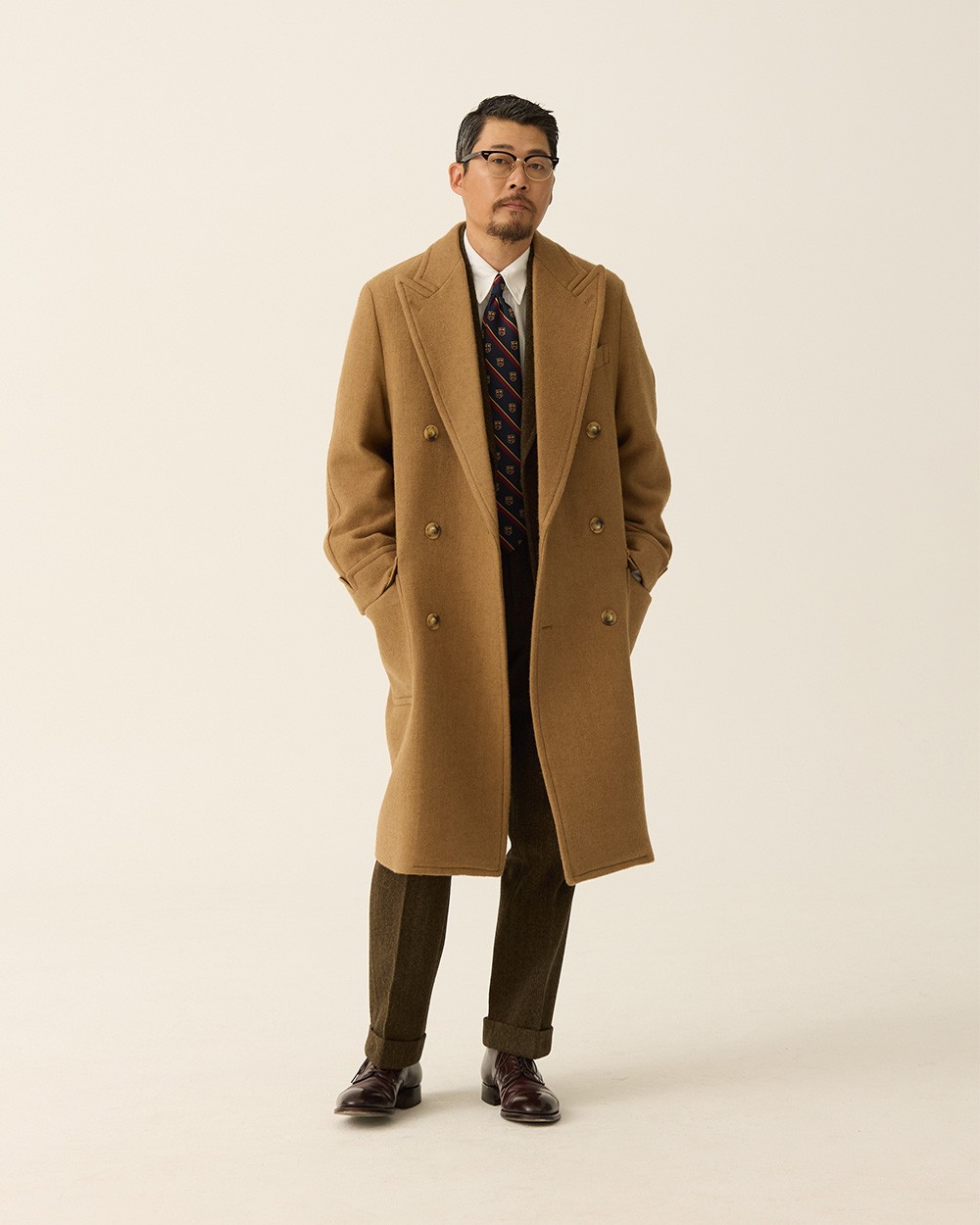
Man in a camel polo coat worn open over a dark suit, white shirt and patterned tie, with black loafers
Camel over a dark suit and a patterned tie. The coat open, the jacket buttoned.
Close-up of a camel polo coat over an olive herringbone suit jacket and paisley tie, hands in the coat pockets
Closer: the coat’s peaked lapel over the jacket’s notch, a paisley tie between them.
Man walking in a camel polo coat worn open over a brown suit and tie, with dark shoes
Camel over a brown suit. Tonal, and it works because the coat is lighter than the suit.
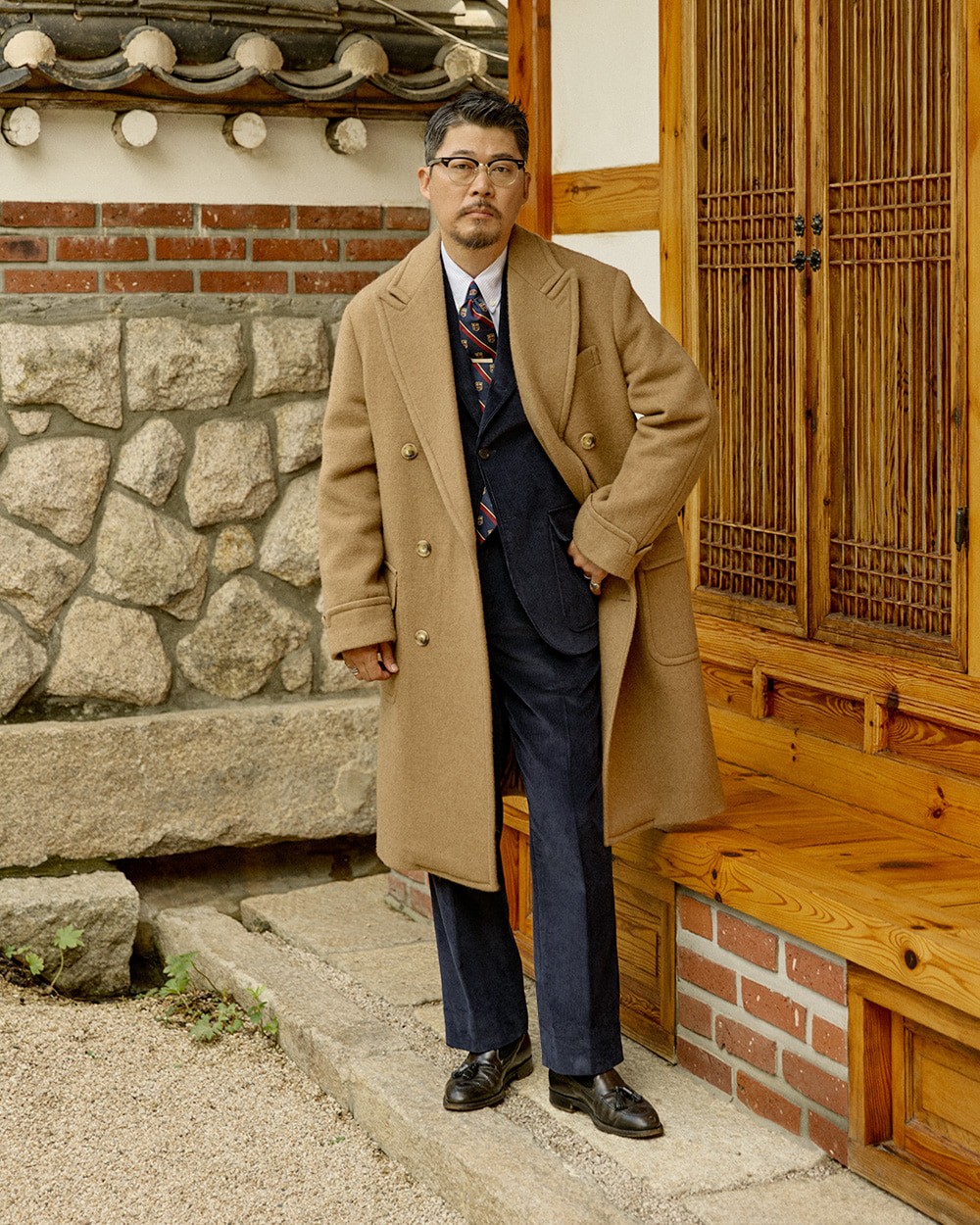
Man in a camel polo coat open over a navy suit, white shirt and striped tie, with black tassel loafers, standing in front of a hanok's wooden doors
Camel over a navy suit and a striped tie, in a Seoul hanok. The combination the coat was made for.

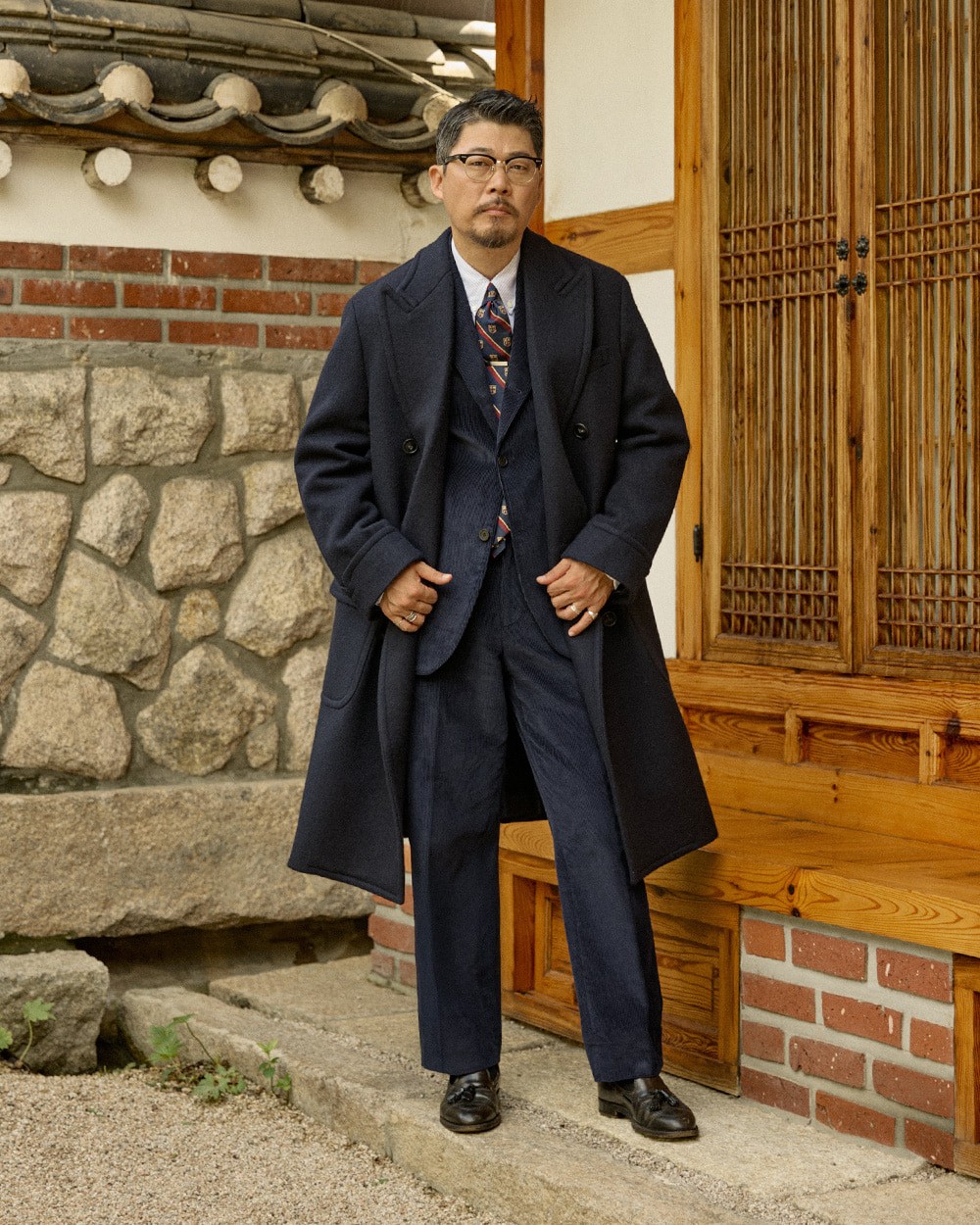
In navy, the coat and the suit become one column and the tie does the work. The grey suit under the navy coat is the sharper combination; navy on navy is the quieter one, and I wear it more.
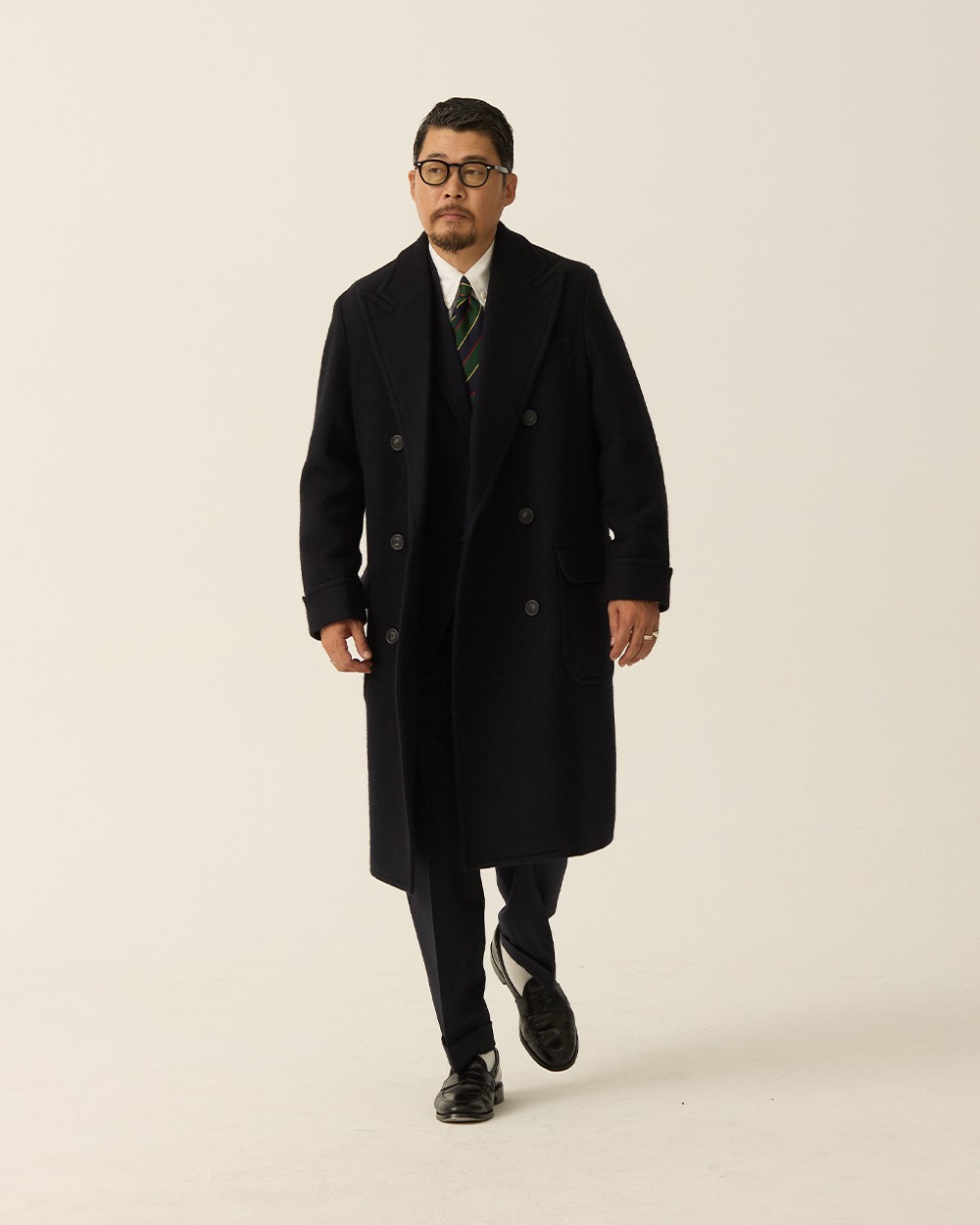
Man walking in a navy polo coat open over a navy suit, white shirt and green striped tie, with black loafers
Navy over navy, with a green striped tie as the only color.
Man in a navy polo coat over a navy suit and striped tie, with black loafers, standing by a hanok stone wall
The same idea outdoors: navy polo coat, navy suit, striped tie.
Man in a navy polo coat open over a grey flannel suit, white shirt and burgundy tie, with black loafers, in front of a painted folding screen
Navy over a grey flannel suit and a burgundy tie. The most office-ready outfit on this page.

Style 2: Over a blazer or sport coat

A polo coat was built to clear a jacket, so a blazer underneath doesn’t bunch at the shoulder. Gold buttons on the navy blazer, horn buttons on the coat, khakis below: the Ivy formula in three layers.
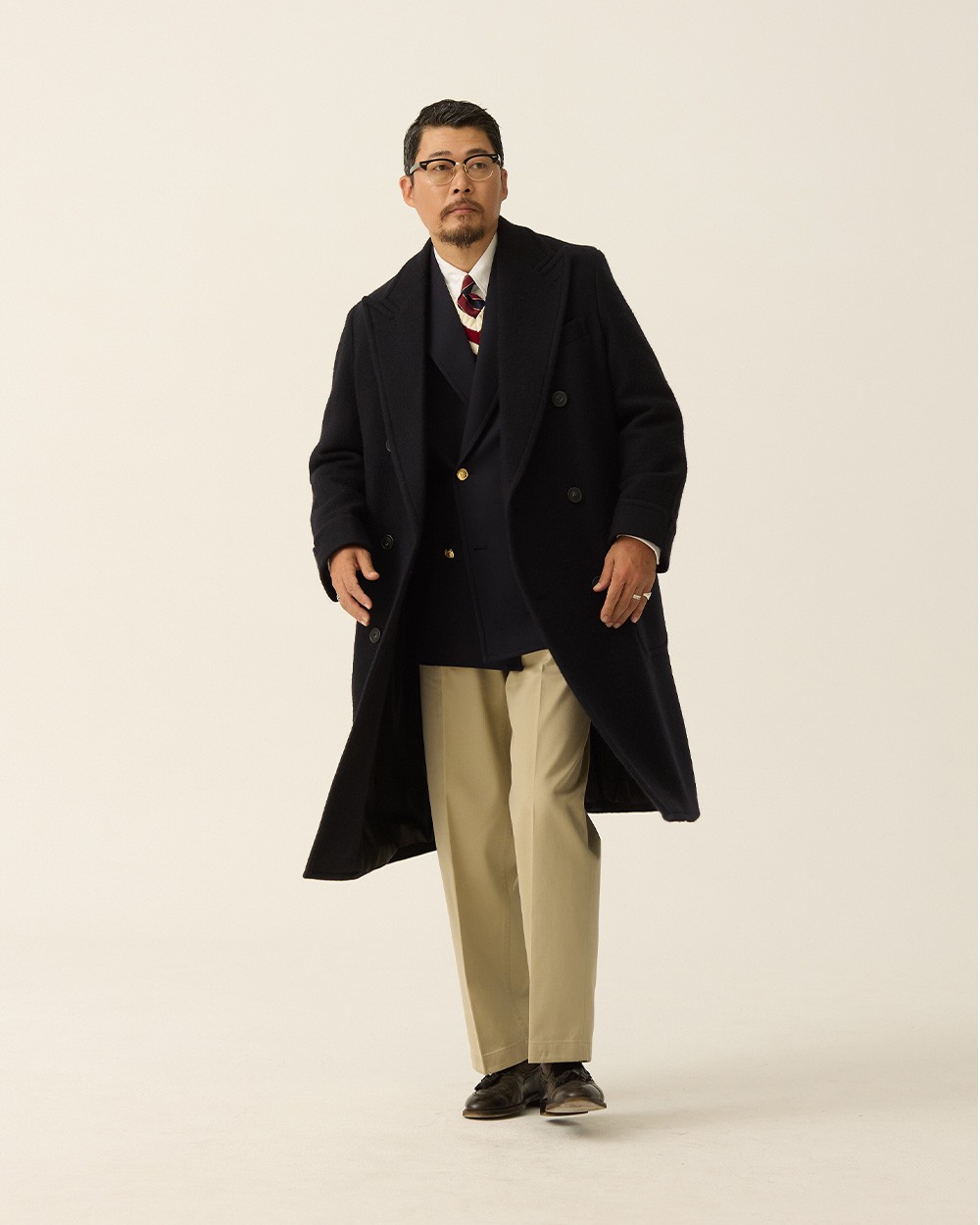
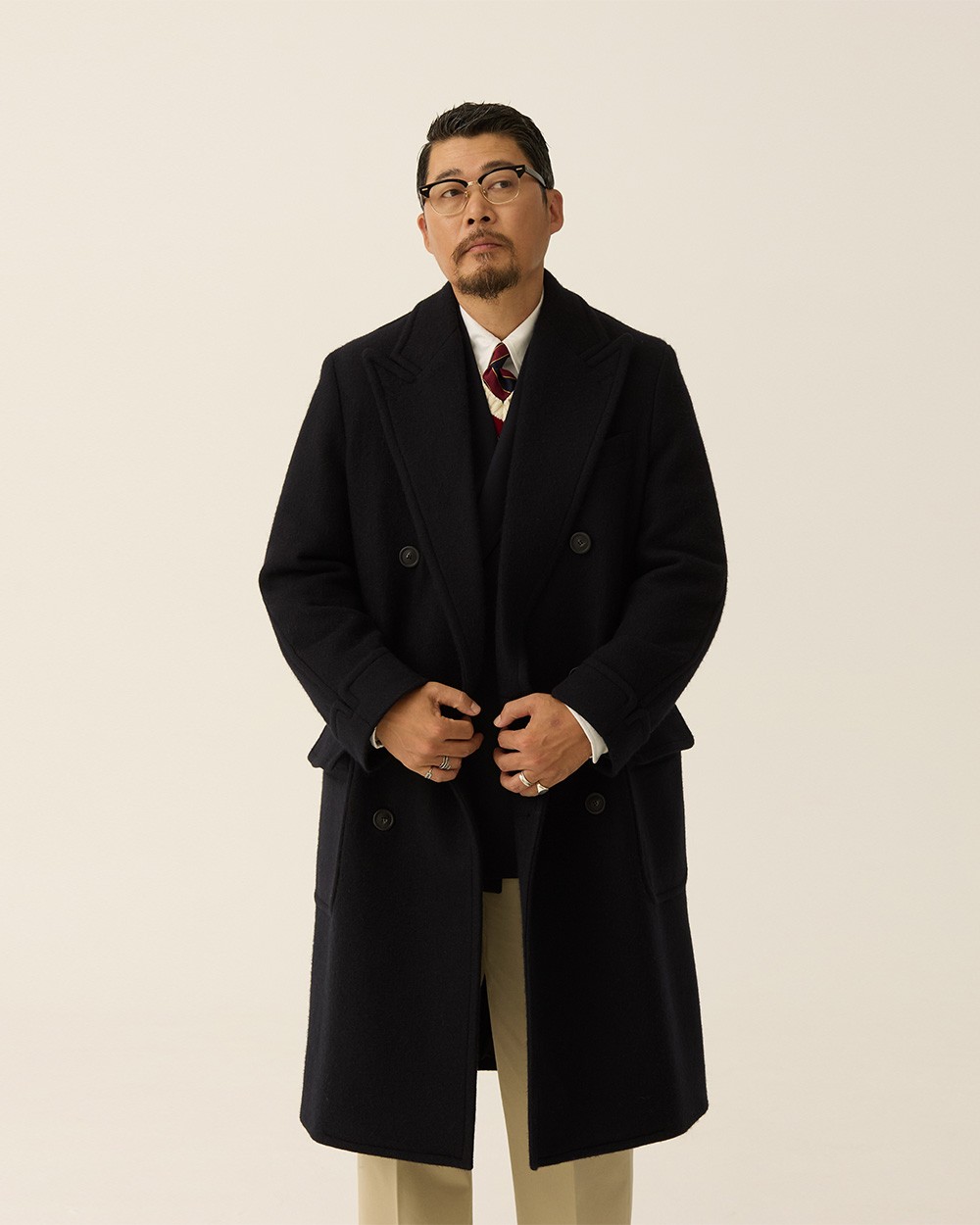
Man in a navy polo coat open over a navy gold-button blazer, white shirt and striped tie, with khaki trousers and black loafers
Navy polo coat over a gold-button blazer and khakis.
Man buttoning a navy polo coat over a navy jacket, white shirt and red-and-navy repp tie, with khaki trousers
Buttoning up over the blazer. There’s room; that’s the point of the full cut.
Man in a navy polo coat open over a navy jacket and tie, with khaki trousers and brown loafers
The same layers with brown loafers, which warm the whole outfit up.
Man in a camel polo coat open over a navy jacket and dark tie, with grey trousers and black loafers
Camel over a navy jacket and grey trousers: the odd-jacket version.
Close-up of a camel polo coat worn over a navy jacket and a striped tie, hands in the coat's patch pockets, beside a hanok's wooden door
Hands in the patch pockets, striped tie, navy jacket. The pockets are deep enough for that.

This is how I actually wore the camel one in February 2026. A navy jacket and a patterned V-neck knit underneath, a light blue oxford, a repp tie and grey flannels. The Seoul street still had the last of its red leaves.


Man in a camel polo coat worn open over a navy jacket, a patterned V-neck knit, light blue shirt and striped tie, with grey flannel trousers and black loafers, in front of a brick wall with red leaves
Camel polo coat, Seoul, February 2026. Navy jacket, patterned V-neck, grey flannels.
Man in a camel polo coat worn open over a navy jacket, patterned V-neck knit, light blue shirt and tie, with grey flannel trousers and black loafers, standing on a street beside a hedge with red leaves
The same day, a step to the side. The coat’s length against the hedge shows how far past the knee it falls.

Style 3: Over a crewneck

Drop the jacket and the polo coat gets younger. A Shetland or lambswool crewneck over an oxford collar, grey flannels, loafers: this is the campus version. It’s what I’d wear to a Saturday lunch.
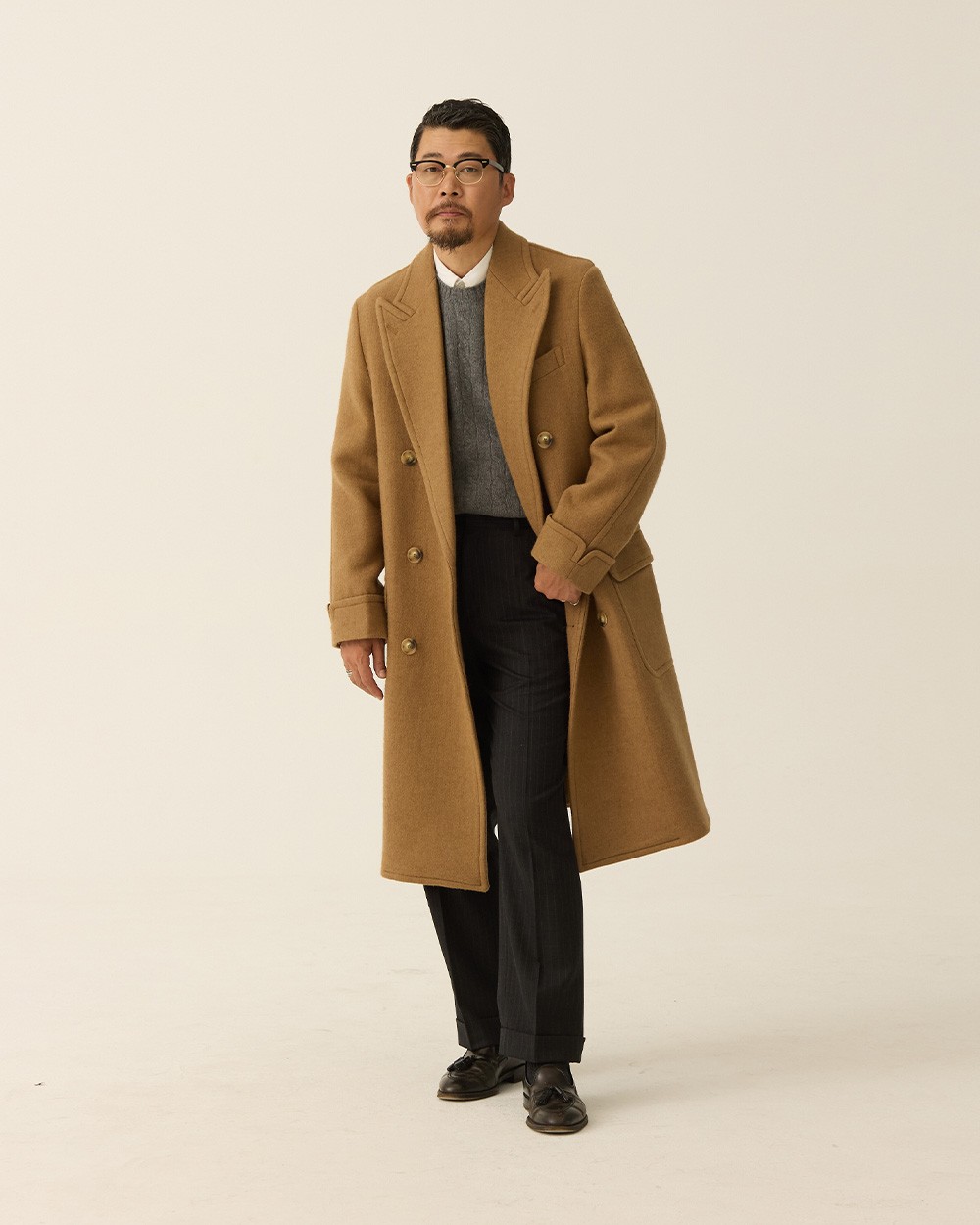

Man in a camel polo coat open over a grey crewneck sweater and white shirt collar, with charcoal trousers and black loafers
Camel over a grey crewneck and charcoal trousers. No tie, and nothing is missing.
Close-up of a man in a camel polo coat over a brown crewneck sweater and white shirt collar, hands on hips, with grey trousers, beside a hanok door
Camel over a brown crewneck: coat and knit in the same family, the shirt collar as the only white.
Man in a navy polo coat open over a navy crewneck sweater and white shirt collar, with grey trousers and black loafers, in a hanok courtyard
Navy over a navy crewneck and grey trousers.
Close-up of a man in a navy polo coat over a grey crewneck sweater and white shirt collar, hands in the coat pockets, beside a hanok's wooden doors
Navy over grey, the shirt collar out over the crewneck.

Style 4: Over a cricket sweater

The cricket sweater is the polo coat’s oldest partner; both came off English sports grounds. Ivory cable with a striped V, a tie or no tie, and the coat does the rest. Navy over ivory is the cleanest contrast on this page.
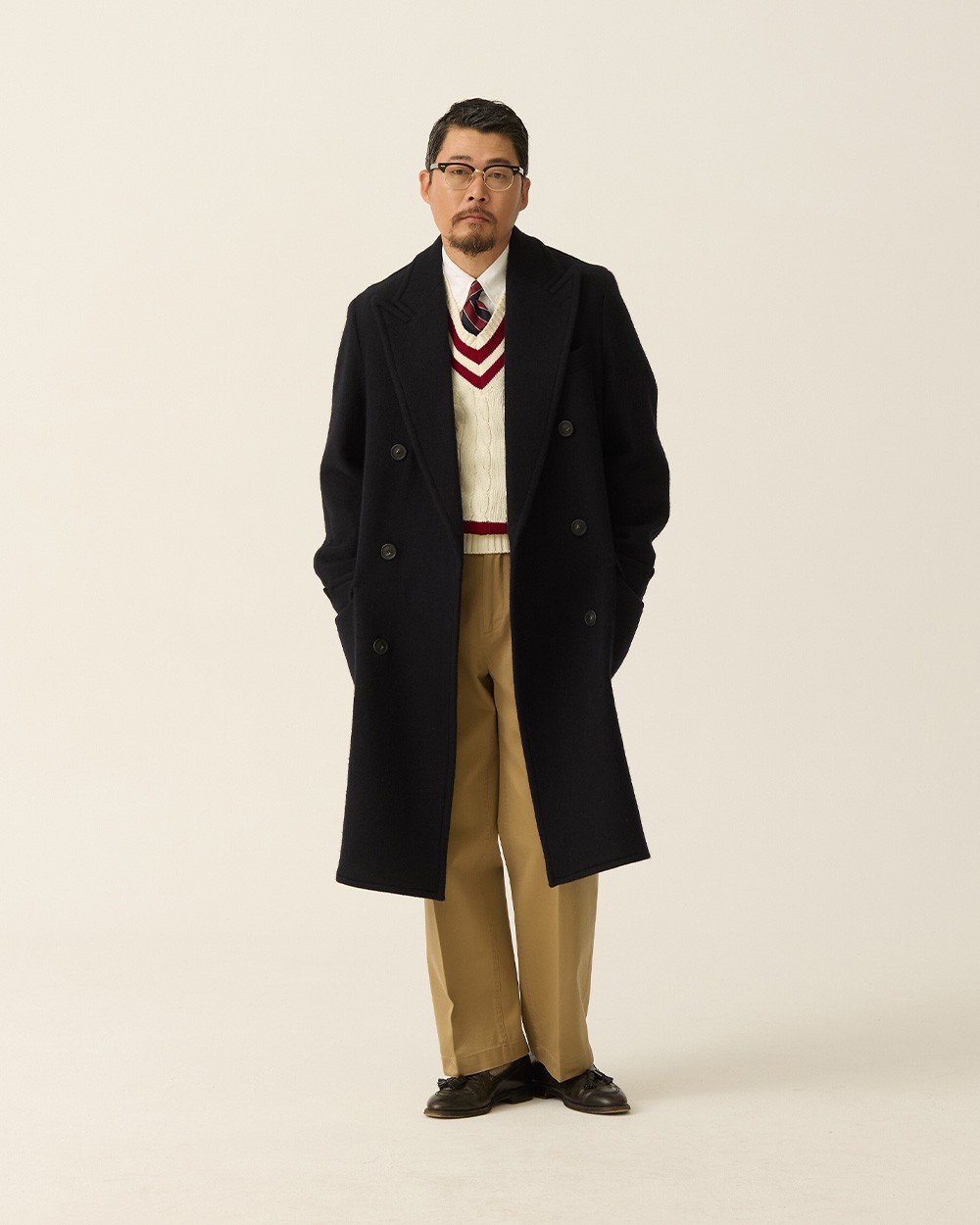
Man in a navy polo coat open over an ivory cricket sweater with red and navy stripes at the V-neck, with khaki trousers and brown loafers
Navy polo coat over an ivory cricket sweater, no tie, khakis and brown loafers.
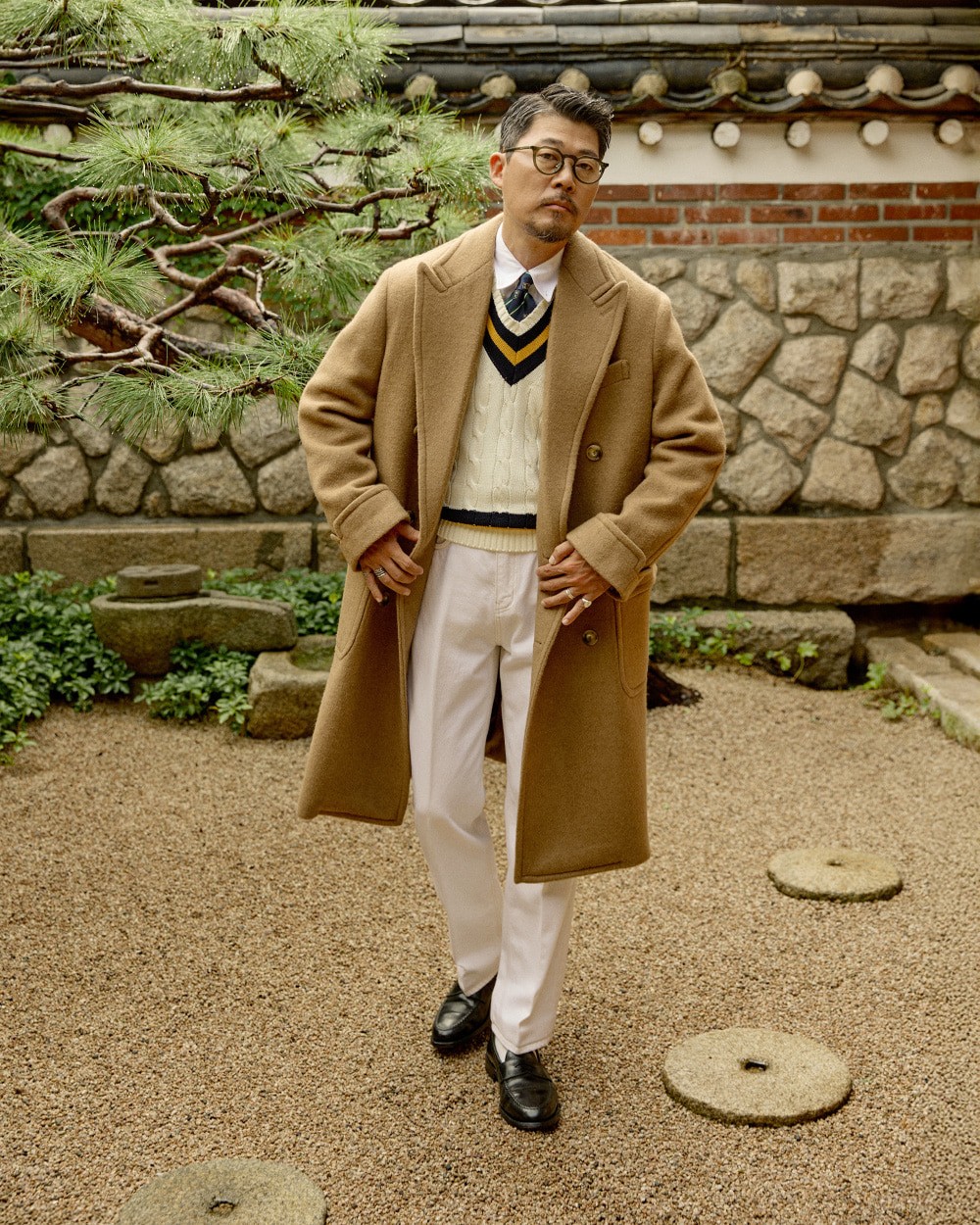
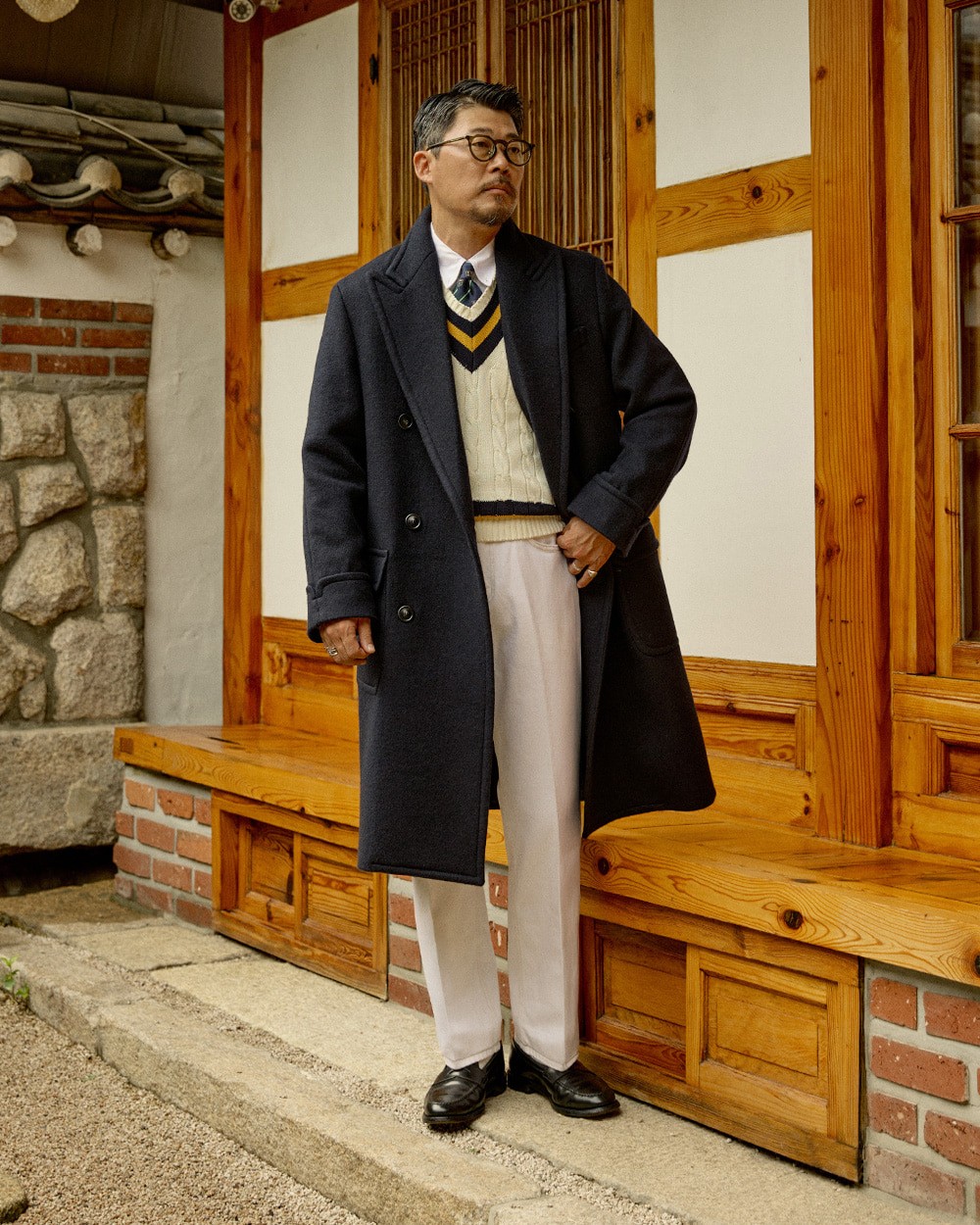
Man in a navy polo coat open over an ivory cricket sweater with navy and yellow stripes, shirt and tie, with white trousers and black loafers, in front of a hanok
Navy over ivory again, with a tie and white trousers. Winter whites under a dark coat always look expensive.
Man in a camel polo coat open over an ivory cricket sweater with navy stripes, white shirt and tie, with cream trousers and black loafers, in a hanok garden
Camel over ivory and cream: the softest version, with black loafers to anchor it.
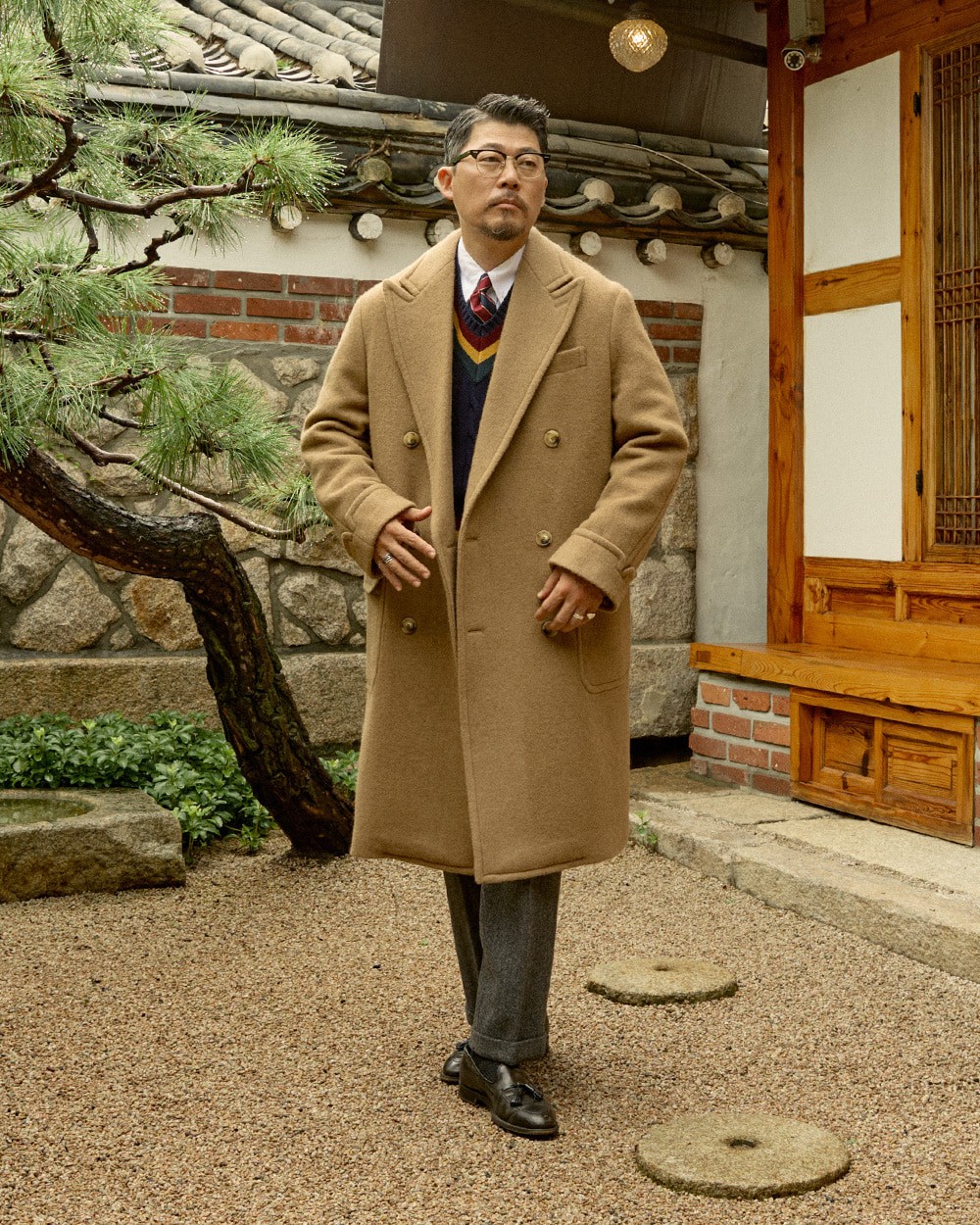
Man in a camel polo coat open over a navy cricket sweater with red and yellow stripes, white shirt and striped tie, with grey trousers and black loafers, under a pine tree in a hanok garden
Camel over a navy cricket sweater and a striped tie, grey trousers below.
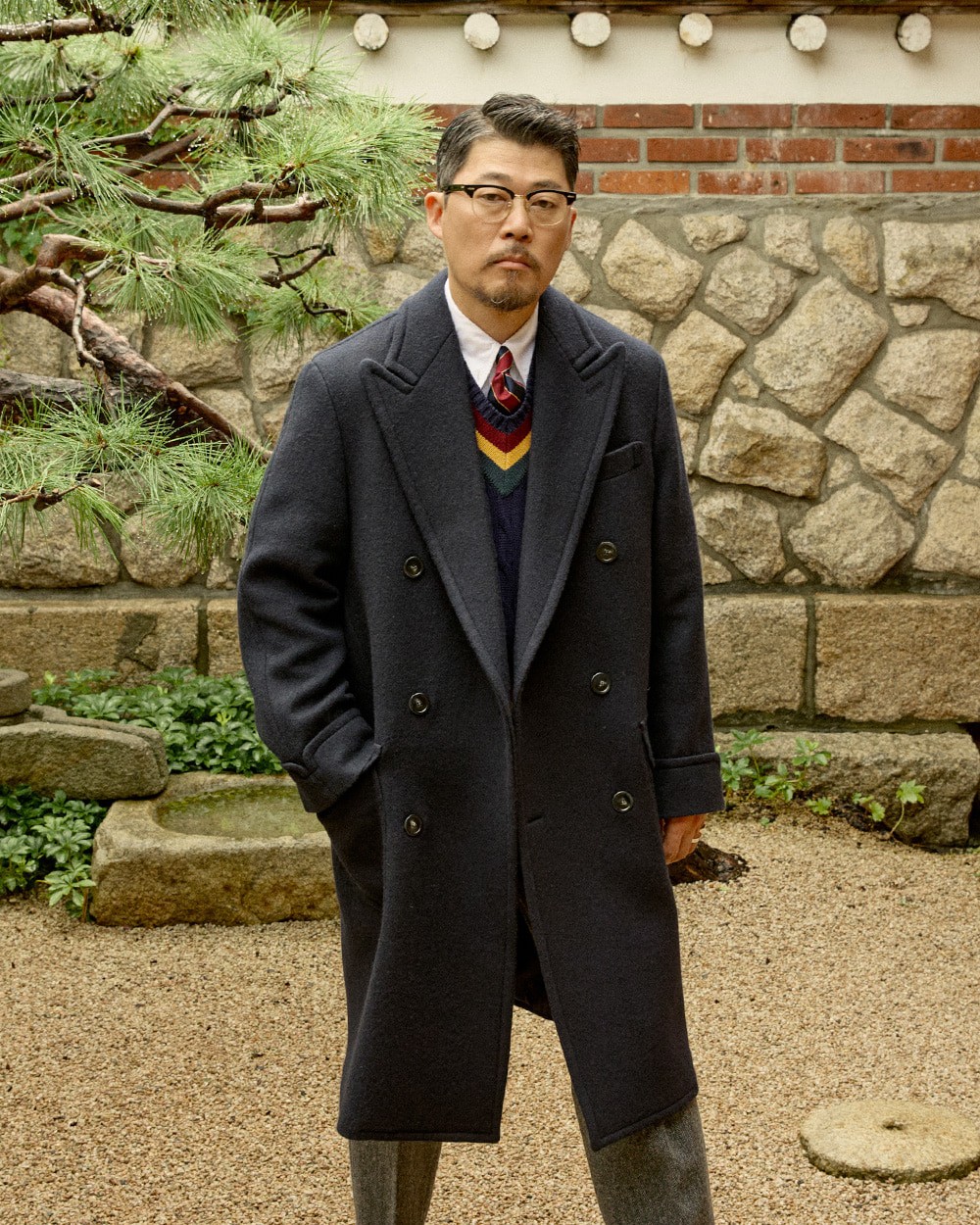
Close-up of a man in a navy polo coat over a navy cricket sweater with red, yellow and green stripes, white shirt and red-and-navy striped tie, in front of a pine tree
Navy over a navy cricket sweater: the stripes at the V are the only color, and they’re enough.

And the real-life version, February 2026, outside Gentlemen’s House in Yeonhui-dong: navy polo coat, navy cricket sweater, light blue oxford, striped tie, Black Watch trousers. Our shop step, not a studio.


Man in a navy polo coat worn open over a navy cricket sweater with red, yellow and green stripes, light blue shirt and striped tie, with Black Watch tartan trousers and black loafers, in front of the Gentlemen's House shop window in Seoul
Navy polo coat outside Gentlemen’s House, Seoul, February 2026.
Man in a navy polo coat over a navy cricket sweater, light blue shirt and tie, with Black Watch tartan trousers and black loafers, standing on the metal step of a shop entrance and looking to the side
Black Watch trousers under a navy polo coat. Tartan is easier than it sounds when the coat is plain.

Style 5: Over a Fair Isle vest

A Fair Isle vest under a camel polo coat is the loudest outfit here, and it still looks calm. The coat covers most of the pattern. Tie or no tie, brown trousers or jeans.
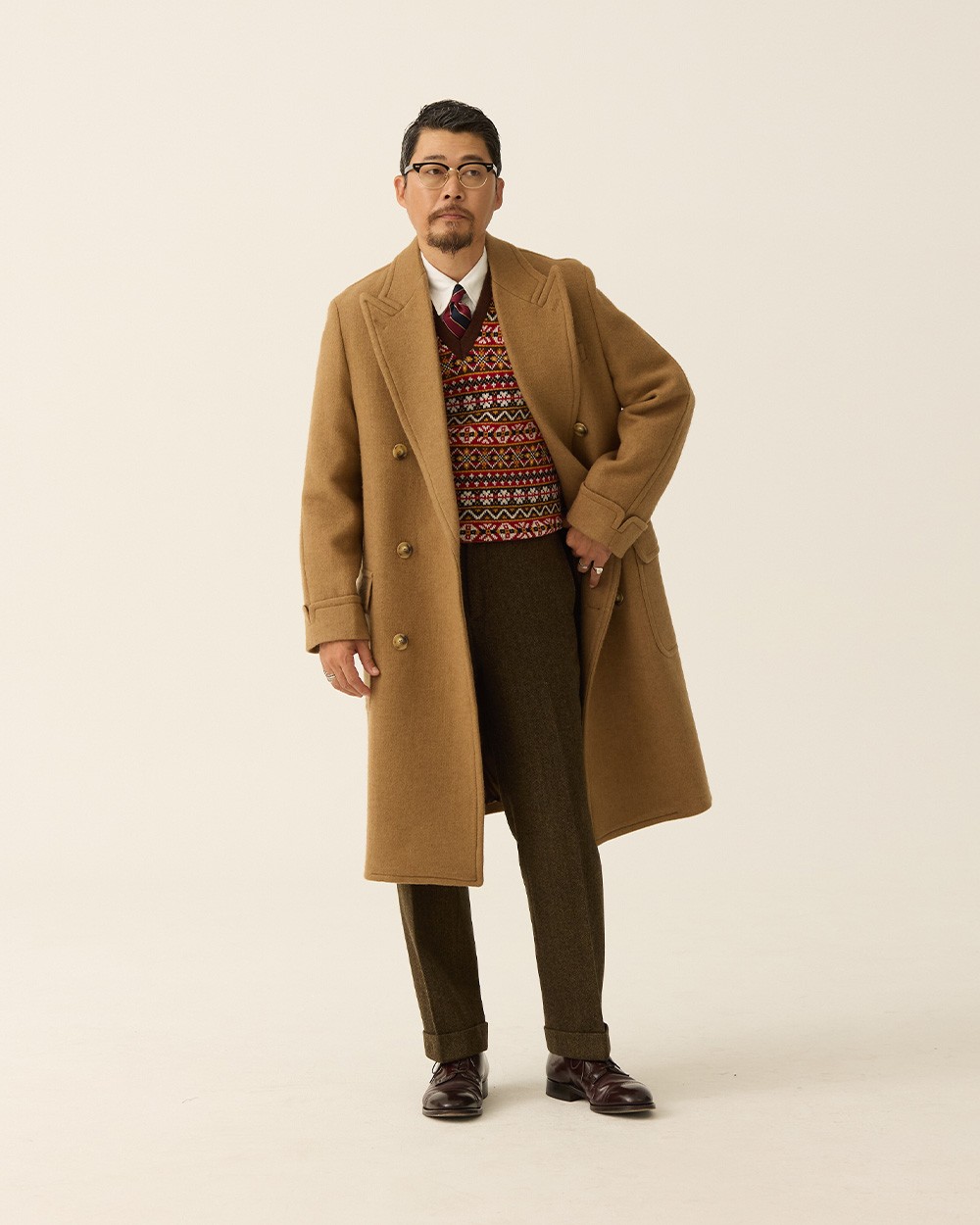
Man in a camel polo coat open over a red patterned Fair Isle vest, white shirt and striped tie, with brown herringbone trousers and burgundy loafers
Camel over a red Fair Isle vest, brown herringbone trousers and burgundy loafers. Three browns, one pattern.
Man in a camel polo coat open over a Fair Isle vest, shirt and tie, with blue jeans and brown suede shoes, in front of a hanok stone wall
The same vest with jeans and brown suede shoes. The coat makes the jeans look like a choice.

Style 6: With jeans

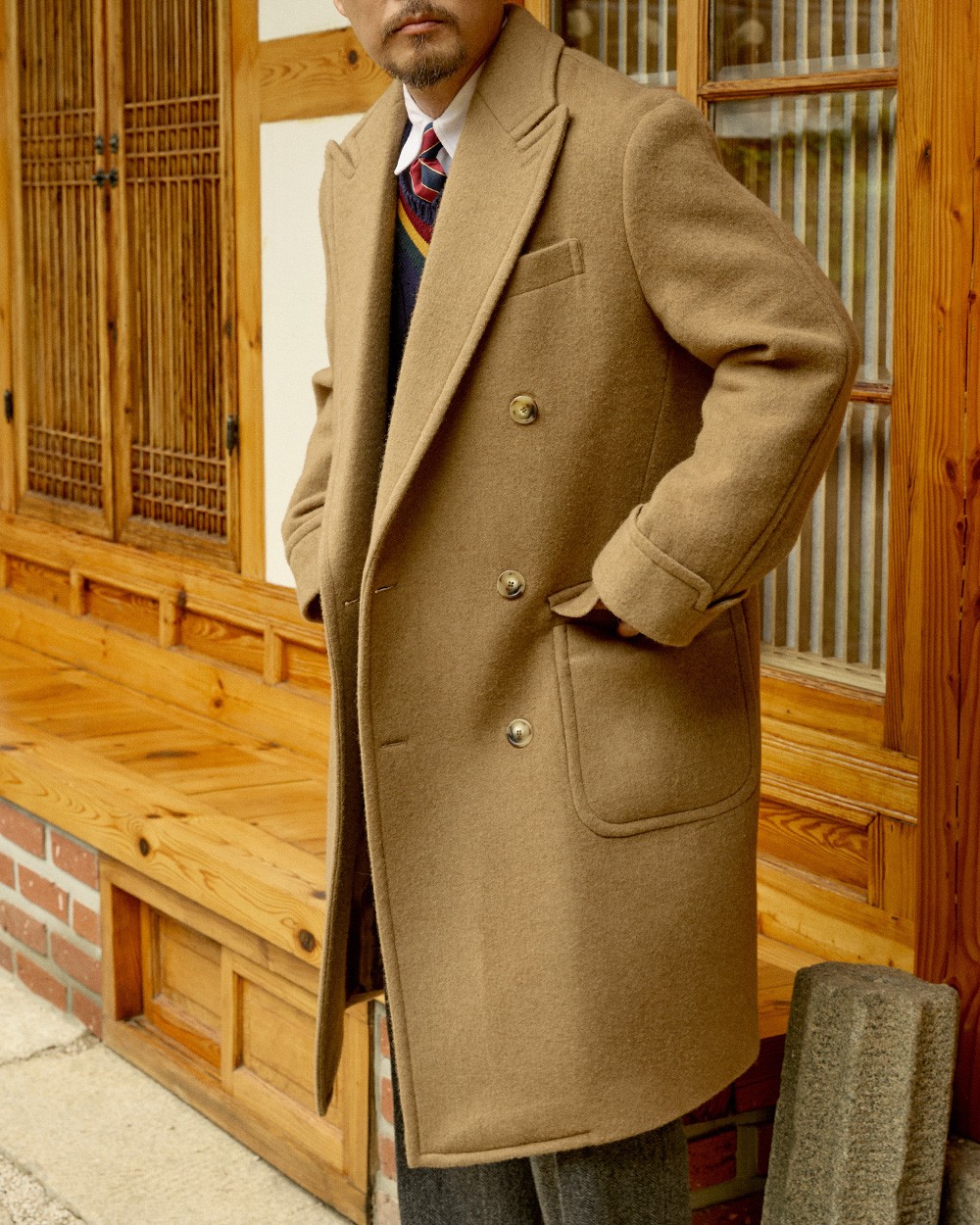
Yes, a polo coat works with jeans. The coat’s length makes the jeans look deliberate rather than lazy. Keep the top half Ivy, a crewneck or a cricket sweater over an oxford collar, and keep loafers below.
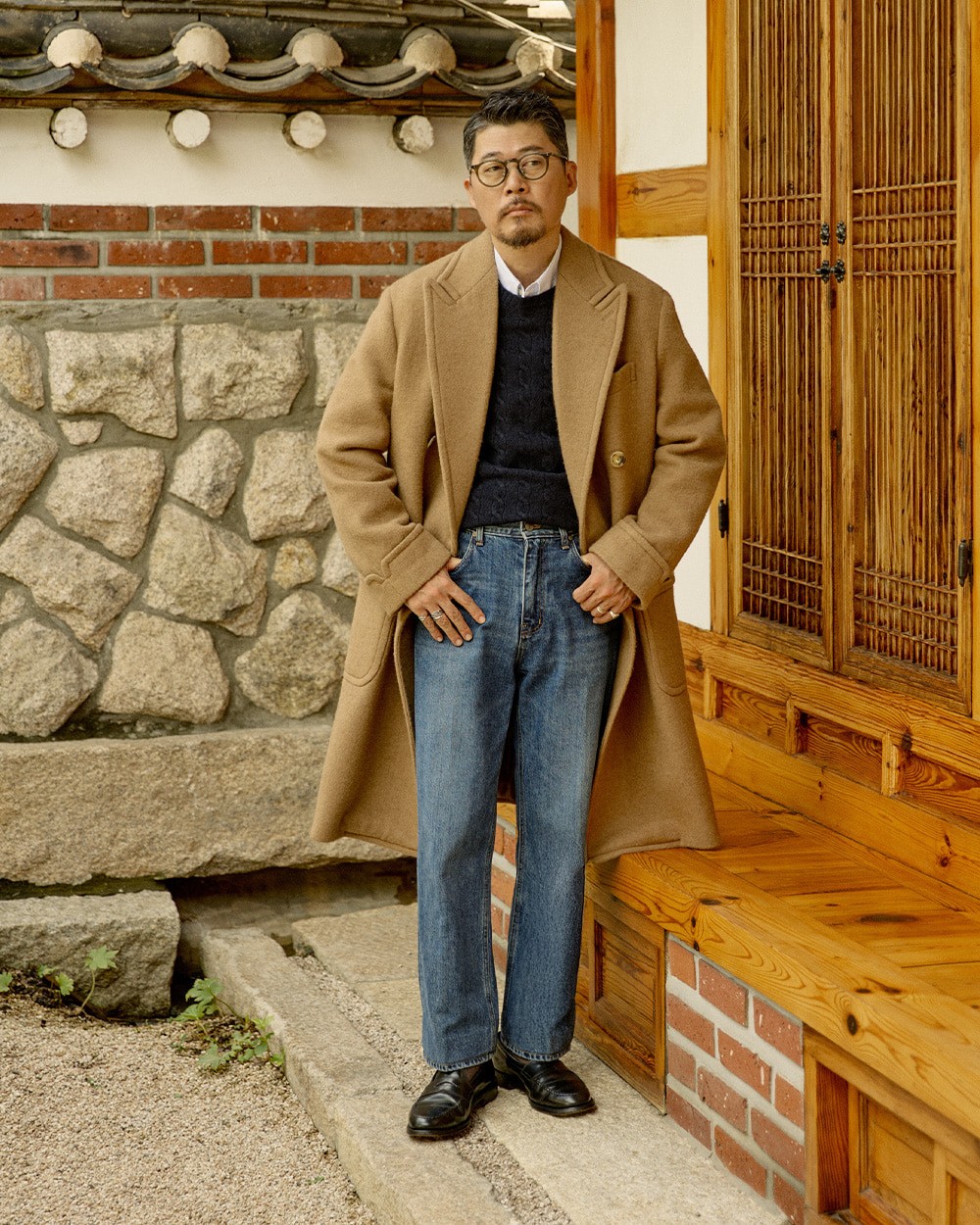
Man in a camel polo coat open over a navy crewneck sweater and white shirt collar, with blue jeans and black loafers, standing in front of a hanok
Camel polo coat, navy crewneck, jeans, black loafers. The weekend version.
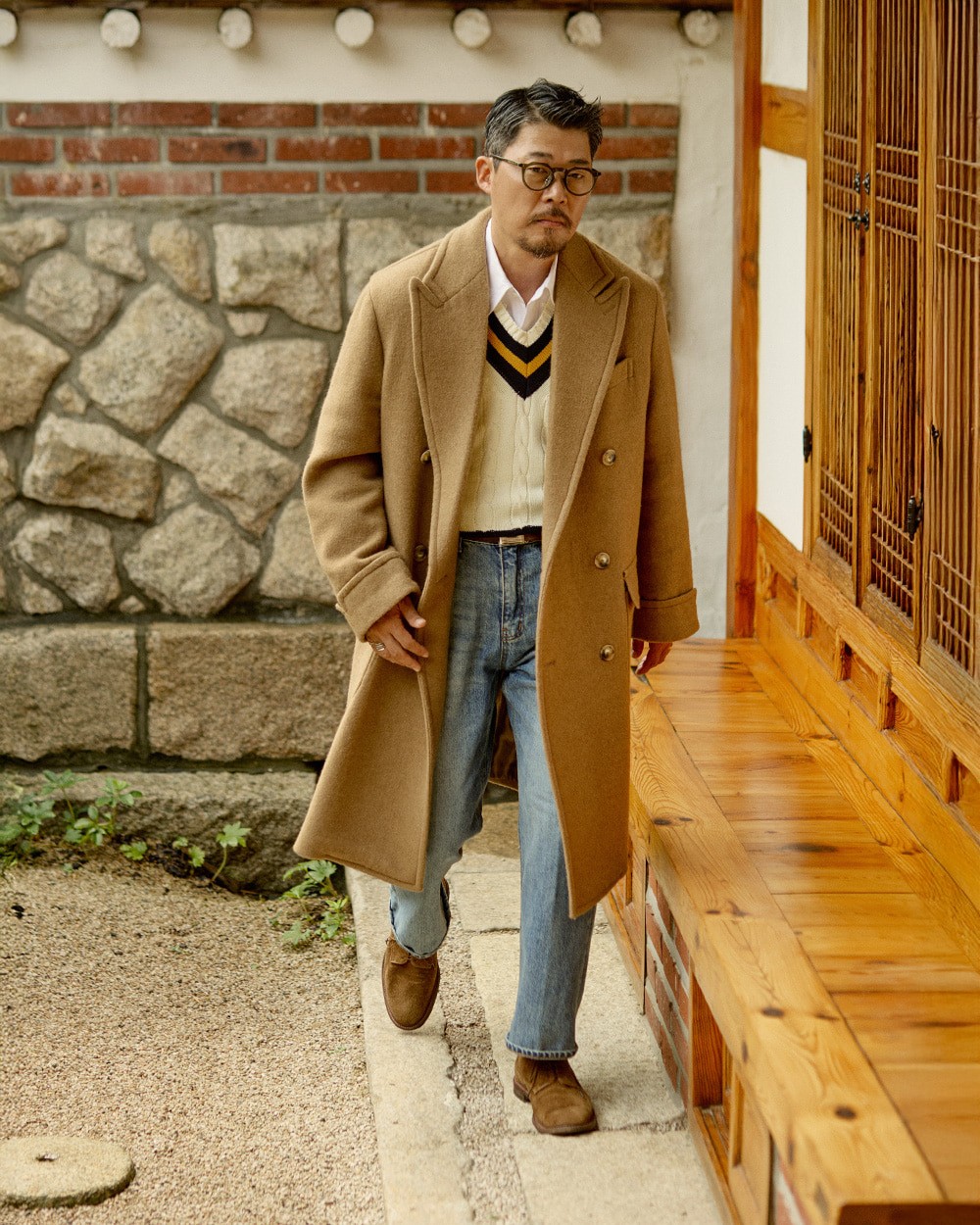
Man in a camel polo coat open over an ivory cricket sweater with navy stripes, with blue jeans and brown suede shoes, in a hanok courtyard
Camel over an ivory cricket sweater and jeans, with brown suede shoes.
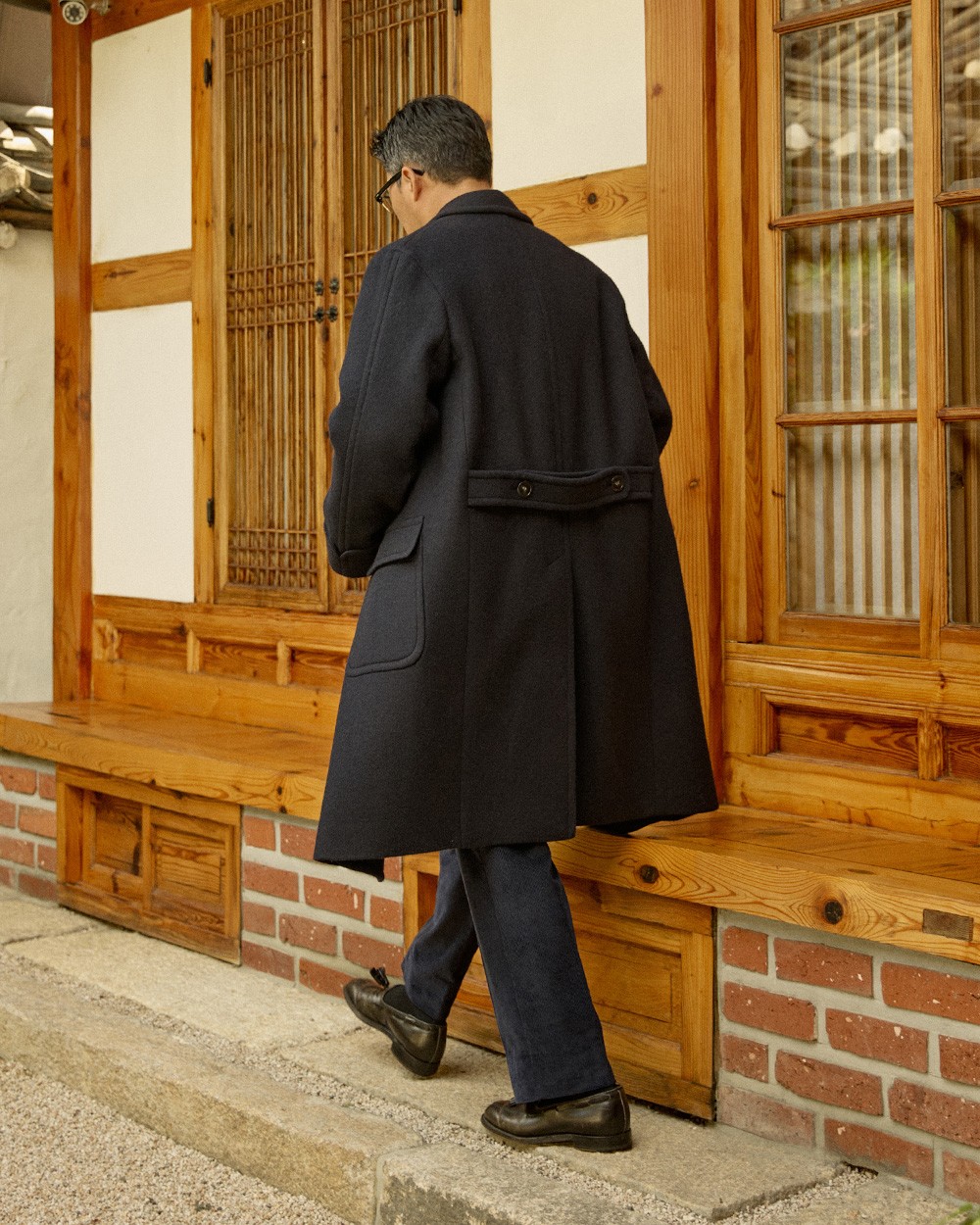
Back view of a man in a navy polo coat with dark jeans and black loafers, stepping onto a hanok's wooden floor, the half belt visible
Navy polo coat with dark jeans, from behind: the half belt and patch pocket do the talking.

Camel or navy: which polo coat first

Camel is the polo coat. It’s the original color and the one people mean when they say the words; natural tan, with every other color a variation. If you’ll own one, own camel.

Camel polo coat laid flat, front and back side by side: six-button double-breasted front with flap patch pockets, and the back with a half belt and hook vent
The Renacts Camel Wool Polo Coat in camel, front and back.

Navy is the quieter buy and, in Seoul offices, the more useful one. It hides on a navy suit and reads as a plain overcoat from across the street. The half belt and cuffs still tell the people who know.

Navy polo coat laid flat, front and back side by side: six-button double-breasted front with flap patch pockets, and the back with a half belt and hook vent
The same coat in navy, front and back. Buy camel first; add navy when the camel one has earned it.
Renacts polo coat Camel Navy
Cloth 40% camel, 60% wool, 22 oz 40% camel, 60% wool, 22 oz
Buttons Buffalo horn, six-by-three Buffalo horn, six-by-three
Best over Navy and grey suits, jeans Grey suits, ivory knits, khakis
Price, sizes $583, sizes 1–3 $583, sizes 1–3

Polo coat vs overcoat vs balmacaan

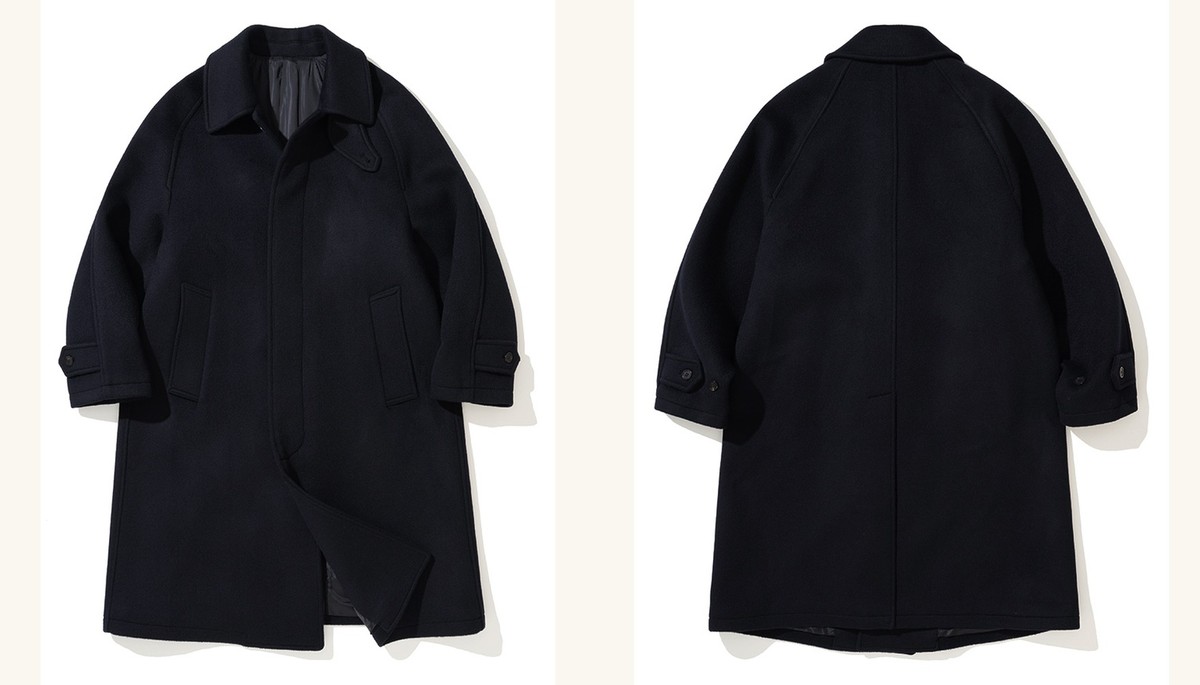
Overcoat is the family name; the polo coat is one member. The other member you’ll meet at Renacts is the balmacaan, and the two couldn’t differ more at the shoulder. Here’s the short version; the long one is in our balmacaan vs polo coat guide.

Polo coat Balmacaan Chesterfield overcoat
Front Double-breasted, six buttons Single-breasted, fly front Single-breasted, often fly front
Shoulder Set-in sleeve Raglan sleeve Set-in sleeve
Collar Peaked lapels or Ulster collar Prussian collar, turns up Notch lapels, sometimes velvet collar
Back Half belt, hook vent Plain Plain, center vent
Cloth Camel hair or camel-wool Tweed, brushed wool, gabardine Wool melton, often dark
Came from English polo grounds, then Ivy campuses A Scottish estate The city, 19th-century England

If the jacket underneath has a natural, set-in shoulder, the polo coat’s set-in shoulder follows it. The raglan balmacaan rounds everything off instead. That’s the practical difference, and it’s why the polo coat is the one I put over a suit.
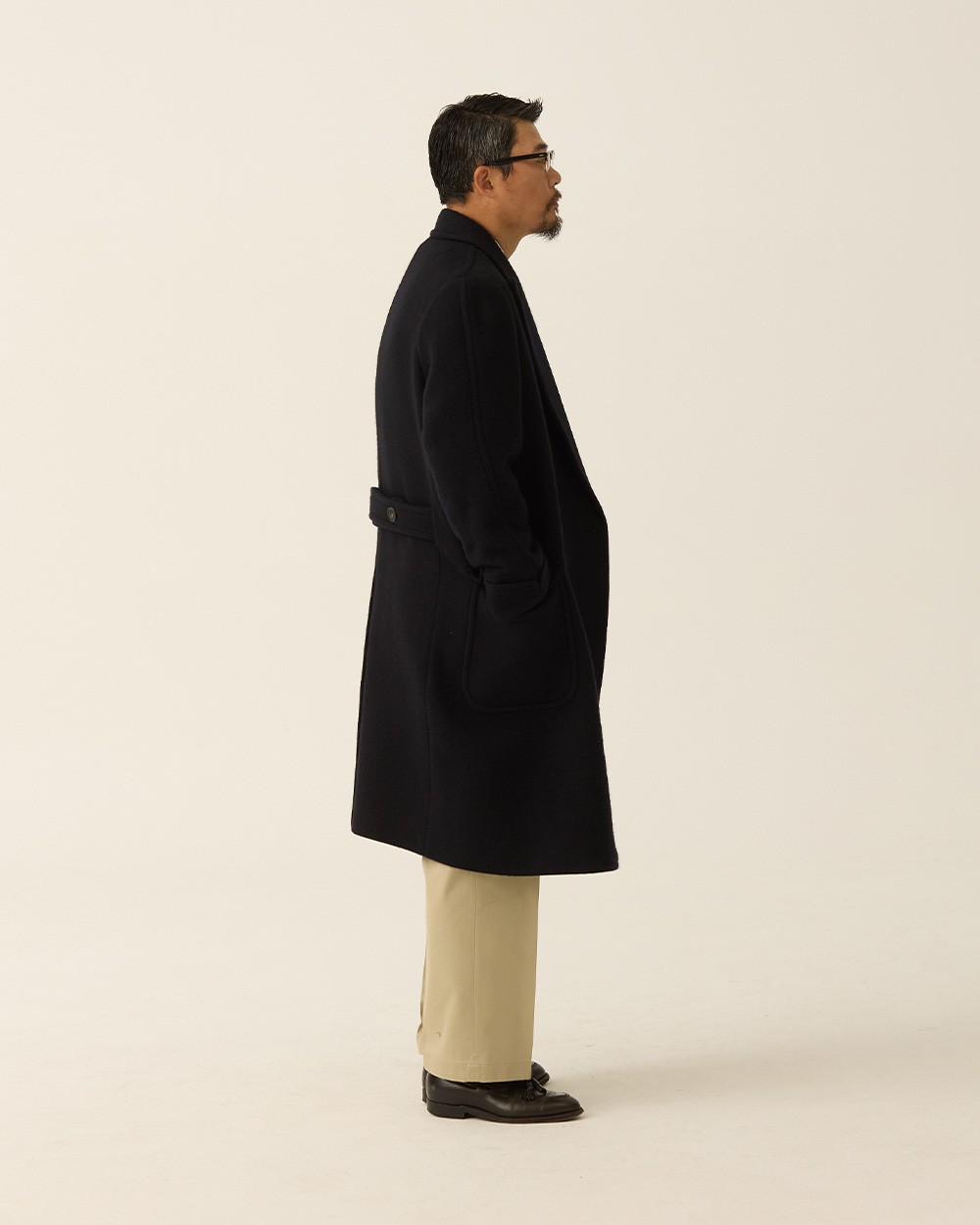
Side profile of a man in a navy polo coat buttoned, with khaki trousers and black loafers, showing the set-in sleeve and the half belt
The polo coat in profile: a set-in sleeve with a defined shoulder, and the half belt behind.
Navy brushed wool balmacaan coat laid flat, front and back side by side, with raglan sleeves and a fly front
For comparison, the Renacts navy balmacaan: raglan sleeves, fly front, no belt.

Polo coat fit, size and care

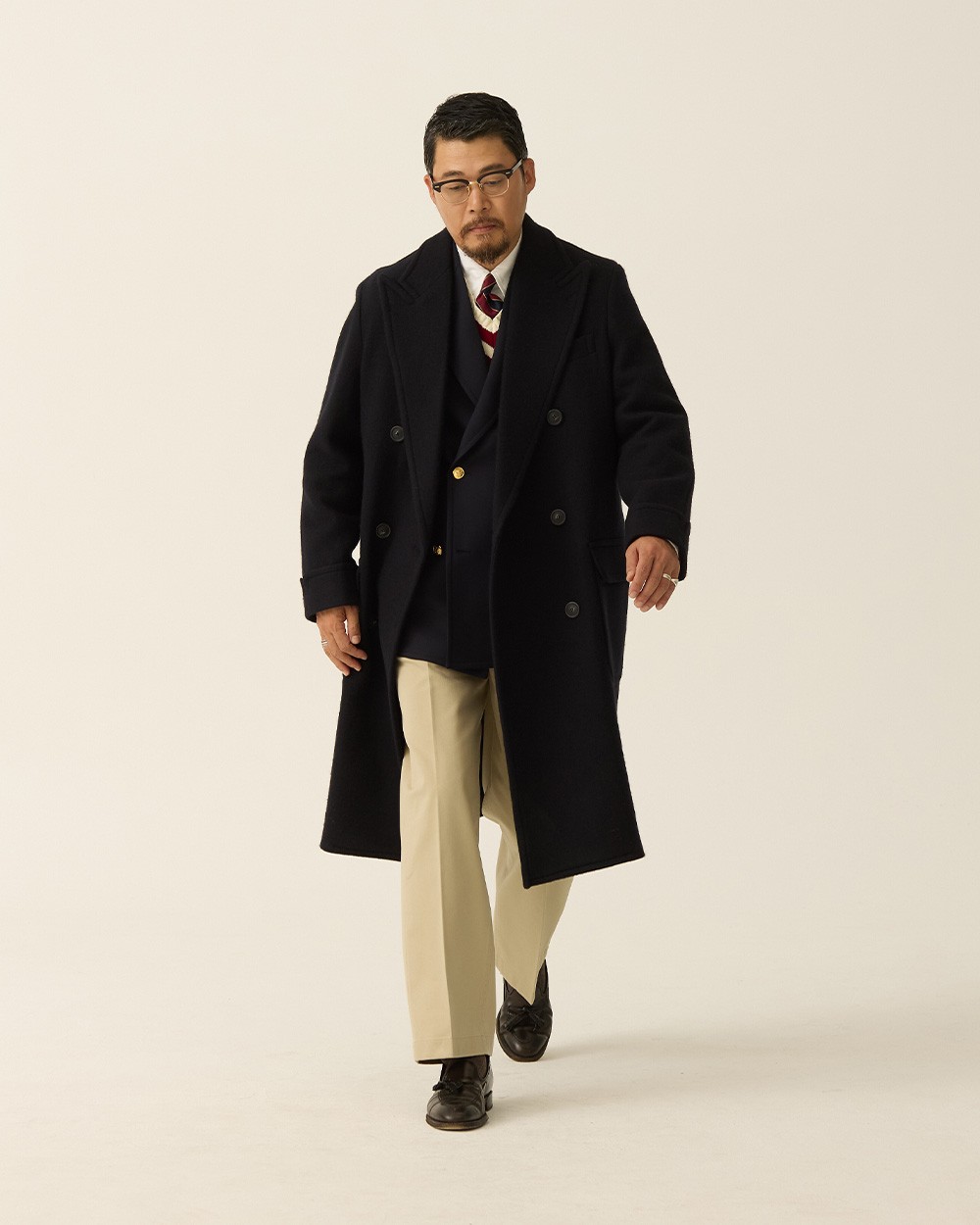
A polo coat should be long, past the knee, and its shoulder should land just outside the jacket shoulder beneath it. If it buttons over a suit jacket with room to spare, it fits. The Renacts coat comes in three sizes; the model, 180 cm and 72 kg, wears size 2.

Size (flat, cm) 1 2 3
Shoulder 45 (17.7 in) 47 (18.5 in) 49 (19.3 in)
Chest 59 61.5 64
Sleeve 63.5 64.5 65.5
Back length 107 (42.1 in) 108.5 (42.7 in) 110 (43.3 in)

Flat measurements, with a 1–3 cm variance. Size for the suit, not the sweater. A polo coat that’s snug over a blazer is wrong; one that’s roomy over a crewneck is just a polo coat.
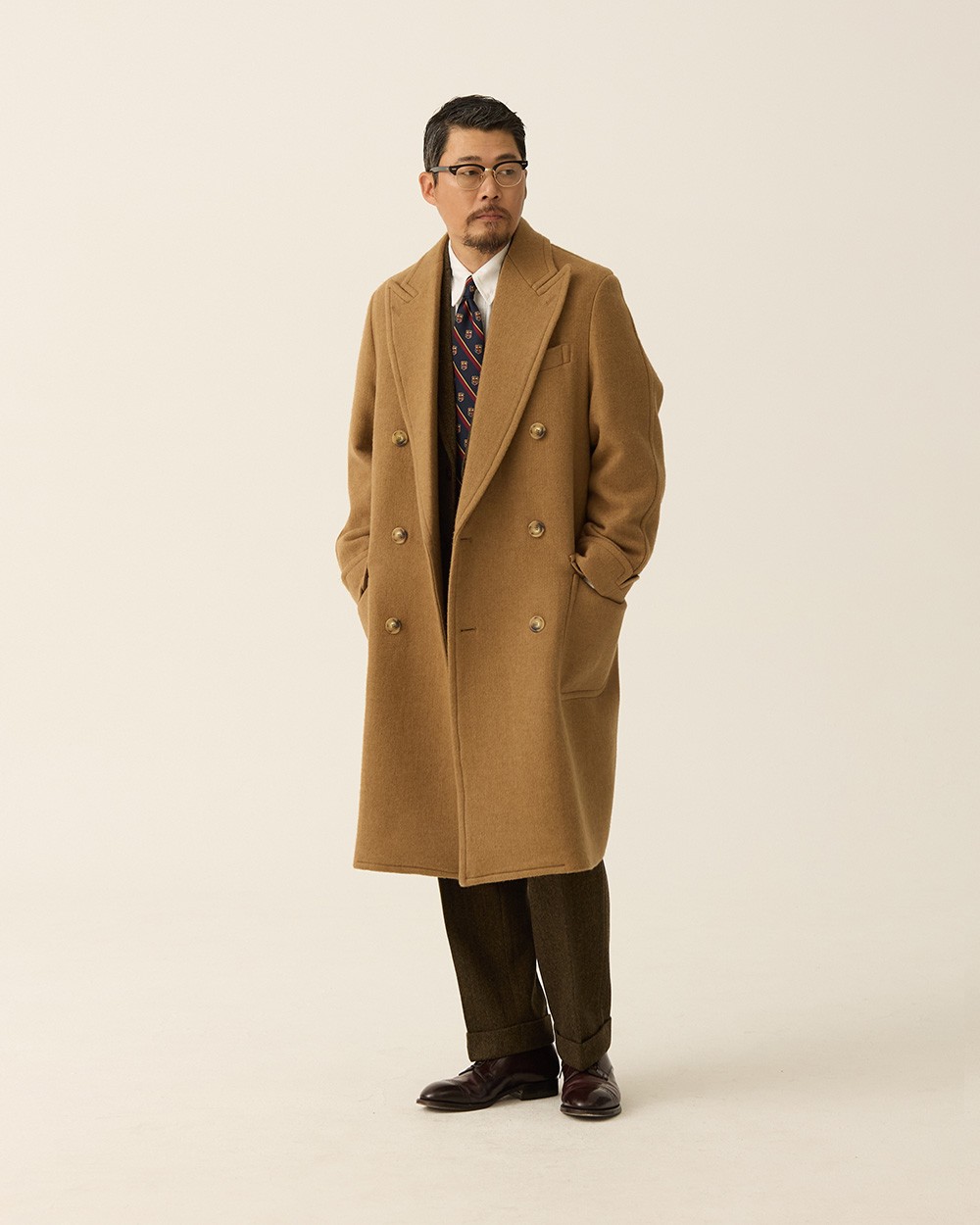
Man in a camel polo coat worn open over a dark suit and patterned tie, hands in the coat pockets, the coat's shoulder sitting outside the jacket's
Shoulder check: the coat’s shoulder sits just outside the suit jacket’s, with room to button.
Man in a navy polo coat open over a navy gold-button blazer and striped tie, with khaki trousers and black loafers, the coat ending below the knee
Length check: the hem lands below the knee, over a blazer and khakis.

Camel and wool want a brush, not a washing machine. Hang the coat on a wide hanger, brush it after wet days, and dry clean it once a season at most. Give the 22 oz cloth a day between wears and most creases drop out on their own.

Polo coat FAQ

What is a polo coat?

A polo coat is a long double-breasted overcoat in camel hair or a camel-wool blend, with patch pockets, turn-back cuffs and a half belt. It began as the coat English polo players wore between chukkers and became the Ivy League overcoat in the 1920s.

Is a polo coat the same as a camel coat?

No. A camel coat is any overcoat in camel cloth, in any cut. A polo coat is the specific double-breasted, half-belted, patch-pocketed one, and it can be navy as well as camel.

Why is it called a polo coat?

Because polo players wore it. The original was a camel wrap thrown on between chukkers, which English tailors called a wait coat; the name followed the coat into town.

Can you wear a polo coat with jeans?

Yes. Keep the top half Ivy, with a crewneck or cricket sweater over an oxford collar, and wear loafers. The coat’s length is what makes the jeans look deliberate.

How long should a polo coat be?

Past the knee. The Renacts coat measures 107 to 110 cm down the back, depending on size, which lands below the knee on a 180 cm frame.

Is a camel-wool blend warmer than pure camel hair?

Pure camel hair is softer, but it wears through at the collar, cuffs and buttonholes. A blend of roughly half camel and half wool, which Boyer recommended, keeps the warmth and lasts longer. The Renacts cloth is 40% camel, 60% wool.