Balmacaan Coat vs Polo Coat: The Complete Trad Winter Guide
The trad wardrobe settles most questions by the end of autumn. The sport coat shelf is built, the flannels are out, the shetlands have come down from the top of the closet. Then the temperature drops below freezing and one question is left: what goes over all of it?
In Seoul that question arrives in the second week of November, and it arrives fast. One week you are still in a sport coat. The next, the wind off the Han has made the decision for you.
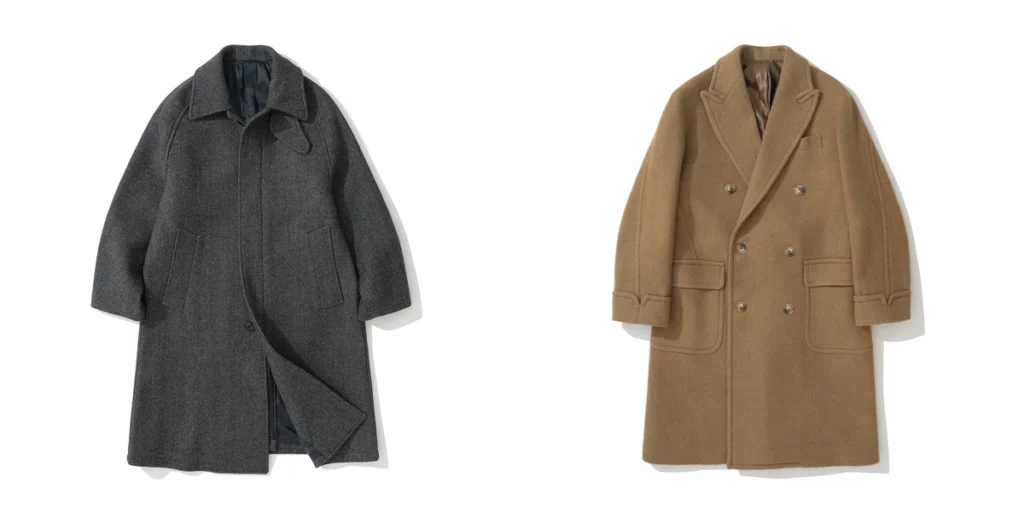
Two overcoats answer it. The balmacaan coat — loose, single-breasted, raglan-sleeved, Scottish, country. The polo coat — full-cut, double-breasted, half-belted, camel, American. Between them they cover the entire trad winter register, and the choice between them is not really about which looks better. It is about what you are wearing underneath.
That is the part most overcoat guides skip. They describe the coat as though it were worn over nothing. But a soft-shouldered jacket and a structured overcoat are two different pieces of tailoring having an argument across your shoulders, and you can see the result from across the street. What follows is the overcoat guide written the other way round — from the jacket outward.
In one sentence: a balmacaan coat is a loose, single-breasted overcoat with raglan sleeves, a short turn-up collar and a fly front, named after an estate near Inverness, Scotland, and cut to go over a tweed jacket. “Balmacaan” is the place, not a cloth or a cut. A polo coat is its opposite number: double-breasted, half-belted, camel. For its eight details and six ways to wear one, see our polo coat guide.
For the cloth and construction vocabulary used throughout — herringbone, melton, natural shoulder, sack cut — see our Sport Coat Essentials guide.
The Balmacaan — The Scottish Estate Coat (mid-to-late 19th century onward)
Origin. The balmacaan coat takes its name from the Balmacaan estate near Inverness, on the western shore of Loch Ness. Sources disagree on exactly when the coat appeared — accounts place it anywhere from the middle to the end of the 19th century — but they agree on the purpose. It was a country coat, cut long and loose in heavy, coarse woolen cloth, made to be pulled on over a tweed jacket and walked in across wet ground.

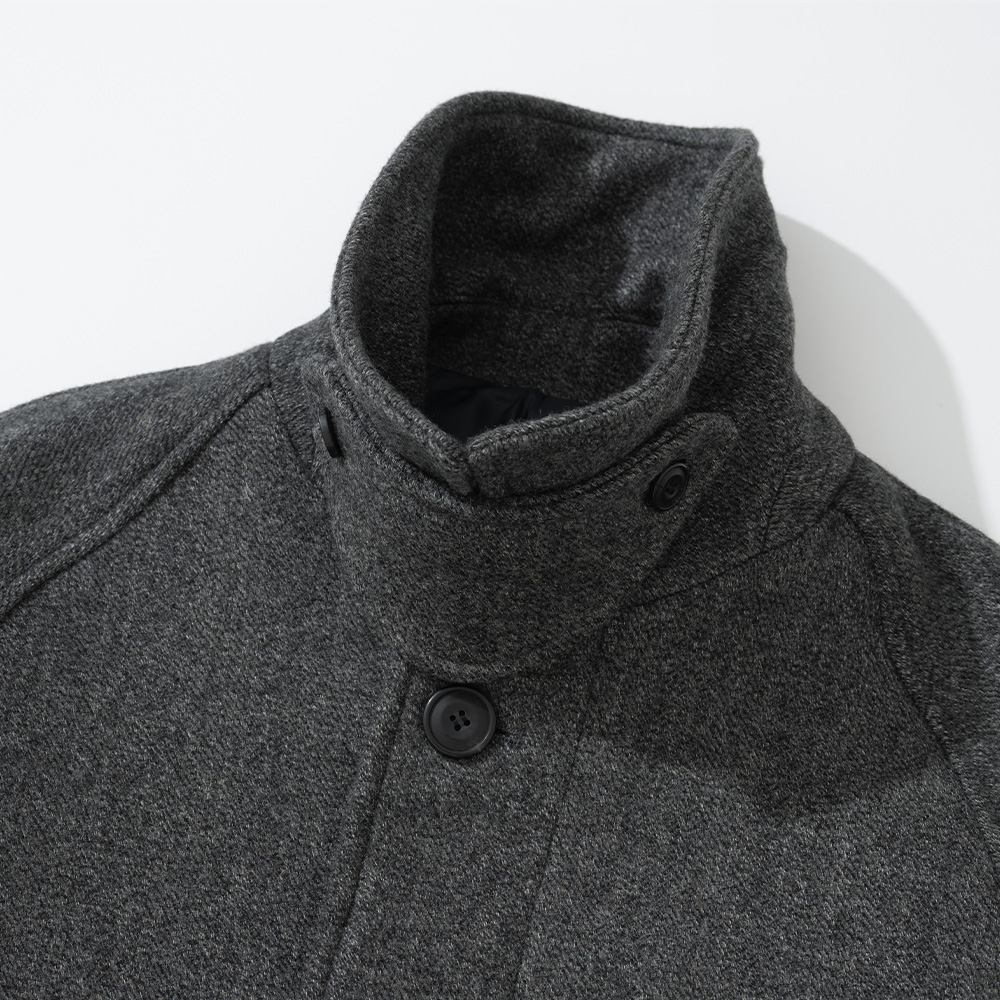
Everything distinctive about it follows from that job. The raglan sleeve — the diagonal seam that runs from the collar to the underarm instead of stopping at the shoulder — was there because it gives the arm a full range of motion and because removing the shoulder seam removes the place where rain gets in. The short Prussian collar turns up against wind without a scarf. The fly front hides the buttons so they do not catch on branches. The pockets sit at a slant, deep enough to be useful with cold hands.

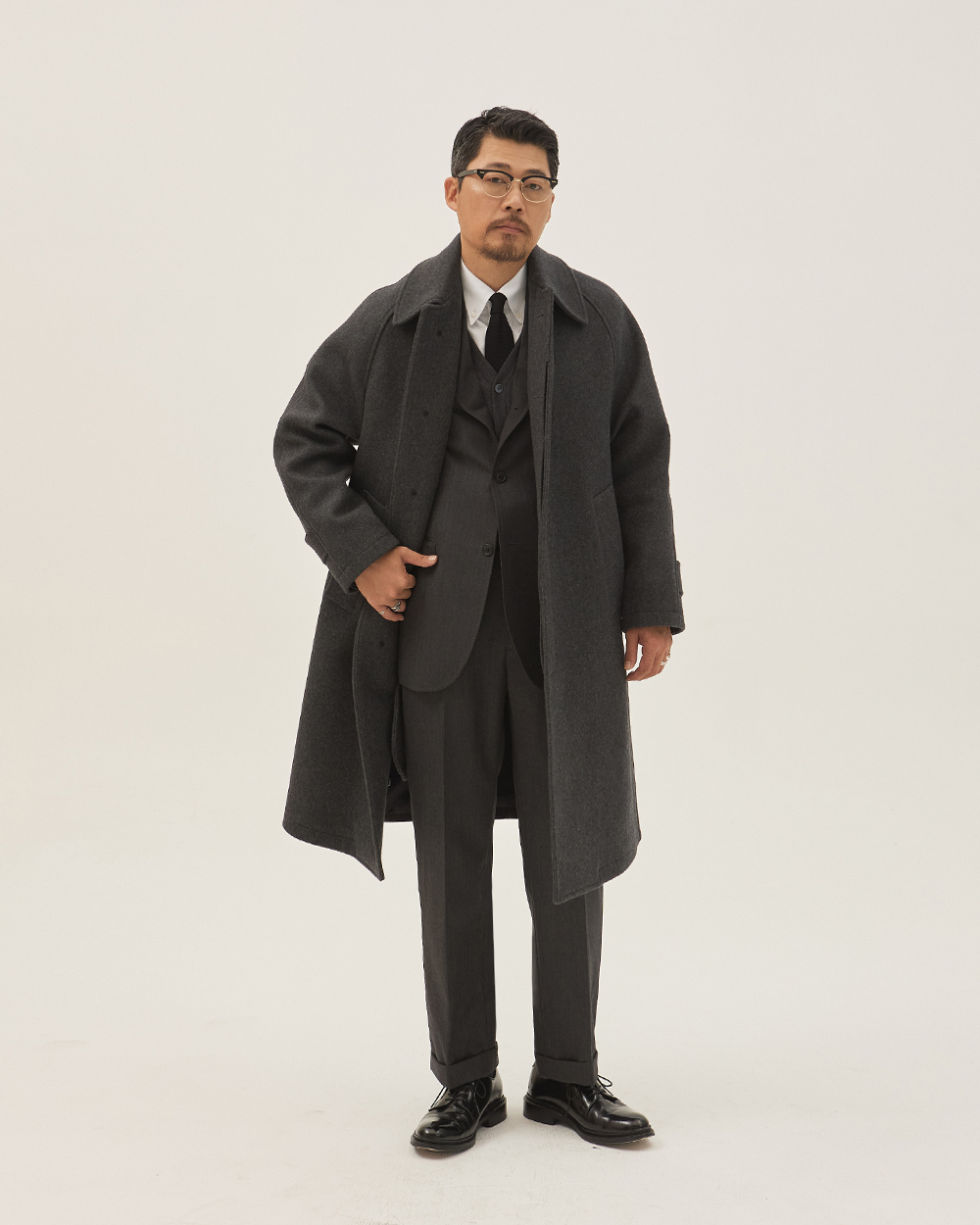
How it reads. From a distance, quiet. The balmacaan has no lapel display, no belt, no visible buttons, no waist. It is a column of cloth with a collar. That restraint is precisely why it survived past the country-house era: a coat that asserts nothing goes over anything. In herringbone it reads as texture rather than pattern. In melton it reads as solid, dense, and slightly severe — the more urban of the two cloths.
The trade-off is that the balmacaan is not a formal coat. The full cut and the raglan shoulder read country and slightly casual by design. Over a dark suit at a wedding it looks like what it is: a walking coat wearing a suit.
In its original context that hardly mattered. The balmacaan lived in the country. In Seoul it lives on the subway, which is where its lack of formality stops being a problem.
That is the polo coat’s territory.
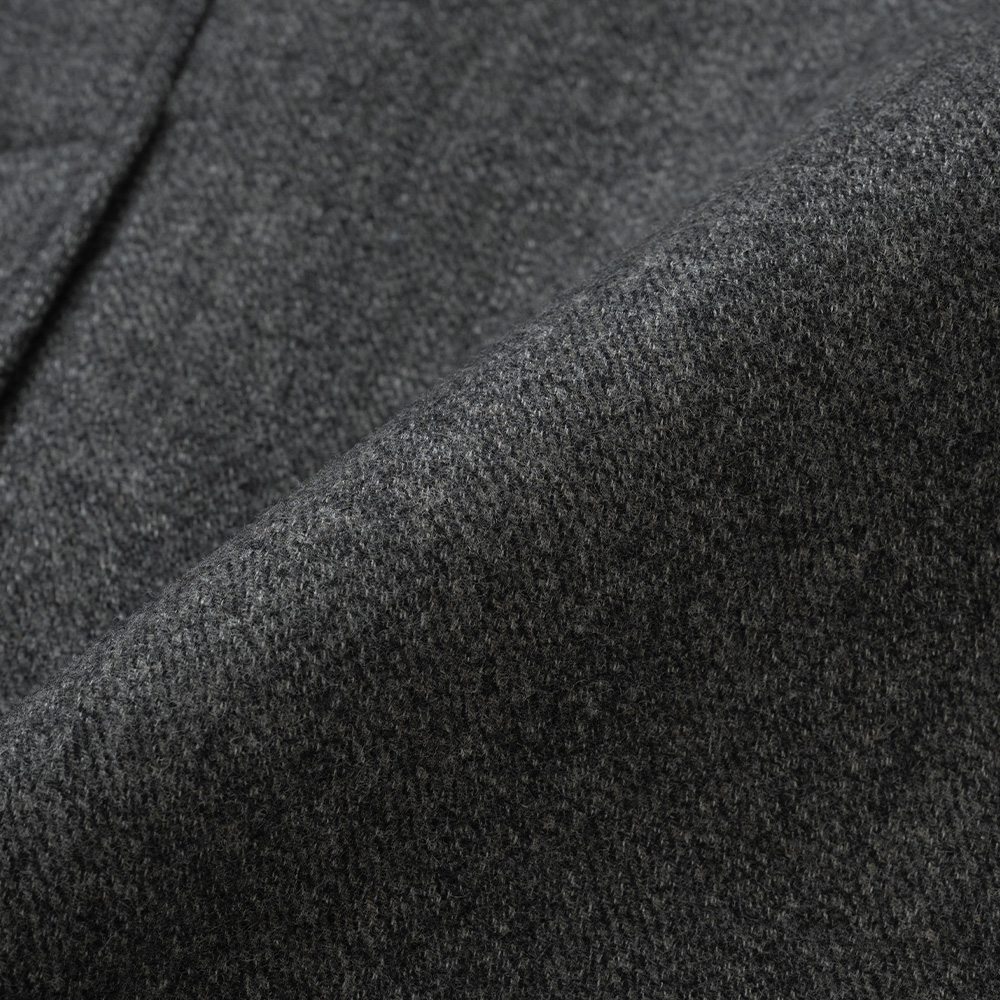
Two cloths cover those two registers this season, four coats in all. Herringbone wool in charcoal and brown is the country register — herringbone at a scale that reads as texture across a room, the same logic covered in our Glen Check and Gun Club guide — at 22–23 ounces. New for 2026, a brushed wool in navy and black is the city register: a soft, matte, solid face at 23–24 ounces, the heaviest cloth the balmacaan has been cut in here. In past seasons the same coat came in melton and in Abraham Moon cloth from Yorkshire; the four 2026 coats get their own section below.
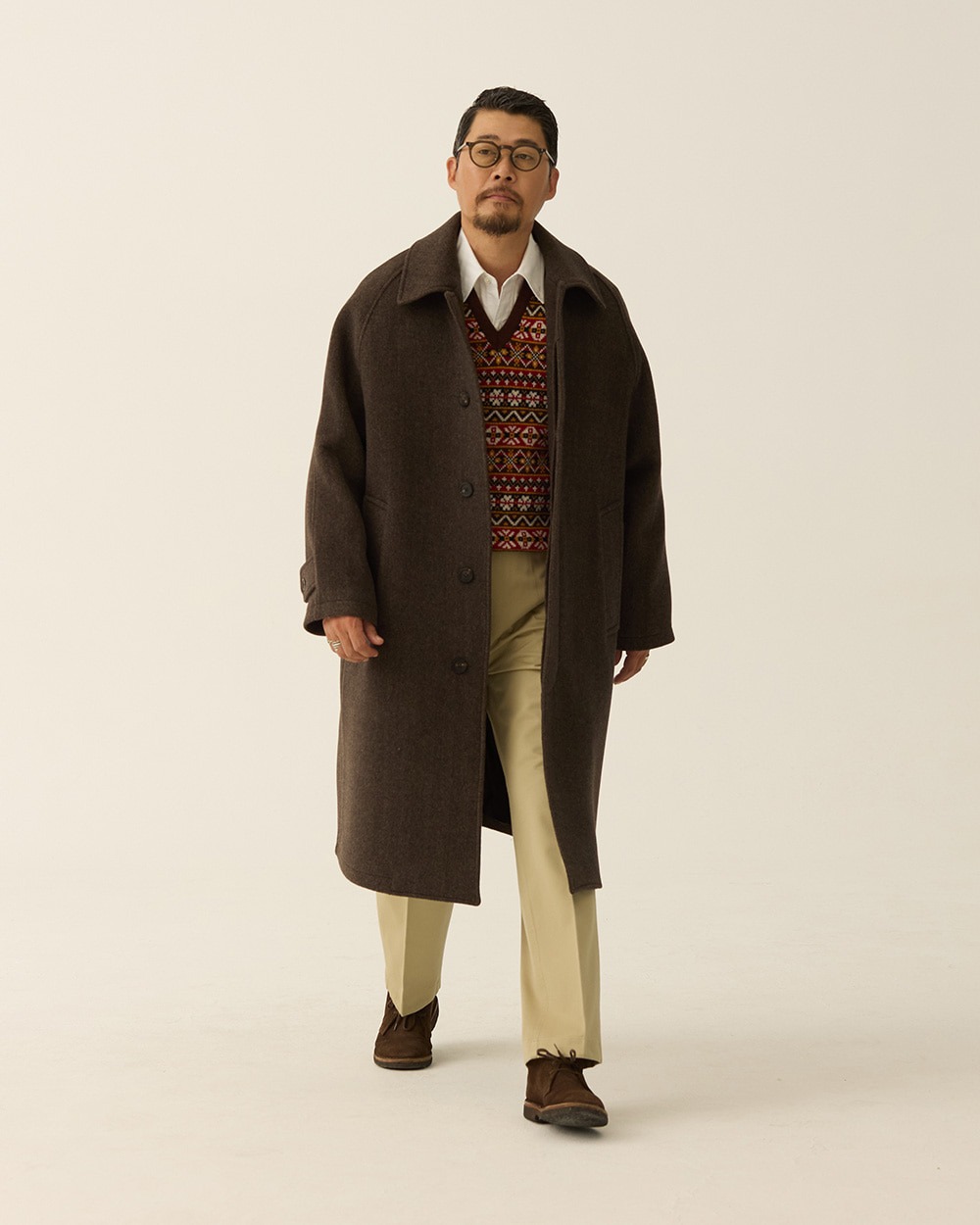
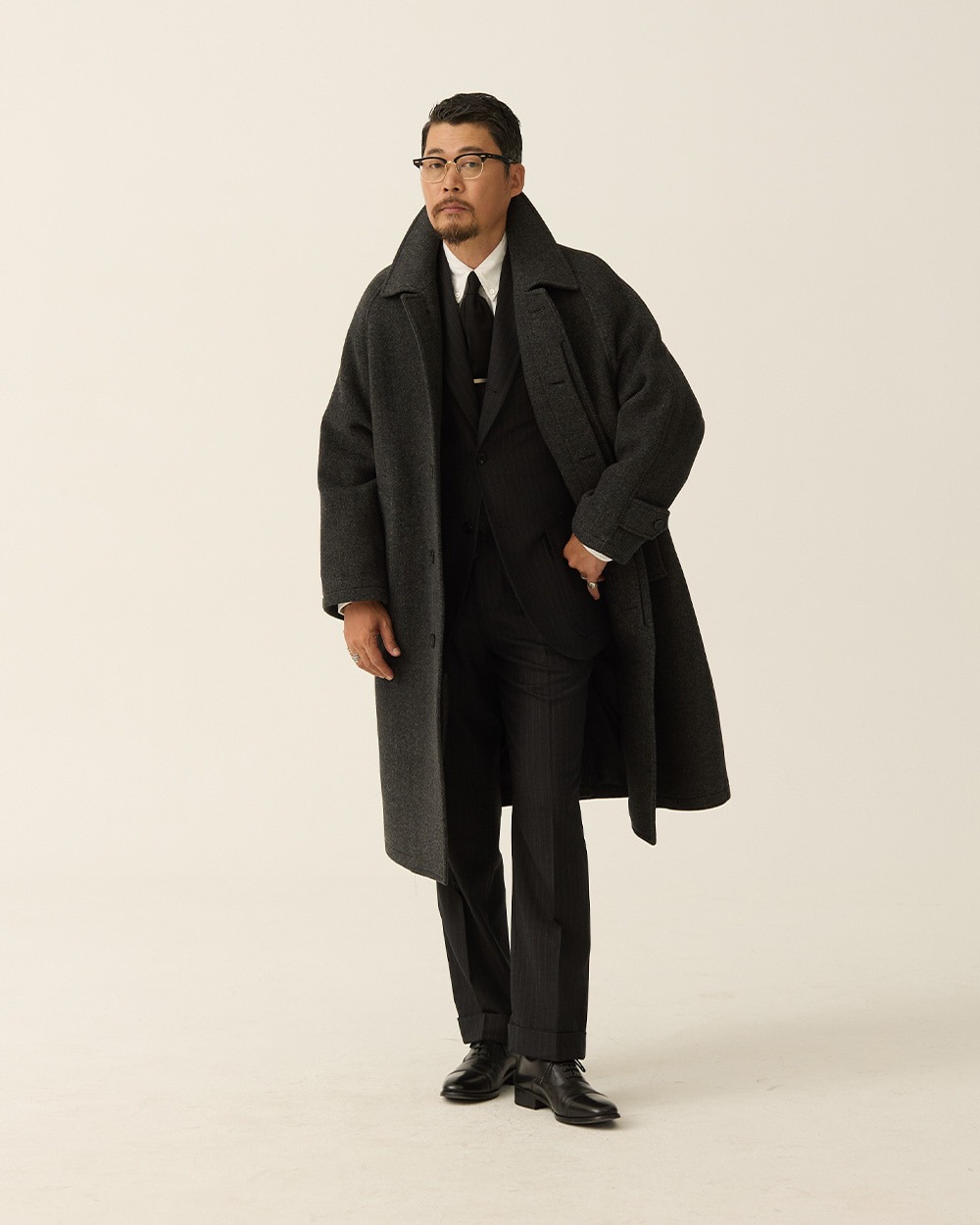
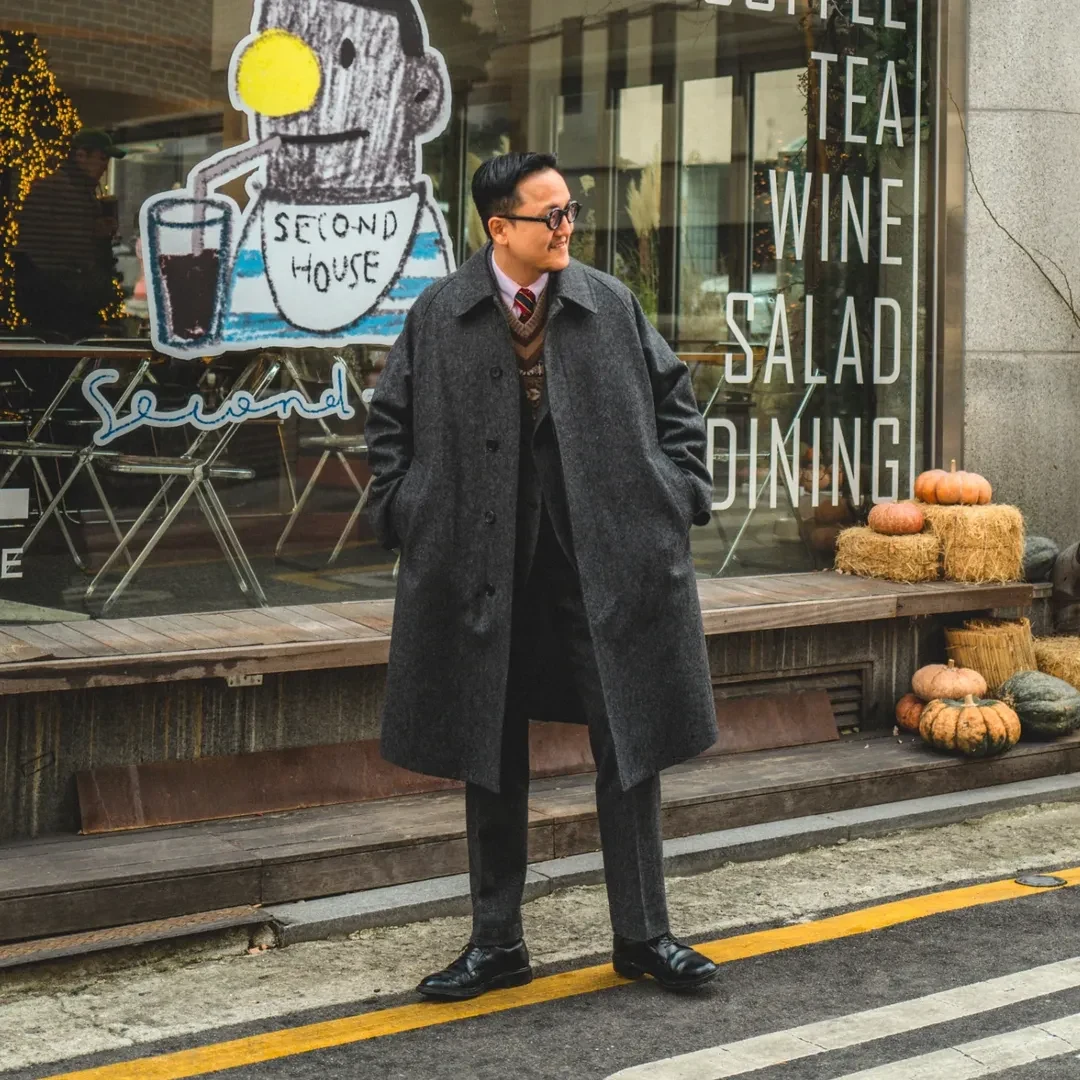
Two outfit registers. Country: the herringbone over a tweed sport coat, OCBD, grey flannel and a Fair Isle vest underneath — the full weight of a trad winter, and the coat still closes comfortably over all of it. City: the brushed wool in navy or black over a soft-shouldered suit, worn open, with a tie. The raglan line keeps it from looking like an office overcoat, which is the point.
The 2026 Balmacaans — Four Coats, Two Cloths
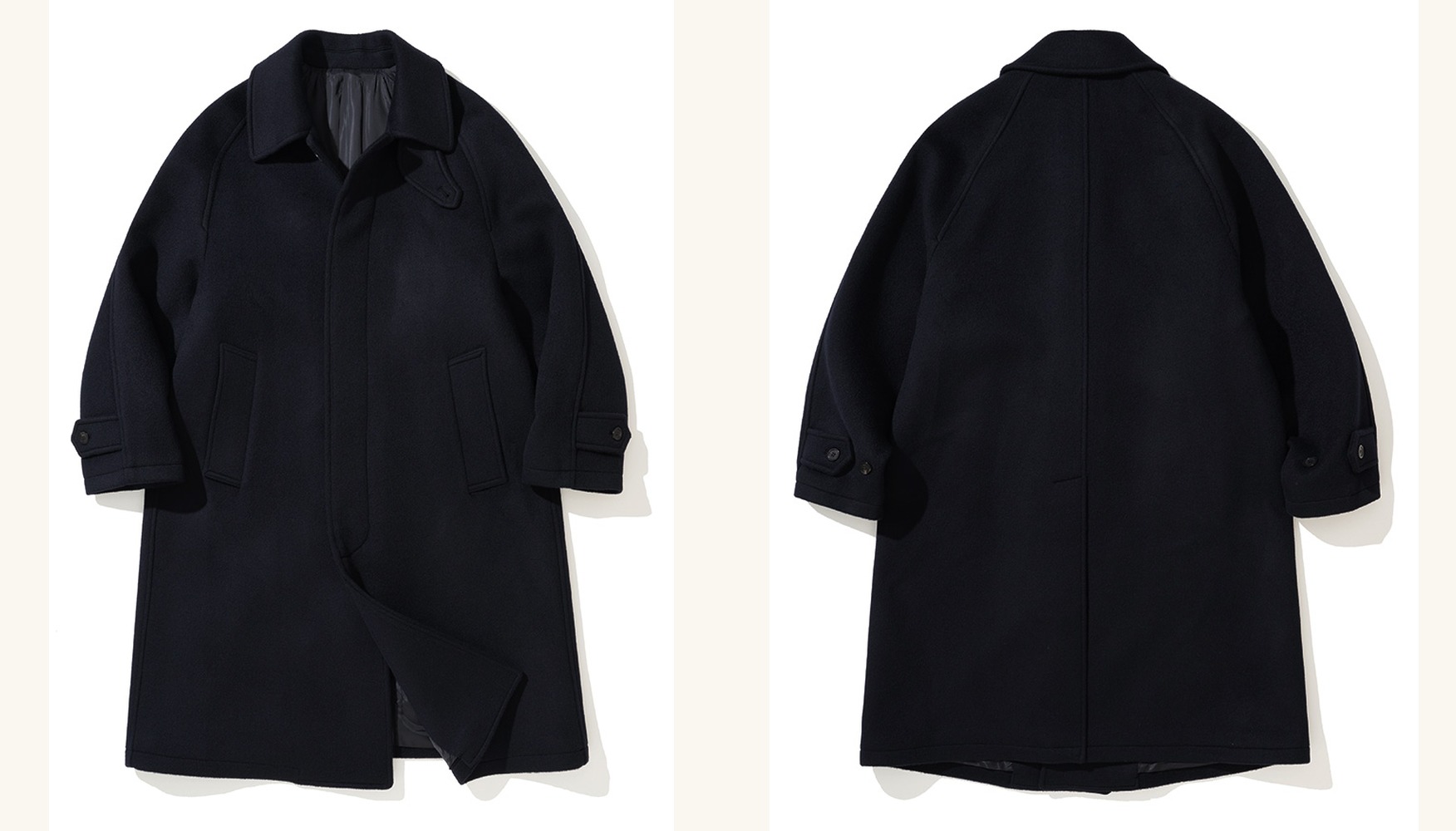
The balmacaan is back on the shelf in four coats: a Herringbone Wool Balmacaan in charcoal and brown, and a new Brushed Wool Balmacaan in navy and black. Same pattern, same details, two cloths. All four are $503 in three sizes.
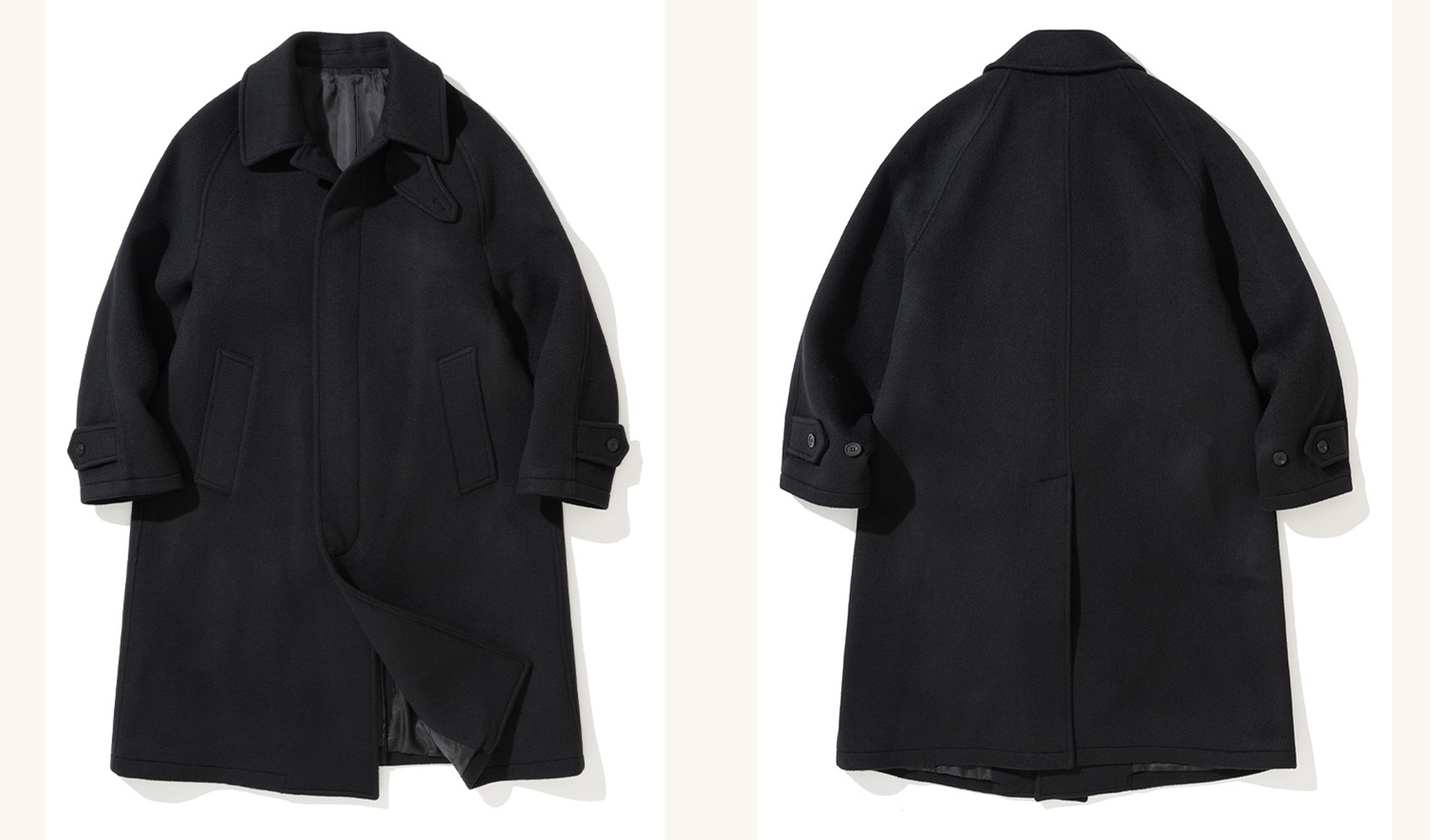
Everything that makes a balmacaan a balmacaan is here, and three details are worth knowing before you buy.
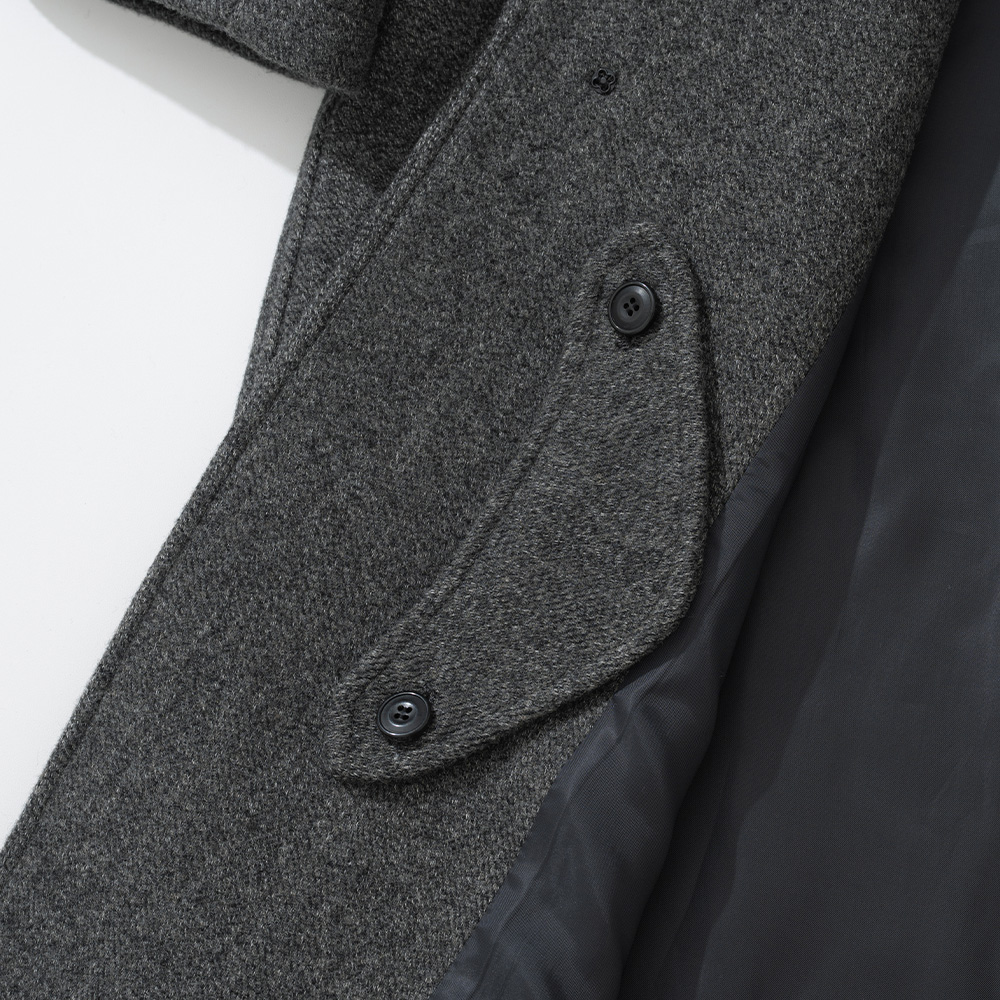
- The throat latch has a home. Most balmacaans leave the latch flapping at the collar when it is not in use. This one buttons away on the inside, so it cannot be lost and leaves no trace on the outside. Collar down, it disappears. Collar up, it closes the neck without a scarf.
- The buttons are hidden. A fly front, as on the originals, so the coat reads as a column with no hardware on it.
- The cuff tab and the vent button. A buttoned tab at the cuff and a button that closes the back vent against the wind — country details that earn their keep on a Seoul avenue in January.


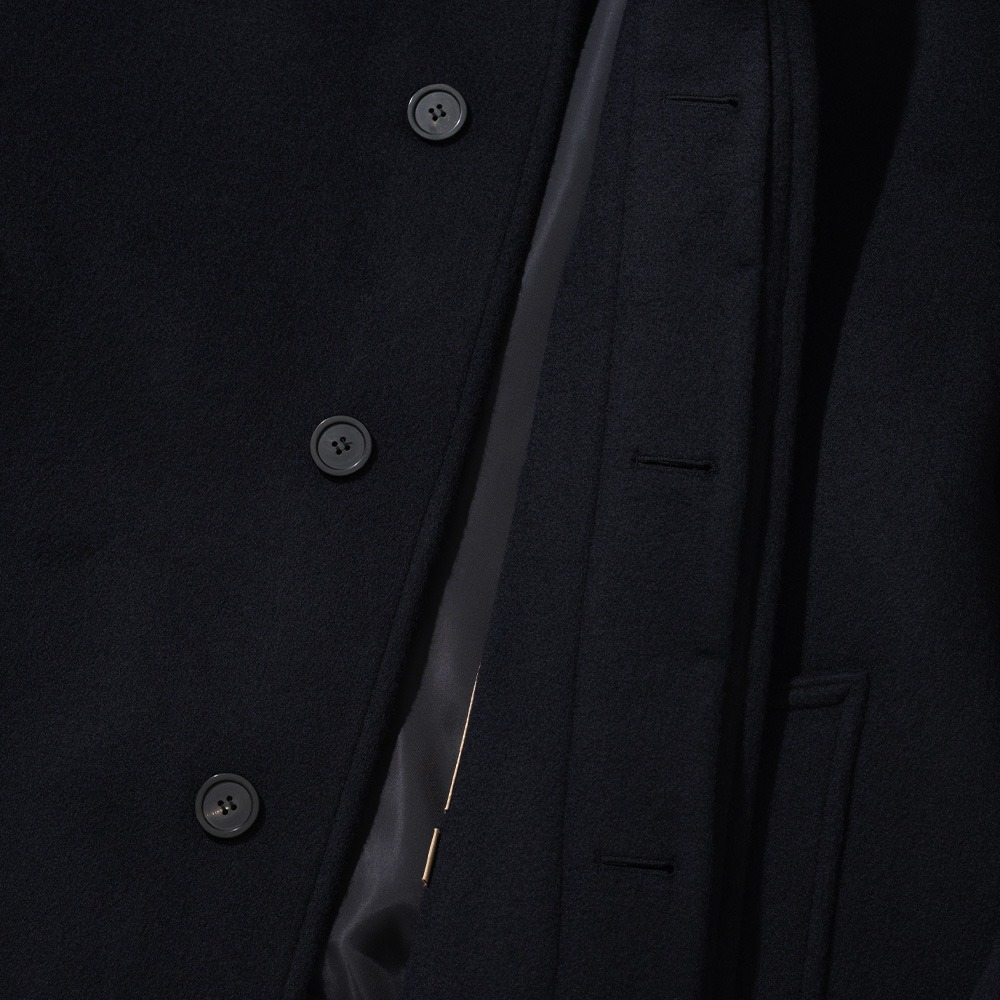
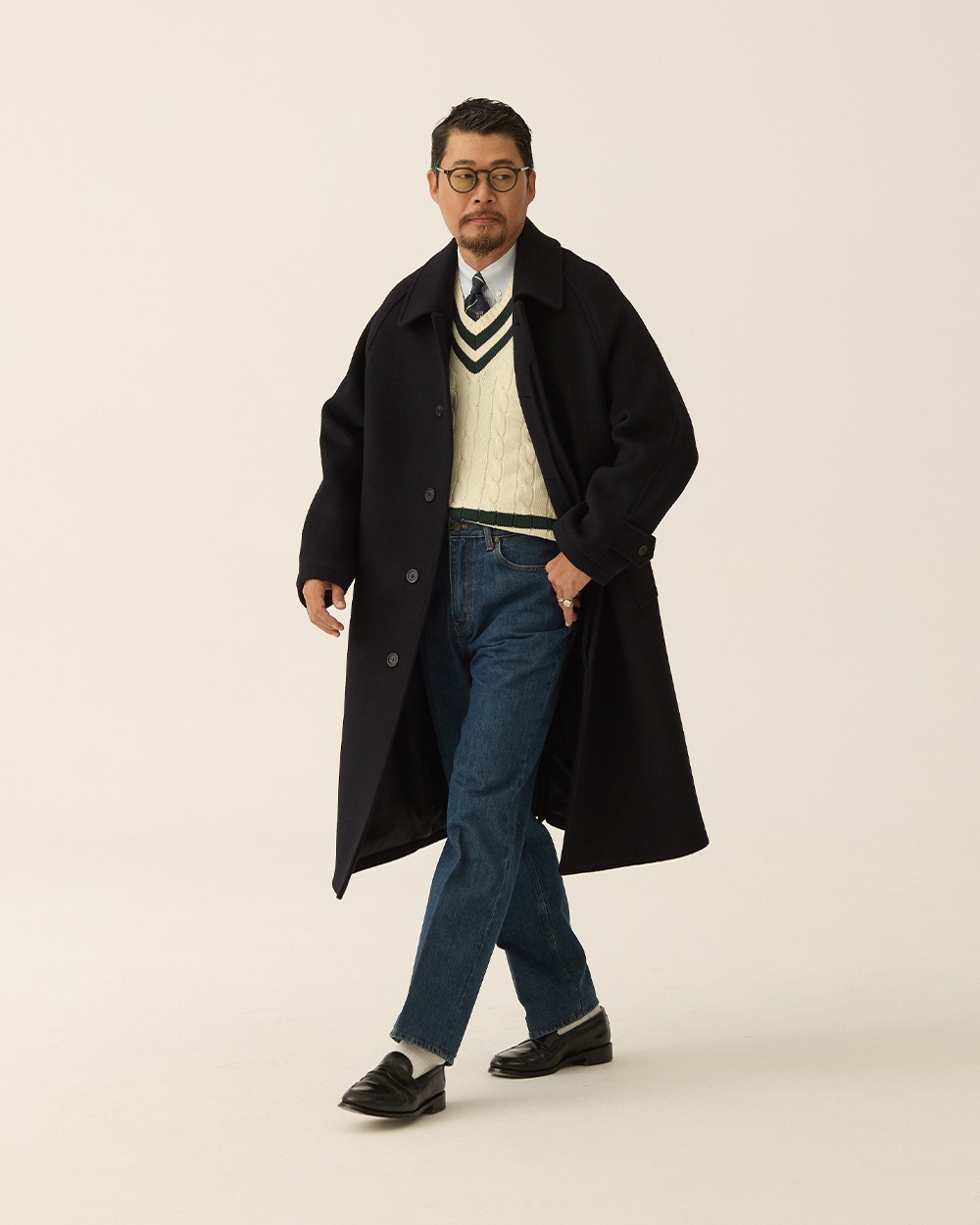
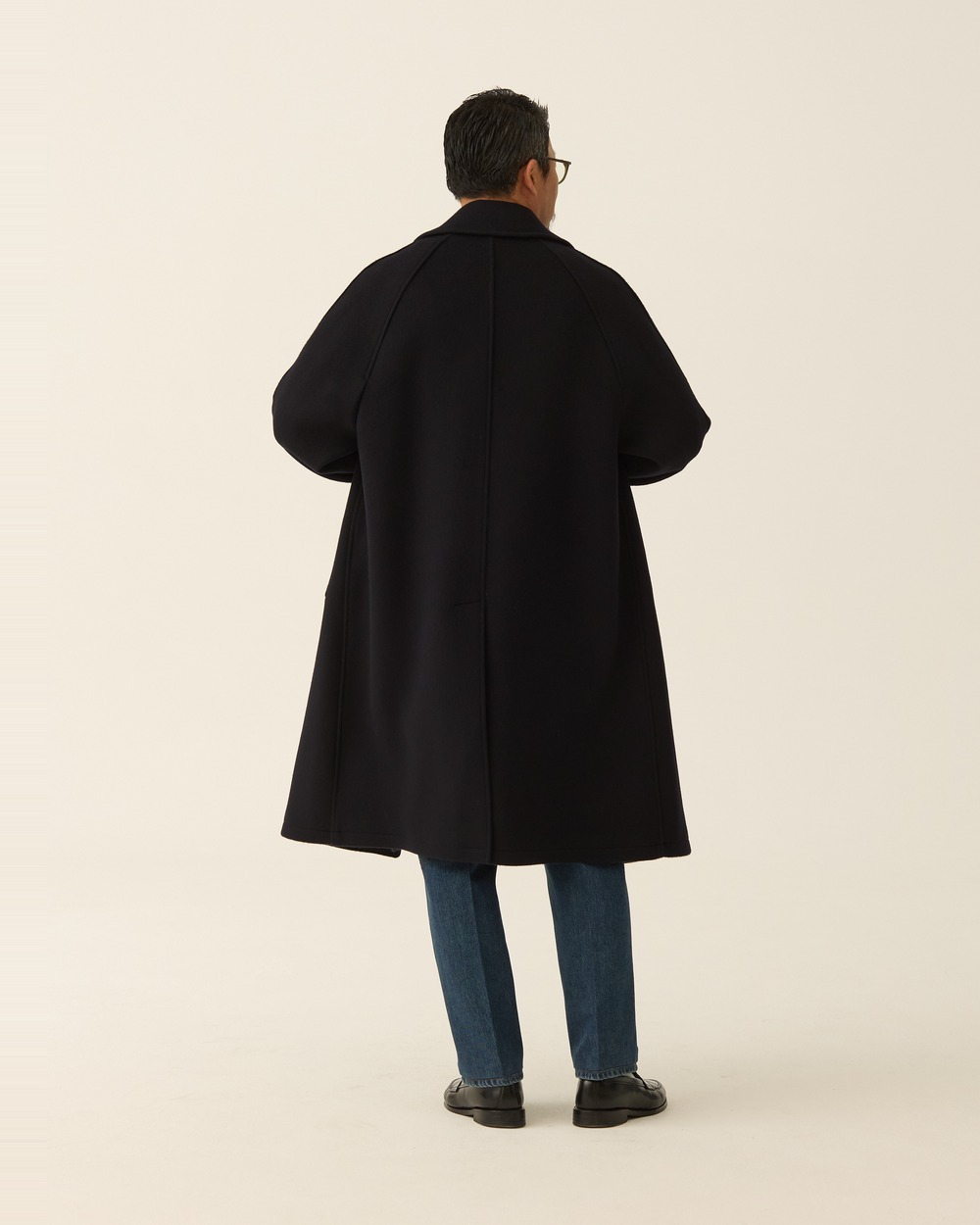
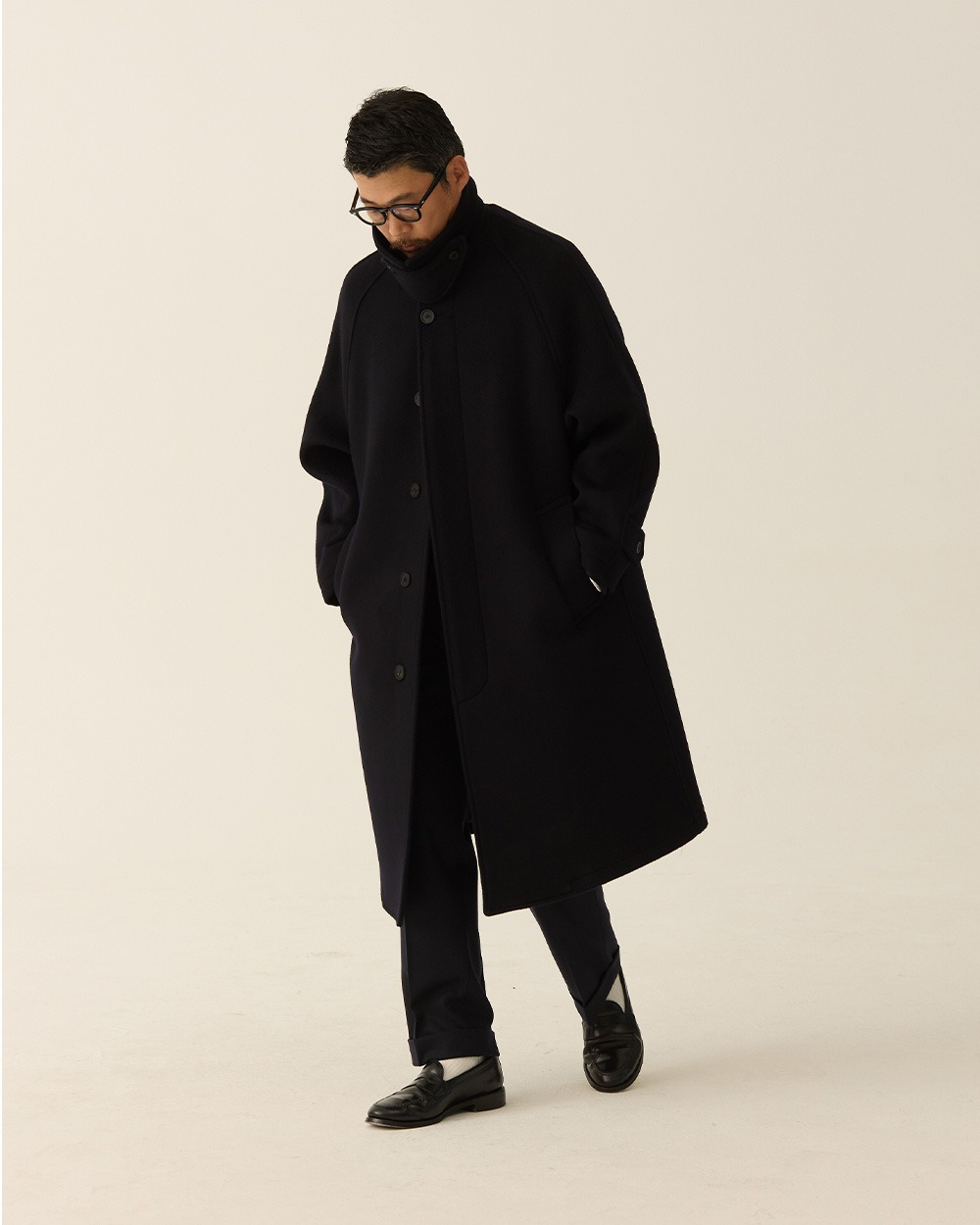
Navy, brushed wool — the one coat
A 100% wool face, brushed, at 23–24 ounces: the heaviest cloth the balmacaan has been cut in here, a class above the herringbone, with a soft, matte surface that reads solid from across the street. Navy is the trad answer and the easier coat. It takes a grey suit, a cricket sweater, a Fair Isle vest, chinos and jeans without comment, and it is the one to buy first.
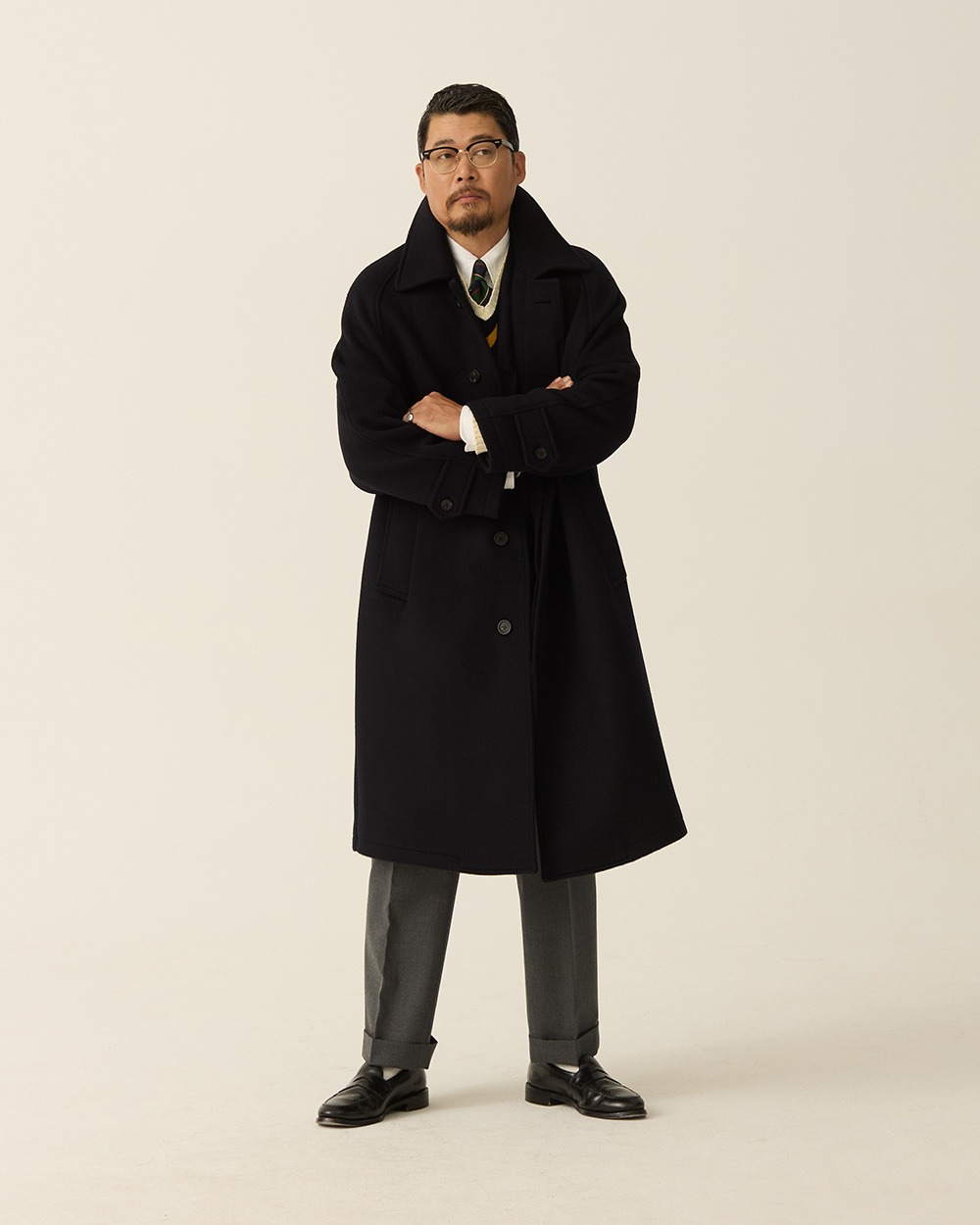
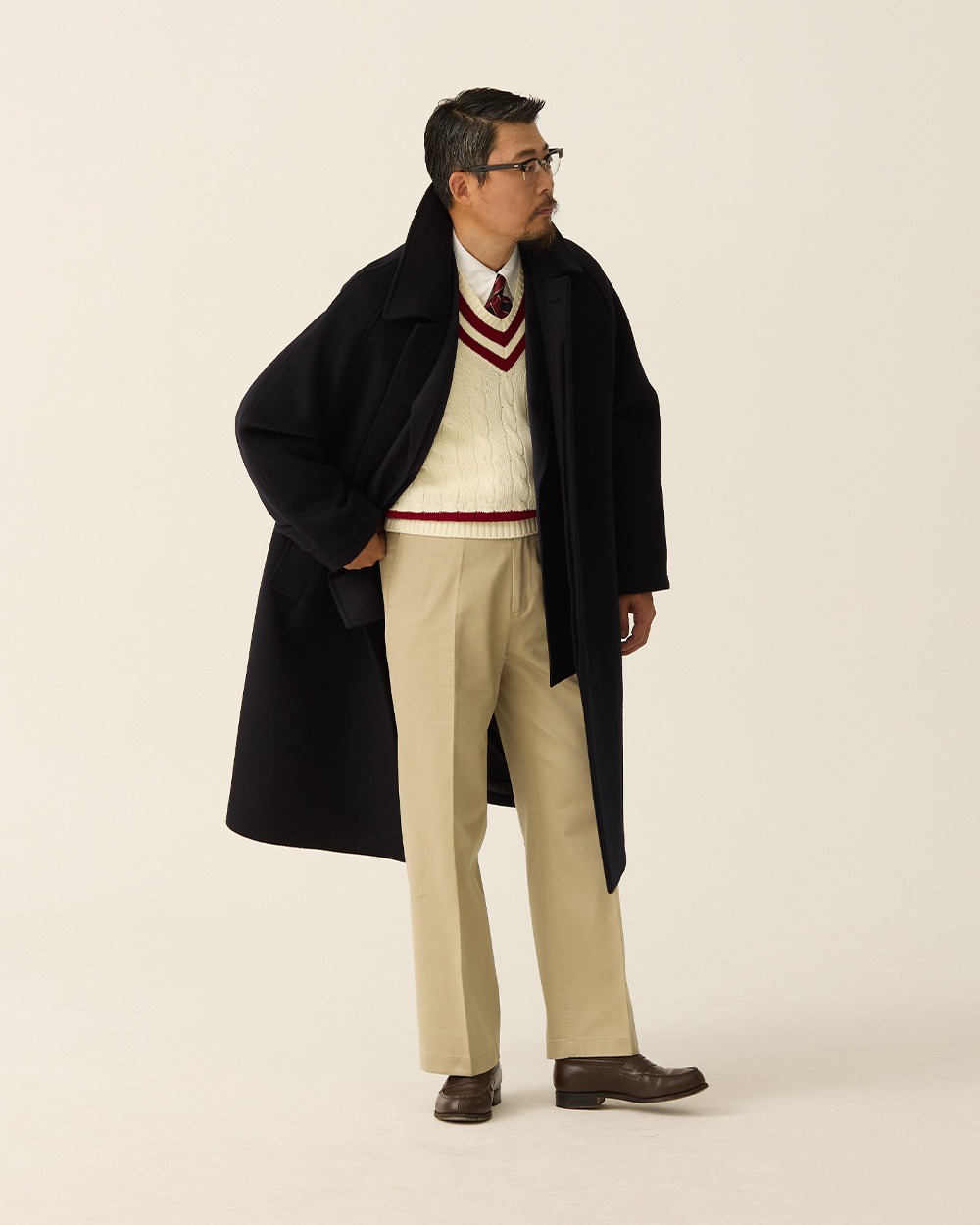
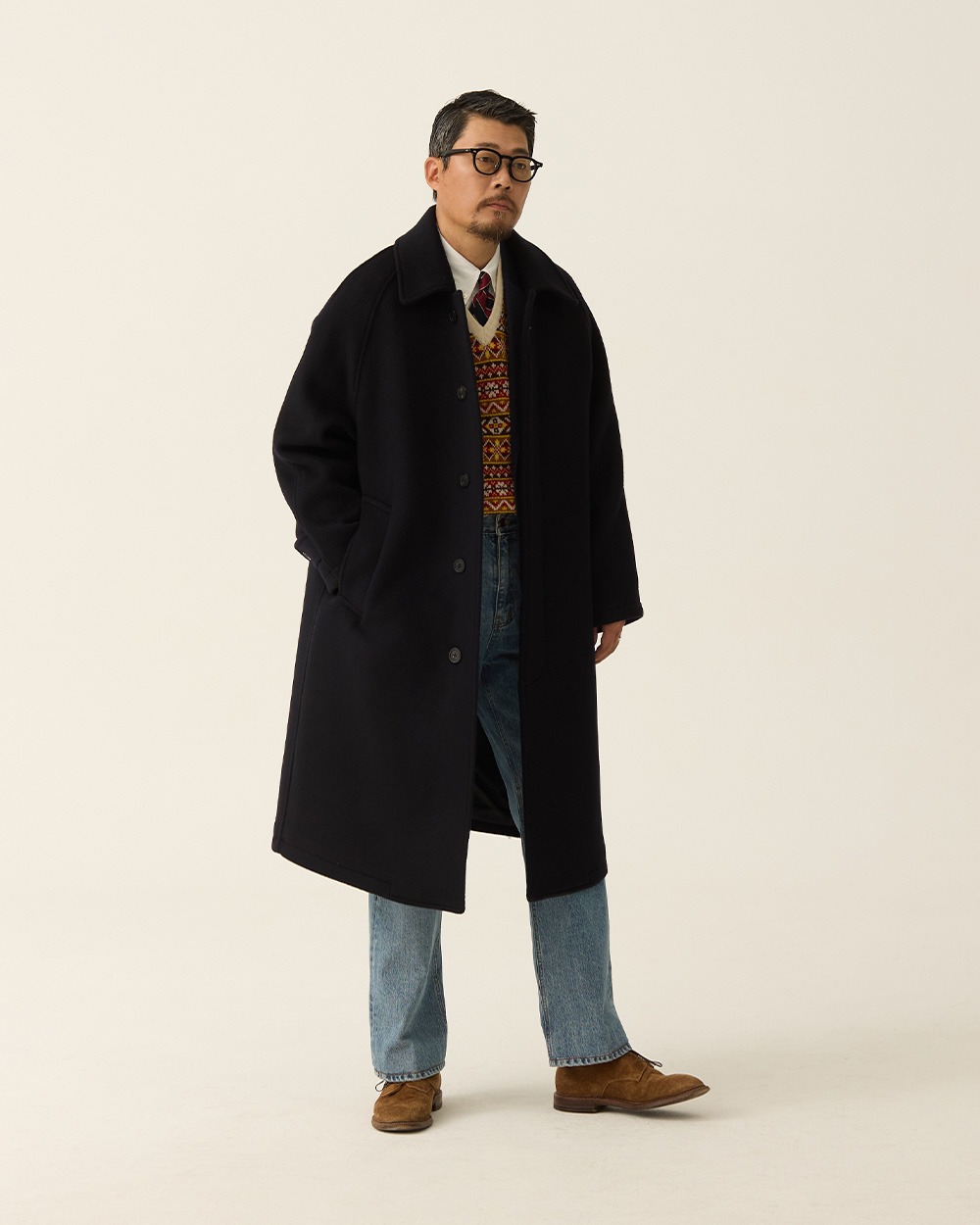
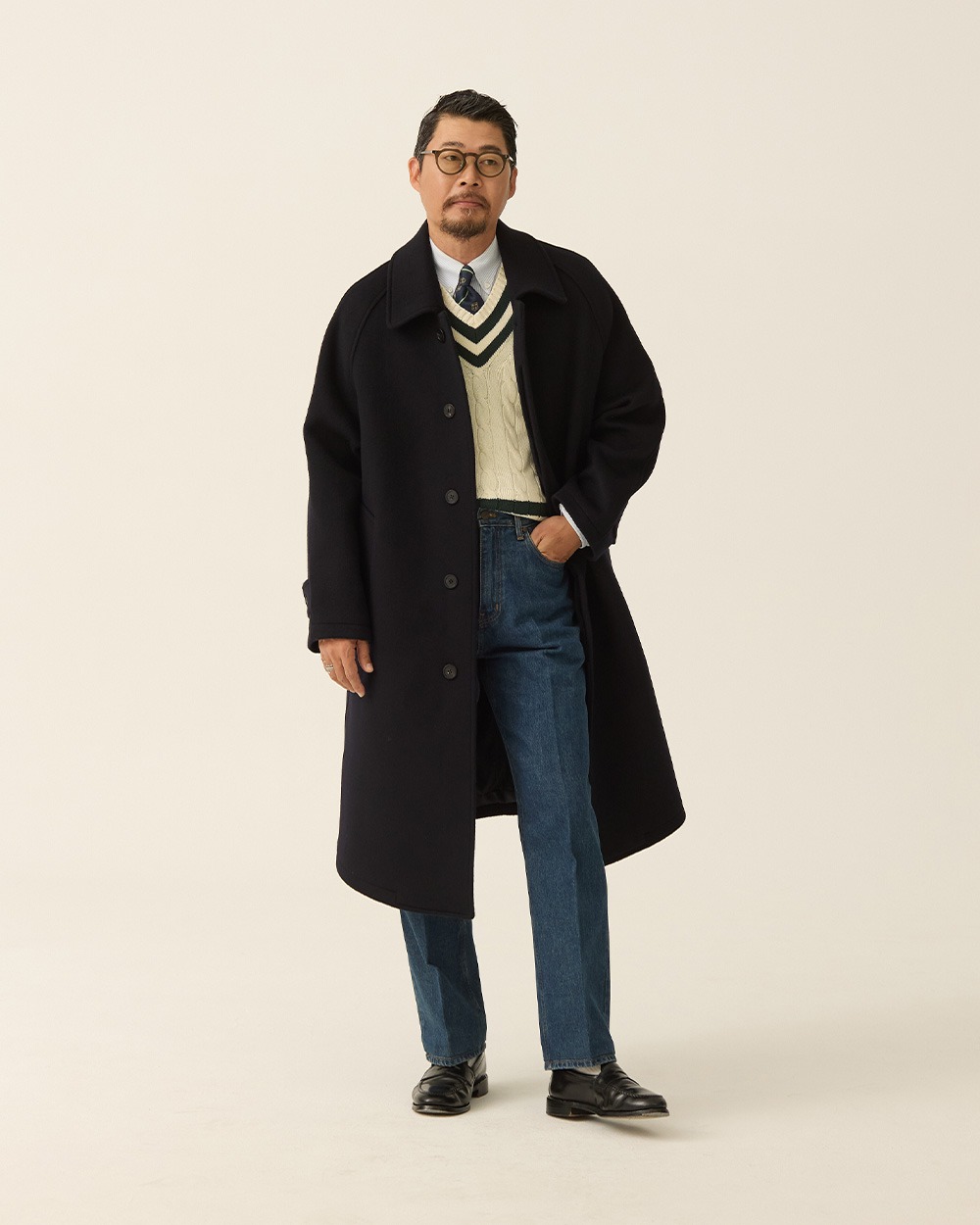
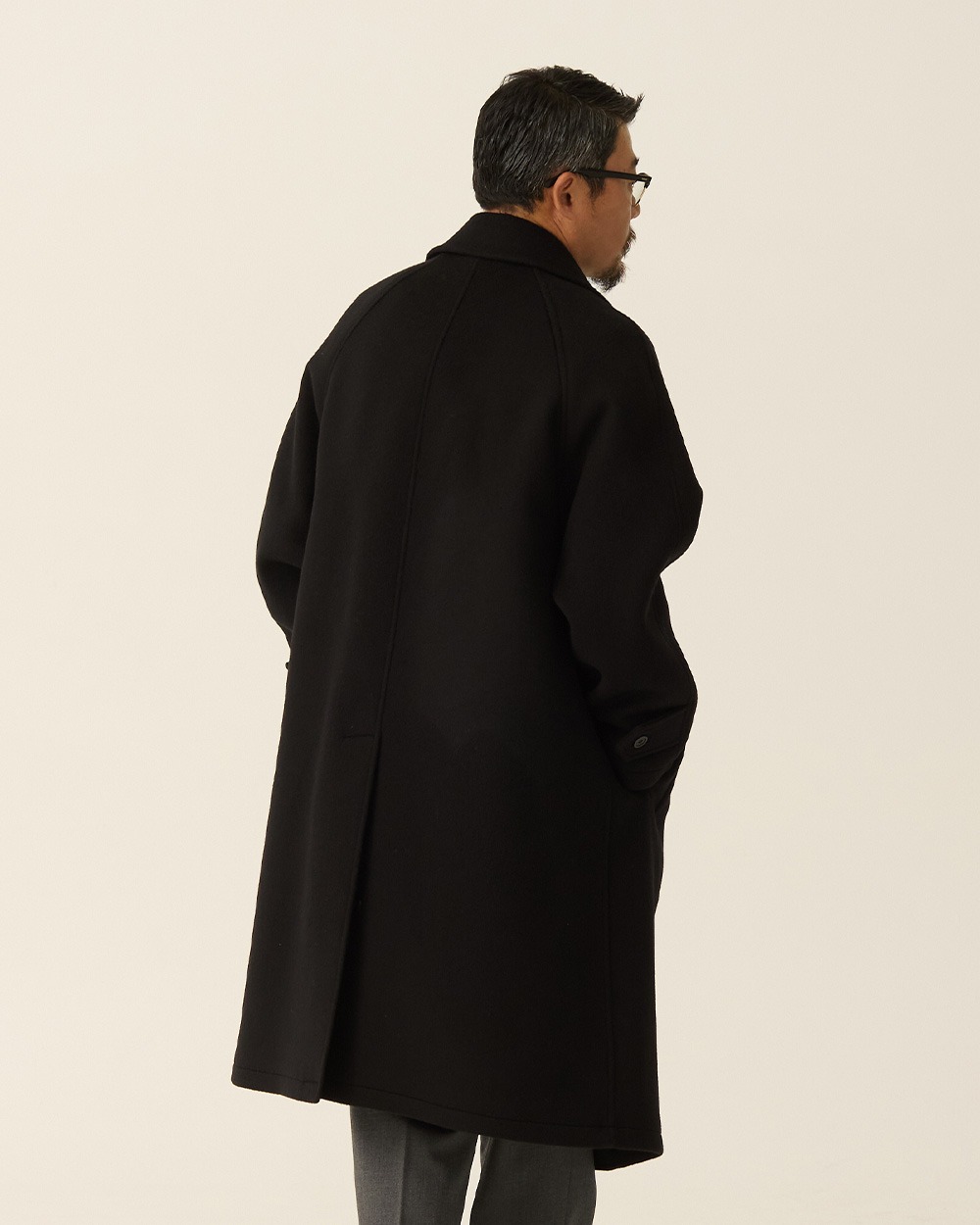
Black, brushed wool — the city coat
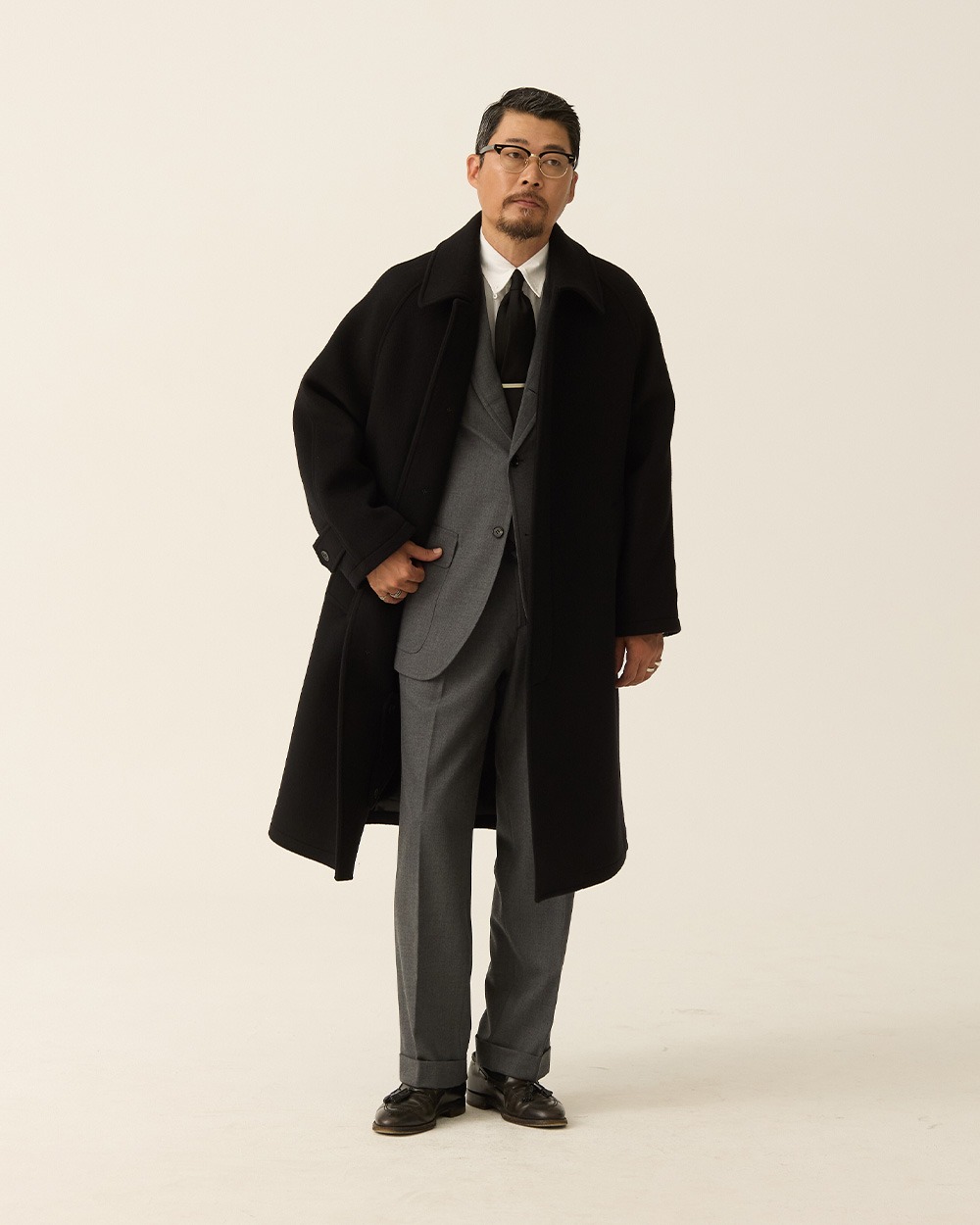
Same cloth, same cut, and a different job. Black sharpens over a grey suit and a tie, and it makes jeans look deliberate rather than casual. Over brown tweed it is harder, and that is the one combination we would leave to navy or brown herringbone.


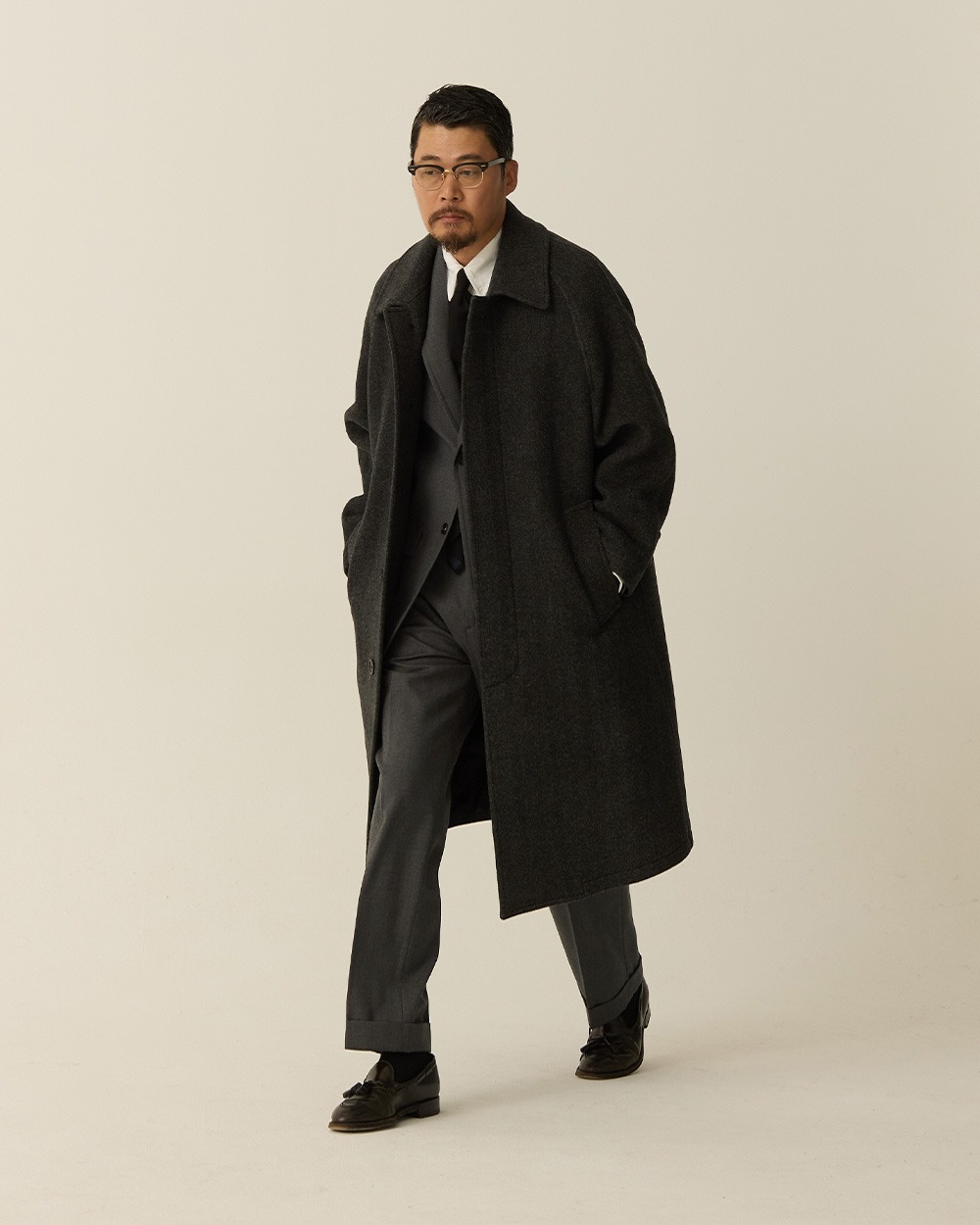
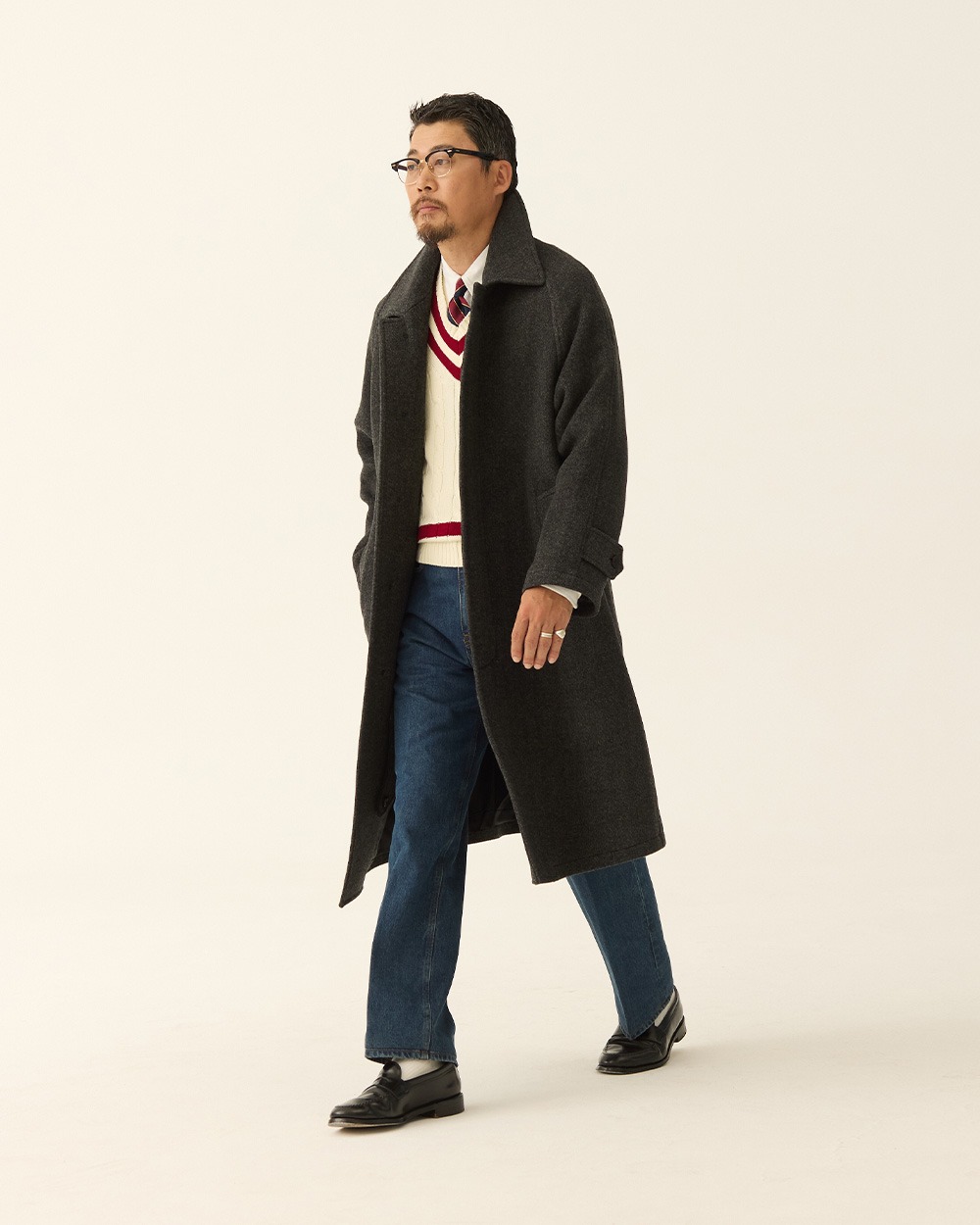
Charcoal, herringbone — the Number One’s cloth as a coat
The other two coats are the balmacaan in its original cloth: herringbone wool at 22–23 ounces, with the same collar, latch, fly front and cuff tabs. Charcoal is the one for a man who owns grey tailoring. Over grey flannels or a grey suit it looks cut from the same bolt, and it takes a tie most days without looking like an office overcoat.



Brown, herringbone — the country coat
Brown is the balmacaan as it started: a country coat that goes over tweed, a Fair Isle vest and khaki without thinking. It is the warmest-looking of the four and the one that disappears into the Ivy autumn palette.
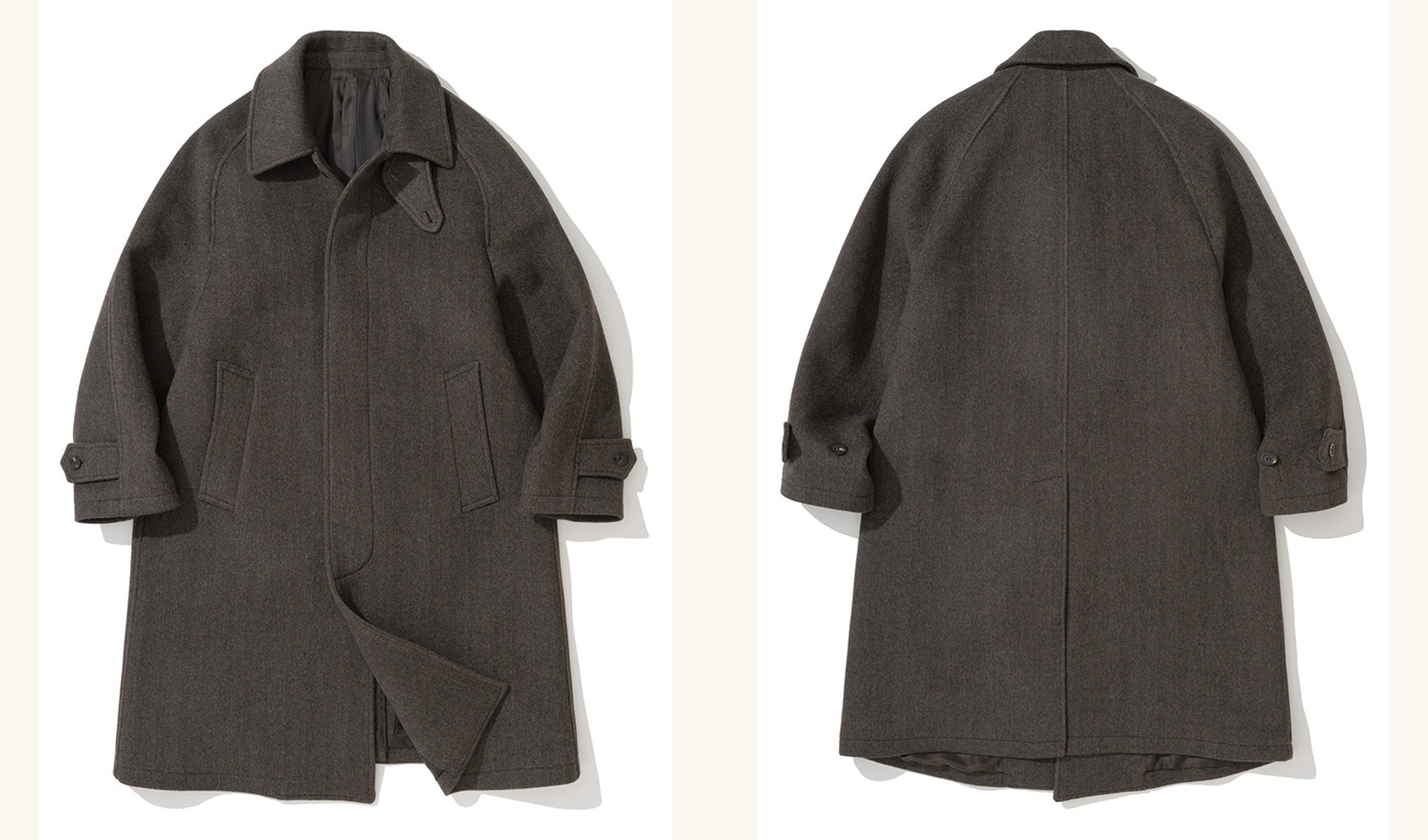
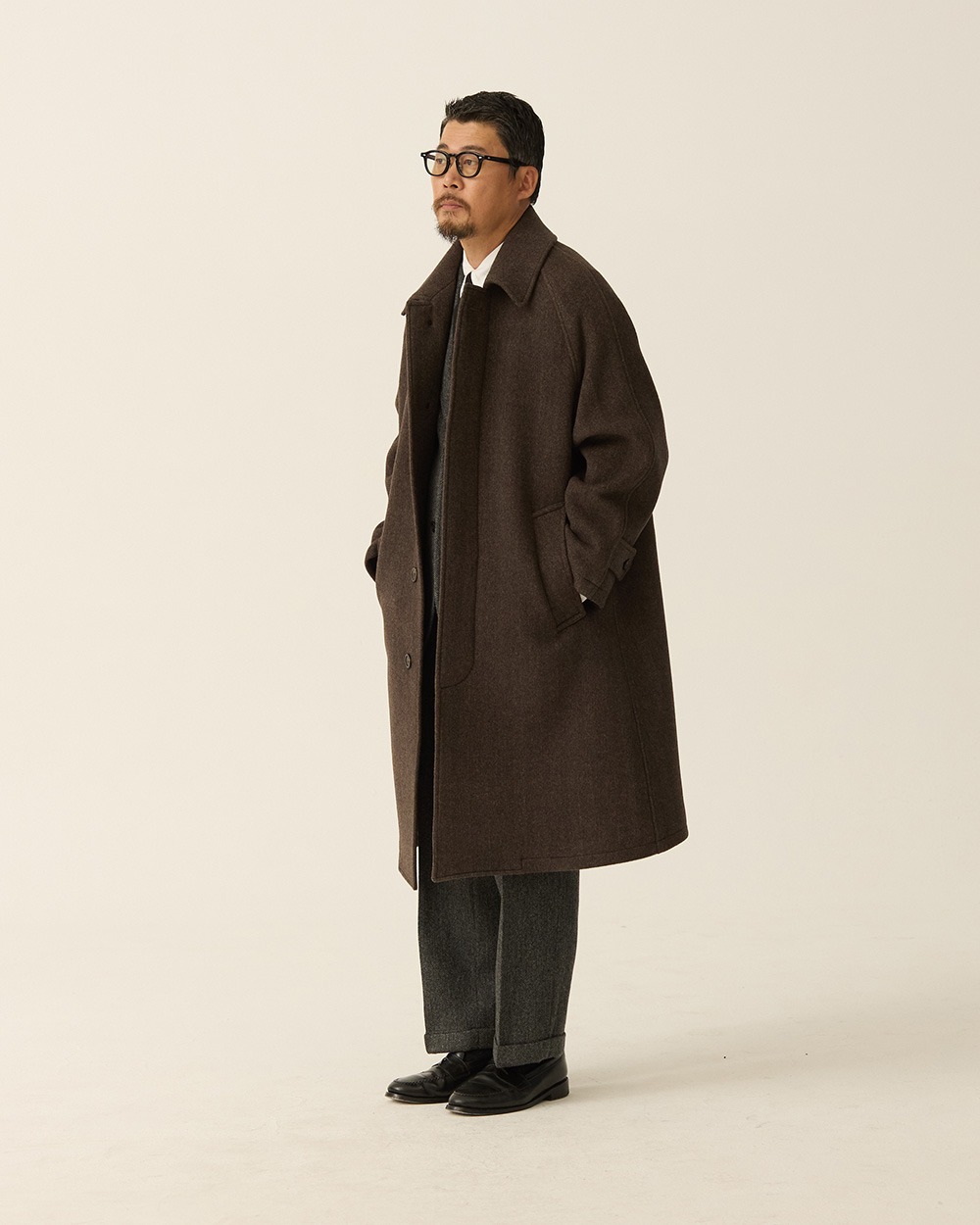

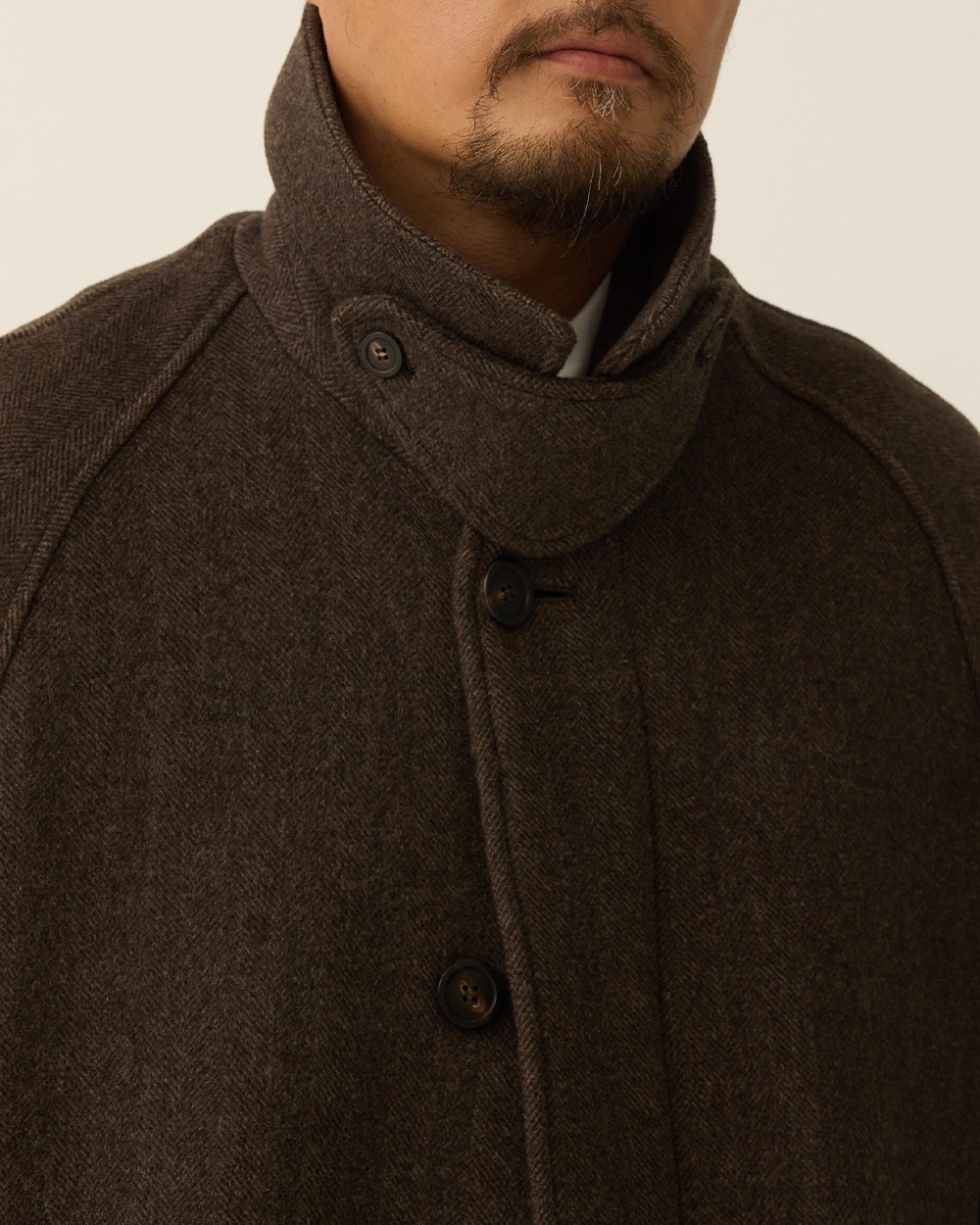
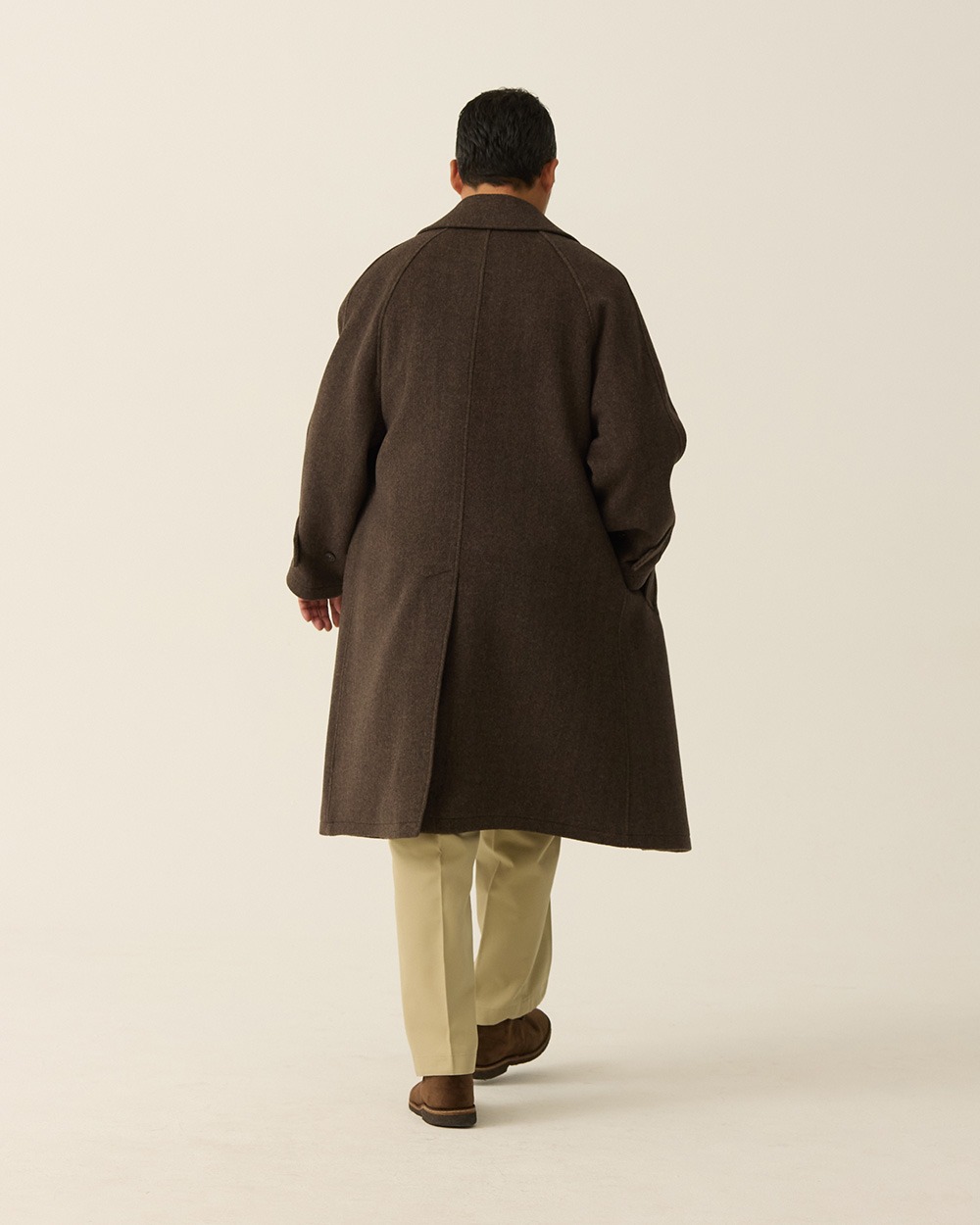
Which of the four? Navy brushed wool if you want one coat for everything. Black if your week is suits and the city. Charcoal herringbone if you own grey tailoring and want the coat to look like part of it. Brown herringbone if your winter is tweed, knitwear and khaki. Whichever you choose, length runs below the knee, as it should (see Fit and Length), and if you are between sizes, size for the jacket underneath, not the shirt.
The Polo Coat — The American Sporting Coat (turn of the 20th century onward)
Origin. The polo coat began as a robe. English polo players around the turn of the 20th century needed something to throw over their shoulders between chukkas, and English tailors — G. Bruce Boyer records — called the resulting garment a wait coat. It was a wrap: full-cut, belted rather than buttoned, designed to be shrugged on for a few minutes and shrugged off again.
It came to America in the 1920s along with the sport itself, and it stopped being sportswear almost immediately. Spectators wanted it. Then undergraduates wanted it. By the end of that decade the camel hair coat had moved from the sidelines to Nassau Street, New Haven, and Cambridge; Boyer’s account of the Yale-Princeton football game around 1929–30 has polo coats outnumbering the raccoon coats that had defined the campus silhouette a few years earlier.
Brooks Brothers has carried the style since the early years of the 20th century. Whether any single house introduced it to America is not something the available sources establish, and this guide does not claim it.
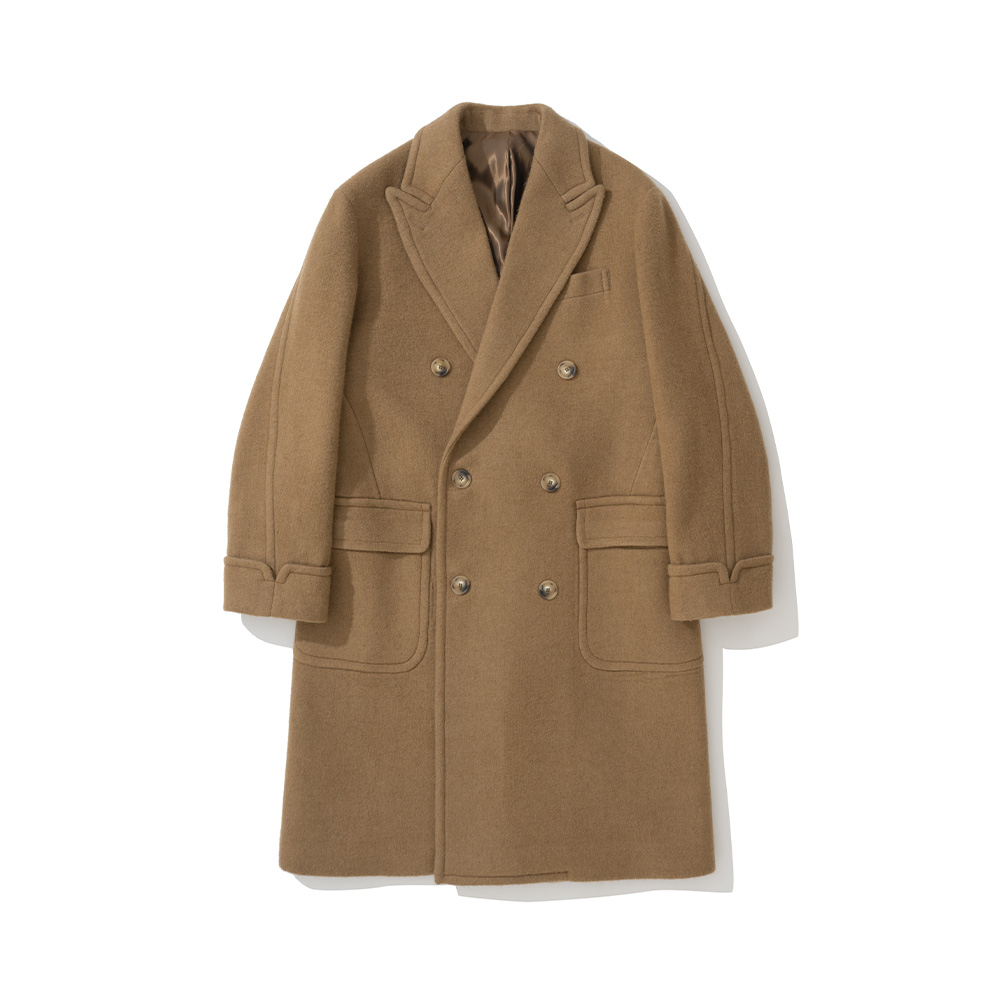
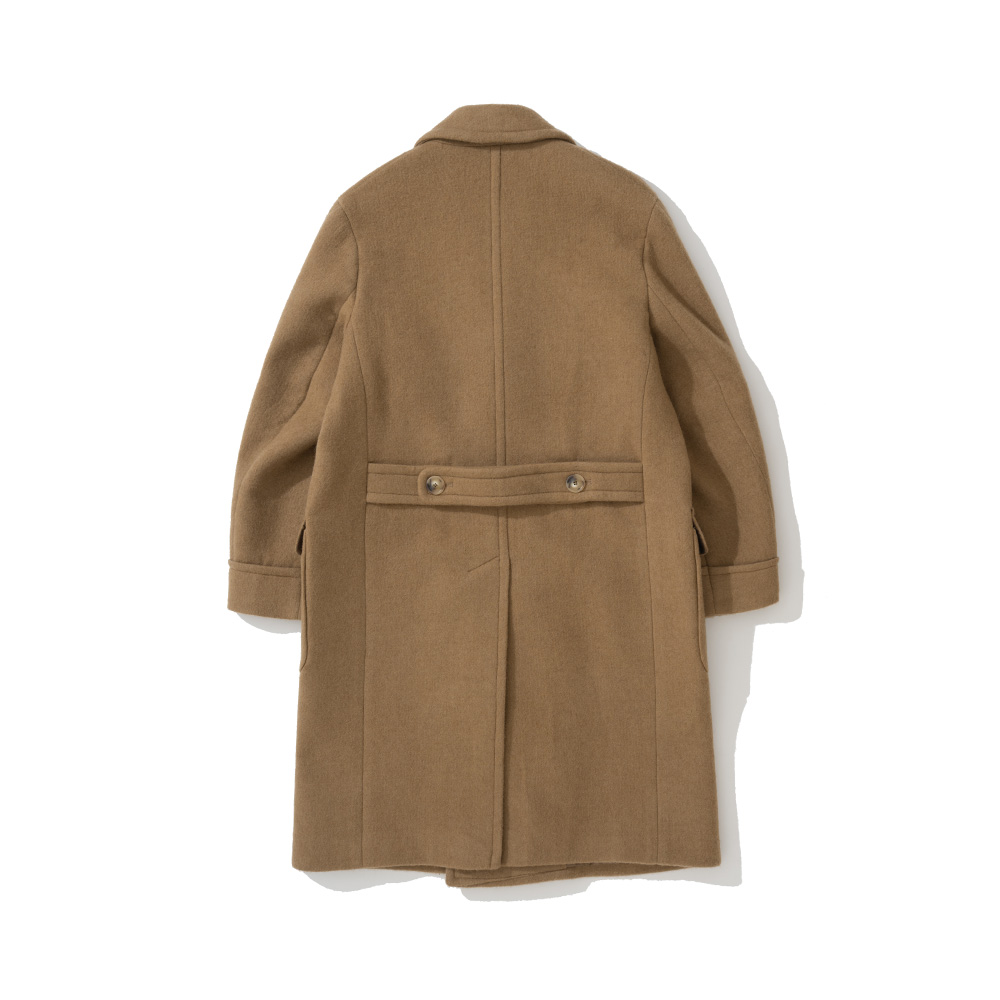
How it reads. Loud, in the specific way trad permits. Six buttons in a double-breasted front, peak lapels, patch pockets with flaps, a welt at the chest, and a half belt across the back that is the coat’s signature — a vestige of the wrap it used to be. In camel it is the single most recognizable coat in the American wardrobe. It does not blend, and it is not supposed to.
That is a harder sell in Seoul, where menswear leans quiet. Wearing one here is a decision, not a default.
The half belt is worth understanding rather than just noticing. It does not fasten anything. It exists to gather the back cloth and give a very full coat some shape at the waist without darts or suppression — the same problem the sack jacket solves by ignoring it. The polo coat solves it with a strap.
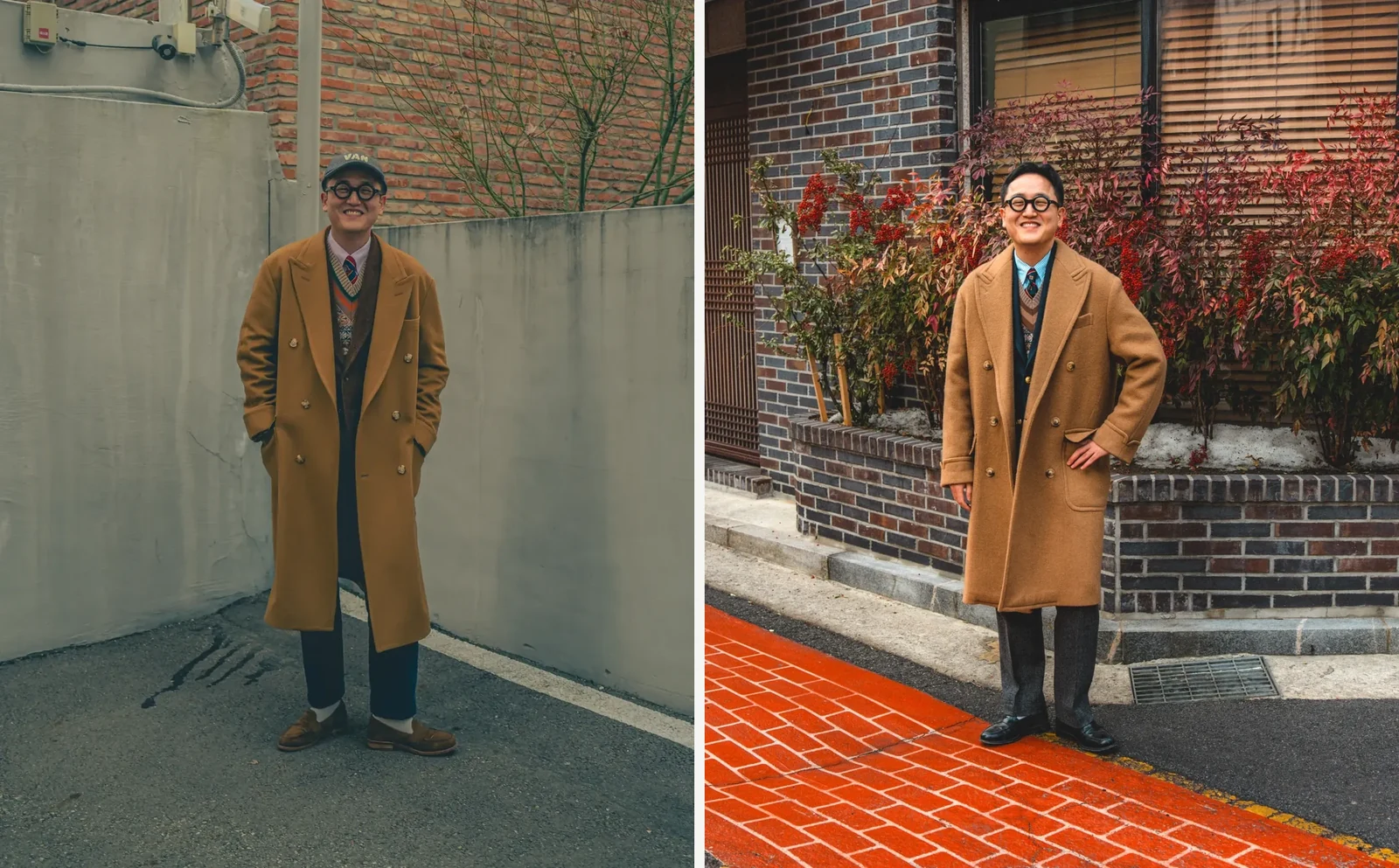
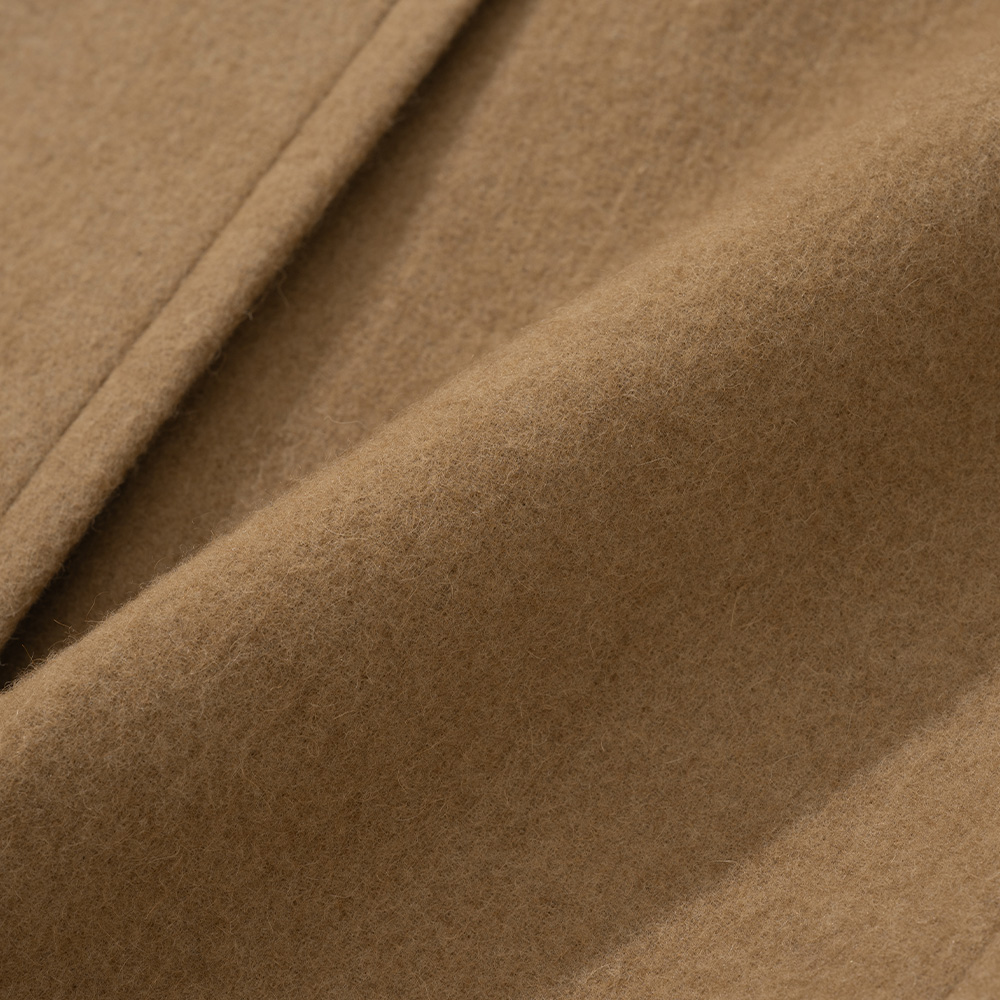
Weight is where most modern overcoats quietly give up. Twenty-two ounces is the class the original coats were made in, and almost nothing on the market now goes there. The Camel Wool Polo Coat is cut in a 40% camel, 60% wool cloth at 22oz — genuinely heavy, in the weight class the original coats were made in and well above what most contemporary overcoats use. Six-button double-breasted front, peak lapels, flap patch pockets, chest welt, half belt, hook vent with vent buttons, buffalo horn buttons, core-spun thread. Length runs 107–110cm across the three sizes, which puts it below the knee on most wearers — full length, as intended, not the cropped modern interpretation.
There is also a navy colorway in the same cloth and cut, both at $583. Navy is a departure from the camel original, and it is an honest one: it takes the polo coat’s construction and drops its volume by about half. If the camel version is a coat people will comment on, the navy is the one you can wear to work every day of the week without anyone deciding you are A Person Who Wears A Polo Coat.
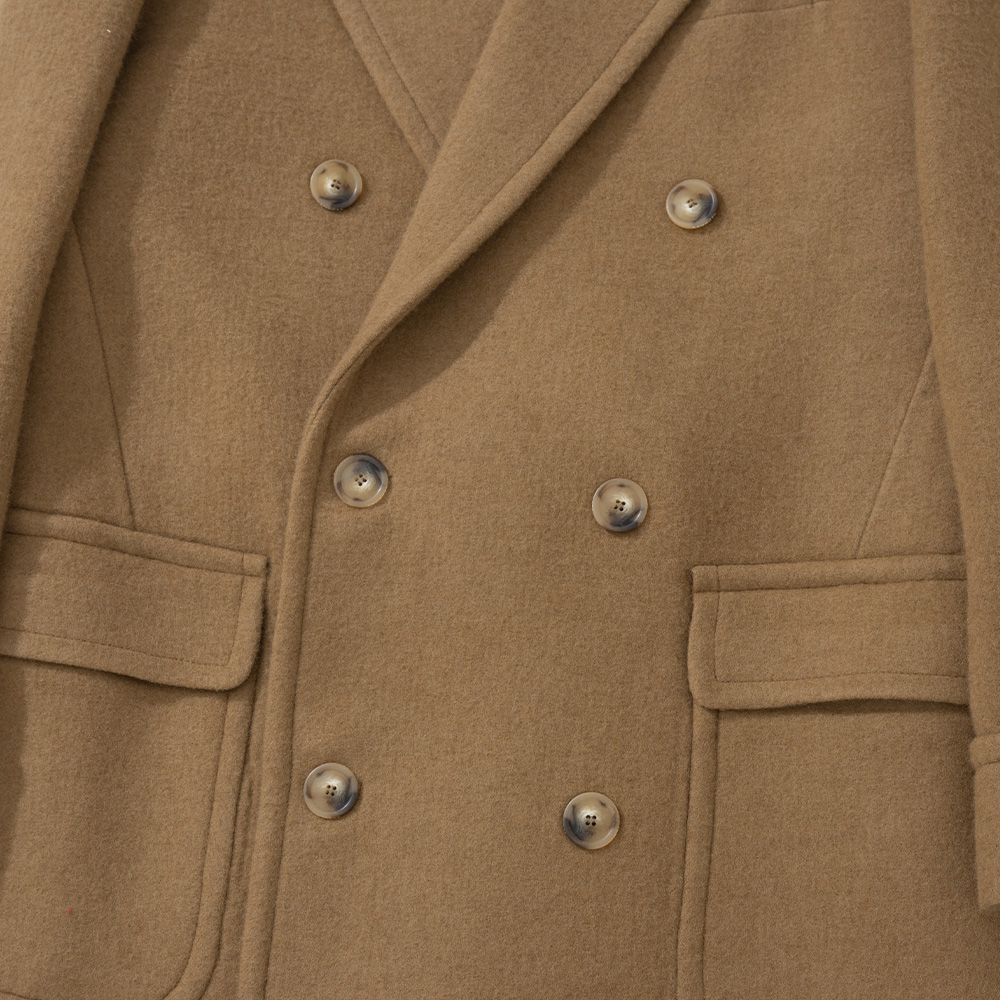
Two outfit registers. Social: camel polo coat over a navy blazer, grey flannel, OCBD and a rep tie — the register the coat was built for, and still the best argument for it. Weekend: camel polo coat over a heavy shetland and dark indigo denim, worn open with the belt loose. The coat is formal enough that it pulls the whole outfit up rather than looking overdressed.
The weekend version travels to Seoul most easily. Nobody here reads a camel coat over a heavy sweater as dressing up.
The Shoulder Question — What Actually Goes Over a Sack Jacket
Here is what the overcoat guides leave out.
The defining feature of American trad tailoring is the natural shoulder: no padding, no rope roll at the sleeve head, a shoulder line that follows the body it is on. It is the reason a sack jacket looks the way it does, and it is the first thing that goes wrong when you put the wrong coat over it.
The failure mode. A slim, structured modern overcoat has its own shoulder — padded, roped, and cut narrow to sit close. Put that over a natural-shouldered jacket and you now have two shoulder lines: the soft one underneath and the hard one on top, half an inch apart, disagreeing. The coat also has to stretch across a jacket it was not cut to clear, so the chest pulls and the button line strains. This is the single most common way a good trad outfit is ruined in December, and it happens at the point where nobody is looking.
Why the raglan wins. The balmacaan has no shoulder seam at all. The raglan runs diagonally from collar to underarm, so the cloth simply drapes over whatever shape is beneath it and takes that shape. Over a natural-shouldered jacket, the balmacaan reproduces the soft line exactly — it cannot fight it, because it has no shoulder of its own to fight with. Over a heavy sweater and no jacket, the same thing happens. This is the reason the raglan overcoat has been the default over soft tailoring for a century, and it is not an aesthetic preference. It is geometry.
Why the polo coat also works. The polo coat does have set-in sleeves, which by the logic above ought to be a problem. It is not, for one reason: the coat is enormous. It descends from a wrap, and it is cut with the volume of one. The shoulder is set wide and soft rather than narrow and structured, so it sits over the jacket’s shoulder rather than on top of it, and the chest has room to spare. A full-cut set-in shoulder and a soft shoulder coexist. A slim one does not.

The practical rule. Over soft tailoring, buy raglan or buy full. What you cannot do is buy a fitted, structured overcoat and expect it to sit over a sack jacket — and this is precisely the coat most retailers will sell you, because it looks best on the hanger and in a fitting room over a shirt. Try any winter coat on over the jacket you actually intend to wear under it. If you own a sack cut blazer, that is the test.
Worth saying plainly, because it matters here. Most winter coats sold in Seoul are cut slim and structured. The default on the rack is the coat that fights your jacket.
Balmacaan vs Polo Coat — The Practical Comparison
| Balmacaan | Polo Coat | |
|---|---|---|
| Origin | Scottish estate, mid-to-late 19th c. | English polo field, c. 1900; American from the 1920s |
| Front | Single-breasted, fly front | Double-breasted, six buttons |
| Shoulder | Raglan — no shoulder seam | Set-in, cut full and soft |
| Collar | Short Prussian, turns up | Peak lapels |
| Shape | Straight column, no waist | Full, gathered by half belt |
| Signature cloth | Herringbone tweed, melton | Camel hair blend |
| Reads as | Country, quiet, weatherproof | Social, emphatic, American |
| Best over | Anything — jacket, knitwear, suit | Tailoring; needs structure beneath |
| Formality ceiling | Smart-casual to business | Business to social |
| Formality floor | Jeans and a sweater | Jeans and a heavy sweater, open |
| Renacts | $484–$503, returns October | $583, in stock, camel and navy |
Three axes matter for daily rotation:
Range. The balmacaan coat has the wider one. It goes over a suit, over a sport coat, over a sweater, over a sweatshirt, and none of those combinations look like a mistake. The polo coat needs something with shape underneath — over a t-shirt it reads as costume. If you own one winter coat, this is the argument for the balmacaan.
Presence. The polo coat has more of it. In camel, it is the outfit; everything under it is supporting cast. The balmacaan is deliberately the opposite — it is a frame around whatever you chose that morning. Which of those you want is a temperament question, not a correctness question.
Weather. The balmacaan was engineered for it. Fly front, raglan seam, turn-up collar, and a hem long enough to keep wind off the legs. The polo coat is warm — a 22oz camel blend is warmer than most things you will find — but it was built for standing at the edge of a field looking well dressed, not for a walk in sleet.
Build Order — Balmacaan First, Polo Coat Second
If you are building an overcoat shelf, the order is settled, and for the same reason the sport coat shelf starts with glen check: buy the versatile piece first.
The balmacaan coat fills the everyday slot. It handles the commute, the weekend, the suit, and the sweater, and in herringbone or charcoal melton it never announces itself. Own one and your winter is functional.
The polo coat fills the register the balmacaan cannot reach — the coat you wear when the point is to be dressed. It is a second coat by nature, and it is a genuinely good second coat, because it does something the first one refuses to do. Buying it first is not wrong, but you will find yourself wearing a very distinctive coat to the convenience store in January.
In Seoul that trip happens more often than you would think. The order above is not a preference. It is what four months of cold decides for you.
For where all of this sits in the wider wardrobe, start at the Ivy Style Guide.
Fit and Length — What to Check
Length. Below the knee for both. The polo coat at 107–110cm is cut to the historical length, and shortening it removes the proportion that makes it a polo coat. A balmacaan coat can run slightly shorter but should still clear the knee; a cropped balmacaan loses the column line and reads as a jacket.
Length earns its keep in Seoul. The wind comes down the avenues rather than across a square, and a hem below the knee is what stops it.
Chest. Both coats should close comfortably over a jacket with a sweater under it. If it closes over a shirt and pulls over a blazer, it is the wrong coat for a trad wardrobe regardless of what it costs.
Sleeve. Long enough to cover the jacket cuff completely, with the coat sleeve ending at the wrist bone. A jacket cuff showing under an overcoat sleeve is the second most common winter fit error after the shoulder.
Shoulder, one more time. Try it on over the jacket. Not over a shirt.
Why It Still Matters in Seoul
Seoul winters make the case better than any argument can. January lows sit well below freezing, the wind moves down the avenues without much to stop it, and the season runs long enough that a coat gets worn nearly every day for four months. This is not a climate that rewards a fashionable coat. It rewards a 22oz cloth, a hem below the knee, a collar that turns up, and a cut that clears a sweater.
Both of these coats were designed under exactly those constraints, a century and a half ago and half a world away — the balmacaan for Highland weather, the polo coat for standing outdoors in an American February. Neither was designed to look good in a photograph. That they do is a by-product of having been built properly for a real problem, which is the whole trad argument in one garment.
A December morning in Jongno in a herringbone balmacaan over a tweed jacket and grey flannel reads the same as it would have in Edinburgh in 1900 or New Haven in 1958. The geography moves. The coat does not.
Common Questions
What is a balmacaan coat? A loose, single-breasted overcoat with raglan sleeves, a short Prussian collar, and usually a fly front hiding the buttons. It is named after an estate near Inverness, Scotland, and was originally a country coat in heavy tweed or gabardine.
Balmacaan vs overcoat — what is the difference? None in category: a balmacaan is one kind of overcoat, the way a polo coat or a chesterfield is. The difference is construction. A balmacaan has raglan sleeves, no waist, a fly front and a small turn-up collar; most other overcoats have set-in sleeves, a shaped body and lapels.
What does “balmacaan” mean? It is a place, not a style word: the Balmacaan estate near Inverness, on the western shore of Loch Ness. The coat was the estate’s walking coat, and the name stayed with the cut.
How warm is a balmacaan coat? As warm as its cloth. The 2026 Renacts coats are herringbone wool at 22–23 ounces and brushed wool at 23–24 ounces, both heavier than melton; over a jacket and a sweater either covers a Seoul January. A balmacaan in gabardine or cotton is a spring coat.
What is the throat latch for? Closing the collar across the throat when it is turned up, so the coat seals without a scarf. On the Renacts coat the latch buttons away inside the coat when the collar is down, so it never dangles.
What is the difference between a polo coat and an overcoat? “Overcoat” is the category; the polo coat is one style within it. A polo coat is specifically double-breasted, full-cut, half-belted at the back, with patch pockets, and traditionally made in camel hair. Chesterfields, ulsters, and balmacaans are all overcoats too.
Does a polo coat have to be camel? Historically, effectively yes — the camel hair cloth and the tan color are what defined it, to the point that “camel hair coat” became a synonym. Navy and charcoal versions keep the construction and drop the visual volume, which makes them easier to wear daily but less recognizably a polo coat.
Can you wear a balmacaan over a suit? Yes, and it is one of the coat’s advantages. The raglan shoulder drapes over a soft-shouldered suit jacket without creating a second shoulder line. In navy or charcoal melton it is fully appropriate for business; in herringbone tweed it reads country and pairs better with a sport coat.
Which overcoat should I buy first? The balmacaan, if you are building a trad wardrobe and buying one coat. It covers more registers and works over more of what you already own. The polo coat is the better second coat.
Is herringbone or melton better for a balmacaan? Herringbone reads as texture and leans country — it is the better match for tweed jackets and flannel. Melton is denser, plainer, and more urban, and it is the better match for suits. Herringbone first if you dress casually, melton first if you wear tailoring to work.
For the cloth and construction background, see Sport Coat Essentials and Glen Check & Gun Club. For the tailoring underneath, see What Is a Sack Suit. For the broader register, start at the Ivy Style Guide.
Coats are on the Renacts coat shelf.