J.Press × Aaron Chang Pop-up: A Trad Philosophy Exchange in Sindang-dong
A Pop-up That Wasn’t Really About Shopping
The J.Press × Aaron Chang popup took place on June 29–30, 2024, inside a borrowed womenswear showroom in Sindang-dong. Not Gangnam. Not Itaewon. Sindang-dong — a neighborhood of convenience stores, tangled overhead cables, and tteokbokki joints. The location was deliberate.
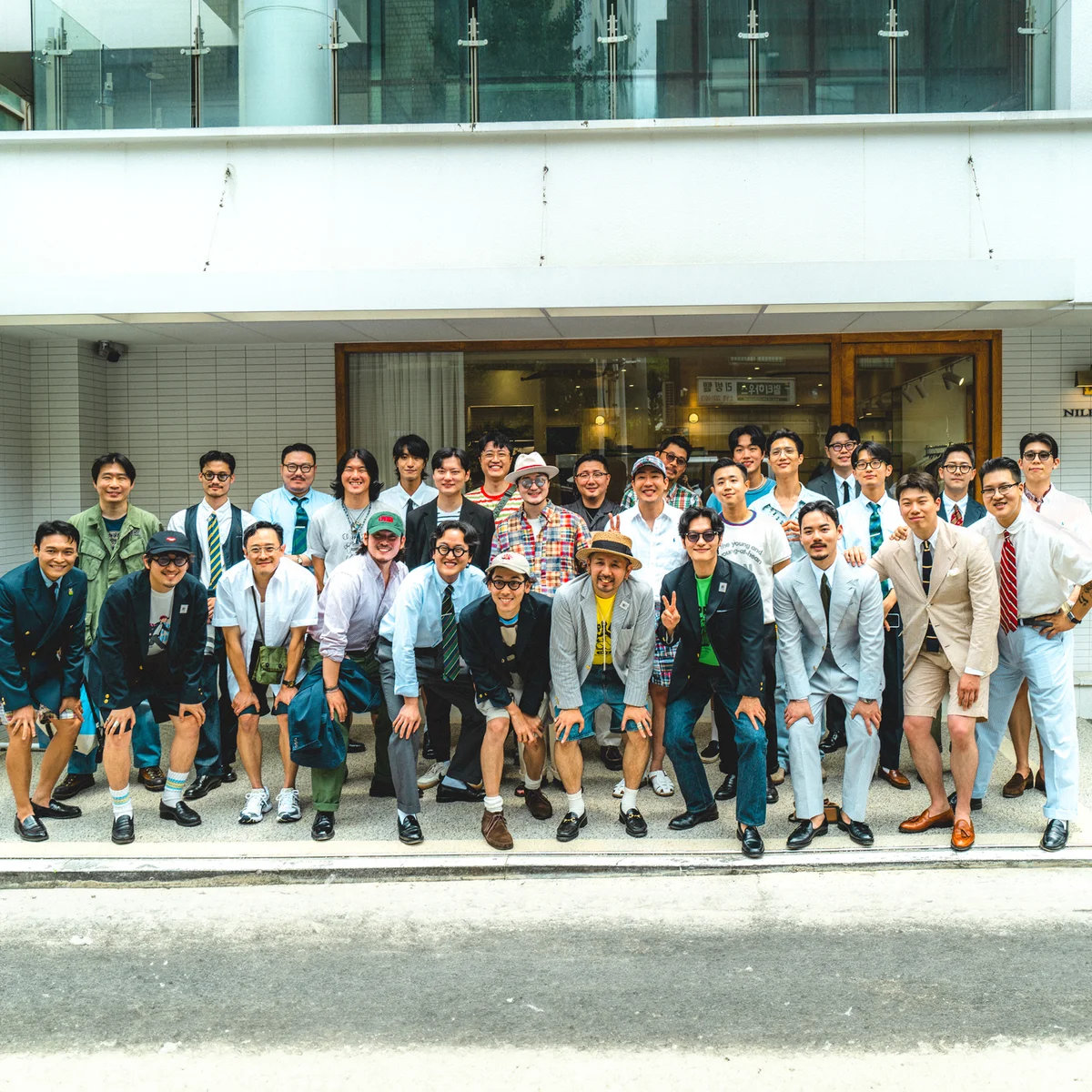
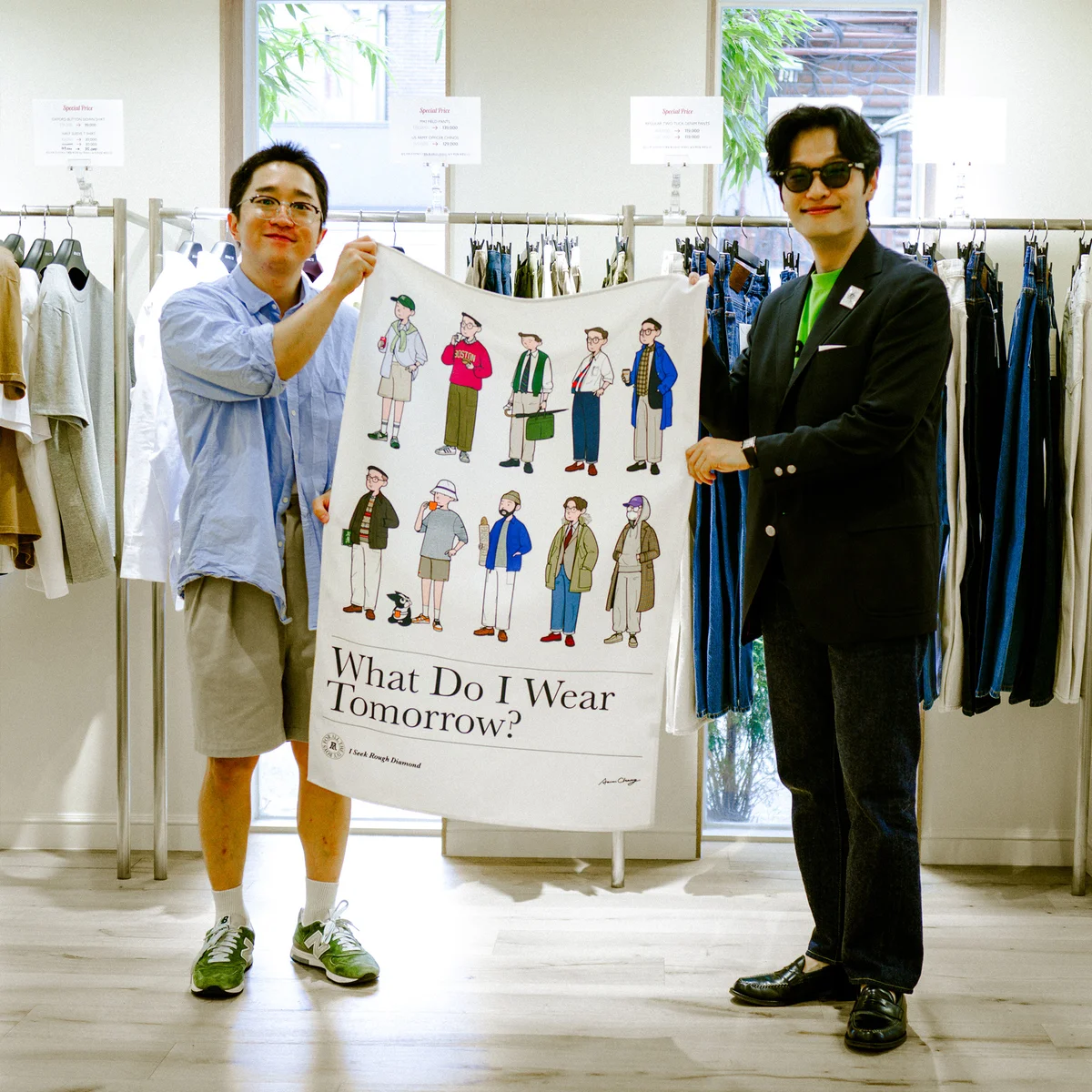
The event was organized by Gentlemens Club, hosted in the NILBY P showroom, and centered on a collaboration between J.Press Sons Aoyama shop director Tomoya Kurono and Ivy Boy illustrator Aaron Chang. Six collab products were released. But the products were almost beside the point.
Here’s what actually mattered: two people stood in front of easels and explained why they made what they made. Then everyone walked through the neighborhood together. That was the event. And it was one of the most meaningful trad gatherings Seoul has seen.
The Collaborators: Kurono and Chang
Tomoya Kurono directs J.Press Sons Aoyama — the Tokyo flagship that keeps J.Press’s century-old American trad DNA alive through a distinctly Japanese lens. He’s the guy responsible for deciding what J.Press means in 2024, at least in that shop. That’s not a small job.
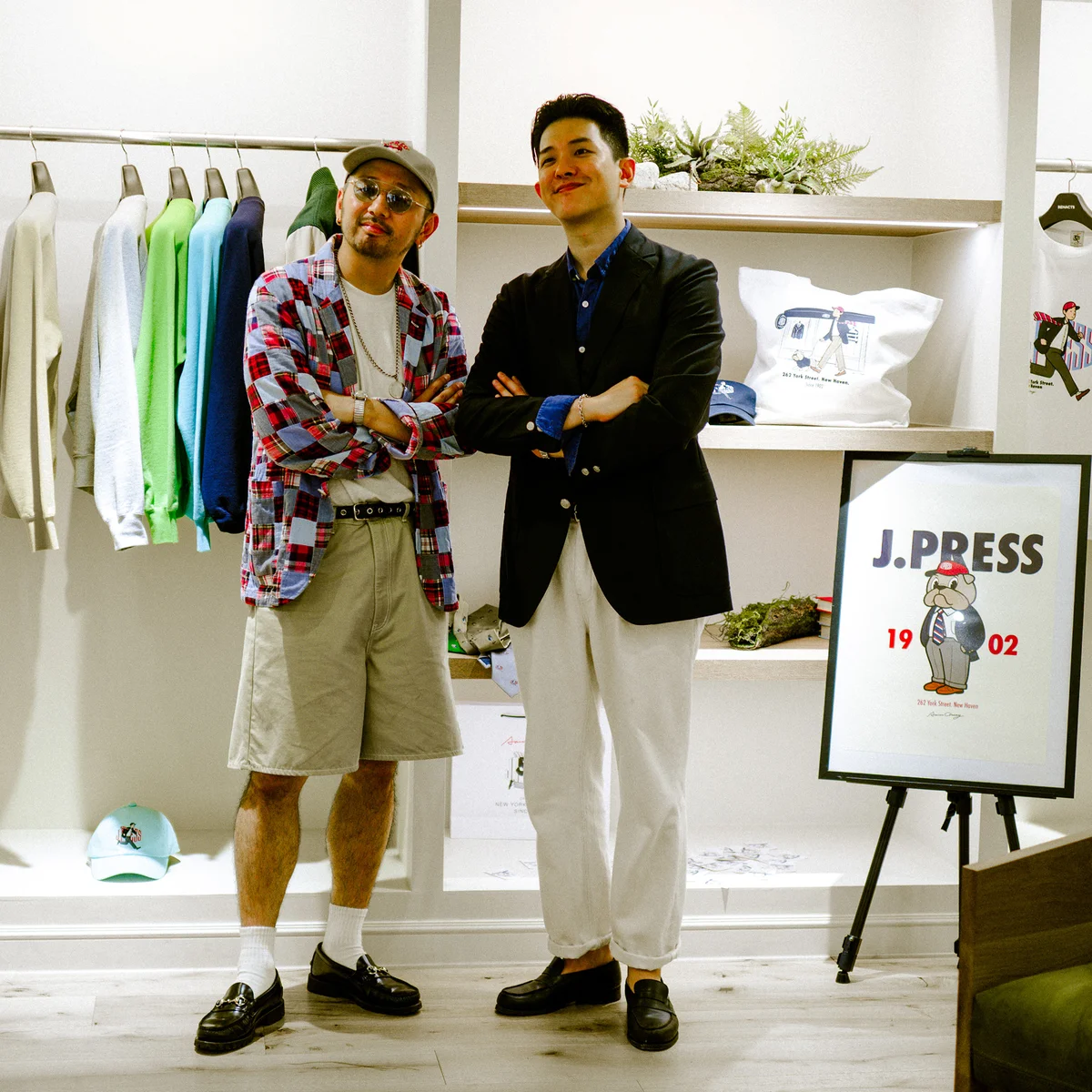
Aaron Chang is an illustrator known for his “Ivy Boy” character series — stylized figures in varsity lettermans, chambray shirts, double-breasted blazers, and anoraks. His work sits somewhere between fashion illustration and cultural commentary. Each character is a little essay on dressing with intention.
The two had been circling each other’s work for a while. The collaboration felt less like a brand deal and more like two people who’d been having the same conversation separately finally deciding to have it together.
What They Actually Made
Six items. Nothing overwrought.
Sweatshirts in three colorways — white, lime, navy — with a co-branded graphic. An oxford shirt. An orange graphic tee featuring Aaron Chang’s reinterpretation of the J.Press bulldog mascot (J.Press was founded in 1902). A necktie. A ball cap. An eco tote bag.
The standout piece wasn’t wearable at all. It was a large fabric panel titled “What Do I Wear Tomorrow?” — ten Ivy Boy characters in different trad outfits, each holding props, each representing a different answer to that daily question. Bold text at the bottom. Aaron Chang’s hand-script signature. It functioned more like an art print than merchandise.
The best collab items make you think about the philosophy behind the clothes, not just the clothes themselves. This panel did exactly that.
The Presentation: Philosophy Before Product
This is where the popup diverged from every other pop-up you’ve attended. Before anyone could browse the rack, Kurono and Chang stood at the front of the showroom and gave a presentation. Not a sales pitch. A real presentation.
They talked about what they valued in the collaboration process. What trad style means to each of them — one from Tokyo, one from Seoul. Why they chose specific details. The audience stood in a line across the showroom, listening.
A man in a cream pinstripe seersucker suit. Another in madras patchwork shorts and a repp tie. Someone with a camera slung around their neck. The mood was collegiate Q&A, not retail event. Think seminar, not sample sale.
Three editors from 2ND Magazine — Japan’s premier trad publication — were there documenting everything for a September issue feature. That detail alone tells you something. A Japanese magazine was covering a Korean trad event. The gravity of the scene is shifting.
The Signing and the Human Moments
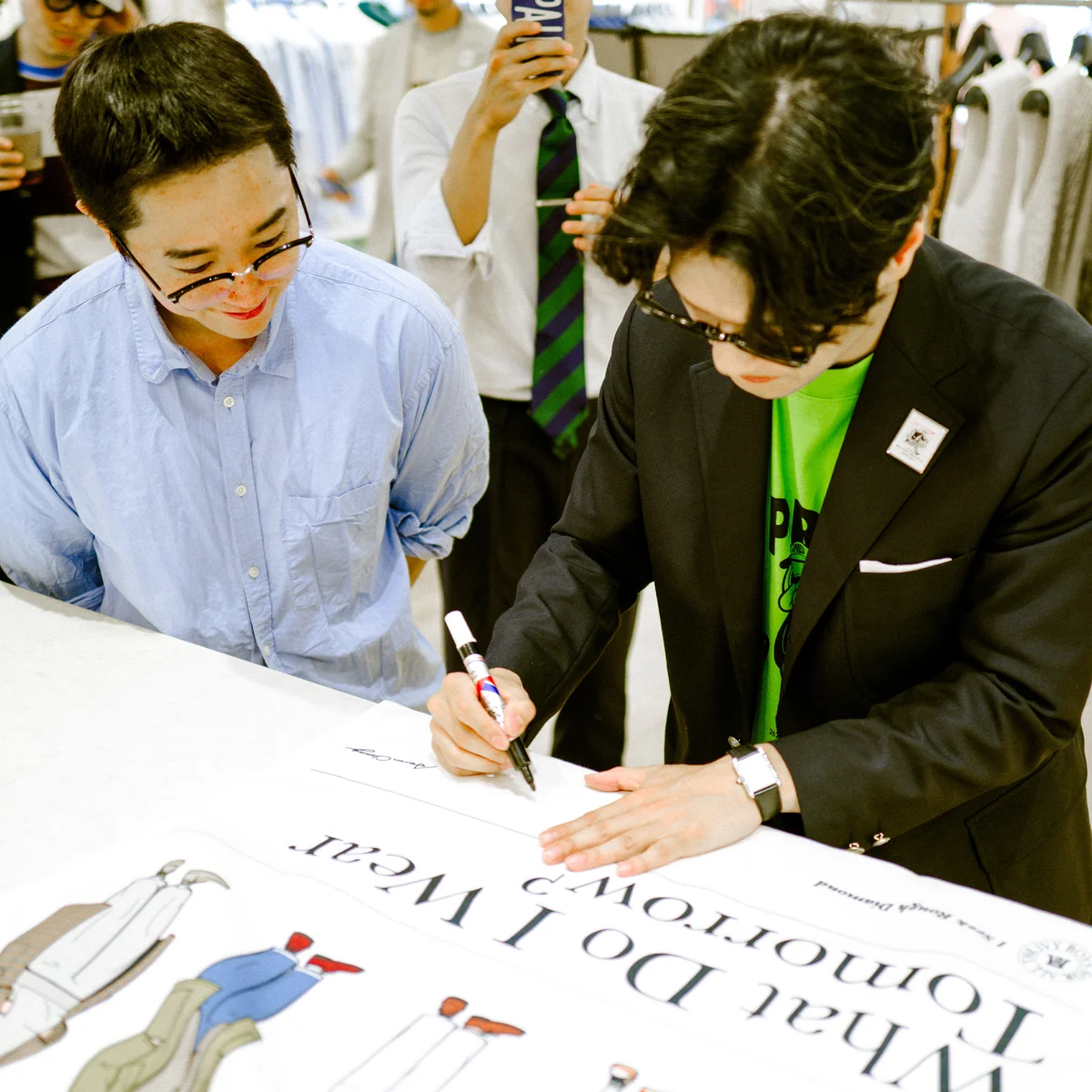
After the presentation, Aaron Chang and Kurono signed the “What Do I Wear Tomorrow?” panels for guests. They leaned over a table, markers in hand, while people filmed on phones and crowded at the edges. No velvet ropes, no queue management system. Just two guys signing their work.

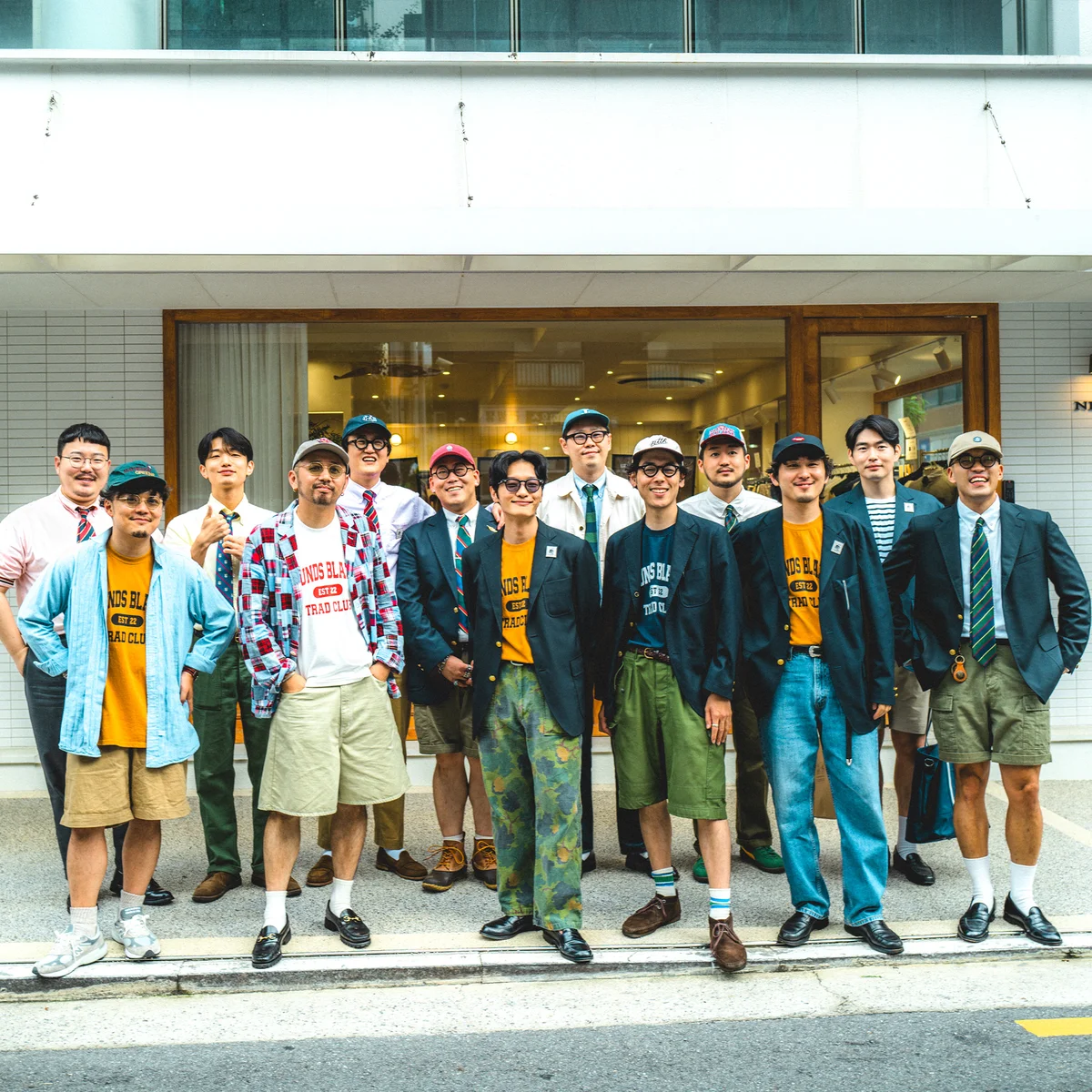
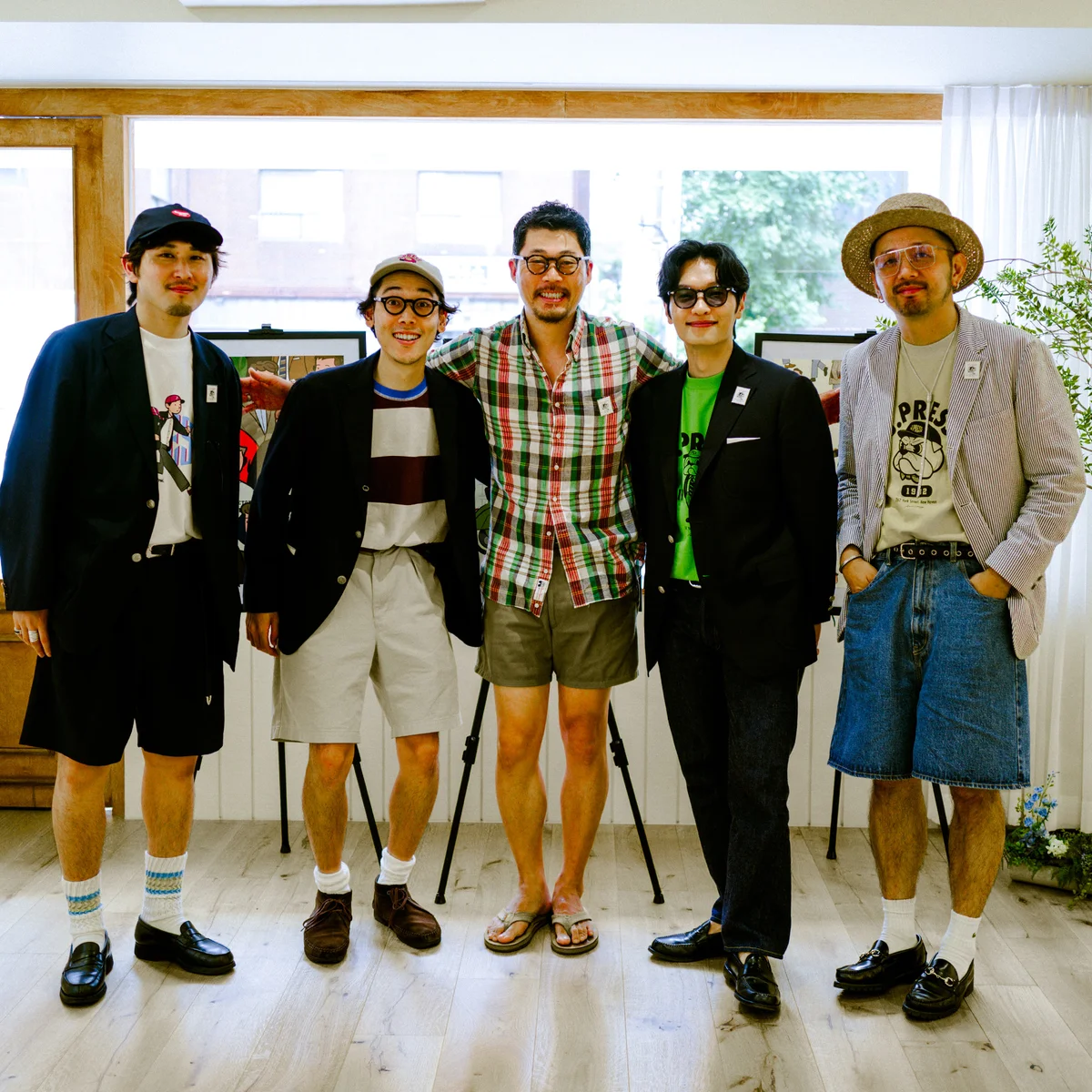
The collab’s orange graphic tee was a gift the Gentlemens Club hosts gave to the J.Press team, 2ND Magazine editors, and Aaron Chang. In one group shot, five of them wore it — layered under navy blazers or paired with madras shirts and beige chinos. Seeing the guests of honor choose to wear what their hosts handed them is a different kind of compliment.
Honestly, there’s something moving about watching a room full of adults get genuinely excited about an illustrated bulldog on a t-shirt. That’s not consumerism. That’s community recognizing shared language.
The Street Walk: Sindang-dong as a Runway
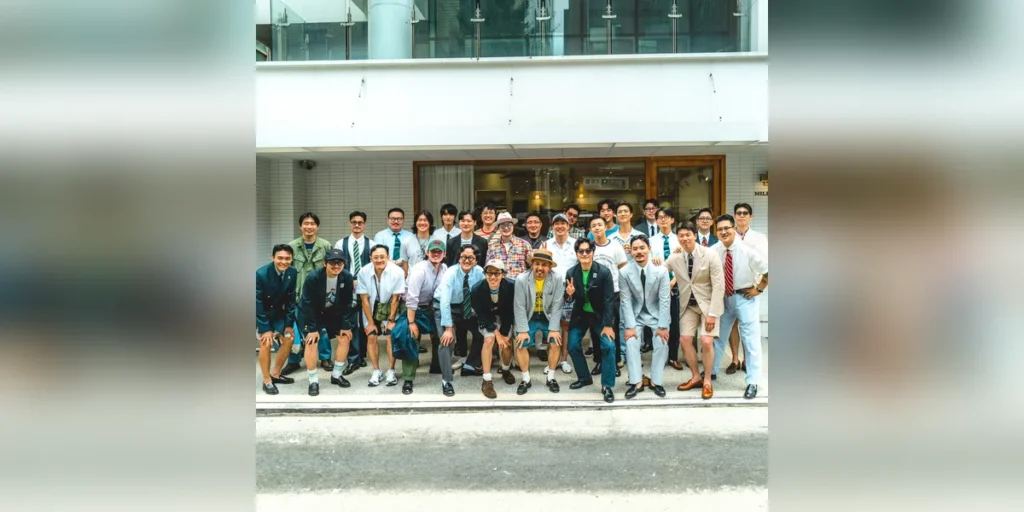
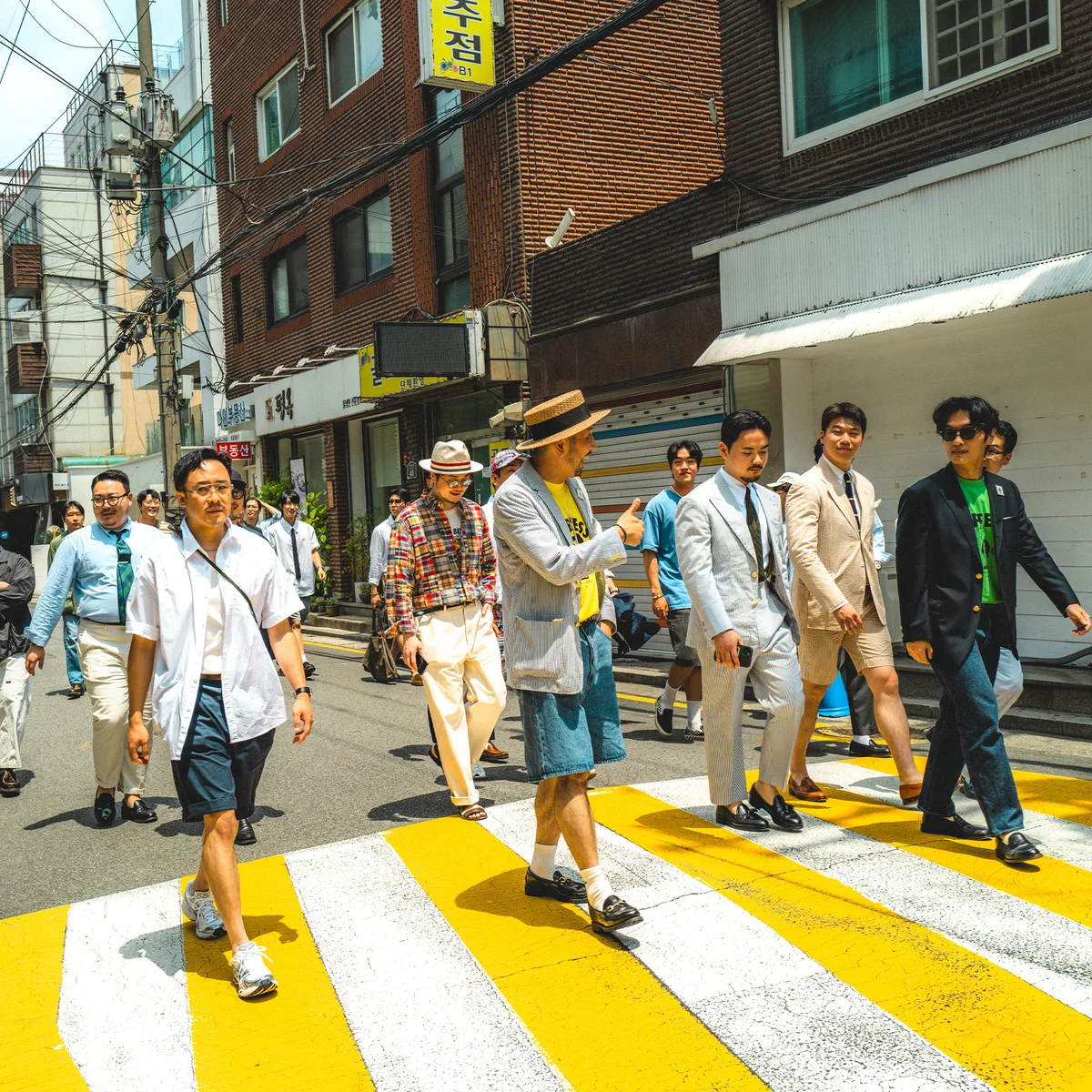
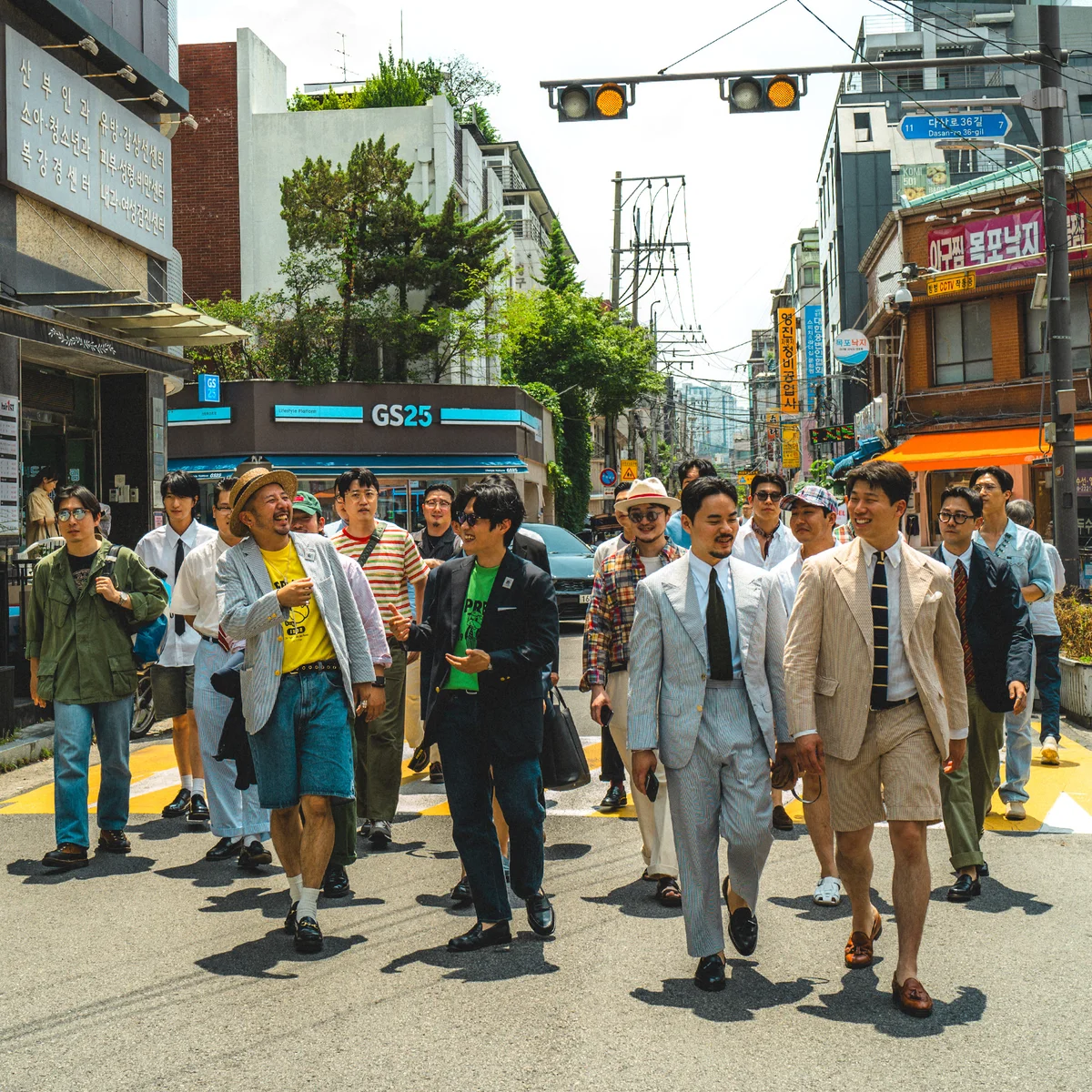
The best moment of the J.Press × Aaron Chang popup came after the showroom doors closed. The entire group — roughly 25 people — walked through Sindang-dong together. Navy blazers, seersucker suits, boater hats, penny loafers, cuffed shorts. Past the GS25. Over the yellow-striped crosswalk. Through the cluttered commercial streets.

A man in a cream linen suit led the procession next to someone in seersucker shorts. Behind them, a guy in a straw boater gestured mid-step. Korean shop signage framed every shot. It looked exactly like a 1960s American campus documentary photograph — except it was Seoul, 2024, and nobody was pretending to be somewhere else.
That’s the thing about Seoul Traditional as a concept. It doesn’t work if you stage it in a curated concept store in Seongsu-dong. It works when you walk it through Sindang-dong’s gritty streets and it still holds. The clothes don’t need a beautiful backdrop. They make their own context.
Why a Womenswear Showroom in Sindang-dong?
The venue choice deserves its own section. NILBY P is a womenswear brand. Their showroom is a clean white box — gallery walls, track lighting, minimal fixtures. It’s the opposite of Sindang-dong’s streetscape outside.

That tension was the whole point. Step inside: quiet, curated, the collab sweatshirts hanging in three colorways on a rack, illustration easels by the window, soft daylight. Step outside: cables, signage, summer haze, the sound of a neighborhood that doesn’t care about your repp tie.
Using a borrowed space also signals something about the event’s intent. This wasn’t a permanent retail play. It was a temporary gathering — a conversation that needed a room for two days and then moved on. The neighborhood didn’t change for the event. The event adapted to the neighborhood.
The Cross-Border Triangle
Count the flags in this collaboration. A Korean host organization — Gentlemens Club. A Japanese heritage brand — J.Press, via its Tokyo outpost. A Korean illustrator — Aaron Chang, working in a visual language borrowed from 1960s American campus style. And a Japanese magazine documenting the whole thing for readers back in Tokyo.


This is what the global trad conversation looks like now. It’s not Americans explaining their own heritage to everyone else. It’s Seoul and Tokyo riffing on shared source material, finding new meaning in it, and checking each other’s work. The original Ivy League schools are barely part of this conversation anymore. The most interesting trad thinking is happening in East Asia.
When J.Press’s Tokyo director flies to Seoul for a two-day pop-up in a borrowed showroom, and 2ND Magazine sends three editors to cover it, that’s not a marketing stunt. That’s recognition. Seoul’s trad scene has earned a seat at the table.
What Seoul Adds to Trad
The original Ivy style was about aspiring to be a complete person — sound body, sharp mind, service to community. The blazers and button-downs were just the visible layer of that aspiration. Seoul Traditional asks what that ethos looks like when it’s born here, in this city, among these streets.
The answer was visible at this pop-up. In Seoul, trad isn’t precious. It’s worn to a signing session in a borrowed showroom, then walked through a neighborhood where nobody else is dressed that way. It’s paired with cargo shorts and clear sunglasses. The code is legible but the accent is local.
Aaron Chang’s “What Do I Wear Tomorrow?” panel captures this perfectly. Ten characters, ten outfits, ten answers to the same question. Some are classic — the chambray-and-chinos guy, the varsity letterman. Others are wilder — the anorak, the shop coat. The point isn’t that there’s one right answer. The point is that you think about the question every morning.
Fair Warning: This Is Just the Beginning
This popup was the first official Gentlemens Club pop-up event. First. The community had been running a football team, organizing volunteer projects, and holding learning seminars before this. The pop-up format was new territory.
They nailed it on the first try. Not because the merch sold out (though it did move). Because the format worked: philosophy presentation first, product second, street walk to close. That’s a template worth repeating.
2ND Magazine’s September 2024 issue carried the coverage back to Japan. That means whatever form the next gathering takes, it starts with international attention already built in. Seoul’s trad community isn’t building in isolation anymore. The world is watching.
If you were there, you already know. If you weren’t, now you know what you missed. The clothes were great. The conversation was better.