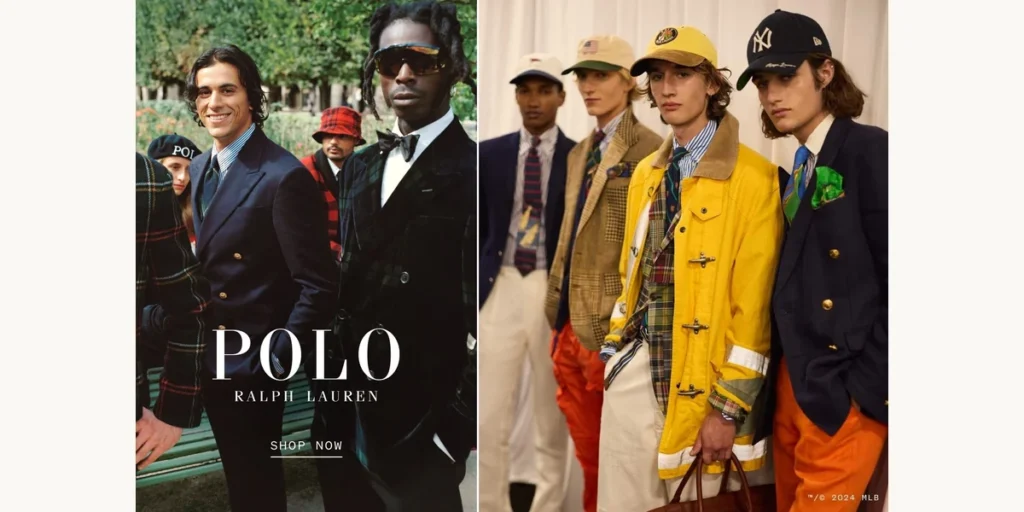
Ralph Lauren History: How a Bronx Tie Salesman Sold Trad to America
Of all the American brands that shaped how Trad reads in 2026, Ralph Lauren is the one we cannot avoid and the one most easily misread. The J.Press and Brooks Brothers stories explain where the Yale-corner version of Trad came from. Ralph Lauren history explains how that same register left New Haven and ended up in JCPenney catalogs, prep-school yearbooks, and — eventually — Seoul concept stores. He is the bridge between the canon and the mainstream, and the bridge has to be understood on its own terms.
What follows is the Ralph Lauren history we read as a Trad blog: not a designer hagiography, but a brand-canon position paper. A Bronx tie salesman, a 4-inch silk necktie, a polo shirt with a pony, a Robert Redford Gatsby fitting, and one 1980 paperback that turned Ivy into a costume. By the end we want a clear answer to a simple question — when we put on a Ralph Lauren oxford in Seoul in 2026, whose closet are we standing in.
1939–1966: The Bronx Kid Named Lifshitz
Ralph Lifshitz was born on 14 October 1939 in the Bronx, New York City, the youngest of four children in a Belarusian-Jewish immigrant family. His father painted houses for a living and painted canvases on the side. The family lived in Mosholu Parkway, a working-class neighborhood that was a long subway ride from Madison Avenue and a longer one from Yale.
The Lifshitz family changed its surname to Lauren in 1955, when Ralph was sixteen. He explained the choice the way most American teenagers explain a haircut — it sounded better, it caused fewer fights at school, it fit the kid he was trying to become. The detail matters because the brand he would build forty years later runs on exactly that move: an old name traded for a better-sounding one, an inherited closet swapped for one we built ourselves.

After a year at Baruch College and a stint in the U.S. Army Reserve, Lauren took a series of low-rung jobs in the New York menswear trade — sales floor at Brooks Brothers (briefly), then Allied Stores, then a tie salesman at Beau Brummell Cravat Company in Manhattan. Beau Brummell made narrow neckties for the post-Mad Men silhouette. Lauren was a good salesman and a frustrated designer. By 1966 he had spent a decade watching American men wear the same 2-inch silk tie with the same gray flannel suit, and he had decided to do something the trade considered idiotic.
1967 Polo Necktie Line — Beau Brummell and Bloomingdale’s
In 1967, with Beau Brummell as financial backer, Lauren launched a small menswear line under a name he picked because it sounded both old-money and athletic: Polo. The first product was a tie. Specifically, a silk necktie cut at 4 inches wide — twice the width of the era’s standard — and priced significantly above the market norm of roughly $5 for standard ties.
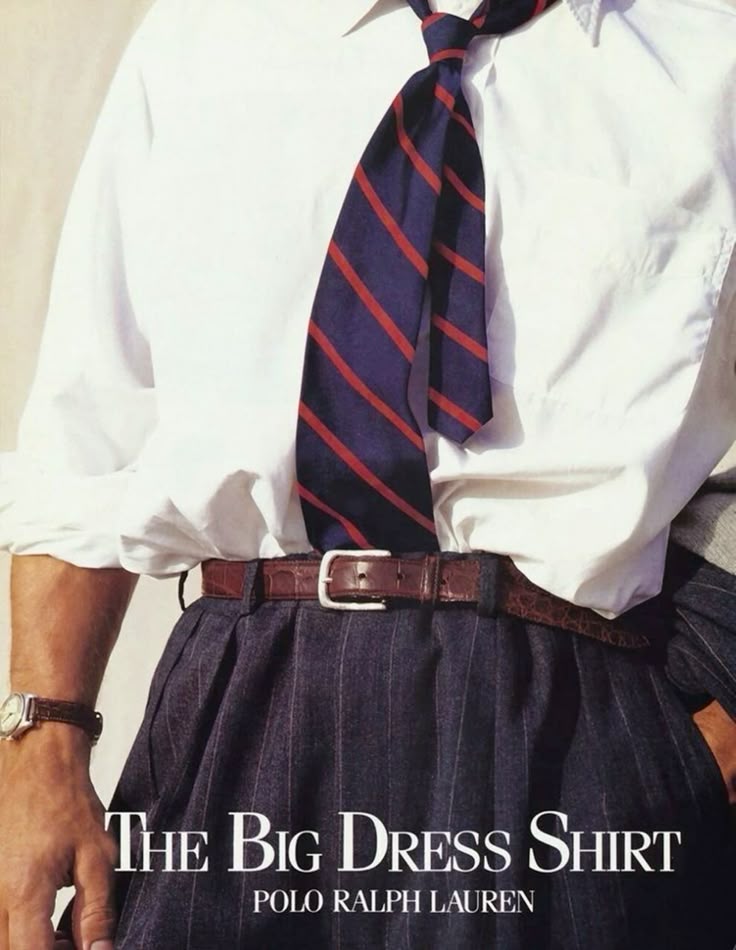
The industry response was the response we always get when somebody widens something. Department-store buyers told Lauren the ties would not sell. Two of them did. The other one — Bloomingdale’s on 59th and Lex — built a dedicated Polo shop on the men’s floor, and the wide silk necktie became the first quiet signal that the postwar American silhouette was about to shift. The wider tie demanded a wider lapel, the wider lapel demanded a softer shoulder, and within five years that whole structural argument would settle into what we now call American Trad’s 1970s register.
The tie did one more thing — it gave Lauren a way to argue with Drake’s of London a decade before Drake’s existed. The argument was that an English-derived accessory could be redrawn in American proportions without losing the Anglo heritage anchor, and that argument is the one Drake’s would inherit and refine after 1977. Ralph Lauren did it first, with a single SKU, on Lexington Avenue.
In 1968, with the necktie line working, Lauren incorporated Polo Fashions Inc. as a standalone business and built a full menswear collection — suits, shirts, sport coats, accessories. The collection was not Ivy in the J.Press sense and not English in the Savile Row sense. It was a third thing — an American man wearing his idea of an English country gentleman, then his idea of a Newport sailor, then his idea of a polo player, with the same wardrobe logic running underneath. The wardrobe logic was the brand.
1972 Polo Shirt and the Pony — America’s Answer to Lacoste
In 1971, Polo opened the first dedicated designer store on Rodeo Drive in Beverly Hills — the first American designer to have a standalone retail space, beating every European house to that move by a decade. In 1972, on the back of that store and the Bloomingdale’s shop, Lauren introduced the product that would become the brand’s vernacular: a short-sleeve mesh-cotton polo shirt, cut fitted, embroidered on the left chest with a small player on a horse swinging a mallet.
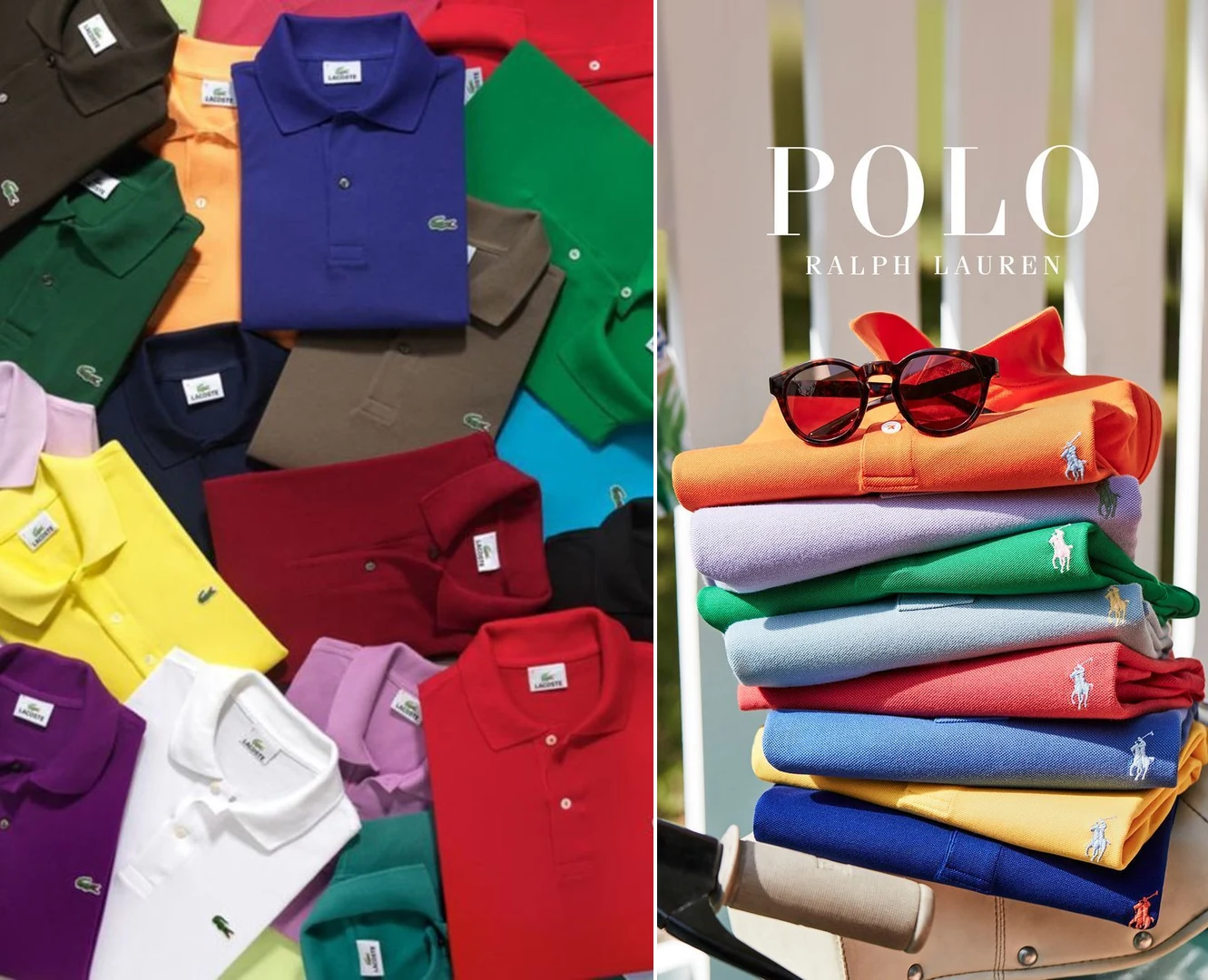
The polo shirt was not invented in 1972. René Lacoste’s piqué-cotton tennis shirt with the crocodile had been on French courts since 1933. Brooks Brothers had been selling the original “polo collar” — the button-down oxford — since 1896, which is its own story in our OCBD guide. What Lauren did in 1972 was take the Lacoste silhouette, redraw it in American proportions, offer it in a wide range of colors, and put a logo on it that meant something specific. Lacoste’s crocodile referenced a tennis champion. The Polo pony referenced a sport almost no American actually played. That gap — between the symbol and the lived experience — is the gap the brand has lived inside ever since.
The Polo shirt mattered because it was the first Ralph Lauren product that worked for an undergraduate without the budget for tailored clothing. A Yale senior could buy a J.Press sack jacket only with parental help. He could buy a Polo shirt with a part-time bookstore job. The brand’s mass-market base started building in 1972 and has not stopped since.
1974 The Great Gatsby — Trad Goes Hollywood
The 1974 film adaptation of The Great Gatsby starred Robert Redford as Jay Gatsby and Mia Farrow as Daisy Buchanan. The costume credit went to Theoni V. Aldredge, who won an Oscar for the work and deserved it. Ralph Lauren’s contribution to Redford’s wardrobe — pink suits, cream linen, the pastel shirt-and-tie combinations that defined the film’s visual register — was widely reported in the trade press at the time and acknowledged in subsequent Lauren biographies, even if the Academy gave the statue to the costume designer of record.
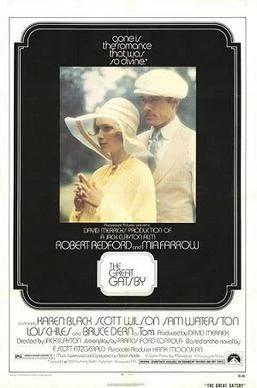
The relevant fact for us is not who got the credit. The relevant fact is that in 1974, before The Preppy Handbook, before the IPO, before any of it, Hollywood asked one designer to dress its idea of an American gentleman in the 1920s — and the designer it asked was Ralph Lauren. Brooks Brothers had been dressing Wall Street since 1818. J.Press had been dressing Yale since 1902. Neither of them got the Gatsby call. The reason is that by 1974 Lauren had built something Brooks Brothers and J.Press could not — a brand that read as American gentry without requiring the audience to know the difference between a sack jacket and a darted one.
In 1977 Diane Keaton wore her own Ralph Lauren pieces into Woody Allen’s Annie Hall, and Allen kept most of them on film — the menswear-for-women look that made vested chinos and oversized oxfords a women’s-fashion category for the next decade. The official costume designer credit went to Ruth Morley, but the wardrobe vocabulary on screen was Lauren’s, brought in through Keaton’s personal closet. By the end of the 1970s the brand had two costume credits in films that defined the American visual decade, and that was the runway nobody else had.
1980–1983 The Prep Wave — The Preppy Handbook and the Mainstream
In 1980, Workman Publishing released The Official Preppy Handbook, edited by Lisa Birnbach with three co-authors. The book was sold as a satire of American old-money costume. It was read, by everyone, as an instruction manual. Within twelve months it was on every American suburban coffee table that had ever wanted to be a New England suburban coffee table, and the wardrobe it described was, in almost every chapter, Ralph Lauren Polo.

Birnbach did not pay Lauren for the placement and Lauren did not pay Birnbach for the placement. The book’s editorial logic landed on Polo because Polo, by 1980, had become the only American label that had pre-translated the J.Press / Brooks Brothers / Andover Shop register into products a high-school sophomore could buy at a department store in Cleveland. That pre-translation is the brand’s defining work. The Preppy Handbook simply named it.
The 1980–1983 prep wave that followed was the largest single-decade expansion any American menswear brand had experienced since the postwar suit boom. Polo grew several-fold from 1980 to mid-decade, expanding into a multi-hundred-million-dollar business. The Polo Pony went from a tasteful chest embroidery to a cultural reference that needed no caption. By 1983, the Trad register — which had been a regional New England wardrobe code for sixty years — was a national costume.
This is the part of Ralph Lauren history where the brand’s relationship to Trad becomes most contested. The Yale-corner old guard read the prep wave as dilution. We read it differently. The wave did not destroy Trad — it widened the population that recognized Trad’s visual cues, and the recognition is what makes the cues legible in 2026 Seoul. Without the 1980 prep wave, we would be explaining what a sack jacket is to every reader. Because of it, we don’t.
Trad / Ivy / Prep — Where Ralph Lauren Actually Sits
The three terms get used as synonyms and they are not. Ivy is a 1950s–1965 American campus register — natural shoulder, 3/2 roll, undarted, the J.Press and Brooks Brothers canon covered in our Ivy Style Guide. Trad is what Ivy became after 1965, when the campus moved on and the wardrobe stayed — a register kept alive by middle-aged alumni, regional New England retailers, and a slowly aging customer base. Prep is what The Preppy Handbook and Ralph Lauren made of Trad in 1980 — a mass-market costume that recycled the cues without requiring the structural commitments.
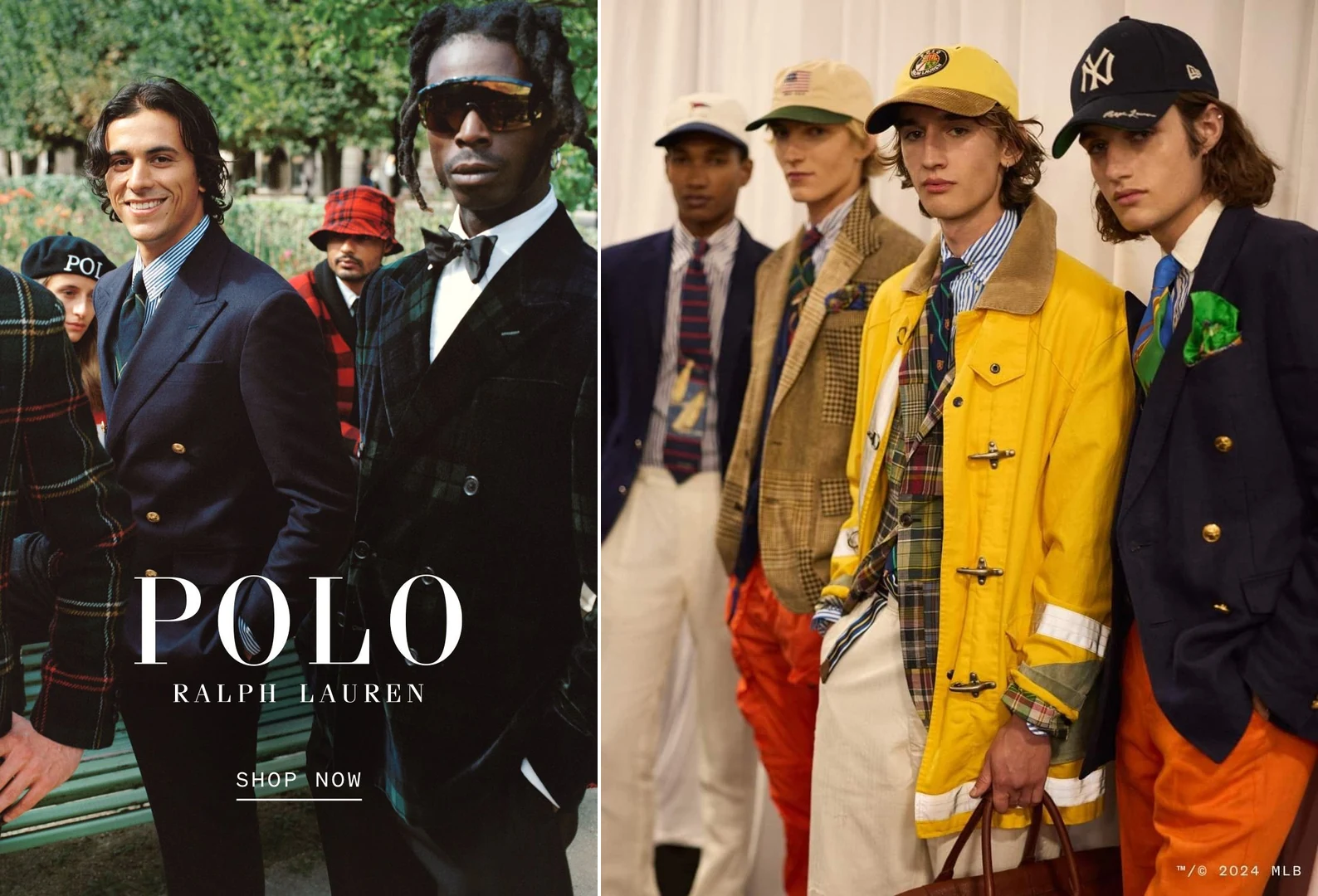
Ralph Lauren sits firmly in the Prep position and has lived there comfortably for forty-five years. The brand’s tailored clothing has always been darted-front, lightly padded, suppressed-waist construction — the opposite of the sack jacket the Ivy and Trad canon defines. The polo shirt is fitted rather than the boxy cut of a J.Press lacrosse jersey. The chino is straight or tapered, not the wide-leg unhemmed twill of the 1960s campus.
This is not a criticism. It is a positioning. When we read a Ralph Lauren campaign image — a fair isle vest, a tweed sport coat, a pair of oxford bluchers — we are reading a brand that knows the visual grammar of Trad and chooses, every season, to translate it for a wider audience. The translation is what we are arguing with when we say Renacts in Seoul is doing Seoul Trad rather than Seoul Prep. Both registers are valid. They are not the same register.
For the Trad reader who wants to wear Polo without leaving Trad — the rule is the same rule that has always worked. Buy the oxford button-down, the chambray, the chino, the cable knit, the fair isle vest, the camel-hair polo coat. Skip the tailored clothing. The tailored line is where Lauren’s Prep DNA reads loudest. The casual line is where it overlaps almost completely with what we wear every day.
RRL and Purple Label — The Brand Splits Its Register
By the mid-1980s the brand had a Prep problem of its own making. The success of the Polo line had locked the main register at one specific point — country-club casual, mass-market accessible, a single wide silk tie scaled to a multi-hundred-million-dollar business. Lauren wanted two more registers, and from 1986 onward he built them.
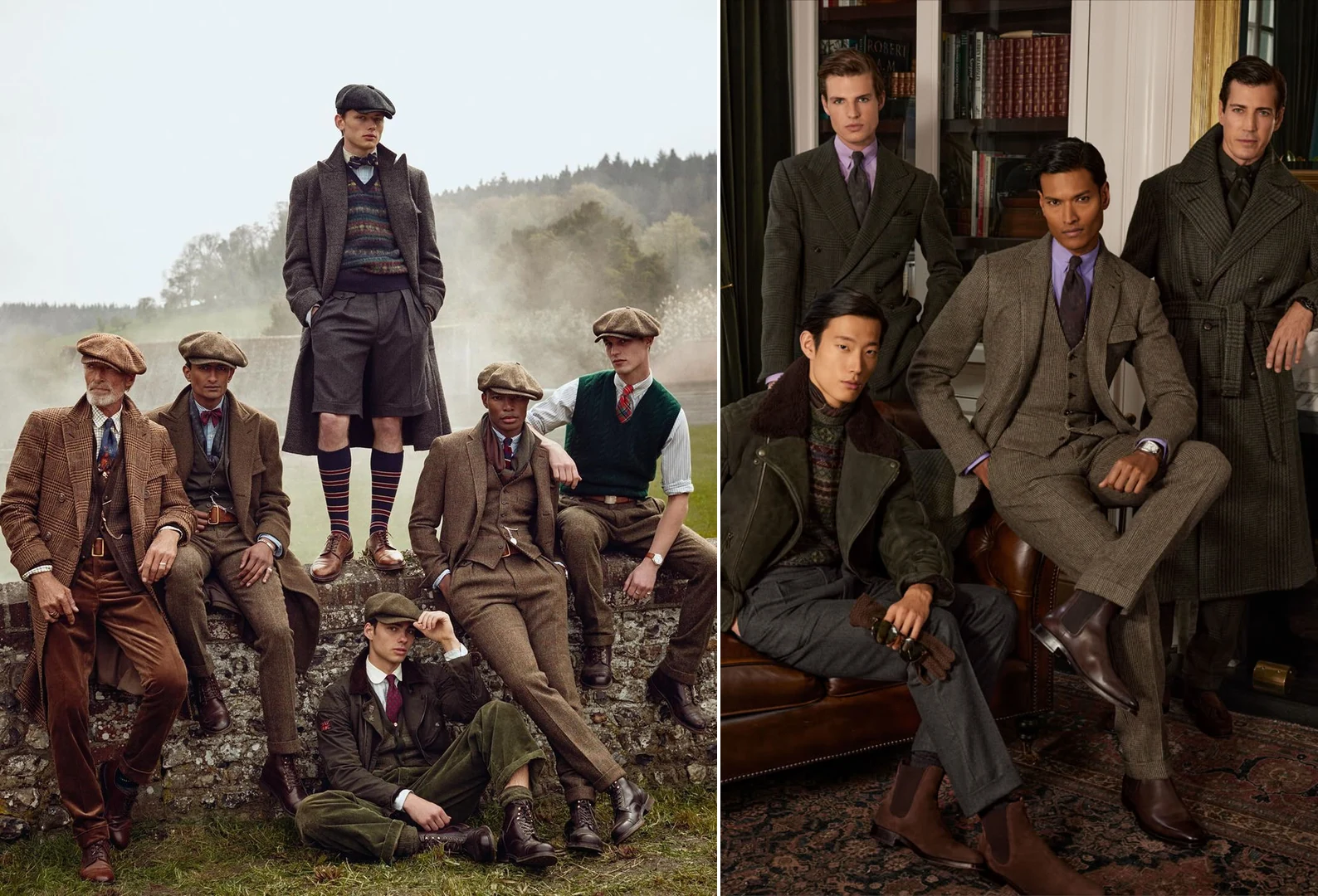
RRL — short for Double RL Ranch, named for Lauren’s Colorado property — launched in 1986. The line was vintage Americana — repro Lee 101J jackets, dead-stock-style chambray, military-spec chinos, raw-selvage denim woven in partnership with Cone Mills in North Carolina. RRL is the Lauren product line we cite most often when we write our Trad denim coverage, because the denim work is serious and the prices match the seriousness. For the reader interested in American workwear heritage — Levi’s 501, Lee, Carhartt, Filson — RRL is the Lauren door into that conversation.
Purple Label launched in 1993 as the top register — luxury menswear made in Italy, full-canvas tailoring, fabrics from Loro Piana and Vitale Barberis Canonico, prices that approached Savile Row bespoke. Purple Label is where Lauren competes with Brunello Cucinelli and Kiton rather than with Brooks Brothers. It is not a Trad line and we do not cite it often, but it matters as a positioning move — the brand split itself into three registers (Prep / Workwear-Americana / Italian Luxury) and ran them in parallel, refusing to be defined by any one of them.
In 1997 Polo Ralph Lauren went public on the New York Stock Exchange under the ticker RL, raising $767M in the IPO. The Lauren family retained majority voting control. The IPO did not change the brand’s product direction so much as confirm what the prep wave had made visible since 1980 — Polo had become an American institution at the same scale as Brooks Brothers, with a customer base several multiples larger.
Why It Still Matters in Seoul
We work out of Yeonhui-dong, in a neighborhood that has roughly the same relationship to mainstream Seoul that New Haven has to mainstream America. The clientele that walks into Gentlemens House on a Saturday afternoon is a self-selected Trad-curious audience — they have already done the homework, they know what a sack jacket is, they recognize a 3/2 roll, they have opinions about Glen Check versus Gun Club. For that customer, Ralph Lauren history reads as the path they took to get to us — the Polo oxford in high school, the country-club rugby in college, the herringbone sport coat at the first real job, and then the slow shift toward the structural commitments the Trad register asks for.
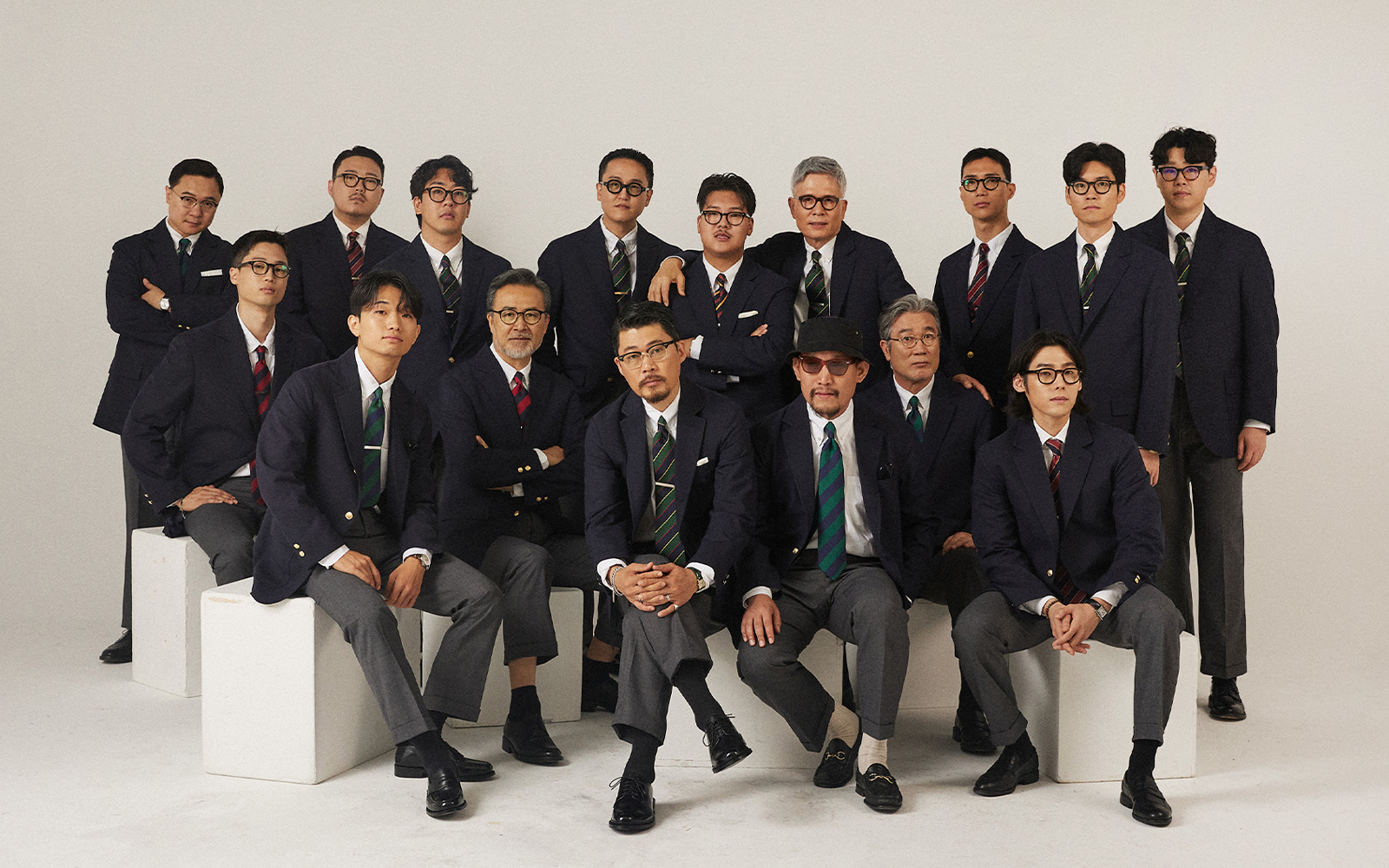
The bridge runs the other direction too. When we recommend a Renacts sack-cut blazer to a customer who has lived inside the Lauren wardrobe for fifteen years, we are not asking them to abandon Polo. We are asking them to take one additional step — from the Prep translation into the Trad source. The cues overlap by 70%. The structural commitments — natural shoulder, undarted front, 3/2 roll, side vents, patch pockets — are the remaining 30%, and that 30% is the work our blog spends most of its time on.
Ralph Lauren history matters in Seoul because the brand is the most efficient on-ramp to American Trad that exists outside the J.Press archives. A Korean reader who never set foot on a New Haven campus knows what a Polo shirt is, knows what the Pony means, knows the chambray-with-chinos combination from a thousand RL campaign images. That recognition is the foundation we build on. The work after recognition — the structural work, the sack-suit work, the cloth-and-pattern work covered in Sport Coat Essentials and the Yale Ivy Style archive — is the work Lauren stopped doing in 1980 and we picked up in 2026.
Put a Polo oxford under a Renacts sack-cut blazer next Saturday in Yeonhui-dong. The shirt is the bridge Ralph Lauren built. The jacket is the bridge we are building. Both are American Trad. Only the proportions are different.
For that customer the shopping list is short and old. A white OCBD and a navy gold-button blazer cover most of what Ralph Lauren spent forty years selling as a lifestyle.