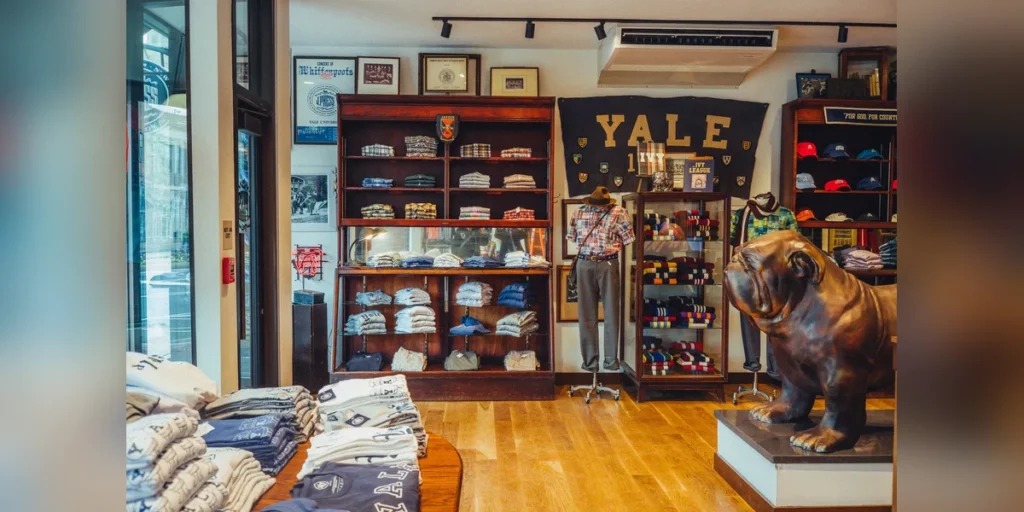
J.Press History: How a Yale Tailor Became the Last Pure Ivy Brand
J.Press history is the quietest brand story in American menswear — and arguably the most instructive. Here is how a 1902 tailor shop next to Yale became the template for the last pure Ivy style brand standing in 2026, why it never drifted when everyone else did, and what it has to do with a blazer you can try on in Seoul today.
Not Brooks Brothers. Not Ralph Lauren. J.Press.
When people talk about Ivy style, two names dominate the conversation. Brooks Brothers — older, broader, the American institution that clothed presidents. Ralph Lauren — louder, richer, the brand that mythologized Ivy into a global aesthetic. Both are essential to the story.
But there’s a third name that matters more than either if you care about what Ivy style actually was. J.Press. Smaller. Quieter. And the only one of the three that never drifted.
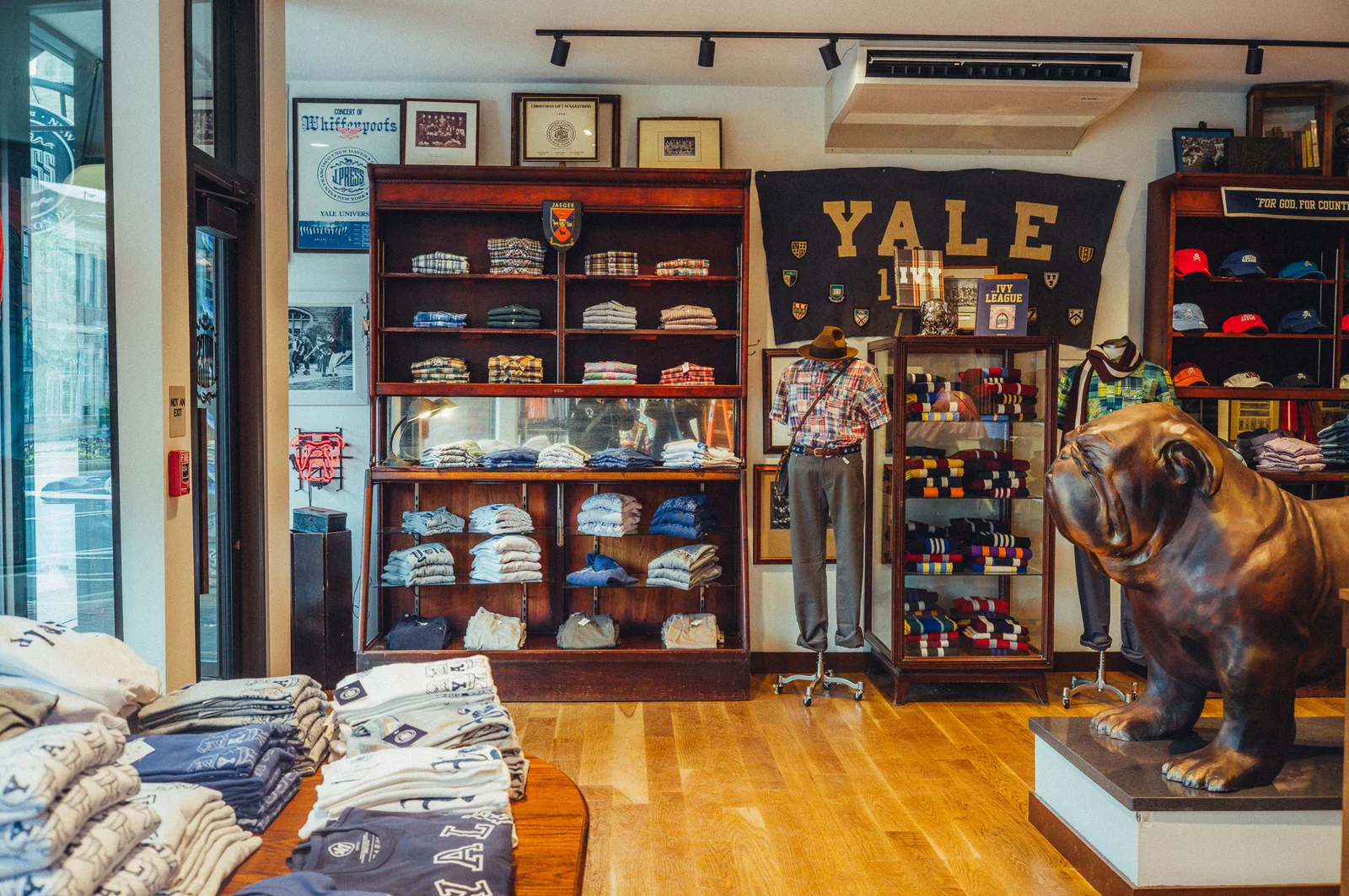
For 120 years, J.Press has sold essentially the same clothes to essentially the same customer: the Yale undergraduate, the Cambridge professor, the New York lawyer who wants a navy blazer that looks like it was cut in 1962. No reinvention. No designer collaborations. No attempt to be modern. That stubbornness is exactly why J.Press matters — and why anyone serious about Ivy style eventually ends up at their door.
1902, New Haven: Jacobi Press Opens a Tailor Shop
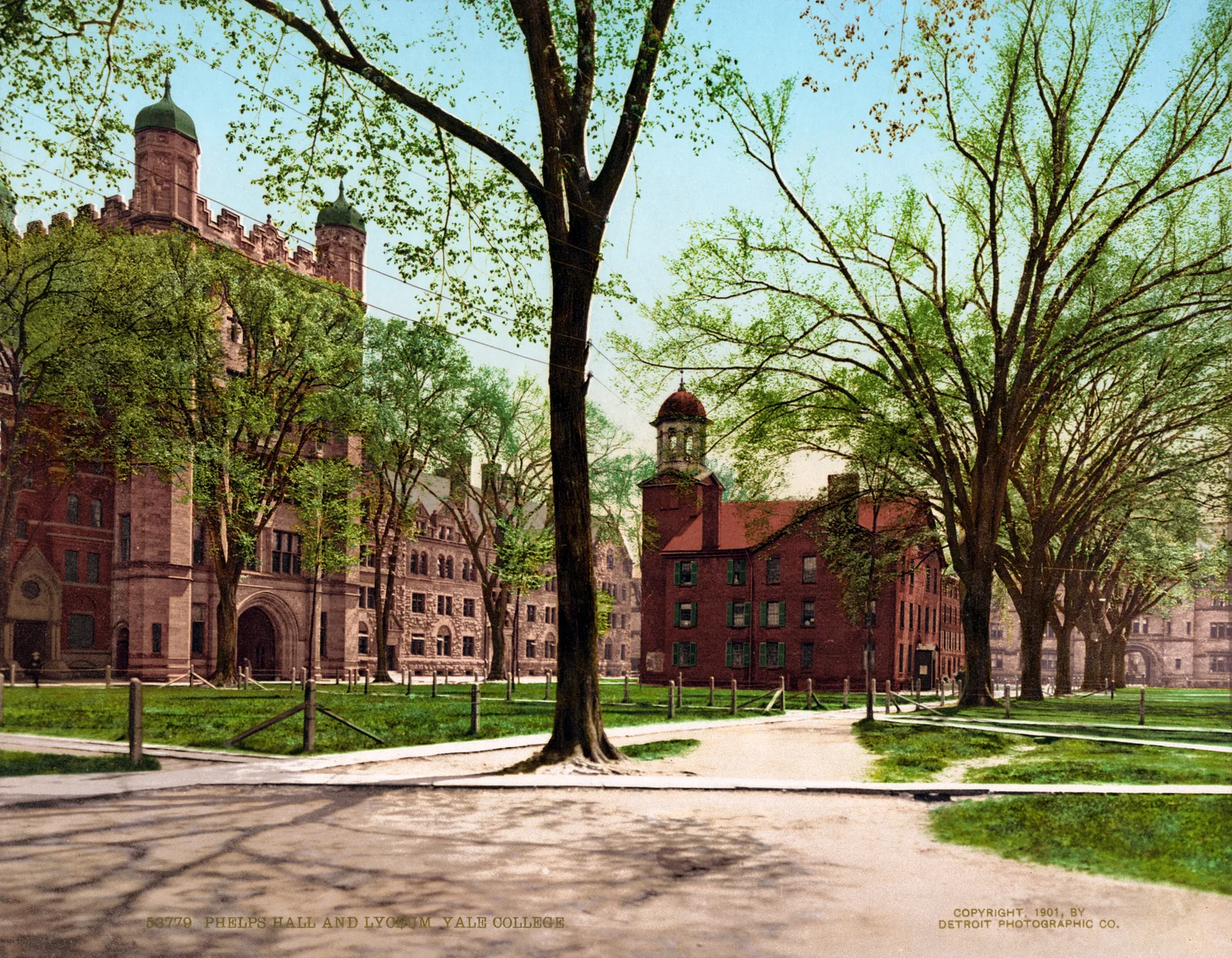
Jacobi Press was a Latvian immigrant who arrived in the United States in 1896 — originally intending to become a rabbi, he became a tailor instead. By 1902, he had opened a small tailoring shop at Yale in New Haven, Connecticut. His first customers were Yale students — boys from wealthy East Coast families who needed suits but didn’t want to travel to Boston or New York for fittings.
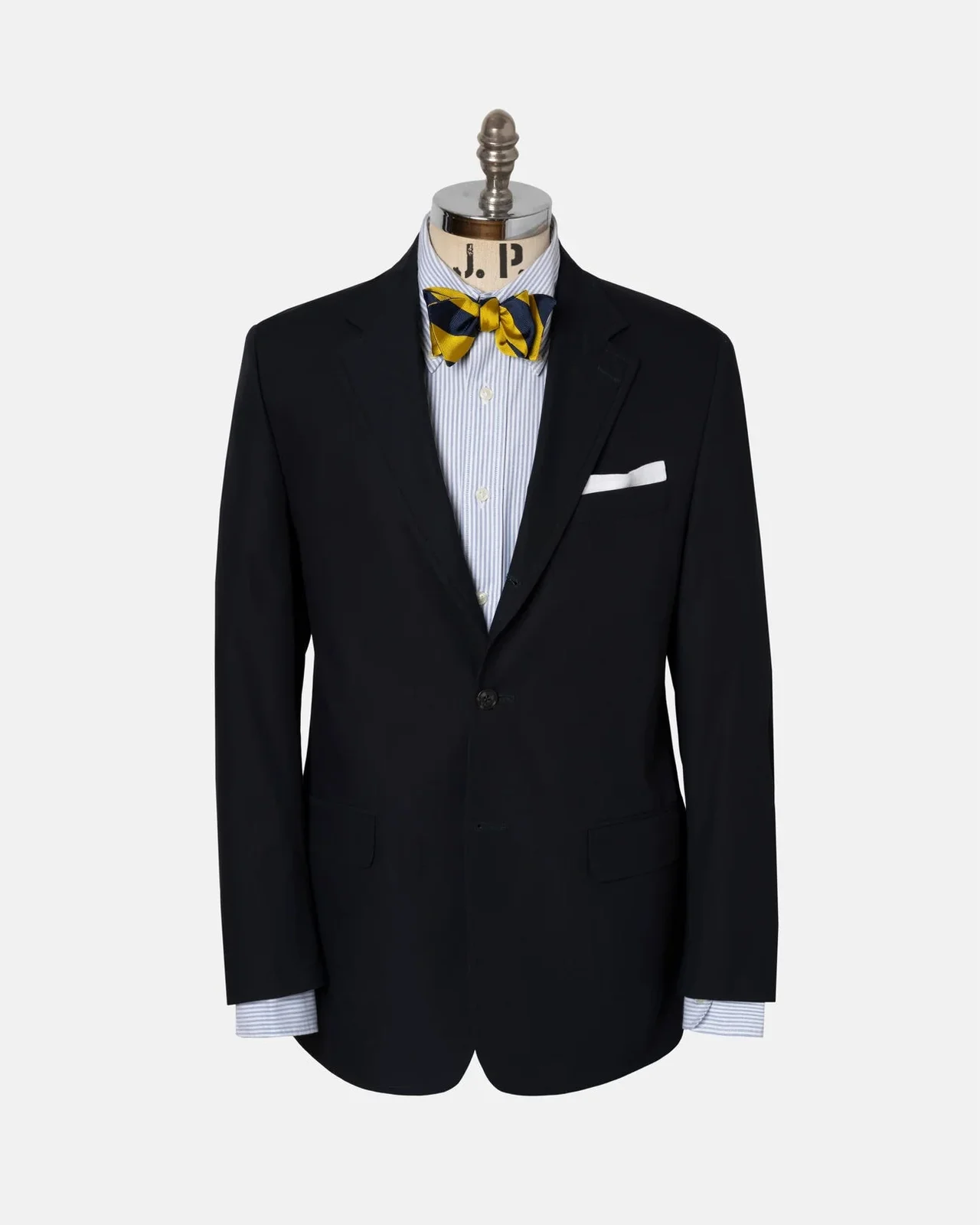
What made J.Press different from a standard campus tailor was the cut. While most American tailors in the early 1900s worked in the structured, padded British tradition, Jacobi Press adopted what would later be called the “natural shoulder” — no shoulder padding, a softer chest, a slightly boxy silhouette. The jacket rolled to the middle button (what we now call 3/2 roll) rather than buttoning at the top.
This cut wasn’t invented at J.Press. But J.Press was one of the first American tailors to commit to it completely. And the students who wore J.Press jackets carried that silhouette into the 1920s, 1930s, and into the canon of what would become American Ivy style.
Three Icons That Defined a Brand
If you reduce J.Press history to its three most influential products, the whole brand snaps into focus. Each piece deserves its own story — and each will get one in future articles — but here’s the shorthand.
The Sack Jacket. Natural shoulder, 3/2 roll, undarted front, center hook vent. It’s the clearest expression of the J.Press cut, and it’s been in the catalog essentially unchanged since the 1920s. Every serious Ivy brand still makes a version of this. Few make it as faithfully as J.Press.
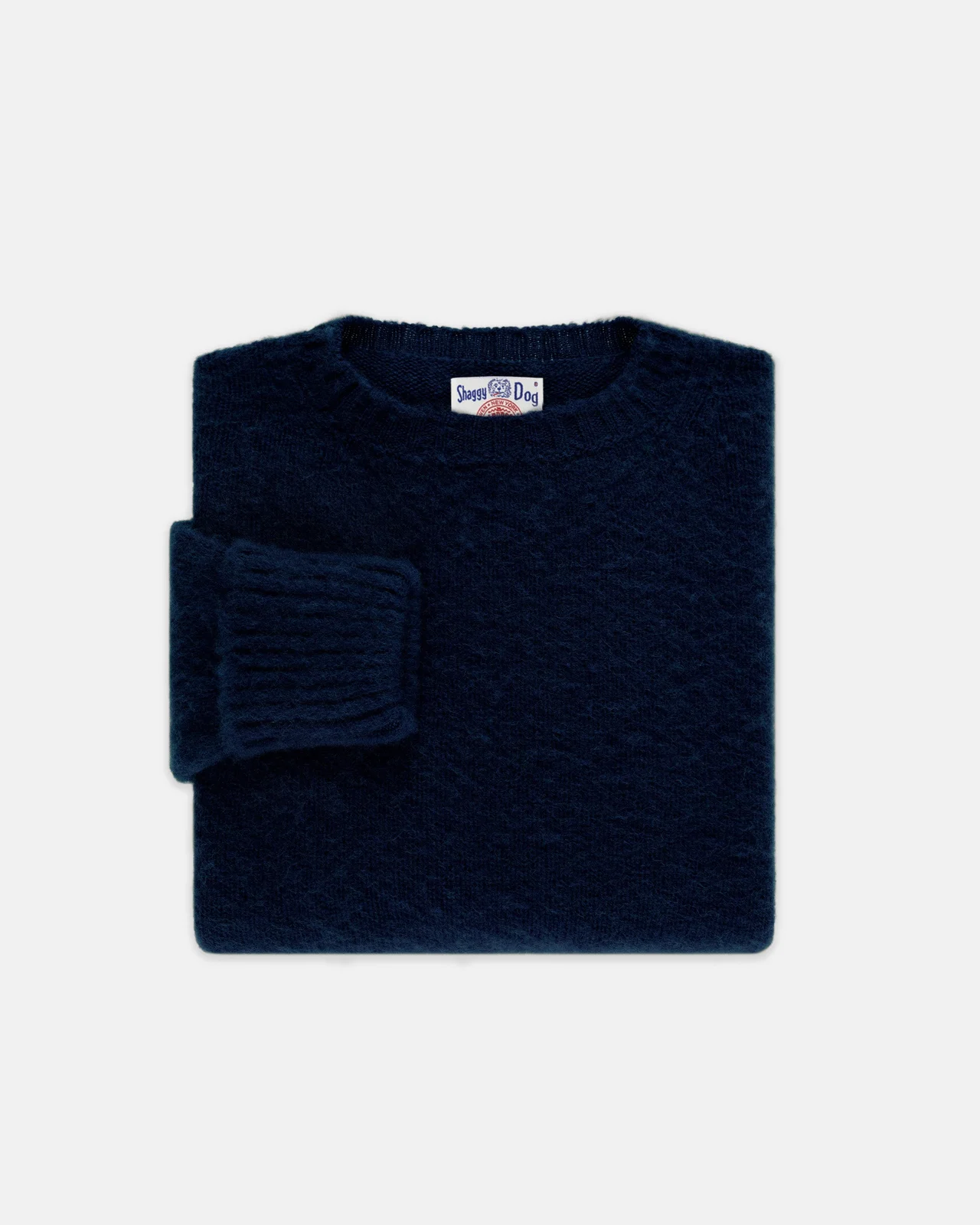
The cricket sweater Shetland Sweater. In the mid-1940s, Irving Press — the founder’s son — traveled to the Shetland Isles in Scotland and visited a centuries-old knitting factory. Working with the factory, he developed a Shetland wool sweater brushed repeatedly to raise the fibers into a distinctively lofty, “shaggy” texture. J.Press didn’t invent Shetland sweaters — they come from the Shetland Islands, obviously — but J.Press made this particular version an Ivy League uniform. Wear one over an OCBD and you’ve signaled your allegiance to the entire canon.
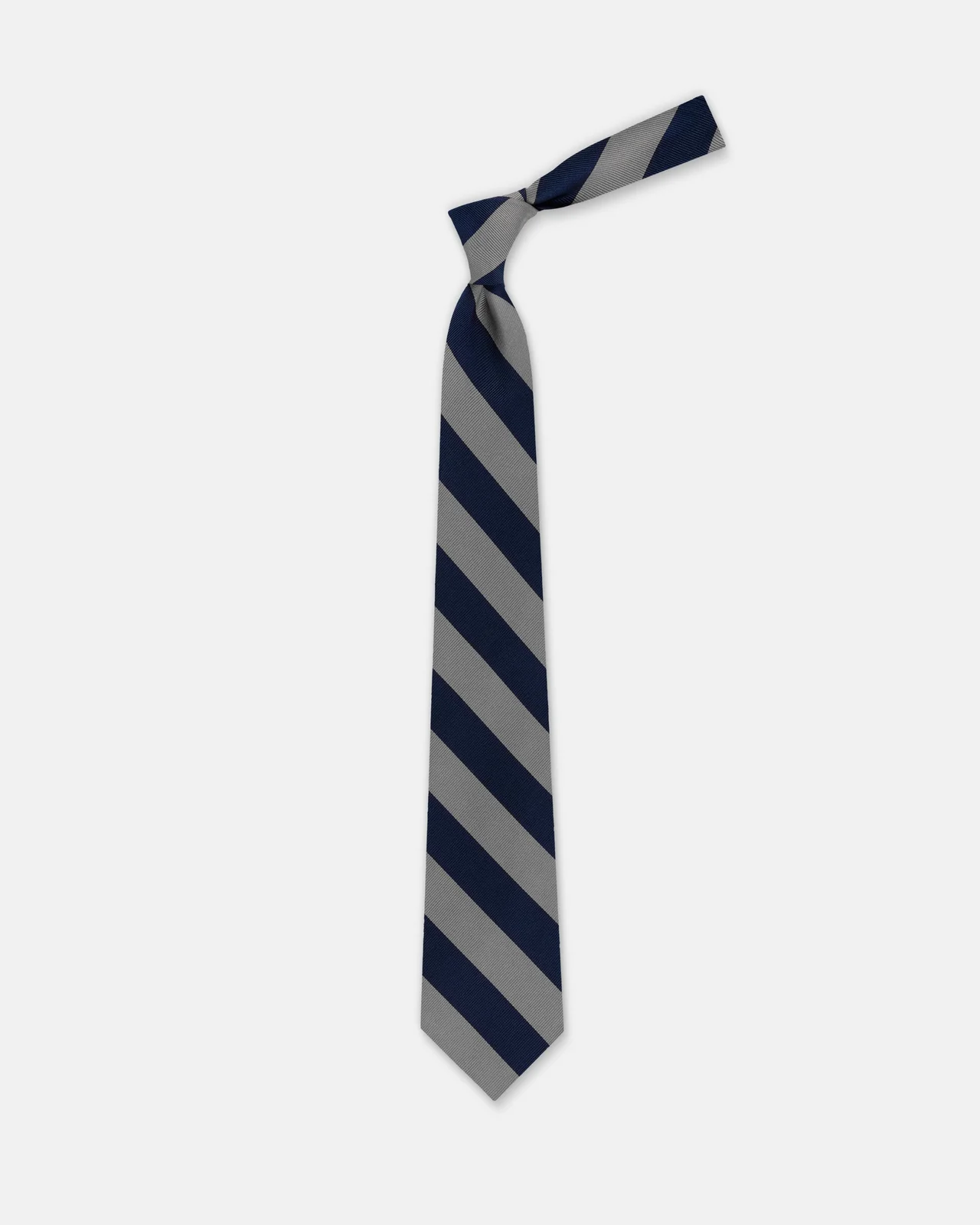
The Repp Stripe Tie. Silk repp ties in specific stripe combinations that reference Yale’s athletic colors and other Ivy League institutions. The English half of that heritage — the modern brand that picked up the same English repp tradition Brooks adapted — is in our Drake’s of London history. When you see a navy-with-gold Yale tie or a crimson-with-white Harvard tie worn with real conviction, it’s probably a J.Press.
How J.Press Stayed Ivy While Everyone Else Drifted
Here’s the strange thing. In the 1970s and 1980s, the rest of American menswear went through a massive transformation. Designer brands exploded. Ralph Lauren turned Ivy iconography into aspirational marketing. Brooks Brothers started expanding into European cuts and contemporary fits. The Ivy silhouette — soft shoulders, loose trousers, longer jackets — started to feel outdated next to Giorgio Armani and power dressing.
J.Press did nothing. They kept making the same sack jackets, the same Shaggy Dog sweaters, the same repp ties. While competitors chased trends, J.Press doubled down on exactly what had worked since 1902.
This wasn’t just conservatism. It was a deliberate positioning. By the 1990s, when Ivy style started getting rediscovered by young menswear enthusiasts (often via Japanese magazines like Men’s Club and Popeye), J.Press was the only American brand still doing it properly. Everyone else had moved on. J.Press hadn’t moved, so they couldn’t move on.
The Japanese Chapter
The most unexpected plot twist in J.Press history begins in 1986, when the Press family sold the brand to Onward Kashiyama — a Japanese apparel conglomerate that had developed a deep appreciation for American Ivy style through the Take Ivy era. This is either a dark moment in J.Press history or its salvation, depending on your perspective.
What’s undeniable is that Japanese ownership preserved J.Press’s identity more rigorously than American private equity ever would have. Kashiyama understood that the value of J.Press was specifically its refusal to change. They kept the New Haven flagship open, maintained the original cuts, and expanded J.Press into Japan — where the brand is arguably more influential today than in its home country.
Japan also contributed the J.Press York Street line (launched in 2013, designed by Ovadia & Sons, now discontinued in its original form) and J.Press Yorkshire (the contemporary Japanese line). Whether these diluted the brand or kept it commercially viable is an open question among enthusiasts. The core J.Press line, however, remains what it was.
Why J.Press Matters in 2026
That’s the whole arc of J.Press history in one paragraph: 1902, natural shoulder, 3/2 roll, Yale, unchanged, Japan, still unchanged. And in 2026, Ivy style is having another moment. Gen Z TikTok creators post OCBD styling videos. Designers like Aimé Leon Dore have built entire brands on prep nostalgia. Vintage Brooks Brothers sack jackets fetch real money on eBay.
In this environment, J.Press is the reference point. Not because they’re fashionable — they’re emphatically not. But because they’re the only continuously operating American brand that never pretended Ivy was a trend. When you want to understand what the Ivy silhouette actually looked like in 1962, you don’t study runway shows. You walk into the J.Press flagship on Elm Street in New Haven and try on a sack jacket.
In Seoul: The Ivy Lineage Continues
J.Press operates four flagship stores — New Haven, New York, Washington DC, and Tokyo. Three of them are within walking distance of an Ivy League campus or a federal government building. The fourth is in the city that, more than any other outside America, has kept Ivy style alive. There’s no J.Press in Seoul. But the philosophy — natural shoulder, 3/2 roll, clothes that don’t change — traveled here through a different route. The next chapter of J.Press history, as far as we’re concerned, gets written here.
At SEOUL Traditional, we think about J.Press often. Not because we want to imitate them, but because the construction standards they preserved are the same standards worth preserving today. Every Renacts blazer is cut with a natural shoulder and 3/2 roll — the same architecture that has defined J.Press for 120 years. If you want to understand what that means for how a blazer should actually fit, start there.
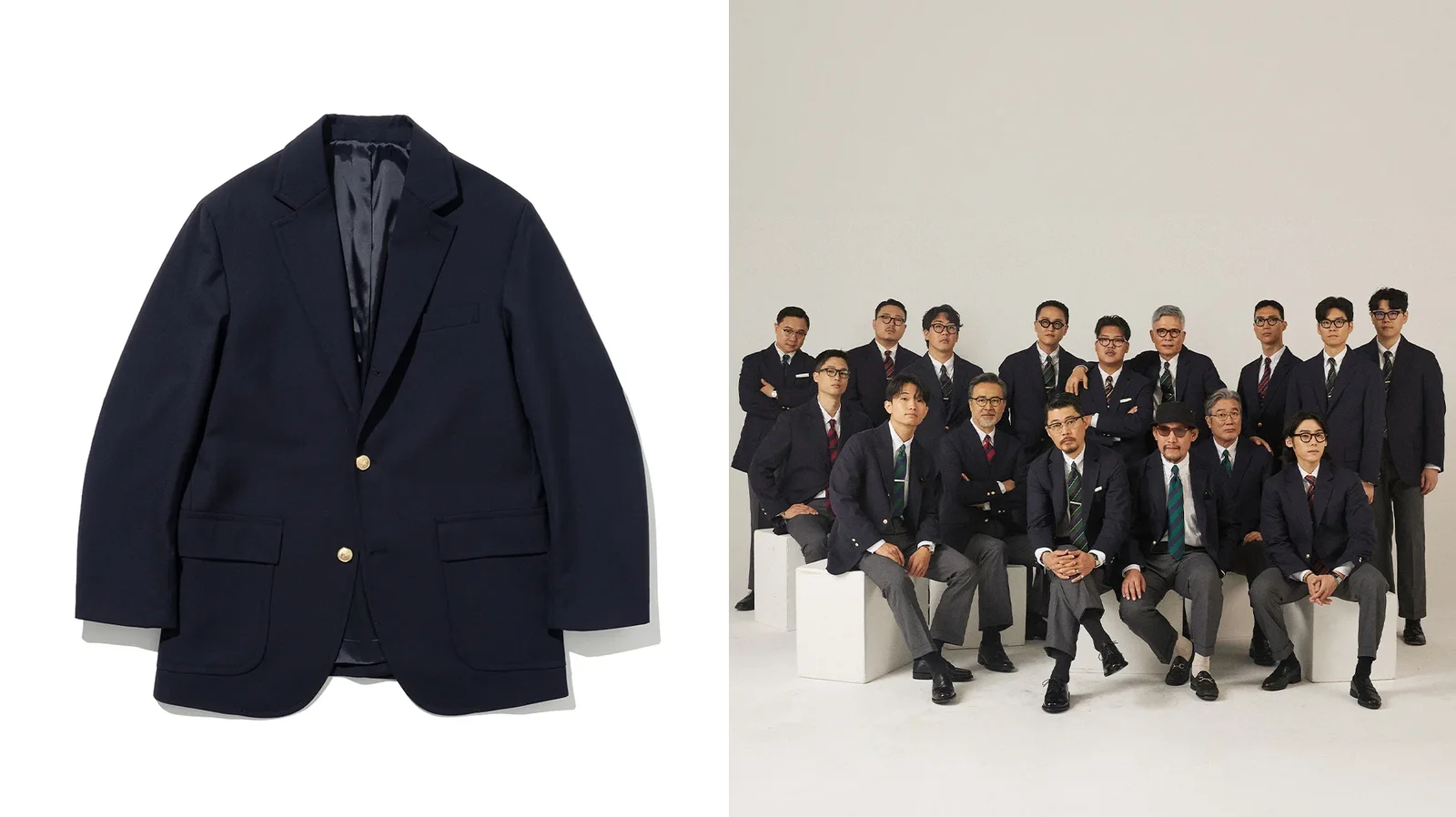
The team wears the same blazer they sell — not as marketing, but because it’s what they actually believe a blazer should be. Same cut across every member, every size. That consistency is the point.
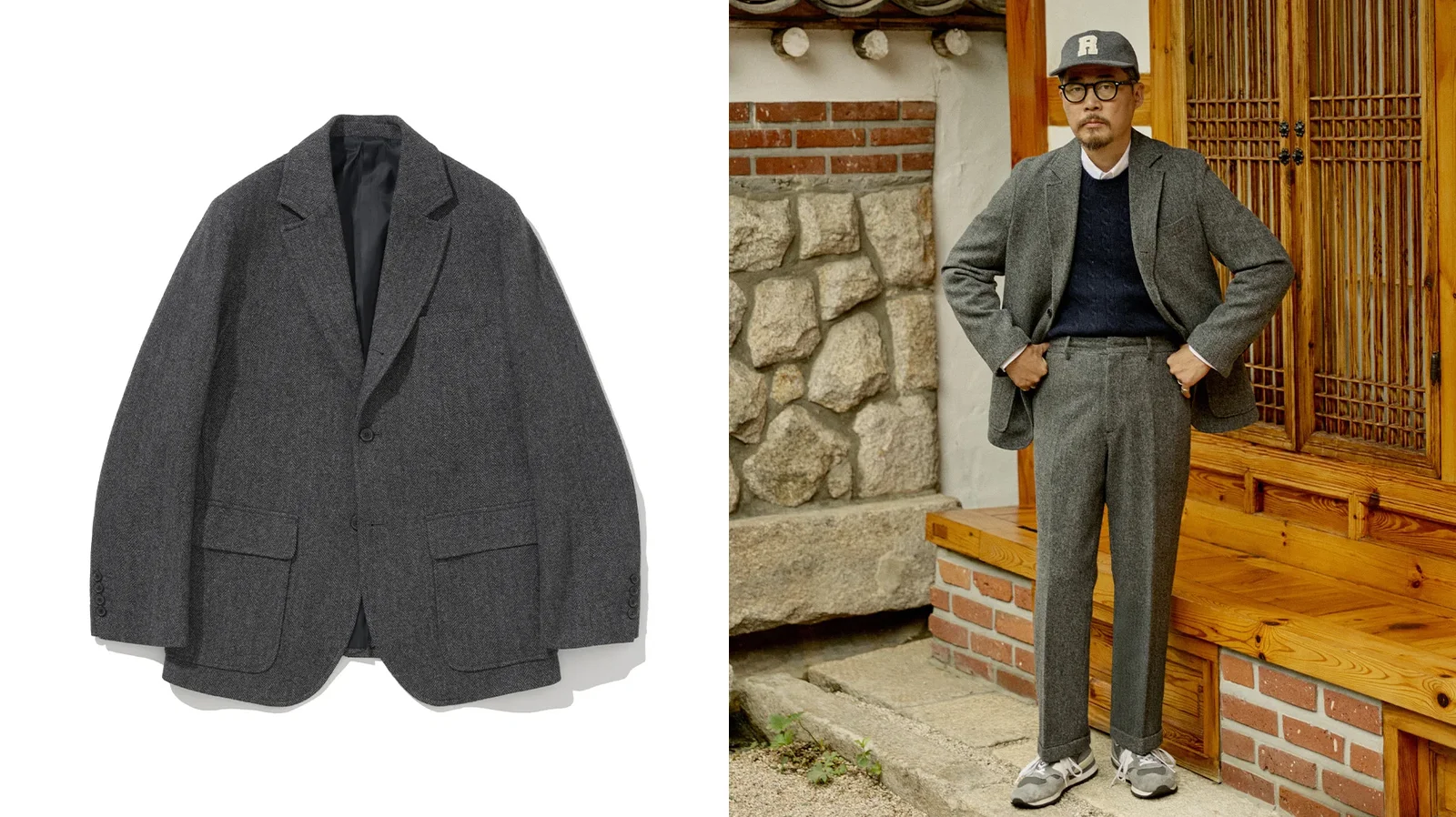
We didn’t inherit this cut directly from J.Press. We inherited it from the same place they did: the recognition that a jacket can be relaxed and rigorous at the same time, if you cut it correctly. If you’re in Seoul and want to experience it in person, you can try a Renacts blazer at Gentlemens House in Yeonhui-dong, Seoul. The lineage that started with a Latvian tailor in New Haven in 1902 quietly continues — in New Haven, in Tokyo, and now in Seoul.
The cut itself is not hard to find here. A grey sack-cut blazer carries the natural shoulder and the 3/2 roll, and the herringbone version does the same job from October.