
Ivy Style Guide 2026: What It Is, How to Wear It, and the Brands Doing It Right
Ivy style is not a uniform. It’s a way of thinking about clothes that started on a handful of American campuses in the 1950s, traveled to Japan in 1965 with the photo book Take Ivy, and is being rebuilt right now by labels like Aimé Leon Dore in New York and Renacts here in Seoul. This is the complete Seoul Trad guide to what ivy style is, how to wear it, and the brands worth your closet space in 2026.
A navy blazer doesn’t make you Ivy. Neither does a ribbon belt, a pair of penny loafers, or a subscription to The Rake. Ivy style is a posture — a way of treating clothes the same way it treats your time and your conversations. It rewards restraint over flourish, fit over fabric, and a soft-shouldered sack jacket over a darted suit.
If you’ve been searching ivy style brands, brands like Aimé Leon Dore, or just trying to figure out where preppy ends and ivy begins, this is the page that will sort it for you. We cover the history (1950s American campuses to 1965 Tokyo to 2020s Seoul), the wardrobe (the seven pieces every ivy closet has), the brands (American, Japanese, and Korean), and the philosophy (why ivy keeps coming back when other styles burn out).
Ivy Style Isn’t Really About Style
Here’s the thing most menswear blogs get wrong: they treat ivy style as a costume. Throw on a sack jacket, add some repp stripe ties, and you’re done. But the students at Princeton, Harvard, and Yale in the 1950s weren’t following a style guide. They were just getting dressed.
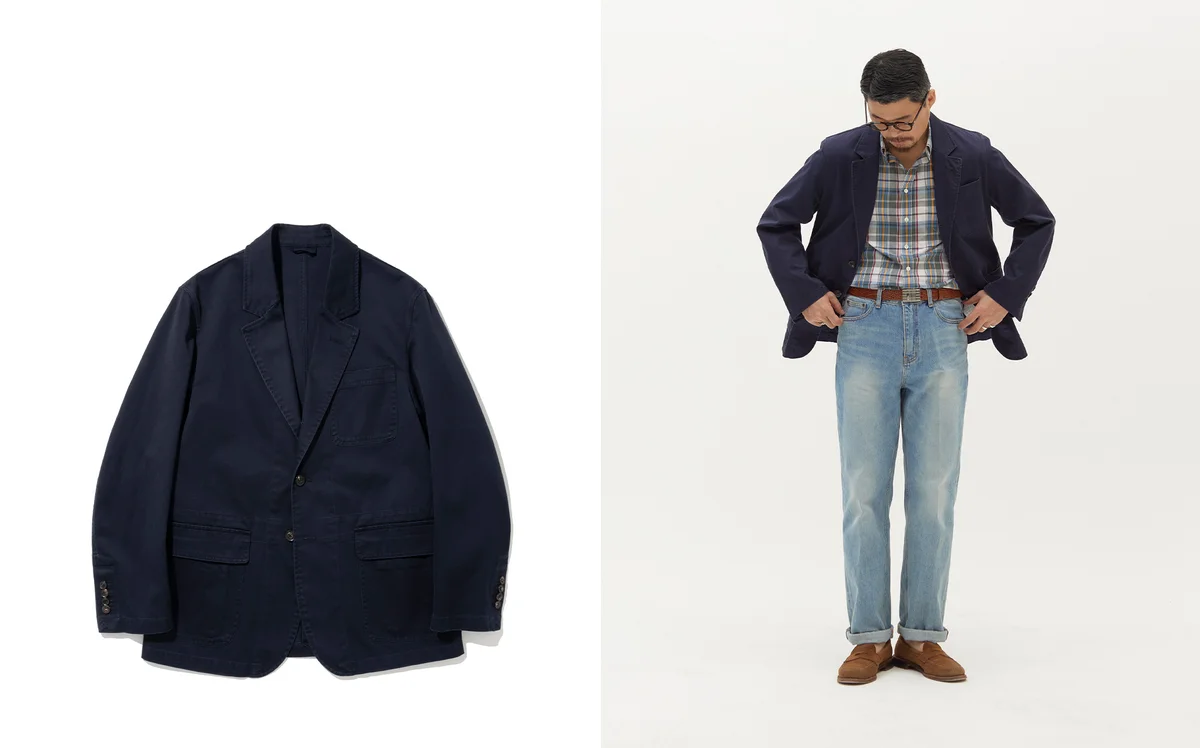
What made them “Ivy” wasn’t the clothes. It was the context. These were young men expected to play a sport, study seriously, join clubs, and eventually lead something — a company, a courtroom, a community. The clothes were a byproduct of that life.
A button-down collar held up during touch football on the quad. Unstructured shoulders let you move between a lecture hall and a crew boat. Khakis survived a semester of daily wear. Every piece solved a problem for someone living an active, engaged life.
That’s why ivy style still resonates. It’s not nostalgia. It’s a blueprint for dressing like a person who actually does things. Skip the guys who treat it like cosplay — they’re missing the point entirely.
A Brief History: From Campus to Culture
Ivy League style crystallized in the late 1940s and peaked around 1955–1965. The key players weren’t designers. They were retailers: J. Press, Brooks Brothers, The Andover Shop, Langrock in Princeton. These stores dressed generations of students in a remarkably consistent uniform — and honestly, they understood their customer better than most brands today.
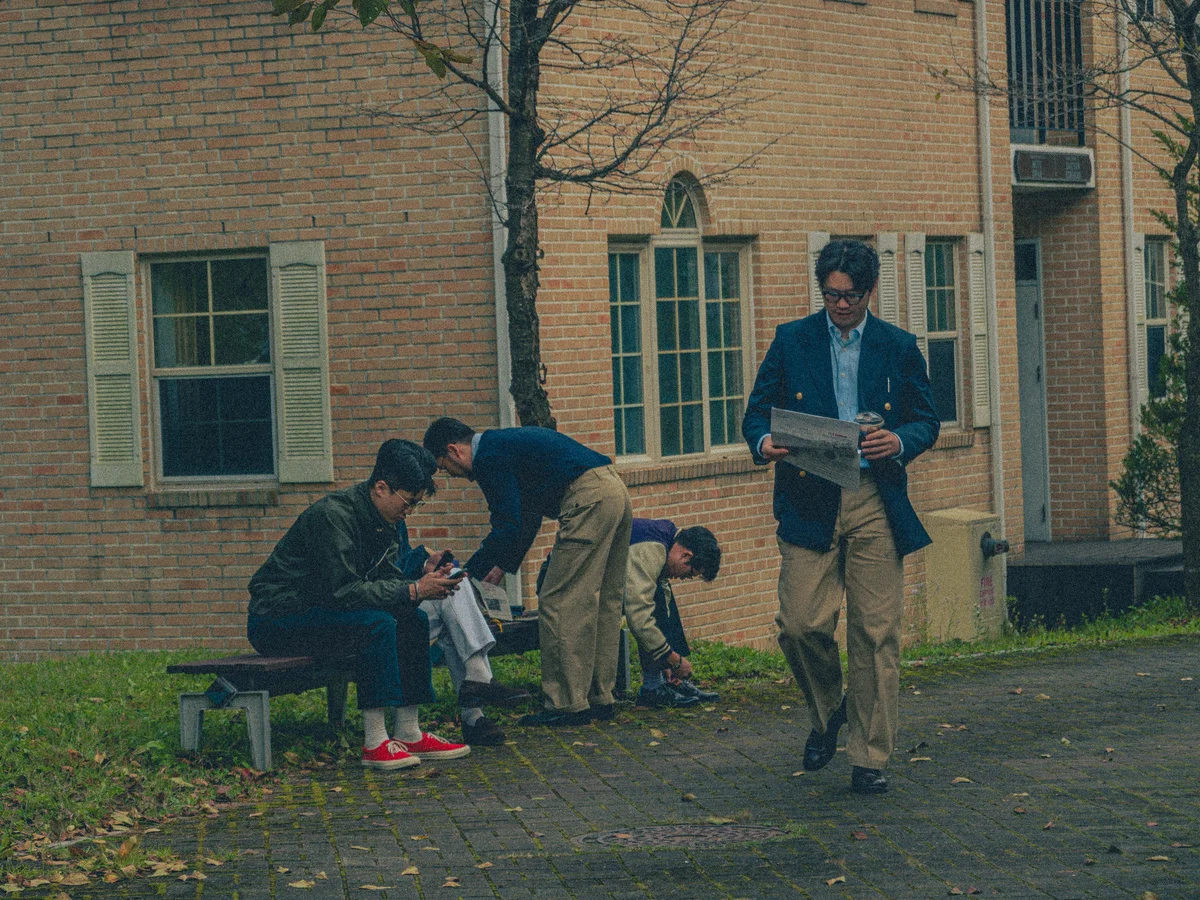
The look spread beyond campus through two channels. First, Hollywood — actors like Steve McQueen and Paul Newman wore ivy style casually, making it aspirational. Second, the workplace — as Ivy League graduates entered law firms, banks, and government, their campus wardrobe became the American professional uniform.
Then came the 1960s counterculture. Ivy got associated with the establishment, which made it uncool for about two decades. But the clothes never fully disappeared. Ralph Lauren built an empire repackaging Ivy for the mainstream. J. Crew did it again in the 2000s. And in 1965, a Japanese photographer named Teruyoshi Hayashida published Take Ivy, a book of candid campus photos that would later spark an entirely different tradition across the Pacific.
The Core Wardrobe: Seven Pieces That Define Ivy
Every Ivy guide eventually becomes a shopping list. Fair enough. But these aren’t arbitrary picks — each piece exists because it served the original Ivy life of sport, study, and socializing. Buy these seven pieces well, and you’ll understand why the style has lasted seventy years.
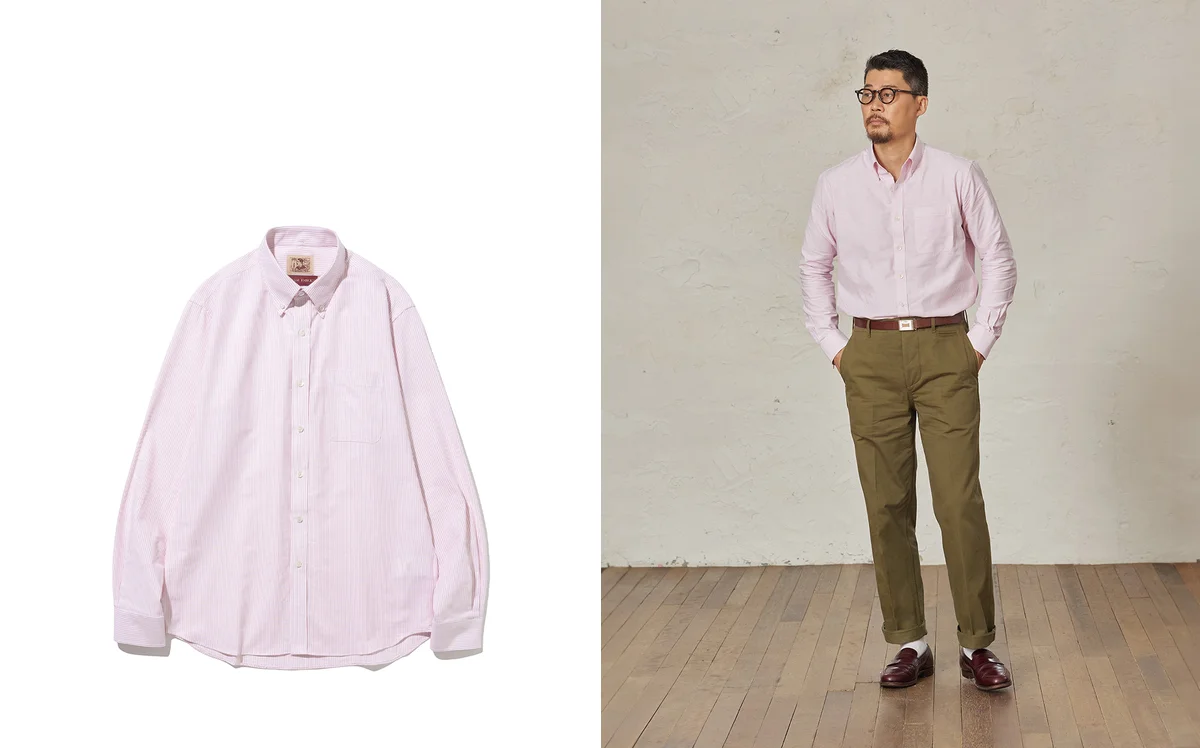
1. The Oxford Cloth Button-Down (OCBD)
The foundation. Brooks Brothers introduced the button-down collar after company president John Brooks saw polo players in England pinning their collars down. The oxford cloth is heavier than poplin, which means it holds its shape without starch and develops that perfect soft roll at the collar over time. That unlined, unfused collar roll is the single most recognizable detail in Ivy dressing — and the hardest to fake.
Get it in white first. Then blue. Then university stripe. You’re set for years. Don’t overthink it.
The one we keep coming back to is the six-button Ivy OCBD — the fuller collar is what lets the roll happen at all.

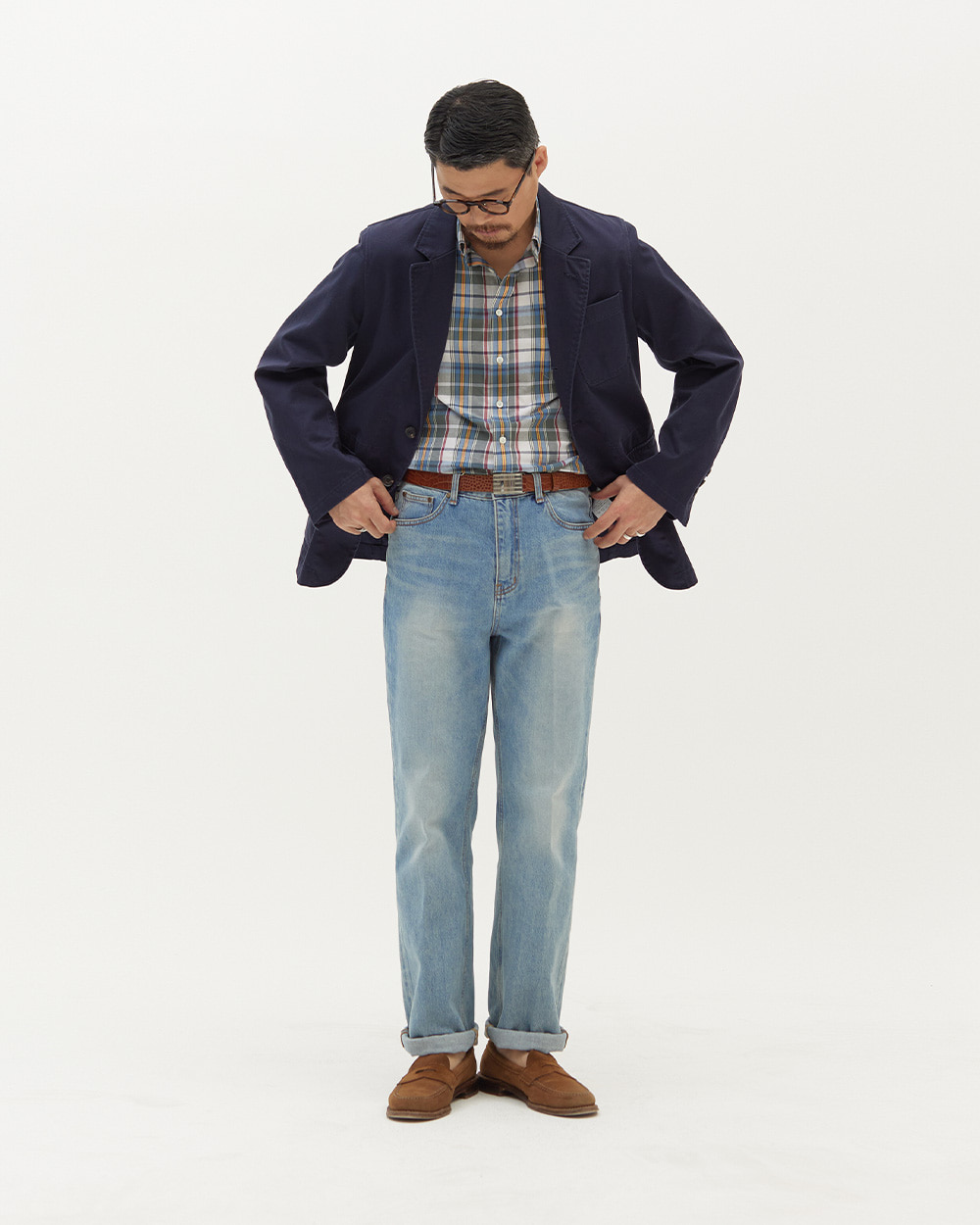
2. The Navy Blazer
Not a suit jacket. A blazer — unstructured or lightly structured, with a natural shoulder. The Ivy version is the “sack” cut: no darts in the front, a straight body, and a slightly boxy silhouette. It sounds unflattering on paper, but on a real human body, it looks effortlessly correct. Modern “slim” blazers look like you’re trying too hard.
Two buttons. Flap pockets. No ticket pocket, no peak lapels, no surgeon’s cuffs. Keep it simple or go home.
That spec, item for item, is what the Wool Sack Cut Gold Button Blazer is cut to.
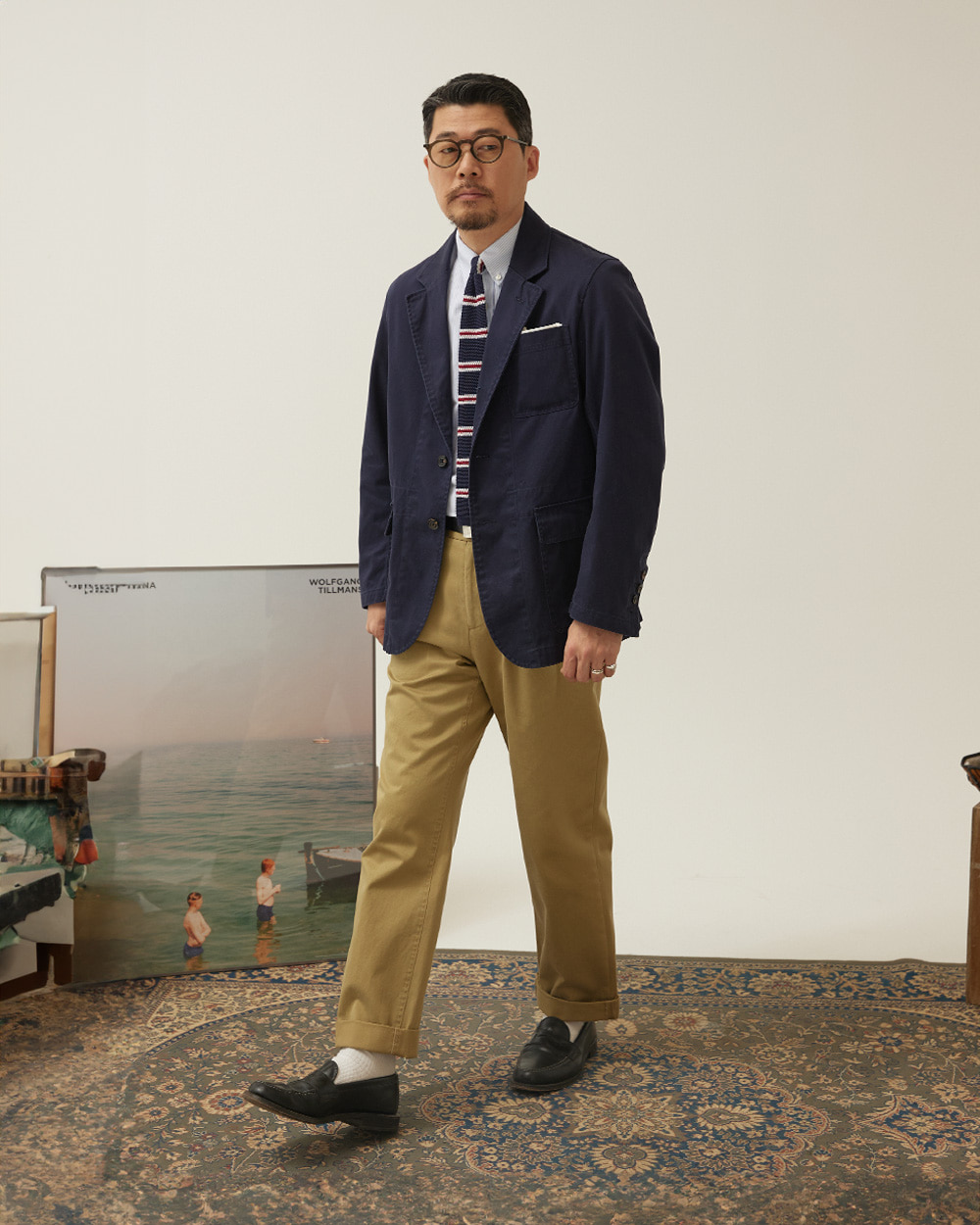
3. Khaki Chinos
Originally military surplus. GIs came home from World War II with khaki trousers, wore them to campus on the GI Bill, and a tradition was born. Flat-front or single-pleat, either works. The fabric should be substantial enough to hold a crease but soft enough to be comfortable. Skip anything that feels like pajamas.
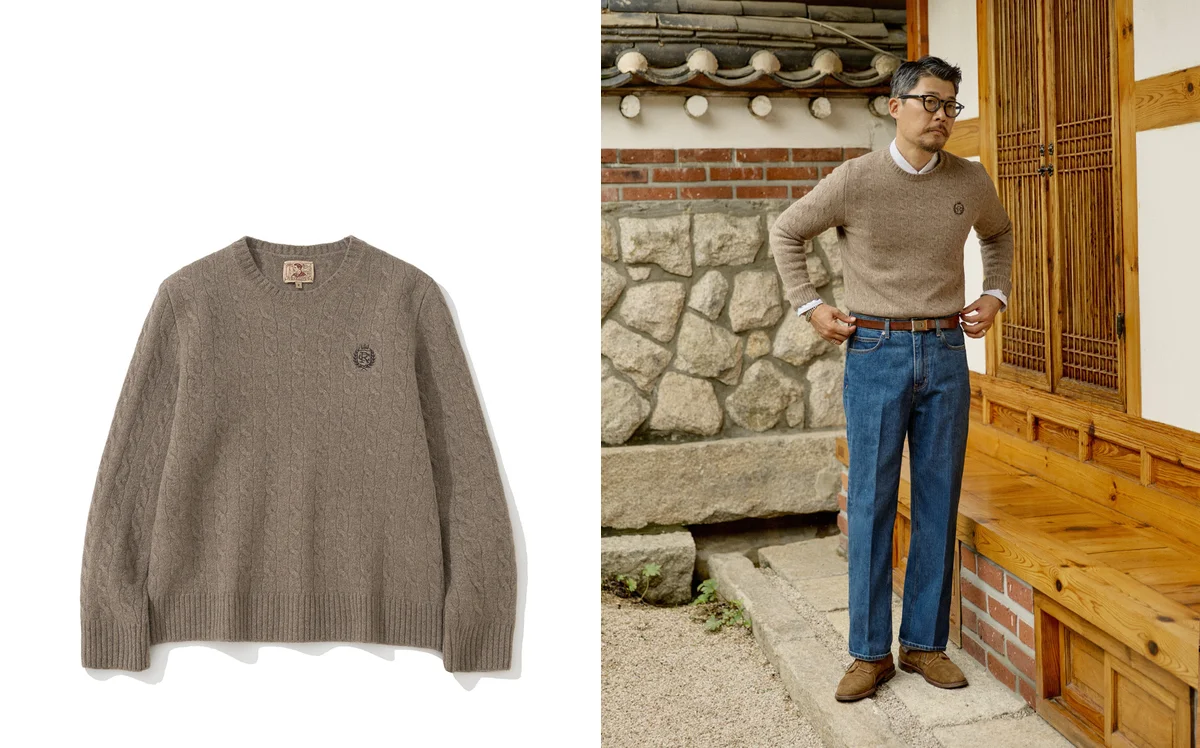
4. The Crewneck Sweater
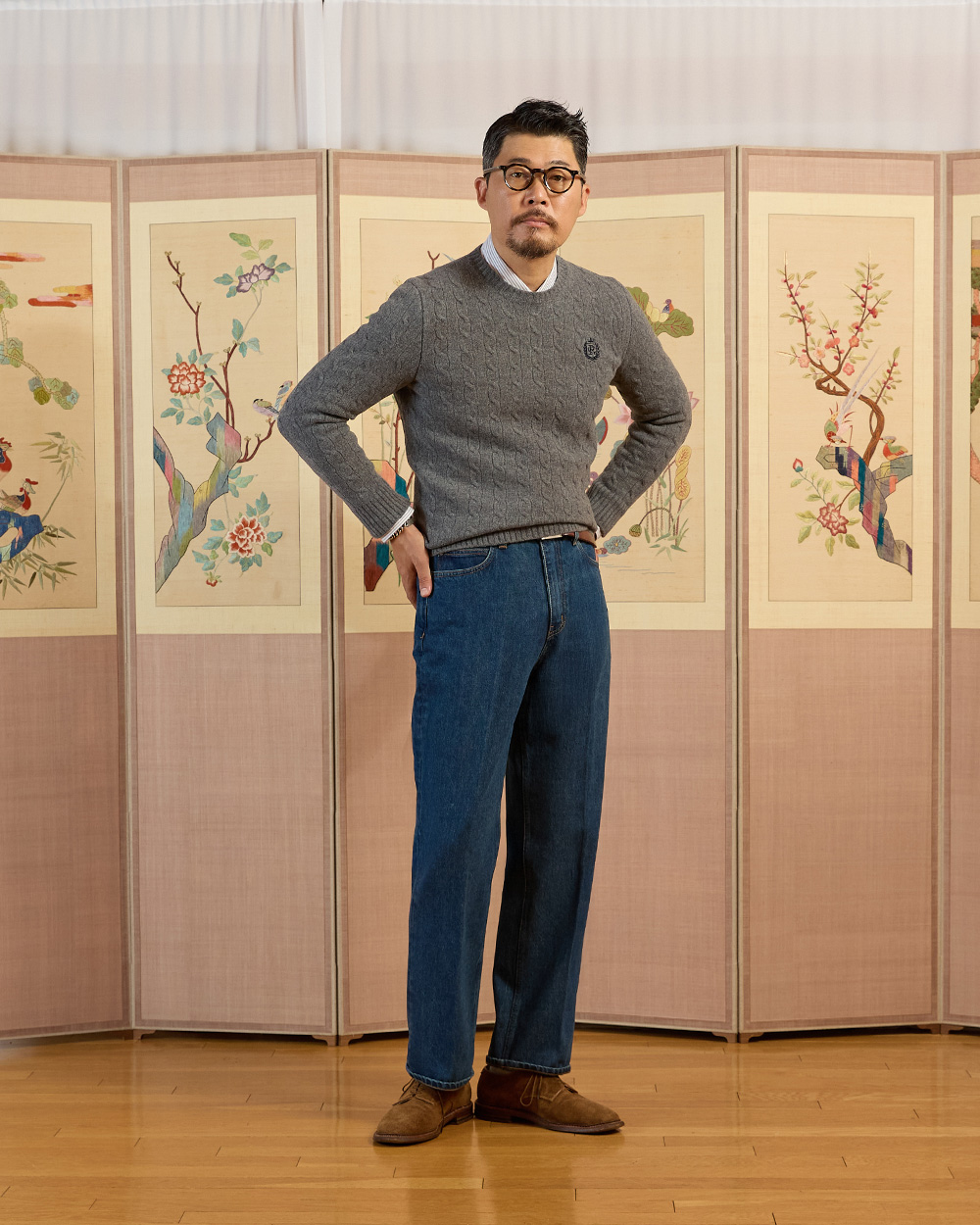
Shetland wool, period. The texture matters — a smooth merino crewneck looks corporate, while a nubby Shetland looks like you’ve owned it since freshman year. No Shetland in the closet? Any knit with real texture — a chunky cable, a brushed lambswool — beats a flat merino. Layer it over your OCBD with the collar poking out. That’s the look. Don’t tuck the collar under like some kind of accountant.
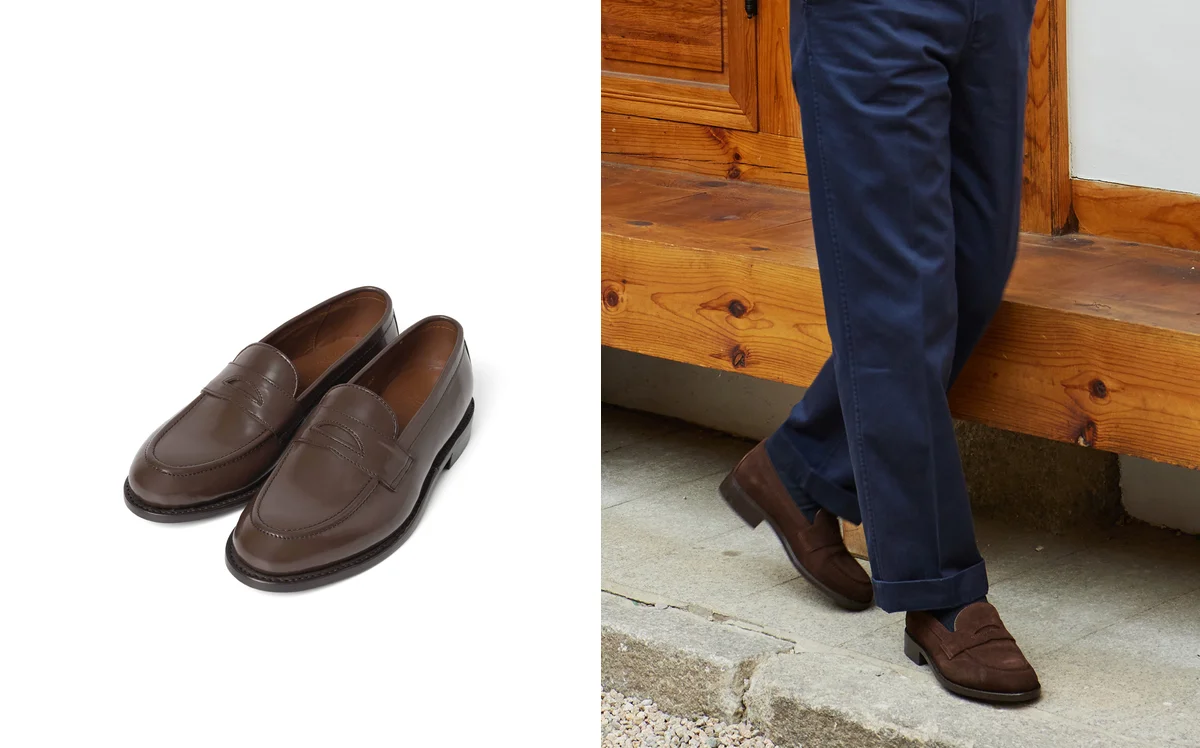
5. Penny Loafers
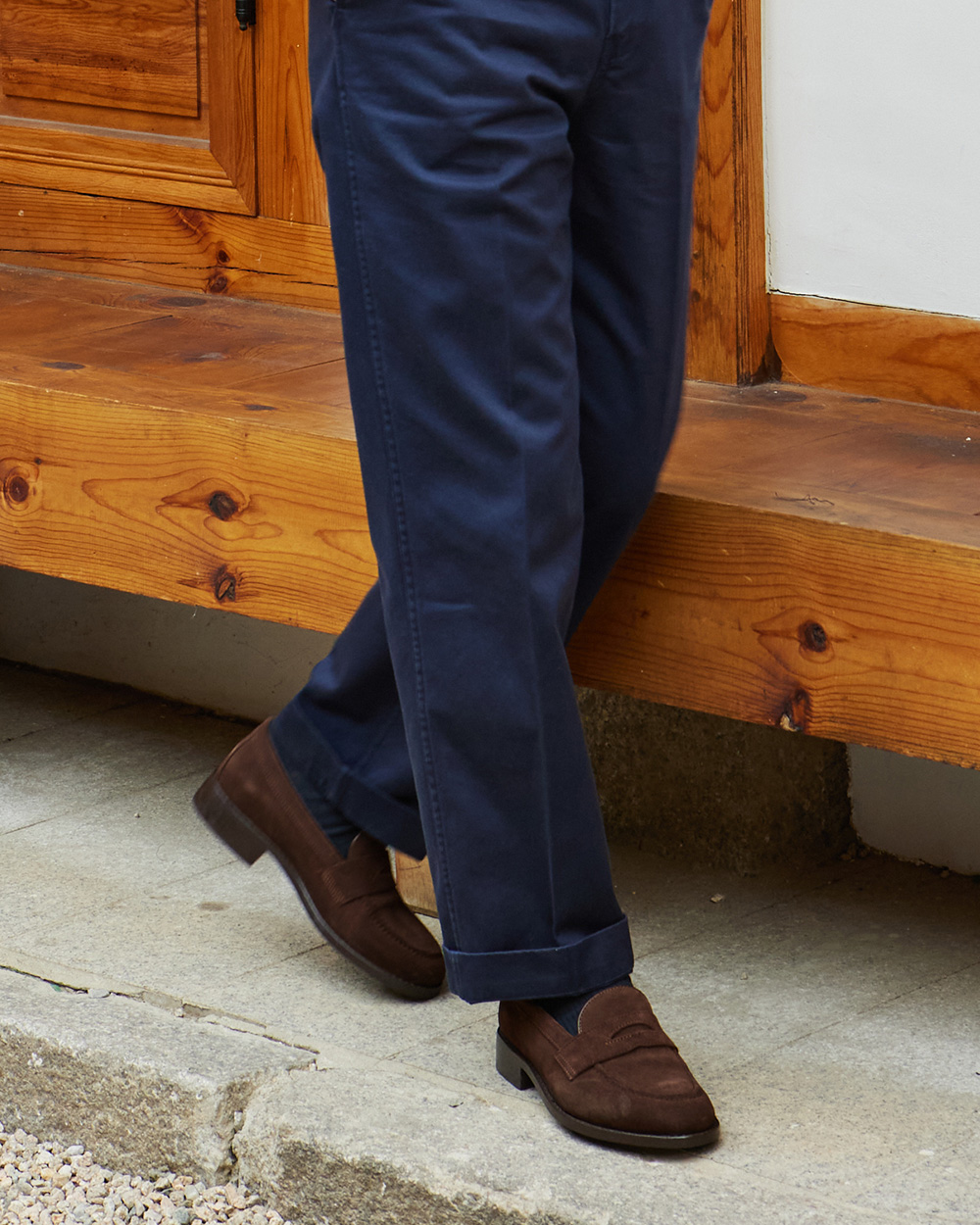
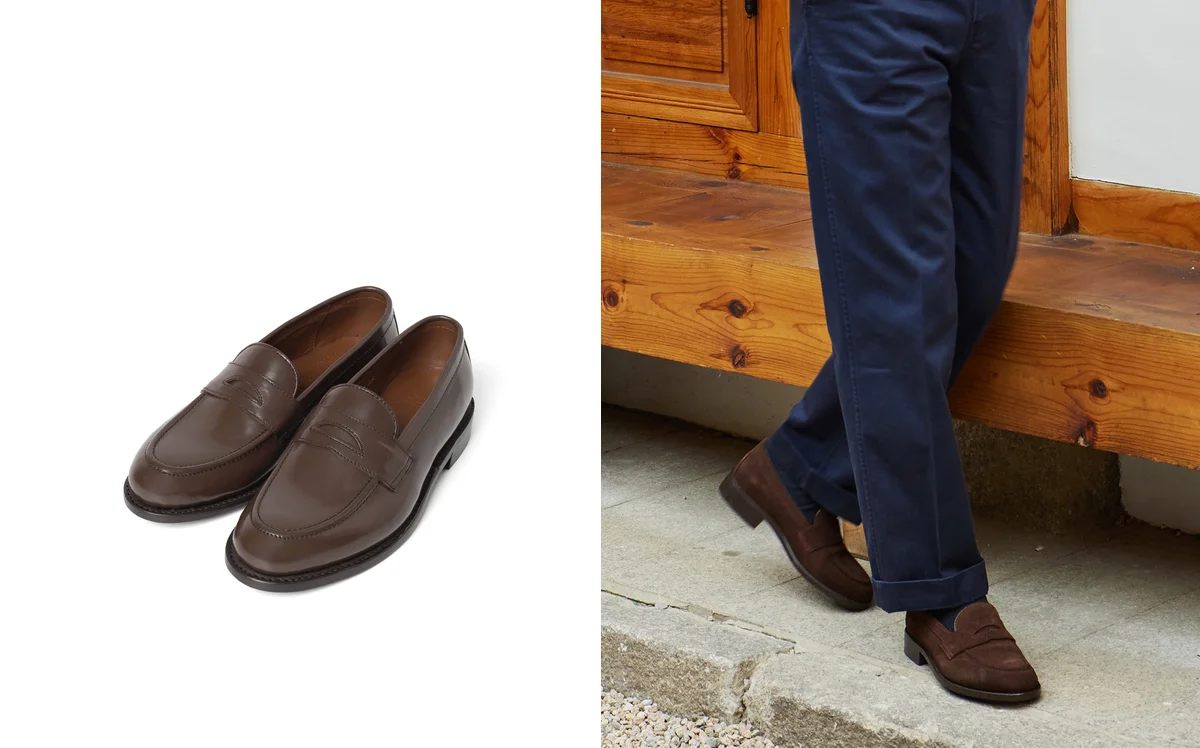
The G.H. Bass Weejun is the archetype, and frankly, still the best value. Slip-on, no socks in summer, wool socks in winter. Penny loafers signal that you’re comfortable enough to not need laces — which, in the Ivy world, is a subtle flex. Tassel loafers are for lawyers. Bit loafers are for trying too hard.
6. Repp Stripe Tie
Stripes run from the left shoulder down to the right hip (the opposite of British regimental ties — an American distinction that matters). Silk, in school colors or classic combinations like navy-and-gold or burgundy-and-green. I’ll be blunt: if you only own one tie, make it a repp stripe.

7. Outerwear That Works
The original ivy style wardrobe had real gaps here. A Barbour jacket or a toggle-front duffle coat covered the basics, but New England weather is mild compared to, say, a Seoul winter. We’ll come back to this — it’s where modern ivy style gets interesting.
The Rules (and When to Break Them)
Ivy has conventions, not commandments. But knowing the conventions is how you earn the right to break them.
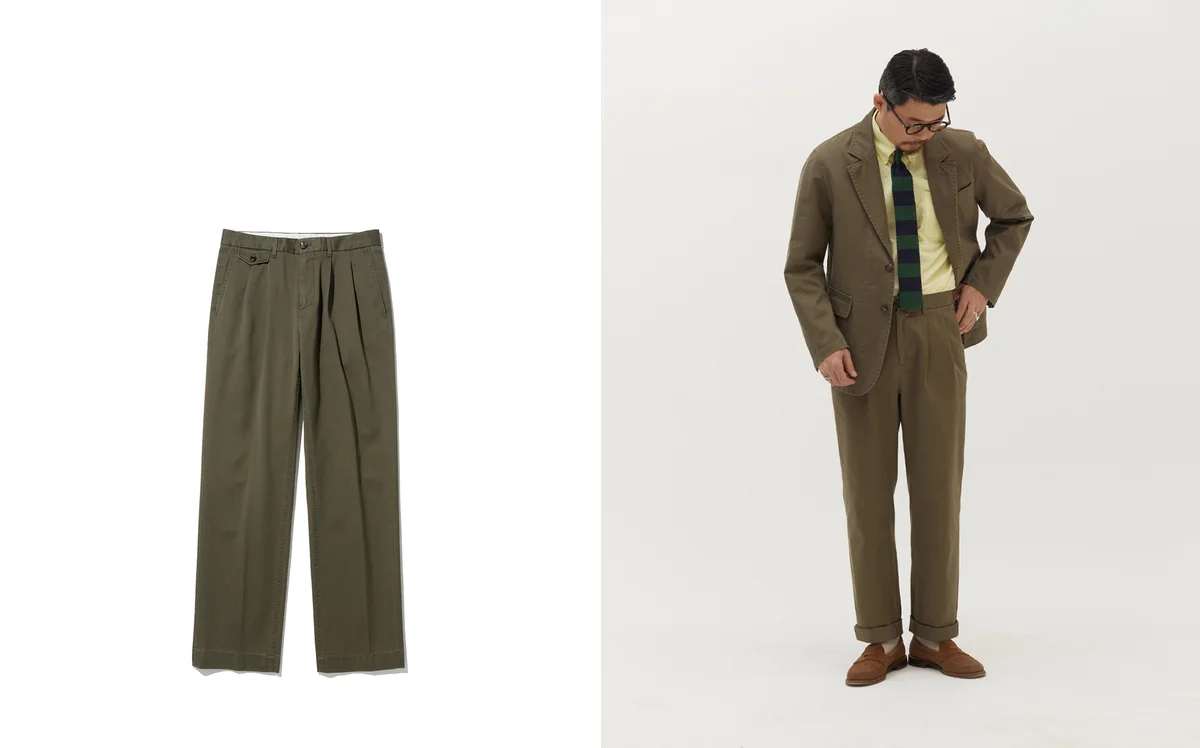
Fit is relaxed, not sloppy. The natural shoulder, the boxy blazer, the full-cut trouser — these aren’t mistakes. They’re intentional. Ivy fits the body without gripping it. If your blazer shows every muscle in your back, that’s Italian tailoring, not Ivy.
Pattern mixing is encouraged. Stripes with checks. Plaid with paisley. The trick is varying the scale — a broad-striped shirt under a subtle glen plaid jacket, not two patterns of the same size competing for attention.
Underdressing beats overdressing. An Ivy guy at a cocktail party might be the only one without a pocket square. He’s wearing a blazer and tie, sure, but the necktie is slightly loosened and the blazer is unstructured. He looks like he belongs everywhere because he’s not trying too hard for anywhere.
The biggest mistake newcomers make is treating ivy style like a costume. If you look like you stepped out of a 1962 yearbook, you’ve gone too far. Absorb the principles and dress naturally within them — that’s the whole point.
Ivy vs. Preppy vs. Trad: Sorting Out the Labels
These three words get used interchangeably. They shouldn’t be. The cleanest way to see it: in 1964 the wardrobe was called Ivy League. By 1970 the identical wardrobe was called preppy. The clothes didn’t change — the culture around them did.
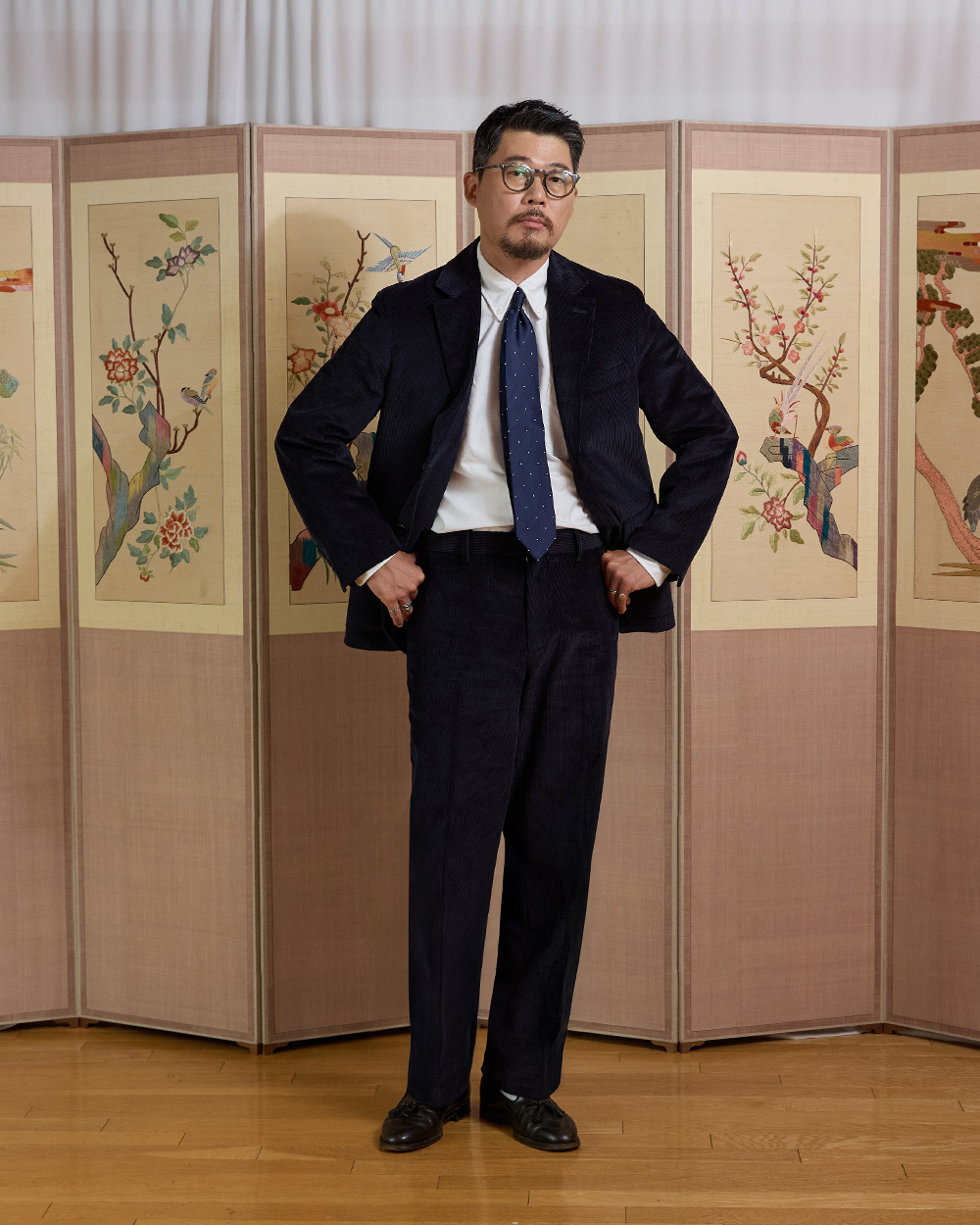
Ivy is the campus original: style first, comfort a close second. An Ivy guy wears tailoring about half the time, goes sockless only when it’s genuinely hot, and layers with intention — a polo under a cricket sweater, colors that agree with each other. It’s dressy-casual with discipline.
Preppy is Ivy on vacation. Same DNA, less rigor. Boat shoes instead of penny loafers, sockless year-round, louder colors, and a blazer where Ivy would wear a suit. Nothing wrong with it — it’s just a different relationship with the same closet.
Trad is the dressiest and rarest of the three: a deliberately conservative continuation of the mid-century wardrobe. The three-roll-two sack suit is its skeleton, khaki its default trouser, a nubby Shetland its one indulgence. If Ivy is a college junior, Trad is his grandfather — and they shop at the same store.
Don’t lose sleep over the labels. Learn the Ivy principles, then drift preppy or trad as your life demands. The wardrobe barely changes; the attitude does.
What Take Ivy Captured — and What It Missed
Hayashida’s Take Ivy is the most important document in Ivy menswear. The photos are candid, unglamorous, and deeply revealing. You see students in rumpled OCBDs and beat-up loafers, not styled editorial shots. Ivy was a living uniform, not a fashion statement.
The book ignited the Japanese Ivy movement — brands like VAN Jacket and later Kamakura Shirts built entire businesses interpreting these photos. Japan proved that Ivy could travel across cultures without losing its soul.
But Take Ivy also froze Ivy in amber. For decades, “authentic Ivy” meant replicating 1960s American campus life down to the last detail. That’s preservation, not evolution. And a living tradition needs to evolve.
Seoul Traditional: The Next Chapter of Ivy
This is where Seoul enters the story. Not as a follower, but as a new voice.
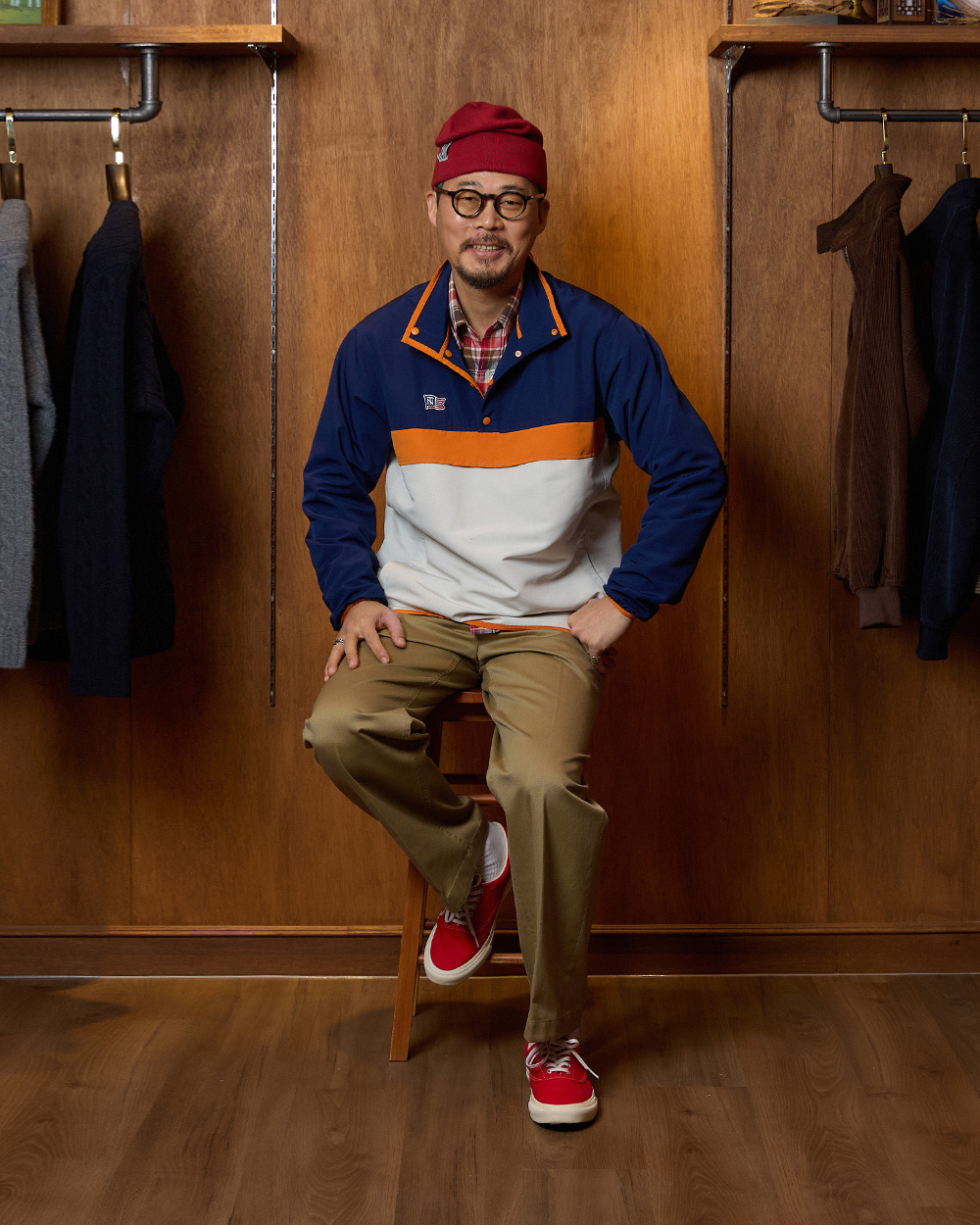
The original Ivy ethos — sound body, sharp mind, community engagement — translates perfectly to modern Seoul. The clothes need adjusting. Seoul winters are brutal; you need an anorak or a heavy parka over your blazer, not a thin Barbour. Seoul summers are humid; lightweight unlined jackets matter more here than tweed ever will.
We call this approach Heavy Ivy. Heavier fabrics. More layering. Outerwear that actually protects you. The proportions shift slightly — Korean body types often benefit from a touch more structure in the shoulder than a true American sack provides. It’s not a copy of 1960s Princeton, and it’s not a copy of 1970s Shibuya. It’s something new.
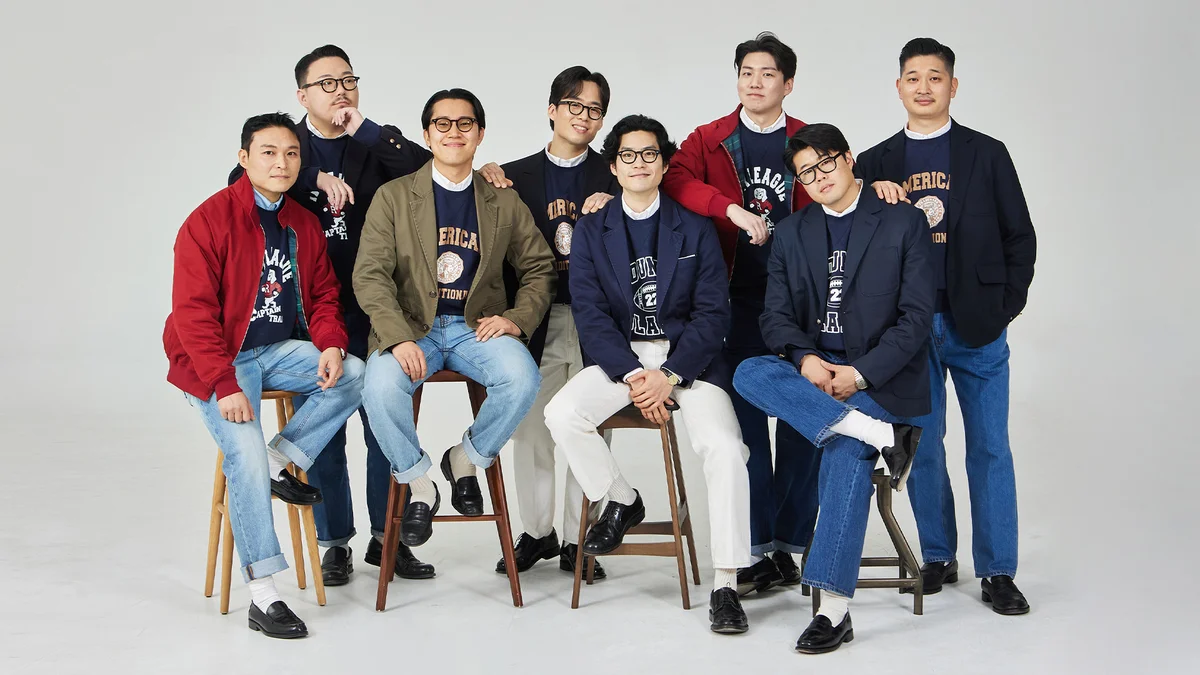
The Seoul Traditional philosophy goes beyond the wardrobe. The Gentlemen’s Club — a real community here in Seoul — runs a football team, organizes volunteer work, and hosts seminars on everything from personal finance to content creation. That’s the Ivy ethos in action: body, mind, community. The blazer is just what you wear while doing it.
The Brands Doing It Right in 2026
The full landscape deserves its own page — we keep a complete, regularly updated guide to ivy style brands — but here’s the short version.
The originals. J. Press (New Haven, 1902) and Brooks Brothers (1818) wrote the canon: the sack cut, the button-down collar, the repp tie. Vintage pieces from either are still the best value in this world.
The Japanese keepers. Kamakura Shirts, BEAMS Plus, and the wider ametora tradition preserved the details through the decades America forgot them. If you want a collar roll done exactly right in 2026, odds are it was made in Japan.
The new prep wave. Aimé Leon Dore and Noah took the language downtown; Drake’s and Rowing Blazers made it playful again. If that’s your lane, start with our guide to brands like Aimé Leon Dore.
And Seoul. Renacts reinterprets the 1950s–60s American archives for this city — heavier fabrics, real layering, proportions cut for how people actually live here. One brand among several doing the work; we happen to know it best.
Building Your Ivy Wardrobe on a Real Budget
You don’t need to spend a fortune. Here’s a realistic starting order, from most important to least:
Month 1: Two OCBDs (white and blue) and a pair of khaki chinos. Cost: $80–$150 total. You now have a foundation that works for almost any situation short of a black-tie event.
Month 2: A navy blazer. This is worth spending more on — $150–$250 gets you something with the right shoulder and decent fabric. Brands at this range include J. Press mainline, vintage Brooks Brothers (check eBay and local thrift stores), and a handful of smaller labels worth researching for your market.
Month 3: Penny loafers and a Shetland crewneck sweater. The penny loafers are a long-term investment; buy the best you can afford. The sweater can be inexpensive — even Uniqlo’s lambswool works in a pinch, though a real Shetland from Jamieson’s or Laurence J. Smith is worth saving for.
Month 4+: Repp ties, a second pair of trousers (grey flannel), a sport shirt or two, and outerwear appropriate to your climate.
That four-month plan gets you 80% of a functional ivy style wardrobe for under $500. The remaining 20% is refinement you’ll figure out over years.
Why Ivy Still Matters in 2026
Menswear moves in cycles. Slim suits give way to oversized silhouettes. Streetwear surges, then recedes. Ivy endures because it was never really fashion — it was a uniform for a particular way of living. And that way of living — active, curious, community-minded, put-together without being precious — never goes out of demand.
The question isn’t whether Ivy is relevant. The question is what ivy style looks like where you live, right now.
In New England, it still looks a lot like 1960. In Tokyo, it’s been filtered through decades of Japanese craft. In Seoul, it’s becoming something heavier, more layered, more practical — tied to a real community that does things beyond getting dressed.
That’s what a good Ivy guide should leave you with. Not just a shopping list, but a reason to care about what you put on in the morning. The clothes are the easy part. The life is the interesting part.
Ivy Style FAQ
What is ivy style in simple terms?
The way American college students dressed in the 1950s–60s, kept alive because it works: soft-shouldered tailoring, oxford button-downs, chinos, loafers, and restraint. Function first — every piece earned its place on a campus, not a runway.
What’s the difference between ivy style and preppy?
Same wardrobe, different discipline. Ivy is the dressier campus original; preppy is its off-duty descendant — brighter, more casual, boat shoes instead of loafers. The full breakdown is in the label guide above.
Which brands make true ivy style clothing?
J. Press and Brooks Brothers for the canon, Japanese makers like Kamakura for the details, Aimé Leon Dore and Drake’s for the modern read — and a growing scene here in Seoul. See our complete brand guide.
Is ivy style still in style in 2026?
More than ever. The old-money aesthetic that took over feeds is ivy with the labels filed off. The difference: trends borrow the look, ivy keeps the reasons. Buy for the reasons and you never have to chase the trend again.
What should I buy first?
Two OCBDs and a pair of khaki chinos — roughly $80–$150 all in. Then the navy blazer. The four-month plan above gets you 80% of the wardrobe for under $500.
What should I read to go deeper?
Take Ivy (1965) for the photographs, Ametora for how Japan saved the style. We’ve rounded up the full shelf in our trad & vintage book guide.