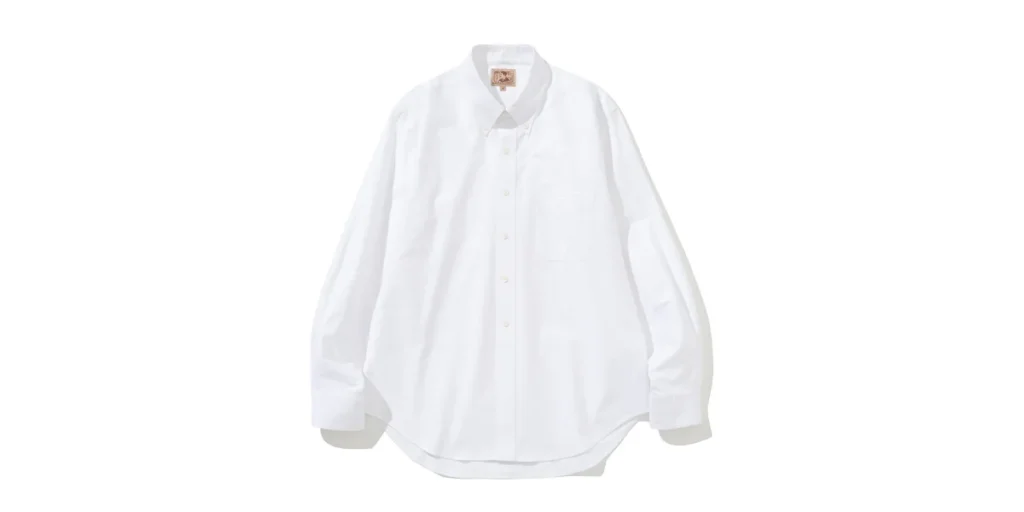
The Oxford Button Down Shirt: History, Fabric & Fit
The oxford button down shirt is probably the most useful shirt a man can own. Not the most formal. Not the most casual. Just the most useful — the one you’ll reach for three days out of five without thinking about it.
For how these colours actually get worn, see our OCBD and chinos styling guide — six looks covering seasonal layering and Seoul-specific combinations.
This guide covers everything: where the oxford button down came from, what makes oxford cloth different from other shirtings, how the collar should roll, and what fit actually works for your body. If you’re buying your first OCBD or replacing a worn-out favorite, start here.
Jump to: What is an OCBD · Buying specs · History · Oxford cloth · Collar roll · Fit · Colors · In Seoul · Care · Buying · FAQ
What Is an OCBD?
OCBD stands for oxford cloth button-down — an oxford cloth shirt whose collar points fasten to the placket with small buttons.
Both halves of the name matter, and most people only get one right. Oxford is the fabric. Button-down is the collar. A shirt needs both to be an OCBD.
John Brooks watched English polo players pin their collars down in 1896, and Brooks Brothers put buttons on a soft collar four years later. Ivy Style marked the collar’s 125th anniversary in 2025.
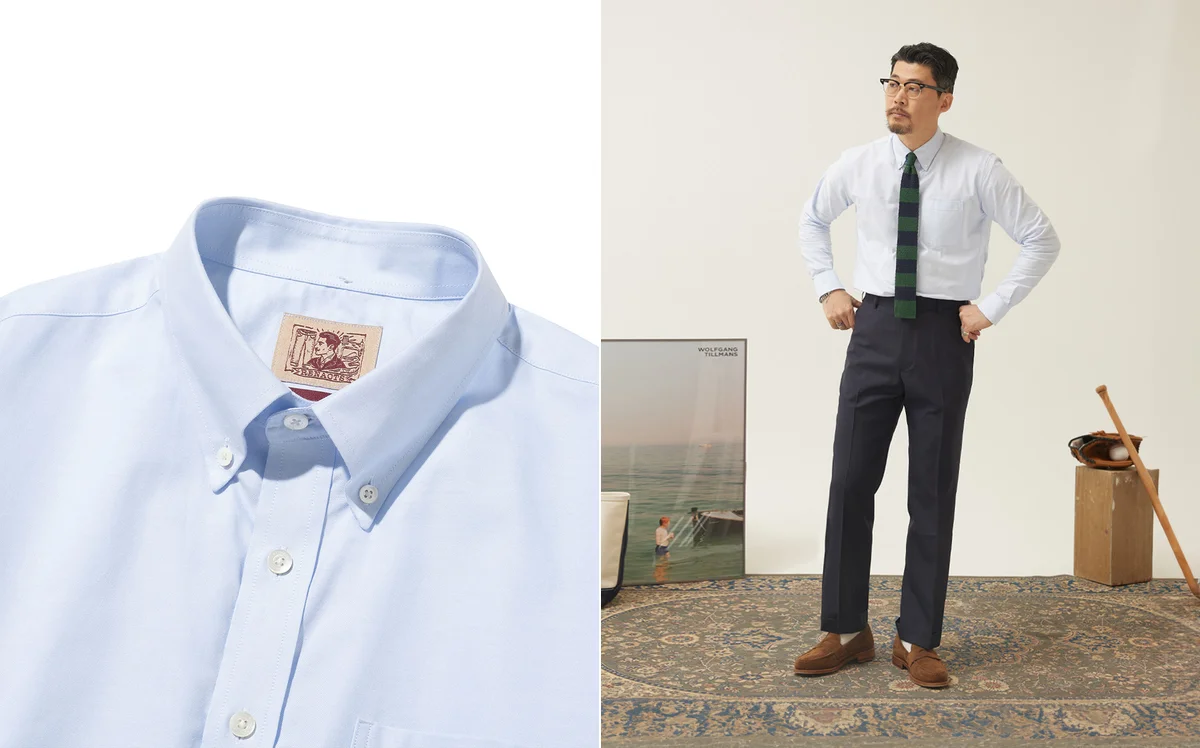
Three things separate a good one from a bad one — the collar roll, the cloth weight and the fit. This guide takes each in turn.
OCBD Buying Specs at a Glance
Everything below is explained in full further down. If you are standing in a shop, this is the short version.
| What to check | What you want |
|---|---|
| Collar construction | Unlined or lightly lined — it should roll, not lie flat |
| Collar point length | About 3 3/8 to 3 1/2 inches |
| Cloth | Oxford basketweave, 5–5.5 oz |
| Side seams | Single-needle stitching |
| First two colors | White, then blue |
| Price band | $40–150 |
Oxford Button Down: How a Polo Match Created Your Favorite Shirt
The origin story is almost too good. In the 1890s, John Brooks — president of Brooks Brothers — watched a polo match in England and noticed the players had buttoned their collars down to keep them from flapping during play. He brought the idea back to New York and put buttons on a soft-collared dress shirt.
That’s it. A functional solution borrowed from sport and applied to everyday clothing. Pure genius in its simplicity.
By the 1920s, the oxford button down shirt had become standard campus wear at Princeton, Harvard, and Yale. The OCBD wasn’t trying to be anything — it just was. It sat perfectly between the stuffiness of a starched dress shirt and the sloppiness of a plain undershirt. Students wore them everywhere because they worked everywhere.
Here’s the thing: Japan saved this shirt. Shosuke Ishizu’s Take Ivy photography project in 1965 captured what American college students actually wore, and the OCBD appeared in nearly every frame. While American fashion chased trends, Japan perfected the OCBD. They understood what we’d forgotten — some things don’t need improving.
What Makes Oxford Cloth Different
Here’s what most people get wrong: “oxford” refers to the fabric, not the collar. You can have an oxford cloth shirt without button-down collars, and you can have button-down collars on non-oxford fabric. The classic OCBD combines both, and that’s where the magic happens.

Oxford cloth uses a basketweave construction — thicker yarns woven in a simple over-under pattern that creates texture you can actually feel. Compare this to broadcloth (smooth but boring) or chambray (soft but weak). Oxford cloth has backbone. It holds its shape through a full day and wrinkles in a way that looks lived-in rather than sloppy.
Weight matters more than most brands want to admit. Skip anything under 5oz — it pills after a few washes and the collar goes limp. Anything over 5.5oz feels like a work shirt. The sweet spot breaks in beautifully after a few washes without losing its structure. That’s exactly where you want to live.
The Collar Roll: Why It Matters More Than You Think
The collar roll is the gentle arc the collar makes between the button and the collar point. It’s the difference between looking like you know what you’re doing and looking like you shop at the mall.
A proper collar roll happens when the collar is cut with enough length and the right interlining — or better yet, no interlining at all. It doesn’t lie flat against your chest like a pancake. Instead, it creates a soft, three-dimensional curve that moves with you. Unlined collars produce the best roll because they’re free to behave naturally.
Honestly, fused collars are the enemy here. That stiff interfacing glued inside makes them sit flat and lifeless. They photograph well for e-commerce sites, but on an actual human they look like cardboard. If you’re shopping for an OCBD and the collar feels rigid between your fingers, walk away. Life’s too short for bad collar roll.
Fit Types: Sack, Slim, and Everything Between
The original Ivy League oxford button down shirt was cut like a box. Straight through the body, no darts, generous in the chest and waist. This “sack” cut was intentional — it was the anti-fashion choice, rejecting the nipped-waist European silhouette in favor of something easy and democratic. Brands like J. Press made this cut their signature — and still do.
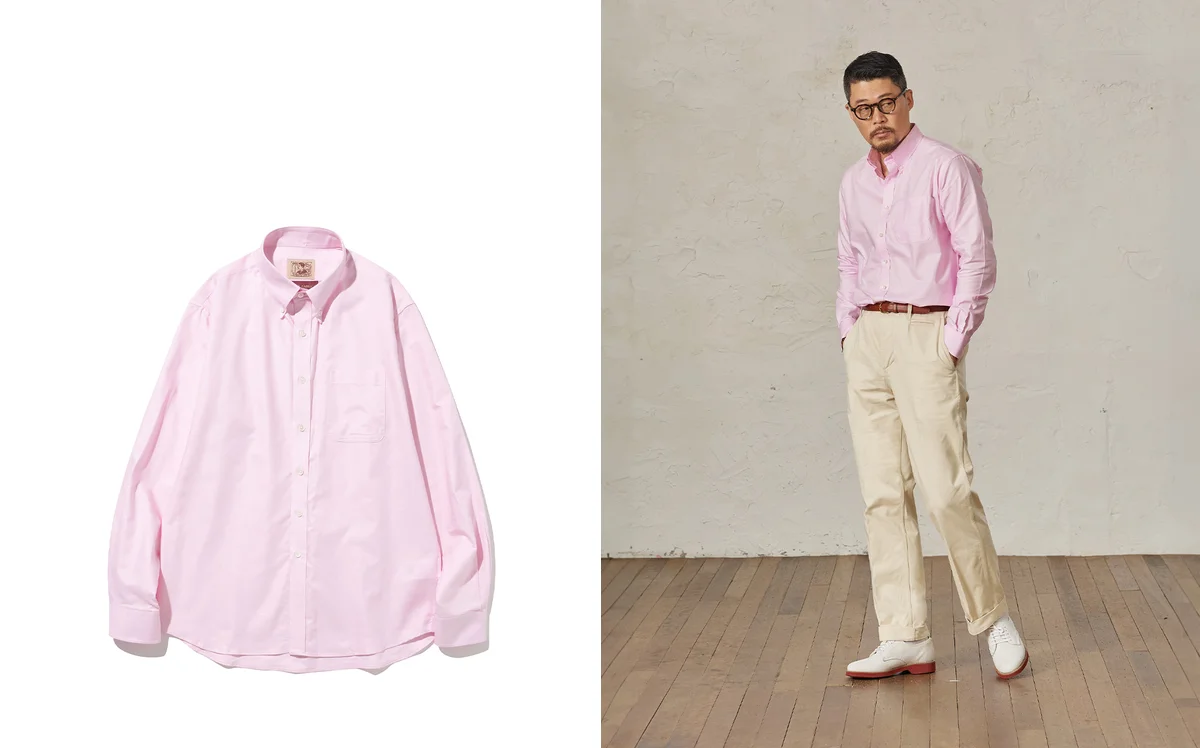
Today you’ll find three main fits:
Traditional/Classic: Roomy through the chest and midsection. Looks best tucked in with a jacket over it. If you’re between 25-35 BMI, this is the one that layers most comfortably.
Slim: Tapered through the torso with higher armholes. Works well on leaner frames, but be honest — if it pulls across the chest when you raise your arms, size up. Nobody looks good in a shirt that’s fighting their body.
Regular: The modern middle ground. Not as billowy as a true sack cut, not as tight as a slim. Most brands have settled on this as their standard, and it works for the widest range of body types.
Unless you’re specifically going for that full 1960s sack look with a 3/2 blazer, the regular fit is the right call for most men in Seoul. The oxford button down layers under anoraks and crewneck sweaters without excess bulk — something that matters when you’re navigating Gangnam in March wearing three layers.
White vs. Blue vs. Everything Else
Buy white first. Then blue. Then stop for a while.
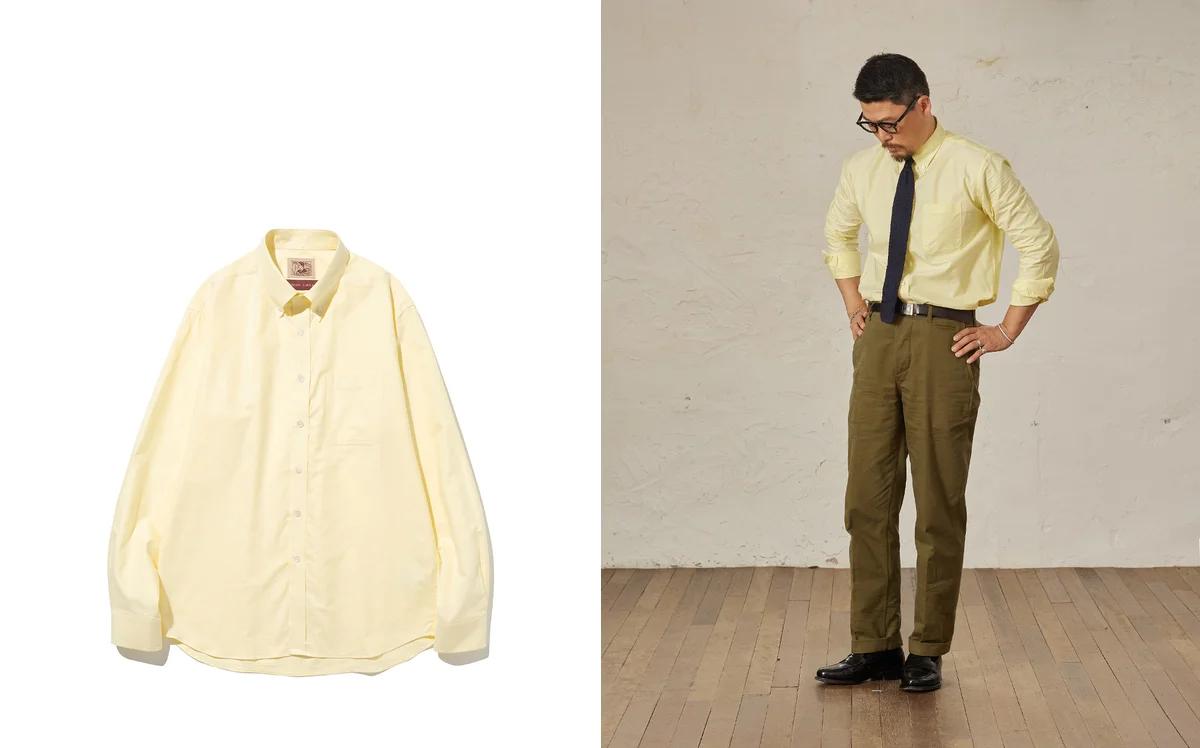
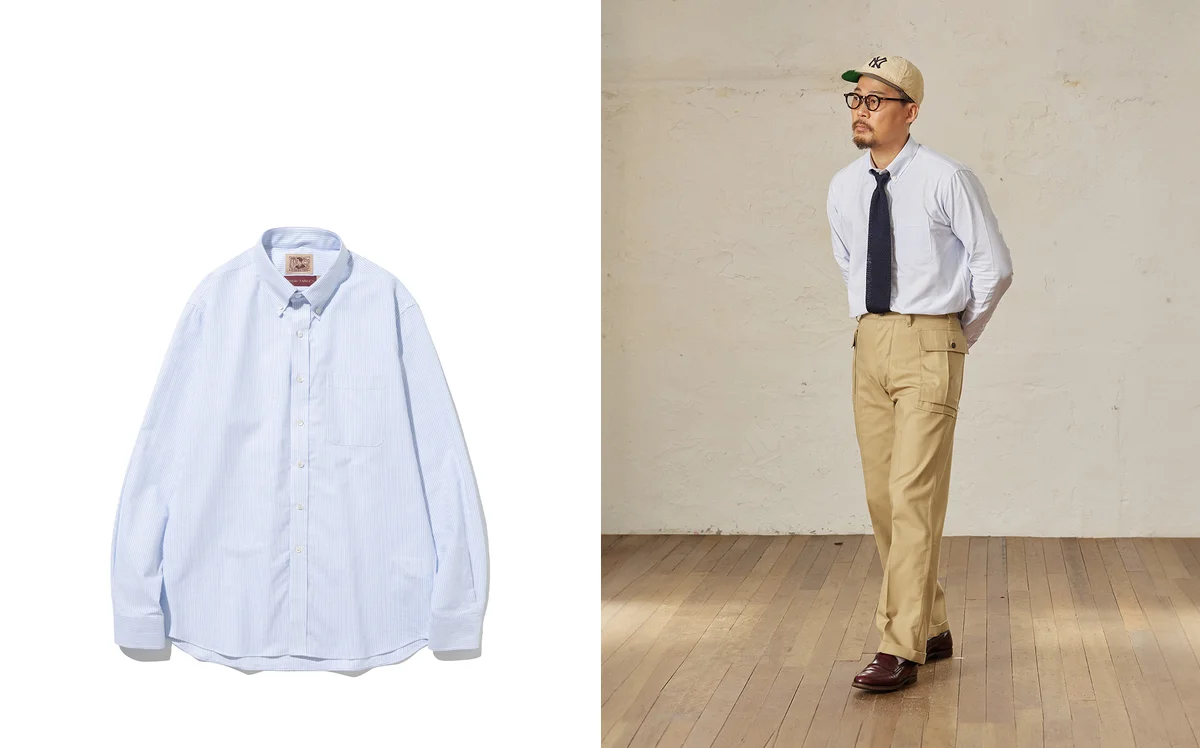
A white oxford button down shirt is the foundation of practically every outfit in the trad wardrobe. It works under a navy blazer, with chinos, under a crewneck sweater, or completely on its own with the sleeves rolled up. Blue is nearly as versatile but reads slightly more casual.
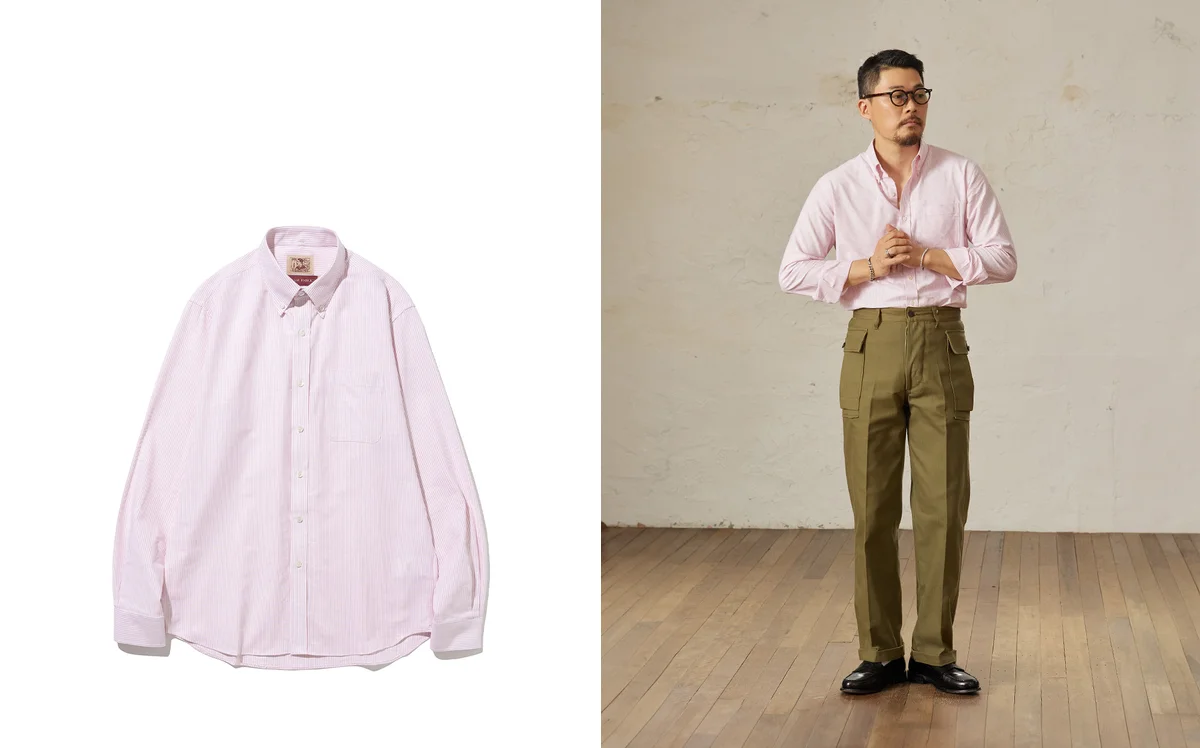
After those two? Pink is the classic third choice — it has deep roots in Ivy style and pairs beautifully with navy and grey. University stripe (blue and white) is another strong option. Avoid anything with too much going on. The whole point of the OCBD is that it’s a quiet shirt.
White with navy, blue with olive, pink with grey — our OCBD and chinos guide walks through six looks built on these colours.
How It Fits Into Seoul’s Version of Trad
In the original American Ivy context, the OCBD lived under sack jackets in wood-paneled classrooms. In Seoul today, it lives a different life.

You’ll wear it under an anorak walking from Hapjeong Station to a coffee shop in Yeonnam-dong. You’ll tuck it into chinos for a Saturday afternoon seminar at the Gentlemen’s Club. You’ll throw a crewneck sweater over it and call it a complete outfit for dinner in Itaewon.
Seoul’s weather demands more layering than a mild New England autumn. The oxford button down shirt becomes the consistent base layer — the one thing that stays the same while everything above it changes with the season. That’s why weight and fabric quality matter so much here. A thin, flimsy OCBD falls apart after a few months of constant wear. A properly woven one gets softer and better.
The one that survives a Seoul summer here is the six-button cut in 100% cotton — white first, blue second, and that is genuinely the whole shopping list.
Care: How to Keep It for Years
Wash cold, tumble dry low. That’s 90% of it.
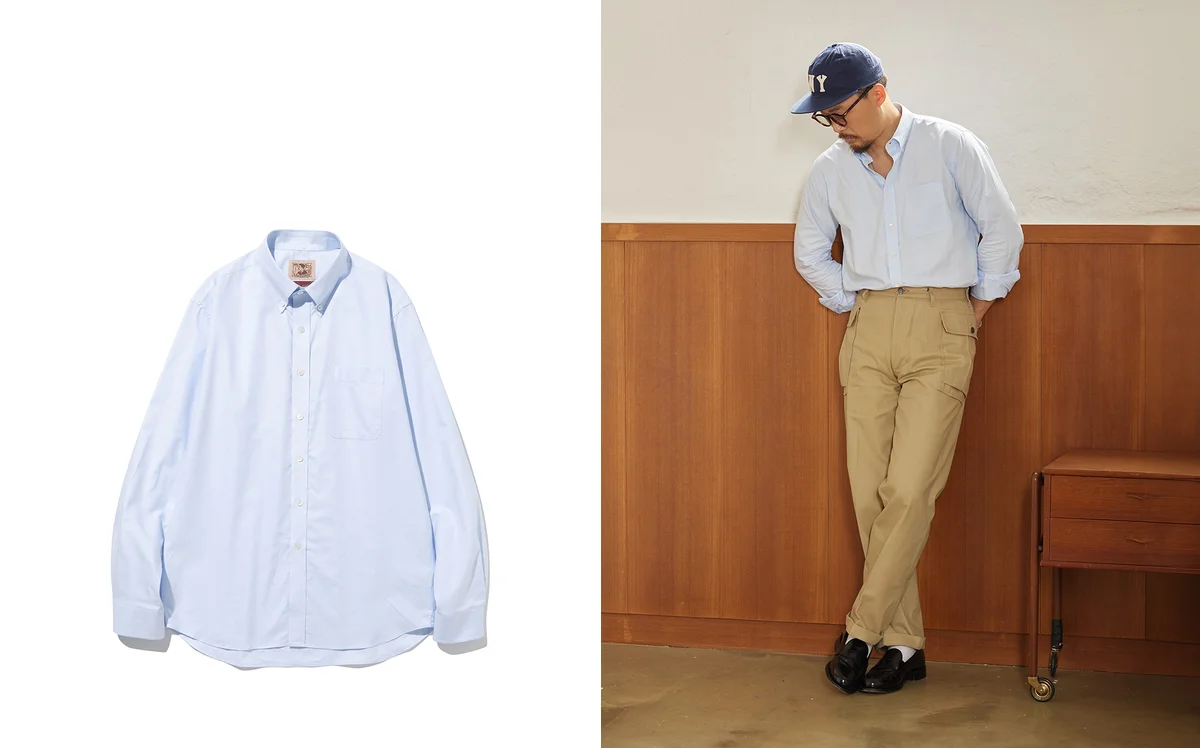
Oxford cloth is sturdy. It doesn’t need the gentle handling of a fine broadcloth dress shirt. A few extra habits will extend its life significantly.
Skip the dryer occasionally. Hang dry every third or fourth wash. The heat from dryers gradually breaks down cotton fibers. Alternating between tumble dry and hang dry gives the fabric a longer life.
Don’t iron it flat. This is crucial. A perfectly pressed OCBD looks wrong — it defeats the purpose of the soft, textured fabric. If you must deal with wrinkles, use a steamer or just wear it slightly rumpled. The oxford cloth looks better with a little imperfection.
Unbutton the collar before washing. This prevents stress on the button attachment points — the most common failure point on any button-down collar shirt.
Rotate your shirts. Owning two or three OCBDs and rotating them means each one gets fewer washes per month. A white and a blue in regular rotation will last you two to three years of heavy wear easily.
What to Look for When Buying
Here’s your checklist. Soft, unlined or lightly lined collar that rolls naturally. Medium-weight oxford cloth — not see-through, not stiff as a board. Single-needle stitching on the side seams if you care about longevity. A collar point length of about 3 3/8 to 3 1/2 inches: long enough to peek above a crewneck sweater, short enough that it doesn’t curl up like a bad 1970s costume.
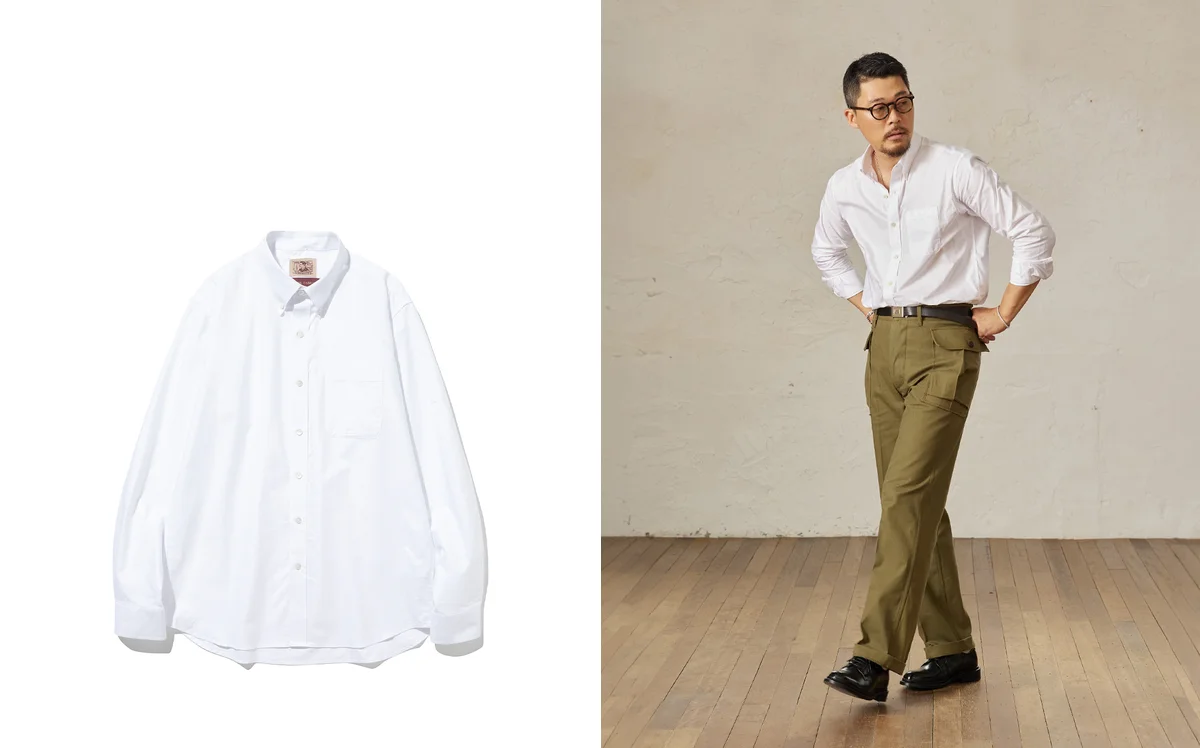
Price-wise, decent OCBDs fall between $40 and $150. Below $40, the fabric is usually too thin and the collar too stiff. Above $150, you’re paying for a brand name or made-to-measure construction — great, but not necessary for most people. Renacts sits right in this range, with the kind of collar roll and fabric weight that would cost significantly more from a heritage American maker.
One last thing: try the oxford button down on with the jacket or sweater you’ll actually wear over it. An OCBD that looks perfect solo might bunch up under a blazer if the shoulders are too wide. Context matters more than the mirror in the fitting room.
OCBD FAQ
What does OCBD stand for?
Oxford cloth button-down. The first half names the fabric, the second half names the collar.
Is “oxford” the fabric or the collar?
The fabric. You can buy oxford cloth without a button-down collar, and a button-down collar in other cloth. The OCBD is the combination.
What weight of oxford cloth should I buy?
Between 5 and 5.5 oz. Under 5 oz pills after a few washes and the collar goes limp. Over 5.5 oz starts to feel like a work shirt.
How long should the collar points be?
About 3 3/8 to 3 1/2 inches. Mercer & Sons, the reference point for this collar, cuts theirs at 3 7/16. Much shorter than that and the collar stops producing a real roll — it lies flat instead. Long enough to sit above a crewneck sweater, short enough that the points do not curl away from the chest.
How should an OCBD fit?
Start at the shoulder seam, which should land on your own shoulder bone. Try it on under the jacket or sweater you actually wear over it, because a shirt that fits solo can bunch under a blazer.
Should an OCBD be tucked in?
Tuck it. The oxford button down shirt was cut with a long tail to stay anchored, and the clean line at the waist is the whole point of the trad silhouette.