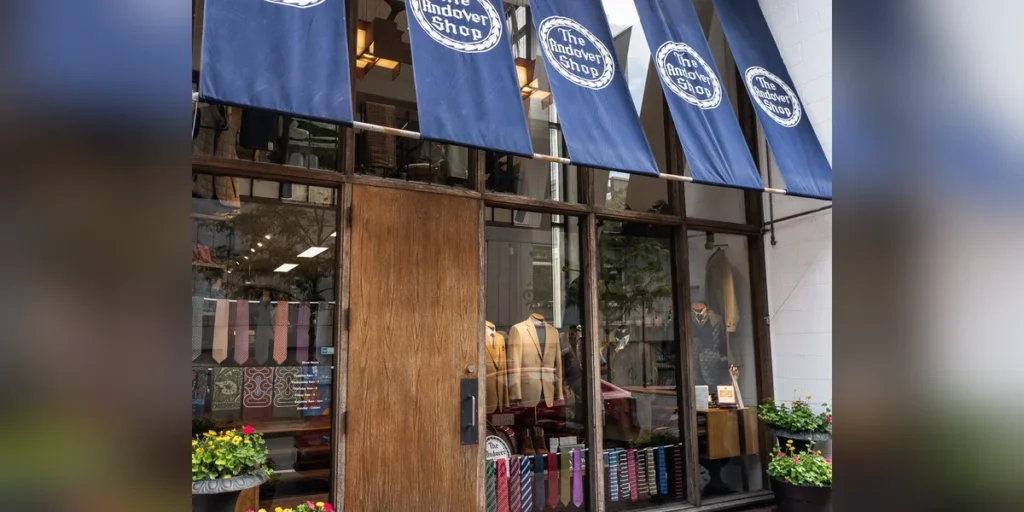
The Andover Shop History: Charlie Davidson and the Trad Mother Church in Cambridge
Andover Shop history begins with a 22-year-old who had served as a gunner in the Pacific, dropped out of Bowdoin after one semester, and gone to New Haven to work at J.Press. In 1948 he co-founded The Andover Shop with his brother-in-law Virgil Marson at 127 Main Street, Andover, Massachusetts. Five years later he opened a second store at 22 Holyoke Street, just off Harvard Yard, in a building he designed himself — and quietly built the most influential American trad address that wasn’t in New York.
Not the Biggest American Trad Brand. The Most Selective.
Brooks Brothers was already 130 years old when Charlie Davidson opened The Andover Shop. J.Press had been outfitting Yale undergraduates for 46 years. Andover came late, and stayed small — two stores, both in Massachusetts, never franchised, never sold to a holding company. That is what makes Andover Shop history different from the rest of the trad canon.
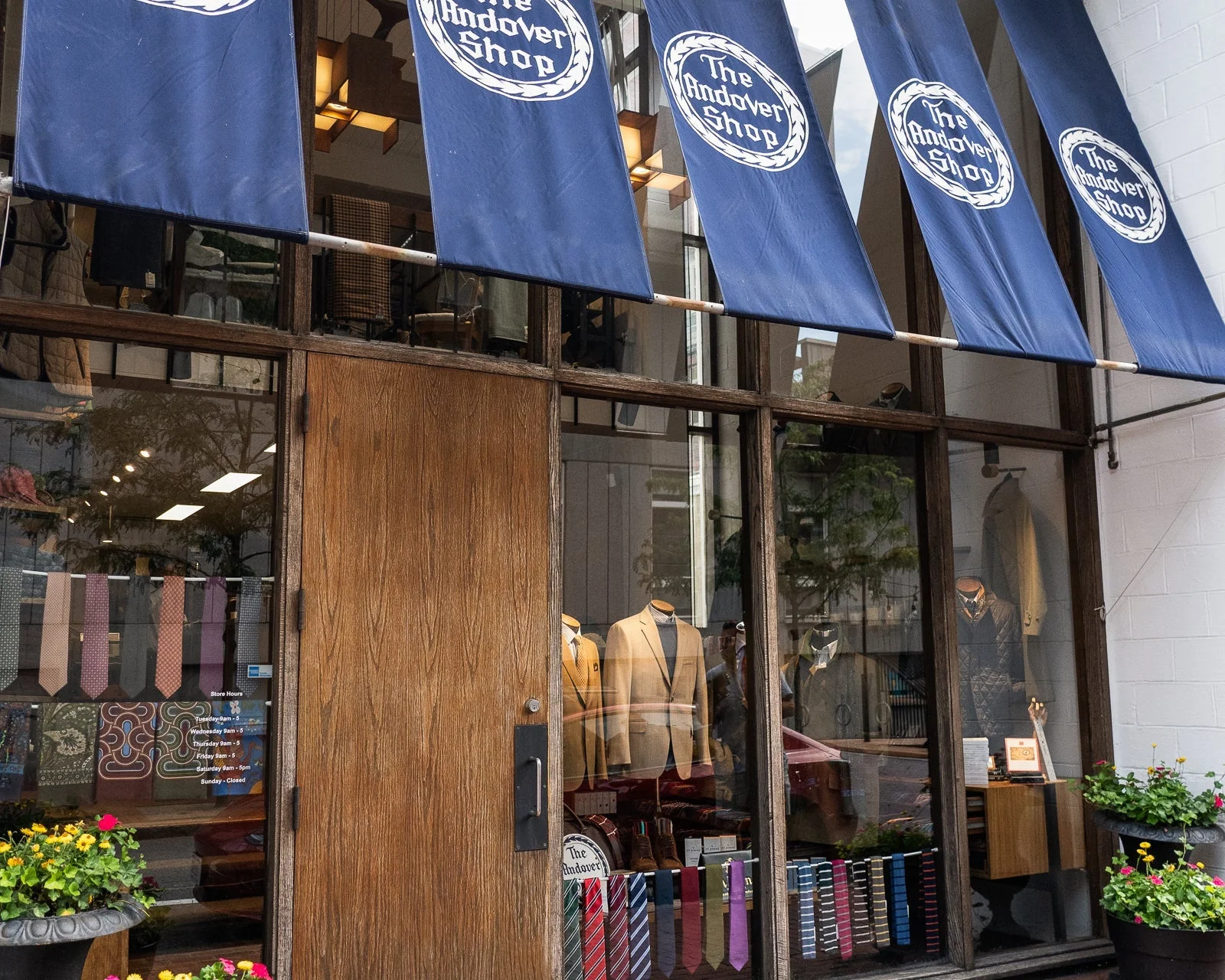
Brooks gave America the ready-made suit. J.Press gave it the natural-shoulder Yale silhouette. Andover gave it a place. Specifically, a 700-square-foot room on Holyoke Street in Cambridge where, for 66 years, the right shirt and the right tweed jacket were available to the right customer — and not really to anyone else. The shop didn’t advertise. It didn’t scale. It was, deliberately, a place you had to know about to find.
That selectivity is the whole point. Andover Shop history is the story of how American trad survives when its larger institutions are bought, sold, and rebranded — and what it looks like when one man simply refuses to do any of those things for seven decades.
1948: A 22-Year-Old Apprentice Opens His Own Shop
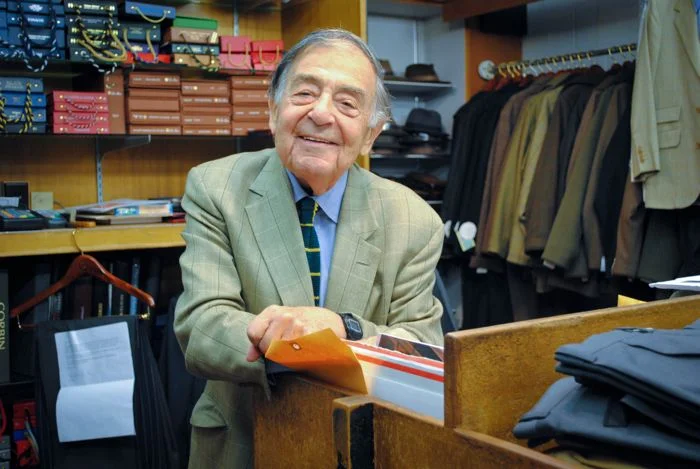
Charlie Davidson was born in 1926 and grew up in Andover, Massachusetts. He graduated from Andover High School, served as a gunner in the Army Air Forces in the Pacific theatre at the tail end of World War II, and came home in 1946. He spent one semester at Bowdoin College in Maine, decided it wasn’t for him, and went to New Haven to work at J.Press. Davidson was an unlikely figure for the role he ended up playing. He stood barely five feet two. After a 1960s surgery for cancer of the larynx removed his vocal cords, he spoke in a deep rasp for the rest of his life. Neither fact slowed him down — if anything, the soft voice forced customers to lean in, which, given that the conversations were about Miles Davis or Ralph Ellison’s correspondence, was probably the right effect.
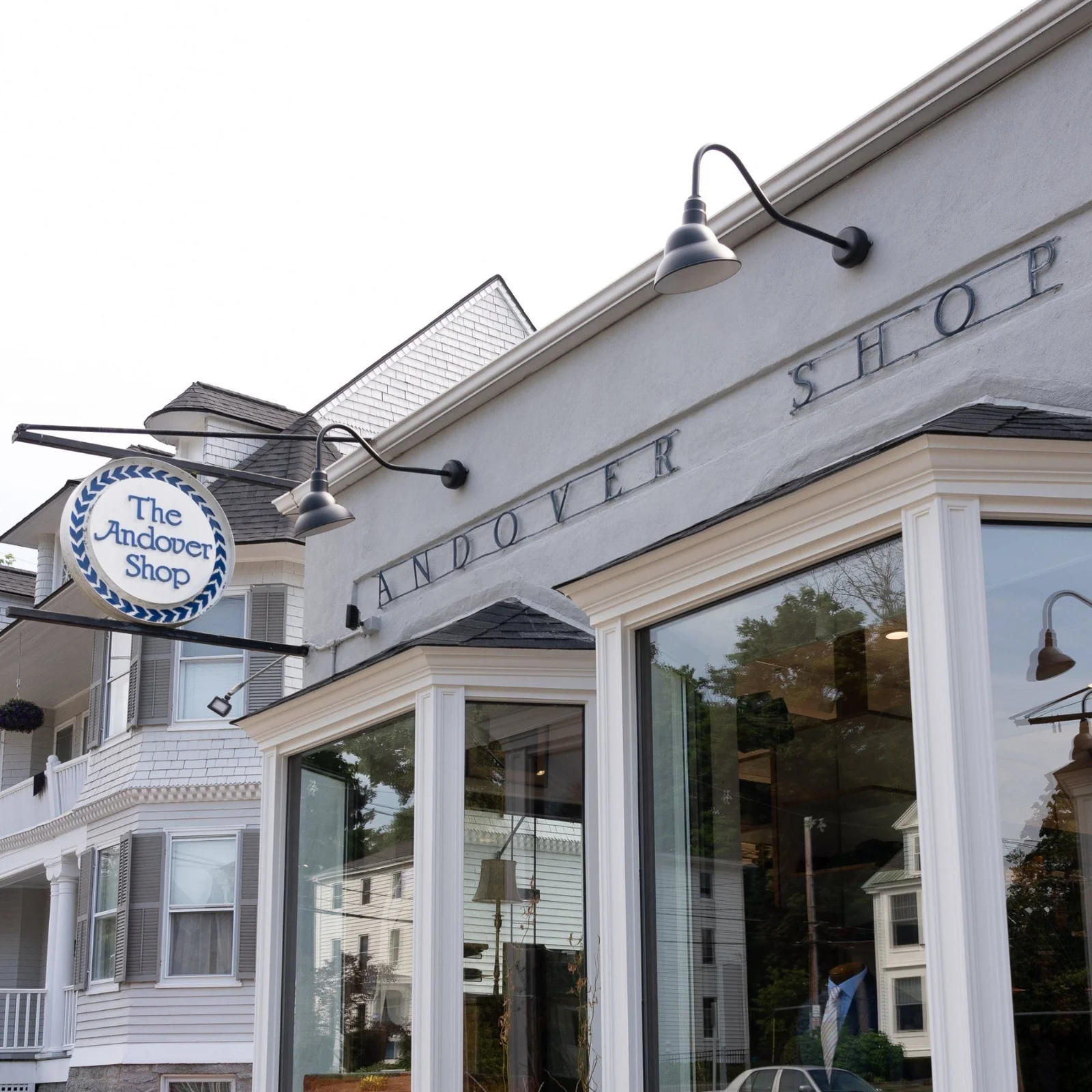
What he learned at J.Press was the soft-shouldered American sack jacket — the 3/2 roll lapel, the undarted body, the natural shoulder, the straight trouser. He learned how to fit it, how to sell it, and how to talk about it without overselling. The brief stint also produced one piece of menswear cinema history: Davidson sold Gregory Peck the hat the actor wears (and famously doffs) in the 1947 film Gentleman’s Agreement, briefly revealing the J.Press logo to anyone watching closely. Within a year of that sale, Davidson was 22 and ready to run his own room — though he didn’t open it alone. In 1948, he and his brother-in-law Virgil Marson co-founded The Andover Shop at 127 Main Street, Andover, Massachusetts, in a building owned by Davidson’s father. Davidson became the public face of the operation; Marson, who later took over running the original Andover store after Davidson moved to Cambridge in 1953, sourced fabric annually from European mills. The two roles complemented each other for decades. On opening day the storefront looked indistinguishable from any other small-town haberdashery in postwar New England.
The difference was Davidson himself. He had absolute conviction about the cut, and he had the social fluency to attract a clientele that was older, richer, and more educated than him. The shop in Andover started serving teachers from Phillips Academy across the road — the 1778 boarding school whose alumni included two American presidents (both Bushes), Humphrey Bogart, and a young Jack Lemmon, who graduated Phillips Andover in ’43 and then worked part-time as a sales associate at The Andover Shop while a Harvard undergraduate. The kind of place where a future Oscar winner rang up Shetland sweaters as a side job. Then doctors from the Boston suburbs, then the Boston Brahmin families that summered in Maine and wintered in Florida. Word travelled. By 1953 Davidson was ready for Cambridge.
1953: Why Cambridge Mattered
The move to 22 Holyoke Street was the inflection point in Andover Shop history. Davidson wasn’t opening a Harvard Square store because he wanted Harvard students. Harvard students didn’t have the money for what he sold. He was opening because Cambridge in the 1950s contained the densest concentration of writers, professors, lawyers, and visiting jazz musicians anywhere in the United States — and that was the customer base. The Cambridge address sat just off Harvard Yard, in a building Davidson designed himself. Andover Shop is best understood as the Cambridge extension of what J.Press had built in New Haven half a century earlier — the same Yale Dress Study Group sack-cut wardrobe (covered in our Yale Ivy Style post), reassembled with slightly tighter editing, fifty miles up the road. Two cities ran the same uniform, one shop each.
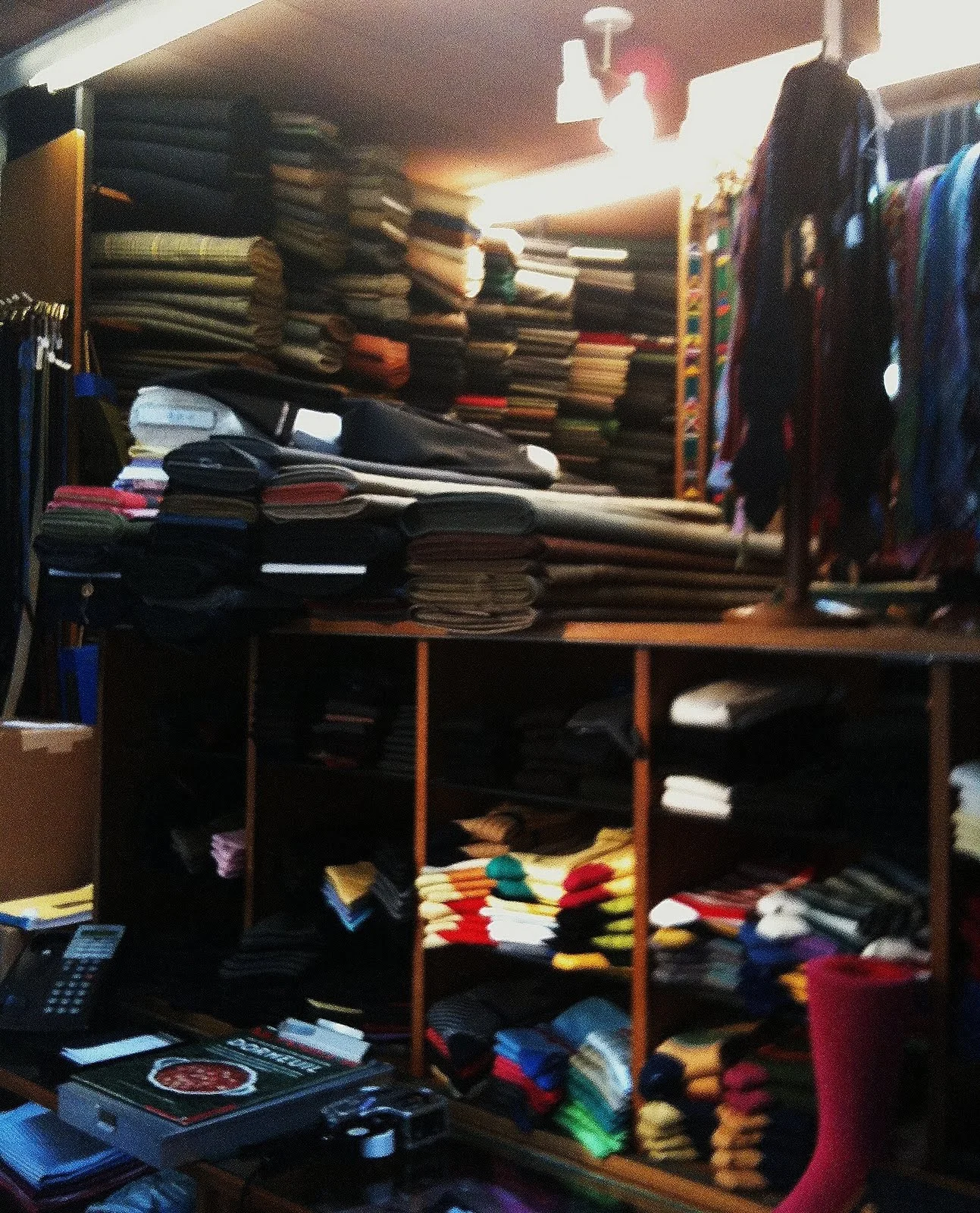
The Holyoke Street shop was small. The merchandise was packed in tight: tweed jackets stacked on hangers, Shetland sweaters folded in piles, oxford shirts on shelves to the ceiling, repp ties on a rotating rack, a counter at the back where Davidson stood. Nothing was arranged for theatre. Everything was arranged for sale.
The cramped layout became part of the brand. People who walked in expecting a polished retail experience left confused. People who walked in already understanding what they wanted left with exactly what they came for, often in twenty minutes flat. The shop self-selected its customers by being a little hard to read.
An Unlikely Salon: Miles, Chet, and Ralph Ellison Walked In
Here is the part of Andover Shop history that becomes legend, and is mostly true. The Cambridge shop became, over the 1950s and 60s, an informal salon where some of the most important American writers and jazz musicians of the postwar era spent significant chunks of their afternoons.
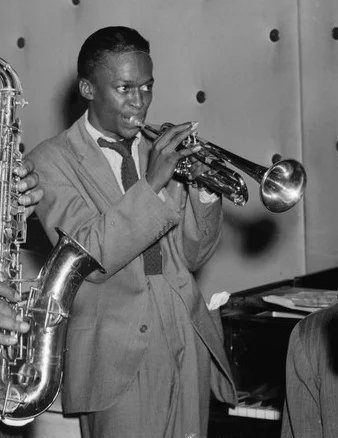
Miles Davis was a regular. The Boston Globe’s obituary for Davidson recorded the line directly: Davis “set down his trumpet to let Mr. Davidson improvise an outfit.” Chet Baker walked in too. Bobby Short. The jazz pipeline ran through Boston and New York, and Davidson — who knew the music as deeply as he knew the cloth — had something to talk about that wasn’t bespoke flattery. The musicians came back because the conversation was as good as the clothes.
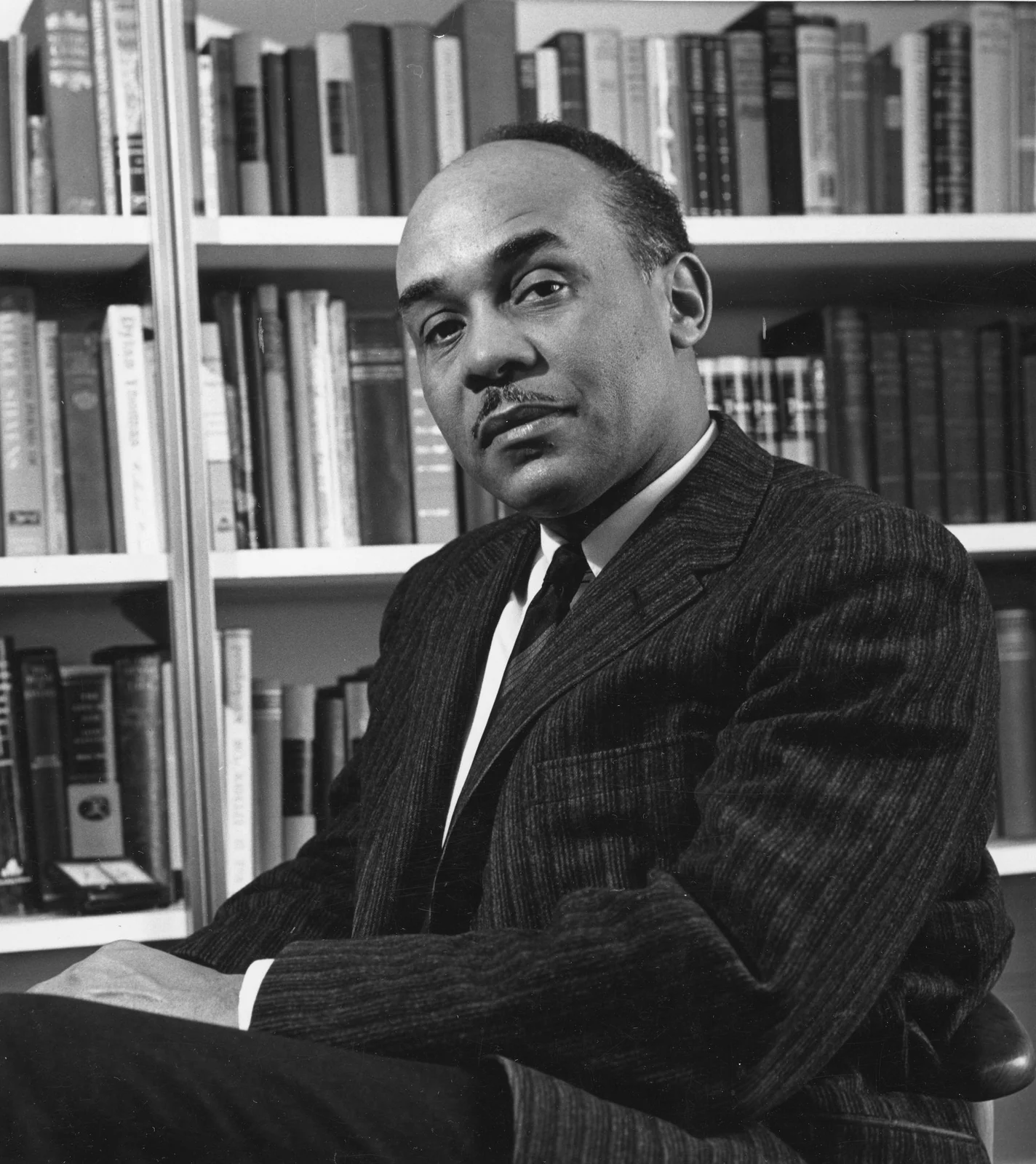
Ralph Ellison, who published Invisible Man in 1952 and never published a second novel in his lifetime, became one of Davidson’s closest friends. The two corresponded for decades. Many of those letters were collected and published in 2023 as part of Miles, Chet, Ralph, & Charlie — an oral history of the shop assembled around Davidson and the customers who became his friends. Norman Mailer was a customer. Henry Louis Gates Jr. was a customer. So were Massachusetts Governor William Weld, Boston Globe columnists Bud Collins and Mike Barnicle, and George Frazier — the menswear writer who arguably invented the concept of “duende” in American clothes journalism.
None of this was a marketing strategy. Davidson didn’t pursue the salon. The salon assembled itself around him because he was actually interesting, the merchandise was actually correct, and the room was small enough that customers ended up talking to each other across the rack of repp ties. The selectivity wasn’t posture; it was practiced. Friends recall Davidson, when he sensed a customer wasn’t going to fit, simply telling them, “You know, I don’t think we have anything for you.” Money, by all accounts, didn’t enter into it. “It was style,” one regular told the Boston Globe. The shop, another customer put it, was “a club, not a store.”
The Andover Wardrobe: Soft Sack, Shaggy Tweed, Surcingle
What did Andover Shop actually sell? The vocabulary is short and almost identical to J.Press, but the editing is tighter. Davidson didn’t carry everything correct; he carried a curated subset of what he personally believed was correct.
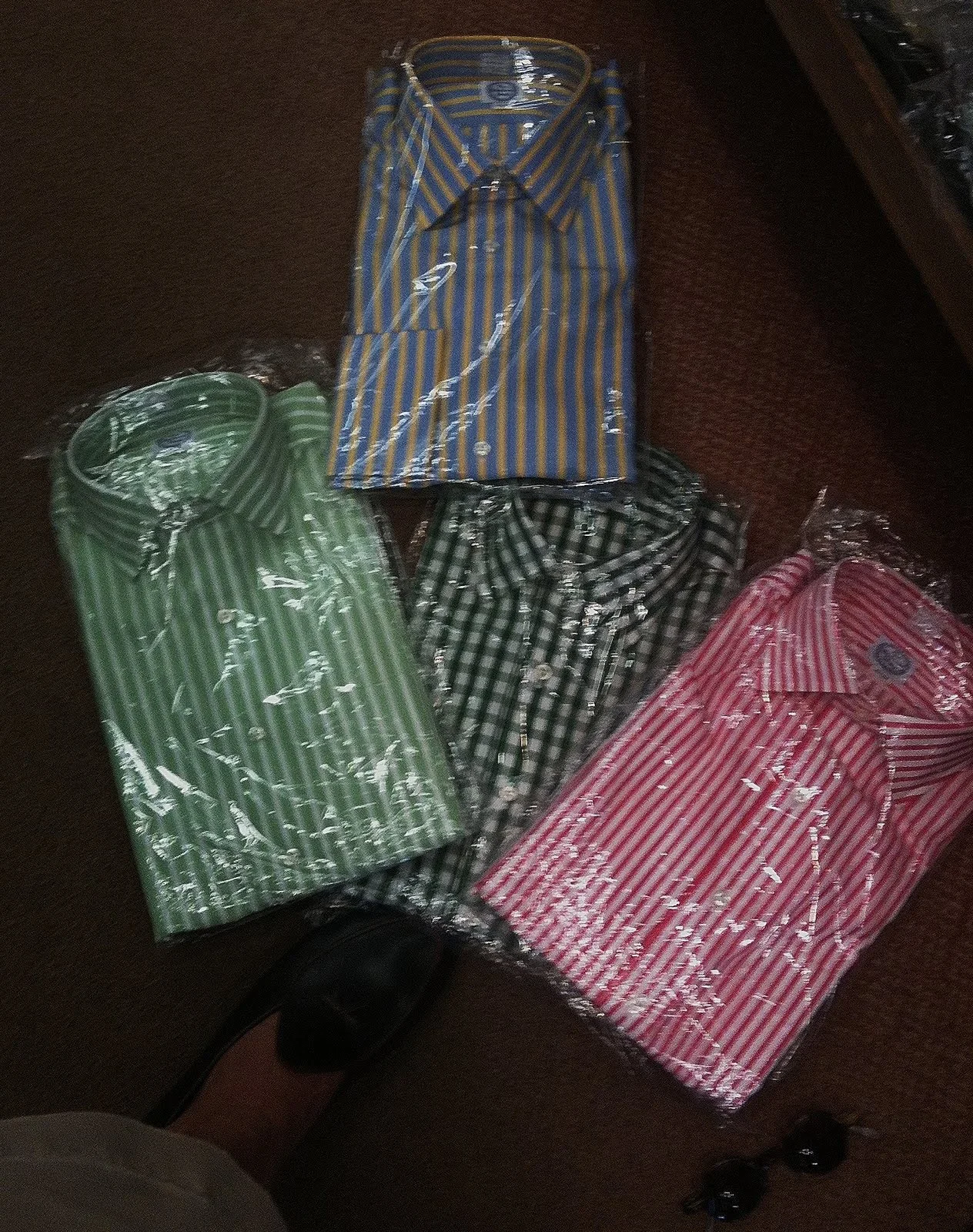
The list was something like this: a soft-shouldered tweed jacket — Harris, Donegal, or Shetland — in a small handful of patterns and colors. A grey flannel trouser. A shaggy Shetland crewneck sweater in eight or nine colors. (Davidson also stocked Fair Isle vests every winter — see our Fair Isle knit history for the 1921 Royal Family adoption that pushed the multi-color Shetland pattern into the American Ivy canon.) A white or blue or pink oxford button-down. A surcingle belt, which is a flat woven cotton belt with a brass buckle that runs the full circumference — originally a horse-girth strap, adapted for trousers. A repp tie or a knit tie. A pair of brown loafers, often Russell Moccasin or Alden. A khaki chino or a poplin suit in summer. A camel polo coat in winter. That was effectively the catalogue.
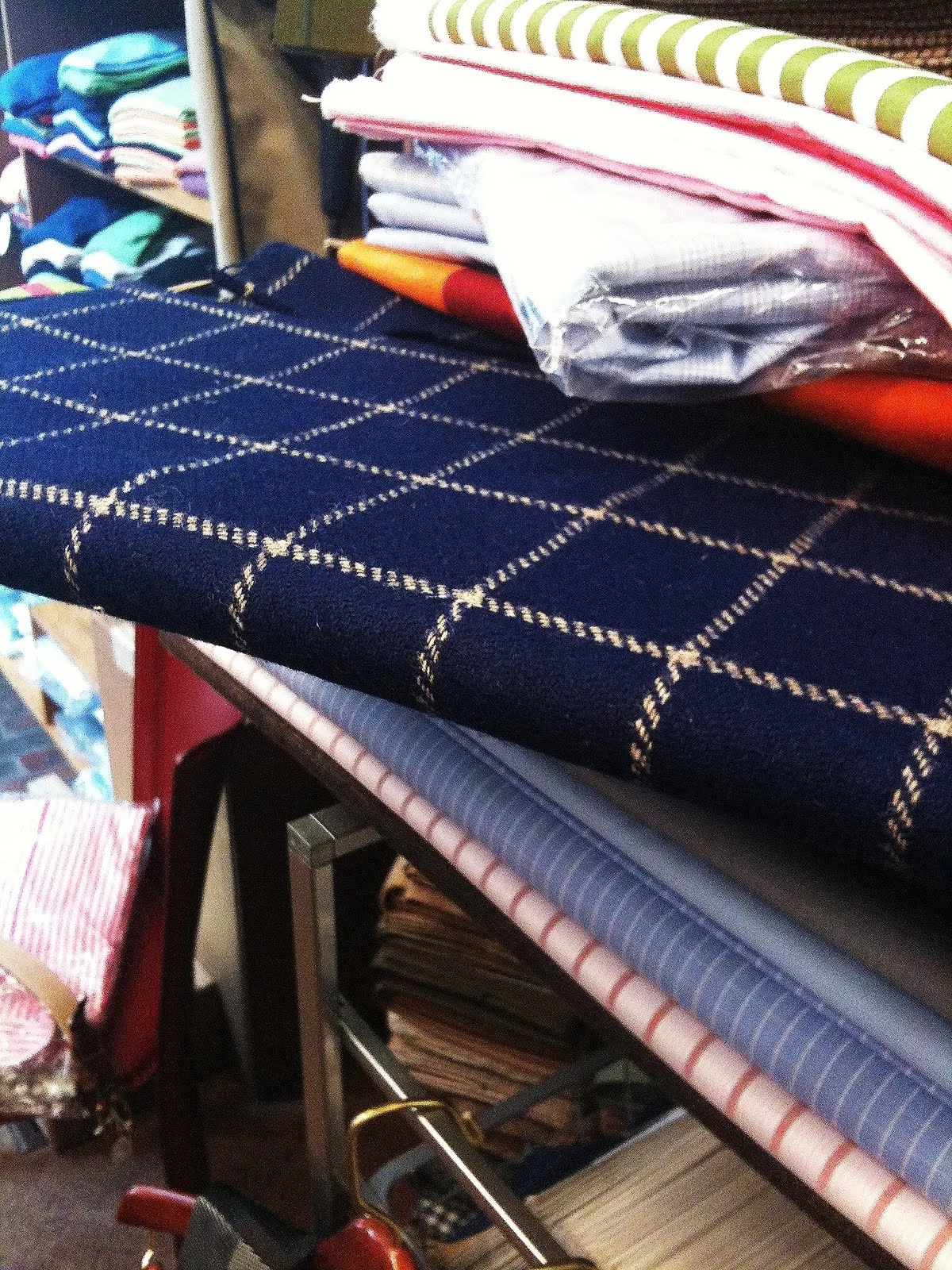
Notice what isn’t on the list: anything trendy. No double-breasted. No peak lapels. No spread-collar dress shirts. No Italian shoulders. No designer labels. The Andover wardrobe was the American trad uniform reduced to its operating minimum, and that minimum hasn’t changed in 78 years. A 1955 Andover customer and a 2025 Andover customer could swap closets and neither would be confused.
The Index Card System: Bespoke Before the Word Existed
Davidson ran the shop on hand-written index cards. Every regular customer had a card with measurements, fabric preferences, jacket history, and notes — what they’d bought, what they’d returned, what they’d ordered for their wedding, what their wife thought. He memorized most of them. When a regular walked in, Davidson already knew what fit and what didn’t.
This is the part of Andover Shop history that the modern bespoke industry has tried to recreate as a marketing concept. Davidson was doing it because there wasn’t any other way to run a small shop. He didn’t have a CRM. He didn’t have inventory software. He had a wooden box of 4×6 index cards and his own memory, and that was sufficient to run a clothing business for 71 years.
The bespoke ethos at Andover wasn’t about full hand-cut suits — Davidson sold mostly off-the-rack. It was about a clerk who knew you, a fitting that took fifteen minutes, and a chalk mark in the right place because he’d already done it for you eleven times. The current obsession with “made-to-measure” services is, in a sense, an attempt to industrialize what a single small shop did naturally for three generations.
2019 and After: The Shop Outlives Its Founder
Charlie Davidson died on December 2, 2019, at age 93, in his Cambridge home. He had run The Andover Shop for 71 years. The Boston Globe headline called him the “Baron of Bespoke.” The Harvard Crimson, the Globe, the New York Times, and Ivy Style all ran obituaries. The Cambridge address closed for several days, then reopened.
This is where Andover Shop history diverges from the Brooks Brothers trajectory. Davidson had sold the business in 2018 — a year before his death — ensuring the transition was on his terms, with continuity of merchandise, staff, and premises locked in before he was gone. (Brooks Brothers, by contrast, was sold out of Chapter 11 bankruptcy in 2020 — the brand that had outfitted Yale alumni since 1818 emerged as a different operation under different ownership.) The Andover Shop didn’t close. It didn’t pivot. It didn’t announce a “new direction.” The Holyoke Street address still operates. The Andover, Massachusetts address still operates. The same tweeds, the same Shetland knits, the same OCBDs, the same surcingle belts.
Whether the shop will outlive the generation of customers who knew Davidson personally is a different question. Trad as a category in 2026 is undergoing a quiet revival in Tokyo, Seoul, and on parts of the American East Coast — but it is also undergoing a generational handover, and the shops that survive will be the ones that successfully transmit the vocabulary to people who never met the founder. Andover Shop has, so far, made that transmission. The vocabulary is intact. The question is who carries it forward.
In Seoul: The Same Soft Sack, the Same OCBD
There is no Andover Shop in Seoul. The shop is, by design, in Cambridge and Andover, Massachusetts, and that is the entirety of its retail footprint. But the architecture Davidson sold is being made today in Seoul by Renacts — and almost the entire Andover wardrobe vocabulary is reconstructable from the Renacts catalog.
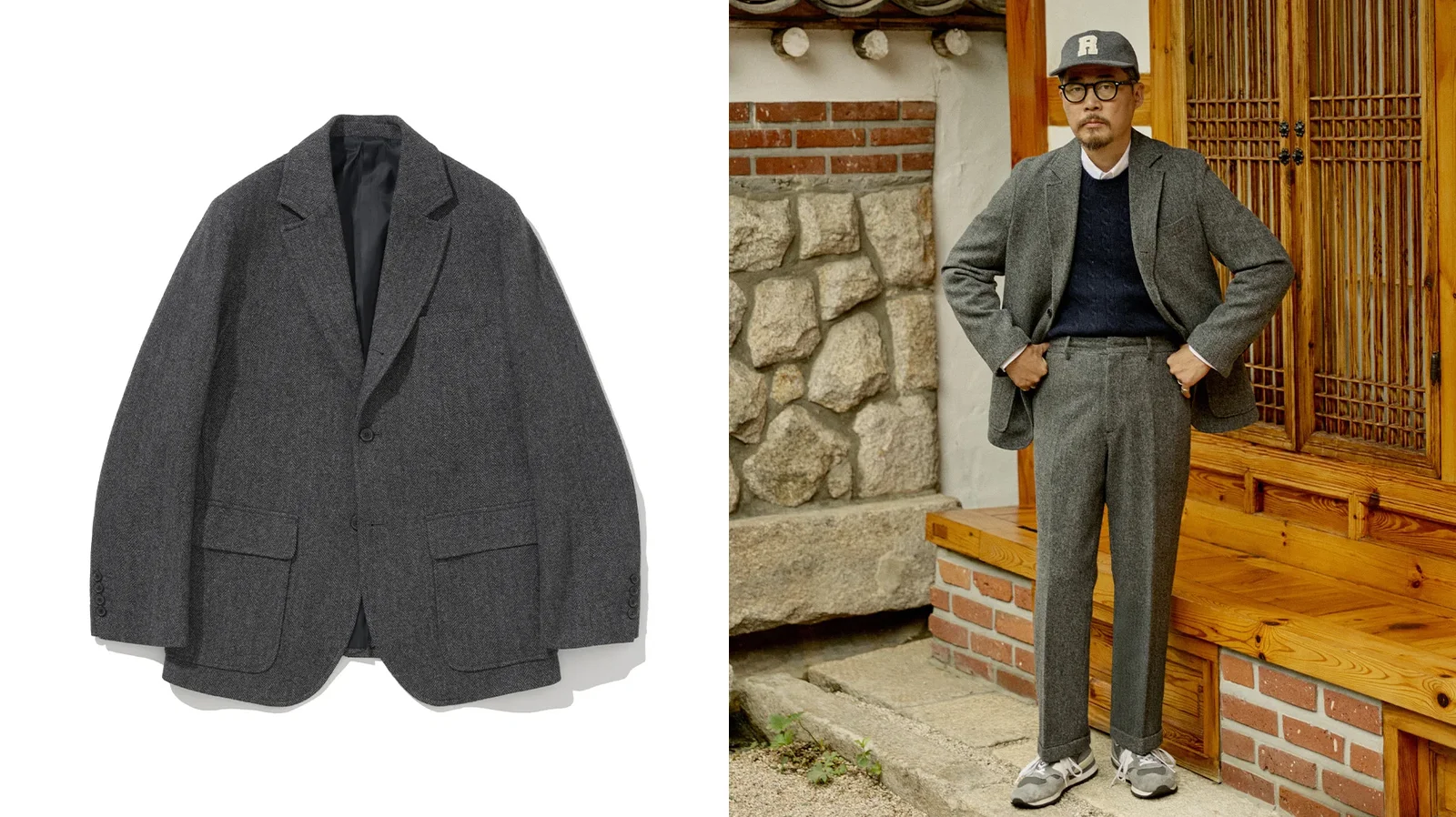
The Renacts Herringbone Sack Cut Blazer is the through-line. Same natural shoulder, same 3/2 roll, same undarted front, same straight body, same Shetland-weight cloth — the soft-shouldered American sack as it has been cut continuously since the 1900s, made today in a Seoul workshop. Pair it with grey wool trousers, a crested or regimental repp tie, and a knit tie or a pocket square, and the resulting outfit is functionally identical to what a Cambridge graduate student would have purchased from Davidson in 1972.
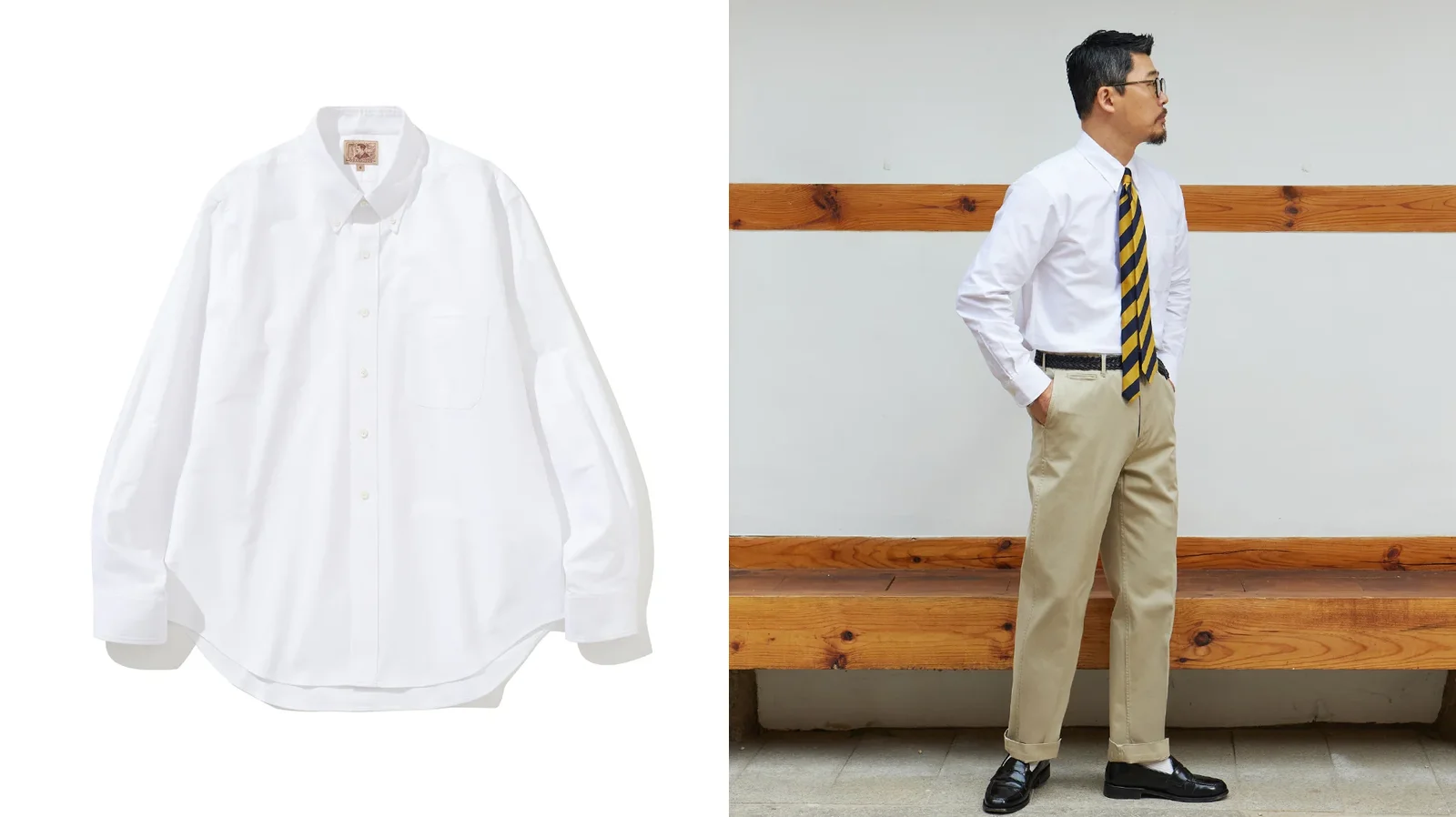
The shirt is the second pillar. Renacts makes the unlined, single-needle button-down oxford in white and oxford blue — the two Andover colours, the two J.Press colours, the two Brooks Brothers colours. Different decade, different continent, identical garment. Add a surcingle belt (still made by a small handful of American belt shops if you want one) and a pair of brown loafers, and the wardrobe is closed.
The point isn’t that Renacts is a Korean Andover Shop. The point is the opposite: Andover Shop history matters because it preserved a specific set of garments, in a specific cut, with a specific palette, for 78 years — and those garments are now being reproduced correctly in places Davidson never visited. The vocabulary travels. If you want to see what an Andover wardrobe looks like assembled in 2026, the closest accurate reconstruction in Asia is in Yeonhui-dong, Seoul. Same soft sack. Same OCBD. Same conviction that the answer was settled a long time ago and didn’t need to be re-asked.