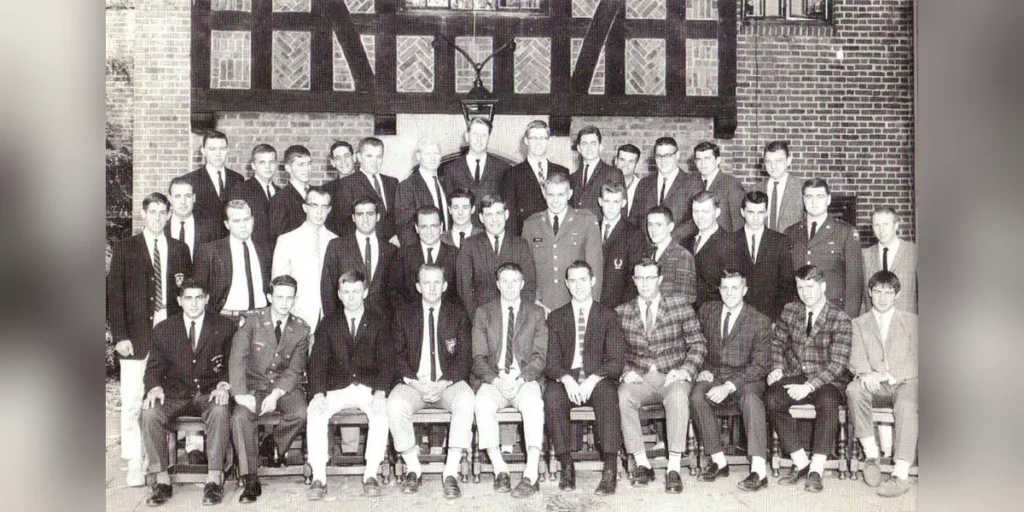
Yale Ivy Style: A 120-Year Guide, 1902 to 2026
Yale Ivy style is the starting point for understanding American menswear in the 20th century. Not Harvard, not Princeton — Yale. Not because Yale dressed better than the other two (that’s a bar-argument question), but because Yale had the specific ingredients that turned campus clothing into a cultural vocabulary: a 1902 tailor shop next to the quad, a century of continuous alumni in East Coast institutions, a student body that photographed itself constantly, and an aesthetic stubborn enough to resist every trend that followed. This is how the Yale Ivy style canon was built.
The short version
- It starts in 1902, when Jacobi Press opened a tailor shop beside the Yale campus: soft shoulders, no padding, a three-button jacket that rolls to the middle button.
- The “Ivy” is literal. Yale planted its first Class Ivy in 1852, a root of English ivy set against a college wall with the class year carved beside it.
- Yale’s real dress code said one thing: a jacket and tie to eat in Commons. The widely shared “20-article Yale dress code” is the 1965 Dress Study Group document, not a university rule.
- The look collapsed after 1968 and survived through three brands — J.Press, Brooks Brothers, L.L. Bean — before being rebuilt abroad, including here in Seoul.
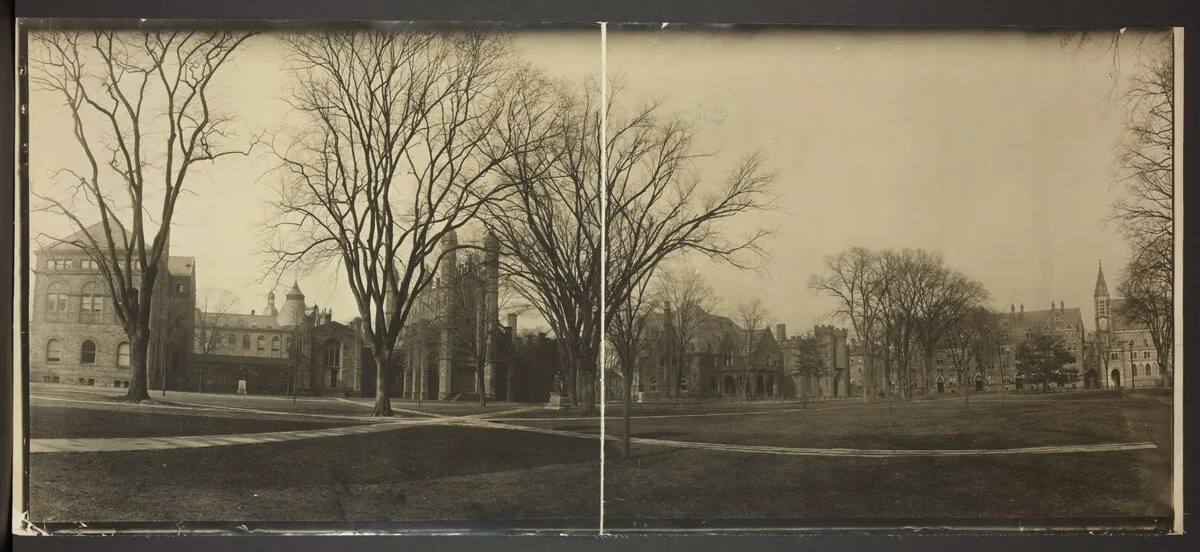
1902, New Haven: The Tailor Shop That Started It All
The concrete Yale Ivy style timeline begins in 1902, when Jacobi Press opened his tailoring shop adjacent to the Yale campus. Press was a Latvian Jewish immigrant who had arrived in America in 1896 intending to become a rabbi, before taking up tailoring instead. His first customers were Yale undergraduates from wealthy East Coast families — the arc of American prep, literally, started with an Eastern European Jewish immigrant cutting suits for East Coast aristocracy. His cut was different from the British-influenced structured silhouette dominating American tailoring at the time — softer shoulders, less padding, a three-button jacket that rolled to the middle button. Students wore his suits to class and to the Fence Club and to Skull and Bones taps, and over the next two decades that cut became what people meant when they said “Yale.”
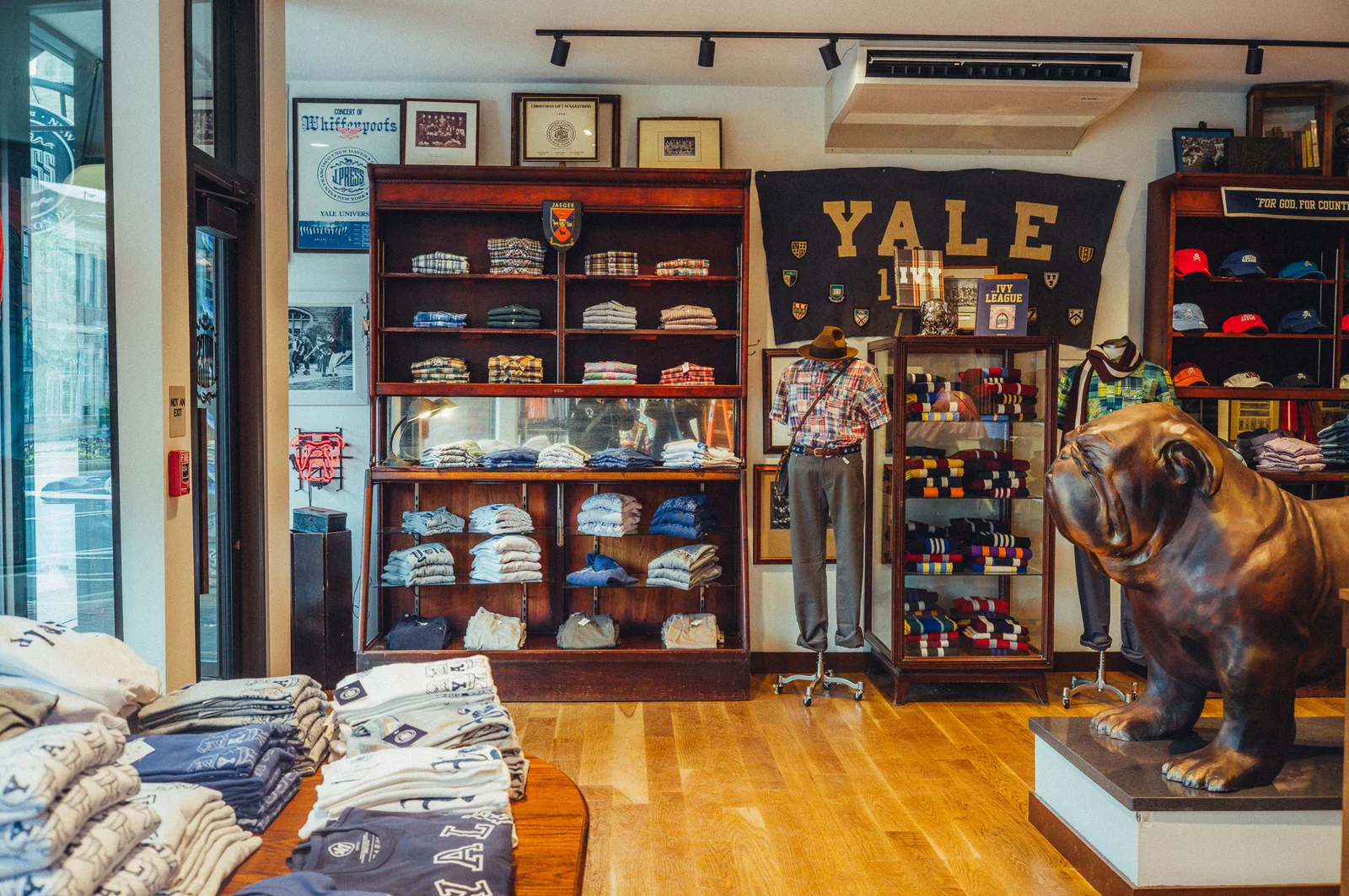
The J.Press shop on York Street (later Elm Street) is the single most important commercial institution in the whole Yale Ivy style history. The J.Press customer list over the next century reads like a 20th-century American hall of fame: Cole Porter (Yale 1913), Robert Frost, F. Scott Fitzgerald, Tom Wolfe, Miles Davis, Frank Sinatra, and every president from Franklin Roosevelt through Bill Clinton. But the core customer always remained what he was in 1902 — a Yale undergraduate walking from his dorm to a 3 PM class. Brooks Brothers in New York dressed Yale alumni after graduation; J.Press dressed them while they were still on campus. The difference matters. A Brooks Brothers suit marked arrival. A J.Press sack jacket marked belonging — you bought it because your classmates bought it, because your senior society had a preferred vendor, because the shop was five minutes from your dorm. If you want the long version of this, we covered it in our J.Press history post.
The Class Ivy: Where the Word Comes From
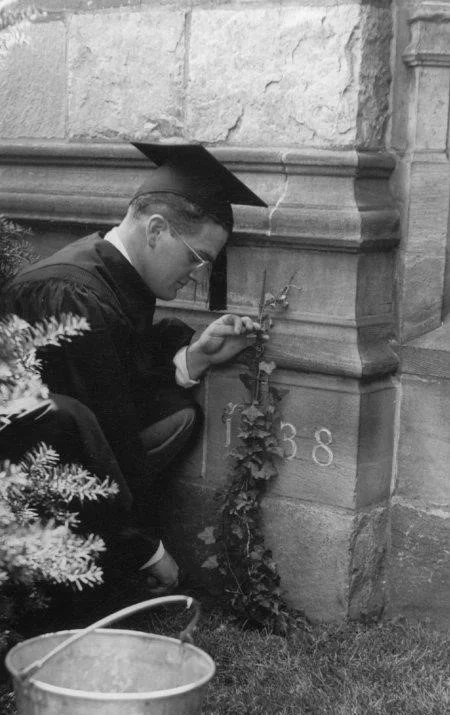
Everyone who writes about the Ivy League eventually has to answer the question: why “Ivy”? The short answer is literal. Yale, Princeton, and the rest had a Class Day tradition going back to the mid-19th century — Yale planted its first Class Ivy in 1852, beside the wall of what is now Dwight Memorial Chapel — in which graduating seniors planted a small root of English ivy beside a college building, with the class year carved into a stone plaque next to it. Over generations, the brick and stone dormitories of Yale and Harvard and Princeton accumulated walls of ivy that grew with each graduating class. Newspapers started calling them “the ivy colleges” well before anyone called the clothes “Ivy style.”
This is worth pausing on because it explains something about the Yale Ivy style aesthetic. The clothing tradition was always literally rooted in the physical campus — the brick, the stone, the ivy, the quadrangle. When a student wore tweed in New Haven in 1938, the visual texture of the jacket matched the visual texture of the walls he walked past. That coherence is why old Ivy photographs look the way they do. The garments and the architecture were photographed in the same palette.
The Yale Bowl, Raccoon Coats, and the 1920s
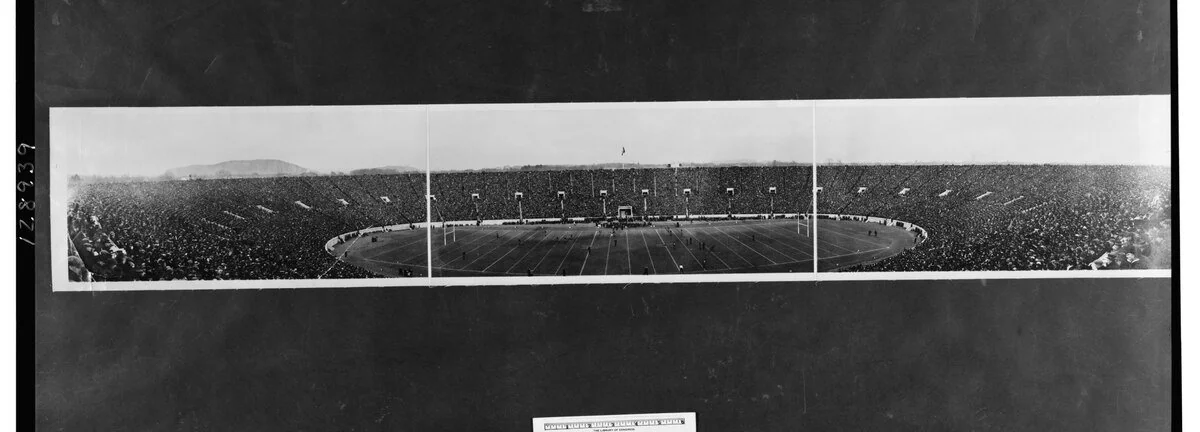
If J.Press gave Yale Ivy style its tailoring, the 1920s gave it its folklore. This was the era of raccoon coats and the Stutz Bearcat and the flask in the hip pocket at the Yale-Harvard game. Scott Fitzgerald, who attended Princeton rather than Yale, fictionalized it as closely as anyone — and the raccoon coat was as much a Princeton or Harvard or Cornell uniform as a Yale one. But the Yale-Harvard Game was where the coat got photographed most often, and the Yale Bowl filled with fur-clad undergraduates became the single image that defined the era. A Yale undergraduate in the winter of 1925 wore a heavy fur coat to the Bowl over a tweed three-piece suit, rep tie, oxford shirt, wingtip shoes. He smoked a pipe or a cigarette. He had a Brooks Brothers raccoon coat if he was rich and a secondhand one if he wasn’t.
That image — the raccoon coat, the flask, the Bowl — hardened into cliché so fast that by 1927 it was already being parodied in Vanity Fair. But the clothing underneath the fur was durable. The three-button sack suit, the button-down collar, the natural shoulder, the straight-leg trouser: this is the Yale Ivy style core wardrobe that survived the Depression and two world wars and the 1960s counterculture and came out the other side essentially unchanged. The raccoon coat was theater. The sack suit was the thing itself.
The 1950s: Take Ivy and the Globalization of Yale Ivy Style
Yale Ivy style became visible to the world outside the Ivy League in the 1950s, for two reasons. The first was television — specifically the televised Yale-Harvard football games and the broadcasts of the Whiffenpoofs, Yale’s senior a cappella group. Millions of Americans who would never set foot in New Haven could suddenly see what Yale undergraduates wore on a Saturday afternoon. The second reason was the Japanese magazine and book industry, which started sending photographers to Ivy League campuses to document the look.
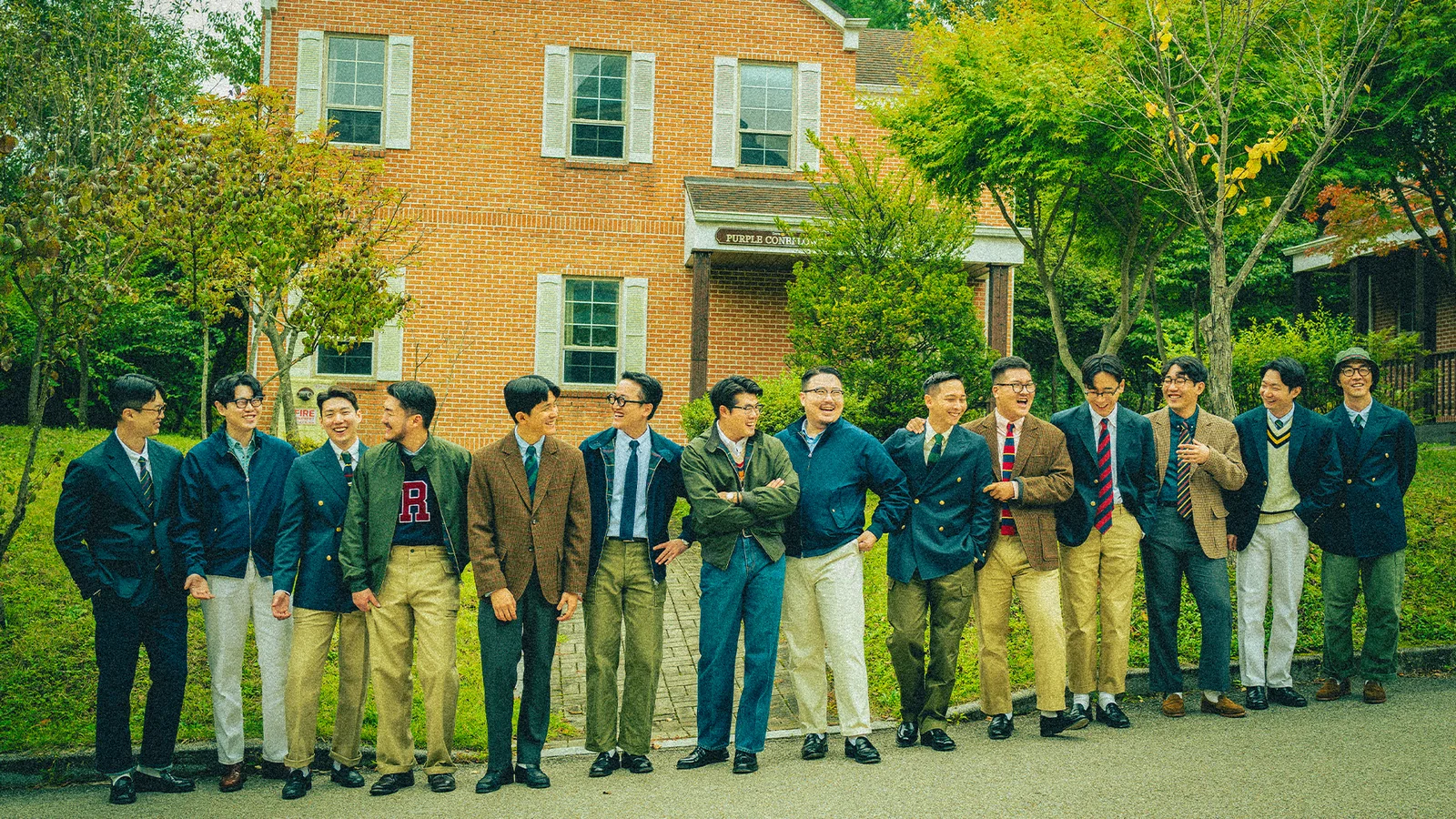
The culmination of that Japanese attention was the 1965 photo book Take Ivy, shot by Hayashida Teruyoshi and a team from Men’s Club magazine. Take Ivy photographed students at Yale, Harvard, Princeton, Dartmouth, and the other Ivy schools going to class, eating lunch, walking between buildings, sailing, sitting on quads. The book sold modestly in Japan and was unknown in America for four decades. The revival began in 2008, when the American menswear writer Michael Williams posted scans of the original Japanese edition on his blog A Continuous Lean, which generated enough cult interest to drive the 2010 English translation by powerHouse Books. From that moment on, Take Ivy became a reference document — not just for menswear enthusiasts but for designers, photographers, and brand directors around the world. Every contemporary Ivy-adjacent brand that matters traces a piece of its DNA to Take Ivy‘s Yale photographs. (The anorak-specific lineage in Take Ivy is covered in our anorak jacket history.)
The 1965 Yale Dress Study Group Guidelines
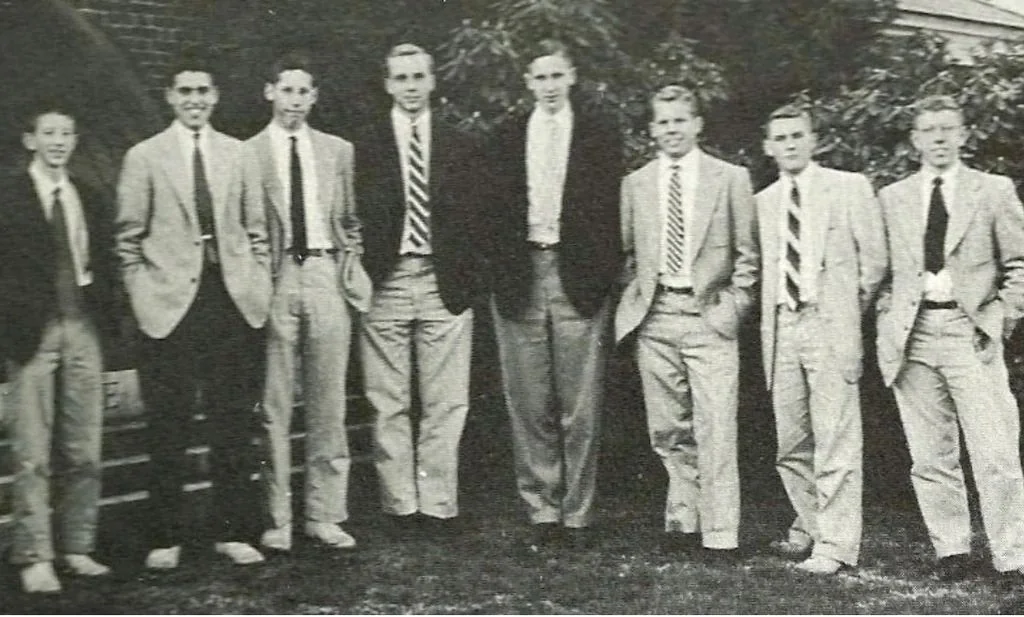
One of the most circulated artifacts from the Take Ivy era is a short document known as the “Yale Dress Study Group Guidelines” or, more often, “Yale University’s 20-Article Dress Code from 1965.” A factual note before going further, because the second name is misleading: Yale did have a real institutional dress code in the 1960s, but it said exactly one thing — men had to wear a jacket and tie when eating in Commons, the university dining hall. That was the full policy, and it was repealed in 1969.
The 20-article document reproduced in Take Ivy is not that policy. It is an informal style guide drafted by a student-led group called the Yale Dress Study Group, published in 1965 and aimed at incoming freshmen. It was almost certainly produced in cooperation with the campus haberdashers that dressed Yale — J.Press, Chipp, and Arthur M. Rosenberg — and functioned as a kind of new-student orientation pamphlet. Think of it less as “the Yale rules” and more as what your senior cousin would have written up if you were arriving in New Haven that September.
What makes the document interesting is not its authority. It has none. What makes it interesting is what it presumes. The Study Group doesn’t argue for any of these items — it lists them as if any reasonable freshman would already agree. The tone is practical, slightly weary, and occasionally specific to the point of comedy. A representative selection of what the 20 articles covered:
- A charcoal-grey or navy two-button suit for general occasions.
- Two or three pairs of cotton trousers — white, beige, and one other color.
- A tweed sport jacket, preferably Harris Tweed or herringbone.
- Oxford-cloth button-down shirts, in white or blue.
- One pair of blucher oxfords and one pair of penny loafers.
- Repp-stripe ties for dates and restaurants; a sport jacket and tie required on both occasions.
- A camel-hair polo coat for cold weather; a ski parka for truly winter outdoors.
- Trousers in any material, but never tight-fitting.
- Cardigans in orthodox colors only — oatmeal, navy, burgundy, loden.
- Casual dress acceptable on campus, since most time is spent in class or at the dormitory.
- Fair Isle Knit History: From the Prince of Wales to Ivy League
- How to Wear a Fair Isle Vest: 5 Ivy League Outfit Ideas
That’s roughly half the 20. The rest covered specific occasion rules (formal dances, club dinners), cold-weather combinations, and a few notes on shoes. The Take Ivy reproduction is the only widely available version, and the original pamphlet exists today mostly as scanned images preserved by menswear archives like Keikari and Styleforum. No official Yale institutional record of the document survives, which is itself a clue that it was never a formal university output.
| Item | What the 1965 guide specified |
|---|---|
| Suit | Charcoal grey or navy, two-button, for general occasions |
| Cotton trousers | Two or three pairs — white, beige, and one other colour |
| Sport jacket | Tweed, preferably Harris Tweed or herringbone |
| Shirts | Oxford-cloth button-down, white or blue |
| Shoes | One pair of blucher oxfords, one pair of penny loafers |
| Ties | Repp stripe for dates and restaurants — jacket and tie on both |
| Outerwear | Camel-hair polo coat for cold; ski parka for real winter |
| Trouser fit | Any material, but never tight-fitting |
| Cardigans | Orthodox colours only — oatmeal, navy, burgundy, loden |
| Everyday | Casual dress fine on campus — most hours are class or dormitory |
What’s worth noticing about the list isn’t its prescriptiveness. It’s the culture the list assumes. The Study Group is not defining Yale Ivy style from scratch — it is documenting a set of choices that have already, by 1965, become obvious enough that a short pamphlet can hand them to a freshman with no explanation required. That’s what a mature style culture looks like from the inside: the wardrobe has become so settled that the rules read like weather reports. Seoul Traditional is trying to produce that same kind of assumed vocabulary, sixty years later, in a different city.
What Yale Ivy Style Actually Consisted Of
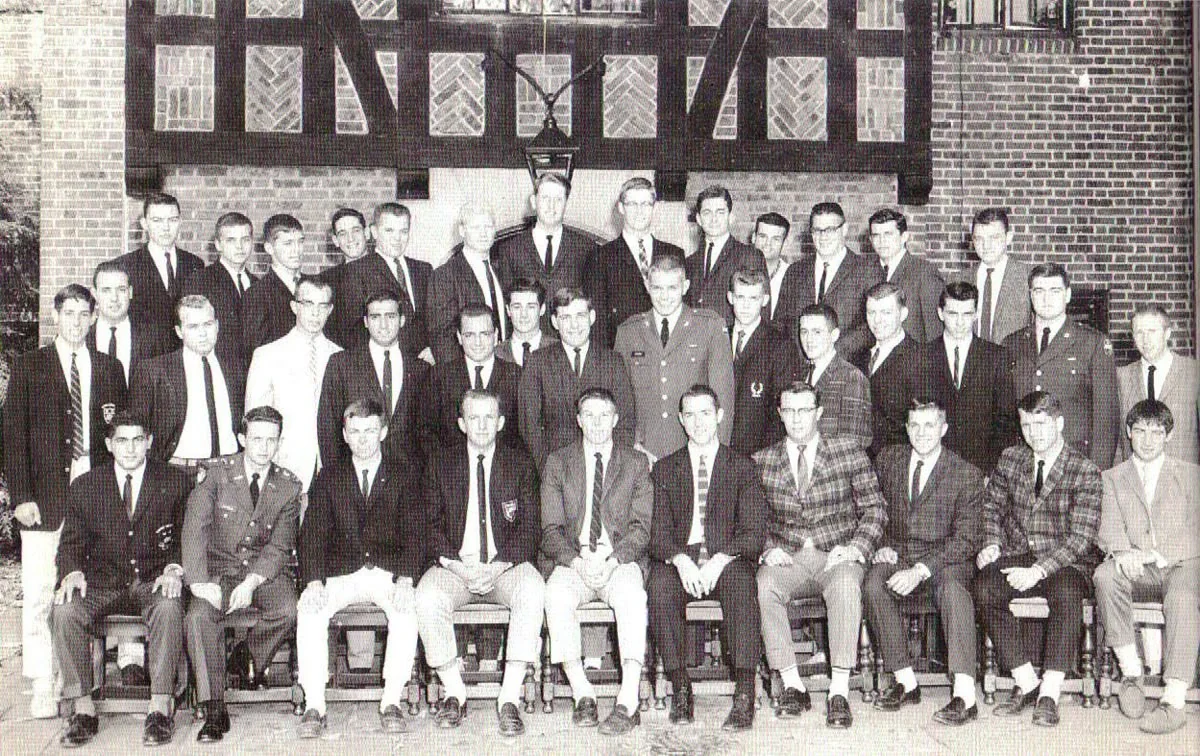
Reduce Yale Ivy style to its wardrobe and you get a short list. Every piece below was produced by at least one of the three reference brands (J.Press, Brooks Brothers, or L.L. Bean) and was worn continuously from the 1920s through the 1970s on Yale’s campus.
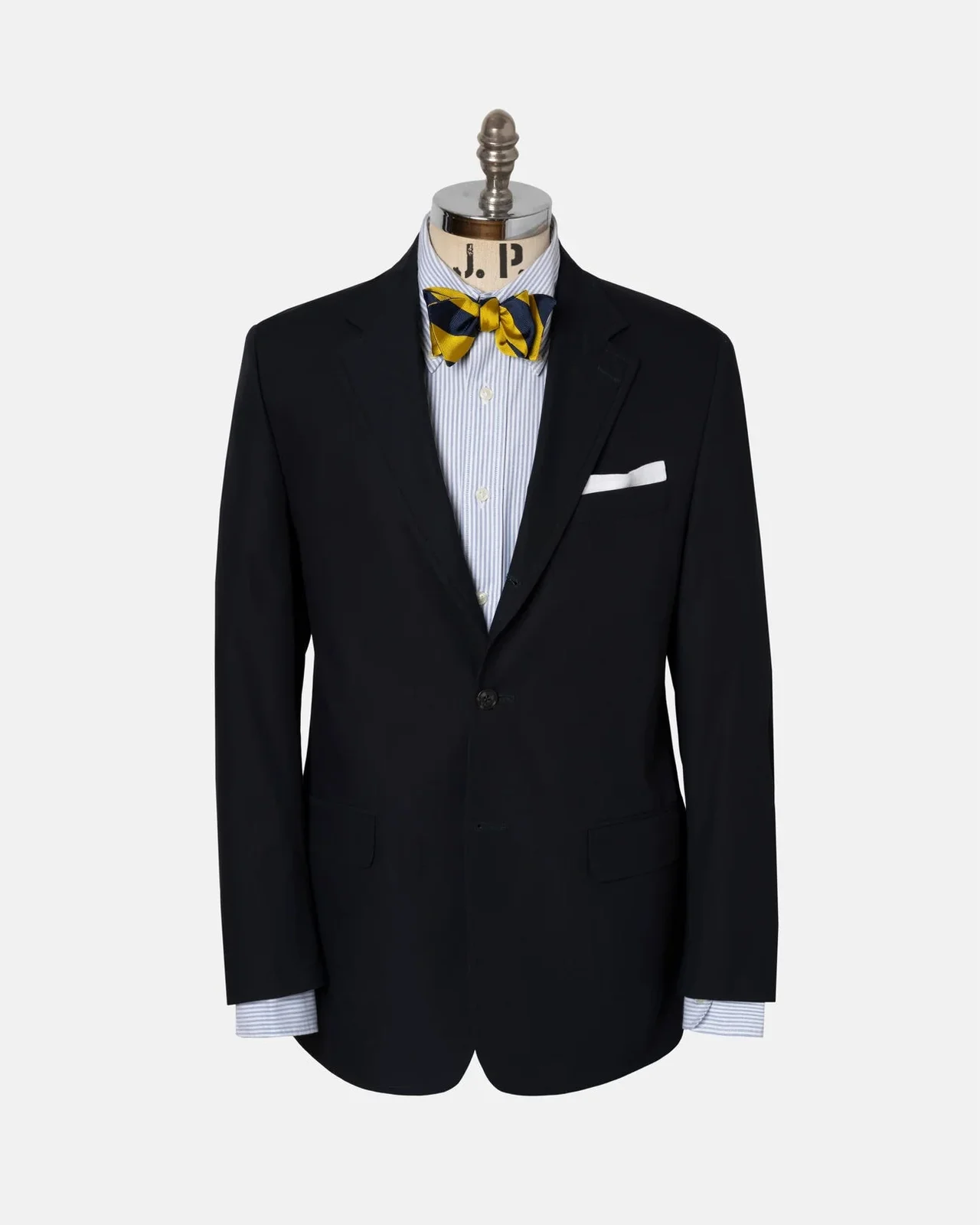
The Sack Jacket. Three-button, 3/2 roll, natural shoulder, undarted body, center hook vent. Usually navy, grey flannel, glen plaid, or Harris tweed. This is the anchor garment — everything else organizes around it.
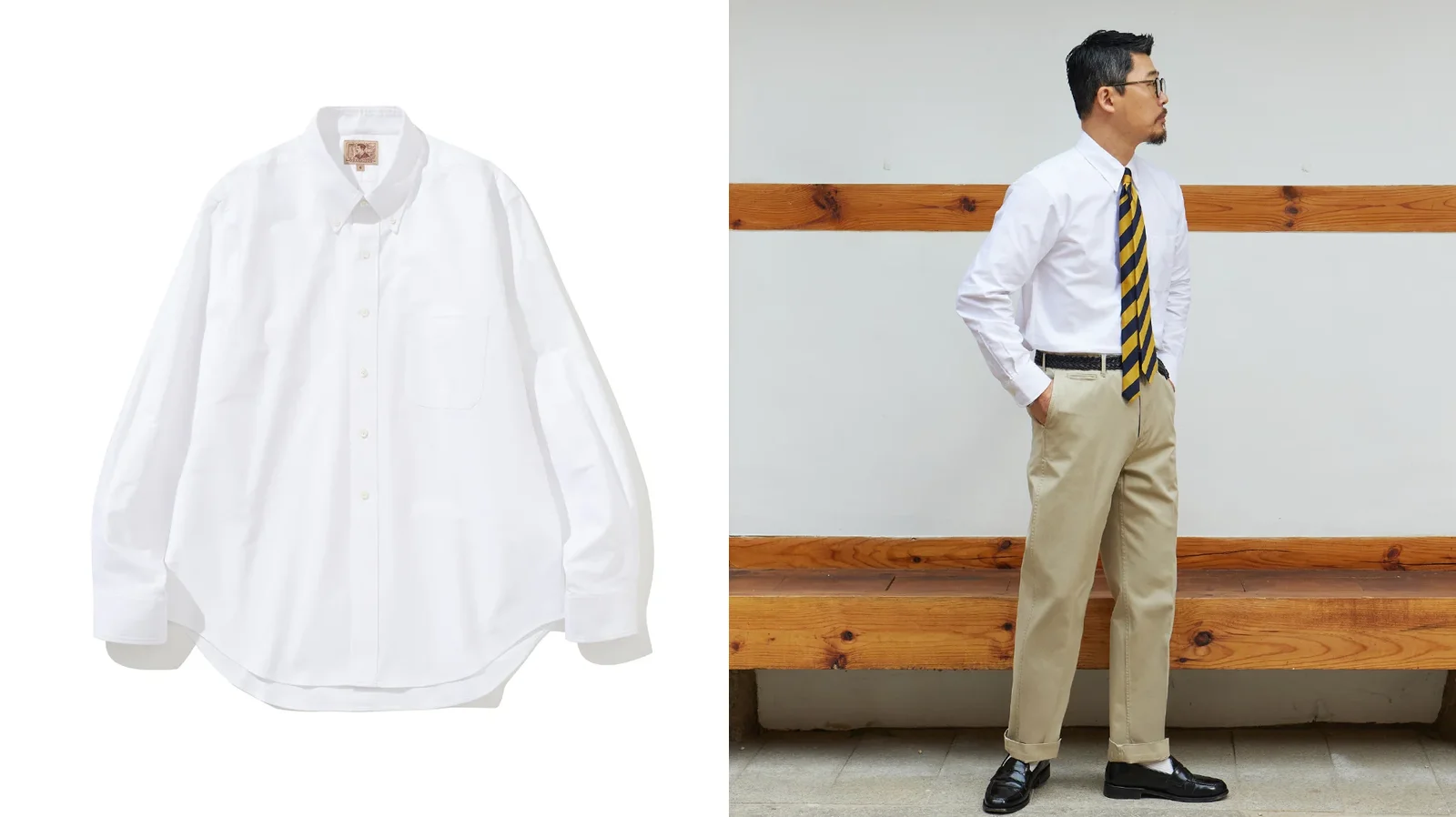
The OCBD. Oxford cloth button-down shirt, typically white or light blue, with a collar that rolled rather than pointed flat. Brooks Brothers invented it in 1896; J.Press sold a near-identical version. A Yale student owned five of them minimum, and they lived in his closet for decades. The full story is in our Brooks Brothers history.
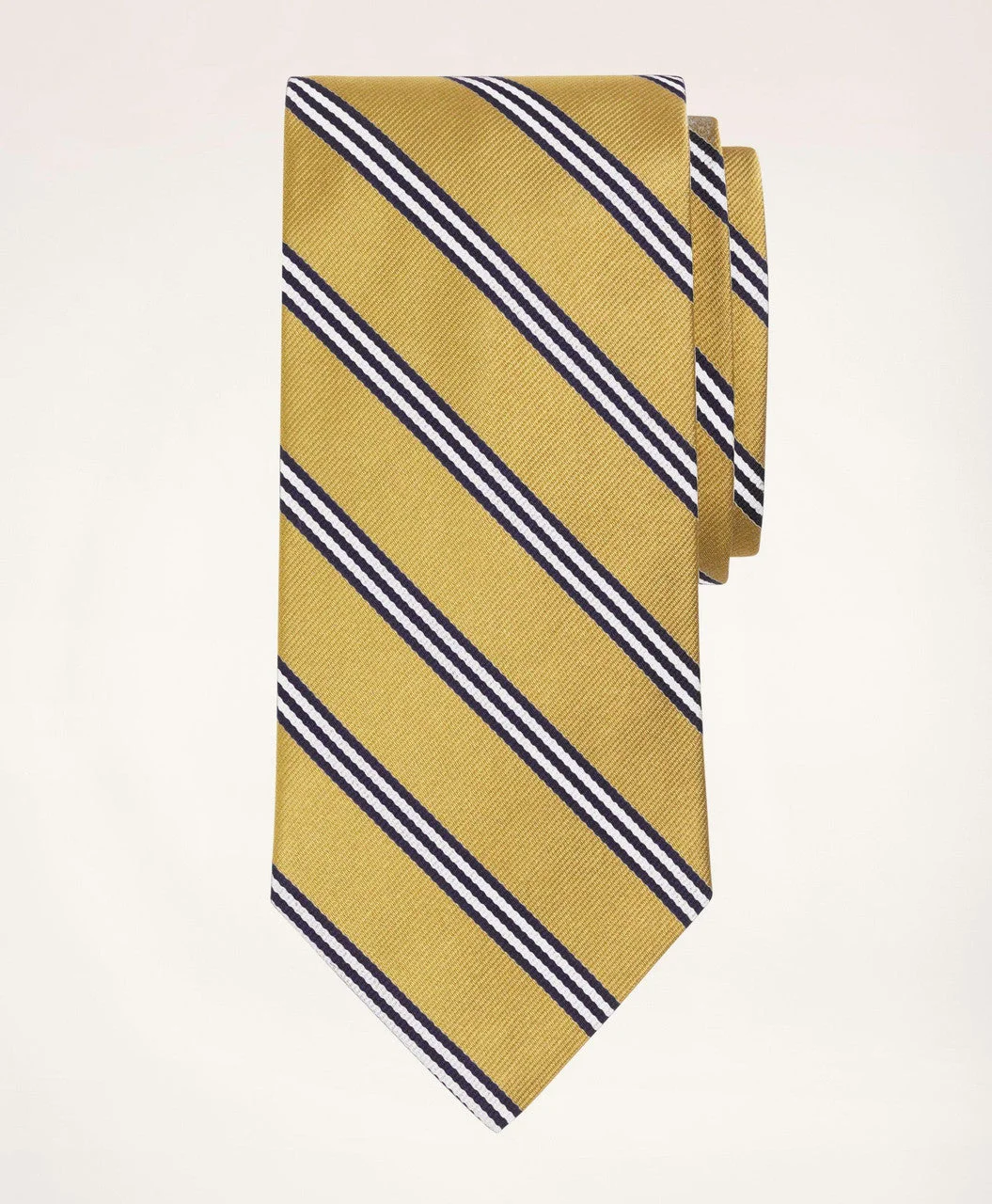
The Rep Tie. Silk repp, stripe pattern, with colorways that signaled affiliation — Yale blue and white, or the stripe of a specific residential college, or of an athletic team. The stripe direction (upper-left to lower-right, as viewed on the wearer) was the American convention; British regimental ties ran the opposite way.
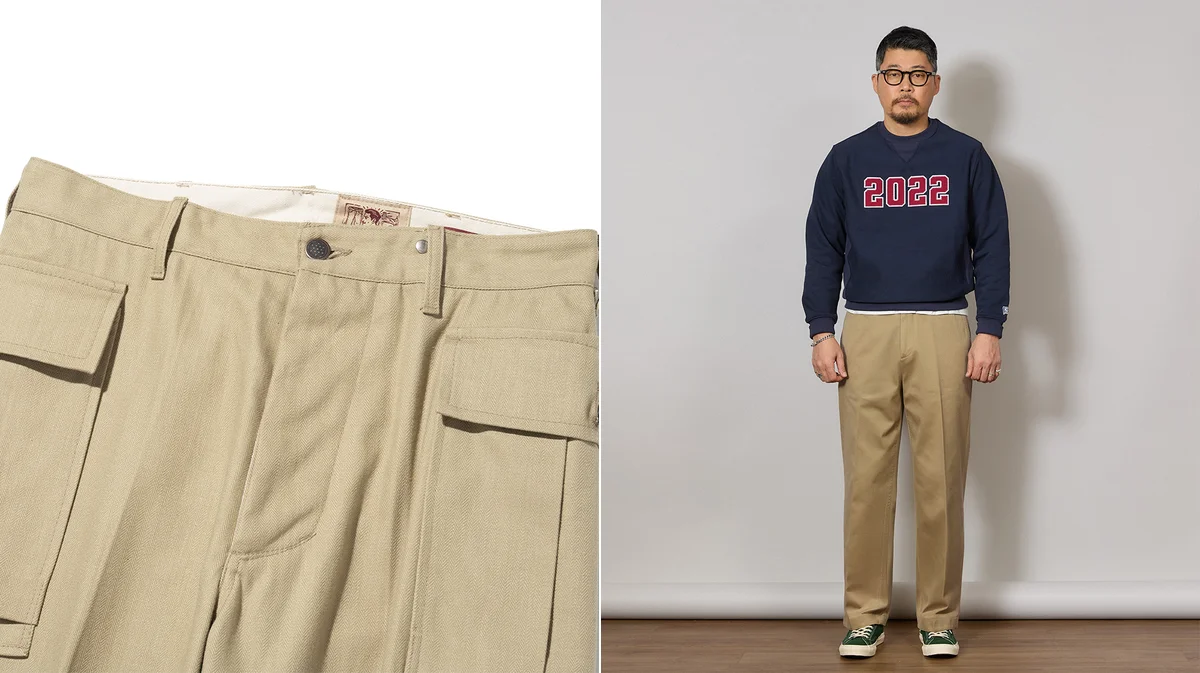
Chinos. Cotton twill trousers, khaki, straight-leg, flat-front or single-pleated. Worn with the sack jacket during the week, with a sweater on weekends.
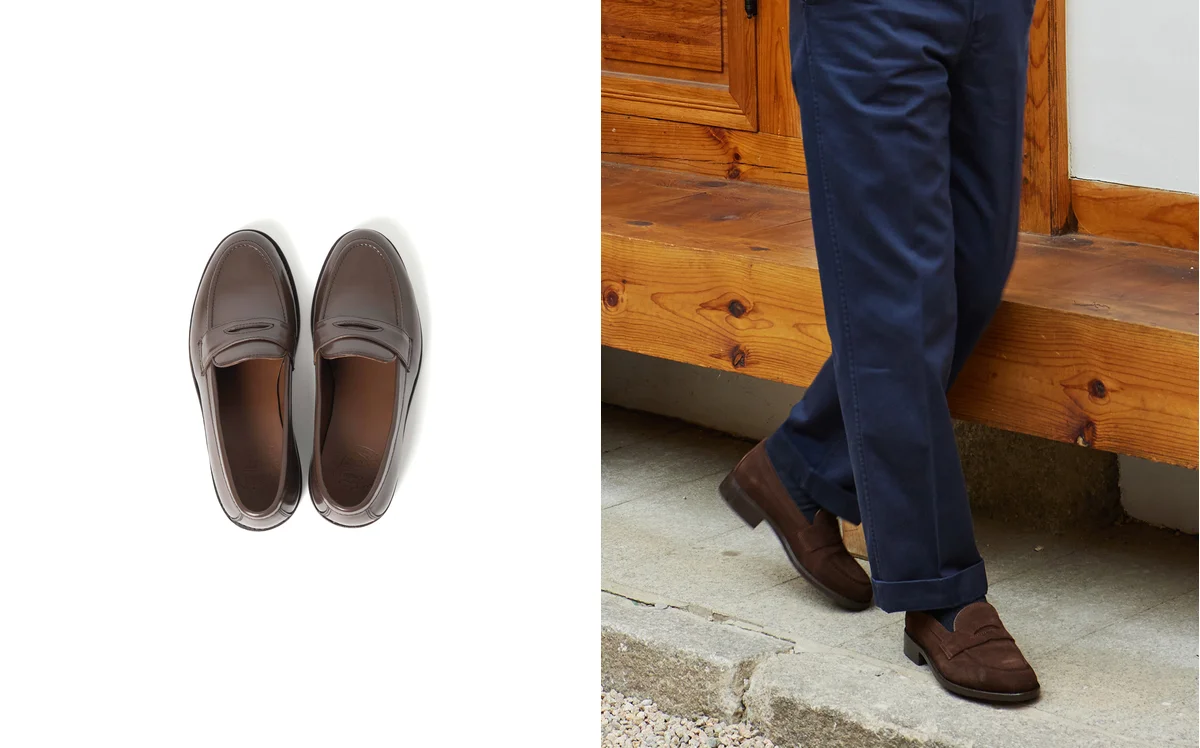
Penny Loafers or Bluchers. Leather slip-ons for fall and spring; blucher oxfords for winter. Bass Weejuns dominated the market; J.Press sold a more structured version.
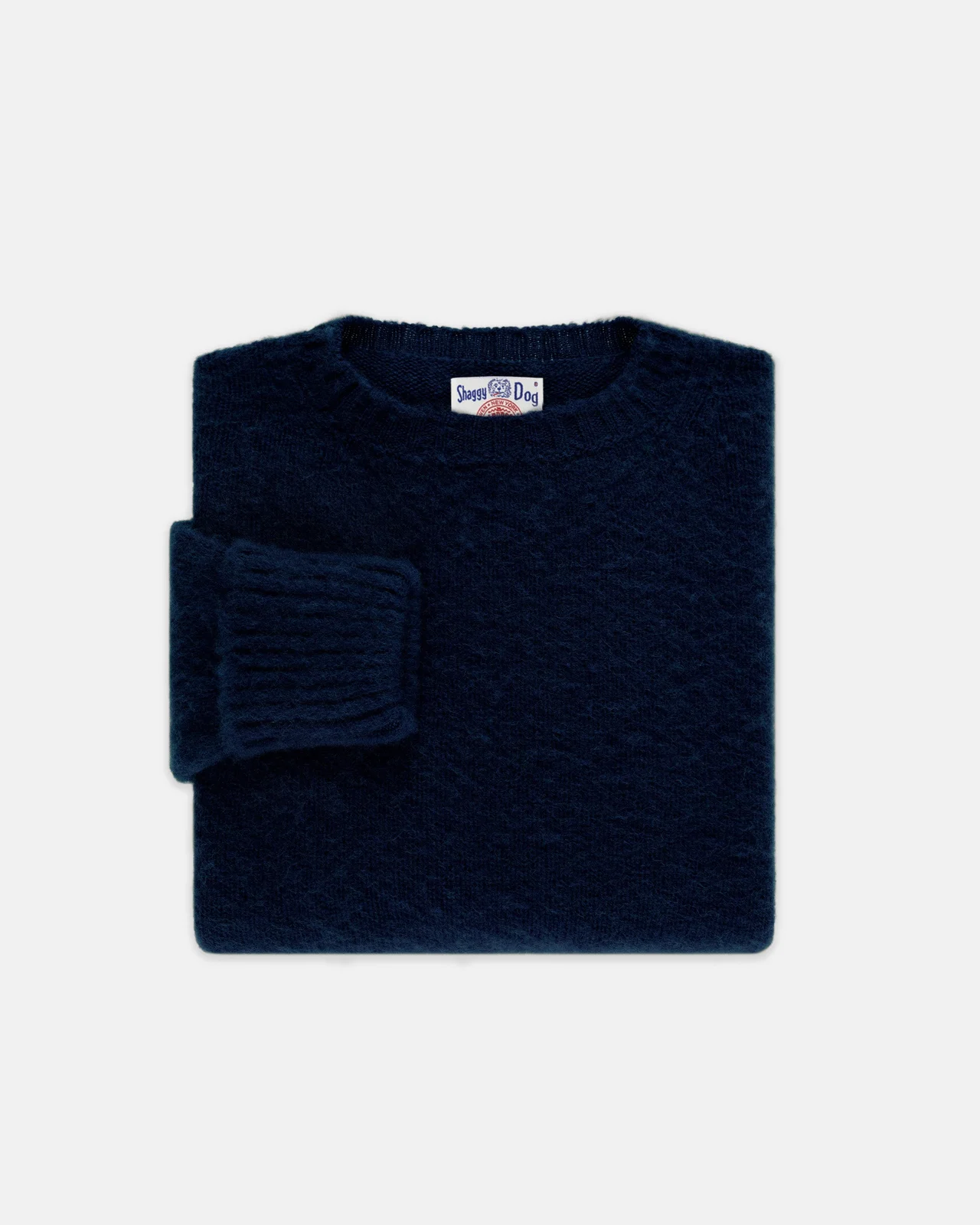
The Shetland Sweater. Hand-knit in the Shetland Islands, then hand-brushed with teasel plants to raise the fibers into a distinctively lofty texture. J.Press’s “Shaggy Dog” Shetland is the canonical version. Worn over the OCBD, under the sack jacket, in every color from oatmeal to navy to burgundy.
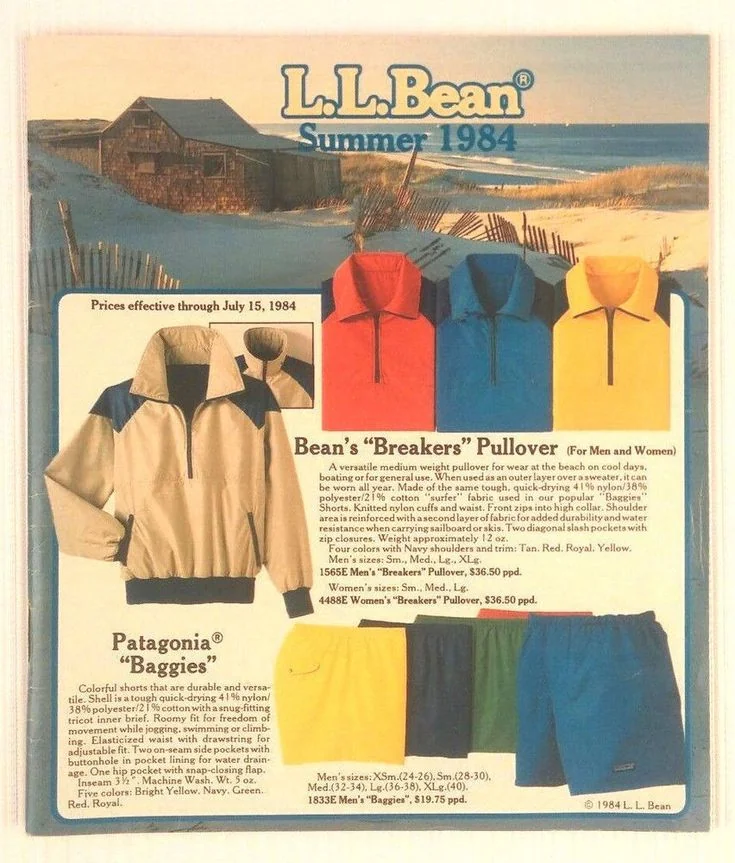
Outerwear. A polo coat for tailored occasions, a tweed field coat for informal ones, and from the 1960s onward, an L.L. Bean anorak or the Maine Hunting Shoe for truly casual Yale Ivy style days. The outdoor-to-Ivy translation is tracked in detail in our L.L. Bean history.
Harkness Tower and the Architecture of Yale Ivy Style
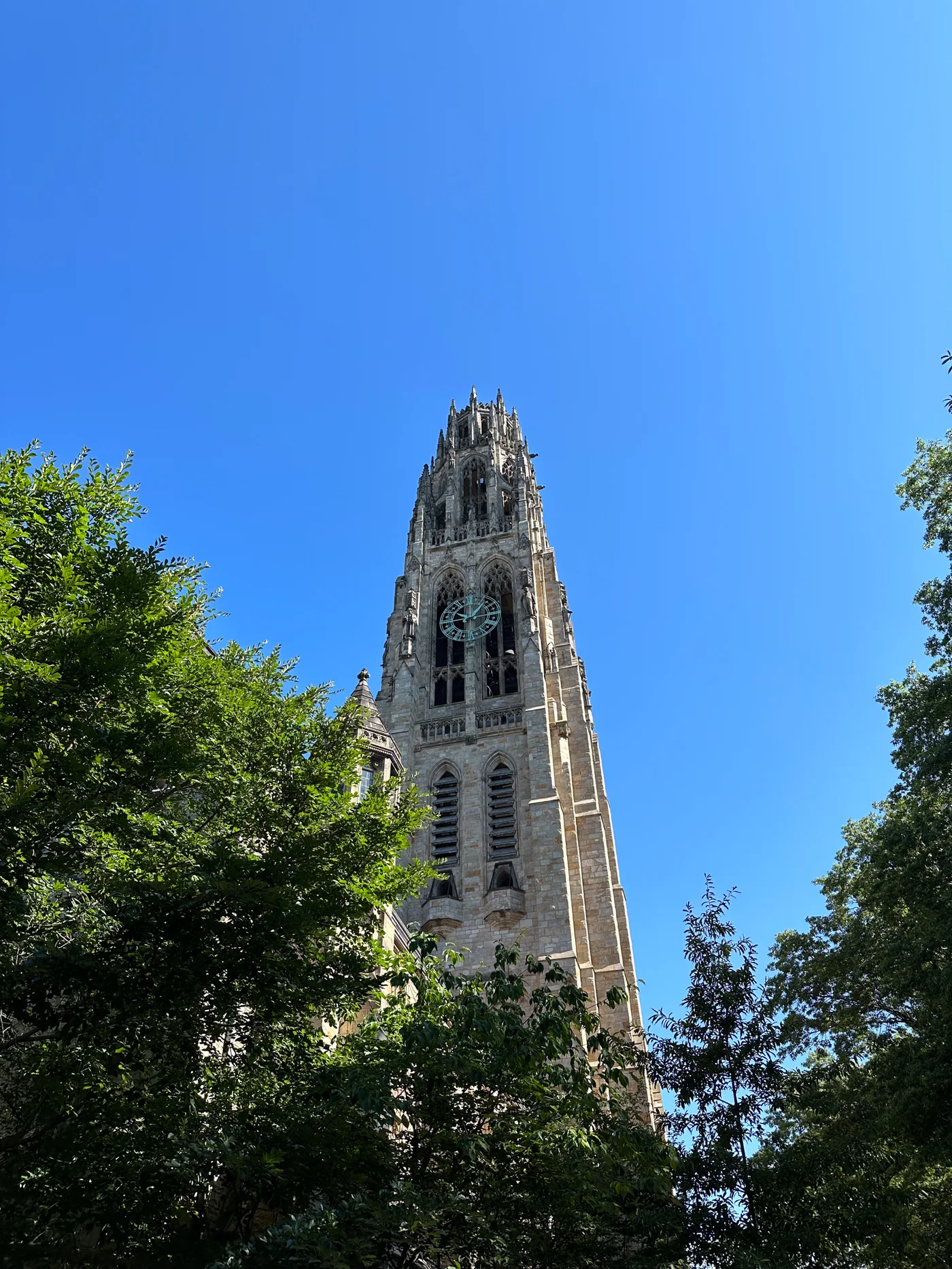
Here is something that gets left out of most Yale Ivy style histories: the architecture did a lot of the aesthetic work. Harkness Tower was built between 1917 and 1921, designed by James Gamble Rogers in Collegiate Gothic style — the tower itself modeled after the 15th-century St Botolph’s Church (the “Boston Stump”) in Lincolnshire, England. The symbol of Yale Ivy style was, literally, an American copy of an English church tower. Yale’s residential college system followed: most of Rogers’s Gothic quads were constructed between 1929 and 1933, with Branford, Saybrook, Davenport, Pierson, Jonathan Edwards, Trumbull, and Calhoun all opening on September 25, 1933. Berkeley followed in 1934, Timothy Dwight in 1935. By the time Yale photographed its students for the yearbook in 1935, the backgrounds were already doing half the styling. A young man in a sack jacket standing under a Gothic arch in New Haven in October looks like Yale Ivy style by sheer visual convergence. He looks the part because the part was literally built around him.
This matters when you try to translate Yale Ivy style to a contemporary context. A Renacts sack-cut blazer worn on a Seongsu street looks like a blazer; the same blazer worn at Harkness Tower would look like Yale. The garment is identical. The context does the remaining work. Recognizing that is the first step to building an honest Seoul Traditional interpretation rather than a costume.
Yale Ivy Style’s Decline and Preservation
Yale Ivy style peaked in the 1950s and early 1960s and then collapsed, or rather was displaced. The 1968 generation rejected the sack suit as a symbol of the establishment it was protesting. The 1970s and 1980s brought designer labels, power dressing, and European cuts. By the mid-1980s, a Yale undergraduate was as likely to be wearing a Giorgio Armani blazer as a J.Press one. The three reference brands — J.Press, Brooks Brothers, L.L. Bean — kept selling the same garments to a smaller and older customer base.
But the Yale Ivy style vocabulary survived in two places. First, in the continuous niche customer base of those three brands — alumni, faculty, East Coast professionals who never let go of the uniform. Second, and more importantly for our purposes, in Japan. J.Press itself became the first American brand licensed in Japan in 1974, and in 1986 was acquired outright by the Japanese apparel company Onward Kashiyama. The brand that dressed Yale undergraduates from 1902 onward is now, literally, a Japanese company that still operates its original American stores. Japanese menswear culture, which had first discovered Ivy through Take Ivy in 1965, never stopped studying it. Brands like VAN Jacket, Beams Plus, and BEAUTY & YOUTH built entire product lines around the Yale Ivy style canon. When American Ivy style began its revival in the 2010s, it was the Japanese interpretation that came back, not the original American one.
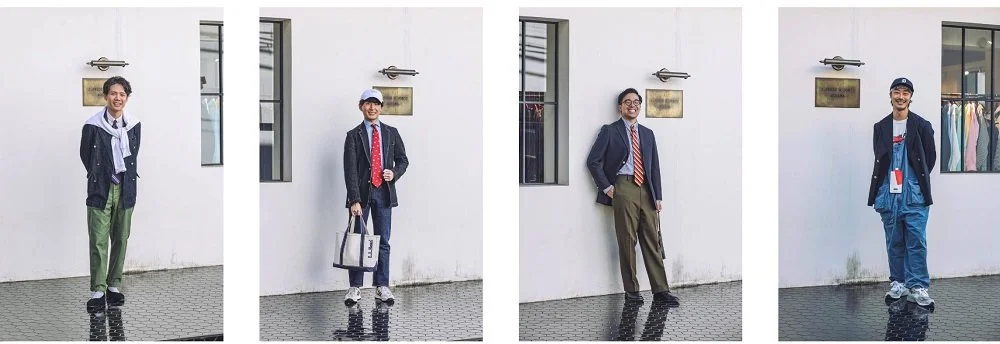
Seoul Traditional: Yale Ivy Style, One Route Further
Which brings the Yale Ivy style story to Seoul in 2026. There is no Yale in Seoul, no J.Press in Seoul, no century-old tailor shop on a Gangnam quad. What exists is a small group of Korean menswear brands — Renacts among them — that have inherited the Yale Ivy style canon through the Japanese route rather than directly from New Haven. The sack-cut blazer, the OCBD, the chinos, the penny loafer, the anorak: every piece in the Yale Ivy style wardrobe has a Seoul-made equivalent being produced now.
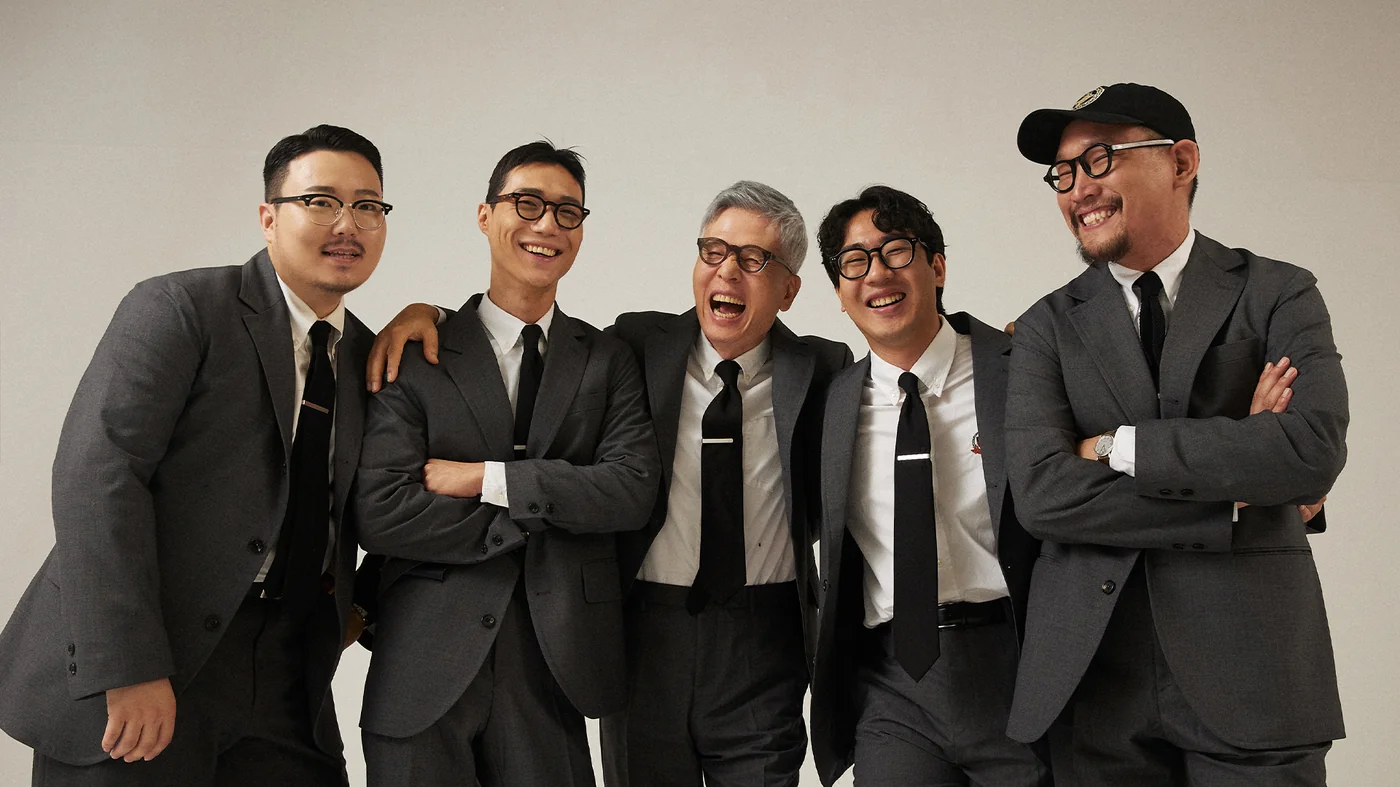
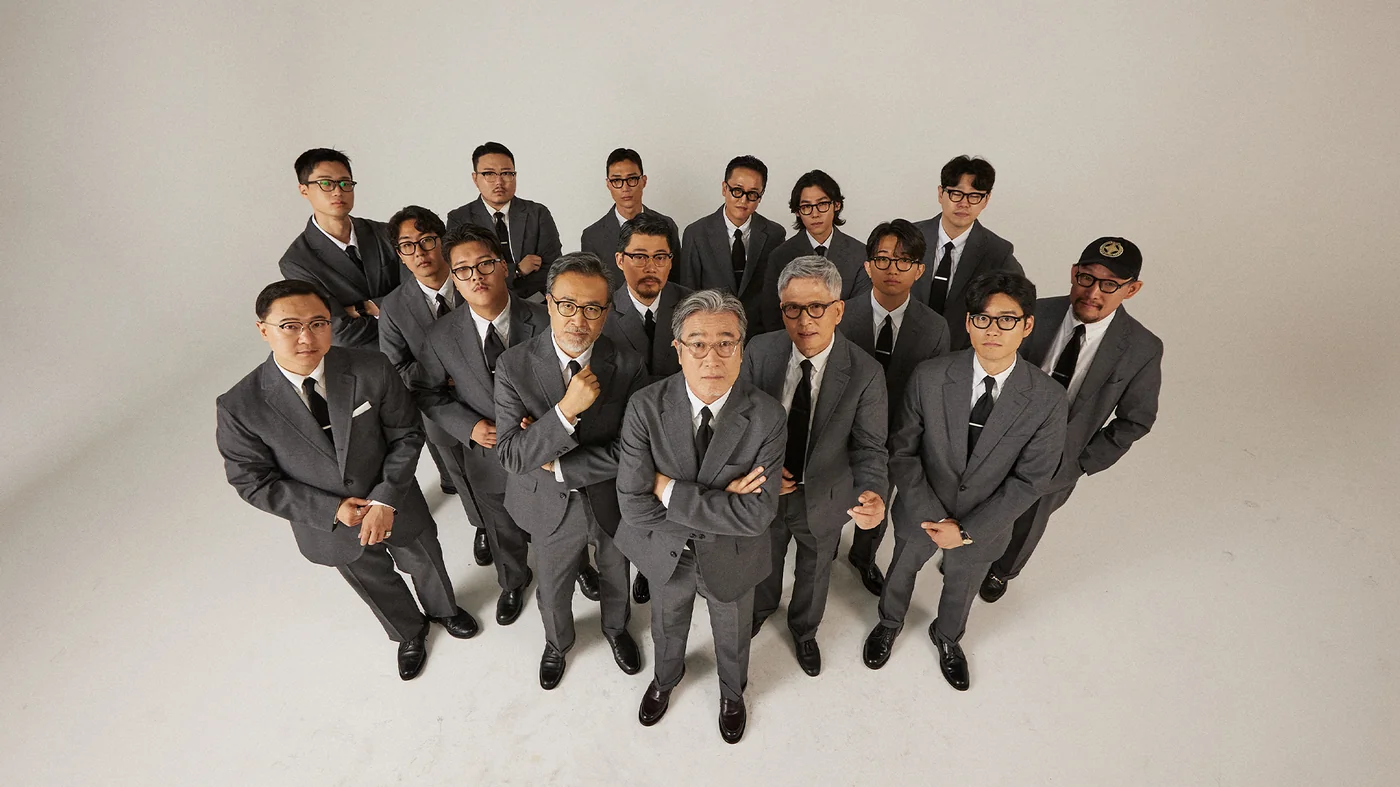
What makes this a continuation rather than a costume is that the Yale Ivy style underlying logic is preserved, not just the surface details. Natural shoulder because a tailored garment should move with the body, not impose on it. Button-down collar because a collar should stay down in the wind without a collar bar. Chinos because cotton twill breathes through a New England spring or a Seoul one. Penny loafer because a shoe should slip on and off. These are design choices that made sense at Yale in 1950 and still make sense in Seoul in 2026. The Seoul Traditional wager is that the logic matters more than the geography.
Why Yale Ivy Style Still Matters in 2026
The full Yale Ivy style history in one sentence: a Latvian tailor opened a shop next to the Yale campus in 1902, dressed two generations of Yale undergraduates in a soft-shouldered sack cut, watched that cut become American prep through alumni networks and football broadcasts, saw it photographed definitively in 1965 by a Japanese magazine team, watched it nearly die in the 1970s, watched Japan keep it alive for thirty years, and is now watching it return through Japanese-influenced Korean brands to a second-generation Asian audience that never saw the original.
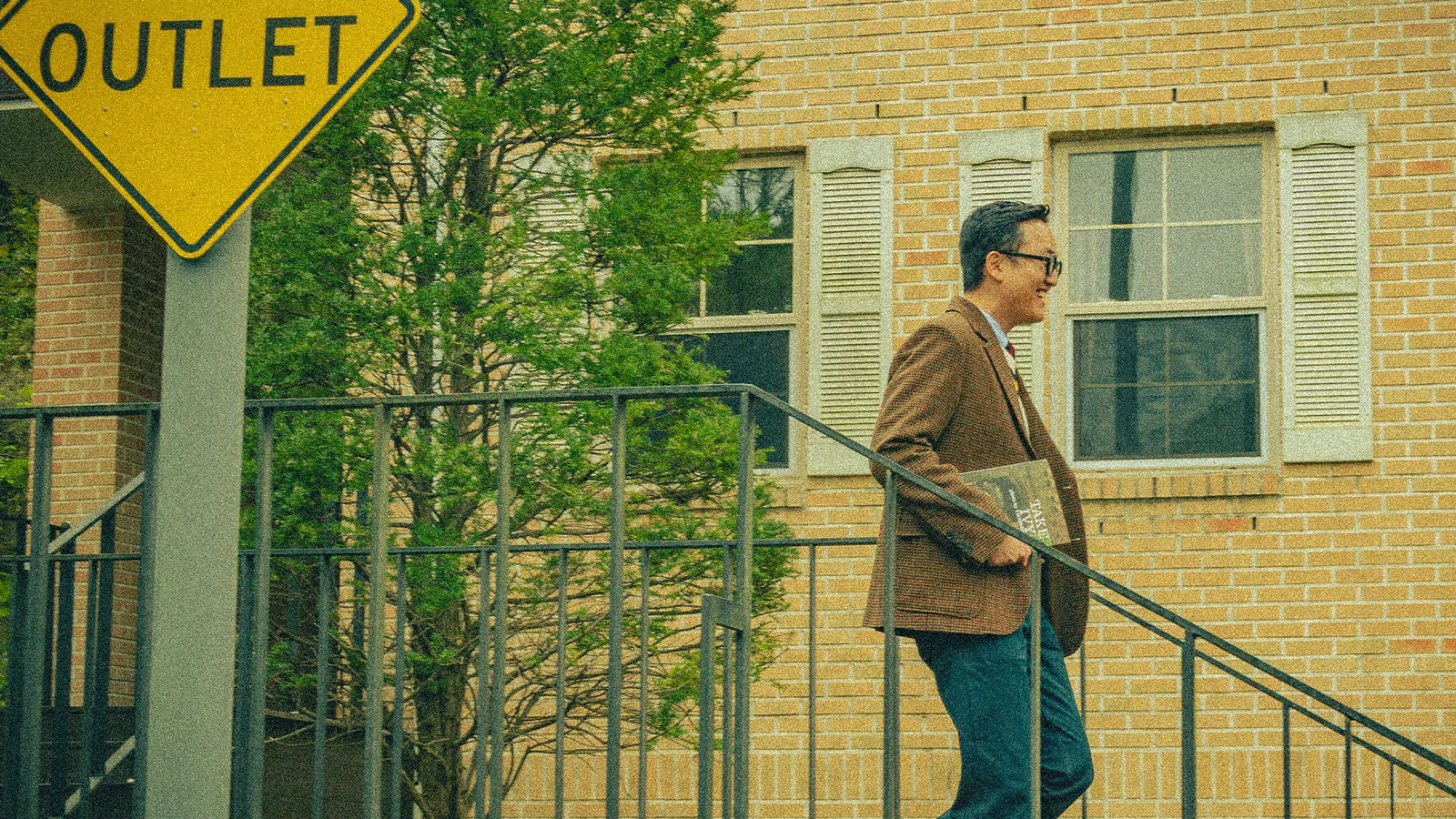
That’s the whole arc. The Yale Ivy style tradition is not a museum piece. It’s a living vocabulary that needed a half-century of Japanese custodianship to survive, and now needs a generation of Seoul-based interpreters to stay useful. The next chapter of this history is being written in Seongsu and Yeonhui-dong, not in New Haven. What Yale started in 1902, Seoul Traditional extends in 2026 — the same garments, the same underlying logic, the same refusal to mistake fashion for style.
Yale Ivy Style: Common Questions
Did Yale have a dress code?
Yes, and it was one sentence long. Men had to wear a jacket and tie to eat in Commons, the university dining hall. That was the entire institutional policy, and it was repealed in 1969.
Was the “20-Article Yale Dress Code” real?
Not as policy, no. The document reproduced in Take Ivy was an informal style guide written in 1965 by a student group — the Yale Dress Study Group — for incoming freshmen, almost certainly with help from the campus haberdashers.
It carried no institutional authority. Nearly every source that reproduces it calls it Yale’s dress code. It wasn’t.
What is Yale academic dress?
A different thing entirely. Academic dress means the gowns, hoods and caps worn at commencement, assigned by degree and faculty. This guide is about what students wore to class.
Why Yale and not Harvard or Princeton?
Because Yale had the shops. J.Press opened beside the quad in 1902, and Chipp and Arthur M. Rosenberg followed. The clothes were cut and sold within walking distance of the classrooms, which is why the look got a name and the others didn’t.
Is Yale ivy style the same as preppy?
No. Yale ivy style is the campus original. Preppy is what the same wardrobe became after it left campus — brighter, looser about the rules, and suburban rather than collegiate.
What do Yale students wear now?
Roughly what students anywhere wear, and that’s the honest answer. The wardrobe outlived the campus that produced it. On a given afternoon you will see more of it in Tokyo or Seoul than on Old Campus.