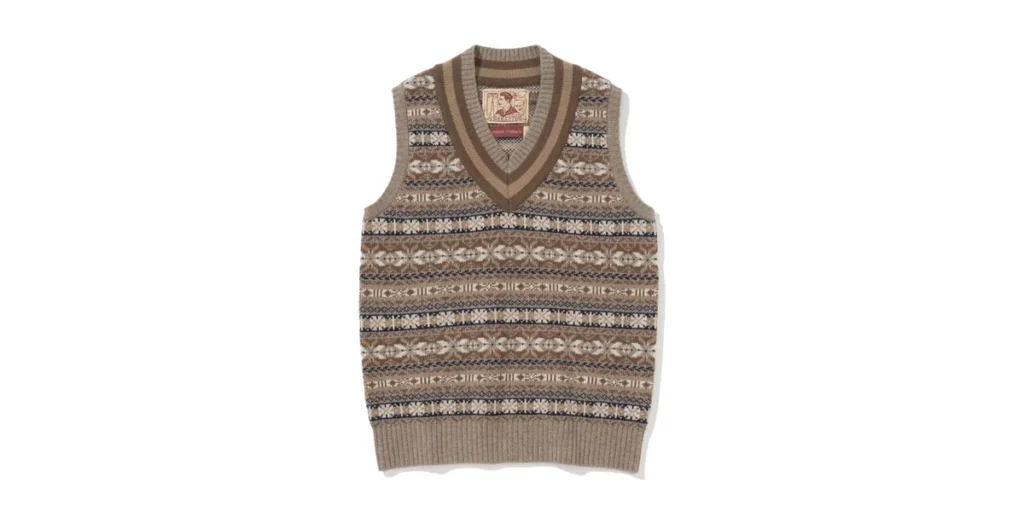
Fair Isle Knit History: From the Prince of Wales to Ivy League
A Tiny Scottish Island Changed Menswear Forever
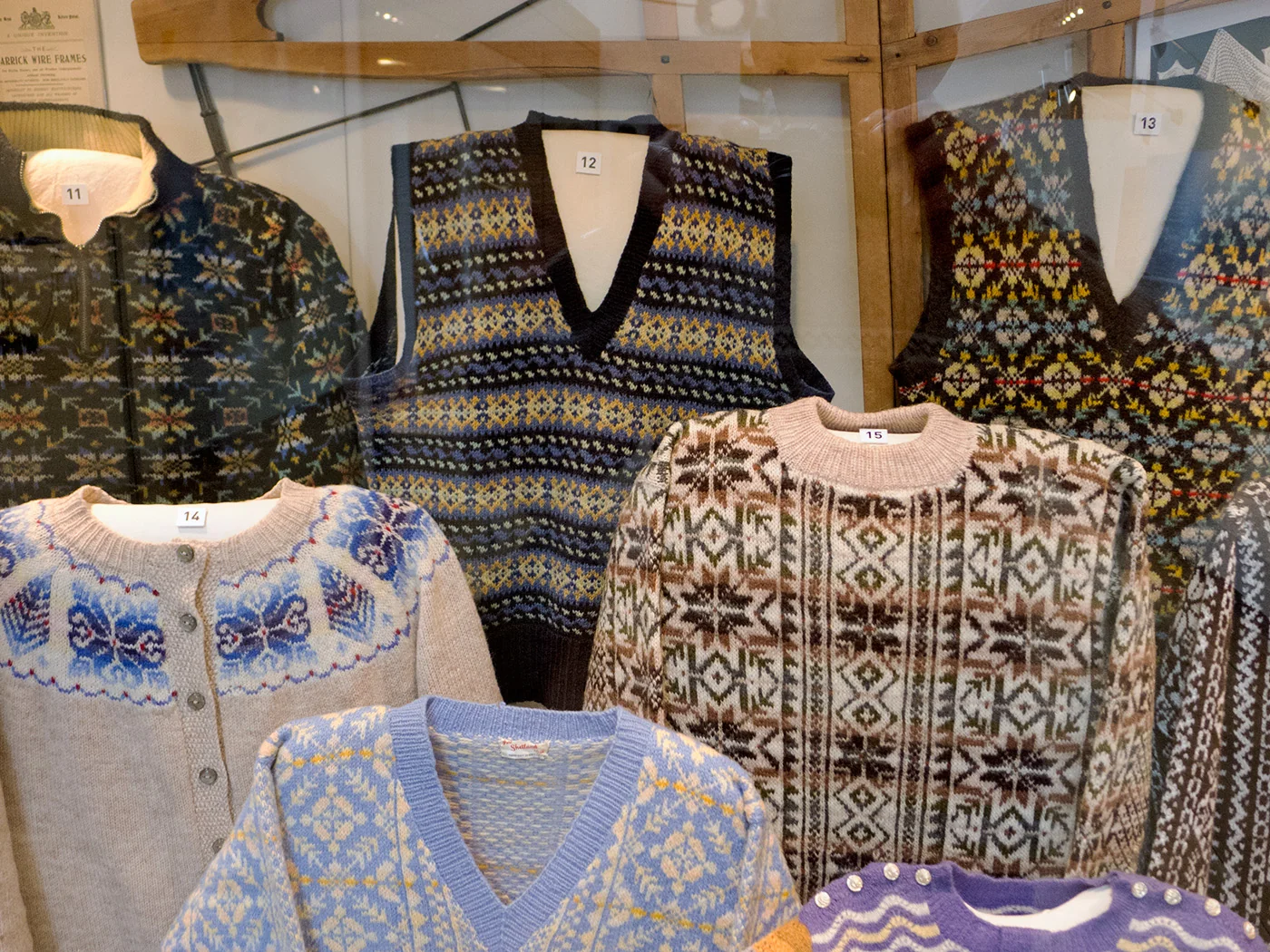
Fair isle knit history begins not in a fashion house or a factory, but on a windswept speck of land between Orkney and Shetland — an island called Fair Isle, technically part of the Shetland archipelago, home to roughly 55–60 people in 2026 (down from 68 at the 2011 census). The women there had been knitting colorful geometric patterns into wool garments for centuries, trading them with passing fishermen — including, according to a long-standing local legend, with Spanish sailors shipwrecked off the island when the Spanish Armada was driven north in 1588. Nobody outside the North Atlantic cared much.
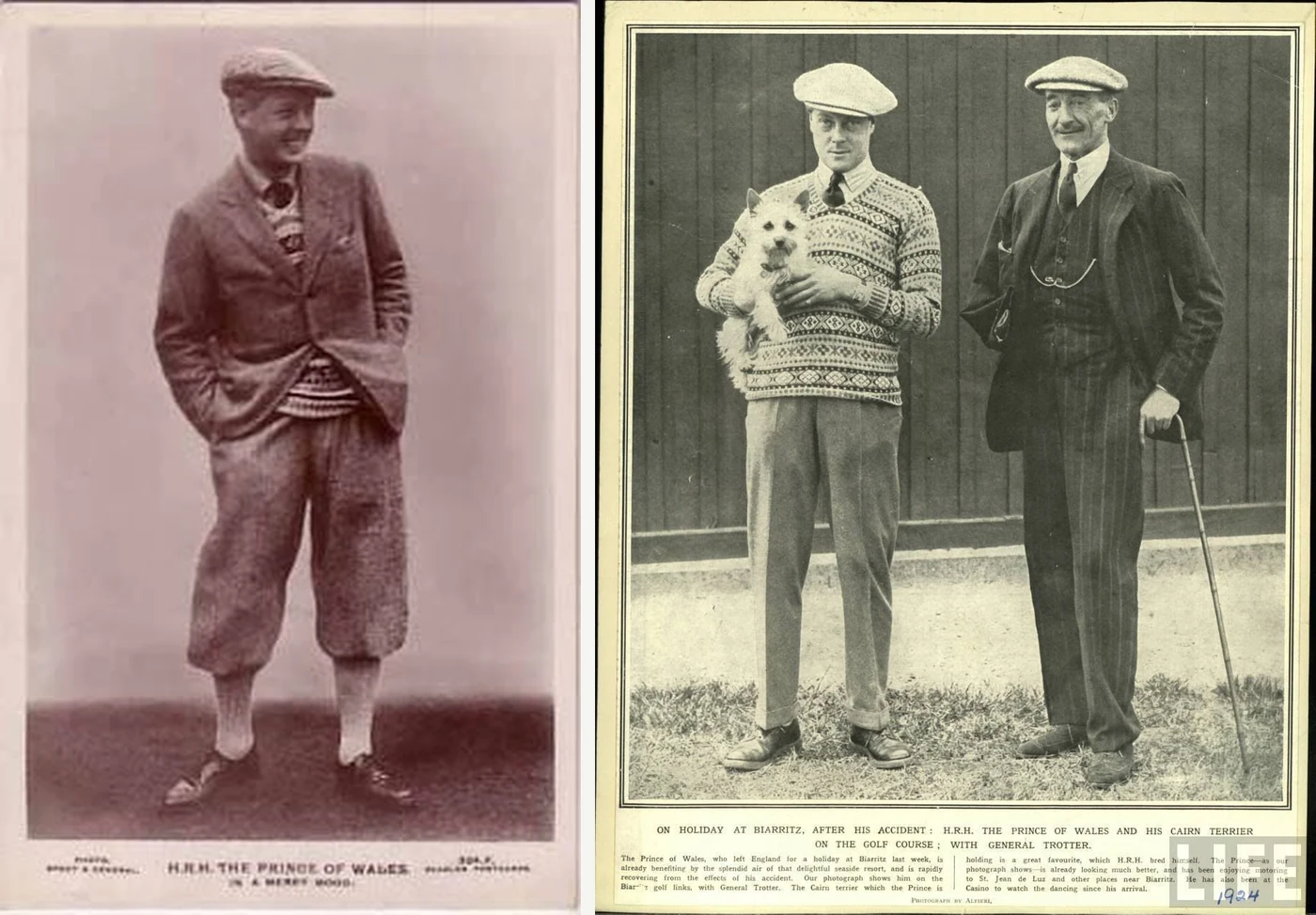
Then, in 1921, the Prince of Wales wore a Fair Isle sweater vest to the Royal and Ancient Golf Club at St Andrews. Photographers caught it. Newspapers printed it. And suddenly, everyone wanted one.
That’s how fair isle knit history works — centuries of quiet craft, then one public moment that changes everything. This piece covers where the pattern came from, how it reached American campuses, what makes a good one, and how it fits into Seoul Traditional style today.
The Real Origin: Fair Isle Before Royalty
Fair Isle sits roughly halfway between mainland Scotland and Norway. That geography matters. The knitting traditions on the island drew from both Scandinavian and Scottish influences, producing patterns that look like neither — horizontal bands of small geometric motifs in multiple colors, typically five or more per garment.
The earliest surviving Fair Isle garments date to the late 1800s, but the technique is likely much older. Islanders used naturally dyed Shetland wool — the soft, lightweight fleece from local sheep that holds color beautifully and breathes well in damp maritime climates.
Here’s what’s interesting: every knitter on the island developed her own pattern variations. No two were exactly alike. The motifs — OXO crosses, stars, anchors, diamond lattices — followed loose conventions, but the specific color combinations and arrangements were personal signatures. It was folk art, not industrial design.
1921: The Prince of Wales Moment
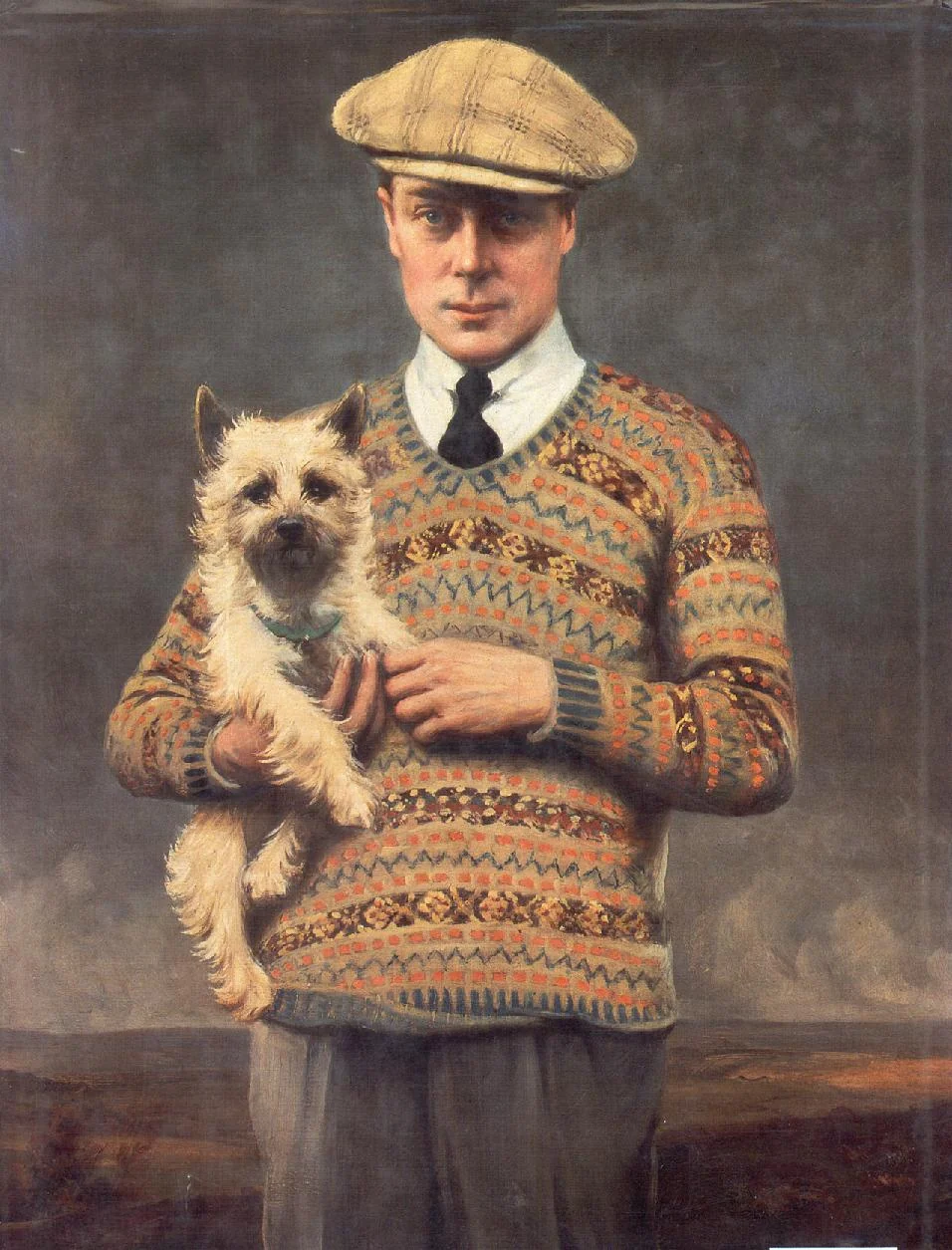
Edward, Prince of Wales, was the most photographed man in the world during the 1920s. He was also a genuine style maverick — the kind of royal who’d wear suede shoes with a suit just to annoy his father.
The 1921 moment was Edward starting to wear Fair Isle publicly — sleeveless V-neck vests photographed at golf and country events. Sir Henry (John St Helier) Lander painted Edward in a Fair Isle V-neck around 1925 (Edward holding his Cairn terrier, the painting now widely circulated) — that painted portrait fixed the look in fashion memory. The Royal and Ancient Golf Club moment came one year later, in 1922, when Edward was installed as Captain of the R&A at St Andrews. Six thousand spectators stood in the rain to watch him hit the ceremonial ‘Drive into Office’ shot from the first tee — wearing a round-neck Fair Isle sweater (this one with sleeves), a soft-collared white shirt, a geometric-pattern tie, and plus fours. The R&A Captain ceremony, rather than the Lander portrait, is what made it international news.
Edward had reportedly received a Fair Isle garment as a gift, possibly tied to his Shetland connections — the precise origin story varies between sources, and the 1924 Times of London piece that first documented his Fair Isle preference doesn’t pin down the specific provenance. What is certain is that he started wearing the garment publicly in the early 1920s, and London’s knitwear suppliers couldn’t keep up with demand within a year.
Within twelve months, London’s best knitwear suppliers couldn’t keep Fair Isle patterns in stock. The Scottish knitwear industry — anchored by Pringle of Scotland (founded 1815) and Lyle and Scott (founded 1874), with Alan Paine (covered in our Cricket Sweater history) as a slightly later peer — picked up the demand and industrialised the pattern. Within five years, the Fair Isle vest was a Pringle catalogue staple. The style spread through the British Isles and crossed the Atlantic by the mid-1920s. Fair isle knit history has a clear before and after — and 1921 is the dividing line.
Fair Isle Knit History Reaches the Ivy League
By the 1930s and 1940s, Fair Isle patterns had become a staple of collegiate menswear in America. The sleeveless vest version was especially popular on campuses — it layered perfectly over an oxford button-down shirt and under a tweed jacket, adding color without bulk.
Browse through old yearbook photos from Princeton, Yale, or Dartmouth in the 1940s and 1950s — the Yale archive in particular shows Fair Isle vests in heavy rotation. By the time the 1965 Yale Dress Study Group put together its dress guidelines for incoming freshmen, the Fair Isle vest was already so embedded in the campus uniform that it didn’t need to be specified — it was assumed. You’ll spot Fair Isle vests everywhere — in libraries, at football games, during casual Friday lectures. The pattern fit the Ivy League aesthetic perfectly: traditional but not stuffy, colorful but not loud, handcrafted but not precious.
The Ivy adoption cemented Fair Isle as a permanent part of the Trad wardrobe. It wasn’t a trend that came and went. It became foundational — right alongside the blazer, the OCBD, and the penny loafer.
What Makes a Good Fair Isle Knit
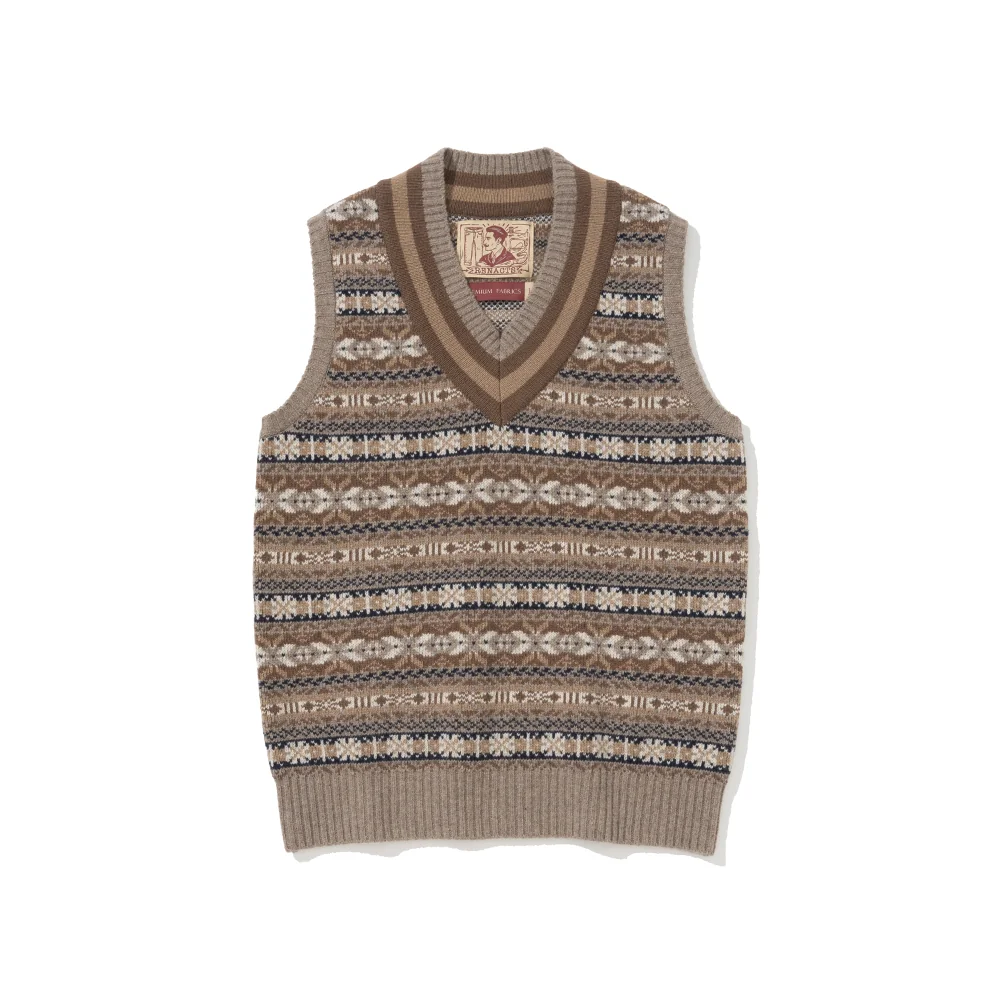
Not all Fair Isle is created equal. Here’s what to look for.
Wool quality comes first. Traditional Fair Isle uses Shetland wool or a similar soft, lightweight yarn. Skip anything made from acrylic or cheap blends — they pill instantly, lose shape after a few washes, and miss the whole point. You want natural fiber that breathes, insulates even when damp, and develops character over time.
Pattern authenticity matters. Real Fair Isle features horizontal bands of small, repeating geometric motifs using multiple colors — typically five or more across the garment. Each row uses only two colors at a time, with the unused yarn carried behind the work (called stranded knitting). This creates a slightly thicker, warmer fabric. Stranded technique is shared across a Northern European family of knit traditions — Norwegian lusekofte, Latvian and Estonian patterned mittens, Scandinavian selburose — and the Shetland Museum has been working since 2010 toward a UNESCO Intangible Cultural Heritage submission for the Fair Isle tradition specifically. The technique is older than the fashion moment by several centuries.
If a sweater just has one big Nordic snowflake on the chest, that’s not Fair Isle. It might be nice, but it’s a different thing entirely.
Fit should be relaxed but not sloppy. Fair Isle knits work best with a bit of ease through the body. Too tight and the pattern distorts. Too loose and you look like you’re wearing your grandfather’s hand-me-downs — and not in the good way.
Vest vs. Pullover vs. Cardigan: Which Fair Isle to Get First
Get the vest first.
The sleeveless Fair Isle vest is the most versatile version. It layers under blazers without adding bulk at the shoulders. It works over an OCBD tucked into chinos for a campus-ready look. And it handles Seoul’s unpredictable spring and fall temperatures well — warm enough for morning commutes, easy to manage when afternoons heat up.
The pullover is the classic choice and looks great on its own over a collared shirt. But it commits you to more warmth, which limits its wearing window. Save it for deep winter.
The cardigan is the rarest and most advanced move. Unless you already own the vest and the pullover, you don’t need to think about it yet.
Fair Isle in Seoul Traditional Style
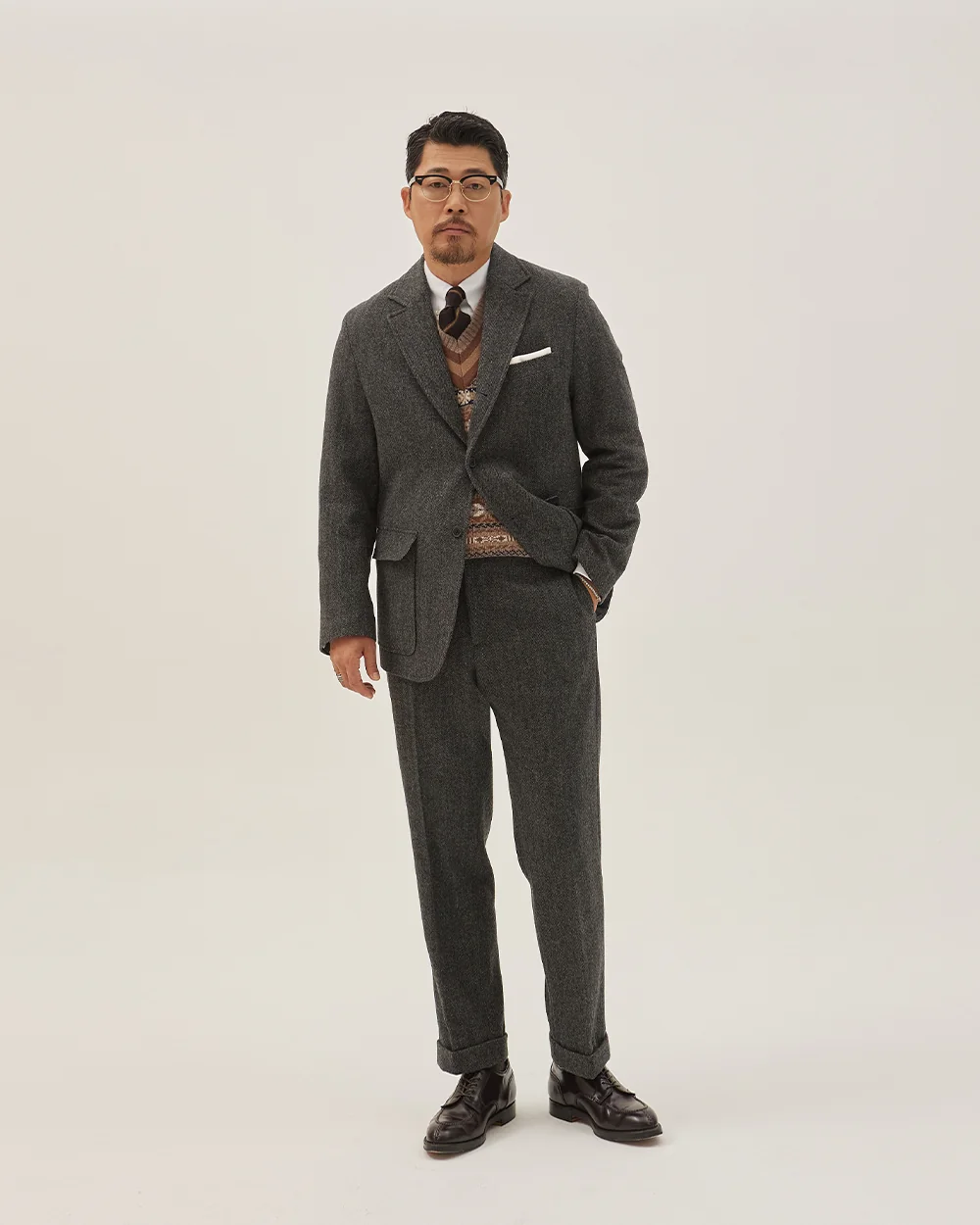
In the original Ivy context, a Fair Isle vest meant New England autumns — leaf piles, football weekends, old stone buildings. The emotional register was nostalgia and belonging.
Seoul Traditional style isn’t about recreating 1950s Princeton. It’s about taking the underlying values — dressing with intention, building a complete life, caring about craft — and expressing them through a Seoul lens.
A Fair Isle vest over a white OCBD, tucked into chinos, with penny loafers works just as well on the streets of Seongsu-dong as it did on the Yale campus in 1955. In Seoul, you might throw an anorak over the whole thing for the walk to the subway, or swap the loafers for derbies when rain is forecast. The pattern is the same; the adaptation is local.
The sweater collection at Renacts is built around this philosophy — taking archived Ivy pieces and making them work for how people actually dress in Seoul. The vest, in particular, gets heavy rotation among Gentlemens Club members during fall football matches and weekend volunteer sessions.
How to Care for Your Fair Isle Knit
Fair warning: knitwear is the category where most guys destroy their clothes through ignorance. Don’t be that guy.
Hand wash or use a delicate cycle. Cold water, gentle detergent — wool-specific if you have it. Never use regular laundry detergent; it strips the natural lanolin from wool fibers and leaves them brittle.
Never wring it out. After washing, press the water out gently by rolling the garment in a clean towel. Then lay it flat on a drying rack. Hanging a wet knit will stretch it beyond recognition.
Store folded, not hung. Hangers create shoulder bumps in knitwear. Fold it and stack it. Cedar blocks nearby will keep moths away without the chemical smell of mothballs.
A well-cared-for Shetland Fair Isle vest will last a decade or more. The colors soften slightly with age, which actually makes the pattern look better. It’s one of those rare garments that improves with wear.
Building Fair Isle Into Your Wardrobe
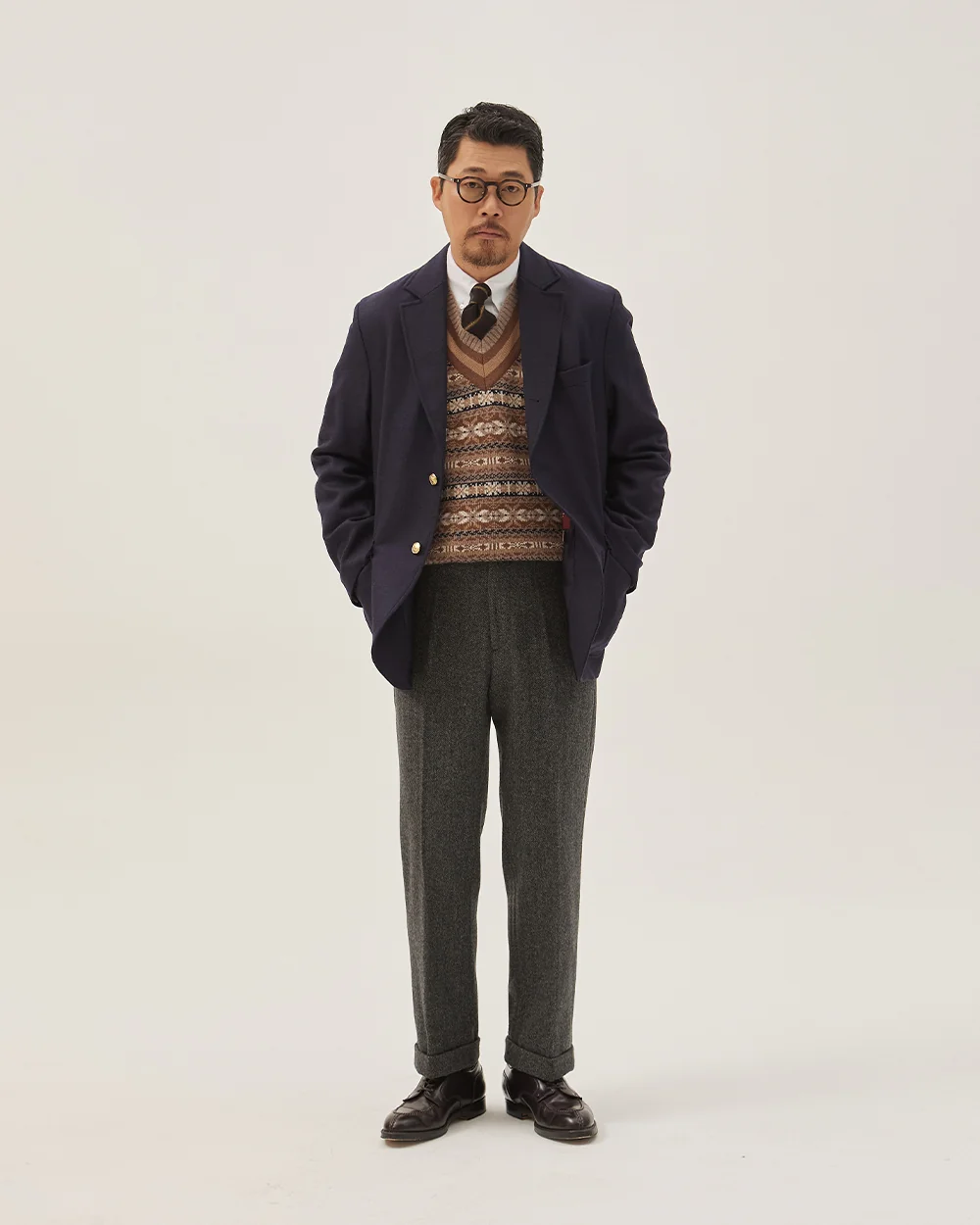
The rest is execution.
A Fair Isle vest in muted, traditional tones — navy base, burgundy and cream accents — goes with almost everything you already own. Pair it with a white or blue OCBD, khaki or grey chinos, and a pair of leather shoes — black plain-toe derbies or black penny loafers are what the Seoul Trad team reaches for most, with brown as the warmer alternative. That’s the foundation.
Once you’re comfortable, experiment with bolder color combinations. A vest with forest green and gold motifs over a chambray shirt adds personality without screaming for attention. The beauty of Fair Isle is that the complexity is built into the pattern — you don’t need to do much else.
That is the Fair Isle knit history playbook in three lines: know where the pattern came from, choose the version that was made correctly, and let the craft speak for itself. Together with the cricket sweater, the Fair Isle vest is the patterned half of the British sport-knitwear canon that crossed the Atlantic in the 1920s and ended up on Yale and Princeton campuses by the 1940s. Edward, the same Prince of Wales who popularised both garments, also popularised the Windsor knot, plus fours, the double-cuff dress shirt, and the neckwear sensibility our Drake’s of London history traces forward. One man’s wardrobe reset four pieces of the modern menswear canon — and the Fair Isle vest is the most surprising of them.
The Fair Isle vests in the line:
- Wool Fair Isle Vest — $157
- Wool Fair Isle Vest [Brown Multi] — $157
- Wool Fair Isle Vest [Ivory Multi] — $157