
Drake’s of London History: How Britain Rebuilt the Ivy Accessory From 1977
Drake’s of London history is shorter than most of the trad canon — younger than Brooks Brothers by 159 years, younger than J.Press by 75, and younger than The Andover Shop by 29. Drake’s opened in 1977. By 2010 it was the world’s standard for the English tie. By 2025 it had quietly become the most-cited menswear brand in serious style writing, period. Here is how three former Aquascutum employees built that.
Not the Oldest English Tie Maker. The One That Rebuilt the Genre.
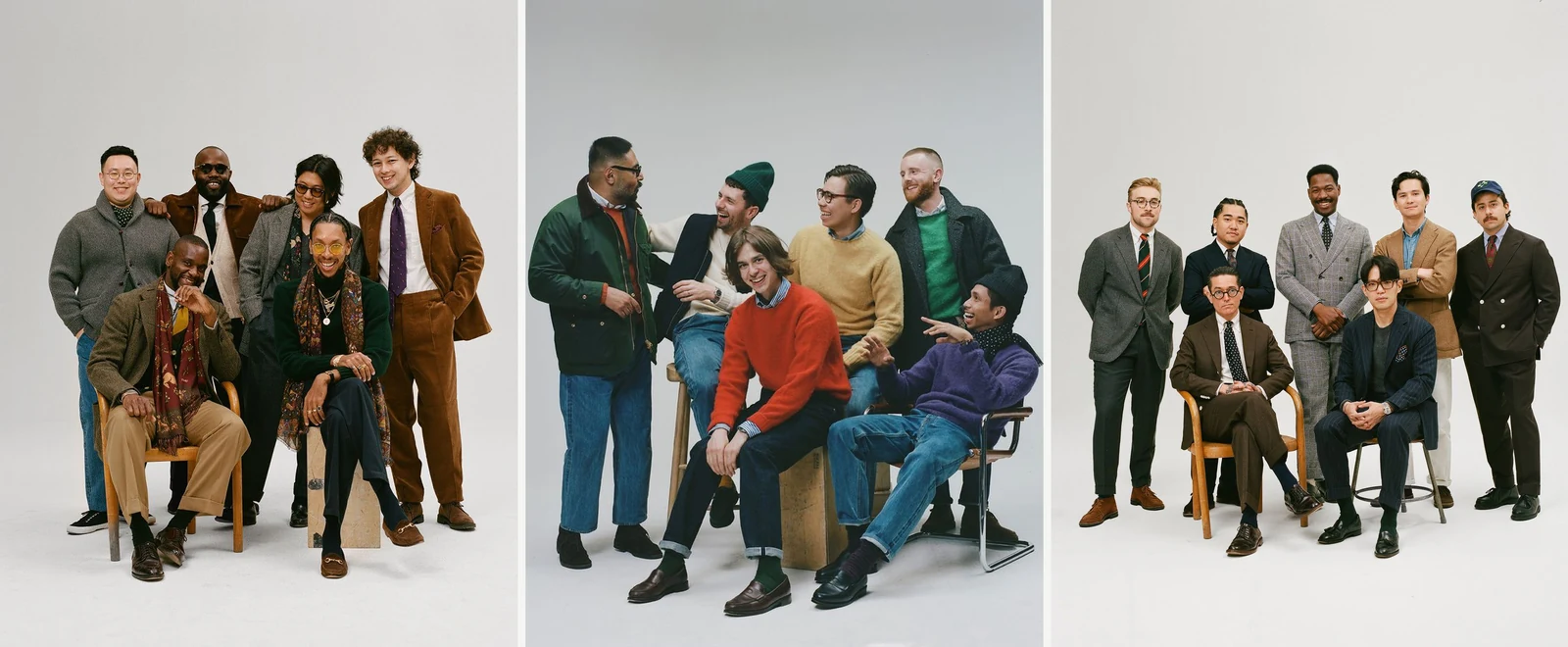
The English tie tradition is centuries old. Macclesfield silk weaving goes back to the 17th century. Regimental and old-school stripes predate the 1850s. Hermès was making ties in the 1920s. Brooks Brothers launched the BB#1 American repp in 1902. By the time Drake’s opened in 1977, the necktie as a category was already 100 years saturated, with serious British, French, and American competition.
Drake’s of London history matters because it didn’t enter that category as a heritage revival. It entered as a small, unfussy, East-End scarf-and-tie operation that took itself more seriously than the larger names did, and slowly built a global reputation for one specific thing: an English tie made correctly, sold to people who knew why that mattered. That selectivity — combined with a 2010 ownership transition that brought in a Hong Kong perspective — turned Drake’s into the menswear-nerd standard worldwide.
1977: Three Aquascutum Refugees Open a Scarf Company in the East End
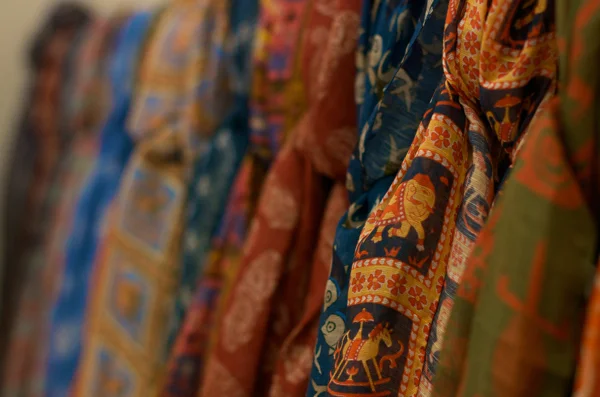
Drake’s was founded in 1977 by three people: Michael Drake, Jeremy Hull, and Isabel Dickson. All three had previously worked at Aquascutum — the British outerwear brand best known for its rainwear and military trench coats. Drake himself had joined Aquascutum directly out of high school, trained in factory production and Saturday-shop duties on Regent Street, and by his early twenties was assistant to the design director — designing the signature Aquascutum check pattern that the brand still uses today. He left to start a small accessories company in London’s East End, focused initially on men’s scarves and shawls, with Hull and Dickson joining him.
The actual founding story is more accidental than the standard retelling suggests. The three started not as scarf-makers but as the British agents for the Italian tailoring brand Belvest. Drake, in his off-hours, sketched lambswool scarf designs; he and Hull took the samples to the SEHM trade show in Paris and came home with about £100,000 in orders — only to lose all the order paperwork in an airport luggage mix-up at Heathrow. With customers but no production, the team travelled the country recruiting tiemakers and weavers, moved them into the Clerkenwell office, and the Drake’s manufacturing operation existed before the Drake’s product range did.
The original commercial product was wool and cashmere scarves, sold to high-end fashion boutiques and traditional tailoring houses across London and the continent. There were no ties. There were no shirts. There was a small workshop, three founders, and a scarf product that the team believed could be made better than anyone else was making it. The early Drake’s of London history is a textbook example of the small-shop operating model: get one product right, sell to distributors who appreciate the difference, expand only when the product expansion is structurally justified.
The Tie Era Begins: From Scarves to Madder Silk
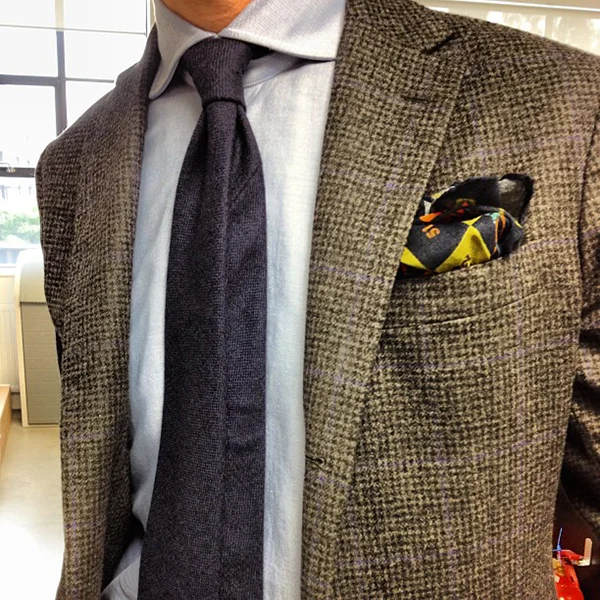
Drake’s expanded into neckties in the late 1980s, and the move changed the company. The tie format suited their workshop scale, and the English silk supply chain — anchored in Macclesfield, Cheshire, the historic centre of British silk weaving since the 17th century — was accessible to a small London operation directly, without Italian or French intermediaries. Drake’s became one of the few modern brands to source the bulk of its silk straight from Macclesfield mills, and that direct relationship is still part of the brand’s structural advantage. The under-served niche they identified was specific: the muted, matte madder silk tie — woven with iron-mordant dyes that produce characteristic dusty colour and a soft, chalk-like hand.
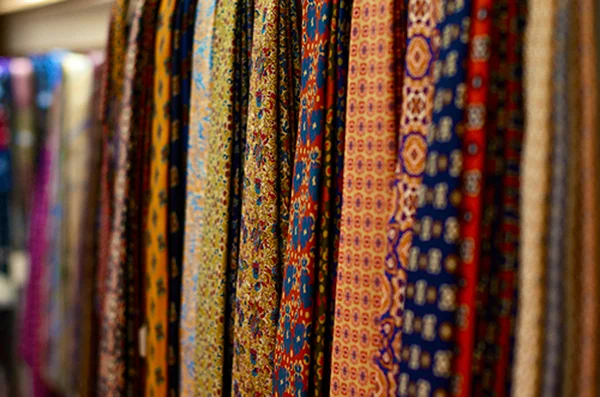
By the early 1990s Drake’s was producing the full English tie range — repp stripes, foulards, paisleys, club ties, and the muted madders — and selling to a global haberdasher network. The 1990s were the brand’s quiet decade: respected by people who knew, mostly invisible to people who didn’t. Drake’s of London history during this period is best understood as a slow accumulation of operational craft — patterns, weaving relationships, hand-finishing techniques — that would become the platform everything since has been built on.
2010: Michael Drake Retires, Hill and Cho Take Over
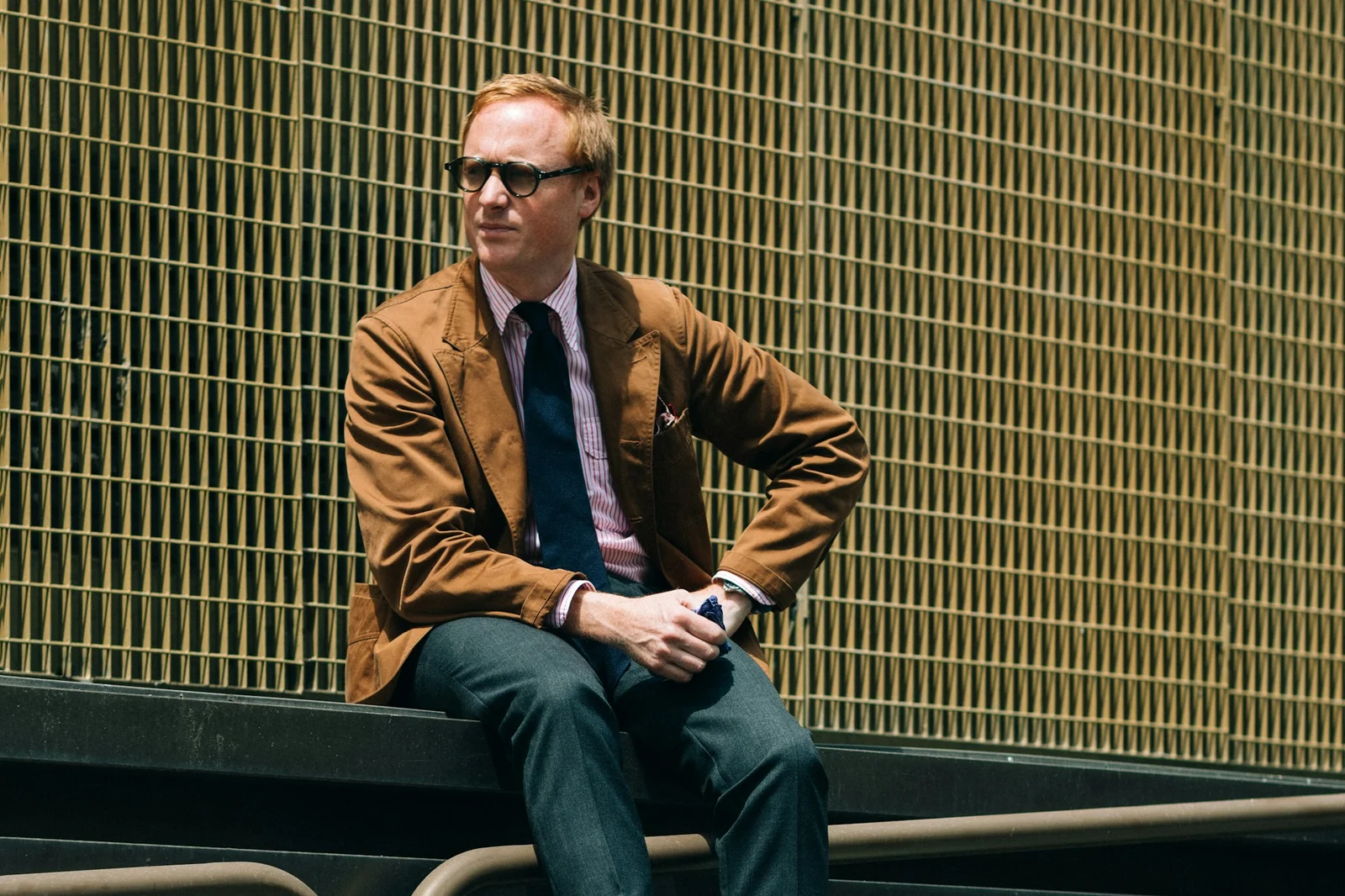
The single most consequential moment in Drake’s of London history was Michael Drake’s retirement in 2010. The brand was acquired by two people: Michael Hill, who had been Drake’s lead designer and Drake’s personal understudy for years, and Mark Cho, the Hong Kong-based co-founder of The Armoury — the menswear retailer that, since its 2010 founding, has become the global hub for serious trad and classic-menswear customers, with stores in Hong Kong and New York stocking Italian sartoria (Liverano & Liverano, Ambrosi), Japanese tailoring (Ring Jacket), and the English brands the Armoury team curates personally. The Armoury had been one of Drake’s most committed international stockists before Cho’s acquisition.
The Hill–Cho era is, in practice, the modern Drake’s. Hill’s brief was to keep the brand recognisably English while expanding the product universe; Cho’s contribution was an Asian sensibility about fit, layering, and the relationship between heritage and modern casual. The combination produced something that hadn’t existed before in English menswear: a tie company that could also dress its customers from head to toe in a coherent house style. By 2018 Permanent Style had named Drake’s its Brand of the Year.
Two Addresses: Clifford Street and Haberdasher Street
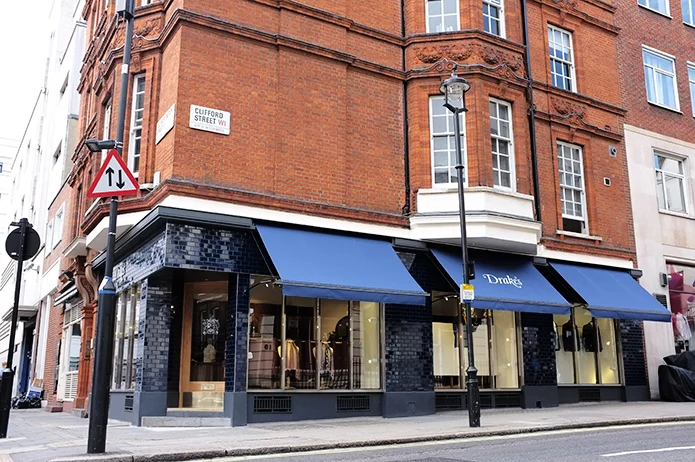
Drake’s of London history has two physical anchors. The first is 3 Clifford Street — opened on 20 May 2011, formerly an antiques gallery, situated between Savile Row and Bond Street. The cobalt-blue tile shopfront and the small ground-floor showroom became the public face of the brand. Customers come for the ties; they leave with the full Drake’s wardrobe Cho and Hill assembled around them.
The second is 3 Haberdasher Street, in the Hoxton area of East London. In April 2013 Drake’s consolidated its operation here: the tie factory, the design studio, the showroom, the warehouse, and the head office, plus a small factory shop that sells production overruns and samples. The two-address structure — a tightly curated flagship near Savile Row, a working factory in the East End — is the cleanest expression of what the modern Drake’s is.
The Rayner & Sturges Acquisition: Shirts Join the Wardrobe
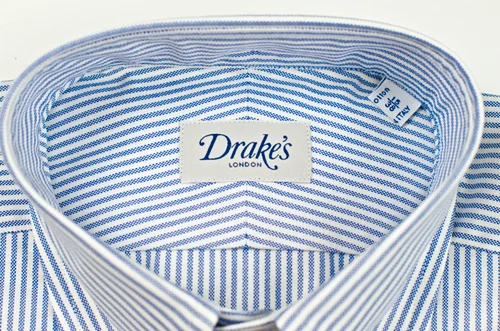
In July 2013, Drake’s acquired Rayner & Sturges, a Somerset-based shirtmaker in the town of Chard — at the time, the last fully independent factory in the UK making shirts for high-end brands like Dunhill, Paul Smith, Crombie, and Ede & Ravenscroft. The same factory had also been producing Cleeve of London — a luxury English shirt brand that had been made on those Chard floors since the late 1950s. In 2014 Michael Hill relaunched it as ‘Cleeve of London Exclusively for Drake’s,’ which became Drake’s primary shirting line and the structural centrepiece of the brand’s English-made wardrobe.
The acquisition was the structural turning point in Drake’s of London history. Until 2013 Drake’s was an accessories company. After 2013 it could put a shirt under every tie it sold and know the shirt was made to its own standards, in the country, by the only factory in Britain still producing serious dress shirts at scale. The English wardrobe became coherent.
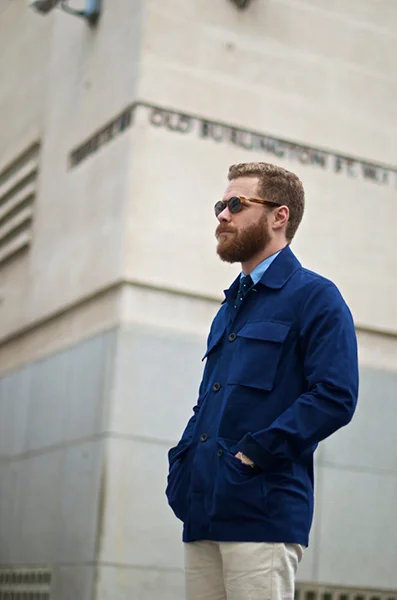
The acquisition was followed by a steady expansion across the 2010s: knitwear, jackets, trousers, shoes, and a series of collaborations including the early Private White V.C. workwear jacket shown above. By 2020 Drake’s was producing complete looks. The original 1977 scarf company had become, four decades later, a full English ready-to-wear house — without ever drifting from the aesthetic that the founders had set in the East End.
The English Repp vs the American Repp
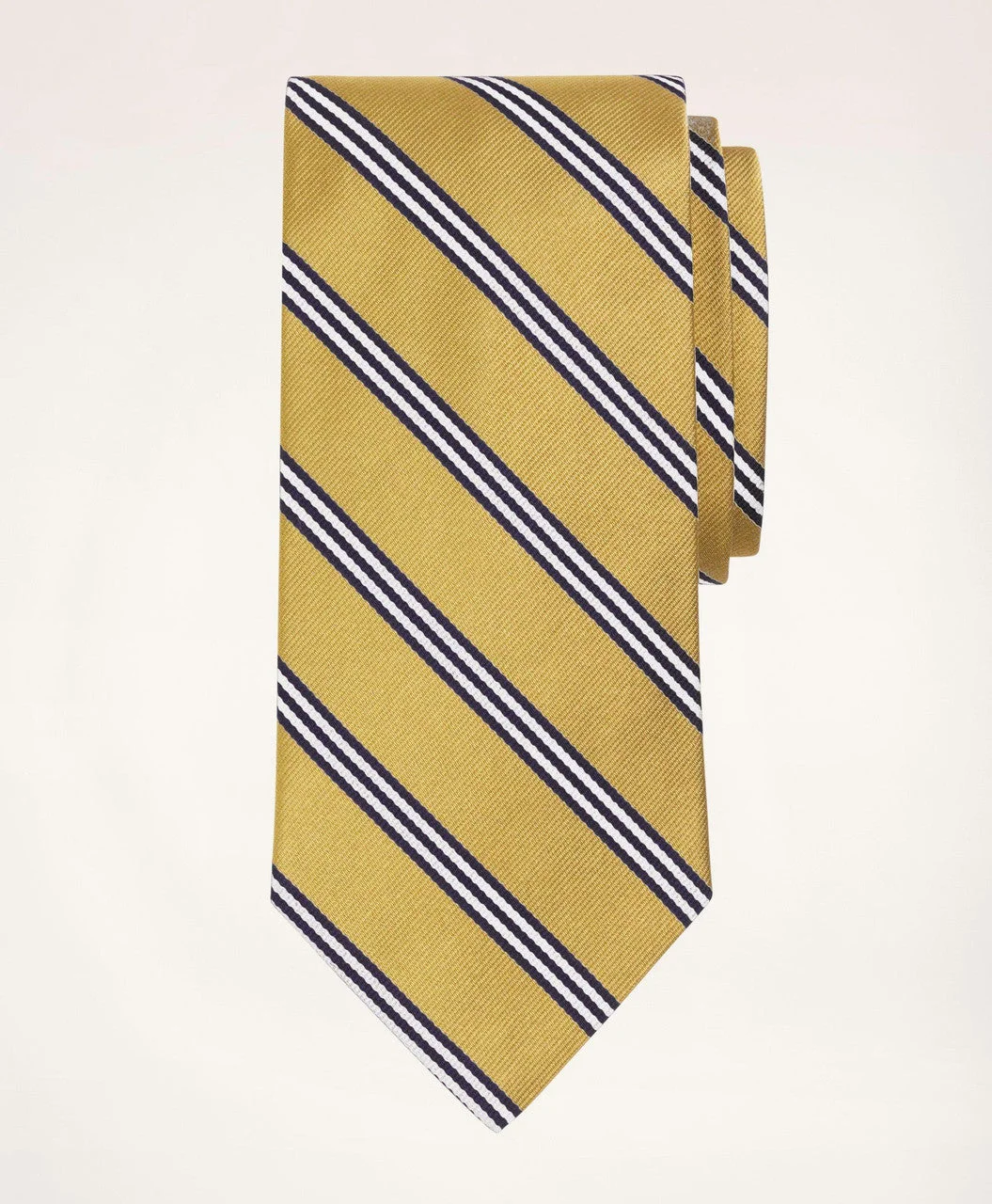
One small detail about Drake’s of London history sits at the centre of how the brand fits into trad. English regimental tie stripes have always run from upper-right to lower-left as the wearer looks down. Brooks Brothers, with the 1902 BB#1 rep tie, reversed the direction so as not to suggest unauthorised regimental affiliation in the United States — American repps run upper-left to lower-right. When Drake’s makes a stripe tie for the British market, it goes the British way; when it makes one for the US trad customer, the direction often flips. The brand is fluent in both vocabularies — something Brooks Brothers, in its modern form, can no longer claim.
That bilingual quality is what makes Drake’s the natural answer when American Ivy customers move past J.Press repps and the post-2020 Brooks Brothers. The language is the same, but the Drake’s version is being made by a brand that has authority in both English and American repp traditions, and is honest about the difference.
In Seoul: The Same Tie Logic, Different Continent
There is no Drake’s shop in Seoul. The closest authorised stockist rotates between Hong Kong (The Armoury’s home market, where Cho still lives) and Tokyo. In Korea, the brand is followed primarily through The Armoury’s own distribution and through serious-customer word of mouth. Seoul Trad customers who want the Drake’s tie they already know about have, until now, had to import.
What Renacts has built in Yeonhui-dong is a parallel, not a copy. The Renacts repp tie is 100% silk, cut to a 149-cm length and 8-cm blade — a width that sits between modern trad standard (3.25 inches) and the 1960s Ivy proportion (3.0 inches). The silk is currently woven in China, where roughly 80% of the world’s silk is produced and where the major European and American tie houses also source their raw material. The finishing is by machine, not hand-rolled — the honest difference from a Drake’s tie at three times the price.
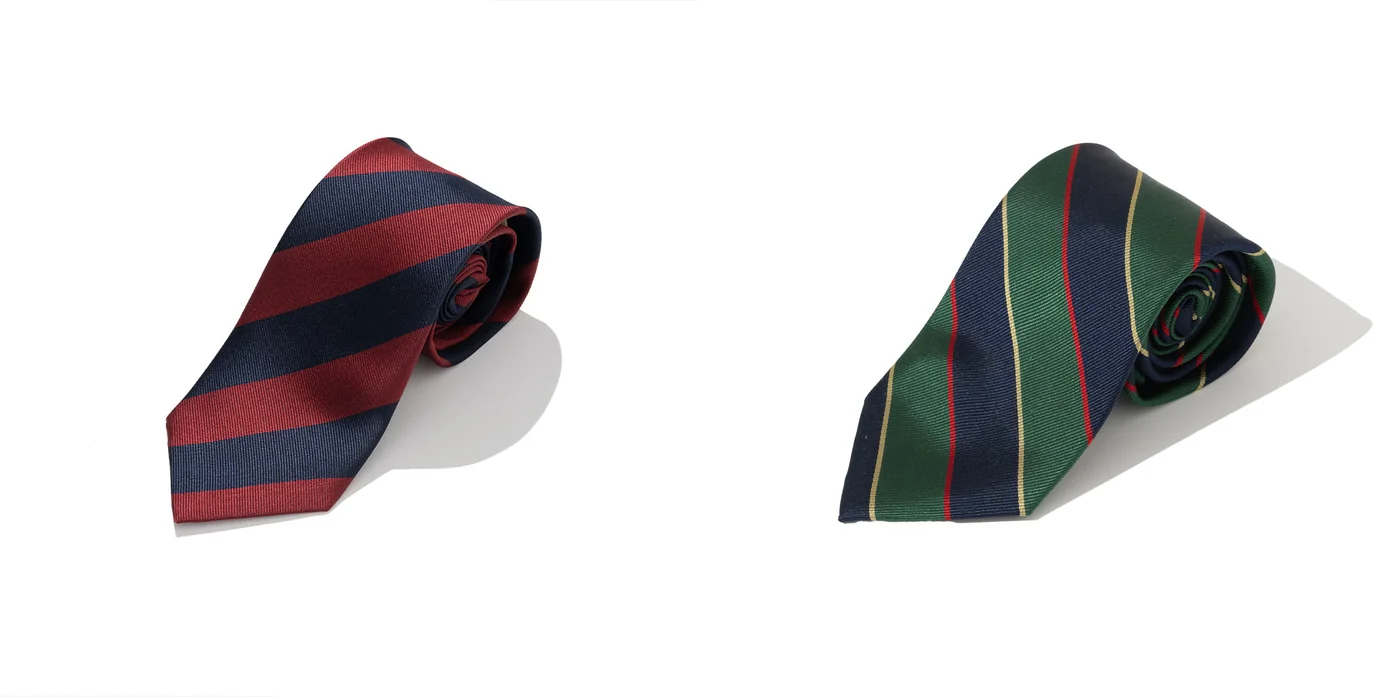
There is one detail in the Renacts tie program worth describing accurately, because the truth is more interesting than a marketing version of it would be. The earliest production runs were made in Korea, in the British stripe direction — upper-right to lower-left as the wearer looks down. The choice wasn’t accidental: the rep tie’s roots are in the 19th-century English regimental and old-school stripe tradition, and the team treated that lineage as the legitimate starting point. The constraint was economic. Reversing the stripe direction in the original Korean factory raised the production cost by roughly 100%, which would have pushed the retail well past the working-customer price point the brand operates at. So the early ties stayed British.
When production shifted to China and the unit cost came back under control, the team began converting new orders and reorders to the American direction, matching the 1902 BB#1 architecture. The reasoning was simpler at this stage: Seoul Trad orients toward American Ivy more than British military regimentals, and the tie should reflect what the customer base actually wears. The transition is not finished — some Renacts ties are still British-direction inventory from the earlier runs, and they will remain so until they sell through. That mid-course correction is what serious brands do quietly. Drake’s, for what it’s worth, makes the call differently for British and American markets and is honest about the distinction. Brooks Brothers in its modern form no longer makes it consistently at all. A Korean brand handling the question this carefully, on a working-customer-price-point tie, is a small but specific signal that the project is being run by people who pay attention to what trad customers actually pay attention to.
The Renacts repp tie sells at roughly $65–$69. A comparable Drake’s English-made repp runs $185–$225; a Brooks Brothers BB#1 runs $110–$130; a J.Press repp runs $95–$125. The argument isn’t that Renacts replaces Drake’s — the hand-rolled tipping, the London-finished construction, the Macclesfield silk relationships, those are real differences and they show up in the price. The argument is that the kind of customer who already knows what a Drake’s madder costs, and why, can find the same silhouette, the same width, and an increasingly correctly-oriented American stripe applied to a working-customer-price-point tie. The brand is honest about where it is in the transition, and that honesty is itself part of why the tie is worth picking up.
That is the broader pattern Drake’s of London history has produced over four decades. A small London operation made a category a category again. Other small operations, in other cities, are now doing the same thing in the same vocabulary. The tie is no longer in decline; it is being rebuilt, brand by brand, at a craft scale none of the legacy giants are currently operating at. That redirection — from mass to small-shop, from formal-only to wearable-with-everything — is the actual achievement of the 1977 founding. The world’s tie industry now mostly runs on Drake’s rules. They just don’t know they do.
The same logic sits on our own rack: the Regimental Silk Rep Tie in red and navy, and a two-tone version when the stripe should sit quieter.