The Sixth Gentlemen’s Club Night — Wild Turkey, A Korean New Year Toast
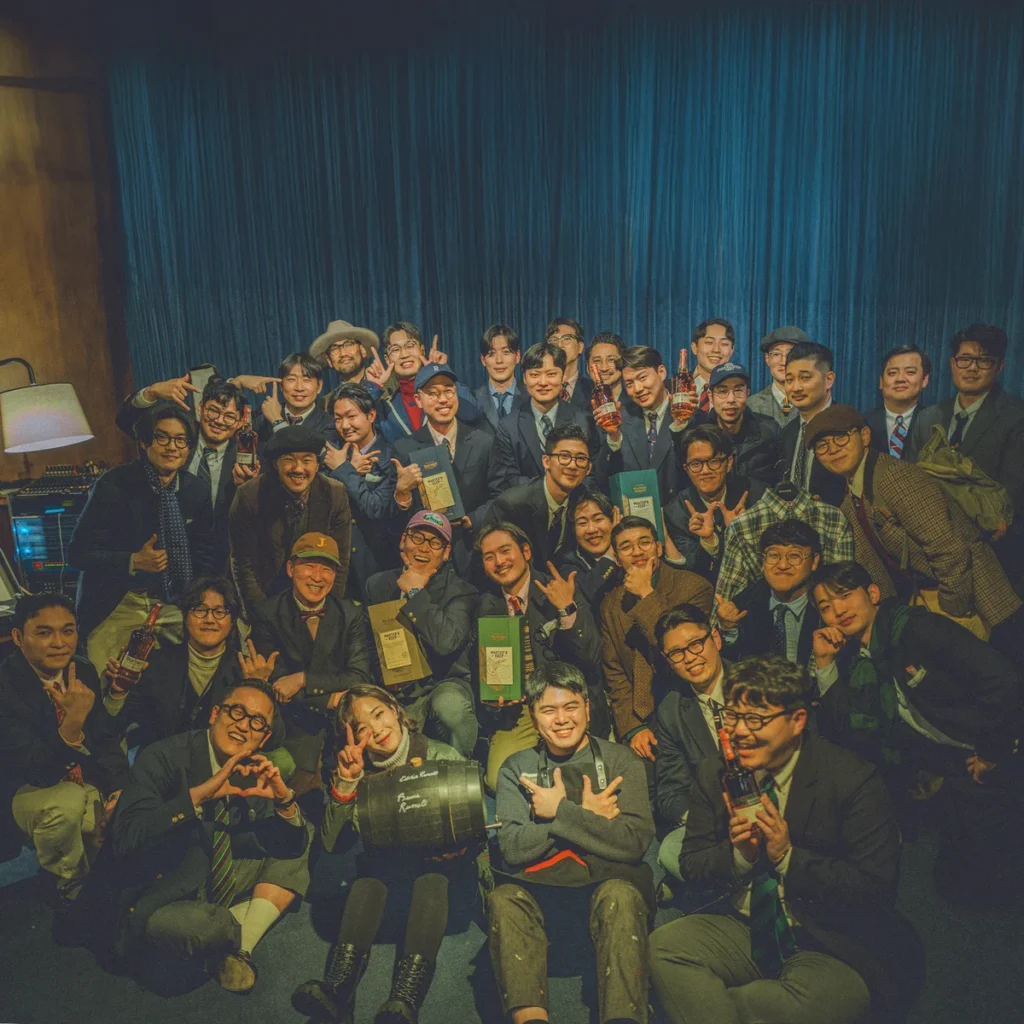
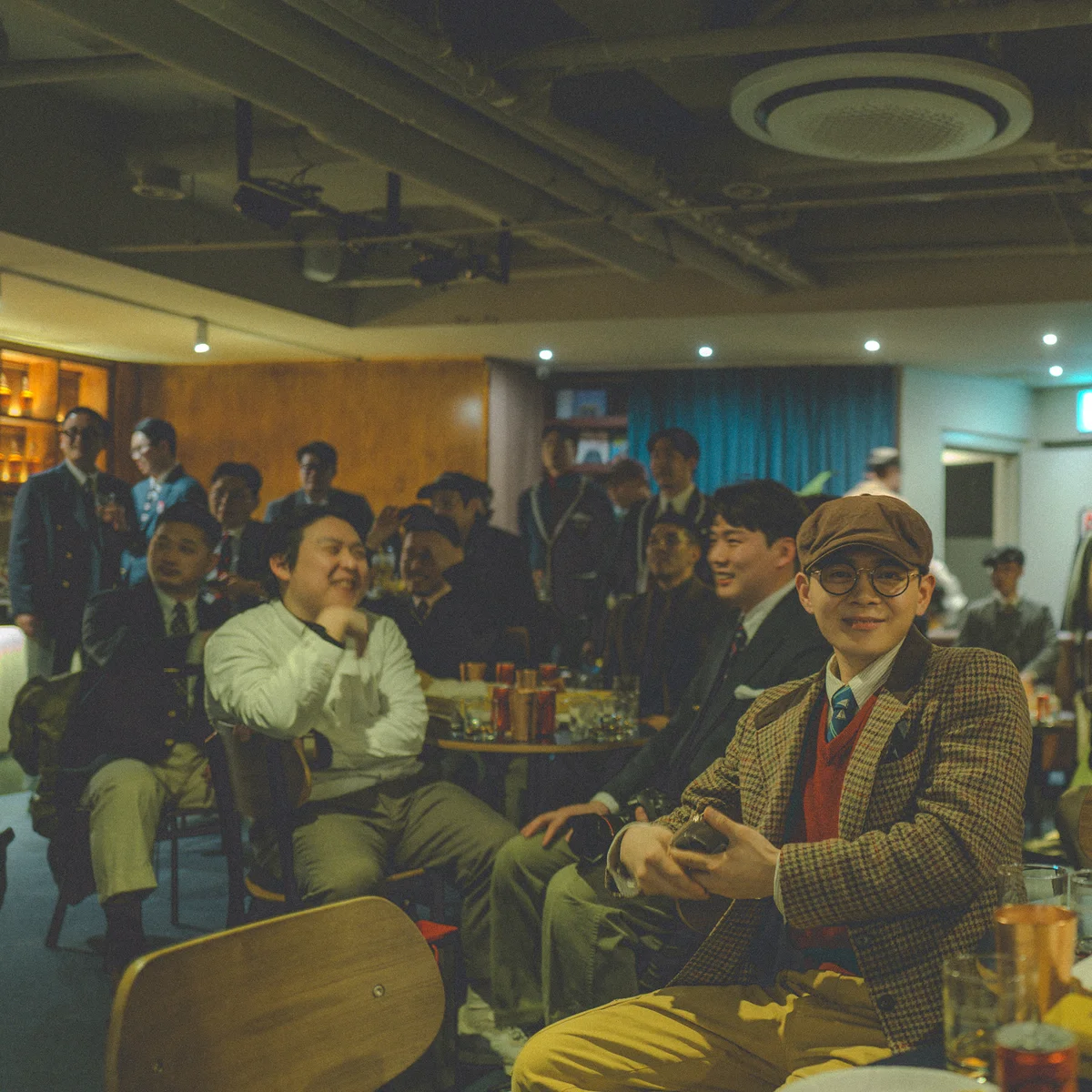
On a Friday night in late February — February 23rd, 2024 — some fifty members of our Gentlemen’s Club Seoul filled a single room in Yeonhui-dong. The dress code was a single line: “a relaxed Ivy look, built around a blazer.” That one sentence produced fifty different outfits. Tweed jackets under hunting caps, navy blazers with unbuttoned Oxford collars, cardigans worn over loosened repp stripes, camel coats with shoulders softened just so. Same code, no two people the same.
This was the sixth meeting of our Gentlemen’s Club — following December’s evening with J.Press Tokyo — and, since it landed in the days after Lunar New Year, it was also our first gathering of 2024.
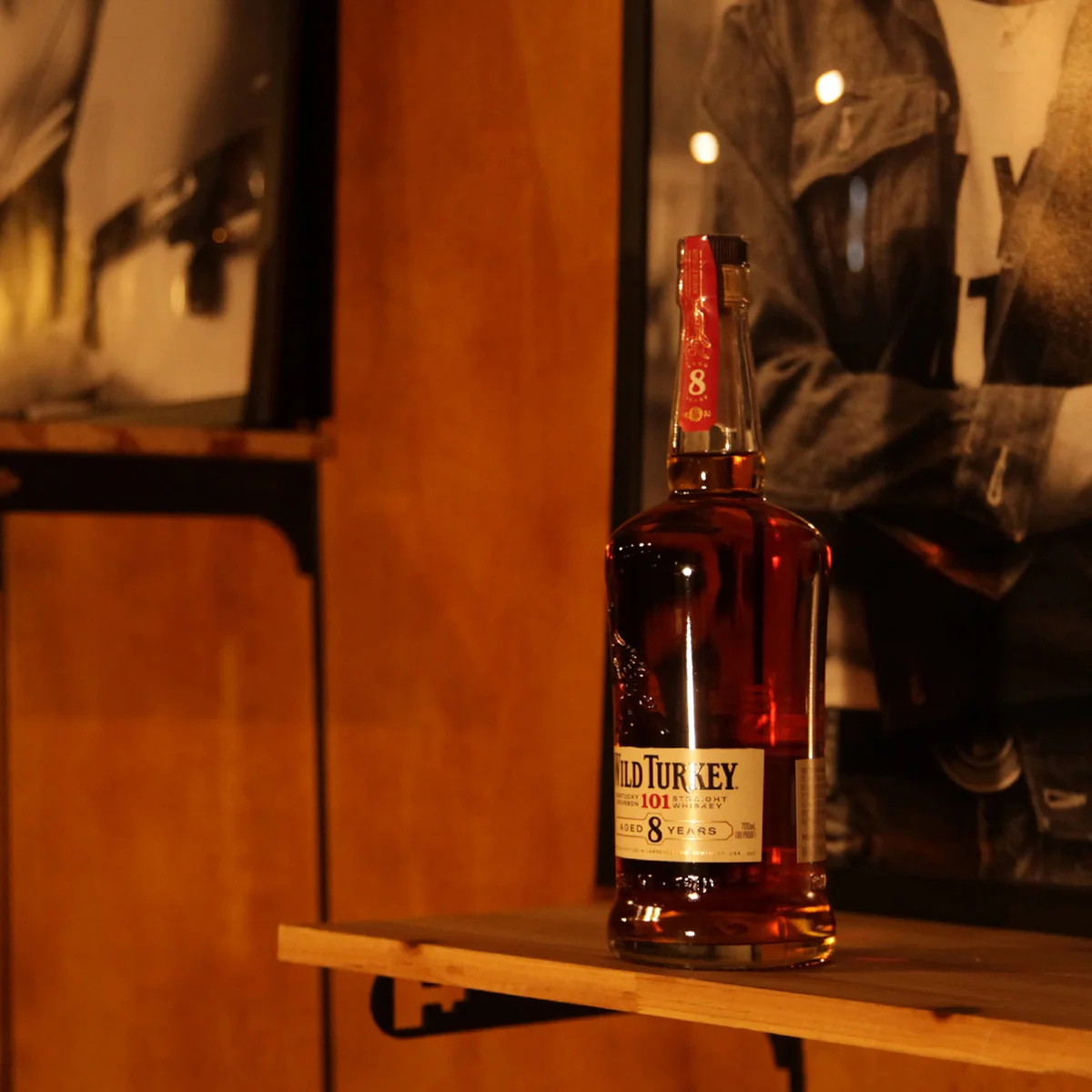
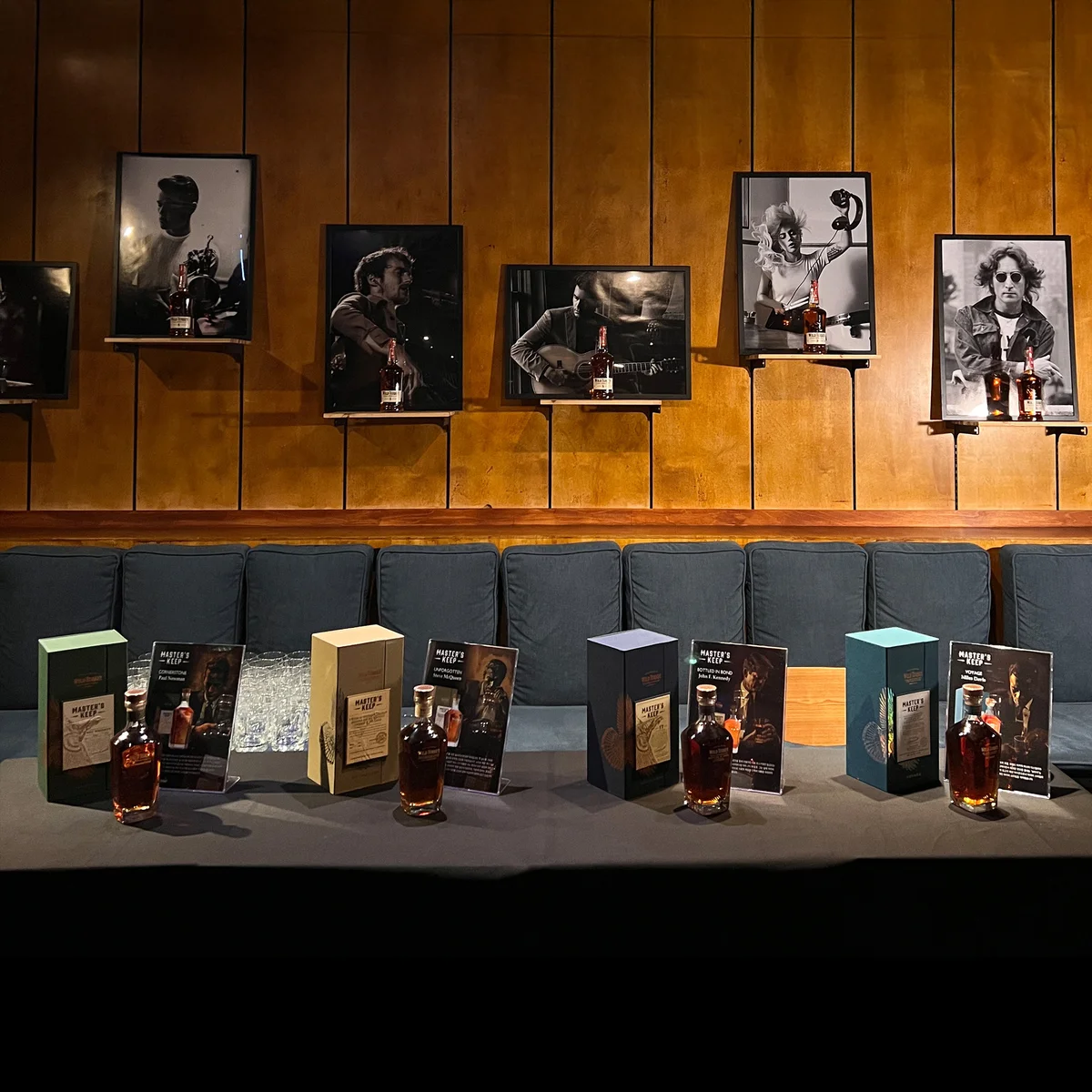
We had wanted the night to feel like the kind of dinner the founders of American Ivy used to throw when they were young men. Not a brand event, not a launch party. A table with glasses on it, a few hours of unhurried conversation, and a bottle that meant something. The bottle, this time, was Wild Turkey 101, in the eight-year expression.
The Night the Five Axes Came Together
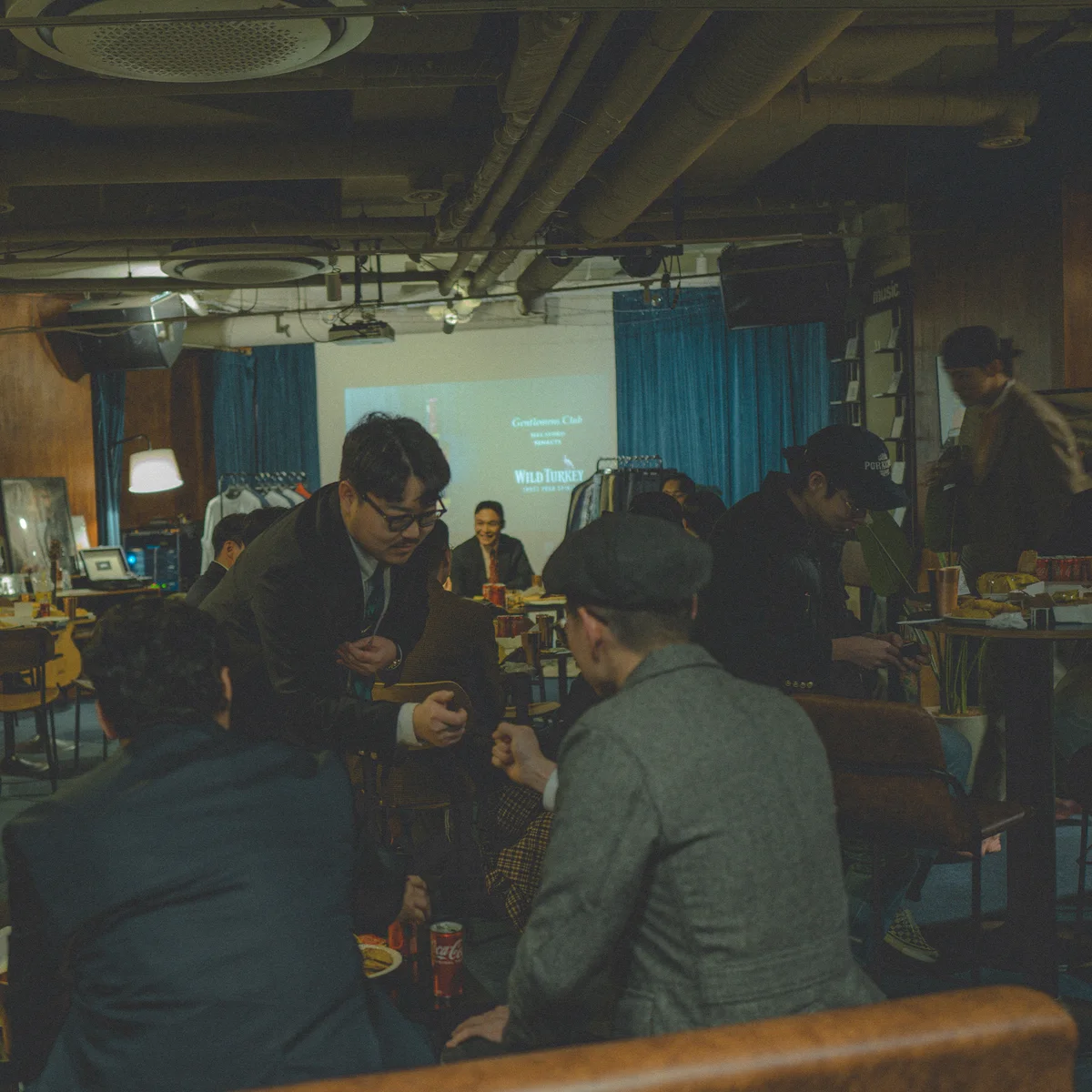
If you spend any time in Seoul’s small but devoted trad scene, you start to notice a few names that keep appearing next to each other. Renacts, the clothing label that builds every blazer on a natural-shoulder, three-roll-two sack-jacket frame. Melavoro, our handmade-leather footwear label — the sister brand whose shoes finish the same outfit a Renacts blazer begins. Heavy-Duty Archive, a vintage shop stocked with American East Coast trad clothing pulled from the 1950s through the 1970s. Gentlemen’s House, the physical showroom where those clothes are displayed and where most of our community gatherings happen. And Gentlemen’s Club, the membership community itself, run as both a Naver café and a series of in-person meetings.
These look like five separate things. They are not. They are five axes of a single team — our team — and they exist in their full form only when they come together in the same room. The sixth Gentlemen’s Club night was that kind of room.
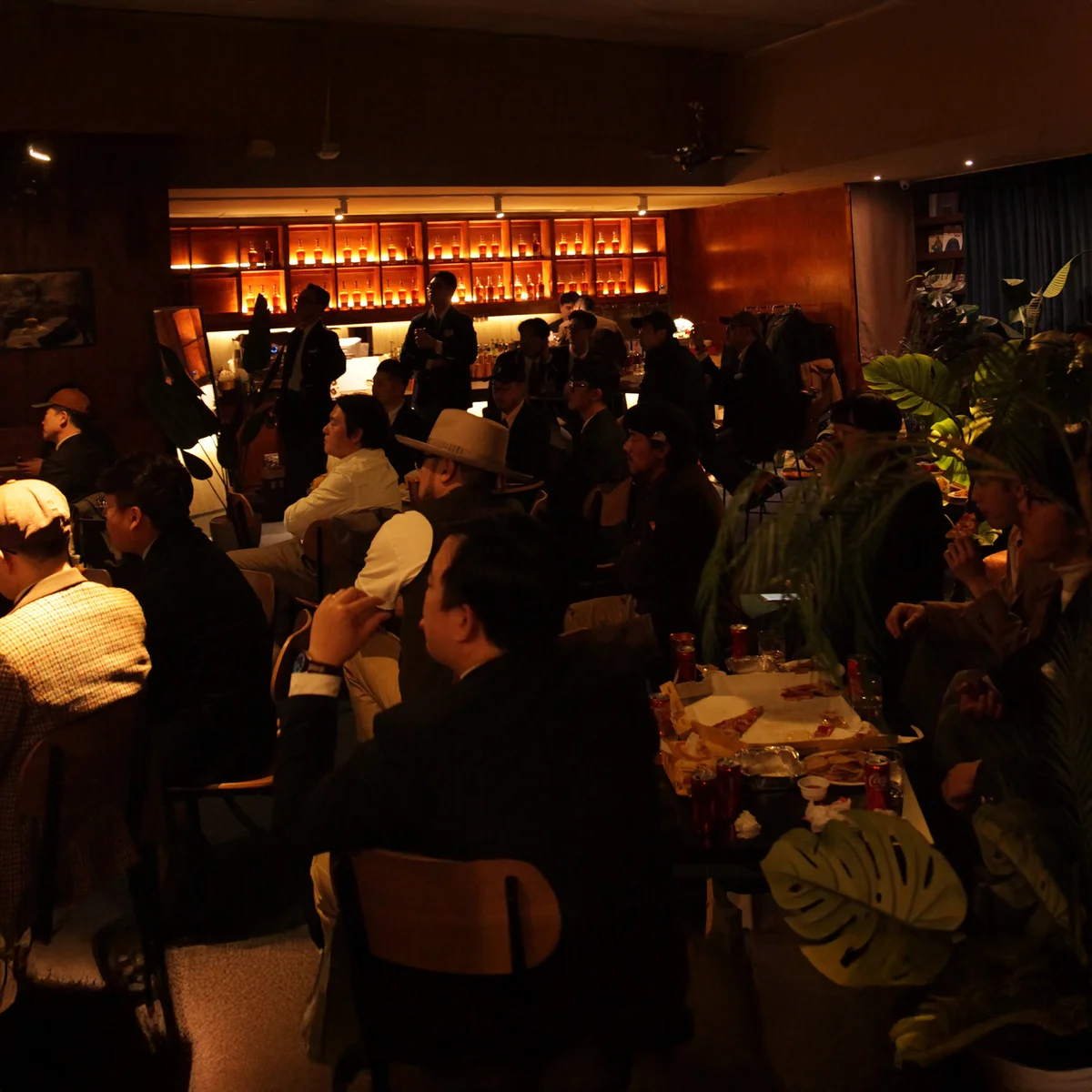
The room itself was Gentlemen’s House. On any normal weekday it operates as a place to try on a Renacts blazer, slip on a pair of Melavoro loafers, or pull a vintage flannel off the rail at Heavy-Duty Archive. On the night of the sixth meeting, the racks were pushed back, the lighting came down, and the space turned into something closer to a private bar with a stage at one end.
Why Bourbon, Why Wild Turkey
Of all the questions a trad-leaning person might reasonably ask about a New Year’s gathering, “why bourbon?” is the easiest one to answer.
The clothes we love and the spirit we poured that night were, in a real and historical sense, made by the same hands. The undarted sack jacket, the soft Oxford-cloth collar, the Shetland sweater bunched up over a repp tie — these were the everyday uniform of a small population of young men attending a small handful of Northeastern colleges in the late nineteenth and early twentieth centuries.
The clubs they joined after dinner — Princeton’s Cottage Club, where F. Scott Fitzgerald was a member; Yale’s Mory’s; the senior societies and dining clubs that wove themselves into every corner of those campuses, with Harvard’s final clubs across the river — were the rooms where their drinking culture took shape. And one of the drinks, more often than people remember today, was American whiskey from a Kentucky barrel.
American whiskey was one of the spirits those clubs grew up on — alongside Scotch and the cocktail culture of the era. Trad is the way those clubs dressed. To put on a sack jacket and pour a bourbon in the same evening is not a forced pairing — it is putting two halves of the same evening back together.
We chose the eight-year Wild Turkey 101 because it is, of all the major Kentucky bourbons, the one most committed to telling its story without ornament. There is no fashionable distillery aesthetic, no parade of single-cask one-offs, no laboratory whittling of the proof down to something easier to market. Eight years in barrel, 101 proof, and a label that has not flinched in decades. It is the sack jacket of bourbon: a thing that would rather be honest than be fashionable.
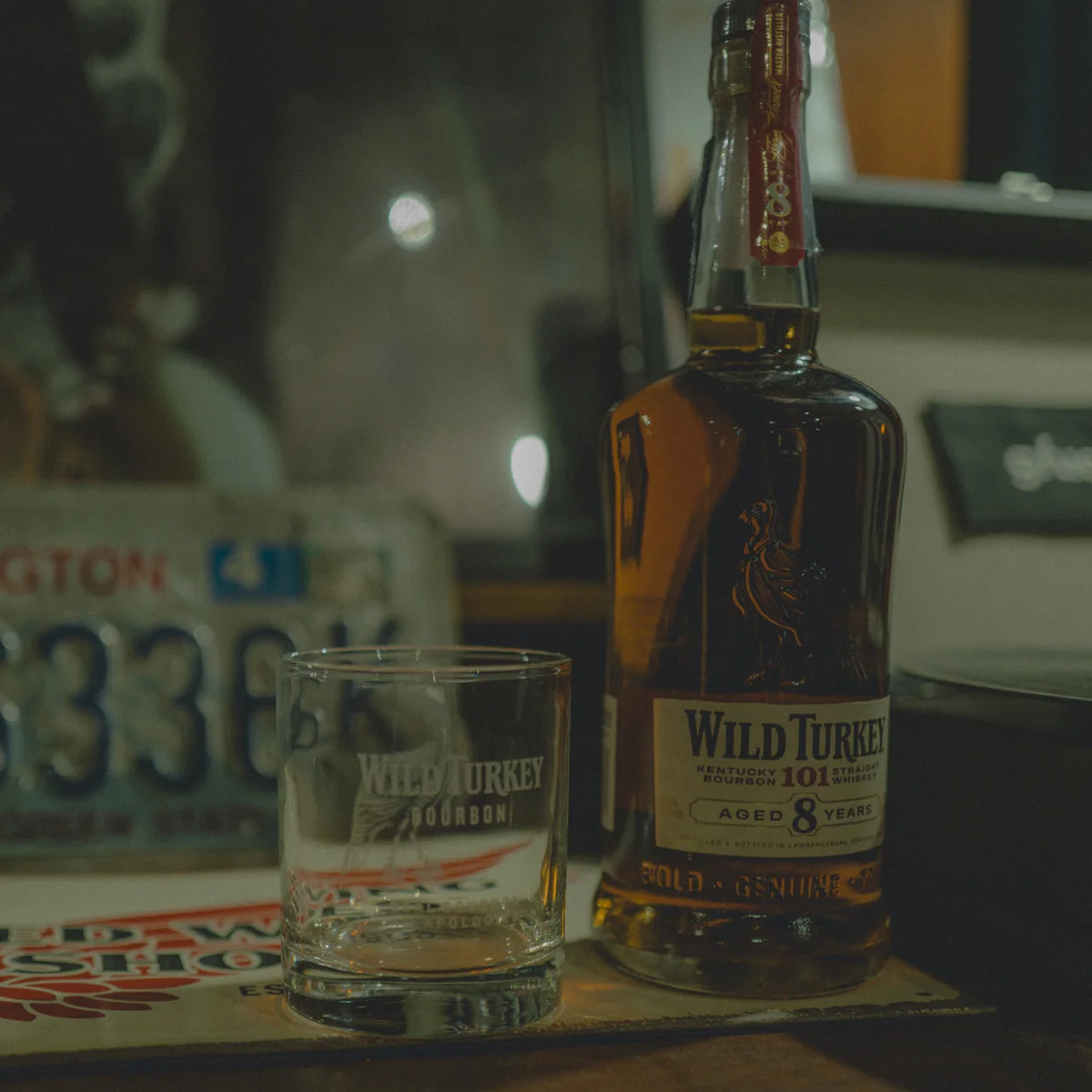
Wild Turkey 101 — A Sack Jacket of a Bottle
If you have ever wondered why trad-minded drinkers gravitate toward a bottle like the 101, here is the case for it laid out plainly.
A natural-shoulder sack jacket is built without darts on the front. It does not pinch the body into a silhouette; it lets the wearer sit inside the cloth. A 101-proof eight-year bourbon does the same thing in liquid form. Eight years in a charred white-oak barrel is a long time, but Wild Turkey is famously light-handed about how much char it lets a barrel deliver. The result is a whiskey with some sweetness up top, a generous middle, and a long finish that goes more raw barley than wood polish. It is bourbon with its tie loosened — the spirit equivalent of unbuttoning the top button of an Oxford shirt at the end of a long week.
The match is not poetic; it is structural. The same instinct that produces a softly built blazer produces a softly built bourbon. And the same trad-leaning person who can spot a 3/2 roll across a room can usually pick out the smell of a 101 in a glass.
This was the bottle our members spent the night with.
The Tasting — Led by Wild Turkey
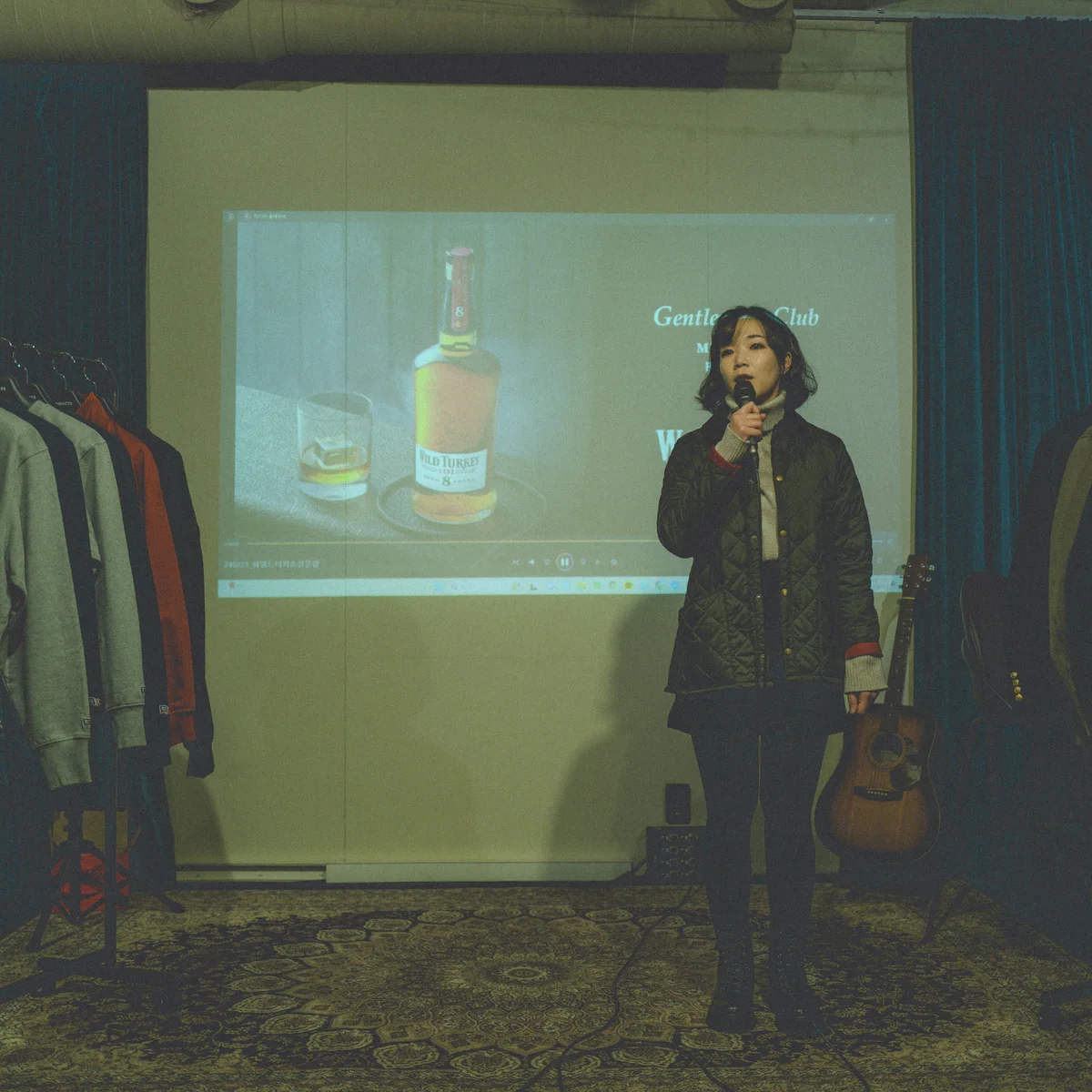
The night was not a private drinking party. It was a guided tasting. Wild Turkey’s Korean team sent one of their curators to lead it — the kind of person who has spent a working life inside Kentucky bourbon and can explain it in plain Korean to a room of fifty.
She walked our members through the bottle the way a tailor walks a customer through a jacket: section by section, at the speed of close attention.
Color first — held against a pale background, against a candle flame, against the inside of a glass. Then the nose, in two passes: a first quick inhale to register the headline notes (the orange peel, the maple, the scorched corn), and then a longer, slower draw to find the second layer (the leather, the wet stone, the faint anise).
Then the mouth: a small sip held in the middle of the tongue, then walked side to side, then swallowed; another sip with the lips parted to let air in. The finish was the test — a long, rounded warmth instead of a sharp bite, which is what eight years in barrel gets you.
Most of our members had drunk the 101 before. None of them had spent twenty minutes inside a single pour with someone who could explain what they were tasting. By the end of the segment, the room had gone quieter than it was at the beginning — the way a room gets quiet when fifty people are paying close attention to the same small thing.
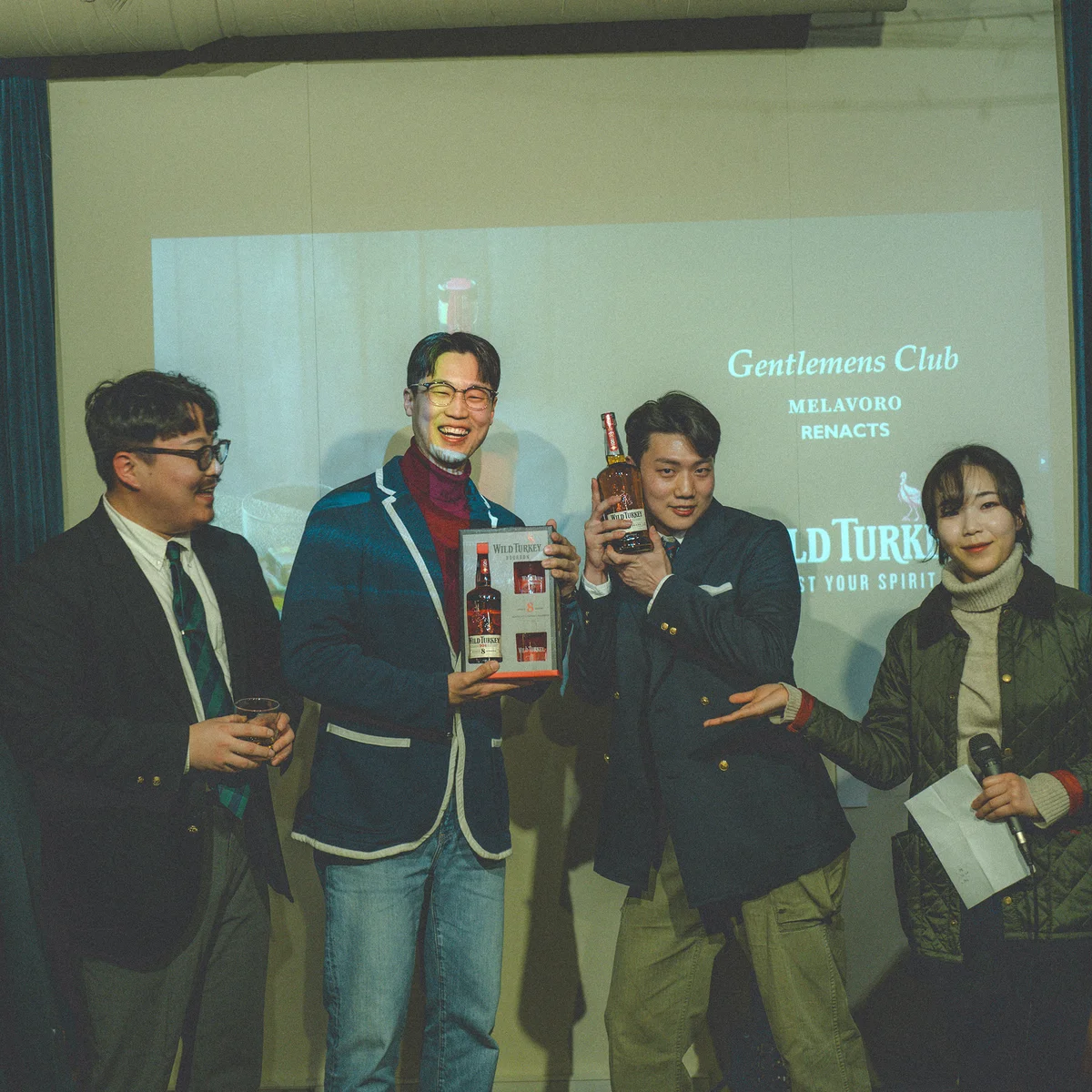
When the guided portion ended, the curator held up a boxed Wild Turkey 101 8-year and let the lights catch it. It was a clean, undecorated photograph of a moment — a still life in the middle of a party.
The Dress Code That Dressed Fifty Ways
A common misreading of trad is that it produces uniforms. The night of the sixth meeting was a fifty-person counterargument.
The members in the room earned their living in dramatically different ways. There was a professor of fine art who had taught at the same university for over a decade. An architect whose firm had just finished an office building near Gangnam Station. A lawyer whose private office held a wall of vintage LPs. A startup founder who had closed a Series A two weeks earlier. A software engineer who had pushed code at four in the morning and then shaved and pulled on a Shetland sweater. The names on the business cards did not overlap.
What they shared was a way of dressing. “A blazer-led, freely interpreted Ivy look,” read the dress-code line on the invitation. Within that line, every member had room to bring out their own version. Someone walked in with the worn handles of a vintage film camera over their shoulder. Someone else came in a hunting cap tilted slightly off-center and put a hardcover book on the seat next to them like a quiet declaration. Repp ties next to knit ties next to no ties at all. Cordovan loafers next to suede chukkas next to a pair of clean white tennis shoes that had been worn just enough not to look new.
This is the trick of a trad code. It looks narrow on paper and turns out to be wide in person. The clothes are a meeting ground, not a uniform. They are the reason fifty people from fifty different fields can sit at the same long table and pick up a conversation as if it had been paused, not started.
The First Toast of 2024
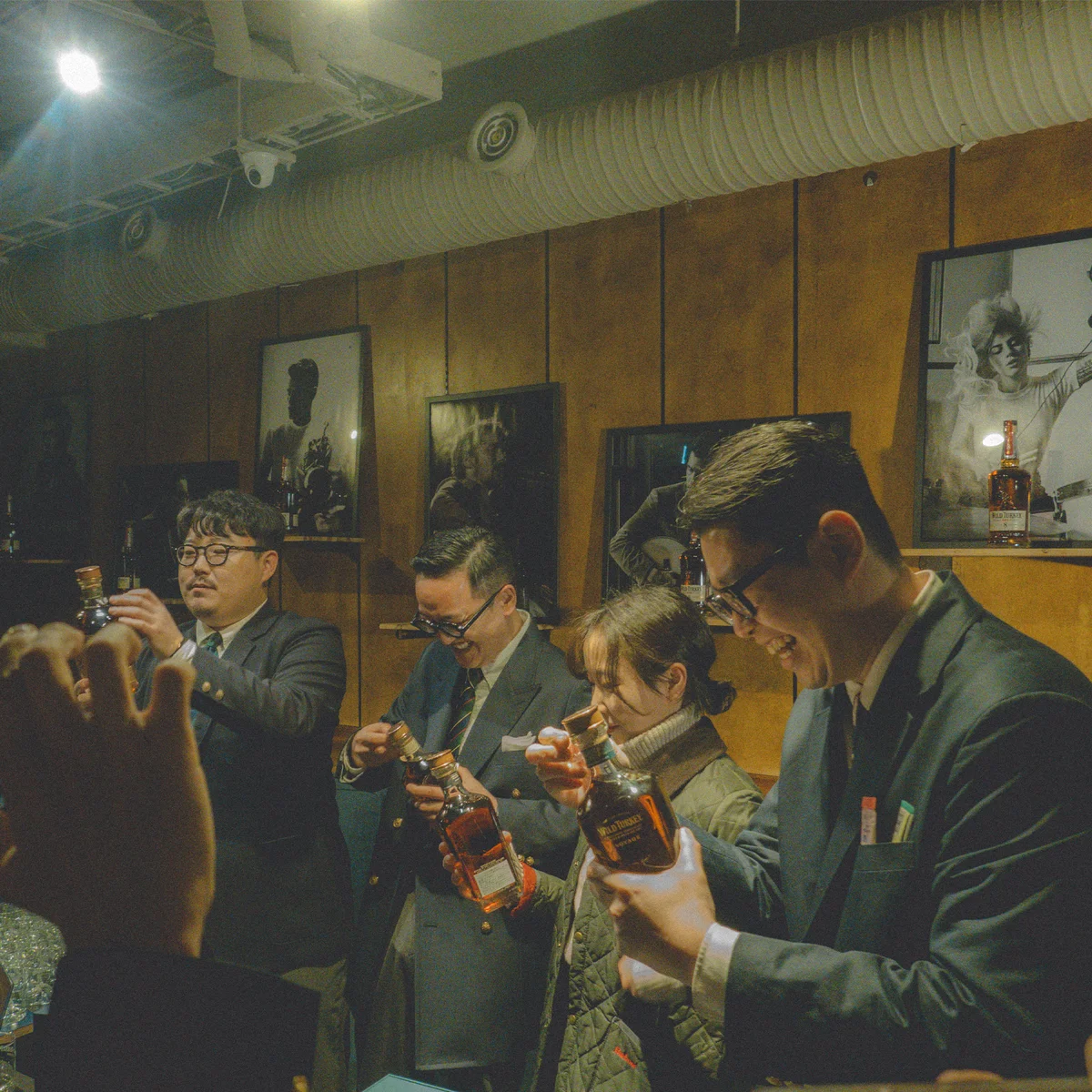
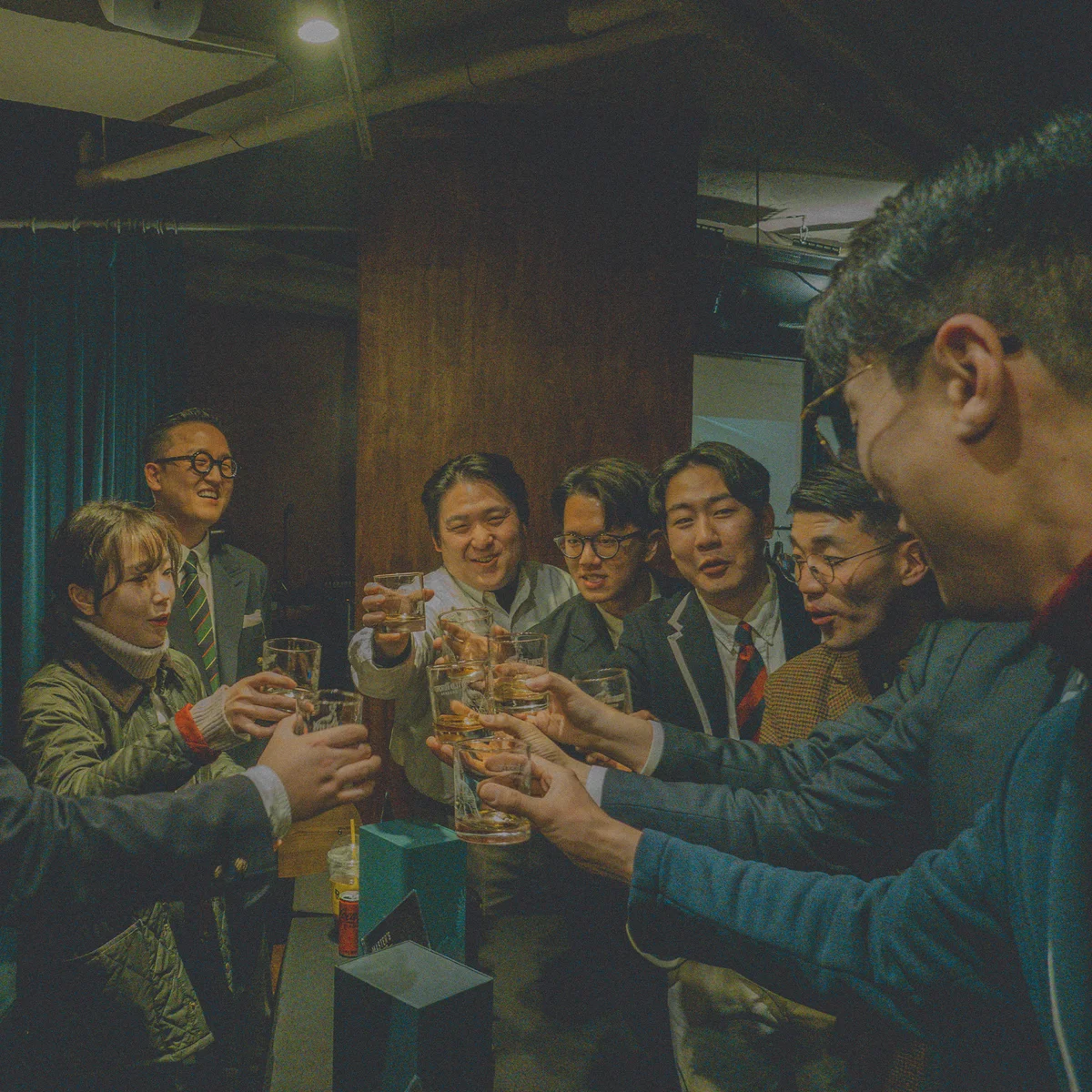
After the curator stepped down from the stage and the lights came back up, the bottles moved out from behind the table to the floor. The pour was generous. The room re-formed into smaller circles, each one organized loosely around a glass.
The first toast of the year was unhurried. There was no script, no host with a microphone. Two members raised their glasses and met three others in the middle of the room, and the rest followed in the way people follow when something feels right. We are not the kind of club that runs on speeches. We are the kind that runs on the moment when the small circles in a room begin to overlap into a larger one.
That moment, this year, took the shape of a New Year’s toast. Not a closing line — an opening one.
Gentlemens Club Seoul: What It Means to Wear Trad Here
In the United States, trad has institutions. Princeton’s Cottage Club, founded in 1887, still stands with a list of members that has been accumulating ever since. Yale’s Mory’s is still there too, a few blocks from Old Campus, pouring the same Cups it was pouring before any of our grandfathers were born. Brooks Brothers is in its third century. The clothes built rooms; the rooms built communities; the communities built the people who would inherit the clothes.
In Seoul, none of that infrastructure exists. There is no Cottage Club here. There is no Mory’s. There is no century-old tailor with a brass plate near a famous campus. We have to build the rooms ourselves.
That is, in the end, what Gentlemen’s Club is for. It is the thing that comes after the closet. The way a trad community in Korea grows is not through more clothes — it is through more nights like the sixth meeting, where the clothes finish their job at the door and the people take over from there. The closet leads to the glass; the glass leads to the conversation; the conversation leads to the next year’s first toast.
The sixth meeting was the moment that loop closed for 2024.
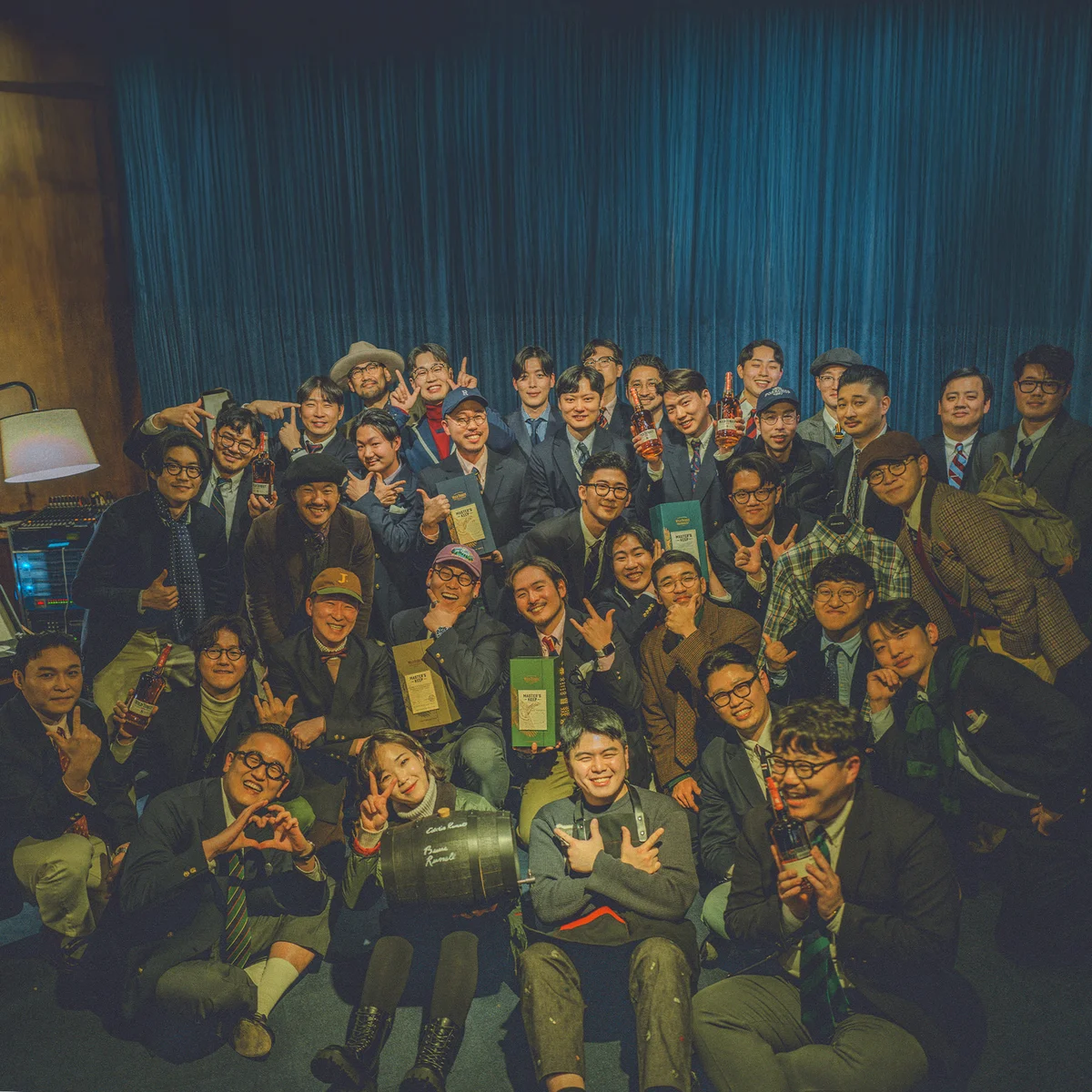
Fifty people in front of a deep-blue curtain, glasses raised, holding bottles and boxes and the slightly tired expressions of people who have spent the last three hours actually talking to each other. The group photograph at the end of the night is the closest thing this club keeps to a public record — a single frame that holds fifty different outfits, fifty different working lives, and one shared evening.
We had wanted the night to feel like an old American dinner. It did. Then we got back to work on the year ahead.