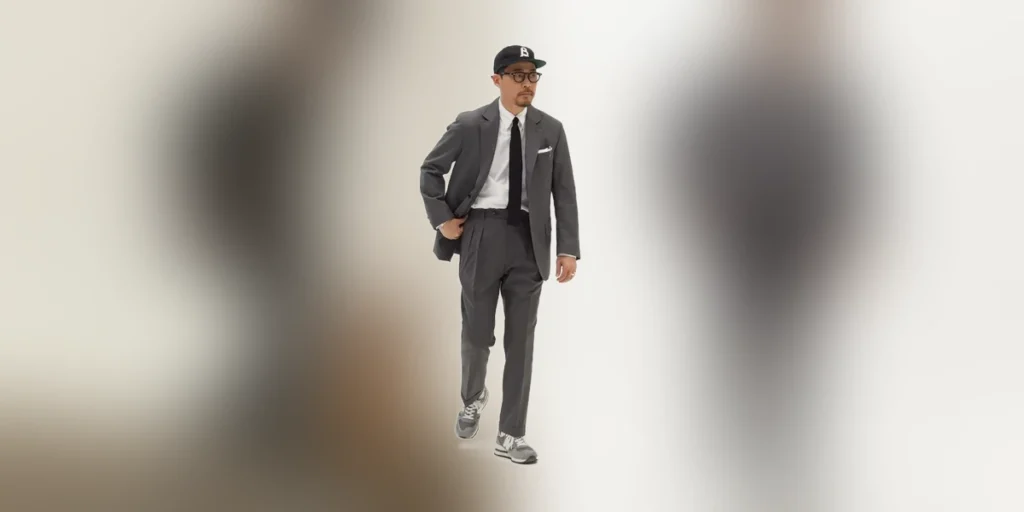
Sack Suit History: From Brooks Brothers to Seoul
The sack suit is the most important suit most men have never heard of. Not the Italian drape. Not the British structured shoulder. The plain, boxy, democratic American sack — born in a New York haberdashery, adopted by Ivy League campuses, forgotten for decades, and now quietly reappearing in Seoul. This piece traces five eras that shaped the garment, and explains why it still matters.
For a broader look at the style built around the sack suit, explore our complete ivy style guide.
Brooks Brothers and the Number One: Where Sack Suit History Begins
In the early 20th century, Brooks Brothers formalized what it called the “Number One Sack Suit” — a model that had evolved from the loose-cut sack coats the house had been selling since the late 1800s. The name was literal. It was a suit cut like a sack — straight from shoulder to hem, no darts, no suppression at the waist, no padding in the shoulders. The silhouette looked almost accidental compared to the structured English tailoring that dominated the era.
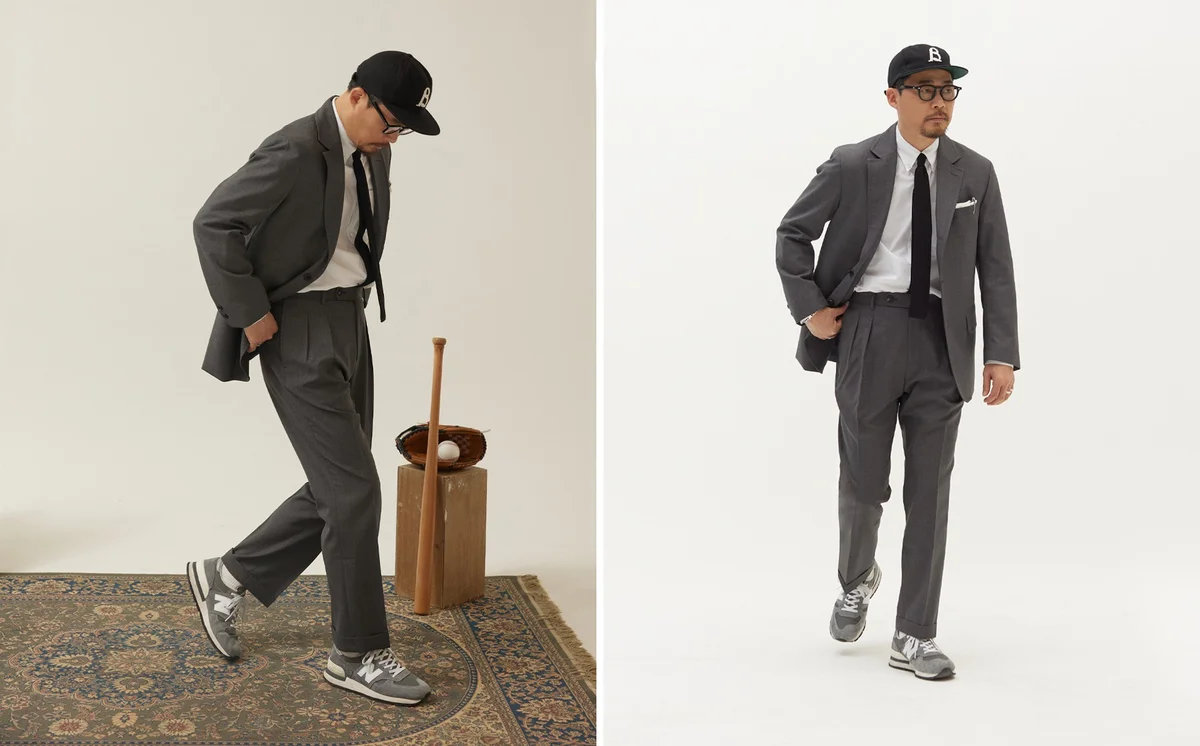
But that was the point. The sack suit rejected the aristocratic posturing of Savile Row. It said: I don’t need padded shoulders to look important. The natural shoulder — soft, unpadded, following the actual line of a man’s body — became the defining feature. The other signature was the 3/2 roll lapel, where three buttons were sewn on but only two were meant to be fastened. The top button rolled behind the lapel, creating a gentle, almost careless curve. The visual effect is subtle but significant: the rolled top button elongates the lapel line, lengthening the chest and softening the overall silhouette in a way a flat three-button front never could.
Here’s the thing about that 3/2 roll. It couldn’t be faked. Cheaper suits with a standard three-button front looked stiff and uptight. The roll required a specific lapel construction — a soft, unstructured chest that let the fabric curve naturally. It was a quiet signal. You either knew what it meant, or you didn’t.
Brooks Brothers sold the Number One Sack for decades with minimal changes. While European fashion houses reinvented silhouettes every season, Brooks kept the same soft shoulder, the same 3/2 roll, the same center vent. Stability was the brand’s entire proposition. It worked — the sack suit became the default uniform of the American establishment before anyone on campus even noticed.
The Ivy League Adoption: Yale, Princeton, and the Golden Era (1920s–1960s)
Students at Yale, Harvard, and Princeton didn’t choose the sack suit because it was fashionable. They chose it because it was easy. Throw it on, skip the tie if you want, pair it with white bucks or penny loafers. The unstructured silhouette meant you didn’t look overdressed even while technically wearing a suit. On a campus where trying too hard was the ultimate social crime, the sack suit was perfect.
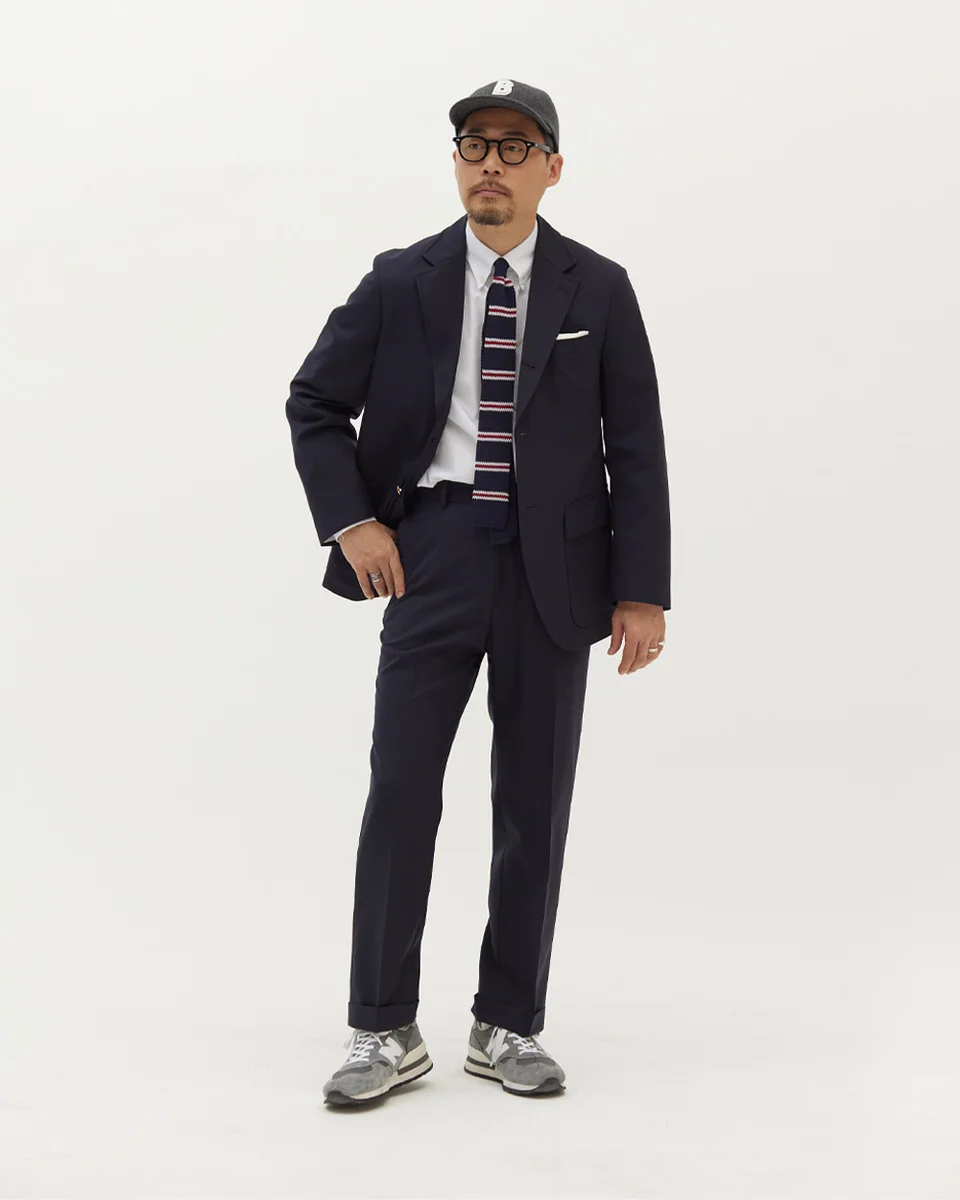
By the 1940s and 50s, the look had calcified into a uniform. J. Press on York Street in New Haven. The Andover Shop in Cambridge. These weren’t just stores — they were institutions that dressed generations of Ivy Leaguers in the same natural-shoulder suits, oxford cloth button-downs, and repp ties. The variation was minor: maybe a slightly wider lapel one year, a slightly narrower trouser the next. But the bones never changed.
Then in 1965, a Japanese photographer named Teruyoshi Hayashida published Take Ivy, a photo book documenting what students at Ivy League campuses actually wore. The book sold modestly at first, finding its audience slowly. But the images — young men in sack jackets, chinos rolled at the ankle, loafers without socks — captured something powerful. This wasn’t costume. It was a way of living. Relaxed but considered. Casual but never sloppy.
The Ivy League era made sack suit history into more than a tailoring story. It became a cultural story — about what it means to dress well without appearing to care too much. That tension, between effort and effortlessness, is the beating heart of Ivy style. It has never really gone away.
The Polo Ralph Lauren Country Era: Tweed, Madras, and the Hamptons (1960s–1980s)
Ralph Lauren understood something about the sack suit that Brooks Brothers itself sometimes forgot: it was aspirational. Not because it was expensive — it wasn’t, particularly — but because it represented a life. Weekend houses. Golden retrievers. Tennis at the club. Lauren took the bones of Ivy style and draped them in fantasy.
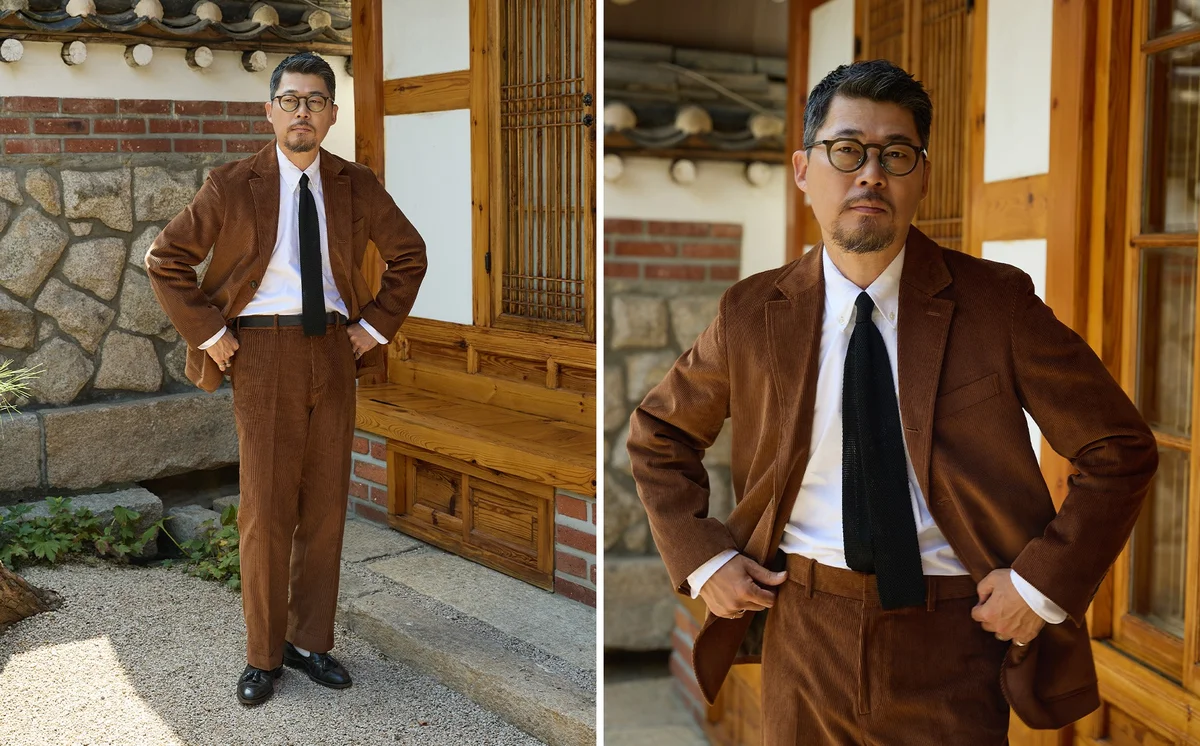
His Polo line in the late 1960s and through the 1980s reimagined the sack silhouette for the country squire. Brown corduroy suits with patch pockets. Madras sport coats worn with chinos and no socks. Tweed jackets layered over cable-knit sweaters. The shoulder stayed natural, the fit stayed easy, but the context shifted from campus to countryside.
Fair warning: this era gets complicated. Lauren was selling a version of WASP America to people who had never set foot in the Hamptons. Critics called it cosplay. But the clothes themselves were genuinely good — the soft shoulder of a Lauren sack jacket in Harris Tweed was as well-constructed as anything from J. Press. He just marketed it with more romance.
What Lauren proved is that the sack silhouette is adaptable. It works in navy worsted for the office, in brown corduroy for a Saturday in the country, in madras cotton for summer. The natural shoulder doesn’t belong to any single context. It belongs to any man who’d rather not look like he’s wearing armor — a lesson that would matter decades later, in a city 6,900 miles from the Hamptons.
The Modern Renaissance: Drake’s, Permanent Style, and the Internet (2000s–Present)
By the 1990s, the sack suit had retreated from the mainstream. The old guard — J. Press, O’Connell’s, The Andover Shop — kept making it for a shrinking audience of loyalists, but the wider menswear conversation had moved on entirely. Italian fashion dominated. Armani’s deconstructed drape, Brioni’s power suits, Zegna’s smooth fabrics — everything pointed toward a fitted, European silhouette. The natural shoulder felt frumpy. Brooks Brothers itself started offering slimmer, more “modern” fits, and the 3/2 roll became hard to find even in the stores that invented it.
The revival started online. Simon Crompton’s Permanent Style blog, launched in 2007, treated classic menswear with the seriousness of wine criticism. Japanese enthusiasts kept the Ivy flame alive across generations of print — Popeye, launched in 1976, introduced American campus style to a new audience, and Free & Easy carried the trad torch through the 2000s revival. And in 2010, Take Ivy was finally translated into English, introducing Hayashida’s photographs to a global audience hungry for something beyond fast fashion.
Drake’s of London began offering soft-shouldered jackets that channeled the sack tradition through a modern British lens. Small American makers revived authentic cuts. The menswear internet discovered that the most radical thing you could wear in 2015 wasn’t a streetwear collaboration — it was a suit your grandfather might have owned.
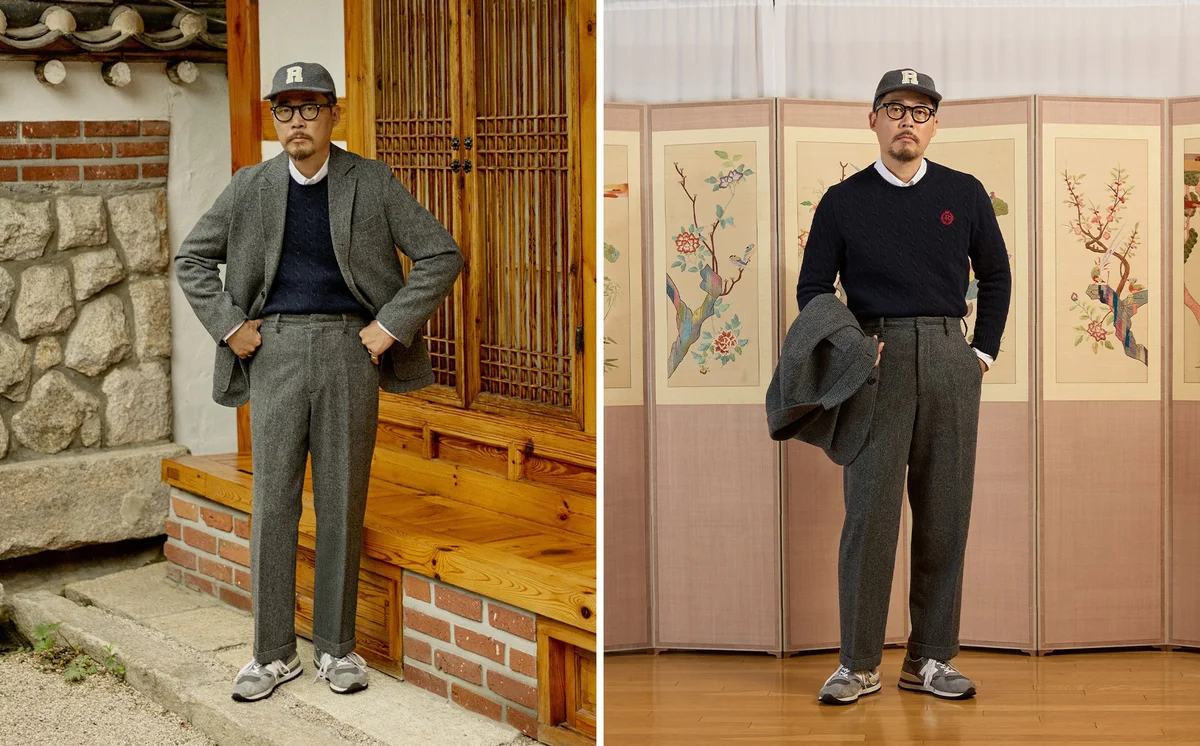
Today’s sack suit doesn’t look exactly like the 1960s version. The trousers are often swapped for chinos. The jacket gets thrown over a crewneck sweater instead of an OCBD. Some wear it with loafers, others with sneakers. The proportions might shift, but the philosophy stays constant: natural shoulders, easy fit, nothing forced.
Behind this revival, however, sat a longer story. What had kept the tradition alive through the lean decades wasn’t America — it was Japan. Ishizu Kensuke founded VAN Jacket in 1954 and spent decades translating Ivy style for Japanese consumers, hosting Hayashida’s Take Ivy expedition in the first place. The Miyuki-zoku — teenagers who gathered on Tokyo’s Miyuki Street in 1964 wearing button-downs and sack jackets — were the first non-American Ivy subculture. By the time Take Ivy was finally translated into English in 2010, Japan had been studying, archiving, and refining the sack suit for over half a century. The Korean revival inherits directly from this Japanese lineage, not from America.
The most interesting pages of this story are coming from Seoul.
Sack Suit in Seoul: Carrying the Tradition Forward
Seoul wasn’t supposed to be a sack suit city. Korean menswear culture for decades leaned toward slim Italian silhouettes — sharp shoulders, nipped waists, tapered everything. But around the mid-2010s, a small community started looking at American Trad differently. Not as something to copy wholesale, but as a framework to reinterpret.
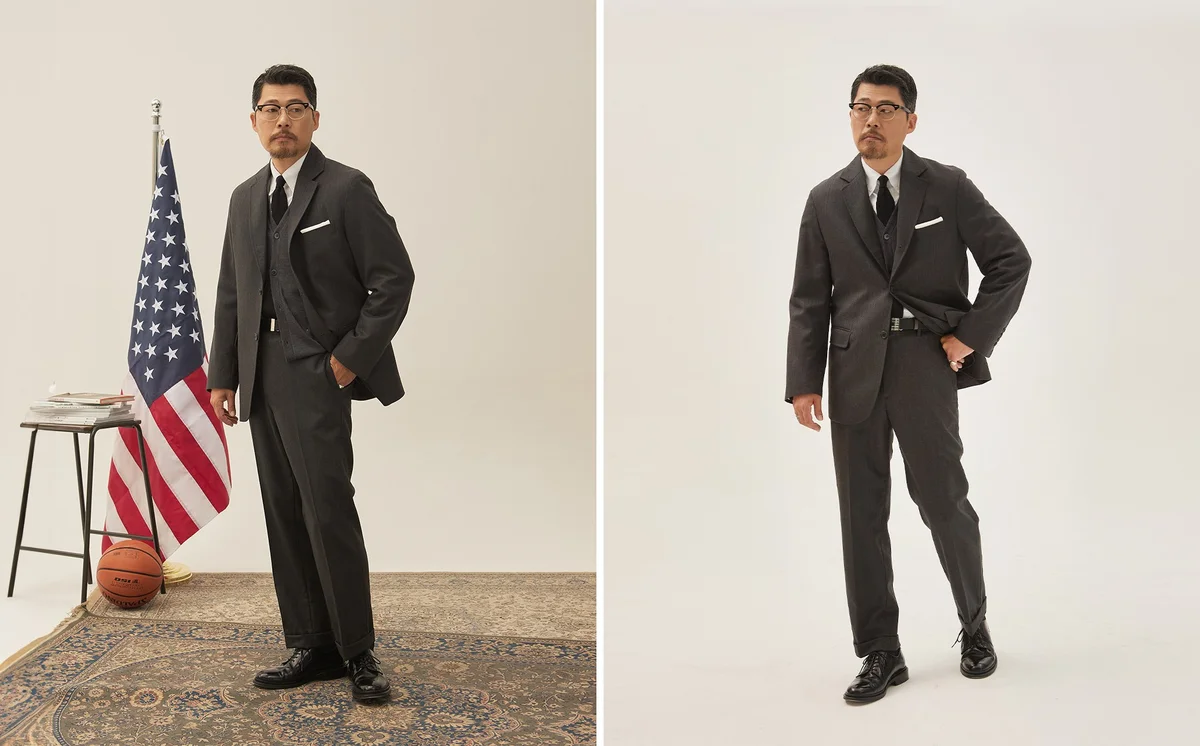
Renacts sits at the center of this movement. The brand works directly from 1950s and 60s American Trad archives, studying original garments to understand the specifics — how the canvas was floated rather than fused, how the sleeve head was set without padding to preserve the natural shoulder line, how the 3/2 roll was engineered through lapel construction rather than pressing. Then it reproduces those details with the precision that Korean manufacturing is known for — adapted for how people in Seoul actually dress.
Layering is the main adaptation. Seoul’s weather demands it. A sack jacket over a crewneck sweater in October. A soft-shouldered blazer under an anorak when the monsoon hits. The same natural shoulder that worked on a Princeton quad works on the streets of Seongsu-dong — you just add more layers and swap the penny loafers for something that handles rain.
The Seoul Traditional philosophy — the idea that the Ivy ethos of sound body, sharp mind, and community service can thrive in a Korean context — gives the sack suit new meaning. It’s not about recreating 1960s America. Through the Gentlemens Club, which runs a football team, volunteer projects, and seminars, the clothes connect to an actual way of living. The sack suit didn’t die when Brooks Brothers filed for bankruptcy in 2020. It just moved to a new city, found new shoulders to rest on, and kept going.
What It Costs Today
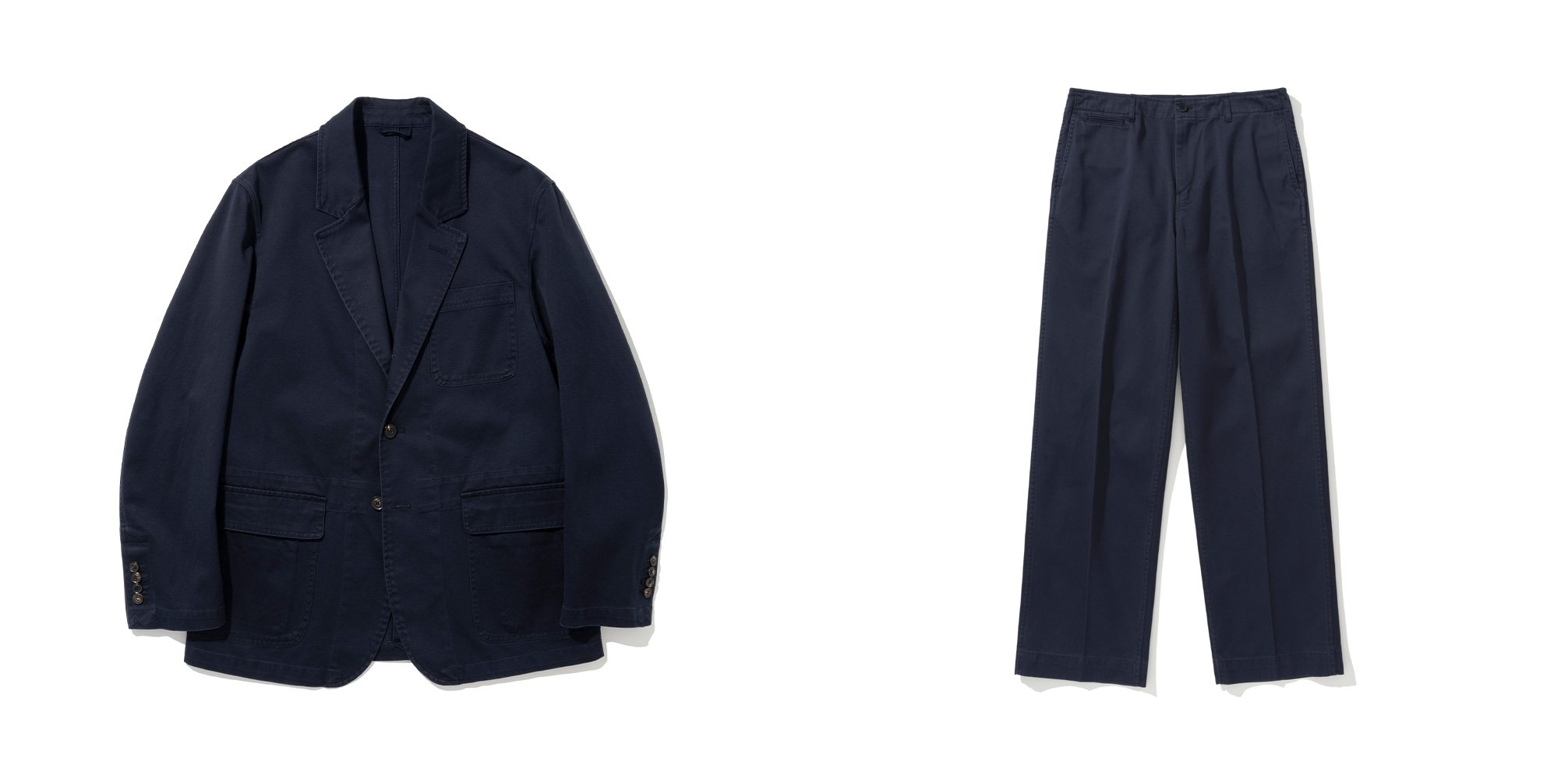
For context: a comparable J. Press sack jacket runs around $1,200, Drake’s soft-shouldered jackets start near $1,200 and climb past $1,400, and bespoke from a New York or London tailor easily clears $4,000. Renacts’ equivalent jackets — $275 to $355, with full jacket-and-trouser sets running $440 to $584 — reflect Korean manufacturing applied to archive-faithful patterns.
The full fabric-by-fabric breakdown — cloth, weight, season and price for all seven — lives in our sack suit guide. The sack suit’s Korean continuation is documented in our Renacts Legacy Suits campaign, where sixteen customers across five generations show the form’s endurance.
Want the practical guide? See our complete sack suit guide for fabrics, fit, and where ivy starts. For real-world fits, see seven ways to wear a sack suit.