Reverse Weave History: From Champion 1934 to Ivy Campus
The Reverse Weave History Starts With a Simple Problem
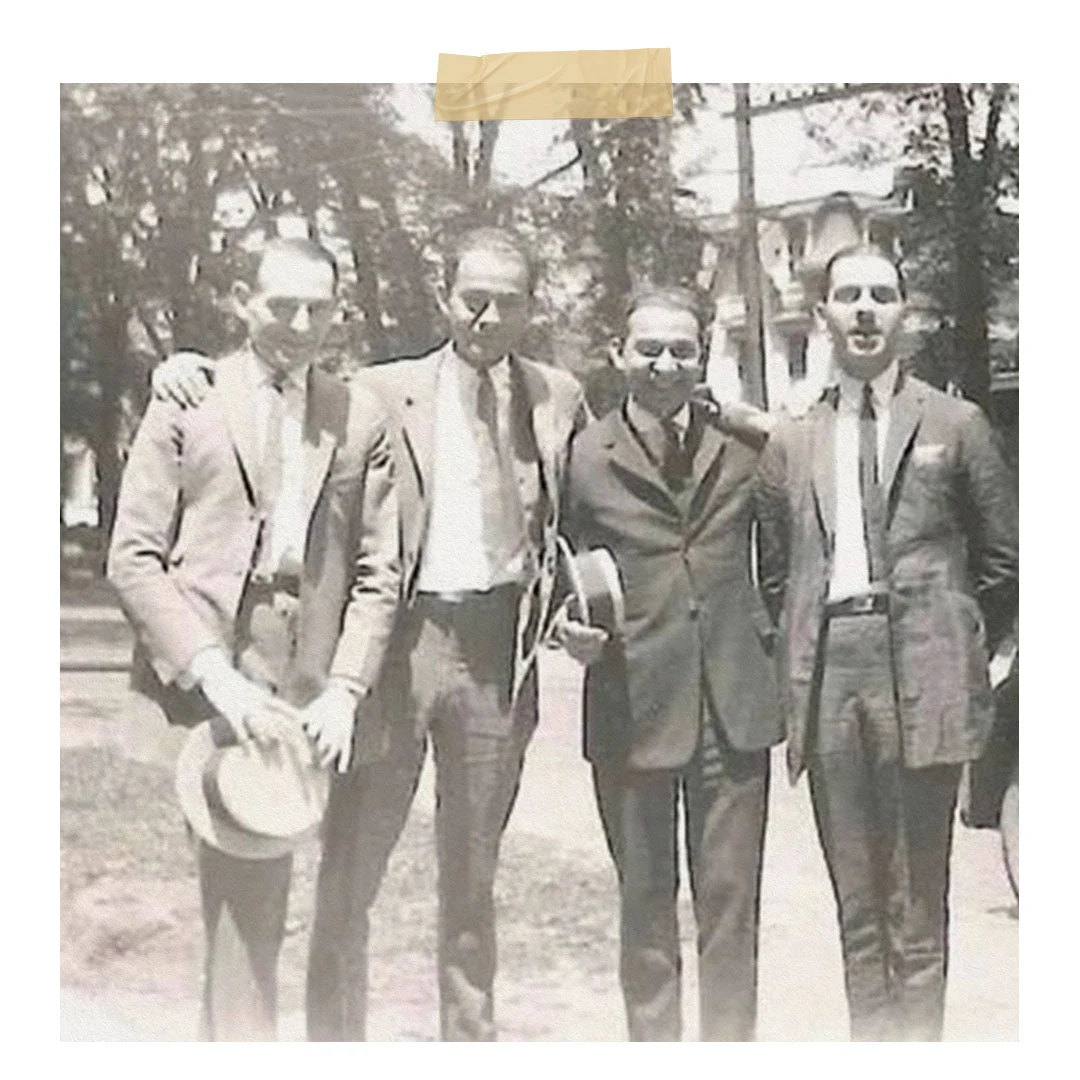
Every reverse weave history article begins the same way — with the U.S. Army in 1937, or with a sweatshirt that won’t stop shrinking. Both are correct, but the more useful version starts in 1934, with a salesman named Sam Friedland and a complaint from a college football coach. The team’s sweatshirts kept getting shorter after every wash, until they couldn’t be tucked into shorts anymore. Friedland, who had been a cutter at Hickey Freeman before joining Champion, was asked to fix it.
What he came up with is the technical foundation for almost every heavyweight sweatshirt that came after. The full reverse weave history is, in one sense, the story of how a small textile workshop solved a coach’s complaint.
What Champion Patented in 1938 (After Four Years of Workshop)
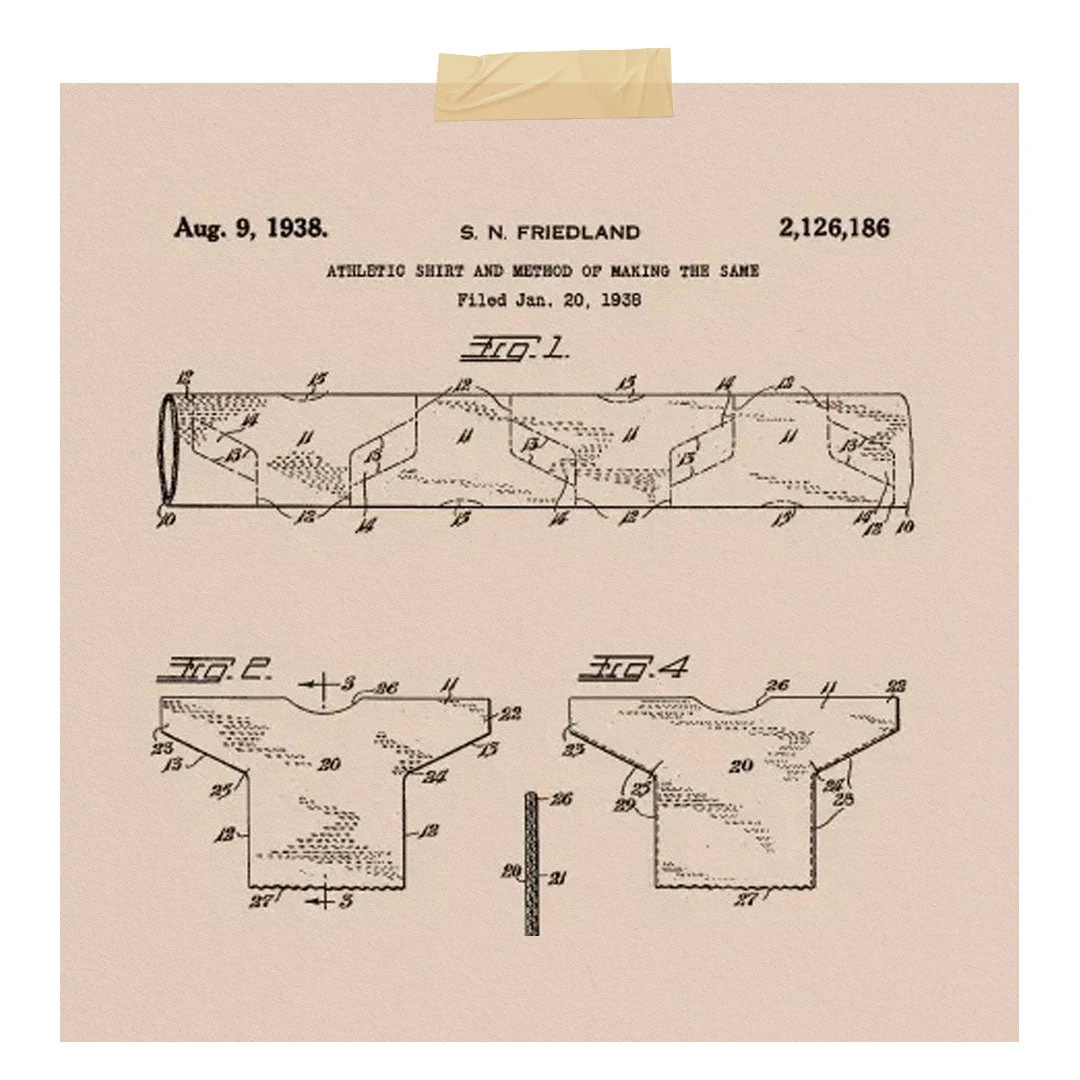
Friedland’s solution was simple in concept. Where every other knit mill in America ran the grain of the fleece vertically (so it shrank lengthwise — i.e. up and down the body — when washed), Champion rotated it 90 degrees. The grain ran horizontally across the body. That’s it. That’s the whole trick. And it changed everything. That single rotation is where the modern reverse weave history begins.
On August 9, 1938, the U.S. Patent Office issued the reverse weave construction patent to Friedland (assignor to Champion Knitwear Co. of Rochester, NY) — the technical milestone the rest of reverse weave history pivots around. To stop the body from twisting under the rotated grain, Champion added side gussets running from underarm to hem. To keep the neck from stretching, they specified a heavier, wider ribbing that maintained its shape through hundreds of washes. It’s one of those details you don’t notice until you’ve owned a cheap sweatshirt that stretched out at the waist after six months. Reverse weave history pivots on this kind of structural detail — invisible until it’s missing.
Why Ivy League Campuses Adopted It First
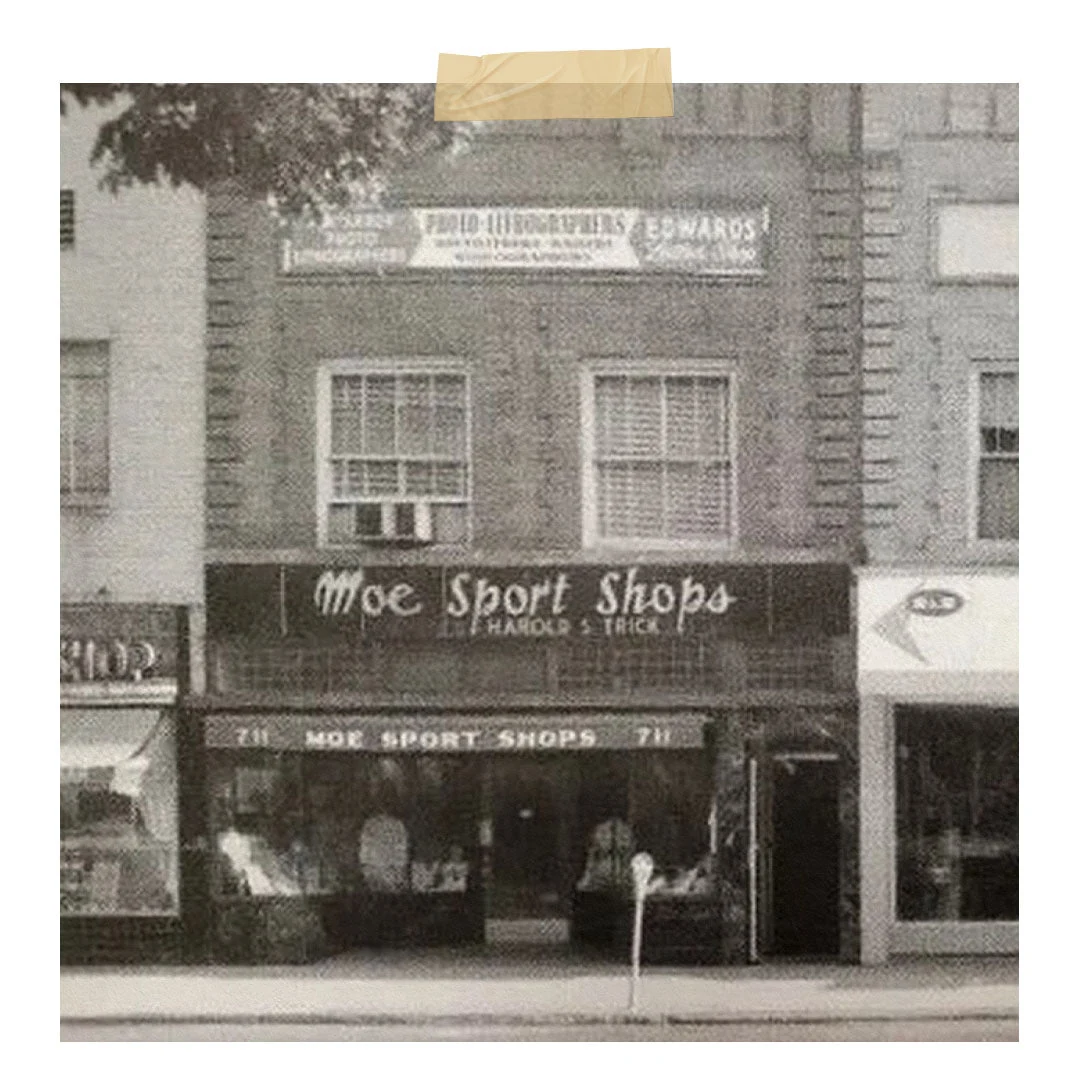
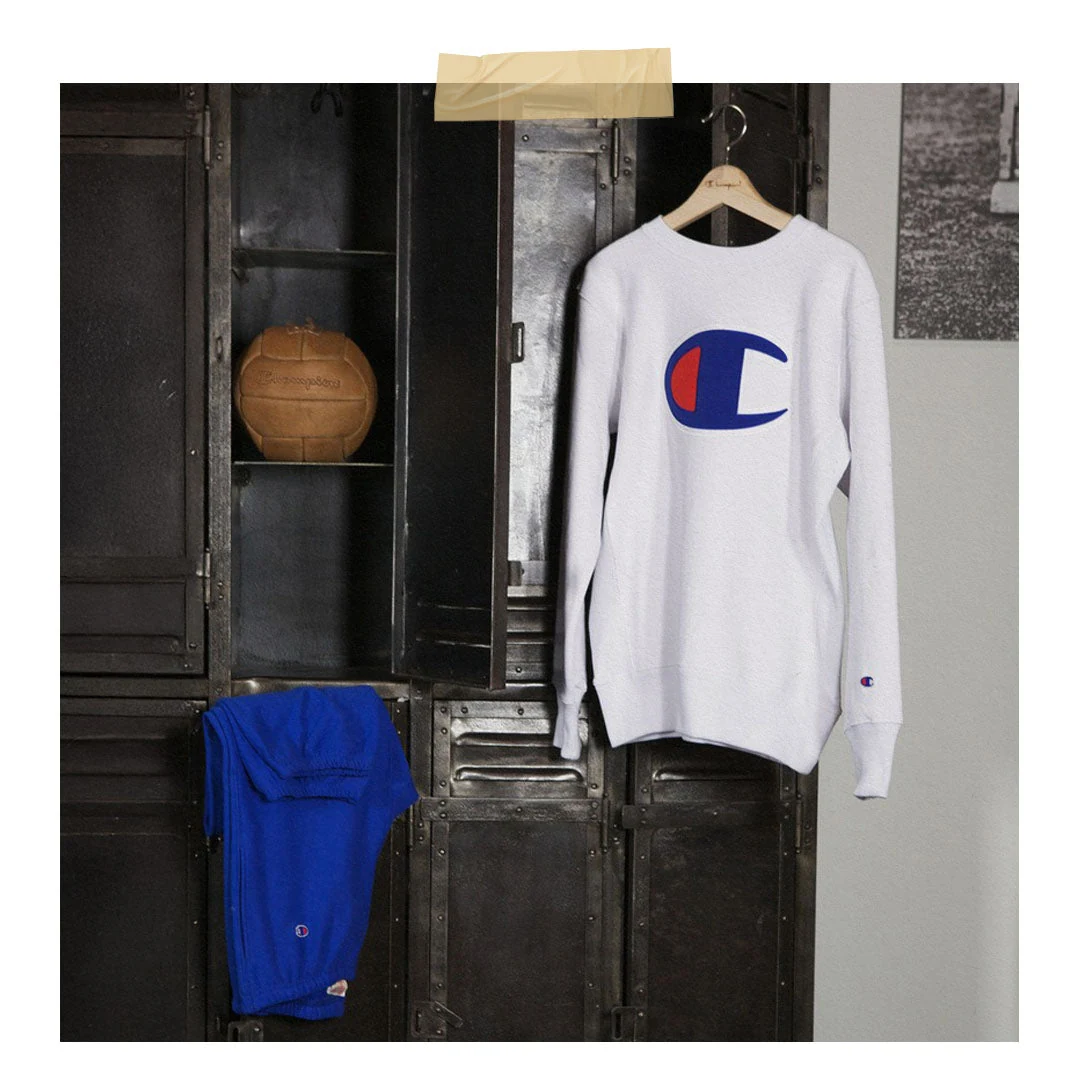
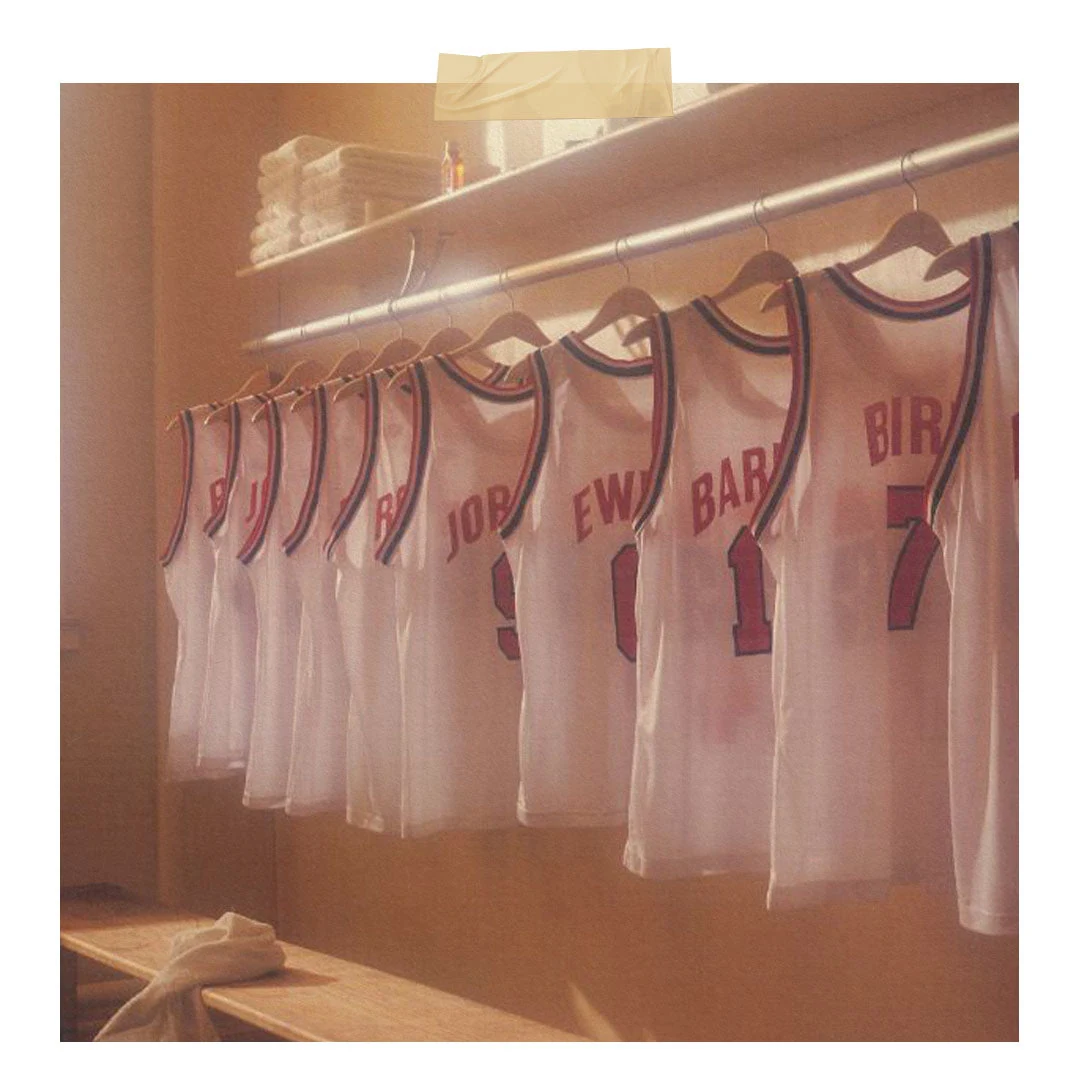
By the late 1930s and into the 1940s, Champion had quietly become the supplier of choice for varsity athletics across American colleges — Ivy League and beyond. Yale, Harvard, Princeton, and Cornell were on the list, but so were Michigan, Notre Dame, and the U.S. Military Academy at West Point. Football, basketball, crew, track — if a team needed sweats, the order went to Champion. The reverse weave was already in collegiate locker rooms before the broader American public had heard of it.
The garment crossed from locker room to dorm room the way most useful clothes do — slowly, by accident, through students who liked how it wore. By the mid-1960s, when photographers were documenting East Coast campus style, the crewneck sweatshirt — usually a Champion Reverse Weave with a university name across the chest — was as much a part of campus dress as the OCBD or chinos. This is the chapter of reverse weave history when the garment crossed from athletic gear into everyday Ivy uniform.
The Reverse Weave History in the Context of Ivy Style
Ivy style is at its core a vocabulary of borrowed garments. The OCBD came from polo, the chino came from the army, the loafer came from Norway. The reverse weave fits the same pattern: a function-first athletic garment that the campus repurposed as everyday dress because the construction was honest. There was no styling in 1965 — just a garment that worked under jackets, layered over OCBDs, and still looked like itself after fifty washes.
This connects directly to Yale Ivy style and the broader American Trad lineage we cover across the site. If you’re exploring what defines the Ivy look and its underlying logic, this is a pattern you’ll see repeated across every essential piece in the wardrobe. That’s why reverse weave history matters beyond Champion archives.
Cross-Grain Construction: Why It Actually Works
Take a normal sweatshirt and put it next to a reverse weave. From a meter away you might not see the difference. Up close, the construction tells the whole story. The cross-grain runs horizontally instead of vertically; the side gussets create a clean panel break from underarm to hem; the V-stitch (or single-bar tack) at the neck reinforces the front of the collar where it gets pulled on the most.
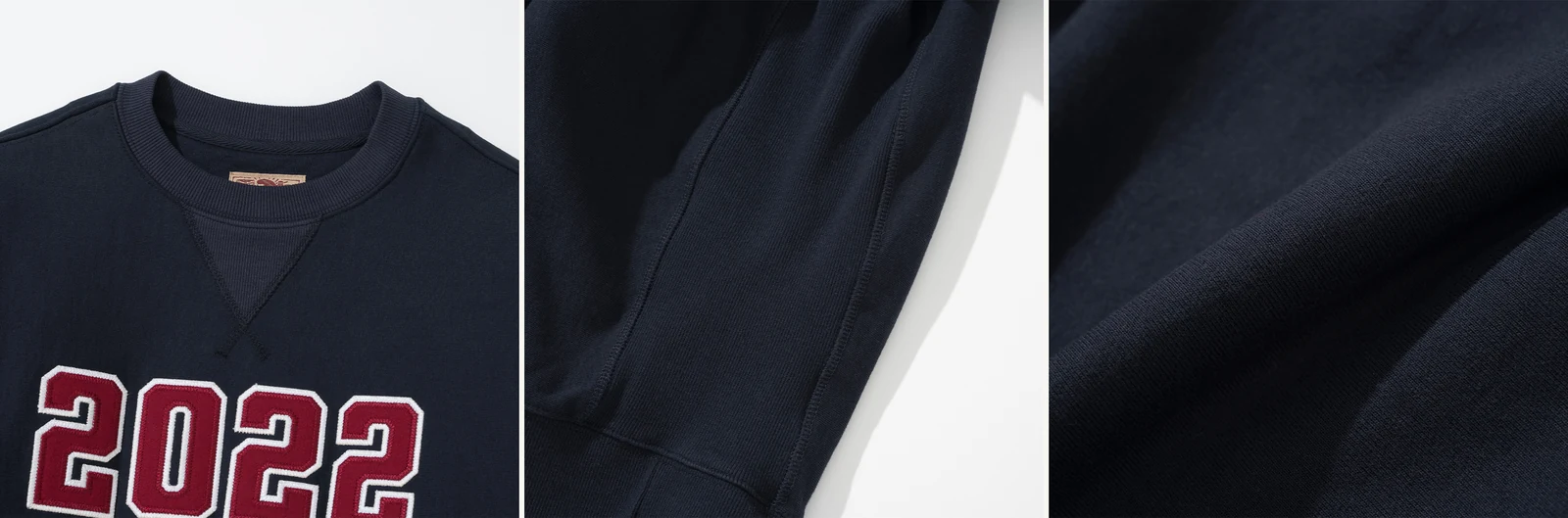
Every one of these details is a structural answer to a real problem. The cross-grain stops vertical shrinkage. The gusset stops the body from twisting under the rotated grain. The V-stitch keeps the neck from cracking apart at the most stressed seam. None of them is decorative. After a year of wear, a good Reverse Weave develops a texture that lighter fleece simply can’t replicate. The structural difference is what carries reverse weave history forward into modern reproductions.
From Athletic Gear to Streetwear Icon
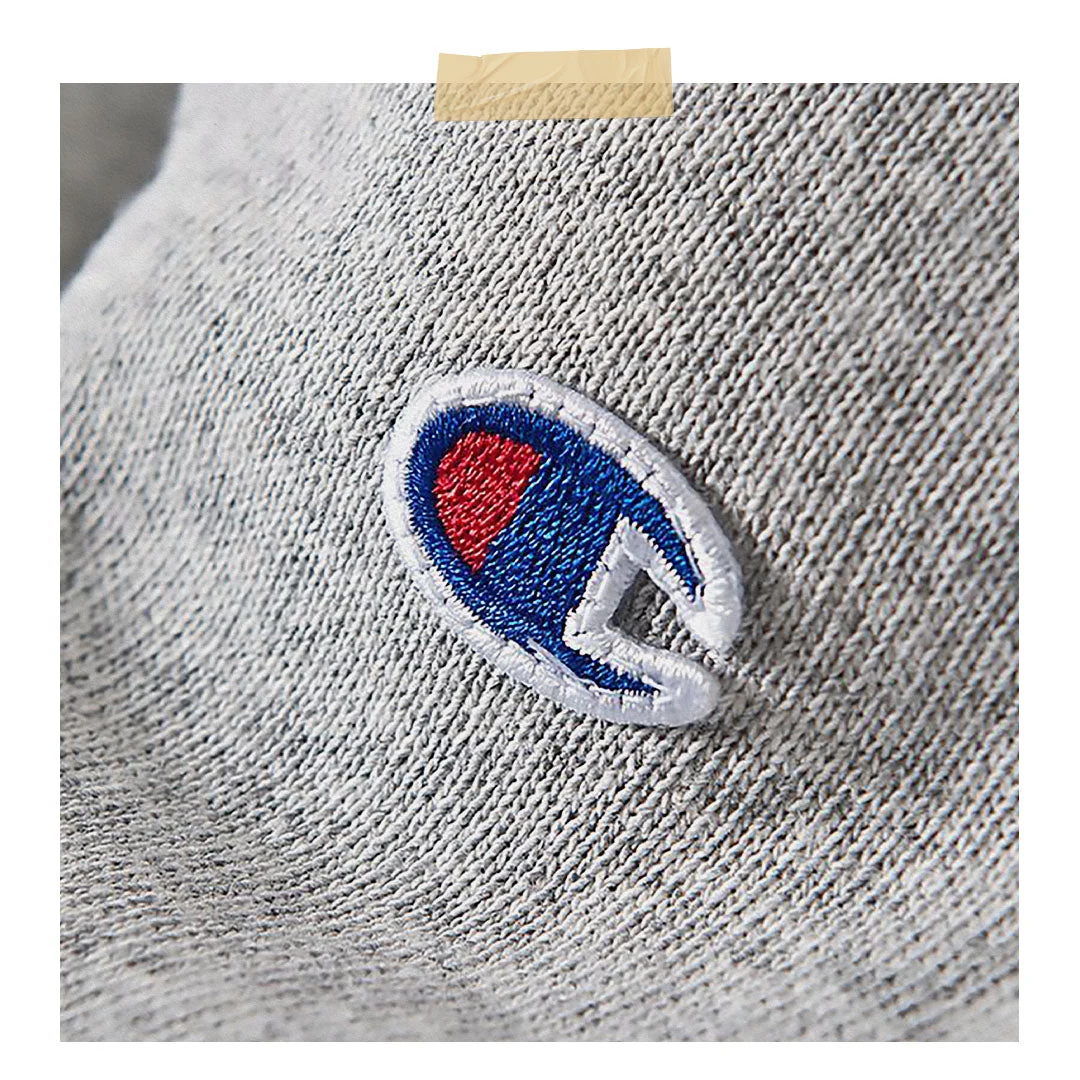
Through the 1970s the reverse weave stayed in its original lane — gym class, varsity teams, college bookstores. Then hip-hop showed up. Through the 1980s, Champion sweatshirts became part of the visual vocabulary of New York rap. Run-DMC wore them. Public Enemy wore them. Anyone who wanted to be associated with the Bronx, Brooklyn, or Queens wore them.
The 1990s pushed it further into fashion territory; the 2010s saw the brand hit a second peak as Vetements, Supreme, and a wave of designer collaborations turned what had been an inexpensive dorm garment into a premium fashion item. By the time Vetements launched its much-discussed Champion collaboration in 2016 at multiples of the original retail price, the reverse weave was firmly part of streetwear vocabulary — a different chapter of reverse weave history but the same garment doing different cultural work.
Seoul Traditional Across Four Axes — Why This Story Matters to Us
SEOUL Traditional isn’t a single brand. It’s a four-axis operation that approaches Ivy and American Trad heritage from complementary angles, and the reverse weave sits naturally at the center of all four:
- Renacts — our brand, building modern reproductions of American Trad pieces (the sack jacket, the cinch-back chino, the collegiate sweatshirt) with construction faithful to the originals.
- Heavy Duty Archive — our vintage shop, sourcing original pieces that document the lineage. Reverse weave is one of the categories we trade in heaviest, because every era is well-represented and the construction holds up.
- Gentlemens House — our showroom in Yeonhui-dong, where the garments live in their natural context: tried on, mixed, photographed.
- Gentlemens Club — our community. Members who actually wear these clothes outside the showroom and bring them back into rotation.
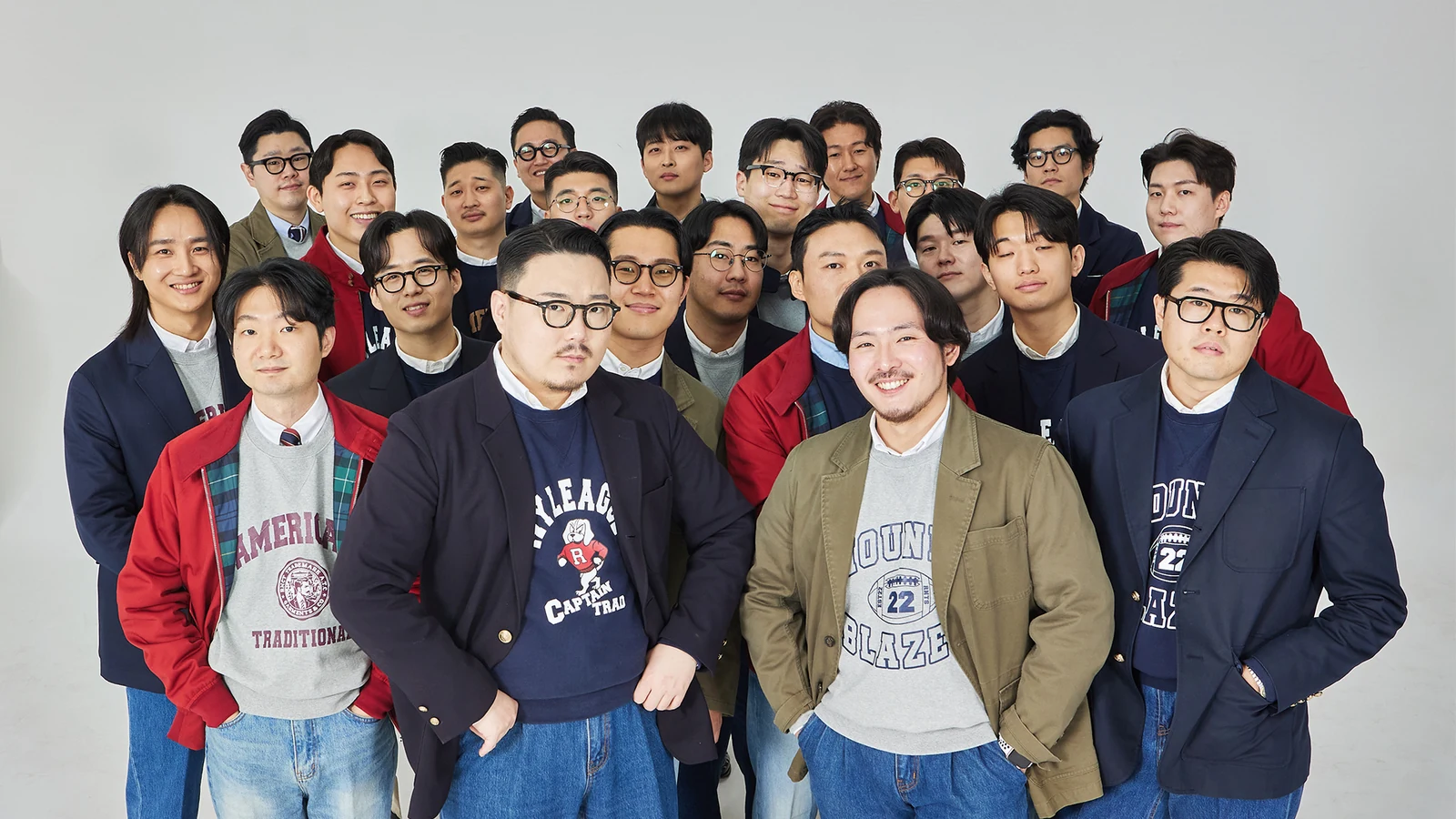
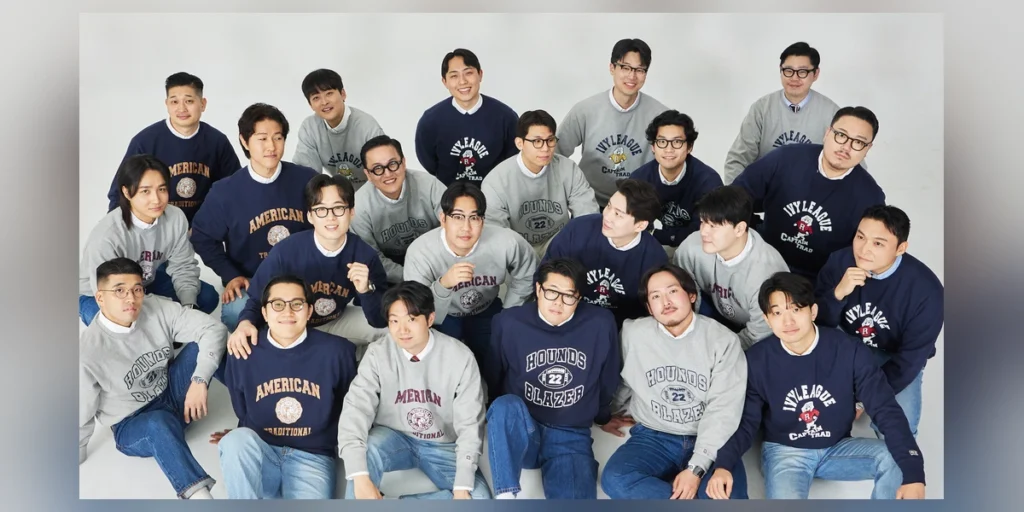
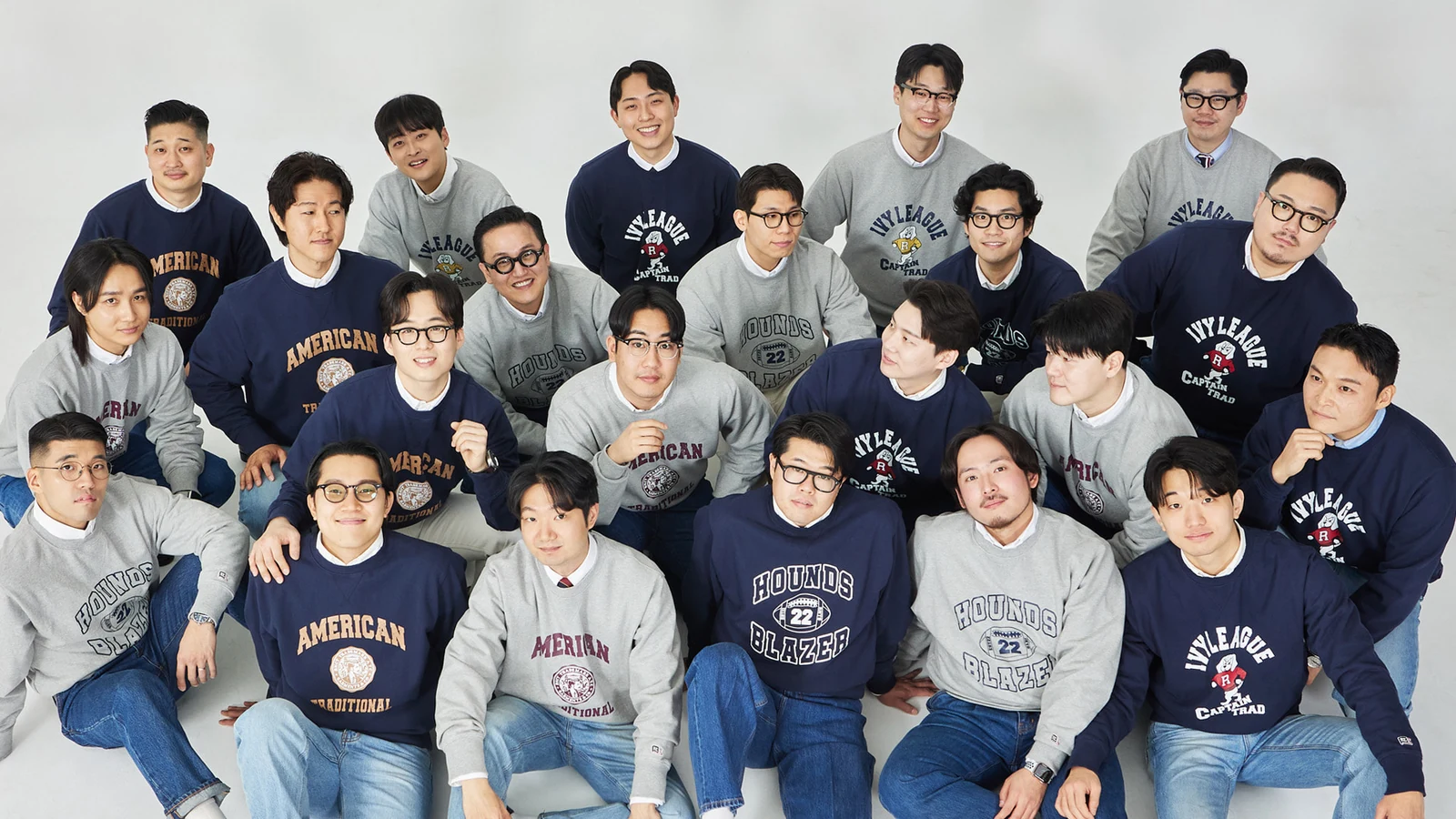
The reverse weave matters across all four axes. It’s a garment Renacts produces, Heavy Duty Archive trades, Gentlemens House displays, and Gentlemens Club wears. The campaign portrait above is the proof — twenty members in roughly fifteen different reverse weave registers, photographed in a single afternoon at our studio. Same garment, different wearers, same story.
The Renacts Collegiate Sweatshirt: 1934 Construction in 2020s Cuts
The Renacts Collegiate Sweatshirt line is our reading of the 1934 Champion archive. Heavyweight cotton fleece, cross-grain construction, side gussets, V-stitched neck — every detail Friedland specified is reproduced. What we adjust is the cut. The chest is slightly more relaxed than 1980s production specs, the shoulder sits at the bone rather than past it, the body length hits just below the waistband rather than over the seat. These are 2020s preferences mapped onto the original construction.
The line breaks into three graphic series, each with a clear meaning behind the design. The construction is constant across all three series; only the graphic vocabulary varies.
Letterman Ivy Sweatshirt — The R Series
The chenille “R” is the Renacts house mark, applied in the varsity-letter format that defined collegiate sweatshirts from the 1930s onward. The Letterman Ivy Sweatshirt ships in three colorways with the same R applique:
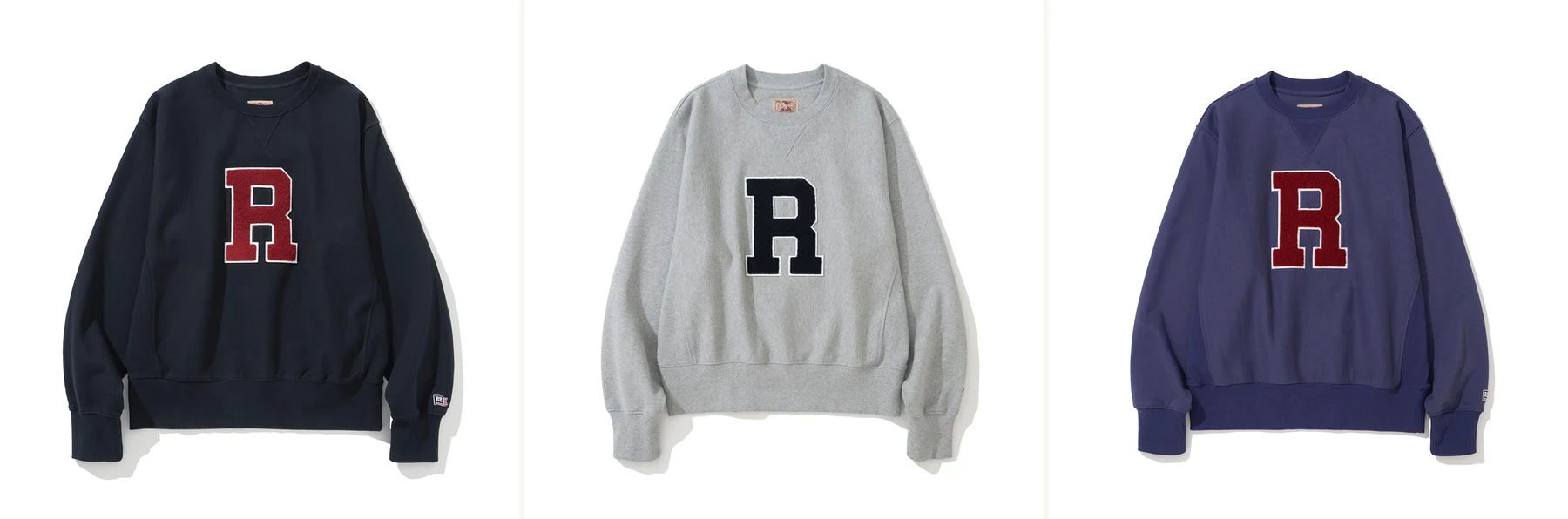
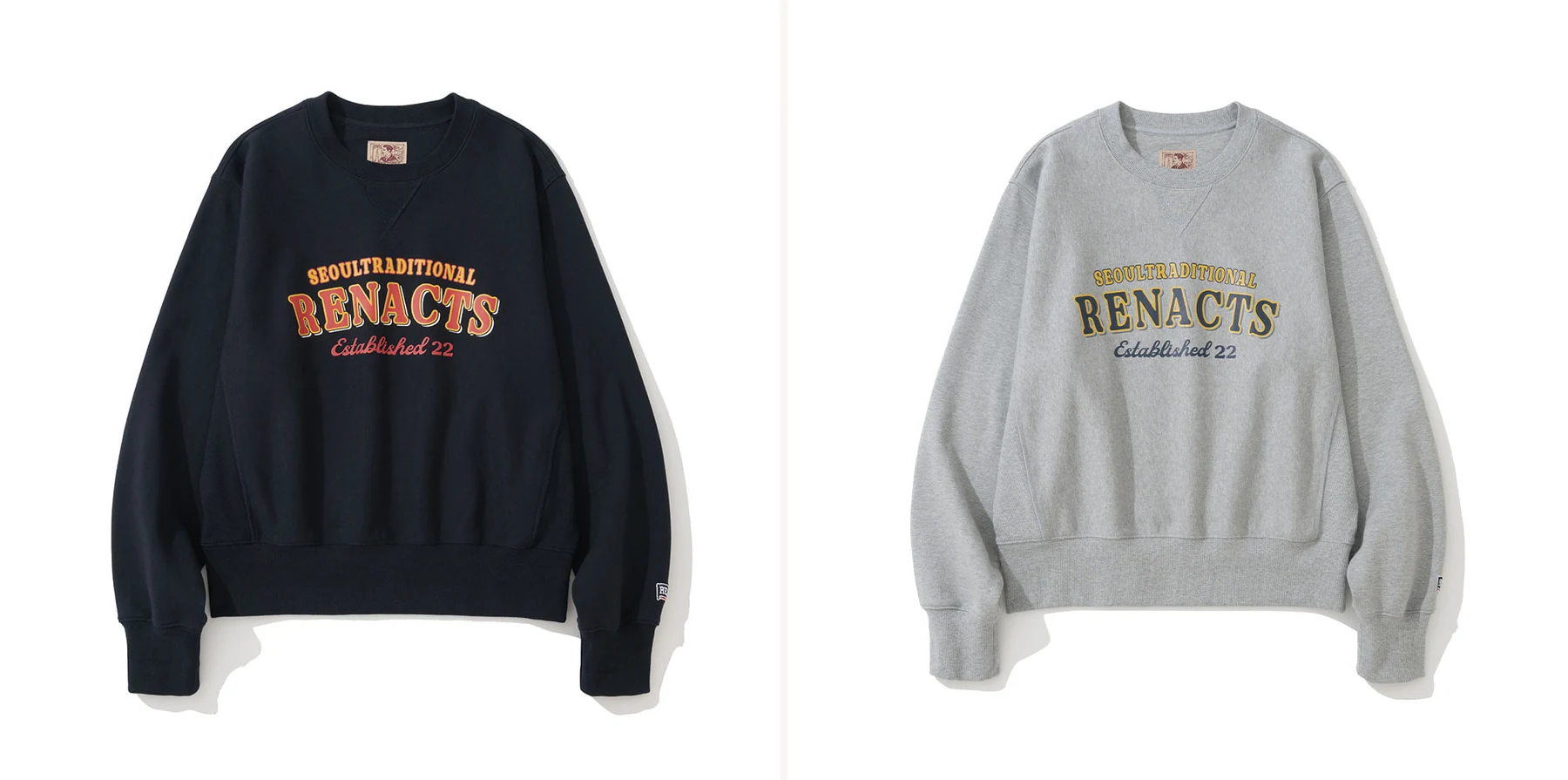
Seoul Trad Ivy Sweatshirt — The Full Brand Series
Where the Letterman uses a single house mark, the Seoul Trad Ivy Sweatshirt renders the brand identity in full. “SEOULTRADITIONAL · RENACTS · Established 22” reads across the chest in a varsity script — the more declarative version of the same construction. Two colorways:
2022 Ivy Sweatshirt — The Year Tag Series
Class-year graphics were a standard collegiate convention through the 20th century — a sweatshirt with “1958” embroidered across the chest told you when the wearer entered school. The 2022 Ivy Sweatshirt uses that format with brand-personal meaning: 2022 is Renacts’ founding year. The graphic is period-correct; the reference is ours.
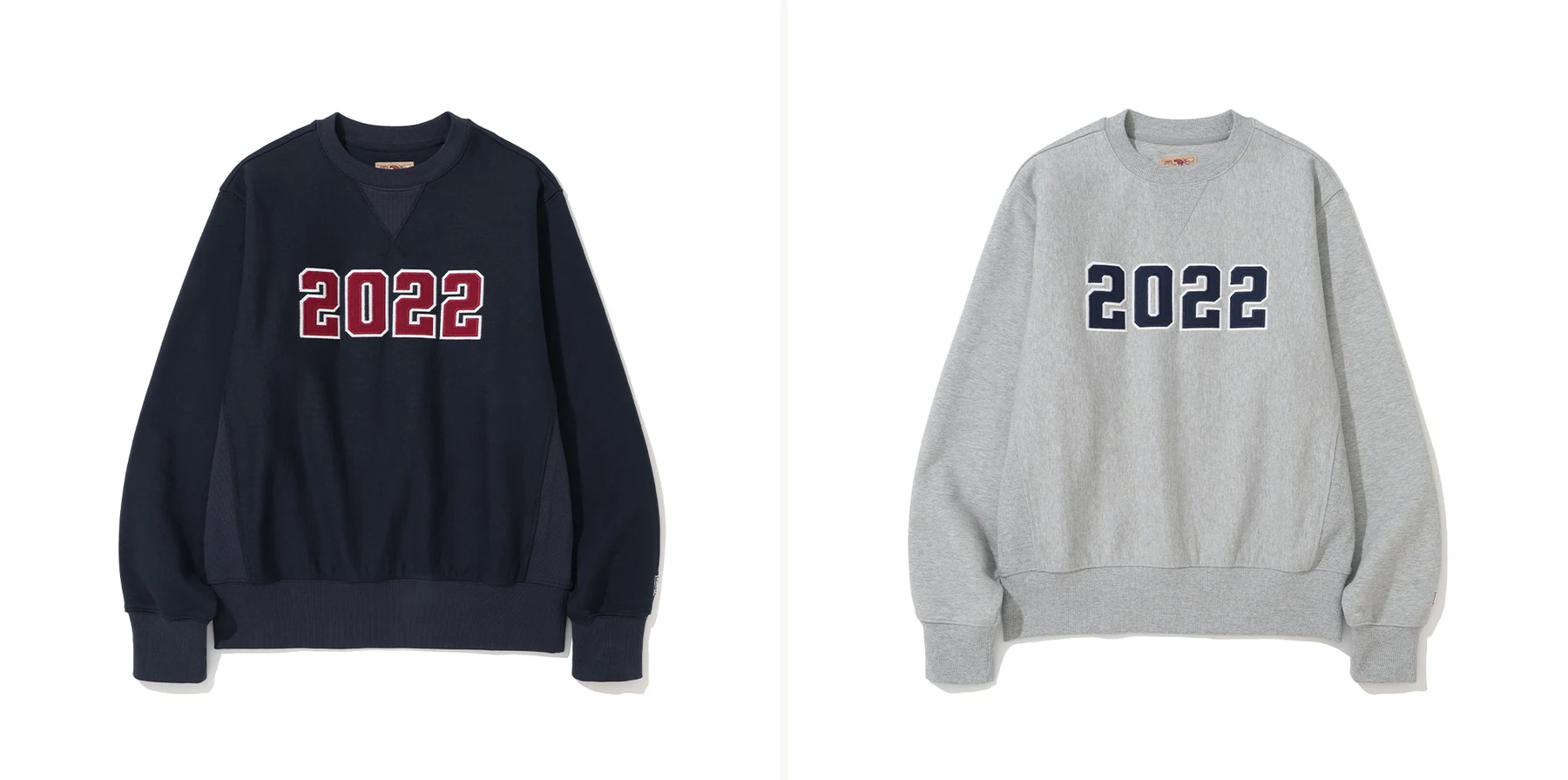
What we don’t do is reverse weave hoodies, zip-throughs, or modern athleisure cuts. The collegiate crewneck is the form that earned its place in reverse weave history, and that’s what we reproduce.
A Gentlemens Club Campaign Across the Reverse Weave Range
In late 2024 we shot a Gentlemens Club campaign focused on the reverse weave. Twenty members, one studio, a single afternoon. The brief was loose: each member styled the sweatshirt how they actually wear it. What came back was the most useful styling reference we have for the garment. A note on the graphics: some of the sweatshirts in these portraits are from earlier seasons (HOUNDS BLAZER, AMERICAN TRADITIONAL, IVY LEAGUE CAPTAIN TRAD) and are no longer in production. The construction principles and layering logic documented here apply equally to the current Letterman, Seoul Trad, and 2022 series.

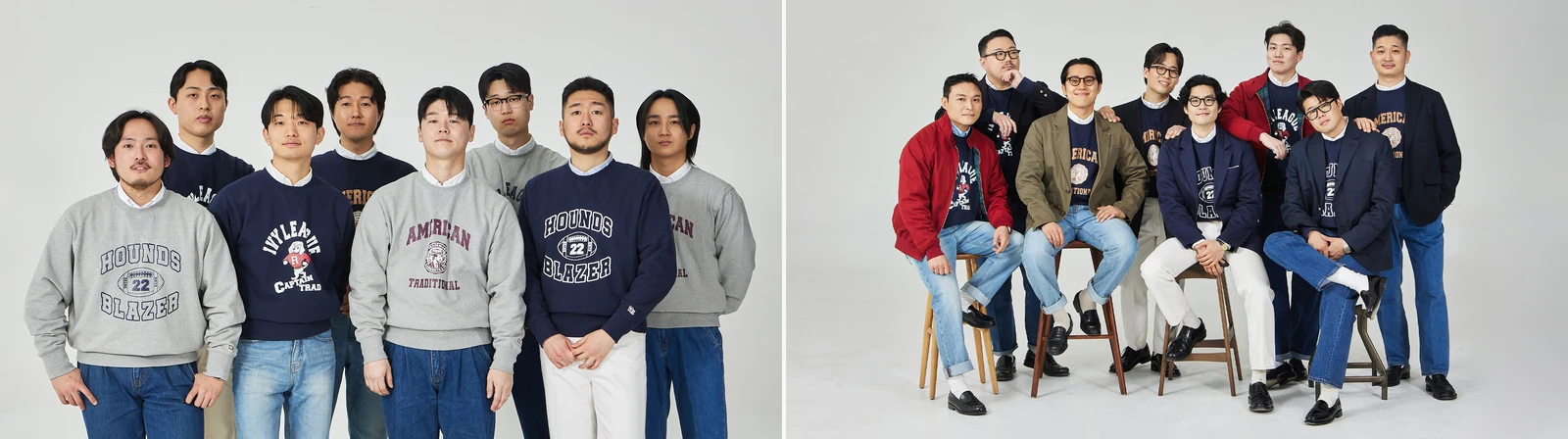
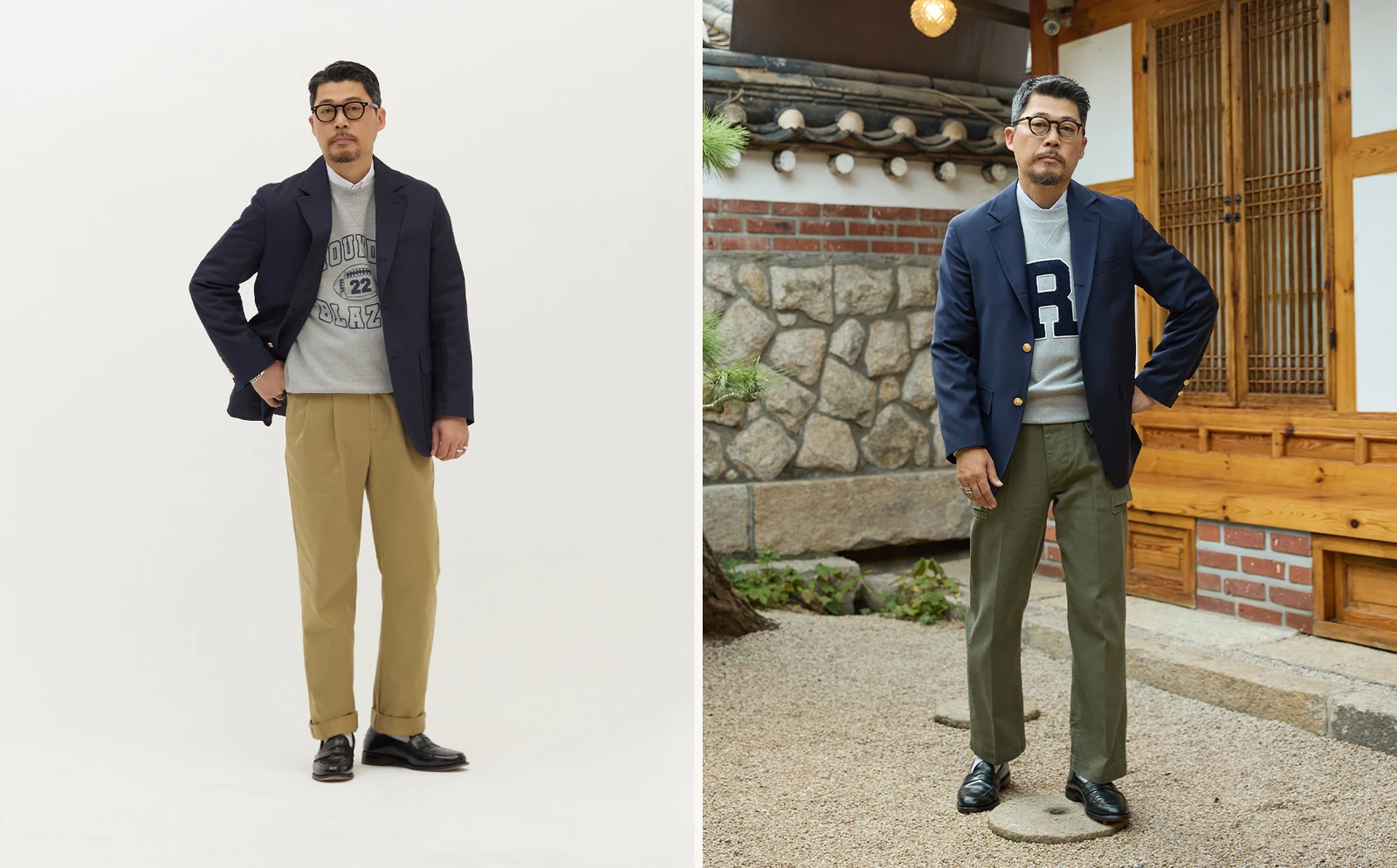
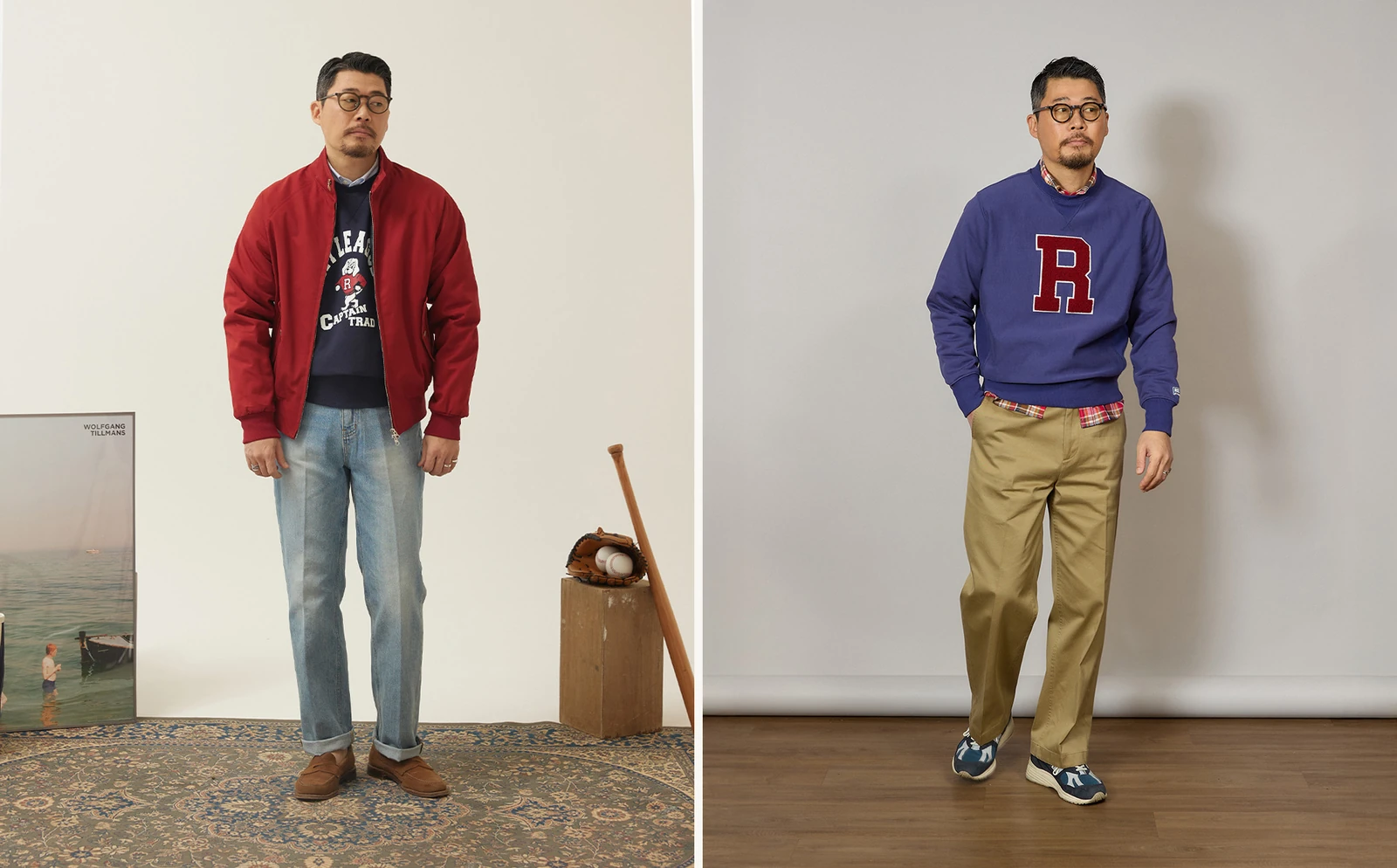
The variation across portraits is the entire point of the session. The sweatshirt under a navy blazer, with a cardigan, with a Harrington jacket. The sweatshirt with khaki chinos, denim, slacks, sweatpants. The sweatshirt as the top layer, as the middle layer, as a peek of color under another piece.
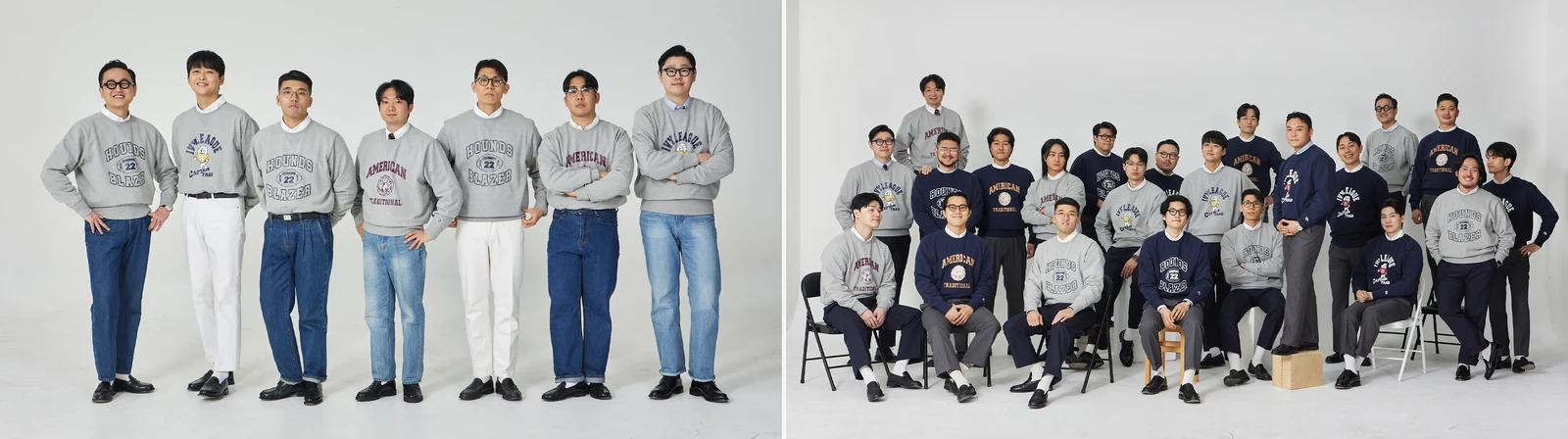

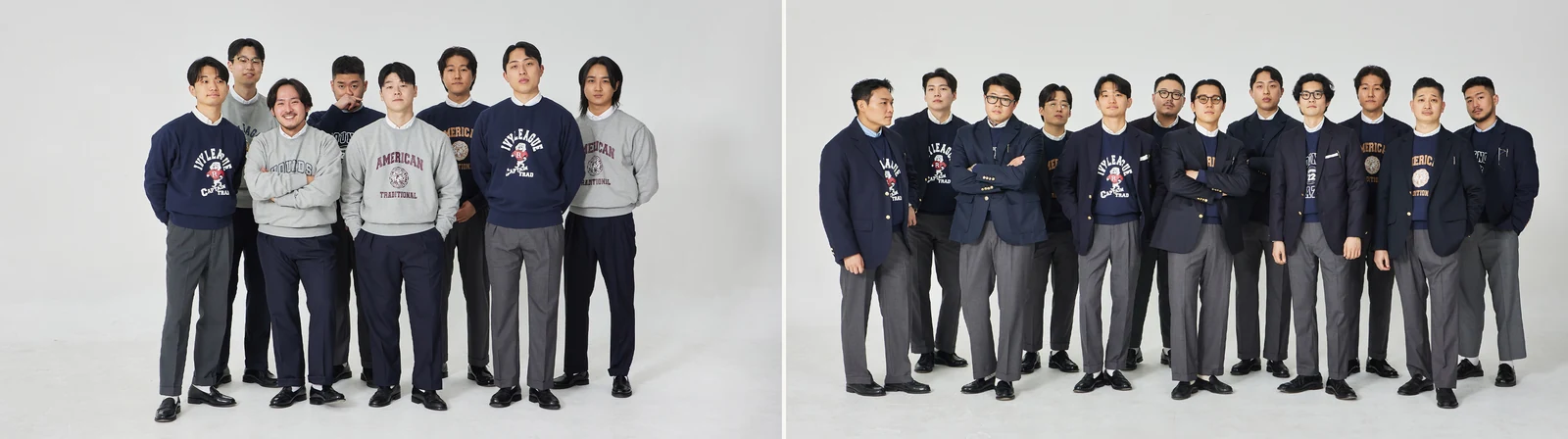
Every wearer brought a slightly different proportion preference and a slightly different taste in graphics. None of those choices broke the formula — they all worked, because the underlying garment was the same.
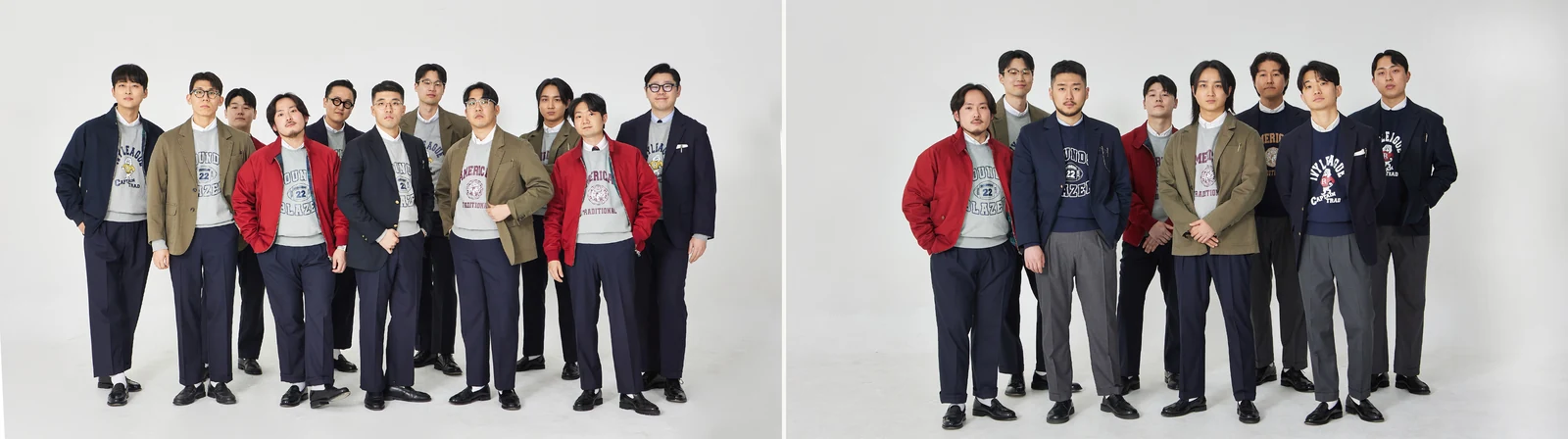
The Outfit Across Seasons: How Gentlemens Club Wears It Outside the Studio
The studio campaign showed range; the day-to-day version is more focused. Members tend to land on a personal three-or-four formula combination and run them across seasons. We documented seven of those formulas in our companion styling guide; below are the four that are most representative for the reverse weave specifically.


What to Look For in a Reverse Weave Today
If you’re buying a reverse weave today — vintage Champion, Renacts production, or anything in between — three details matter more than the brand on the tag. Heavyweight cotton (12 oz minimum), real side gussets running from underarm to hem (not faux panel stitching that mimics them), and V-stitched neck reinforcement (or a single-bar tack at the front of the collar). The construction signals that connect modern garments back to the original reverse weave history.
Beyond construction, the garment has to have honest collegiate or athletic provenance. Letters, athletic department graphics, university names, year tags — these are the period-correct vocabulary. Streetwear-influenced graphics (oversized logos, abstract typography, art prints) are different garments doing different work, regardless of whether they’re built on a reverse weave base.
In Seoul today, the reverse weave operates the same way it did on a 1965 New Haven campus — as a structurally honest garment that fits a wardrobe rather than dominating it. Different city, different climate, different daily rhythms — but the same garment principles work because they were always about construction rather than context.
That’s the lesson reverse weave history offers anyone willing to read it: function-first construction, period-correct graphics, and a willingness to wear the garment until it breaks down properly. The garment that solved a coach’s complaint in 1934 is still doing exactly the same job today. The continuity is the point.