
Loafer Shoes History: From Norwegian Farms to Seoul Streets
The loafer didn’t start as a fashion statement. It started as a slipper for Norwegian fishermen and farmers — people who needed to kick their shoes off fast at the end of a long, wet day. Here’s the thing: understanding the full loafer shoes history explains why this shoe feels so effortless. The loafer was literally designed for ease.
Here’s everything you need to know about loafers — where they came from, the major types, how they ended up on every Ivy League campus in America, and why they’ve become essential to the way we dress in Seoul today.
Loafer Shoes: The Norwegian Origins Nobody Talks About
Most loafer shoes history starts in the 1930s, but that’s missing the real story. Norwegian shoemaker Nils Gregoriusson Tveranger grew up watching local farmers wear simple, laceless leather slippers called “tøfler.” In 1930, he formalized the design into the Aurland moccasin — a slip-on loafer with a hand-sewn apron front that actually worked.
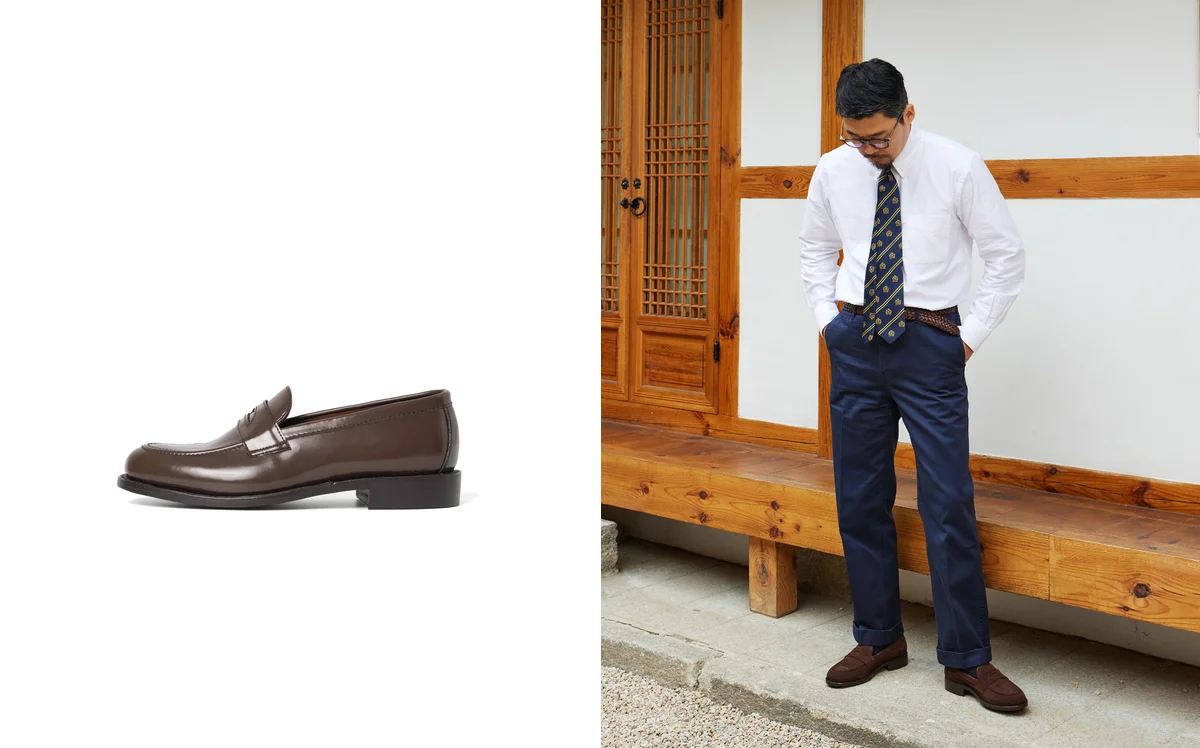
These Aurland shoes made their way to European tourists visiting Norway. Smart American visitors brought them home. By the mid-1930s, the design caught the attention of G.H. Bass in Maine, who saw its potential and created something brilliant with it.
The key innovation was combining the Norwegian hand-sewn moccasin construction with American durability standards. Bass added a proper leather sole, a real heel, and that small decorative slot across the saddle strap. The “Weejun” was born in 1936 — the name a clever abbreviation of “Norwegian.” Pure genius.
How the Penny Loafer Got Its Name
The diamond-shaped cutout on the Bass Weejun’s strap wasn’t designed for coins. It was purely decorative. But American prep school students in the 1950s started slipping pennies into the slot — some say for emergency phone calls, others say just because it looked cool. Honestly, it doesn’t matter why they did it.

The penny loafer became the defining shoe of the Ivy League because it was perfect. It was dressy enough for a lecture hall, casual enough for a weekend in town, and you never had to tie a lace. Students at Princeton, Harvard, and Yale wore them sockless with chinos in September and with wool trousers and argyle socks in November.
The penny loafer succeeded because it solved a real problem. College men needed one shoe that worked everywhere. The loafer was that shoe — and still is.
The Major Loafer Types, Ranked
Not all loafers are created equal, and I’ll be blunt: some are significantly better than others. Over the decades, the basic slip-on form has branched into distinct styles, each with its own personality and level of formality.
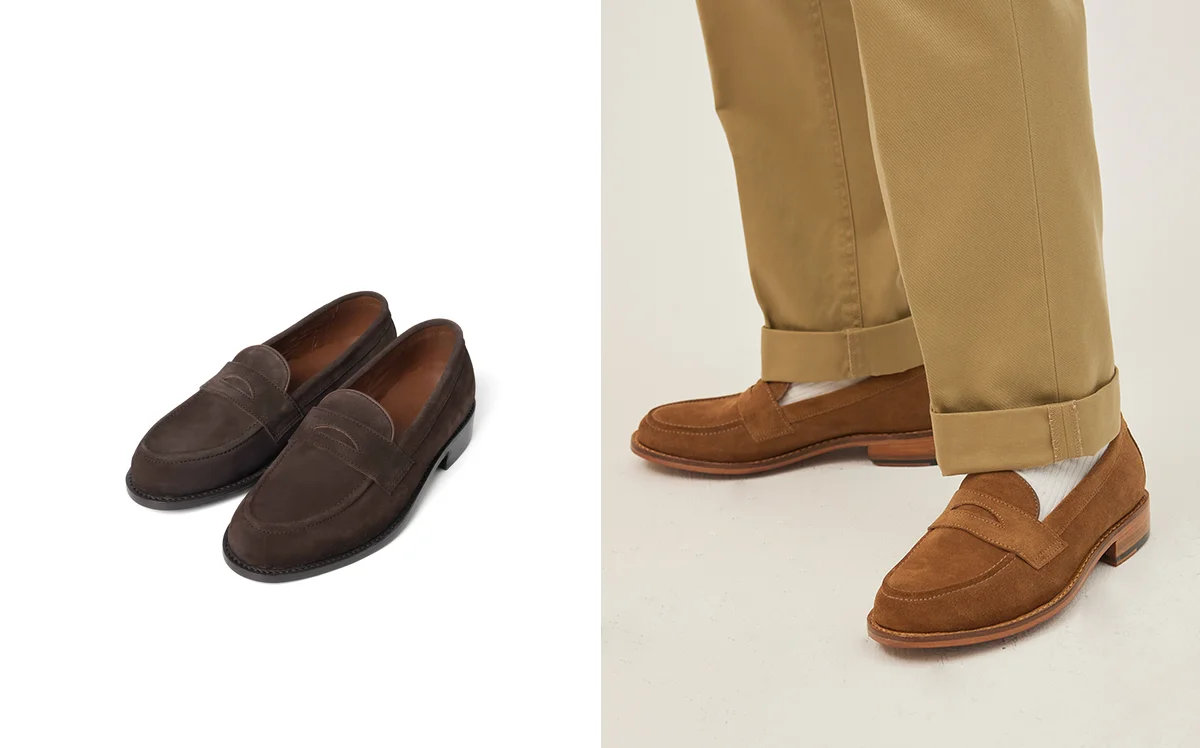
Penny Loafer. The king. The saddle strap with its diamond cutout sits across the vamp like a visual anchor. Beef roll penny loafers — where the strap is rolled and stitched at the edges rather than laid flat — add a chunkier, more casual character that’s absolutely perfect. This is the loafer I’d recommend first, every single time. It works with everything from denim to odd trousers, and it’s the most historically connected to the Ivy tradition.
Tassel Loafer. Slightly dressier and criminally underrated. The Alden tassel loafer became a staple of East Coast lawyers and bankers in the 1960s for good reason. Two leather tassels hang from a lace threaded across the vamp. Paul Newman wore them. So did JFK. They sit in that perfect sweet spot between casual and business — ideal with a blazer and grey flannels.
Bit Loafer. The Gucci horsebit loafer, introduced in 1953, added a metal snaffle across the vamp. It’s the most European, the most luxurious, and honestly the trickiest to wear in a trad context. Not really our lane, but you should know it exists.
Construction Details That Actually Matter
A good loafer lives or dies on three things: the moccasin construction, the leather quality, and the sole.
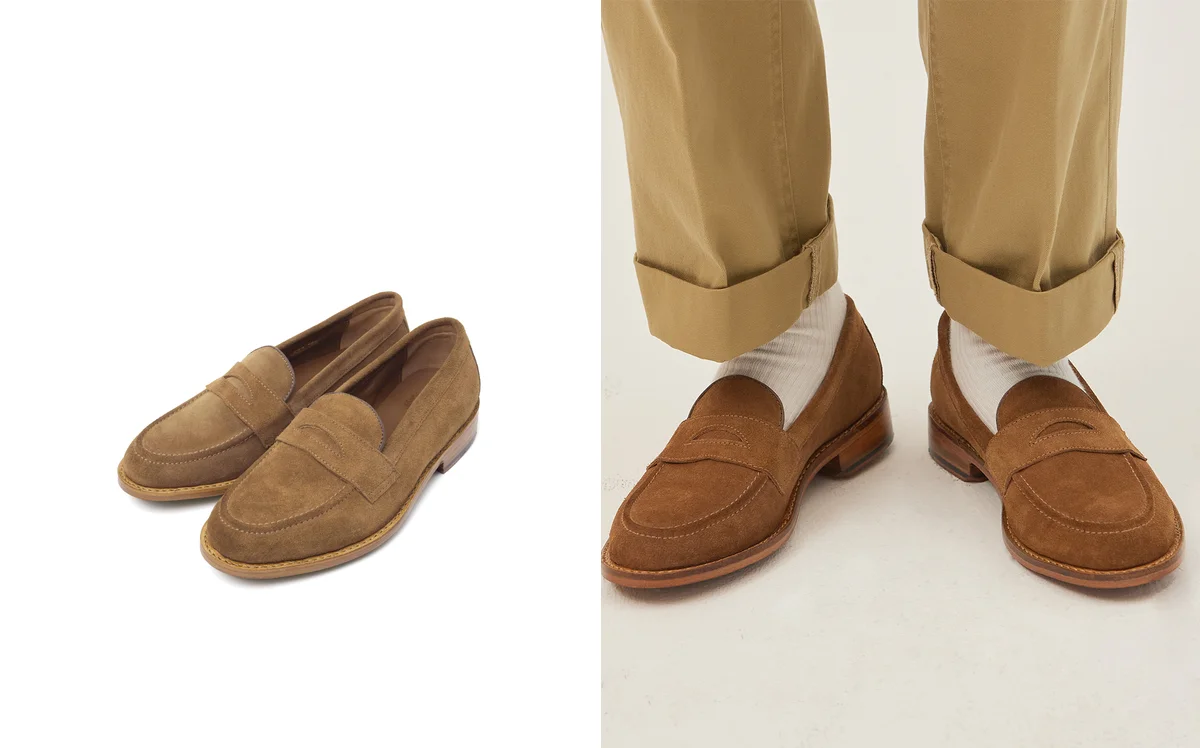
True moccasin construction means the leather wraps under your foot and is stitched to the upper, creating a single continuous piece. This is what gives loafers their distinctive comfort — no rigid insole fighting against your foot. Hand-sewn moccasin construction uses a single needle and thread to join the vamp to the plug (the piece under the toe). You can see the stitching on top. Machine-sewn versions look similar but lack the slight irregularity that marks handwork.
For soles, leather is traditional and dresses up beautifully. That said, a rubber sole or a leather sole with a rubber half-sole makes far more sense for daily wear in Seoul. Our sidewalks are unforgiving, and summer monsoons don’t care about your leather soles.
Why Loafers Became Ivy League Uniform
The loafer shoes history intersects perfectly with the Ivy League story. In Take Ivy, the 1965 photo book by Teruyoshi Hayashida, loafers appear on nearly every other page. Students walking across Harvard Yard. Guys lounging on stone steps at Princeton. The loafer is everywhere.

The reason is philosophical, not just practical. The Ivy League ethos valued sprezzatura — looking good without appearing to try. A lace-up oxford says “I dressed carefully this morning.” A loafer says “I just slipped these on.” That studied casualness was the whole point.
Loafers also played well with the Ivy wardrobe’s other essentials. They looked right with the oxford button-down shirts and khaki chinos that defined the look. No fuss, no clash, just quiet coordination.
Loafers in Seoul: A Different Context
Seoul’s relationship with loafers is its own story. Korean men discovered the loafer through Japanese fashion magazines in the 1980s and 1990s — which had themselves discovered it through Take Ivy two decades earlier. So our loafer tradition is, in a sense, a copy of a copy. That’s fine. Every tradition starts somewhere.

What makes loafers work especially well in Seoul is our climate and lifestyle. Summer humidity makes sockless loafers a survival strategy, not just an aesthetic choice. The city’s mix of subway commuting, café culture, and office life demands shoes you can walk in all day but still look sharp. A beef roll penny loafer in natural or burgundy handles all of it.
In the Heavy Ivy approach we talk about at Seoul Traditional, loafers anchor outfits that layer a crewneck sweater over an OCBD with an anorak on top. The loafer keeps the bottom half simple while the top half does the work. Grounded below, expressive above — that balance is very Seoul.
How to Choose Your First Pair
If you own zero loafers, start with a penny loafer in burgundy or dark brown. Skip black entirely — black penny loafers read like a waiter’s shoe. Burgundy is more versatile than you’d think. It plays well with navy, grey, khaki, and olive.

Fit matters more with loafers than almost any other shoe. There’s no lacing to adjust. The loafer either fits your foot perfectly or it doesn’t. You want a snug fit when new — leather stretches. Your heel should not slip when you walk. If it does, the loafer is too big, and no amount of insoles will fix it properly.
Sizing tip: most people go half a size down from their sneaker size. Try them on in the afternoon, when your feet are slightly swollen from the day.
Care and Maintenance for Longevity
Loafers take more abuse than lace-ups because they’re easier to slip on, which means you wear them more. Invest in cedar shoe trees — they absorb moisture and hold the shape. Put them in every single time you take the loafer off.
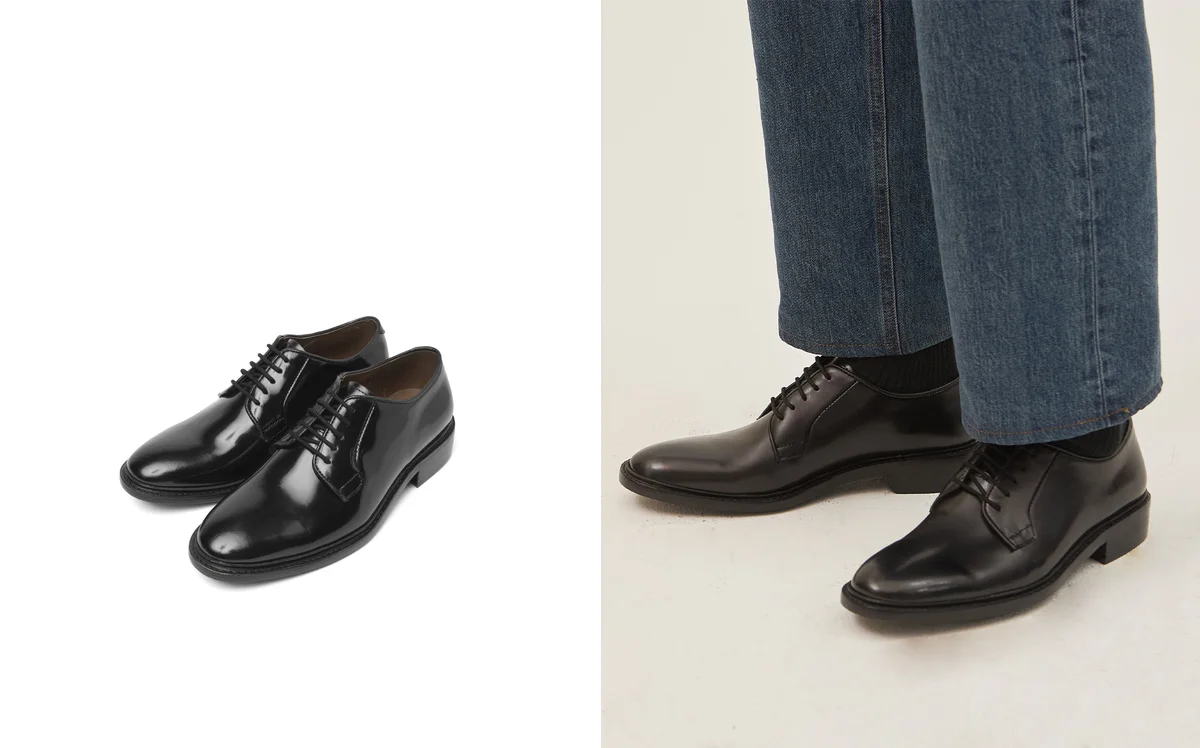
Condition the leather every 3–4 weeks if you’re wearing them regularly. A simple cream polish in a matching color keeps the leather fed. For beef roll loafers, pay extra attention to the rolled edges of the strap — that’s where cracking starts first.
Rotate your shoes. Never wear the same pair two days in a row. Leather needs 24 hours to fully dry out. This alone will double the lifespan of your loafers.
And if you’re wearing them through Seoul’s summer monsoon season, stuff them with newspaper when they get soaked and let them dry away from direct heat.
The Loafer’s Place in Your Wardrobe
A loafer isn’t a replacement for every other shoe. The loafer fills the gap between too dressy and too casual. Derby shoes with a navy blazer for a formal dinner. Loafers with the same blazer for a Saturday gallery opening. That’s the range.
The loafer shoes history tells us something broader about how the best menswear works. The fishermen who first wore slip-on leather shoes in Norway weren’t thinking about style — they were thinking about function. American college students who adopted them weren’t thinking about Norwegian heritage — they were thinking about convenience. And we’re not thinking about 1950s Princeton when we wear them in Hannam-dong. We’re thinking about what works here, now.
That’s how real traditions form. Not through imitation, but through each generation finding its own reason to keep wearing the same thing.