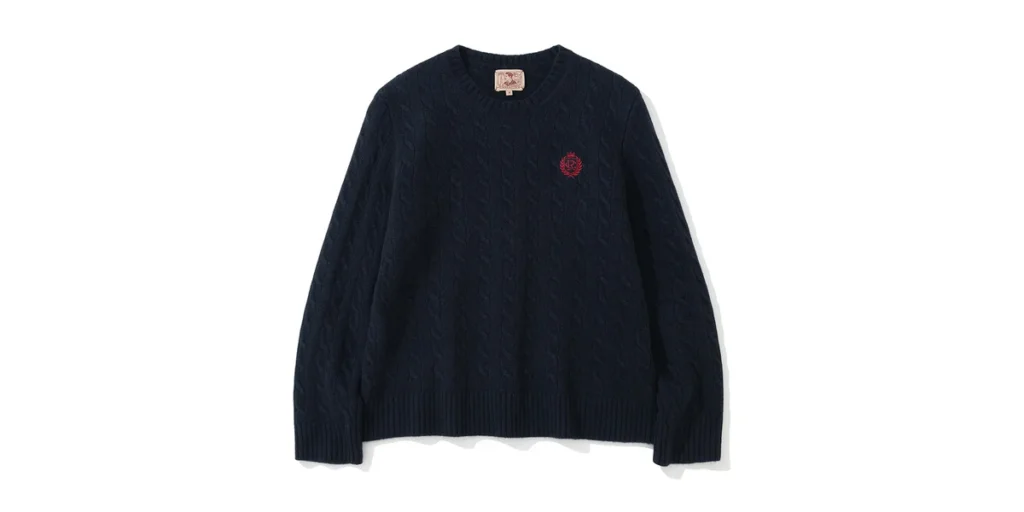
Crewneck Sweater Guide: Fabric, Fit & Care
The Crewneck Sweater Needs No Introduction — But Deserves One
A crewneck sweater is probably the first knit you ever owned. Your mom bought you one. You wore it wrong for years — too big, too thin, wrong color. And yet you kept reaching for it, because honestly? Nothing else sits so effortlessly between a shirt and a jacket.
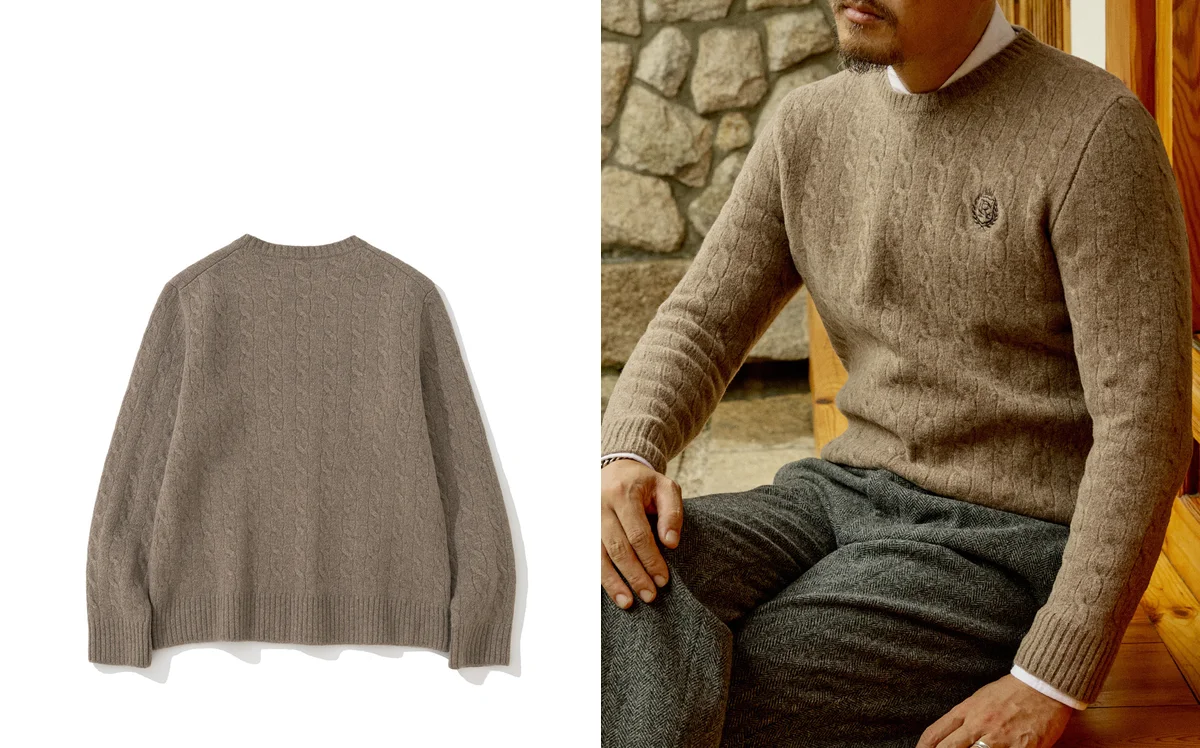
This guide covers everything worth knowing: the fabrics that actually matter, how the fit should work on your body (not your dad’s), and the care habits that keep a good knit alive for a decade. If you’re dropping real money on one, you better know what you’re buying.
Why the Crewneck Became the Ivy Uniform
The crewneck sweater wasn’t always casual. In the 1920s and 30s, it was athletic gear — literally what rowing crews wore. The name stuck, thankfully.

By the 1950s, it had migrated from the boathouse to the lecture hall. American college students cracked the code: a crewneck over an oxford cloth button-down, under a sack jacket, created the perfect layering system for New England weather from September through April. No fuss, no overthinking. Just warmth where you needed it.
Flip through Take Ivy and you’ll see it everywhere. The crewneck wasn’t trying to be special. It was infrastructure — the middle layer that made everything else work seamlessly.
Fabric Is Where Your Money Goes
Two crewneck sweaters can look identical on a hanger and feel completely different on your body. Here’s the thing: the difference is always fiber.
Shetland wool is the gold standard for Ivy style. It’s lofty, slightly fuzzy, and develops gorgeous texture with wear. The yarn comes from Shetland sheep — small, hardy animals that produce fiber with real character. New Shetlands feel rough? Good. After three or four wears, they soften beautifully. A well-worn Shetland has soul that no merino can touch.
Lambswool sits softer from day one. It’s finer than regular wool, taken from a sheep’s first shearing. If Shetland is a tweed sport coat, lambswool is a flannel blazer — smoother, more refined, less rugged. For guys who find wool scratchy, lambswool over a collared shirt is your answer.
Merino is the lightweight option. Excellent for office layering where you need warmth without bulk. But it pills faster and lacks the structure that Shetland or lambswool provides. It drapes rather than holds its shape.
Cotton knits work in spring and early fall, but they stretch out quickly and don’t insulate worth a damn. If you’re buying one crewneck, make it wool. Trust me.
Gauge: The Detail Most People Ignore
Gauge refers to how tightly the yarn is knitted. It changes everything about how a sweater looks and performs, yet most guys ignore it completely.
A 7-gauge knit is chunky — visible stitches, serious weight, very casual. Think fisherman sweater territory. A 12-gauge is mid-weight, the sweet spot for proper Trad layering. A 14-gauge or higher is fine knit, almost smooth enough to pass for woven fabric.
For the classic crewneck-under-blazer look, 12-gauge is your target. It adds warmth without making your jacket sleeves feel stuffed with batting. Renacts builds their crewneck sweaters at 12-gauge lambswool — substantial enough to wear solo on mild days, refined enough to disappear under a sport coat.
How a Crewneck Sweater Should Actually Fit
Most guys wear their crewnecks too large. The logic feels sound — it’s knitwear, it should be relaxed. But a sloppy crewneck just looks like you borrowed someone else’s clothes.
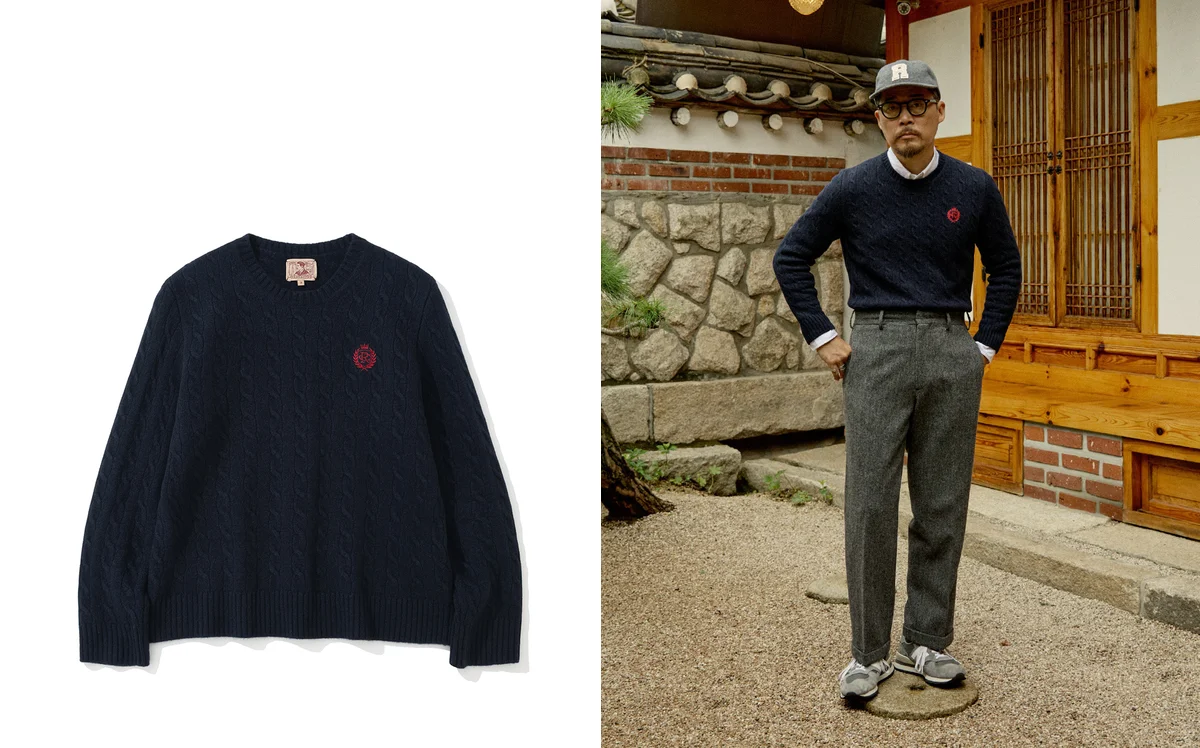
Shoulders: The seam should sit right at the point of your shoulder. Not an inch past it. This single measurement determines whether the sweater looks intentional or accidental.
Body: Slim through the torso but not tight. You should be able to pinch about an inch of fabric at the side seam. Enough room for a shirt underneath, not enough to billow.
Length: The hem should hit mid-fly. When you raise your arms, your belt shouldn’t show. When you sit down, the sweater shouldn’t bunch up around your chest like a life vest.
Sleeves: To the wrist bone. About a half inch of shirt cuff peeking out is the classic look, but this isn’t mandatory. What matters is that the sleeves aren’t pooling over your hands.
The Neckline Makes or Breaks It
Not all crewnecks are created equal at the collar. A good crewneck has a ribbed neckband that sits close to the base of your neck — snug but not choking. It should hold its shape after washing.
Cheap crewnecks have loose, floppy necklines that stretch out after a few wears. You end up with a boat-neck silhouette that exposes your undershirt. Once the neckline goes, the sweater is done. No amount of careful washing brings it back.
Look for a neckband that’s at least an inch wide with tight ribbing. This is the structural detail that separates a five-year sweater from a one-season sweater.
Three Colors to Own First
If you’re building from zero, this is the order.
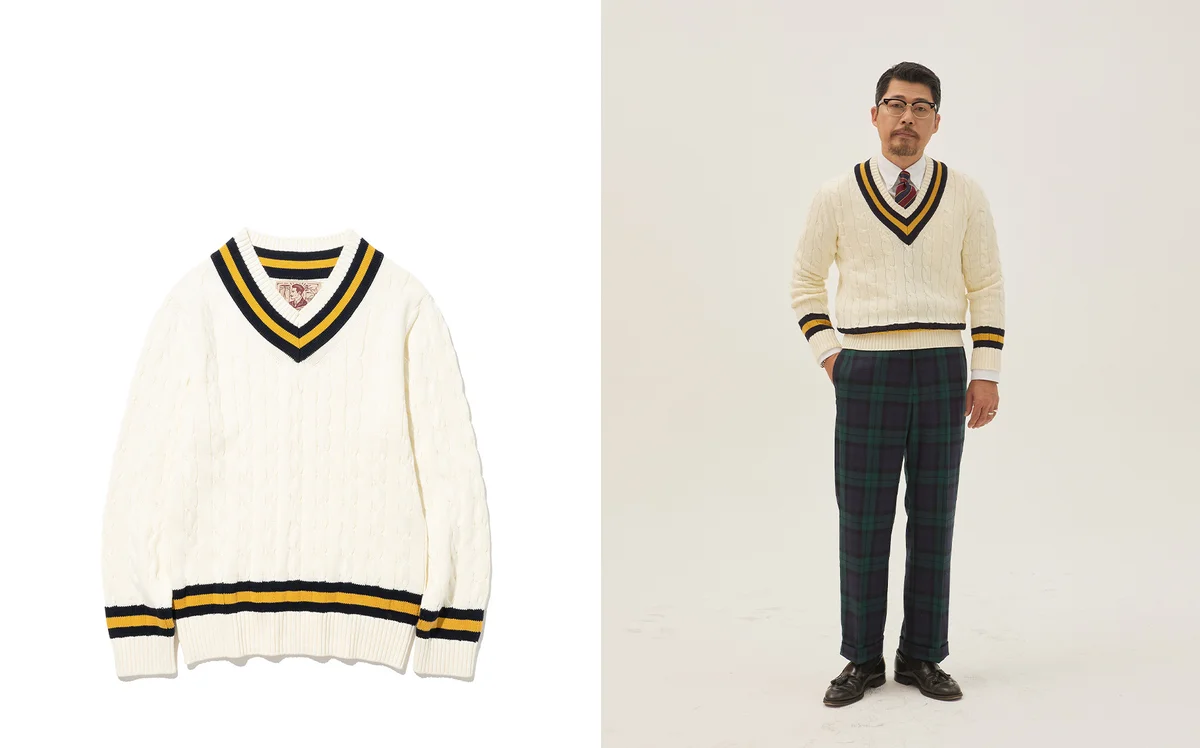
Navy. Goes with grey trousers, khaki chinos, jeans, olive pants — basically everything. Under a navy blazer, it creates a tonal column that’s effortlessly sharp. This is your first crewneck, full stop.
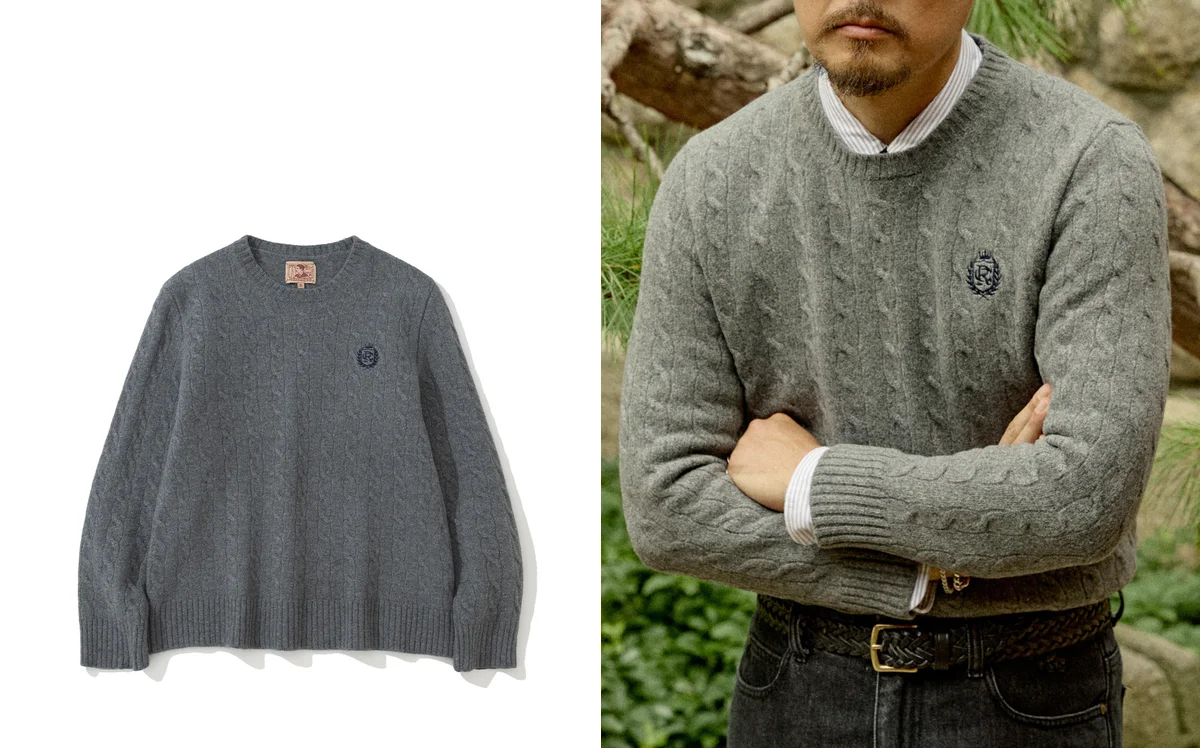
Grey. Heather grey, specifically. It’s the neutral that plays well with both warm and cool palettes. A grey crewneck over a white OCBD is one of those combinations that always looks right, even when you’ve put zero thought into it.
A Shetland tone. This is where it gets fun. Rust, mustard, forest green, wine — the earthy, saturated shades that Shetland wool does better than any other fabric. These colors give your fall and winter wardrobe personality without trying hard. Honestly, a burnt orange Shetland crewneck might be the single best piece for Seoul’s autumn.
Layering: The Crewneck’s Real Purpose
A crewneck sweater works in three configurations.

Sweater alone: Fine for weekends, casual offices, coffee runs. Roll the sleeves to the forearm in warmer weather. This only works if the fit is right — too baggy and you look sloppy, too tight and you look like you’re heading to the gym.
Over a collared shirt: The Trad standard. An OCBD underneath gives you structure at the collar and cuffs. The shirt collar should sit neatly above the crewneck’s neckband. If you haven’t tried this with a proper oxford cloth button-down, start there.
Under a blazer or sport coat: The full three-layer stack. This is where the crewneck earns its keep as a wardrobe essential. It replaces a vest or waistcoat, adding warmth and visual depth without formality. In Seoul’s long winters, this combination carries you from November through March.
The Seoul Angle: Why Crewnecks Work Here
In the original Ivy context, the crewneck was for layering against cold New England classrooms. In Seoul, the use case is surprisingly similar — but the outer layer changes.

Seoul winters are sharp and dry. The subway is overheated. The street is freezing. A crewneck under an anorak, with an OCBD underneath, handles the temperature swing from Gangnam Station to the Bukchon side streets without breaking a sweat — literally.
This is what we mean by Heavy Ivy. The pieces are the same, but the system adapts to Seoul’s rhythm. You’re not copying 1960s Cambridge. You’re solving the same problem — dressing well in variable conditions — with the tools that make sense here.
Care: How to Make a Crewneck Last Years
Washing: Hand wash in cold water with a wool-specific detergent. If you must machine wash, use a mesh bag on the gentlest cycle. Never use hot water. Never wring it out.
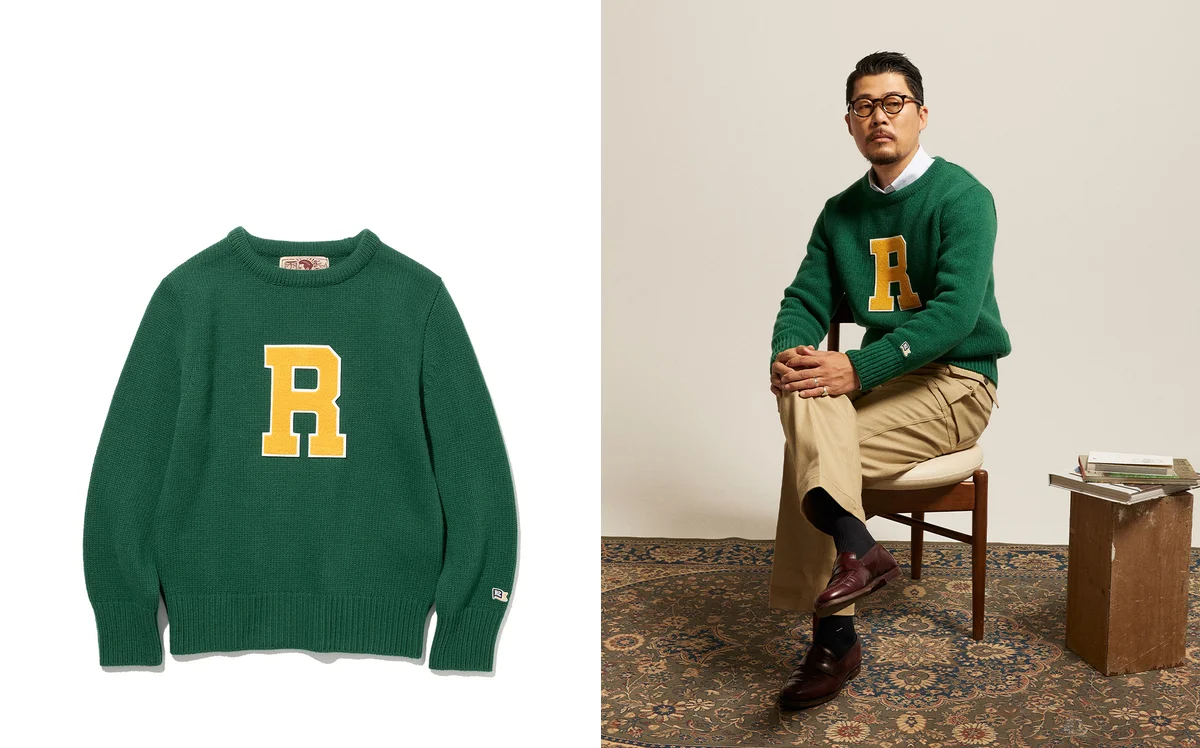
Drying: Lay flat on a towel, reshape by hand, and let it air dry. Hanging a wet wool sweater on a hanger is how you end up with shoulder bumps that never come out. This isn’t optional — it’s the single most important care step.
Pilling: It’s going to happen, especially with Shetland. Use a sweater stone or a fabric comb every few wears. Pilling isn’t a defect — it’s the nature of staple-fiber wool. A quick pass with a comb keeps things looking sharp.
Storage: Fold, don’t hang. Cedar blocks in your drawer keep moths away. Before storing for the season, wash first — moths are attracted to body oils and food residue, not the wool itself.
Fair warning: if you follow these steps, a good lambswool or Shetland crewneck lasts seven to ten years easily. The cost-per-wear math gets absurd.
What to Spend
Below $40, you’re getting acrylic or very thin cotton. It’ll look fine for a season and fall apart. Between $60 and $120, you’re in the range of real lambswool and Shetland from brands that care about construction. Renacts’ crewneck sweaters land in this range — built in 12-gauge lambswool with a reinforced neckband that holds its shape.
Above $150, you’re paying for heritage branding or cashmere blends. Neither is necessary. A well-made lambswool crewneck at $95 outperforms a luxury cashmere one at $300 in durability and ease of care.
Buy the best wool crewneck you can afford, take care of it, and you won’t need another one in that color for years.