
OCBD Shirt: Tucked vs Untucked (When to Wear Each)
Do you tuck an OCBD? Tuck it.
The shirt was cut for it. A traditional oxford button-down has a long curved hem meant to stay inside the waistband, and the clean line at the waist is the whole point of the trad silhouette. This relaxed-but-intentional approach is central to the Ivy style philosophy we outline in our complete guide.
What follows is why the hem settles this for you, what to do when a shirt fights the tuck, and how to keep a tucked shirt from looking stiff.
The OCBD Tucking Rule Is Simpler Than You Think
Look at the hem. If it falls below your hip bone — roughly past the zipper of your trousers — it was cut to be tucked.

Most traditional OCBDs have exactly that shape: a longer body with a curved hem, so the fabric stays anchored through a full day of movement. That curve is the tell.
A shirt built to hang loose has a shorter, straighter hem that stops near mid-fly. Wearing a long curved hem untucked reads as unfinished, because the fabric has nowhere to sit and drags past your back pockets.
Check the hem first. It answers the question before you get to the mirror.
When Tucked Is Always the Right Call
Any time you’re wearing a blazer, tuck the OCBD. No exceptions. I’ll be blunt: an untucked shirt under a sport coat is a rookie mistake that creates a sloppy silhouette where fabric bunches at the hip, destroying the jacket’s clean line. The Ivy guys at Princeton and Yale in the 1960s always tucked — not out of stuffiness, but because they understood that proportions don’t negotiate.
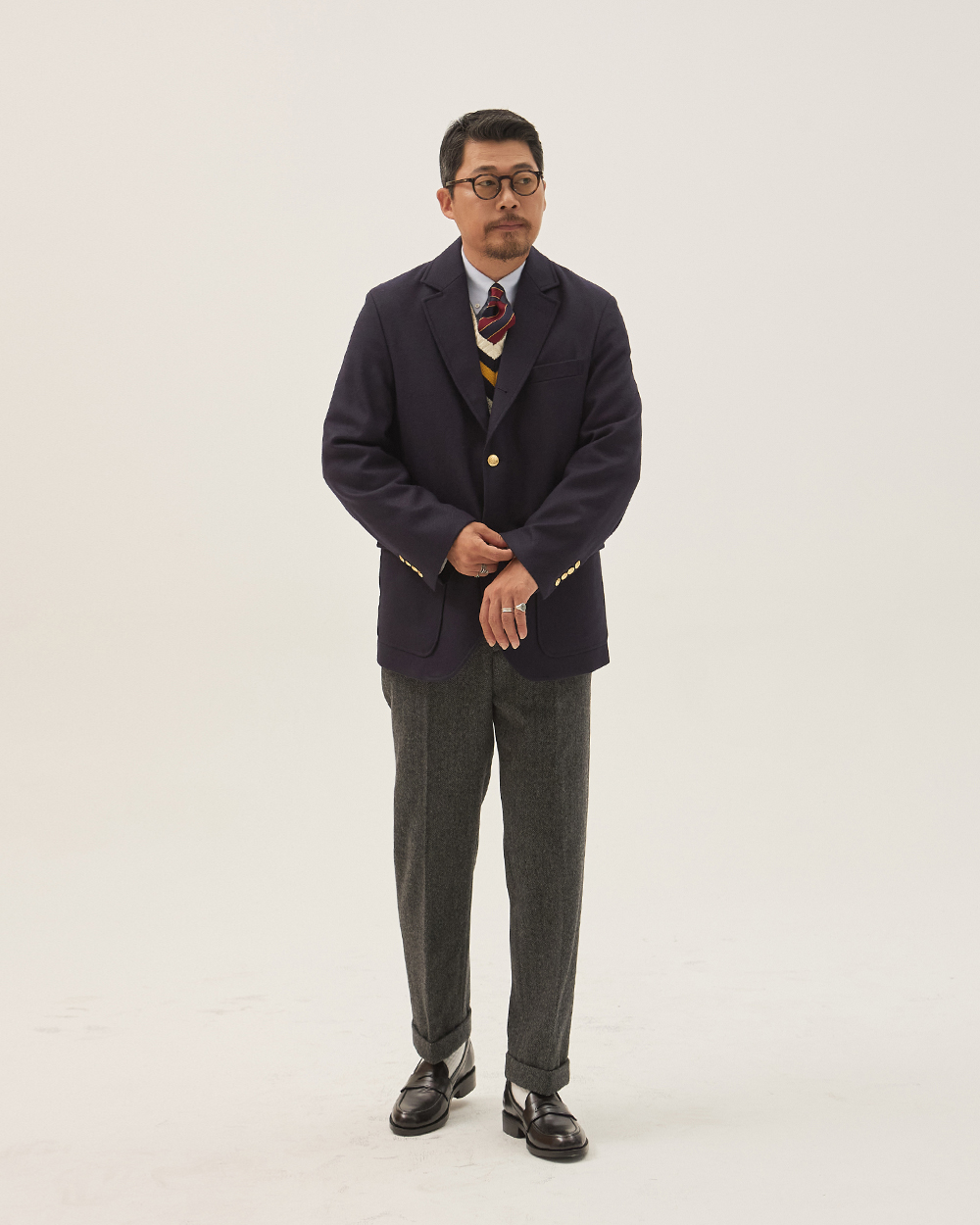
Same goes for dress trousers and slacks. Trousers have a defined waistband that demands a tucked shirt. If the pants have a crease, the shirt goes in. Don’t overthink it.
Business casual settings, job interviews, dinners where you’d think twice about ordering ribs — tucked every single time. It’s the safer, sharper option and the one that signals you actually thought about what you put on instead of grabbing whatever was closest.
When a Shirt Fights the Tuck
Some shirts bunch at the waist when you tuck them. That is a cut problem, not a reason to wear the shirt untucked.

There are two usual causes. The body is too wide, so the excess fabric has to go somewhere — size down, or find a trimmer cut. Or the hem is short and straight, which means the shirt was never built as a traditional OCBD.
A proper oxford tucks flat, with a little ease above the waistband and no rope of fabric around the midsection. If yours cannot manage that, the shirt is the problem, not the tuck.
The Seoul Weekend Formula
In the original Ivy context the shirt went into pressed khakis with a belt, on campus and off. Seoul’s weekend is easier in tone, but the line at the waist has not moved.

Here is the combination that works twelve months a year: OCBD tucked into slim chinos, belt on, cuffs rolled once, penny loafers. Add an anorak when October arrives.
The ease comes from the roll of the cuff and the softness of the cloth. It does not come from pulling the shirt out.
Body Type Matters More Than You’d Expect
Tucking helps more builds than it hurts.

Under 5’8″: a tucked shirt with a belt draws a visible waistline and gives the leg its full length. Left untucked, a long hem cuts the line and shortens the leg.
Broader builds: a well-fitted tucked shirt reads slimmer than a loose shirt tenting over the midsection. Counterintuitive, but it holds up in photographs.
Taller frames with a long torso have the most room to play with, which usually means the rise of the trouser matters more than the shirt does.
The Half-Tuck Is Not a Thing
Let’s be blunt. The front-only tuck — where you stuff just the front hem into your waistband and let the back hang — doesn’t belong in a traditional wardrobe. It’s a fashion-week affectation that looks intentionally messy.

If you want a relaxed tuck, do a full tuck and then raise your arms overhead. The shirt will pull out slightly and blouse naturally over the waistband. That gentle ease is the relaxed tuck you’re looking for — effortless because it literally required no effort.
What About the Sleeves?
Sleeves down, or rolled to a precise fold — one or two turns above the wrist. That matches the formality of a tucked hem.

A tucked OCBD with aggressively bunched sleeves sends mixed signals. Keep the roll deliberate and the same on both arms.
And always button the collar points down. It is an oxford button-down for a reason.
The Short Version
Tuck it. Then check three things.

Hem — long and curved means it was built to be tucked. Belt — a tucked shirt needs a waistline, so put one on. Cuff — roll once or twice above the wrist, or leave it down.
That is the whole decision. The ease in a trad silhouette comes from soft cloth and a natural shoulder, not from an untucked hem.
OCBD Tucking FAQ
Should you tuck an OCBD?
Yes. A traditional oxford button-down is cut with a long curved hem that is meant to sit inside the waistband, and the clean line at the waist is what the trad silhouette is built on.
Is an OCBD ever worn untucked?
Not in this wardrobe. A long curved hem worn untucked hangs past the back pockets and reads as unfinished, which is the opposite of what the shirt was cut to do.
How do you stop a tucked shirt from pulling out?
Buy the hem, not the fix. A proper OCBD hem falls below the hip bone and stays put on its own. If yours rides out by lunchtime, the body is too short.
Do you need a belt with a tucked OCBD?
Wear one. Tucking creates a visible waistline, and a bare waistband leaves that line unfinished. Leather with loafers, in a tone close to the shoes.
Does the half-tuck work?
No. Tuck fully, then raise your arms — the shirt pulls out a little and blouses naturally. That gentle ease is the relaxed tuck, and it takes no effort.
What if the shirt bunches at the waist?
That is the cut, not the tuck. Either the body is too wide and needs sizing down, or the hem is short and straight, which means it was not built as a traditional OCBD.