Madras Fabric History: The Indian Cotton That Defined Summer Prep
Madras Fabric History Starts in Chennai, Not Connecticut
Every summer, madras plaid shows up on shirts, shorts, and patchwork jackets across the prep world. Most guys wearing it have no idea where it comes from. Here’s the short version: madras fabric history begins in the city now called Chennai, India — formerly Madras — where handloom weavers have been producing lightweight vegetable-dyed cotton for centuries.
The fabric wasn’t designed for American country clubs. It was designed for Indian laborers — Chennai fishermen, field workers, and everyday people moving through the region’s brutal heat. In its home region, madras is still considered a humble, working-class cloth rather than a luxury item. It took a specific act of American cultural translation in the 1950s to turn Indian workwear into an Ivy League summer uniform. Madras is one of the lightest, most breathable woven cottons you can find, and every quality it has — the loose weave, the soft hand, the imperfect dye — comes from that original working-class purpose.
Understanding madras fabric history matters because it explains why the real thing behaves differently from what most fast-fashion brands sell as “madras” today. The authentic version bleeds. It fades. It gets better. The knockoffs just look like plaid.
From Indian Handlooms to American Campuses
Madras cotton existed for hundreds of years before Americans discovered it. The East India Company traded madras cloth from Fort St. George in Chennai as early as the 17th century, and British colonials wore it throughout the subcontinent. The first direct American connection to the fabric is the founding of Yale University itself: in 1718, Elihu Yale — the East India Company administrator who had run Fort St. George (then called Madras) — donated three trunks of Indian madras to the struggling Collegiate School of Connecticut. The school sold the fabric to complete its new buildings and renamed itself Yale in gratitude. The Ivy League institution most associated with American prep style is, literally, named after a man who ran a madras-exporting colonial outpost.
The fabric drifted in and out of the American market for two centuries after that. Sears sold America’s first mass-market madras shirt in its 1897 catalog. But the modern madras boom arrived in 1958, in one of the most famous incidents in American menswear history. That year, Brooks Brothers bought out a 10,000-yard shipment of authentic Indian madras from importer William Jacobson — who had sourced it from C. P. Krishnan Nair, the Chennai textile magnate. Brooks Brothers turned the lot into jackets, shirts, and shorts and shipped them to American buyers without any laundering instructions. The dyes, of course, bled in the wash. Lawsuits followed. Brooks Brothers brought in advertising legend David Ogilvy, who spun the scandal into the now-iconic tagline “Guaranteed to Bleed” — turning the fabric’s flaw into its defining feature. Post-war American campuses were casual but still dressy, and madras hit the sweet spot — patterned enough to be interesting, lightweight enough for September in New Haven.
Life magazine ran features on it through the late 1950s and early 1960s. Kennedy-era Washington adopted it. J.Press added it to its Yale-campus wardrobe. The fabric became permanently associated with a certain kind of American ease — educated, relaxed, summery.
The colonial arc behind all of this is more complicated than the Ivy version makes it sound. The same handloom cotton the Kennedys wore on Nantucket had, in earlier centuries, been traded across the Atlantic as currency in the slave trade, worn by Kalabari families in West Africa as sacred cloth they called injiri (“real India”), and imposed on enslaved Caribbean women as a marker of inferiority. Today the same fabric is the official national dress of Martinique. A simple summer plaid carries more weight than its weight suggests.
What Makes Real Madras Different
Here’s the thing most people get wrong: authentic Indian madras is vegetable-dyed. That means the colors bleed when washed. This isn’t a defect. It’s the defining characteristic.
The bleeding that Ogilvy’s campaign weaponized was the signature of the authentic dye process: natural vegetable pigments — indigo (blue), turmeric (yellow), laterite (red earth tone) — that softened and merged into each other over repeated washes, creating a washed-out patina that looked better with age.
Modern madras from most brands uses synthetic dyes that don’t bleed. The pattern is printed or yarn-dyed with chemical colorants. It looks like madras. It’s not really madras. The authentic stuff has a slightly irregular hand — you can feel the variation in the weave because it was made on a handloom, not an industrial power loom.
The Weave and Weight
Madras uses a plain weave — the simplest structure, with warp and weft threads crossing one-over-one. The authentic specification runs a lightweight 60-count yarn for the warp and a slightly heavier 40-count yarn for the weft, which is what gives genuine Indian madras its characteristic soft hand and irregular texture. This creates a fabric that’s incredibly breathable. Most authentic madras runs in the 3–4 ounce per square yard range; a standard oxford cloth is around 5 ounces. Madras is roughly 30–40% lighter than an OCBD.
That lightness is why it works so well in humid weather. Seoul in July is brutal — 30°C with 80% humidity. In that kind of heat, you want the thinnest possible fabric between you and the air. Madras delivers.
The downside of that light weight is durability. Madras isn’t built for hard wear. It wrinkles easily, it can tear if you’re rough with it, and the collar points on a madras shirt won’t hold a crisp roll the way an OCBD will. That’s fine. It’s a summer fabric. Treat it accordingly.
Classic Madras Patterns and Colors
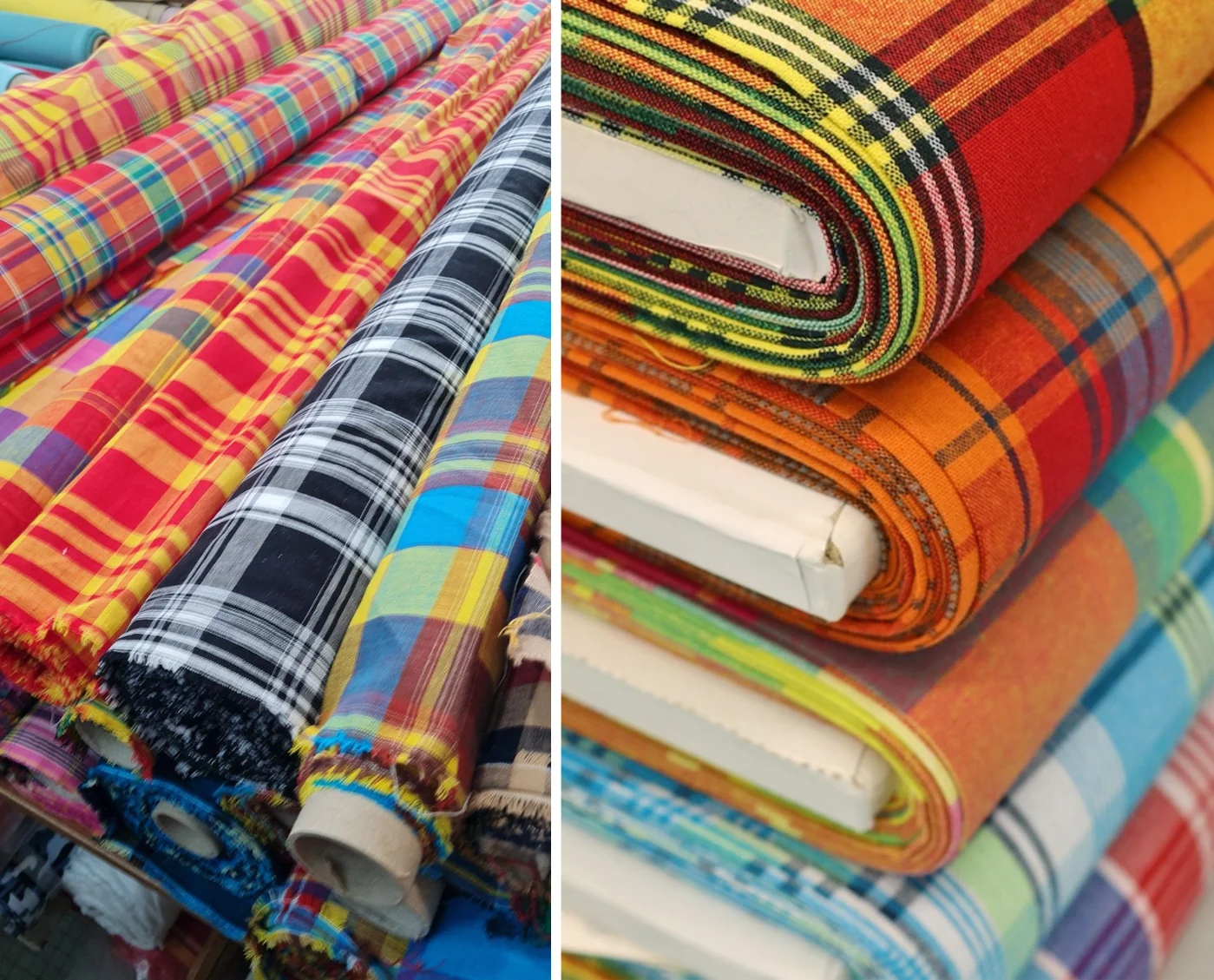
Madras plaid isn’t one pattern — it’s a family of patterns. The common thread is overlapping stripes in multiple colors, creating an asymmetric plaid. Unlike tartan, which follows strict clan-specific rules, madras patterns are freeform. Weavers in Chennai traditionally chose colors based on what dyes were available.
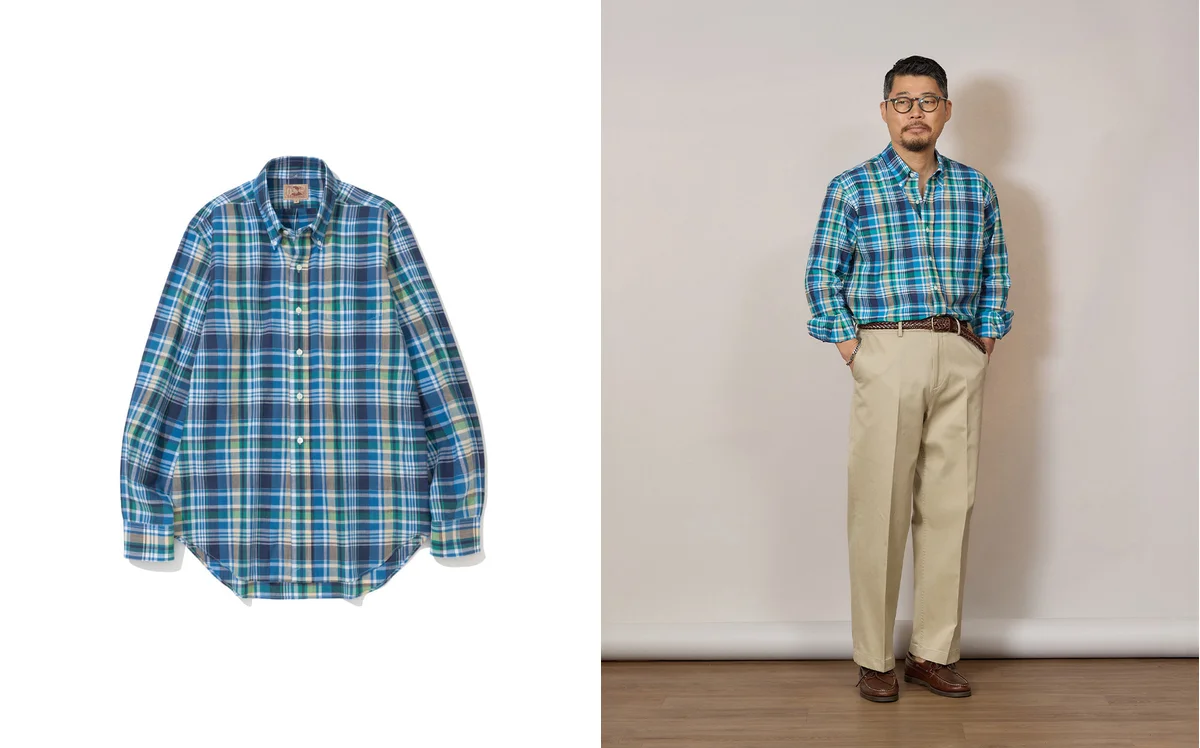
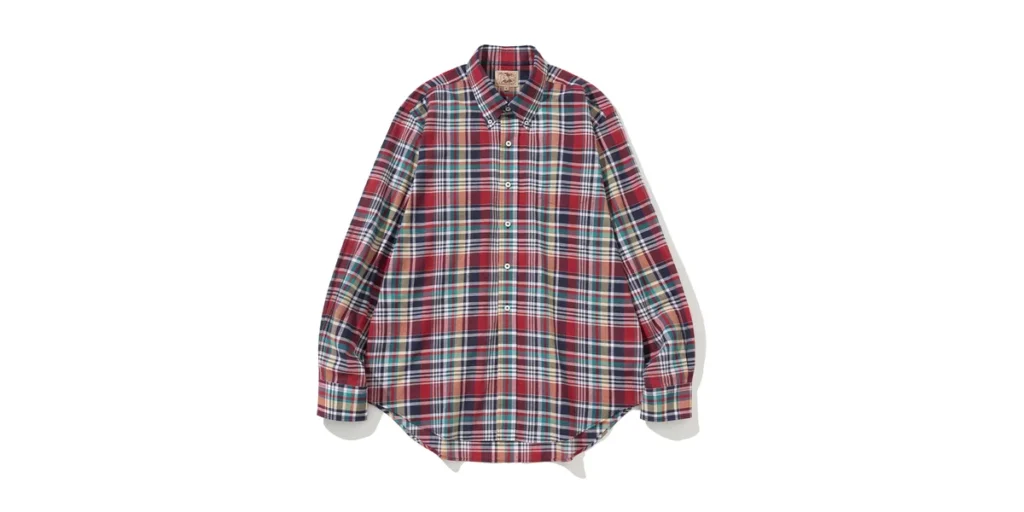
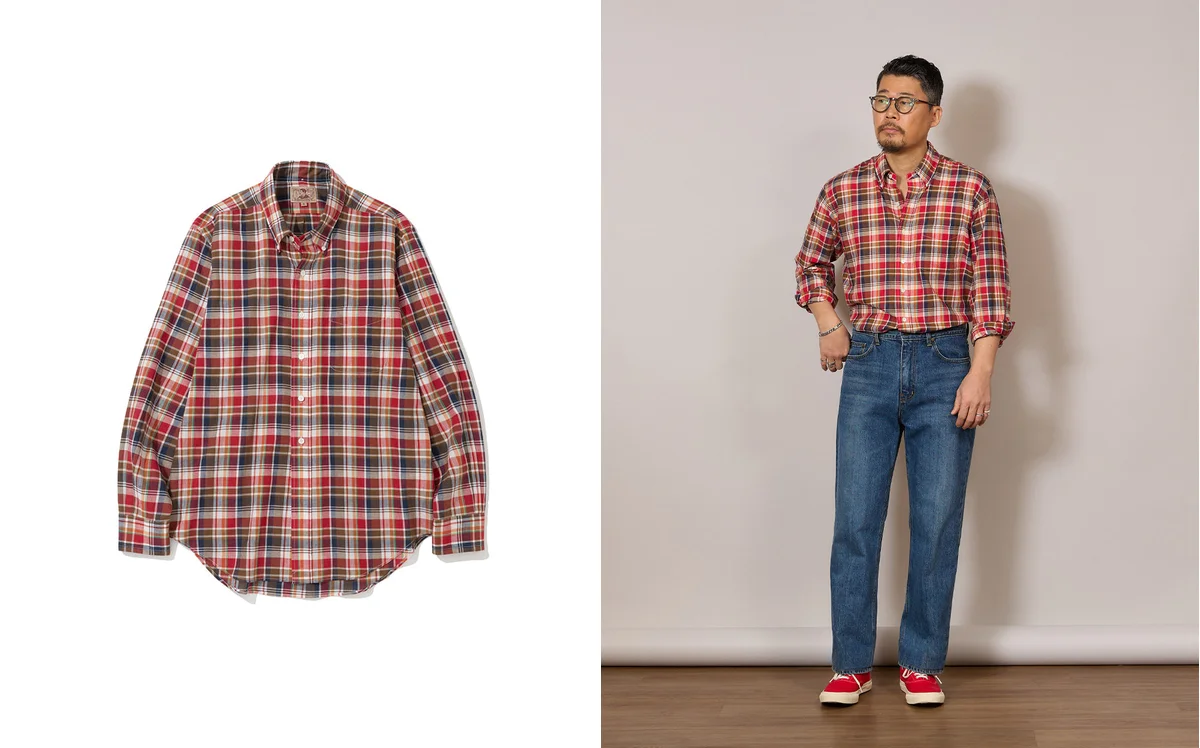
The most recognizable combinations lean warm: red, yellow, orange, and green. But you’ll also find navy-and-green versions, muted earth tones, and the occasional pink-and-blue that screams Nantucket. The brighter, warmer colorways are the classic ones. If your madras looks like it could double as a Scottish tartan, it’s probably not authentic.
Patchwork madras deserves its own mention. In the 1960s, someone had the idea to cut different madras fabrics into squares and sew them together into a single garment. The result looks chaotic but somehow works. Patchwork madras jackets and shorts became a prep staple. They’re loud. That’s the point.
Madras Fabric History Meets Seoul
In the original Ivy context, madras meant Bermuda shorts and go-to-hell pants at the country club. In Seoul today, it reads differently — and the reason it reads differently is a Japanese detour.
Yasuhiko Kobayashi’s September 1976 Heavy Duty Ivy feature in Men’s Club magazine (covered in detail in our L.L. Bean history and anorak jacket history posts) famously combined a madras shirt with a mountain parka, Levi’s 501s, and climbing boots. The layering looked absurd on paper and worked perfectly in practice. Japanese brands like Beams Plus and BEAUTY & YOUTH built their summer lineups around that reading of madras. What Seoul Traditional inherits is not the Kennedy-era Nantucket version of madras — it is Kobayashi’s translation of it.
Seoul’s version of summer trad tends to be more restrained. A madras shirt tucked into chinos with penny loafers works perfectly. Skip the full patchwork jacket — that reads more costume than style on the streets of Gangnam. One madras piece per outfit is the rule. Let it be the statement, and keep everything else quiet.
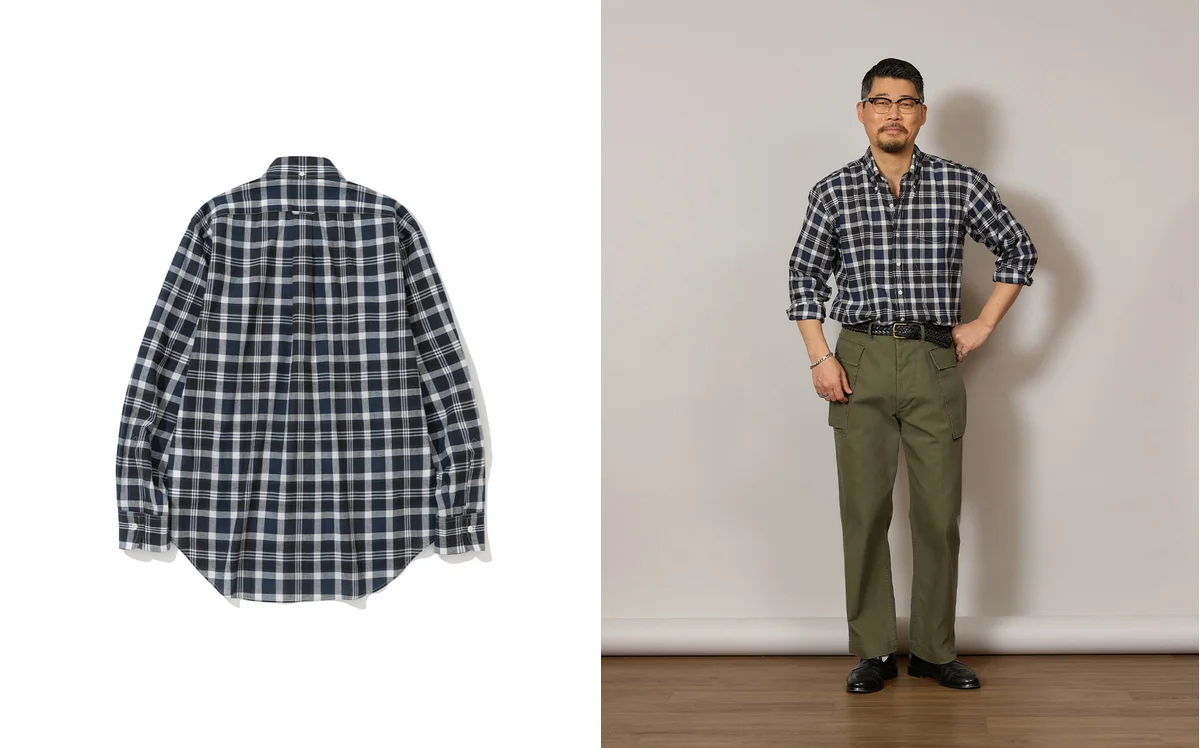
The navy-based, muted colorways make more sense for Seoul than the bright reds and yellows. The style temperature here runs cooler and more urban than a New England beach town. The fabric still delivers on breathability, which matters when you’re navigating Euljiro in August humidity.
Keep the approach simple: respect the fabric’s origins, pick colorways that work with your existing wardrobe, and don’t try to out-prep the prep. One well-chosen madras shirt does more than a closet full of loud patchwork.
How to Wear Madras in a Modern Wardrobe
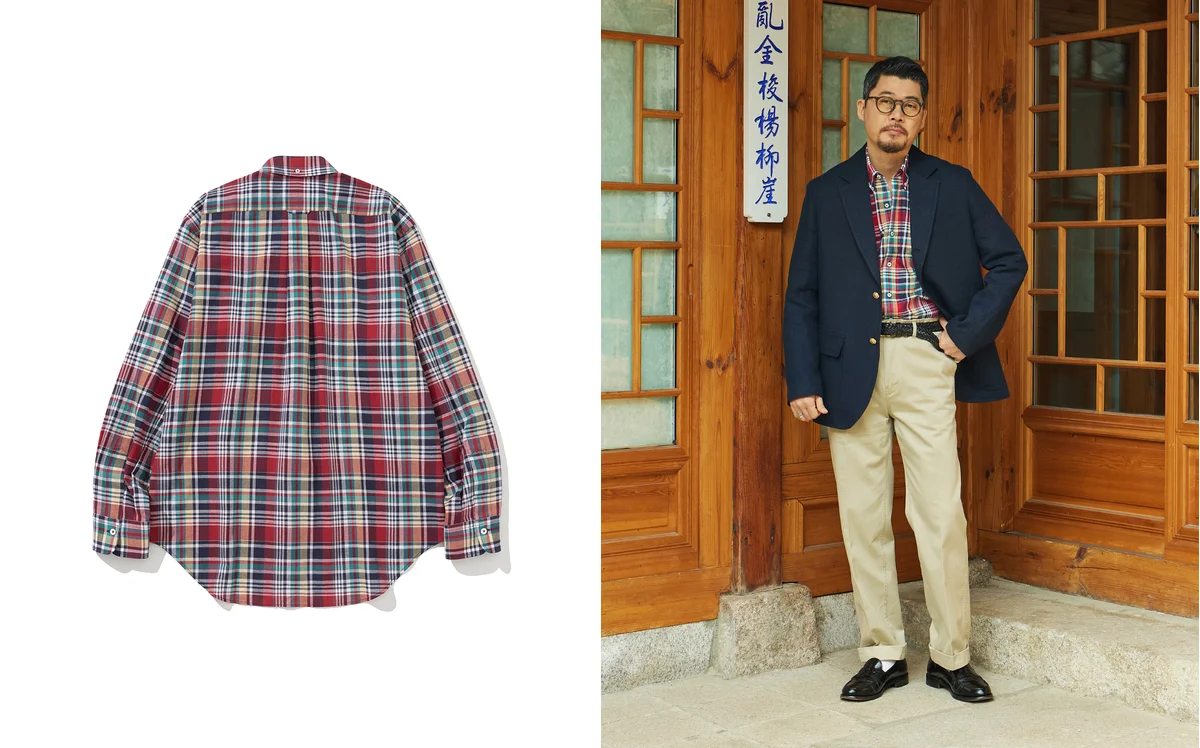
The safest entry point is a madras shirt. Tuck it into khaki chinos, add a pair of penny loafers, and you’re done. This combination has worked since 1958 and it still works today. The shirt provides all the visual interest — your bottoms and shoes should be neutral.
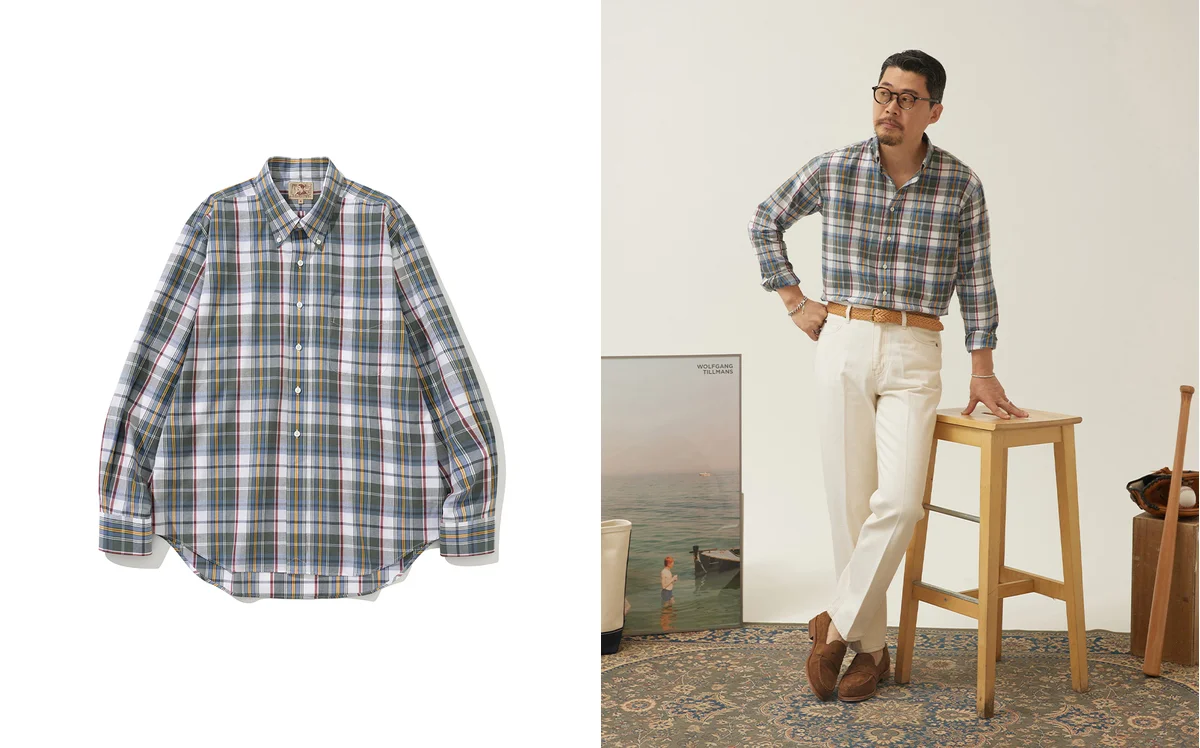
For a slightly dressier take, layer a navy blazer over a madras shirt. The structured blazer calms down the busy pattern. Keep the blazer unstructured and lightweight — a heavy wool blazer over madras looks wrong in every way.
Madras works better as a shirt than as shorts or pants. Madras shorts can tip into “tourist at a resort” territory fast. A madras shirt tucked in with a belt looks intentional. Madras shorts with boat shoes looks like you’re lost on the way to a clambake.
Ties are another option. A madras tie adds summer personality to a white or blue OCBD without overwhelming the outfit. It’s a small dose of color and pattern that signals you actually know your madras history — without turning yourself into a walking flag.
Renacts carries madras shirts in multiple colorways — the same authentic lightweight specification described above, paired against the same natural-shoulder, cotton-forward wardrobe the rest of the Seoul Traditional catalog is built from. How to wear them in a real Seoul summer is its own full post.
If you want the entry point in one garment, it is a madras button-down in navy multi — dark enough in the ground that the pattern reads as texture from across a room.
Caring for Madras Cotton
If you have authentic bleeding madras, wash it in cold water separately the first few times. The dyes will run. This is normal and expected. After three or four washes, the bleeding slows down and the colors settle into a softer, more lived-in palette.
Never bleach madras. Never put it in a hot dryer. The fabric is lightweight and the dyes are delicate. Hang dry is ideal. If you must use a dryer, use the lowest heat setting and pull it out while still slightly damp.
Ironing madras is optional. Some guys like the rumpled look — it suits the casual, summery character of the fabric. If you do iron, use a medium setting with steam. Madras isn’t meant to look pressed. It’s meant to look relaxed.
Store madras shirts folded, not on hangers for long periods. The lightweight fabric can stretch at the shoulders over time. Keep them out of direct sunlight during storage — even vegetable dyes will fade unevenly if one side gets more light than the other.
Why Madras Still Matters
Madras fabric history spans centuries and continents. It connects Indian artisan traditions to American campus style to modern Seoul streetwear. Few fabrics carry that kind of cultural weight while still being practical and wearable.
Nothing else does what madras does. No other fabric is that light, that colorful, and that suited to hot weather. Linen wrinkles worse. Seersucker has less color. Hawaiian shirts have less heritage. Madras occupies a unique spot in menswear — bold enough to make a statement, traditional enough to be taken seriously.
If you own zero madras, start with one shirt in a muted colorway. Wear it with the simplest outfit you have. See how it feels when the fabric breathes in summer heat. That’s the experience that hooked Ivy Leaguers sixty years ago, and it holds up just as well now.