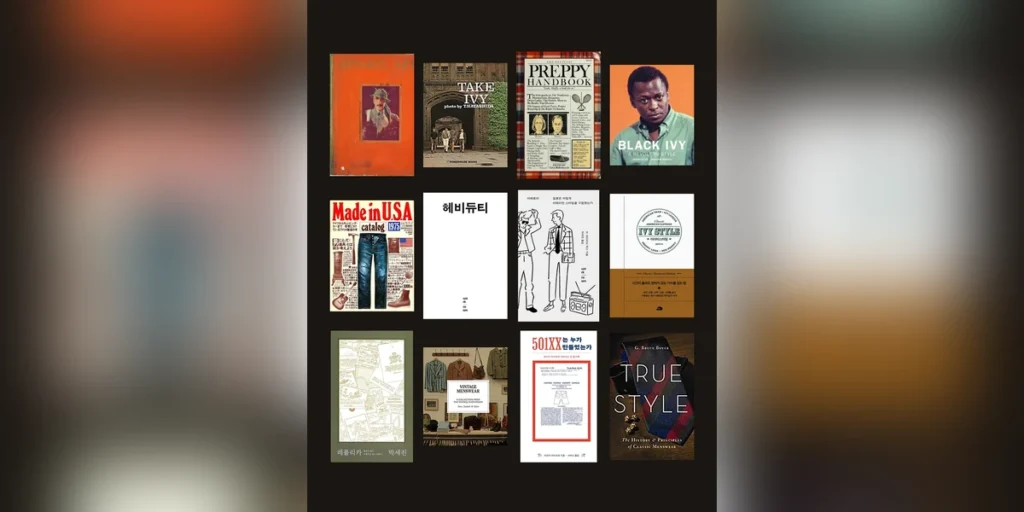
12 Books Every Trad Devotee Should Read — A Vintage Bibliography from Seoul
These are the men’s fashion books we keep on the shelf that menswear people don’t post to Instagram. The shelf sits behind the desk, slightly tilted, and gets pulled down every time the weather shifts or a new shipment of vintage hits the showroom. When a jacket from 1962 lands on the cutting table and we need to know why the lapel rolls the way it does, the answer is almost never online — it is in one of these twelve volumes.
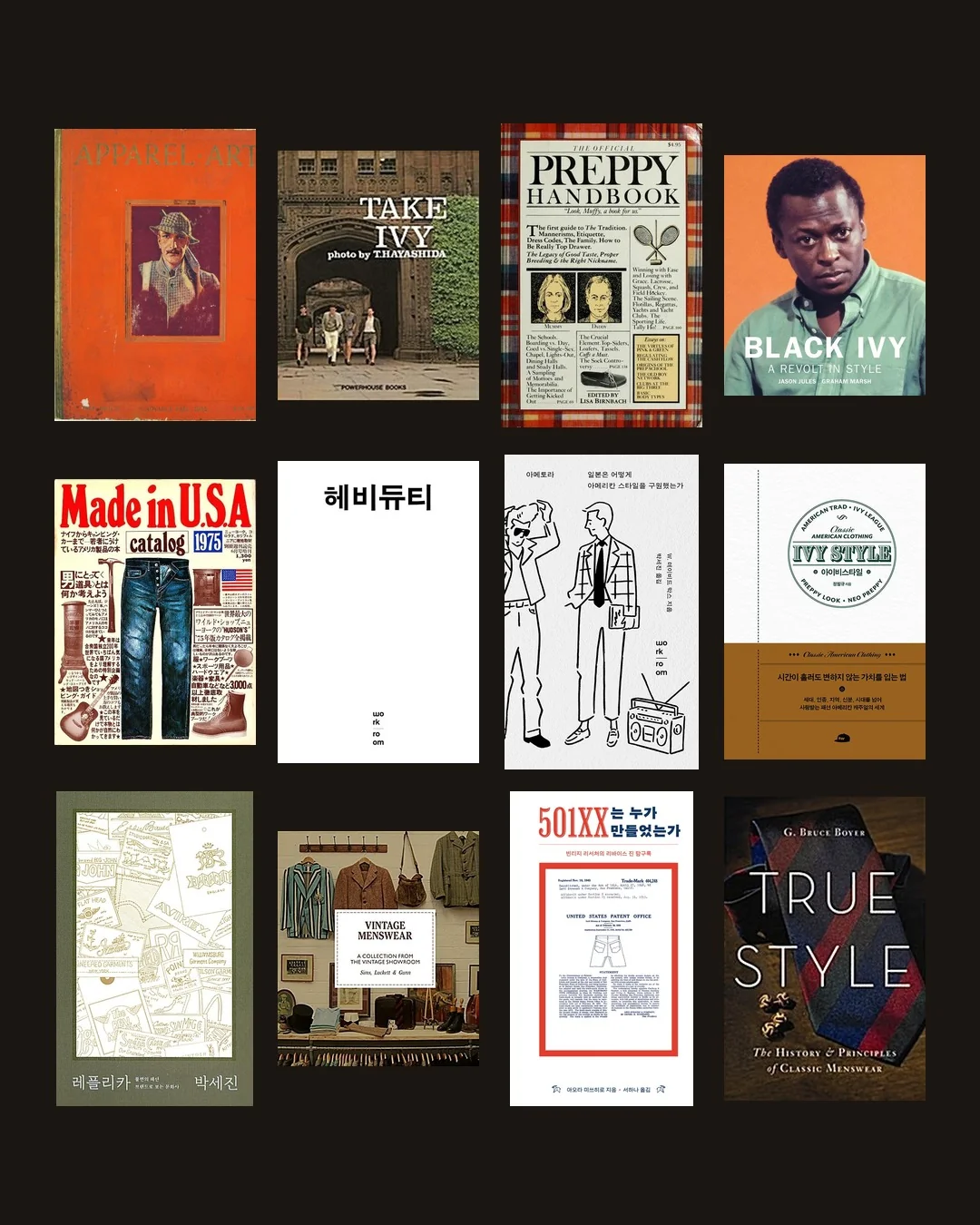
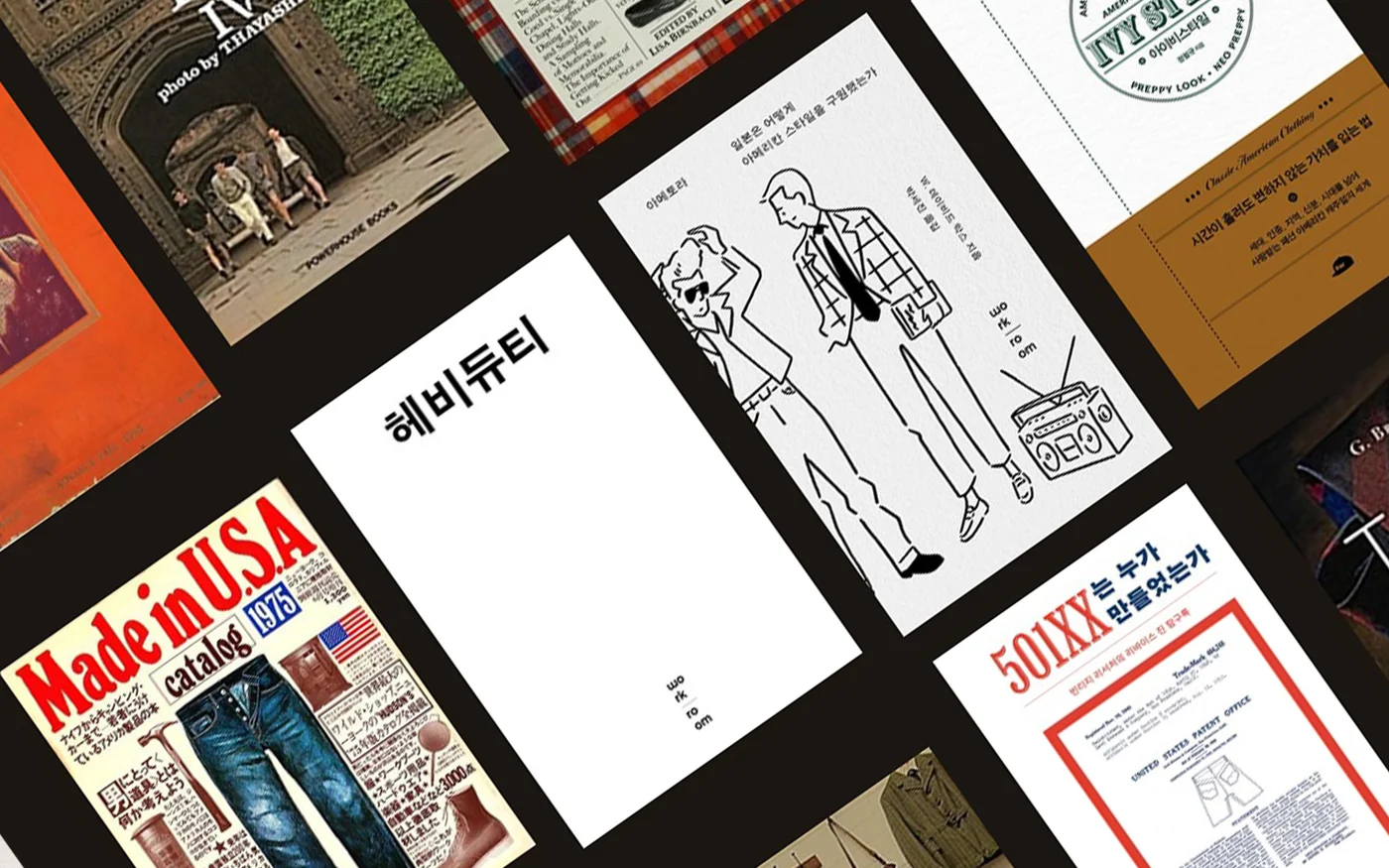
We’ve been collecting these men’s fashion books in our archive at Yeonhui-dong for years — some bought in Tokyo, some tracked down on out-of-print sites for embarrassing sums, two of them written in Korean by people we know personally. Together they trace one continuous story: a way of dressing that America invented, Japan preserved, and Seoul is now translating into its own language. This is the reading list we’d hand a friend who walked in and asked where to start.
The pattern we’ve noticed is this. The deeper anyone goes into clothes, the closer they move toward the original. Trend-chasing is a phase. After a while, you start asking who made this first, what room it was worn in, what the shoulder construction was actually trying to do.
And the people who know those answers wear the same oxford shirt differently. They roll the cuffs with intent. They balance the trouser break against the loafer with a confidence that can only come from having seen the photograph it’s referencing. We organize the twelve books into four chapters — the originals, the Japanese interpretation, the field manuals, and the two Korean books that close the circle in Seoul.
The 12 Men’s Fashion Books on Our Shelf, Organized in Four Chapters
We’ve organized these twelve men’s fashion books into four chapters — the originals, the Japanese interpretation, the field guides, and the two Korean books that close the circle in Seoul. Read in order, they trace one continuous story: the way of dressing America invented, Japan preserved, and we’re now translating into Seoul’s own register.
Chapter I · The Originals: Where American Style Began
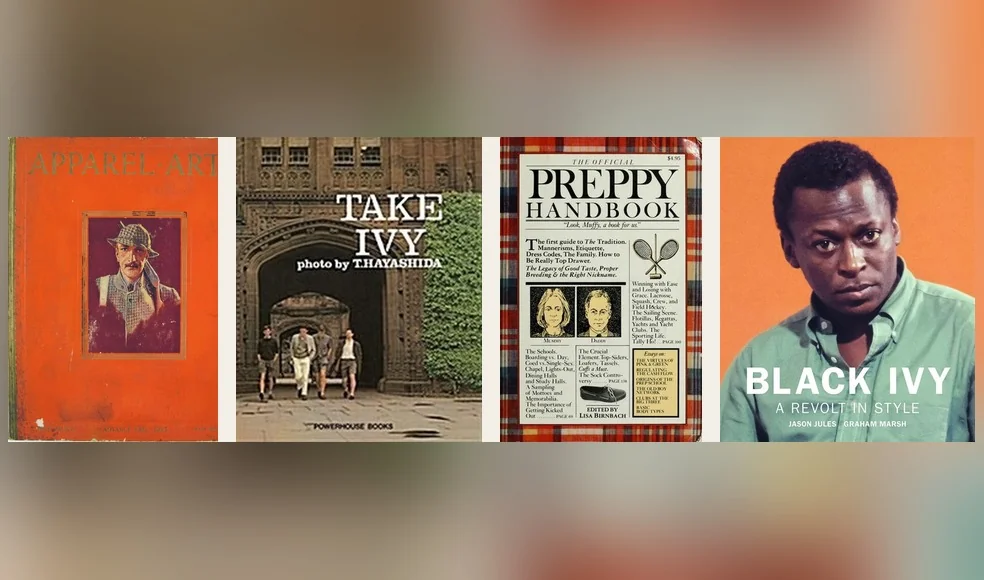
Everything we call “classic” started somewhere. Someone cut it first, someone else photographed it, a third person codified the rules — and a fourth wrote down what the first three were too close to see.
The four books in this chapter cover thirty years of American menswear from the inside, the outside, the satirical angle, and the angle that almost got left out of the story entirely. Read them in order and the phrase “American style” stops being a marketing word and becomes a specific set of garments worn in specific rooms by specific people. For the broader stylistic framework these books all orbit, our complete Ivy style guide sits alongside this reading list as the practical companion.
Apparel Arts Archive — The Real Source for American Tailoring
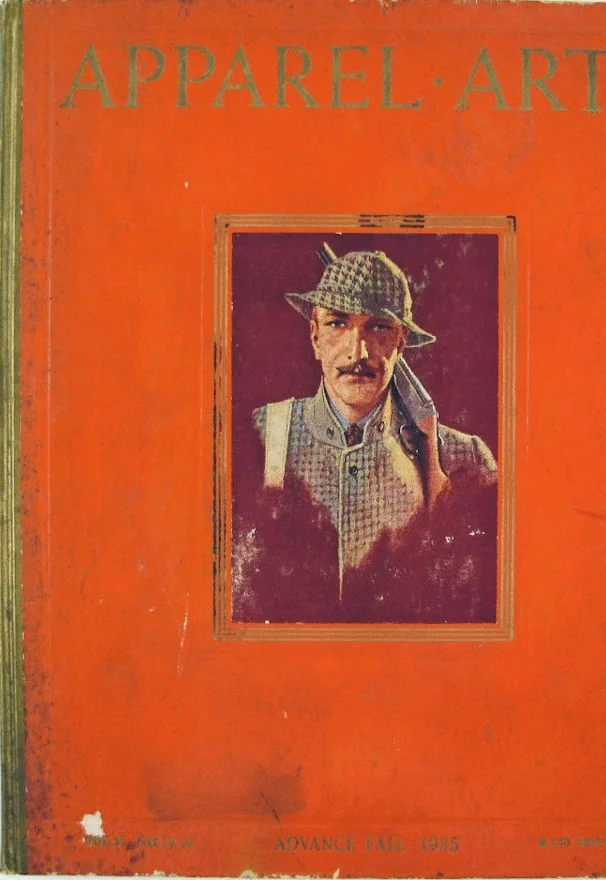
If we had to name the foundational text, it would be Apparel Arts. Published from 1931 to 1957 in the United States, it was the trade magazine that eventually became GQ. The reason it matters isn’t its age. It’s that Apparel Arts documented the formation of American men’s tailoring in real time — the only primary source we have for the 1930s and 1940s, before the silhouette had a name. The illustrations were watercolor, the writing was technical, and the audience was the haberdasher behind the counter, not the customer in front of it.
Most people reach for Take Ivy when they want to understand American classic clothing, but Apparel Arts sits thirty years earlier. Before the Ivy League students adopted the tweed jacket, this is what their fathers were buying. The unstructured shoulder, the soft lapel, the natural drape that would later define the American sack suit — all of it is here, documented in the language the trade actually used. Japanese vintage collectors cite it more than any other source. The book is long out of print, but if you search “Apparel Arts” you’ll find a surprisingly rich digital archive. The doorway is still open.
Take Ivy — The Ivy League Wardrobe, Sixty Years Later

In 1965, four Japanese photographers crossed the Atlantic with cameras. Their destination was the American Ivy League campus. The book they brought back has spent the last sixty years as the single most-cited document in vintage menswear. A tweed jacket with a scarf thrown over it. An oxford button-down ironed but not fussed over. A pair of penny loafers worn with the instep showing. What looks like a costume reference now was, in 1965, simply what kids wore to class.
What makes Take Ivy exceptional isn’t the clothes. It’s the position. Americans couldn’t see their own style because they were inside it. Four photographers from Tokyo could, because they weren’t. The book captured something native that natives can’t describe — students walking to class, sitting on library steps, reading on the lawn. Not styled, not posed, simply observed. Anyone interested in American casual, Ivy, or trad has to start here. If you’re reading this in Korean menswear circles, the book is almost certainly already on your shelf.
The Official Preppy Handbook — When a Joke Became the Manual
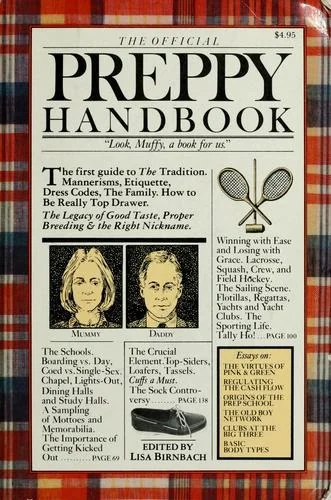
In 1980, Lisa Birnbach released a guidebook to East Coast American upper-class student culture — the world the word “Preppy” was beginning to name. The funny thing is that the book was conceived as half a joke. Birnbach exaggerated the codes of preppy life to make readers laugh. What happened instead was that everyone started reading it as instruction.
Clothing, language, hobbies, etiquette — the book inventoried every layer of Northeastern elite student life and categorized it. It became an instant bestseller, and the joke became the rulebook. A pink oxford under a navy blazer with a knit tie pulled loose — the entire madras-and-oxford preppy aesthetic as we know it — was crystallized by this book’s decision to call it a category.
Ralph Lauren’s entire marketing engine ran on the same fantasy in parallel, and the two together created the version of American trad that the world bought. To understand one axis of American classic, this is required reading. It also happens to be one of the most readable books on the list.
Black Ivy — The Other Half of the Same Decade
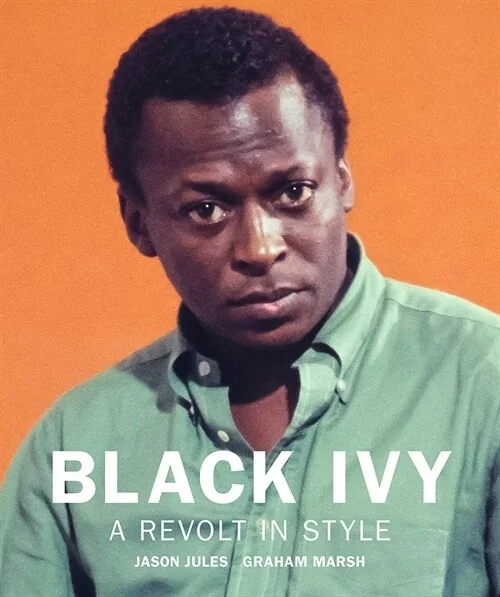
In 2021, Jason Jules published Black Ivy, and the book filled a gap that had been visible to anyone paying attention. Miles Davis in a slim suit. Sidney Poitier with a shirt collar pressed to the millimeter. Black American cultural figures of the 1960s wearing Ivy clothes in a context Ivy clothes hadn’t been written about wearing. The book documents, with photographs and essays, how the same wardrobe lived in a different room.
If Take Ivy showed white students on campus quads, Black Ivy shows the same era’s jazz clubs, civil rights marches, and Harlem barbershops. The wardrobe overlaps almost entirely — the natural-shoulder jacket, the OCBD, the repp stripe tie — but the meaning shifts when the room shifts. Read both books and you stop thinking of Ivy as a single culture. You start seeing it as a set of garments multiple communities adopted, each with their own reasons. That double vision is, in our view, the more accurate way to read the entire decade. Black Ivy sits on the shelf next to Take Ivy in our archive for exactly that reason.
Chapter II · Japan’s Interpretation: Sixty Years of Keeping the Flame
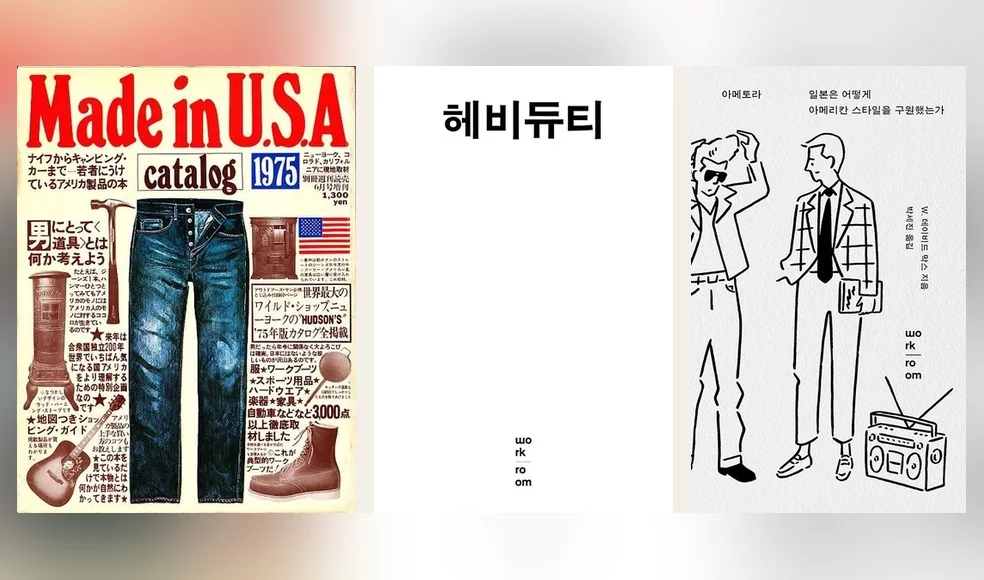
Of the twelve men’s fashion books on our shelf, three come from this lineage. Japan didn’t import American clothes. Japan studied them. Observed, documented, dismantled, reassembled.
Sixty years of that process accumulated into something the original country had forgotten how to do — and at some point the interpretation surpassed the source. There’s a reason every serious vintage conversation circles back to Japanese magazines, Japanese brands, Japanese reference books. To understand contemporary American casual, you have to pass through the Japanese prism first. These three books map that journey.
Made in USA Catalog — The Spark of the Japanese Vintage Boom
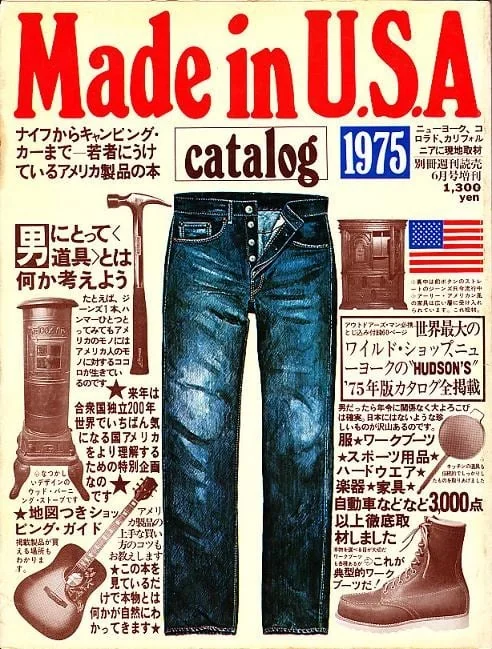
In 1975, Kinameri and Ishikawa traveled across the United States and photographed roughly three thousand objects — clothes, tools, cars, household goods. The result was a 274-page catalog called, simply, Made in USA Catalog. It wasn’t a product list. It was a cultural archive of what an American thing looked like, organized through Japanese eyes.
The book’s position in Japanese fashion history is hard to overstate. The following year, in 1976, a magazine launched that inherited its sensibility directly — Popeye. The catalog was the spark for the Japanese heavy-duty boom and the entire American vintage import culture that followed. Every Japanese reinterpretation of American clothing for the next fifty years grew from this seed. There’s a reason the book is on every vintage reading list. It’s the document that started the conversation.
HEAVY DUTY — The Book That Named the Aesthetic

In 1977, Yasuhiko Kobayashi published an illustrated reference book that codified an entire way of dressing. Work boots, down parkas, flannel shirts, canvas backpacks — the wardrobe of someone moving between the mountain and the city, refusing to draw a line between the two. The book’s title was the name of the category it was inventing: HEAVY DUTY.
Fifty years later, this is still the foundational text in vintage and outdoor circles. Why workwear details look the way they do, how the functional vocabulary of outdoor clothing migrated into everyday wear, why a canvas tote and a wool tweed jacket can sit comfortably in the same outfit — the book explains all of it through line drawings and short essays.
It’s also where the word “heavy duty” stopped meaning “sturdy” and started meaning something closer to a posture. The HEAVYDUTY ARCHIVE shelf in our showroom takes its name, and its logic, directly from this book. If you want to understand why a beat-up M-65 jacket and a pair of well-worn chinos read as composed rather than careless, this is the book that decided so.
Ametora — How Japan Kept the Clothes America Forgot
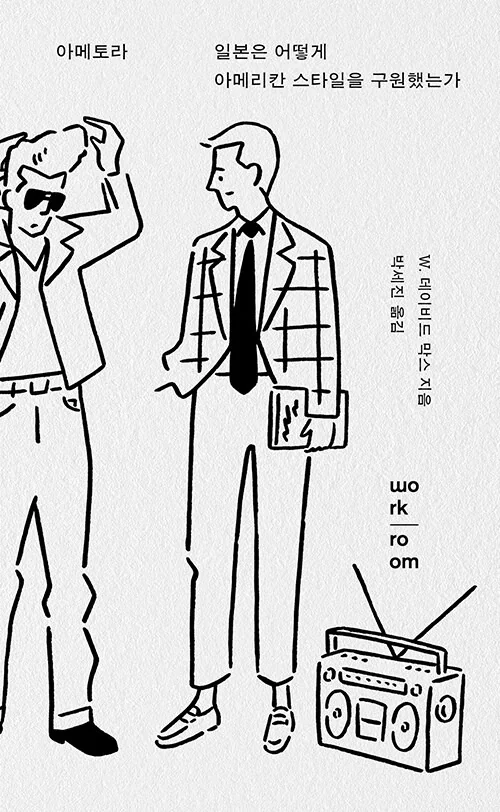
In 2015, the American journalist W. David Marx asked a question that should have been embarrassing to American menswear: why do Japanese people know American clothes better than Americans do? The book he wrote to answer it traces a hundred years of cross-Pacific influence. The title is a Japanese contraction of “American Traditional,” and it tells you exactly what the book is doing.
The details America forgot in its postwar shift to mass production — the loom-width of selvedge denim, the gusseted underarm of a flat-knit sweatshirt, the hand-welted construction of a work boot — were preserved by Japanese artisans across sixty years of patient reproduction. Ametora documents that preservation in granular detail. It also makes a larger argument: that fashion isn’t just an industry, it’s a way one culture can hold another culture’s memory. If we could recommend only one book from this entire list, this would be the one most of our customers come back and thank us for.
Chapter III · Field Guides and Manuals: The Curator’s Desk
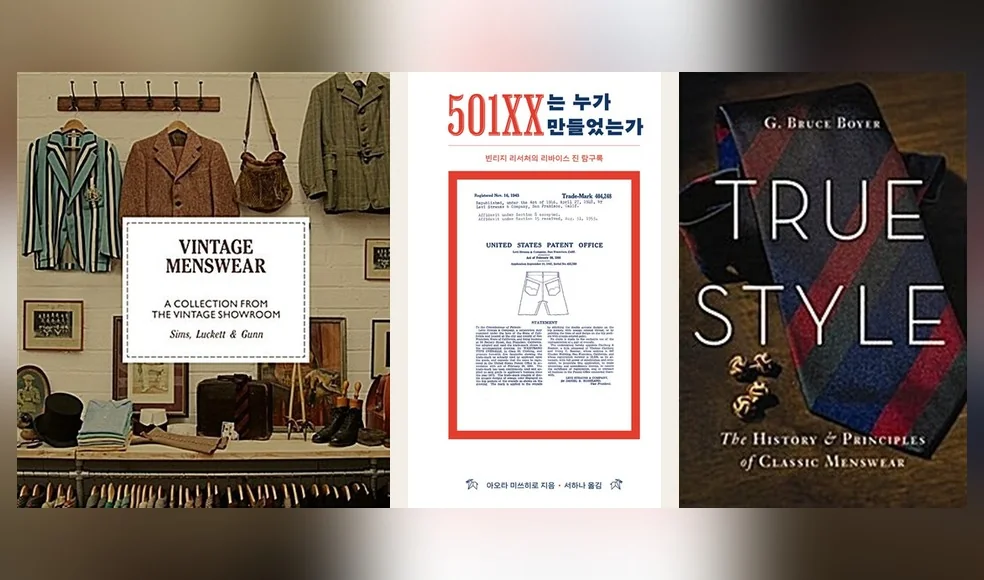
Some books are written by people who wear clothes. Others are written by people who organize them — curators, archivists, dealers who’ve handled thousands of garments, checked the labels, dated the construction, sorted everything by decade and category. When you want to know how a thing was actually made, an afternoon with one of these three books beats a hundred Pinterest searches. They are reference works in the strictest sense.
Vintage Menswear — A Hundred Years, Catalogued
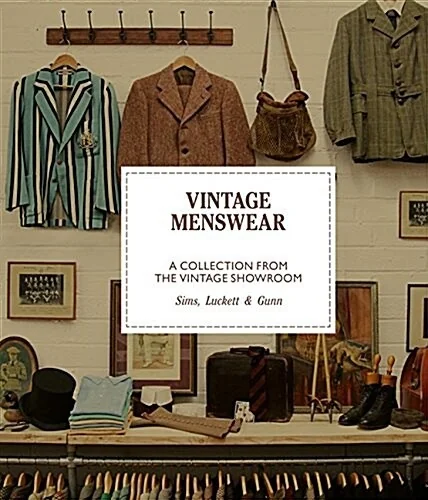
In 2012, three curators from London’s premier vintage showroom organized their collection into a single book. The scope is exact: one hundred years of menswear, from 1880 to 1980, sorted into workwear, military, sportswear, and adjacent categories. Each garment is photographed alongside the details that date it — the label, the stitching, the hardware, the cloth. It’s the reference we open first when an unfamiliar piece comes through our archive.
The book’s real value isn’t the photographs, though they are excellent. It’s the arc you see when the categories are laid side by side. Workwear becoming casual wear. Military details migrating into civilian outerwear. The functional vocabulary of one decade becoming the design language of the next. A hundred years of menswear in one tracking shot. The phrase “the curator’s desk book” gets used about a lot of titles. This is the one it’s actually true of.
Who Made 501XX — A Hundred and Fifty Years Through One Jean
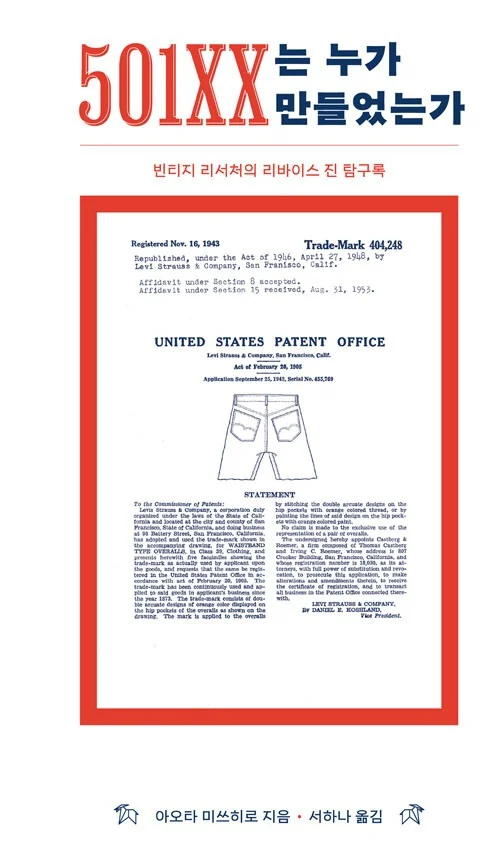
In 2024, Mitsuhiro Aota published a focused study built around a single model — the Levi’s 501XX. The book traces, in obsessive detail, how a pair of trousers stitched together for California gold miners in 1873 became the global default for denim a century and a half later. Why the rivet positions changed. When the Big E label switched to the small e. How the selvedge width shifted across decades of loom retooling. The entire history of denim, told through the variations of one jean.
If you care about vintage denim, this is a required reference. If you wear denim every day but never thought about its history, this book will reorganize your closet for you. There’s a level of fluency here that only comes from a writer who has held thousands of pairs in his hands and learned to read each one. We pair it on our shelf with the HEAVYDUTY ARCHIVE’s own denim notes — the two together cover almost everything we ever need to answer.
True Style — The Most Honest Introduction to Classic Menswear
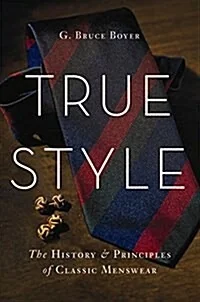
In 2015, the longtime menswear columnist G. Bruce Boyer condensed decades of writing into a single book. The structure is simple. One chapter per category — shirts, jackets, denim, shoes — with the history of the garment and the logic of how to wear it laid out cleanly. The word “correct” shows up often, but Boyer’s correctness isn’t a rulebook. It’s context. Once you understand why a garment took the shape it did, the way to wear it follows naturally. That’s his entire argument.
For someone new to classic menswear, this is the most readable, least pretentious starting point in print. For someone already deep in the subject, it’s a useful reset — the kind of book you reread every few years and find new sentences in. We keep a copy on the showroom counter for visitors to flip through while they wait. It does more work than any sales pitch we could write.
Chapter IV · Seoul’s Translation: The American Classic in Korean
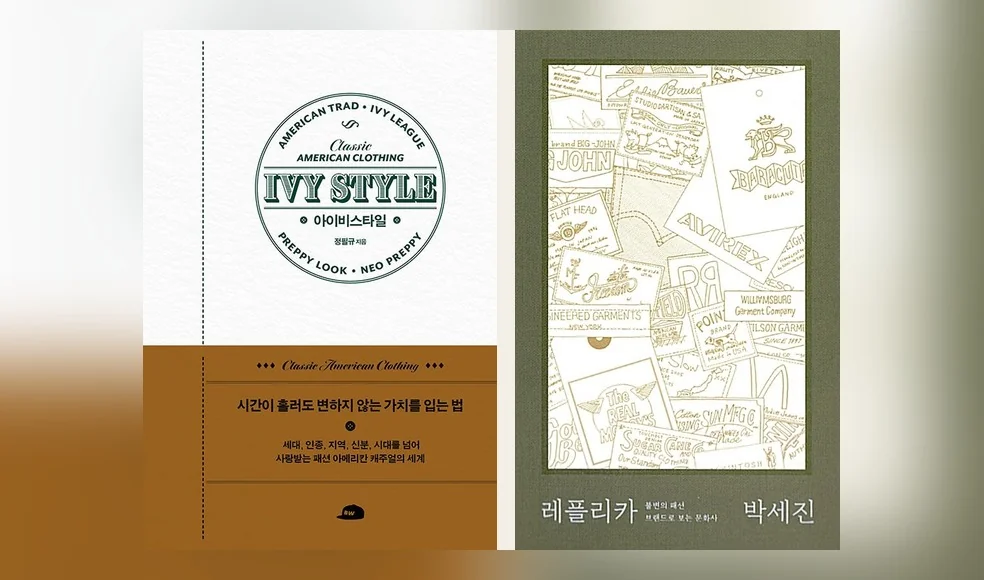
What America made and Japan preserved, two Korean writers translated into our own language. They didn’t simply render English sentences into Korean. They reconstructed the context of American classic for a Korean reader — what these clothes meant, where they came from, why anyone in Seoul should care. There are only two books in this category, because honestly there are only two that do the work properly. We’ve handed both to friends starting out in vintage, and both have done the job they were written to do.
Ivy Style — The First Korean Book on American Classic
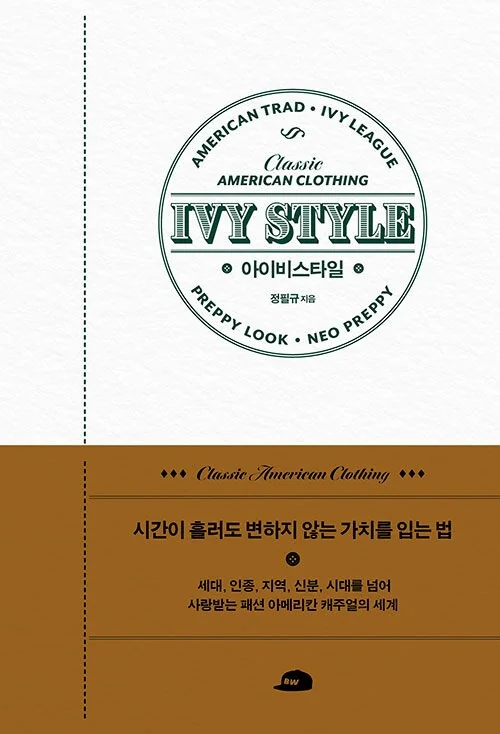
In 2021, Pilkyu Jung published Ivy Style (Korean: 아이비스타일), the first proper Korean-language Ivy guide in print. The subtitle — roughly, “a way of wearing values that don’t age” — states the book’s intent directly. This isn’t a coordination manual. It’s a single volume containing the history of the garments, the origins of each piece, and the logic of how to combine them, written for a reader who hasn’t had access to English-language sources.
Take Ivy showed Ivy style in photographs. This book explains it in sentences. Why the button-down collar exists, what a regimental tie’s stripe direction signals, what the metal buttons on a navy blazer originally represented — the kind of detail that English-language menswear writing assumes you already know. In a market where American classic books in Korean are vanishingly rare, the existence of this single volume matters more than its individual chapters. We recommend it as the first book to anyone in Korea who’s starting from zero.
Replica — Reading Eras Through Clothes
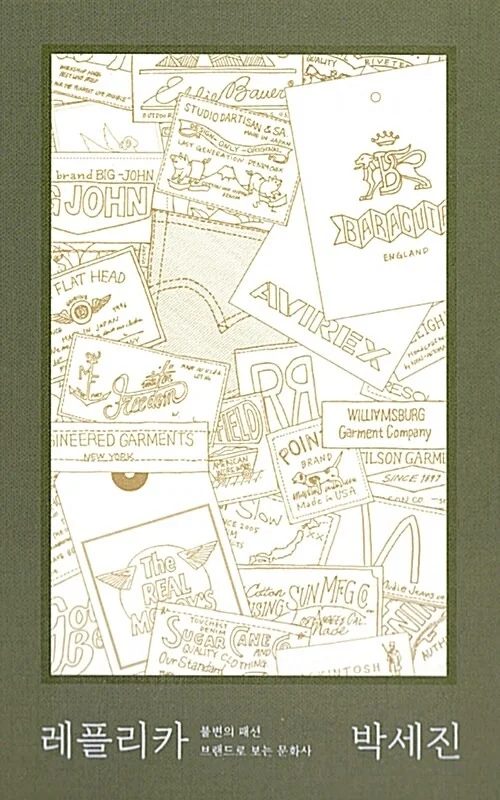
In 2018, Sejin Park published Replica (Korean: 레플리카), subtitled as a cultural history told through the brands that never died. Levi’s, Converse, Red Wing, Champion — the labels that survived a century by refusing to change — serve as the cast. Through them, the book asks how a garment can carry the memory of an era, and why anyone bothers reproducing an old design exactly when newer techniques exist.
The title is itself the argument. The Japanese vintage scene’s central practice — reproduction, or 復刻 in Japanese, replica in the borrowed English — is named directly. Why do people resurrect old clothes?
What does fidelity to a 1947 jean accomplish that an updated version doesn’t? This is one of the very few Korean-language books that takes vintage culture seriously enough to ask those questions. For anyone who likes clothes but has never thought about which decade they came from, the book changes the angle entirely. Once you start reading garments as cultural records, the wardrobe never looks the same again.
From America to Japan to Seoul — The SEOUL Traditional Archive
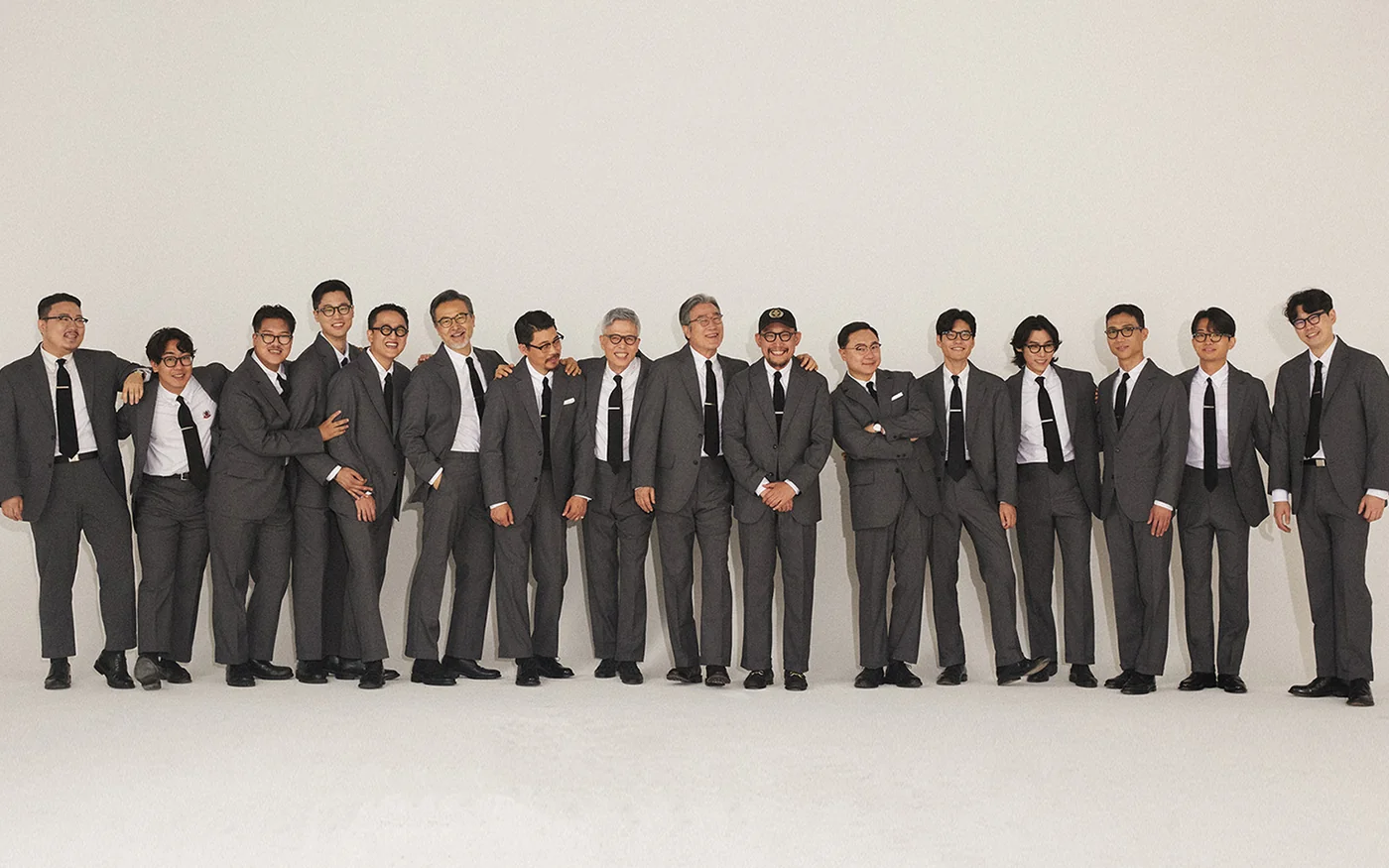
Read the twelve books in order and a single arc emerges. America made the clothes. Japan watched, kept, and preserved them across sixty years of patient archival work. And now Seoul is picking up where the lineage left off — not as imitation, but as a third interpretation of the same source material. We collect the original-era pieces under the HEAVYDUTY ARCHIVE label, and Renacts reconstructs the patterns in our own language for the way people actually dress in Seoul today. We call the whole effort SEOUL Traditional — American Trad, translated for here.
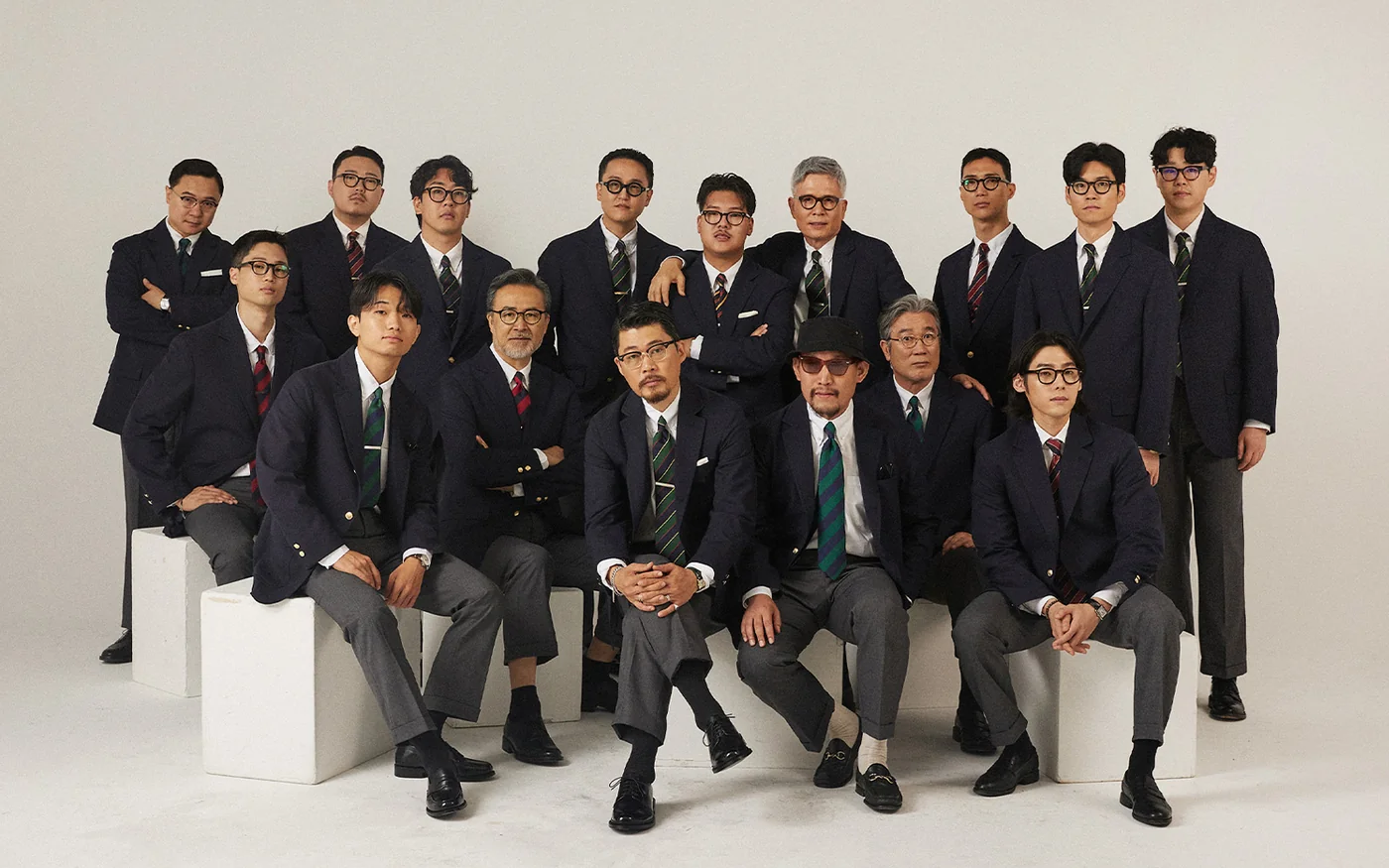
The bookshelf has a physical address. The pieces HEAVYDUTY ARCHIVE collects and the pieces Renacts builds sit in the same room at Gentlemen’s House in Yeonhui-dong — our showroom is, in many ways, the three-dimensional version of this reading list. If you’ve read about a 3/2 roll lapel and want to see one in soft chest construction, or you’ve looked at a Take Ivy spread and wondered what the equivalent looks like under a Seoul October sky, the answer is here in person. The archive and the books explain each other.
Men’s fashion books, vintage menswear reading, American classic references, trad-style bibliography — the books that teach you how to dress with intent — whichever search brought you here, the recommendation is the same. Open one of the twelve before you buy your next jacket. The depth of what you know about a garment shapes the way you wear it, and the way you wear it is, in the end, all anyone sees. That’s why these twelve books have stayed on our shelf for as long as we’ve been doing this.