17 American Vintage Brands Every Trad Collector Should Know — From Filson to RRL
American Vintage Brands: 17 Labels That Built the Trad Canon
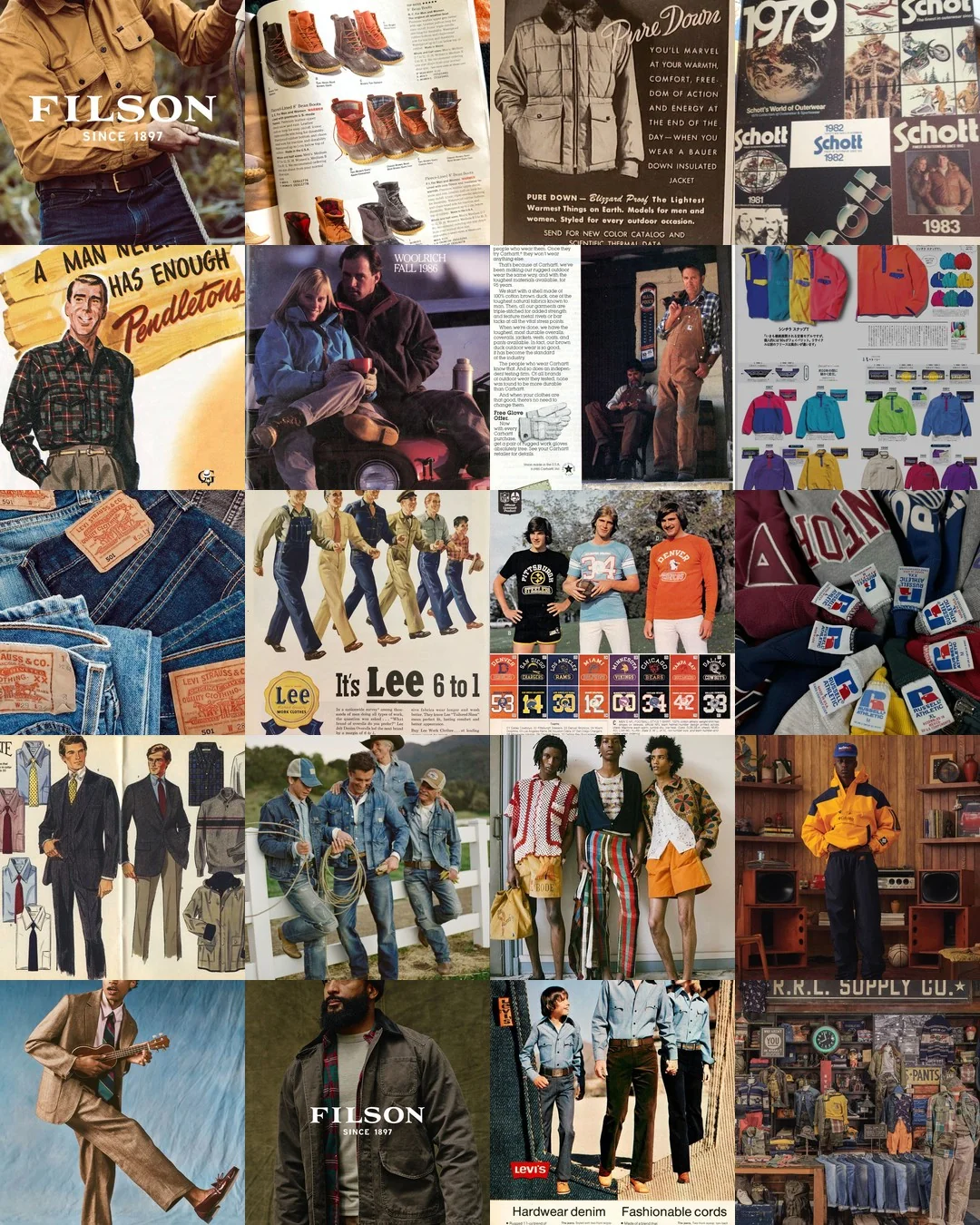
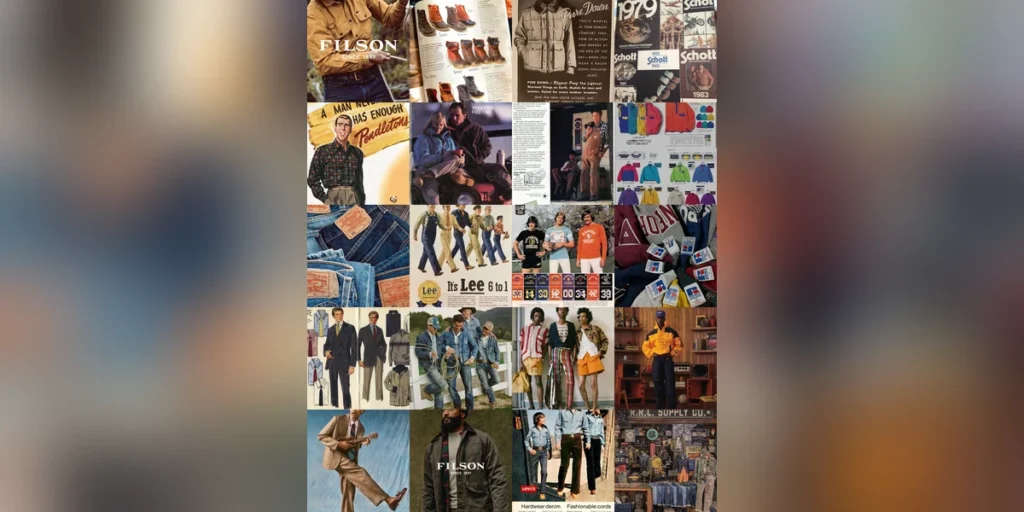
Search for the best American vintage brands and the answer keeps narrowing to the same handful of names. Levi’s for denim. Carhartt for workwear. Brooks Brothers for trad. Almost every garment we now call “classic” began in an American industrial town — Seattle, Detroit, New York, Kansas. Walk into a Tokyo vintage shop or pull a piece off the rail at our Yeonhui-dong archive, and more than half the labels point back to those same zip codes.
This piece is our seventeen-brand map of American vintage, assembled across the years we’ve spent on these labels — Tokyo flea markets, online auctions, and the vintage room of our Gentlemens House showroom that we operate under the HEAVYDUTY ARCHIVE label. Fourteen heritage houses with at least a century behind them, plus three new American labels that everyone in Seoul, Tokyo, and New York is currently watching. For each one we cover the signature pieces, the label-era that matters to collectors, and the small details we look for when a piece comes through our door. If you’re starting an American vintage wardrobe, these are the seventeen brands you eventually meet.
American Vintage Workwear: Seven Brands from Filson to Carhartt
American vintage workwear was built in nineteenth-century industrial cities. Clothes for miners, loggers, railroad crews, and farmers became the core of how American men have dressed for over a hundred years. Heavy canvas, dense wool, triple-stitched seams. Garments engineered to outlast the body wearing them. That standard — durability as the starting point — is the architecture of everything we now call vintage. The next seven brands wrote that standard.

Filson (1897, Seattle) — Founded to outfit miners heading north to the Klondike Gold Rush. Tin Cloth (waxed canvas) and wool Mackinaw shirting have been the signatures for over a century. The 1950s through 1970s USA-made production is where vintage value sits, with pieces from the original Seattle factory before the 1990s being the genuine core. After 2010, licensing expanded and the “Made in Seattle” label became its own collector category. The reference pieces are the Mackinaw Cruiser jacket, Tin Cloth Field Jacket, and the original briefcase. Layer a Filson Cruiser over an oxford cloth button-down and you have the baseline formula for oxford-and-workwear styling — the most reliable way into American vintage.
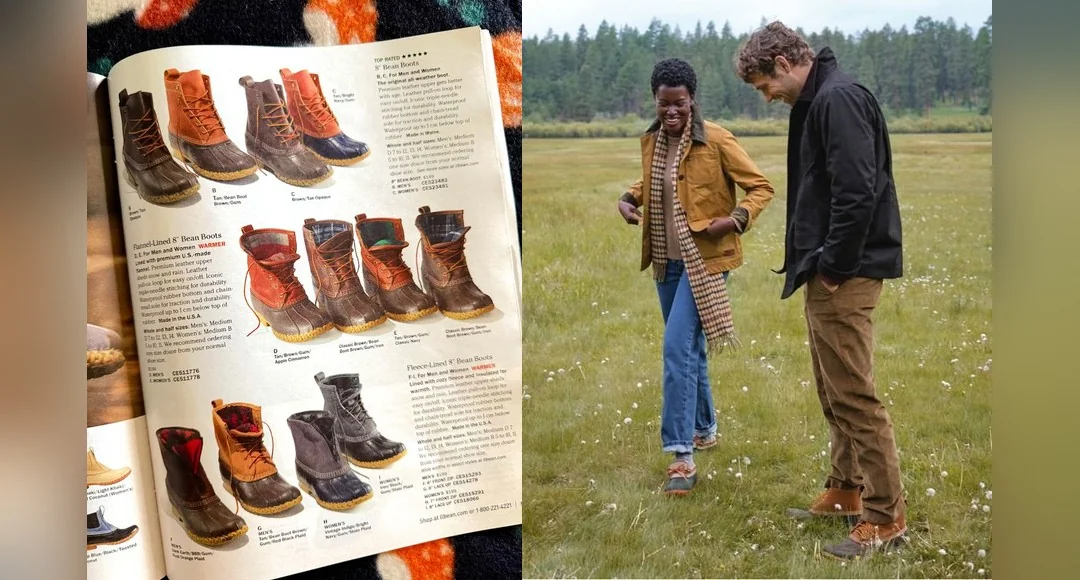
L.L. Bean (1912, Maine) — Started with a single boot a hunter built for himself, and grew into the canonical East Coast outdoor house. The Bean Boot and the Norwegian sweater are non-negotiable pieces of any Heavy Duty Ivy wardrobe. Maine-made USA labels from the 1970s through 1990s carry the strongest collector premium, and the full-grain leather Bean Boots from the 1980s are the run we look for first. Reference pieces: Bean Boot, Norwegian sweater, Field Coat, Boat & Tote. We dig into the full origin in our L.L. Bean history piece, but the styling tells the whole story — Brooks Brothers OCBD, Levi’s 501, Bean Boots underneath. That’s East Coast Ivy in one line.
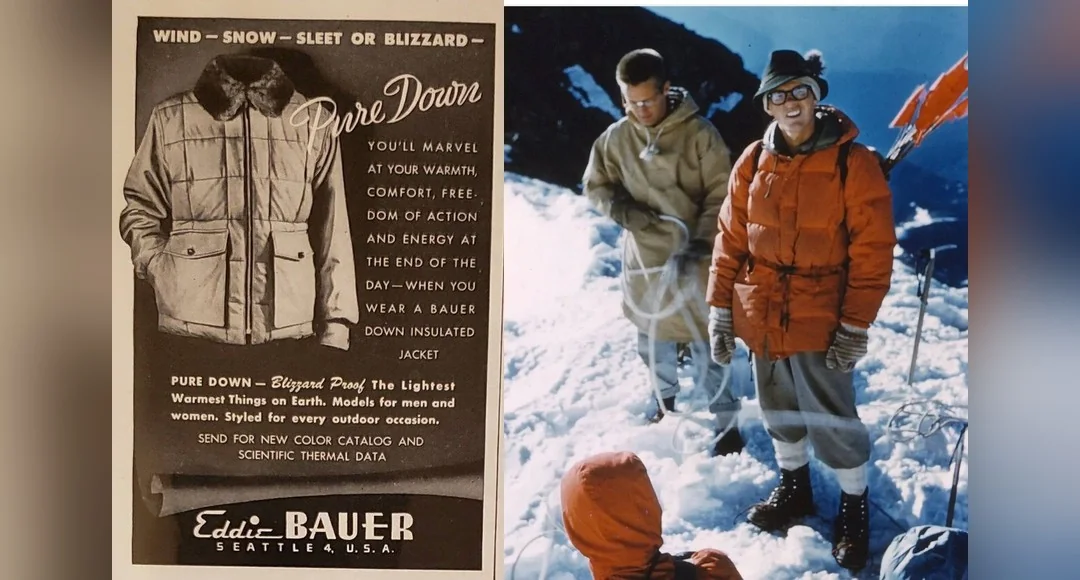
Eddie Bauer (1920, Seattle) — In 1936, Eddie Bauer designed the first quilted down jacket, the Skyliner — the patent issued in 1940 — and effectively invented the down-insulated outerwear category. The “Blizzard-Proof” labels from the 1970s and 80s are the collector window, with the Karakoram-line down jackets being the pieces we set aside whenever they come in. Reference pieces: Skyliner, Karakoram, Yukon, Kara Koram Pile. If you’re buying one down jacket for an American vintage rotation, vintage Eddie Bauer is the only correct starting point — the cut, the down fill, and the patina of a forty-year-old shell are not things contemporary outerwear reproduces.
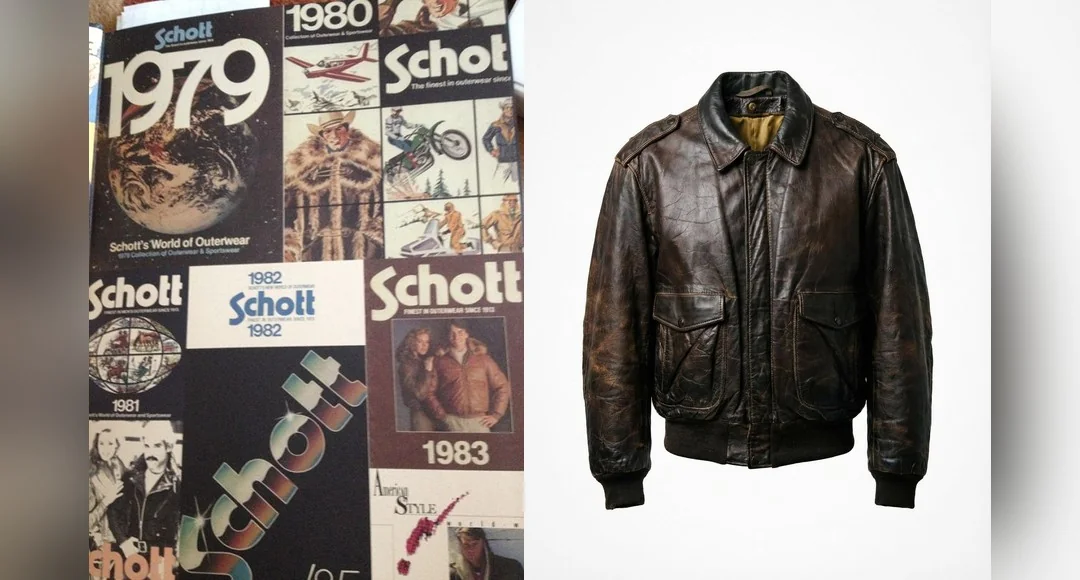
Schott NYC (1913, New York) — In 1928, Schott built the first zip-front motorcycle jacket, the Perfecto, and became the original American leather house. “Made in USA” Perfectos from the 1960s through 80s are the vintage core, and the 618 model is the cleanest expression of the silhouette. Reference pieces: Perfecto 618 / 641 / 519, B-3 shearling jacket. A vintage Schott Perfecto thrown over a Brooks Brothers oxford is the most durable formula in American leather styling, full stop. Because the leather only improves with wear, vintage Schott routinely commands more than the current production — a piece that already has thirty years of break-in is the goal, not the starting point.
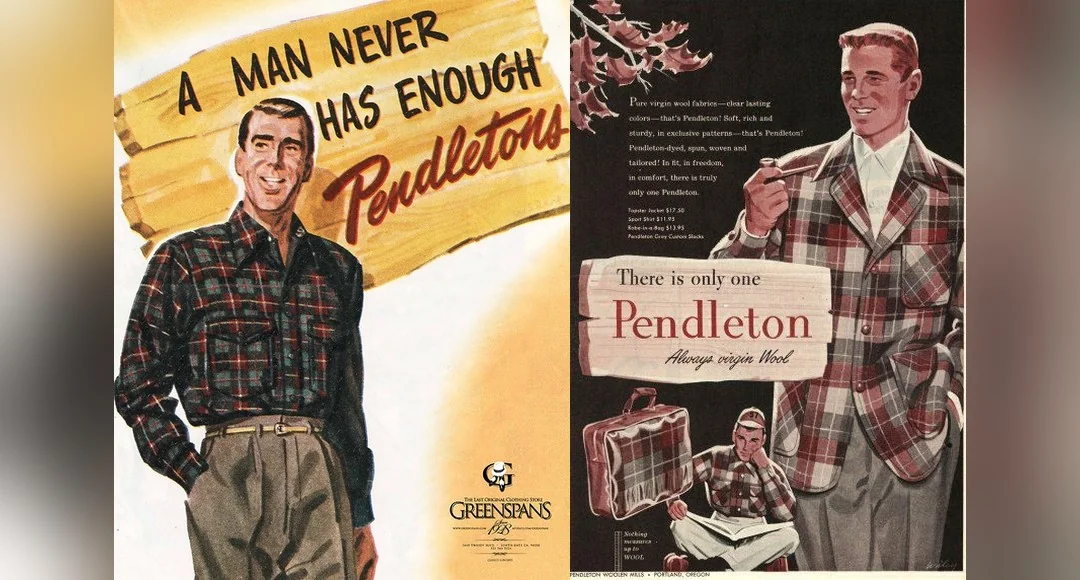
Pendleton (1863, Oregon) — A vertically integrated wool house that has run its own Oregon mill from raw fiber to finished garment for over a century and a half. The USA-made Board Shirts from the 1950s through 70s are where vintage value concentrates, and the Indian Blanket patterns remain Pendleton’s strongest visual signature. Reference pieces: Board Shirt, Indian Blanket, Topster Coat, Camp Shirt. In the American vintage wool-shirt category, Pendleton occupies a position no other label can substitute for.
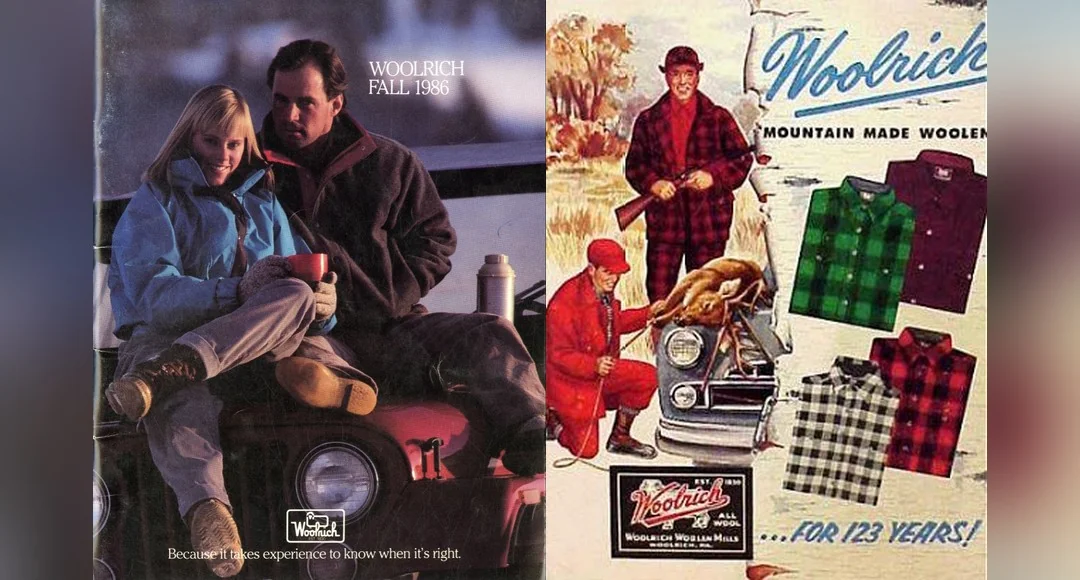
Woolrich (1830, Pennsylvania) — The oldest continuously operating wool mill in America. Buffalo Check shirting and the Arctic Parka are the templates from which most American outdoor clothing was derived. USA-made Buffalo Check shirting from the 1970s and 80s commands the strongest collector premium, and the red-and-black two-tone is the canonical color story. Reference pieces: Buffalo Check shirt, Arctic Parka, Mountain Parka, Mackinaw Coat. If Pendleton is the polished trad wool, Woolrich is the rougher outdoor cousin — we keep both in the archive because they answer different questions about the same fiber.
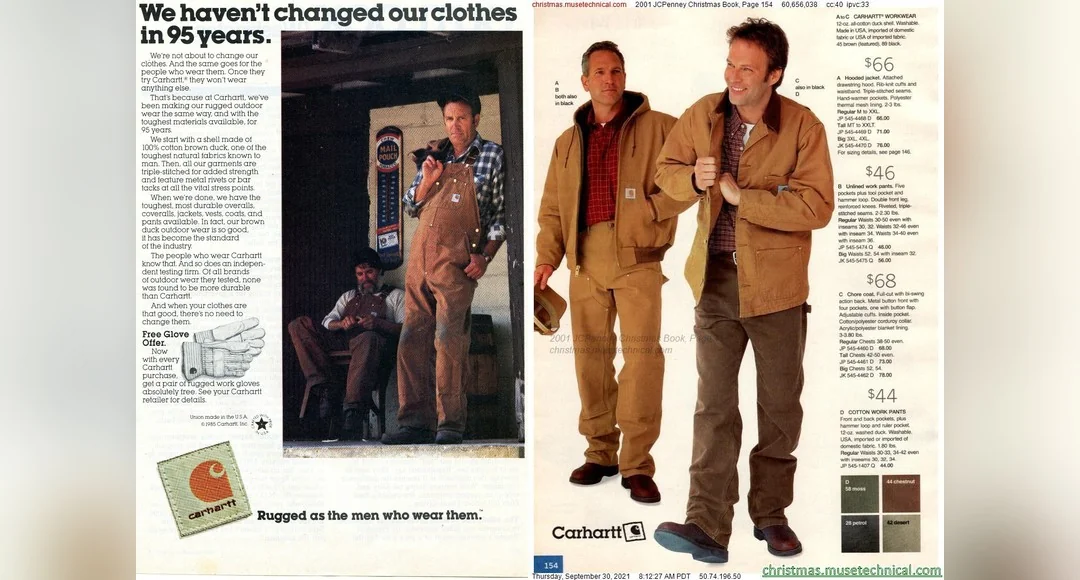
Carhartt (1889, Detroit) — Built for railroad crews, and still the American workwear house everyone meets first. Heavy duck canvas and triple-stitched seams are the signatures. USA-made “Carhartt Original” labels from the 1970s through 90s are the collector range, with the pre-1990s Michigan factory production sitting at the top of that range. Reference pieces: Detroit Jacket, Active Jacket, Double Knee Pants, Chore Coat. Carhartt is cut boxy by design — size down a hair, or take true to size, and the cotton-duck shoulders eventually mold to you. For the workwear context that ties into our broader chino history coverage, vintage Carhartt is the most accessible price point of any seven-brand in this section.
California Outdoor Vintage: A Patagonia Deep Pile Field Guide
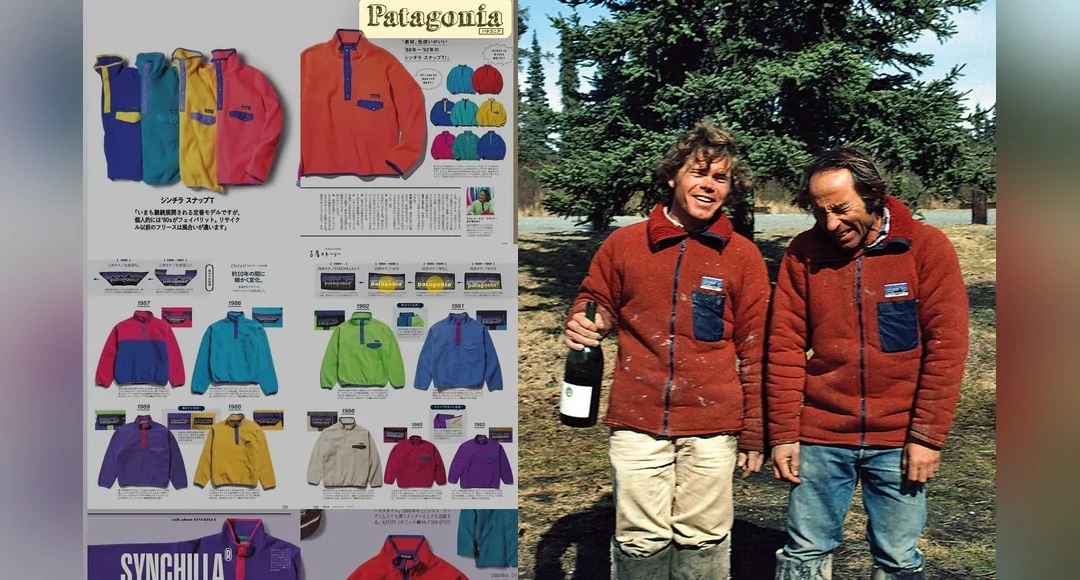
Even within American outdoor clothing, the strand that started in 1970s California breathes a completely different air. East Coast heritage was clothing built to endure labor and weather. West Coast outdoor — especially the lineage Patagonia inherited from climbing — was clothing built to interrogate environment and ethics at the same time.
Patagonia (1973, Ventura, California) — Yvon Chouinard, who had been making climbing hardware in a Ventura blacksmith shop, started Patagonia as the first major outdoor brand to put environmental and social responsibility at the front of the proposition. 1980s and 90s Deep Pile Snap-T pullovers are the collector centerpieces, and the multi-color block configurations — the runs that put red, yellow, teal, and purple in a single pullover — have become their own sub-category in Japanese vintage shops, where they now trade in the high-value tier reserved for true archive pieces. Reference pieces: Snap-T pullover, Retro-X, R1 fleece, Baggies Shorts. One vintage Deep Pile Snap-T is enough to pull the entire 1990s California outdoor mood into the wardrobe. The market split is consistent: 1980s multi-color Snap-T pullovers command top prices among collectors, and 1990s solid-color Snap-T pullovers sit at a more accessible tier — but both are vintage-correct.
American Vintage Denim: Levi’s Big E vs. Lee Union Made
Denim, as a category, was invented in America. Workwear built for nineteenth-century miners and cowboys became the global standard for casual dress over the following century. Rivets, selvedge, arcuate stitching — every detail we now treat as “authentic” was set by two American houses: Levi Strauss and Lee. American vintage denim begins with these two and ultimately returns to them.
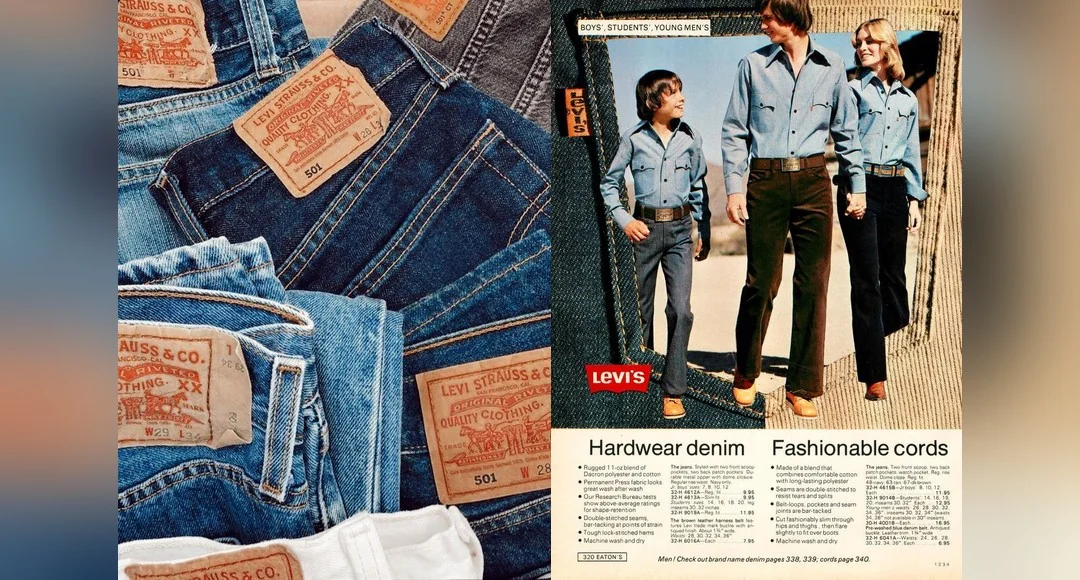
Levi’s (1853, San Francisco) — The brand that established almost every modern denim convention. Big E labels (pre-1971 production, where the back-pocket red tab reads capital “LEVI’S”) and the 501XX line are the collector core. In 1971, the label changed to lowercase “Levi’s” (small e), so Big E vs. small e is the first authentication question on any vintage Levi’s piece. Pre-1966 501XX deadstock occupies the highest tier of the collector market, 1970s Big E 501s sit in a serious mid tier, and 1980s and 90s small-e pairs trade at the most accessible entry point. Reference pieces: 501, 505, 517, 550, Type II / III denim jackets. For the full label-evolution deep dive — including the rivet, stitch, and selvedge details that separate decades — the bibliography we put together in our trad and vintage books guide covers David Marx’s research and the Japanese-language “Who Made 501XX?” volume that remains the reference text.
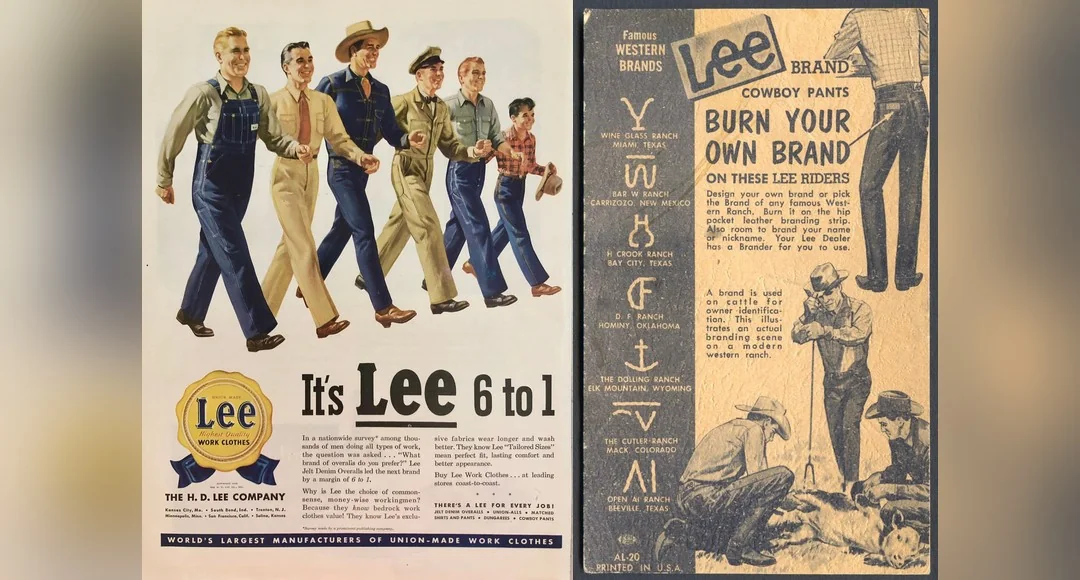
Lee (1889, Kansas) — The first house to put a zipper on jeans (1926) and the brand that defined the cowboy denim register from the 1944 label era onward. 1950s and 60s “Union Made” labels are the collector core, and the 1950s 101 Rider trades actively even in our small Korean collector circle. Reference pieces: 101 Rider, 101-Z jean, Storm Rider jacket, Loco Jacket. If Levi’s is the urban worker’s jean, Lee is the farm-and-frontier jean. Keeping both in the rotation is the only way to actually own American vintage denim — the two strands of the same fabric story.
Vintage Sweatshirts: Champion Reverse Weave vs. Russell Athletic
The sweatshirt and the hoodie — garments we now consider universal — also started in America. More precisely, in early-twentieth-century American college athletic departments. Two houses set the standard: Champion and Russell Athletic. Any conversation about American vintage sweatshirts splits between these two and only these two.
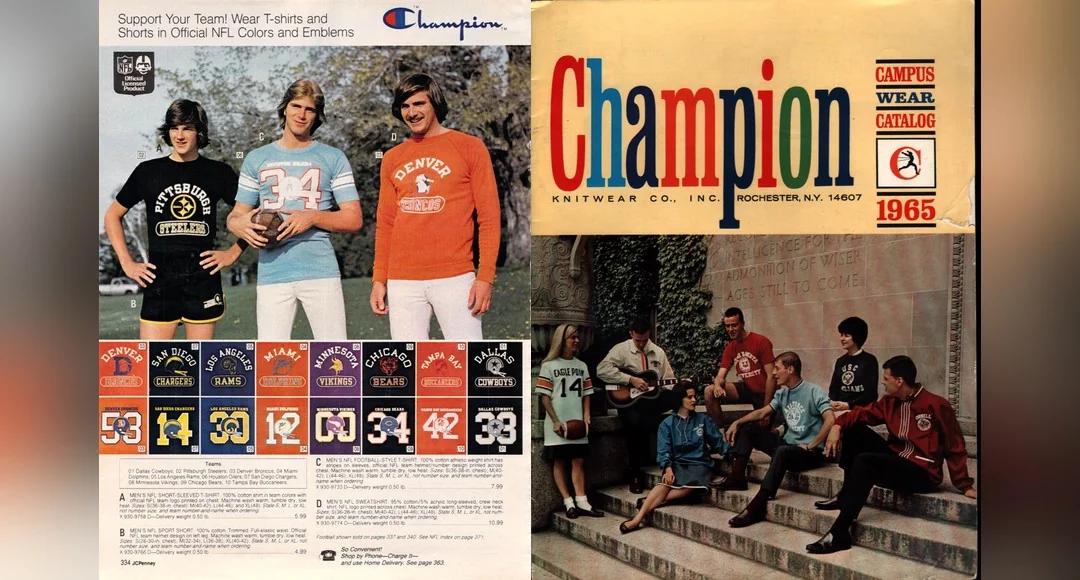
Champion (1919, Rochester, New York) — In 1934, Champion developed Reverse Weave (patented in 1938 by Sam Friedland), which solved the single biggest sweatshirt problem of the era — vertical shrinkage in the body length after washing. By weaving the fabric grain horizontally rather than vertically, Reverse Weave keeps the length stable through the laundry cycle. The full origin story sits in our Reverse Weave history piece. “Tri-blend” labels from the 1960s through 80s (cotton-poly-rayon blend) carry the strongest collector premium, with the 1970s and 80s Reverse Weave bodies featuring the diamond-shaped side gusset — the V-panel under the arm — being the configuration we keep on permanent watch. Reference pieces: Reverse Weave crewneck, pullover hoodie, S1051, T1011. A vintage Champion Reverse Weave with Levi’s 501 and Bean Boots is the cleanest possible American vintage casual formula. The combination has worked for forty years; we don’t expect it to stop.
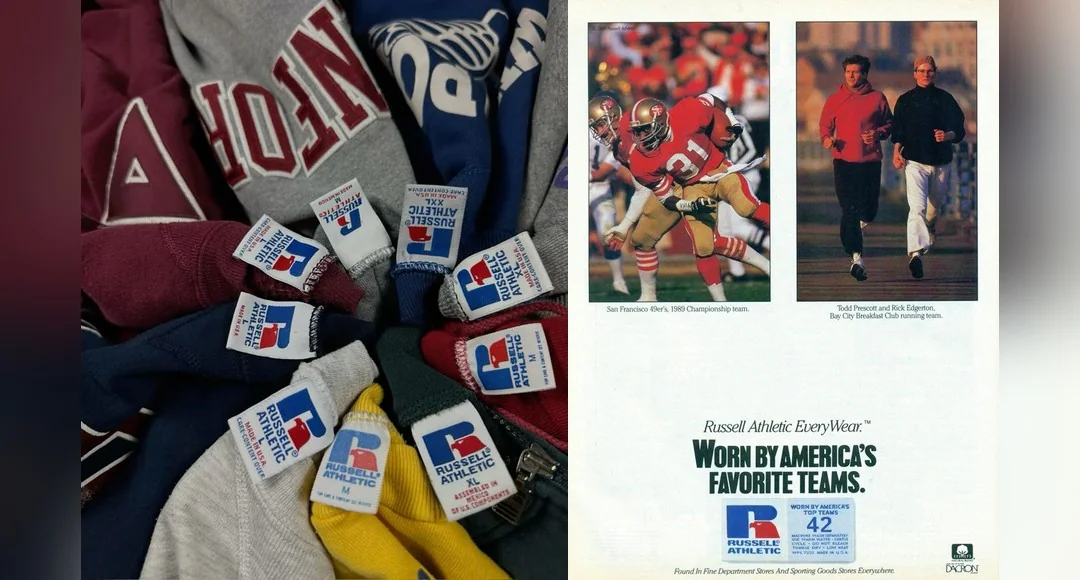
Russell Athletic (1902, Alabama) — First to scale 100% cotton sweatshirt production, and the house that supplied much of mid-century college football and baseball uniforming. USA-made “NuBlend” labels from the 1970s through 90s carry the strongest collector value, and the heavier loopback and boxier silhouette are what separates a Russell from a Champion at twenty paces. Reference pieces: Dri-Power Sweatshirt, heavyweight crewneck, Athletic hoodie. Champion is the more tailored register; Russell is the boxier and more casual one. Keeping both is the only way to actually own the American vintage sweatshirt category in its full range.
American Trad Vintage: Brooks Brothers OCBD and RRL Made in USA
If workwear, denim, and sweats are the everyday vocabulary of American clothing, trad is its formal grammar. American trad — the language built in East Coast Ivy League prep schools and New England old money — has been the standard syntax of American menswear for nearly two centuries. Any conversation about vintage trad brands has to start here.
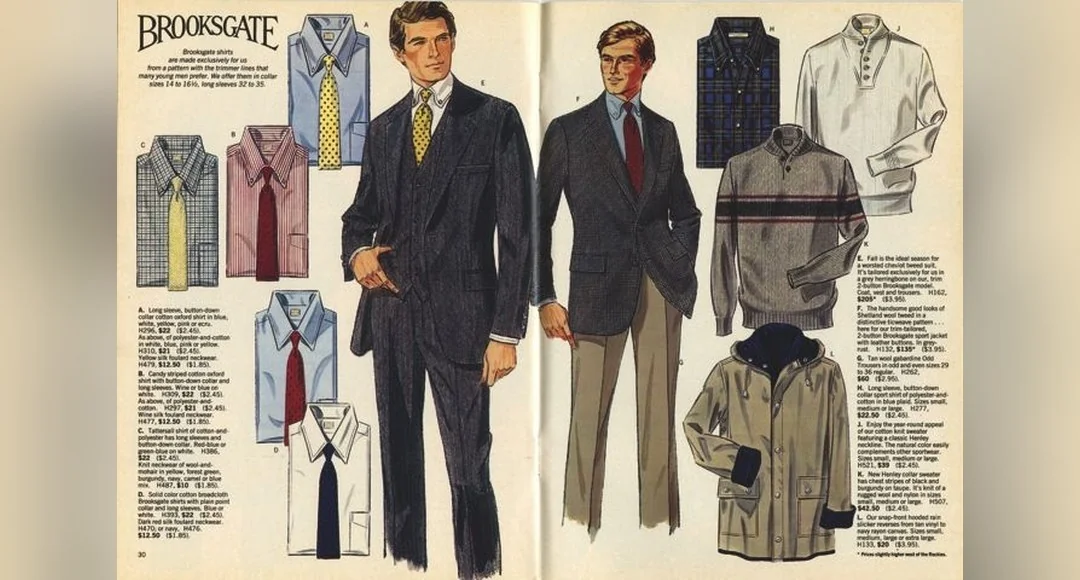
Brooks Brothers (1818, New York) — The oldest continuously operating clothier in America. In 1896, the house introduced the oxford cloth button-down shirt, taking its inspiration from the polo collars worn on English polo fields; in the late 19th century, it formalized the Sack Suit silhouette that defined American tailoring for the next century — the full lineage sits in our Sack Suit history piece. USA-made “Makers” label OCBDs from the 1960s through 80s carry the strongest collector premium, and the natural collar roll — the way the collar arcs softly off the placket rather than sitting flat — is the single most diagnostic detail of a vintage Brooks Brothers OCBD. Reference pieces: 1818 Sack Suit, OCBD oxford, Polo Coat, Repp Tie. If you’re only adding one vintage American oxford shirt to a wardrobe, a vintage Brooks Brothers OCBD is the only correct answer. We’ve written the long-form brand Brooks Brothers history for anyone who wants the full two-hundred-year arc.
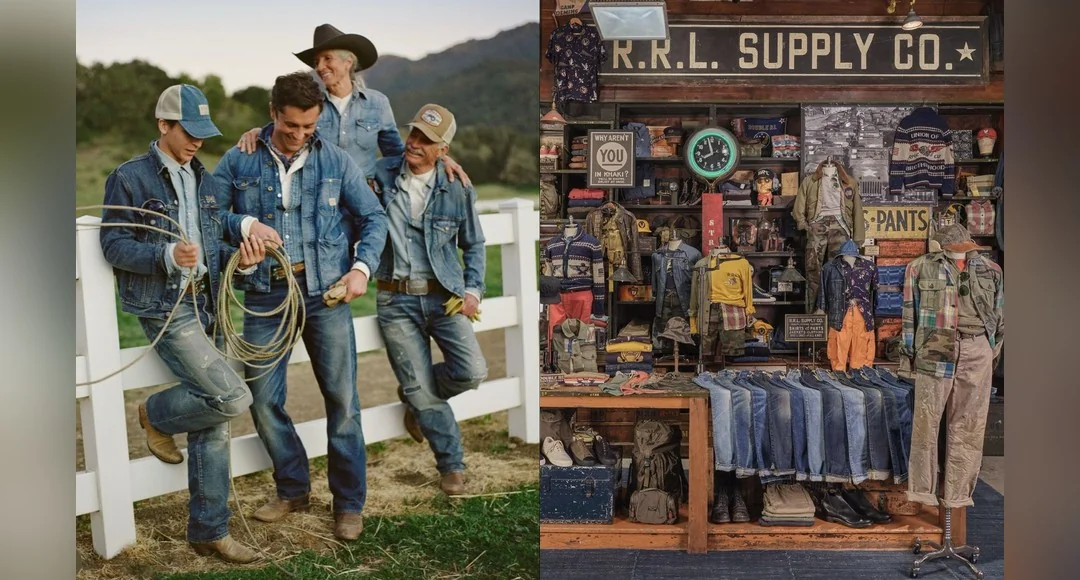
RRL (1993) — The line Ralph Lauren built so he could reproduce, as new garments, the vintage American pieces he collected himself. Our Ralph Lauren history piece covers the larger arc; RRL is its most archive-faithful expression. The line reinterprets American workwear, Western, and military vintage details in new production. Early 1990s through 2000s “Made in USA” seasonal archive pieces carry the highest collector value, and the in-house washed denim (the Lot 100 program) along with the Trail Boot define the RRL vintage canon. Reference pieces: Lot 100 denim, Trail Boot, cable-knit sweater, Officer Shirt. If Brooks Brothers is straight-line trad, RRL is trad cross-bred with workwear; owning both doubles the territory of American vintage trad in a single move.
The New American Vintage: Bode, ALD, and Noah
That covers the century-plus heritage side. The next three labels are the newer American brands the rest of the menswear world is currently watching most closely. The interesting fact is that all three are, at root, vintage and heritage reinterpreted through a new framework. The original American canon is so dense that even the newest brands have to build on top of it rather than around it. So when we talk about American vintage labels, we don’t stop at the old houses — we keep these three on the same map, because they extend the lineage rather than break from it.
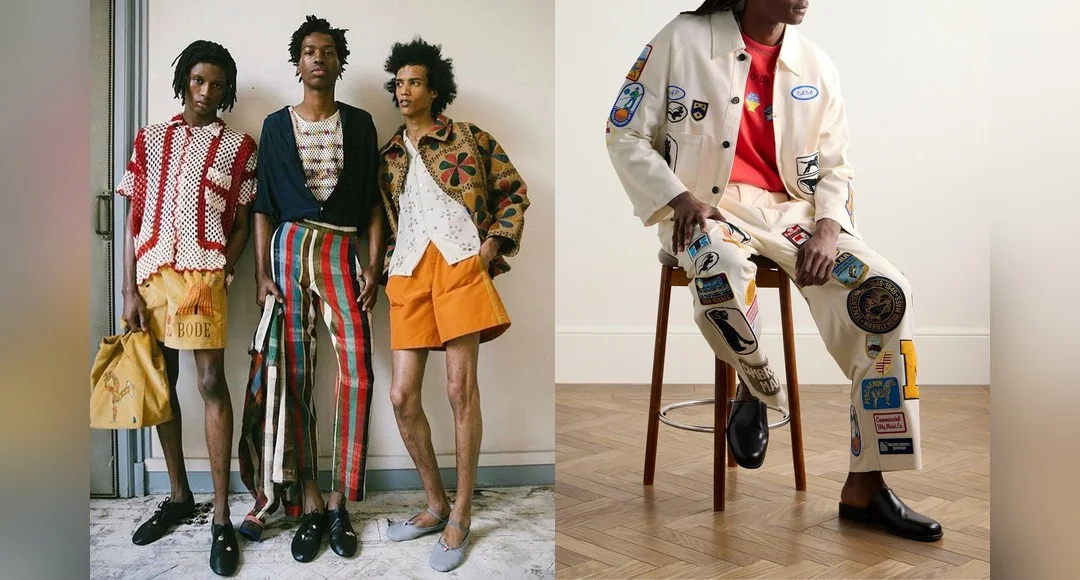
Bode (2016, New York) — Emily Adams Bode Aujla’s line, which reconstructs old American bed linens, tablecloths, embroidered textiles, and quilt fragments into ready-to-wear garments — a vintage-textile reinterpretation house in the most literal sense. CFDA American Menswear Designer of the Year in 2022 and again in 2023, which functionally placed Bode at the top of the contemporary American vintage scene. Reference pieces: Quilted Workwear Jacket, Senior Cord Pants, embroidered shirts. Because almost every Bode piece is effectively one-of-one, each garment functions as an archive object in its own right.
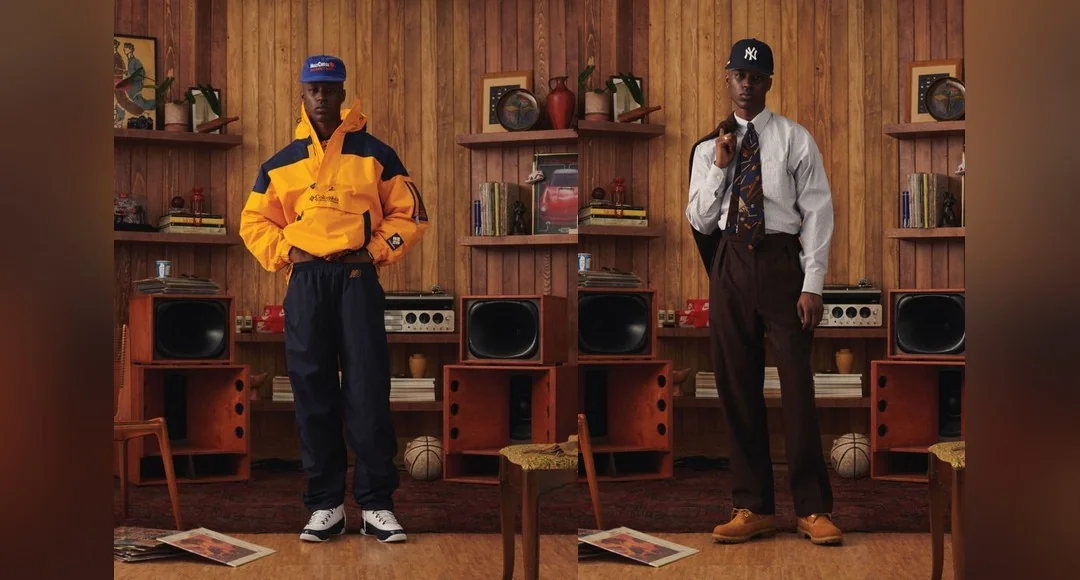
Aimé Leon Dore (2014, New York) — Teddy Santis’ contemporary line, which reinterprets vintage Americana and heritage references through a modern New York register. Better known as ALD, and currently the most globally distributed of the new American labels via Mr. Porter, SSENSE, and the brand’s own Manhattan flagship. Reference pieces: the ALD x New Balance collaborations (990, 827, 1906), knit cardigan, crewneck sweatshirt. The ALD x New Balance 990 program tends to sell out on release and trade in the high-value secondary tier almost immediately.
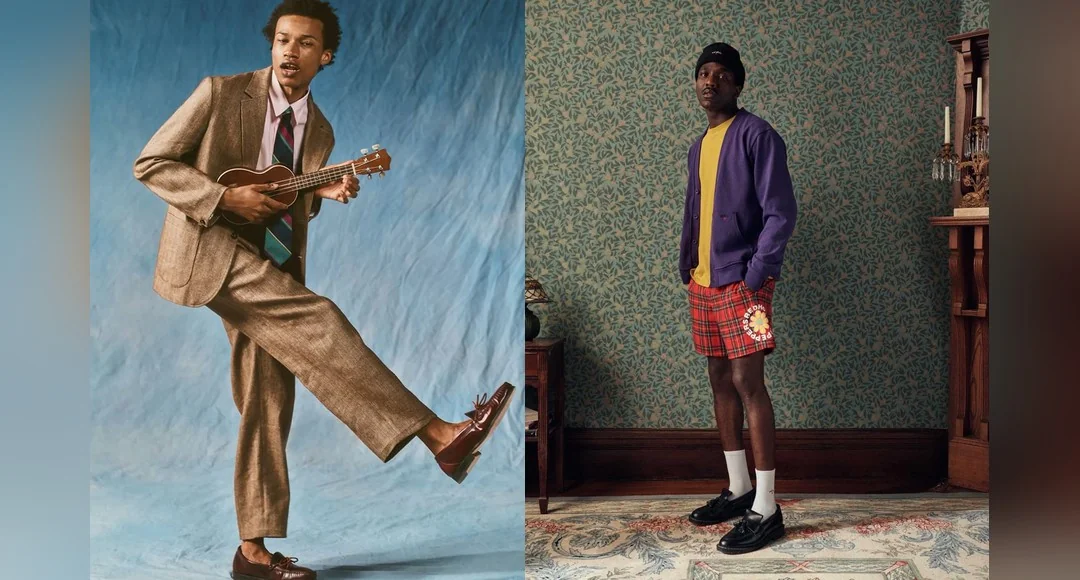
Noah NY (2015, New York) — Brendon Babenzien’s line (former Supreme design director) reinterpreting Ivy, surf, and workwear in equal measure. The new American brand most consistently mentioned in Korean menswear coverage and the most direct extension of East Coast trad. Reference pieces: Rugby Shirt, recycled wool sweater, polo tee, N. Hoodie. A Noah Rugby Shirt is the natural follow-on for anyone who’s been wearing vintage Polo Rugby pieces — the same category written one generation later.
American Vintage FAQ: Three Questions We Get Most Often
Q1. Starting an American vintage wardrobe — which brand first?
Buy a vintage Levi’s 501 first. The price range is wide and accessible (1980s small-e pairs sit at the most affordable end of the vintage 501 market), the silhouette pairs with anything, and the piece functions as the base unit of the entire vintage market — almost every other piece is measured against how it sits with a 501. The second buy is a Brooks Brothers OCBD oxford or a Champion Reverse Weave crewneck, both of which trade in mid-range vintage tiers. Those three categories alone build out roughly seventy percent of an American vintage wardrobe.
Q2. How do I distinguish USA-made labels from current licensed production?
The fastest check is the back of the label itself — the “Made in USA” or “Made in [city]” line. Each brand has its own label-evolution timeline: Levi’s is pre-1971 “LEVI’S” (Big E) vs. post-1971 “Levi’s” (small e), Filson is pre-1990 “Made in Seattle” vs. post-1990 licensed production, Carhartt is pre-1990s “Made in Detroit, Michigan” vs. later Mexican and Chinese licensed production, and every brand has its equivalent decade-by-decade rule. Learning one brand’s label timeline thoroughly is the starting point of vintage authentication, not the end.
Q3. Where can I actually see American vintage in Korea?
At our Yeonhui-dong Gentlemens House, the vintage room we run under the HEAVYDUTY ARCHIVE label keeps a rotating selection of American vintage you can handle and try on. The lineup changes by season and most pieces are one-of-one, which is why Korean collectors stop in regularly. Online, the Japanese vintage circuit (Baycrew’s, Underground, archive specialists in Tokyo) ships American vintage internationally, and direct buying through Grailed or eBay is also workable — though authentication risk is real, and a vetted Korean shop remains the safer route for anyone still building a label-reading eye.
American Vintage at Our Yeonhui-dong Showroom
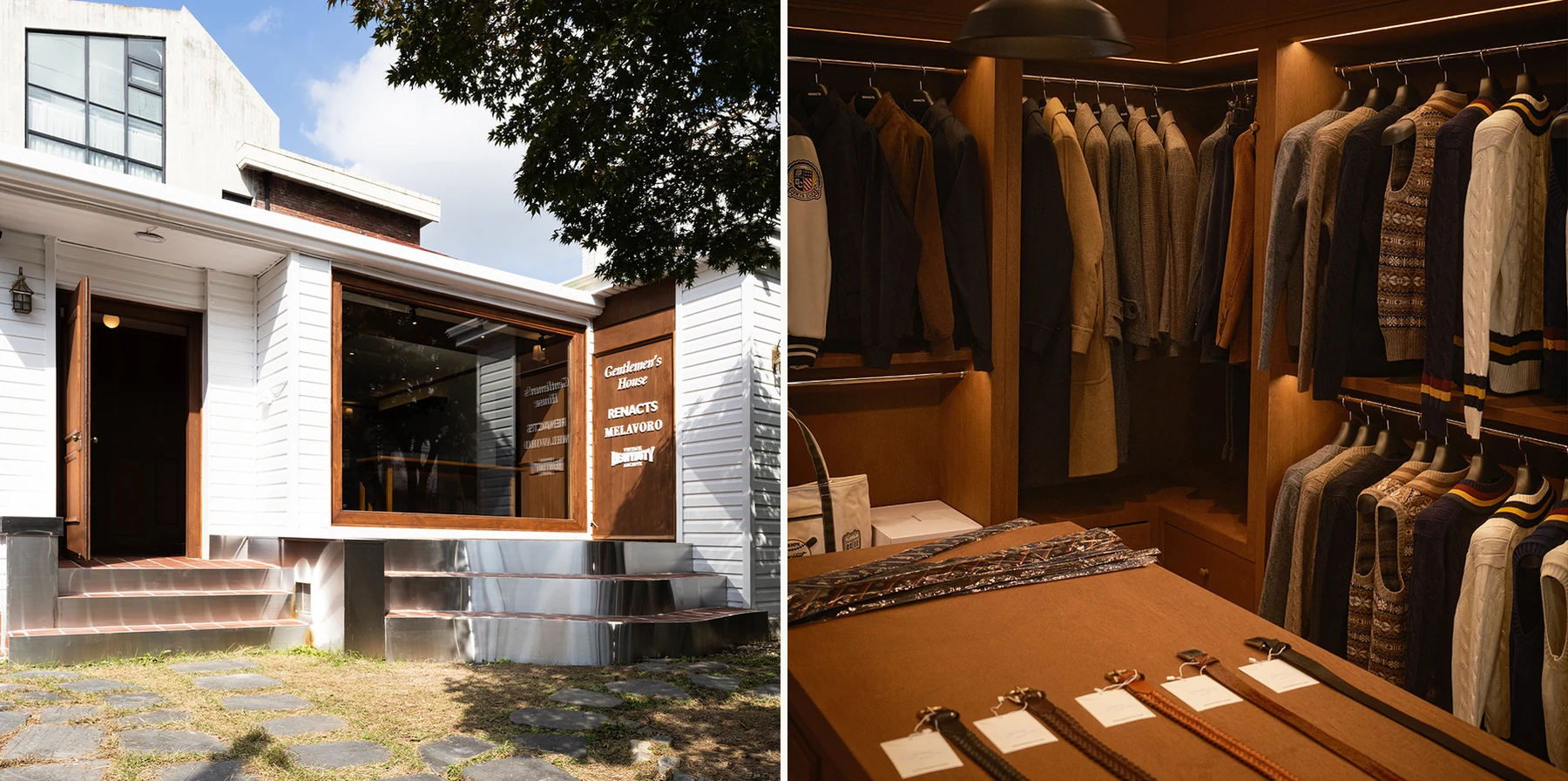
To summarize the map: American vintage built its entire canon across five categories — workwear, outdoor, denim, sweats, and trad. Fourteen heritage labels (Filson, L.L. Bean, Eddie Bauer, Schott, Pendleton, Woolrich, Carhartt, Patagonia, Levi’s, Lee, Champion, Russell, Brooks Brothers, RRL) carried the canon through a century of production, and three contemporary labels (Bode, ALD, Noah) are now adding new layers on top of that canon rather than around it. Seventeen brands you eventually meet if you keep digging into vintage — this piece is the first map we’ve drawn of that territory.
In our showroom’s vintage room — which we run under the HEAVYDUTY ARCHIVE label at Gentlemens House — we curate the USA-made label era of these seventeen brands by decade and by model. One character on a label, one stitch line, one fabric hand — the small differences are what separate a vintage piece from a piece of used clothing. For deeper Levi’s label-decoding, the Japanese-language “Who Made 501XX?” volume covered in our trad and vintage books guide remains our reference text. For practical American vintage styling from people who handle the pieces every day, our recent madras patchwork blazer outfit reads on the staff floor before customers arrive.
This piece begins a series. A Japanese edition (45rpm, Visvim, Kapital, Tets) and a Korean edition (Renacts, plus the vintage pieces we curate under the HEAVYDUTY ARCHIVE label) follow next. American vintage brands — the seventeen labels you eventually meet — are where we’ve started, because every other geography of vintage answers back to these names first.
Come see American vintage in person at our Yeonhui-dong Gentlemens House.
Three of those five columns are on the rack in Yeonhui-dong, made rather than collected: a white Ivy OCBD for the trad column, straight-cut denim for the denim one, and a cotton fleece sweatshirt for the sweats. Reproductions, not archive pieces, and we say so.