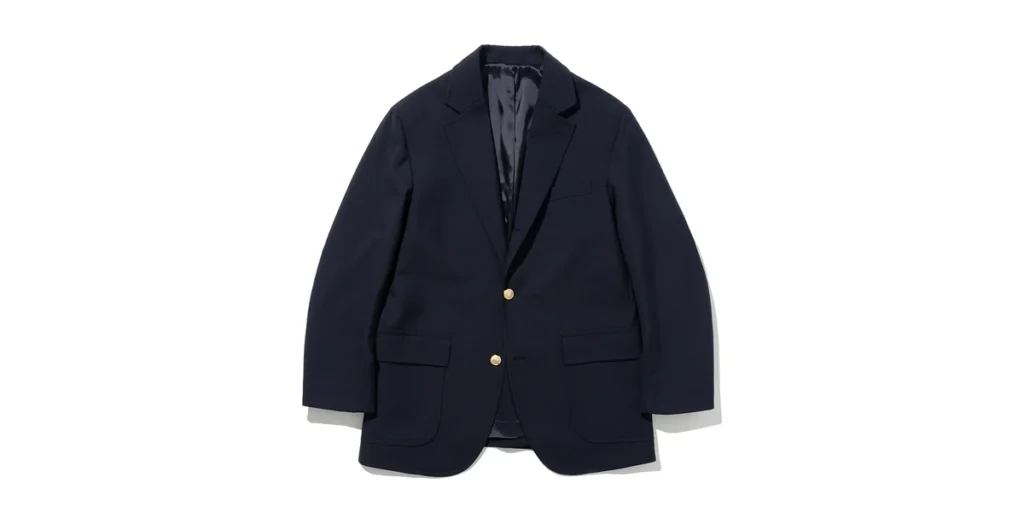
Navy Gold-Button Blazer: The Most Versatile American Trad Jacket
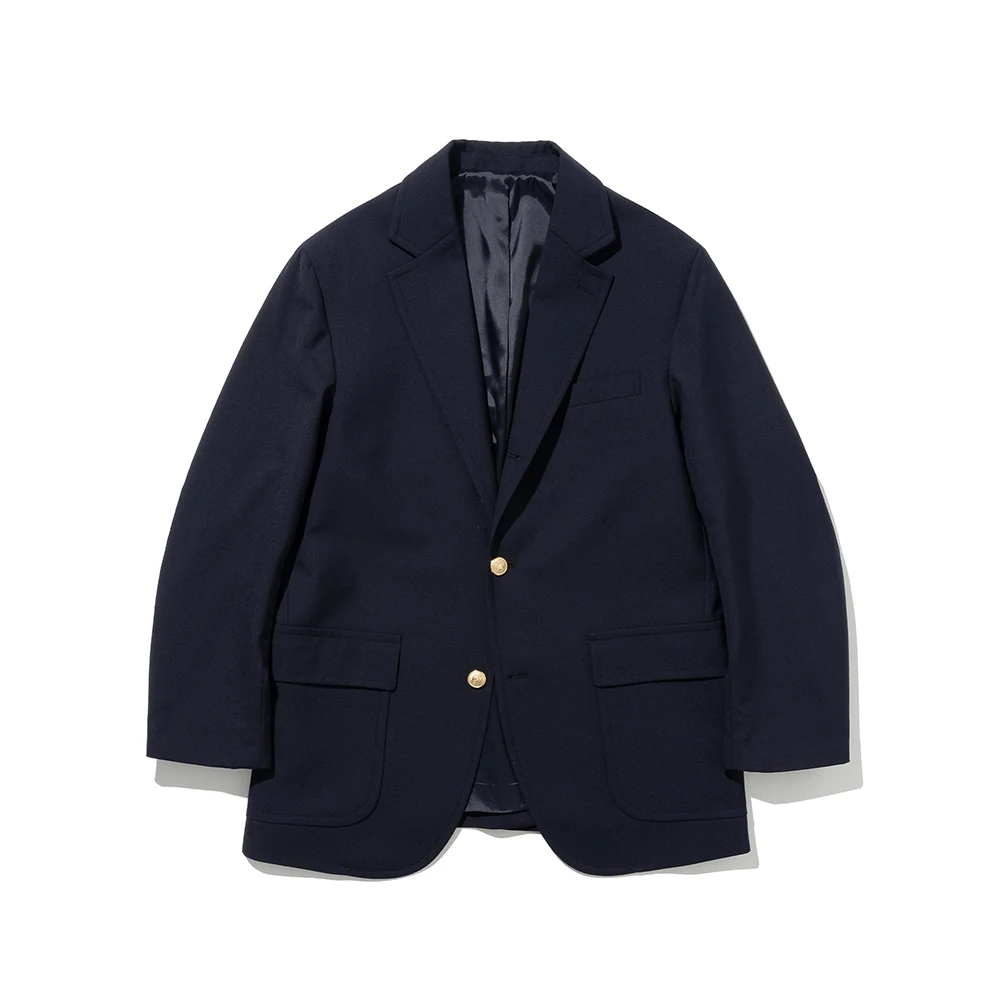
The navy gold-button blazer is, in the American trad vocabulary, the single most versatile tailored jacket in existence. One garment that handles a Tuesday office presentation, a Saturday lunch, an evening event, and a Sunday gallery visit without changing — same jacket, four registers. Renacts makes the jacket in two configurations: a single-breasted Wool Sack Cut Blazer and a double-breasted Wool Sack Cut Double Blazer. Both are navy, both have gold buttons, both are cut on the same American sack-cut architecture. This post decodes what makes a navy gold-button blazer the canonical American jacket and how to read the two Renacts versions against each other.
A 100-Year-Old Garment, Built in Seoul Today
The navy gold-button blazer originated in the late-1800s British rowing-club uniform — specifically the navy boating jackets of clubs like the Lady Margaret Boat Club at Cambridge (founded 1825) and the regatta blazers of Oxford colleges. By the 1890s, the format had crossed the Atlantic and been adopted by the boating clubs at Yale (the Yale Ivy lineage covered in our Yale Ivy Style post), Harvard, Columbia, and Princeton — at first in coloured stripes, then increasingly in plain navy with the club’s gold buttons. By the 1920s, the plain-navy gold-button blazer had detached from any specific club and become a generic American campus jacket. By the 1950s, it was the canonical Yale-Princeton Friday-afternoon jacket. By the 1970s, it was the universal American Ivy League graduation present. A 100-year continuity, unbroken.
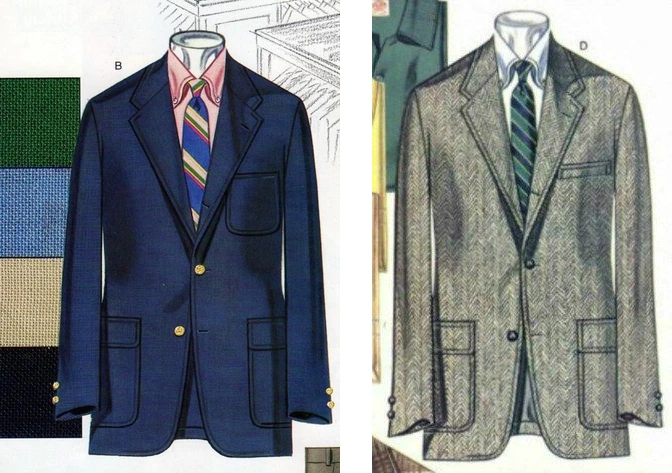
The structural blueprint stayed identical across that century. The 1901 Brooks Brothers Number One Sack Suit (above) was cut on the same architectural decisions Renacts uses in 2026: 3/2 roll lapel, natural shoulder, undarted body, hook vent, single-breasted two-button front. Strip out the matching trouser and add gold buttons in place of horn — and the Number One Sack Suit becomes the navy gold-button blazer. The blazer is, structurally, the sack suit jacket given a new vocabulary.
The Renacts version of the navy gold-button blazer continues this 100-year line in Seoul. The current production runs use Oldgate of England cloth (a coarse English wool blend); at the June 2026 product renewal both the single-breasted and double-breasted versions transition to 100% wool from a Korean mill, cut and tailored in Korea. The full supply chain repatriated — English wool blend to domestic Korean wool, English mill to Korean mill, factory production to Made-in-Korea construction. The architectural decisions (3/2 roll, natural shoulder, undarted body) stay identical to the 1901 Brooks Brothers source; the cloth and the country of construction are what change. American Ivy heritage rebuilt in Seoul on Korean wool.
Single-Breasted vs Double-Breasted: Two Configurations
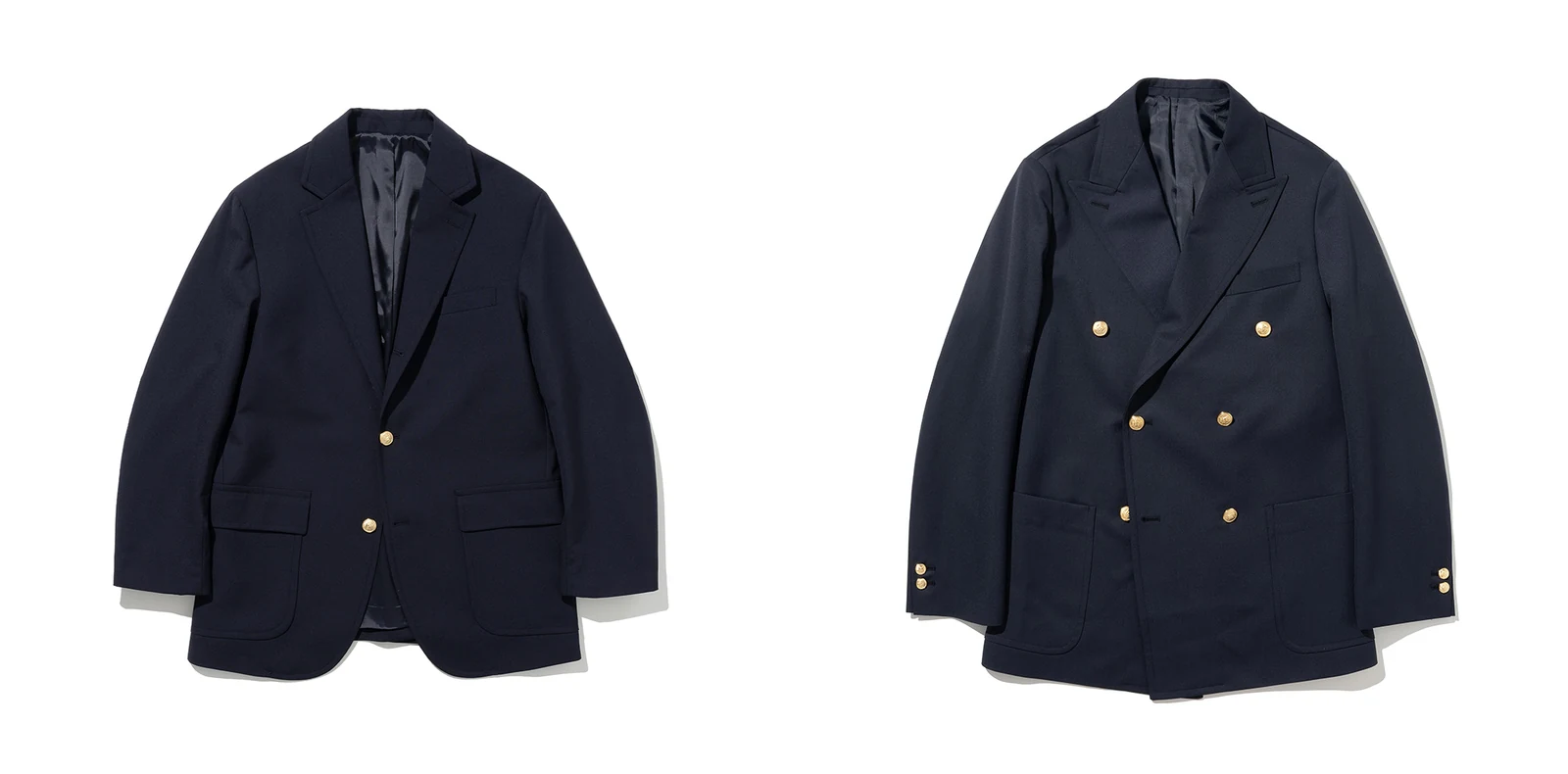
Renacts makes the navy gold-button blazer in two configurations, both built on the same sack-cut architecture but positioned at different formality registers.
Single-breasted (Wool Sack Cut Blazer Navy, $355). The default reading. 3/2 roll lapel, two visible gold buttons (the centre button is the working button; the top button rolls under the lapel), currently Oldgate of England cloth (wool 55% / polyester 45%); transitioning to 100% wool from a Korean mill with Made-in-Korea construction at the June 2026 product renewal. Two patch pockets, hook vent, functional sleeve buttons. This is the version that handles every outfit register from weekend casual to smart office. The format is the textbook American Ivy blazer.
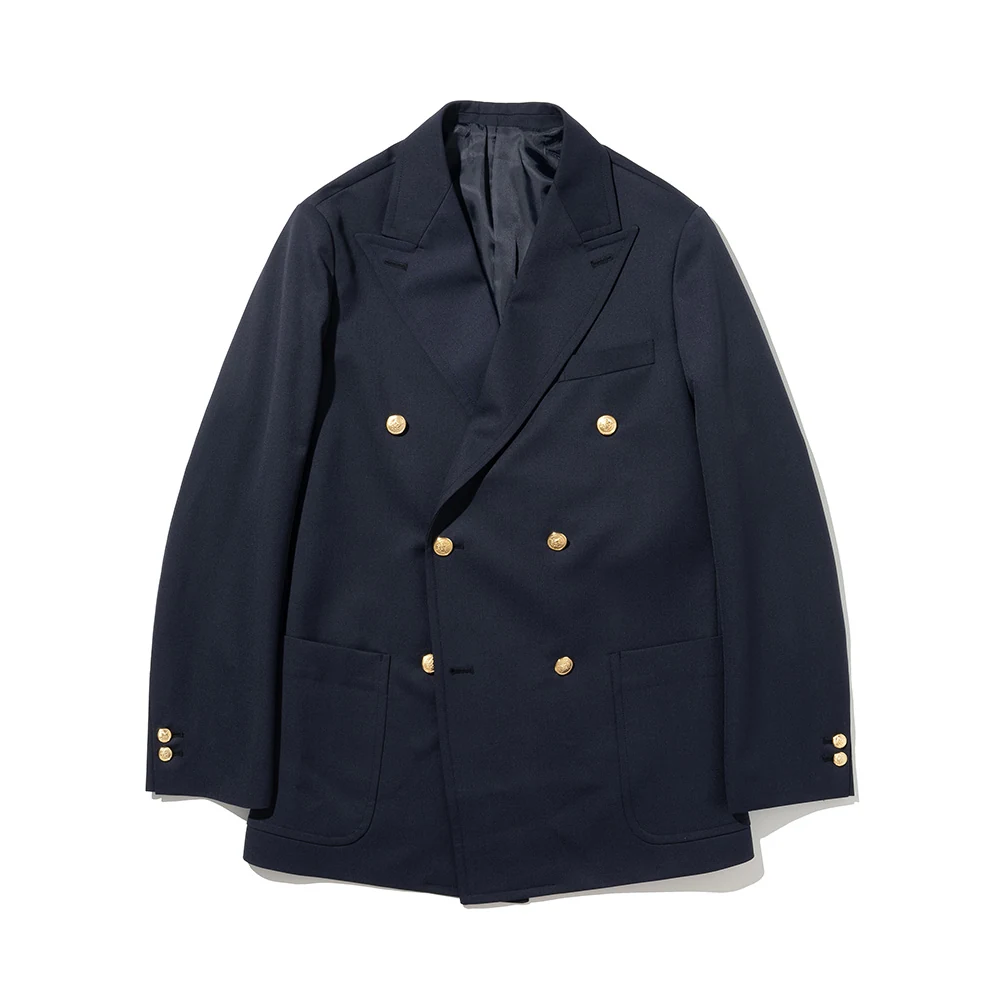
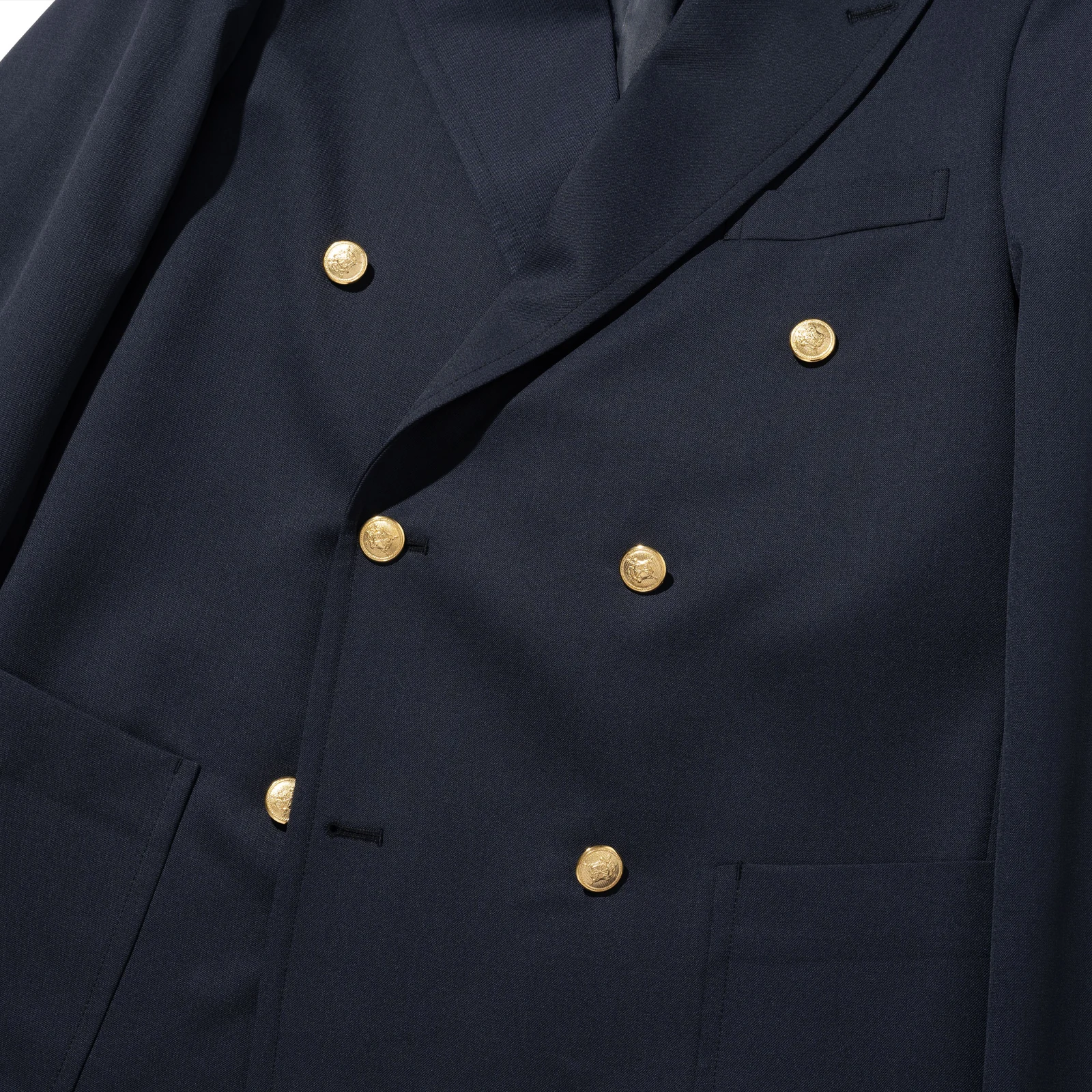
Double-breasted (Wool Sack Cut Double Blazer Navy, $360). The more formal reading. 6×2 button arrangement (six gold buttons visible, two fasten), peaked lapels, currently Oldgate of England cloth (wool 60% / polyester 40%, coarser-thread English suiting blend); transitioning to 100% wool / Korean mill / Made in Korea at the June 2026 product renewal, double rear vents, working sleeve buttons. The double-breasted version sits one formality register above the single-breasted — appropriate for evening events, cocktail receptions, weddings as a guest, and the kind of business meeting where a suit would be too formal but a single-breasted blazer slightly under-dressed.
The Six Architectural Decisions That Make This Jacket
What separates a correctly-built navy gold-button blazer from a generic navy jacket is six specific architectural decisions, each traceable to a specific American Ivy reference.
1. Natural Shoulder
No padding, no roping, no built-up shape. The shoulder line of the jacket follows the wearer’s actual shoulder, with the canvas and lining doing minimal structural work. This is the single most important architectural decision in American trad tailoring — and the central technique covered in the Brooks Brothers and J.Press heritage posts.
2. 3/2 Roll Lapel (Single-Breasted) / Peaked Lapel (Double-Breasted)
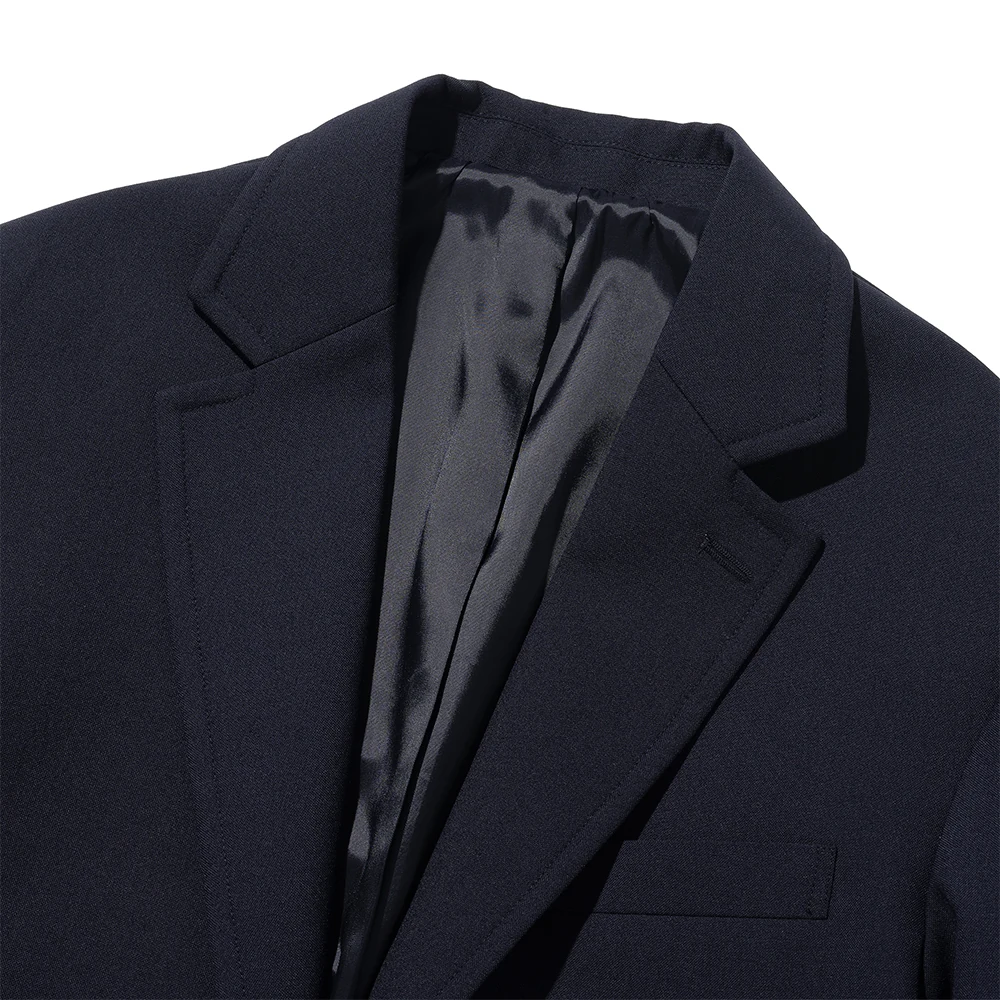
On the single-breasted version, the 3/2 roll is a structurally three-button jacket whose lapel is pressed (or rolls naturally) so the top button hides under the lapel break. The result is a clean two-button visual front with extra room in the lapel for tie expression. The 3/2 roll was perfected by Brooks Brothers in 1901 and never bettered.
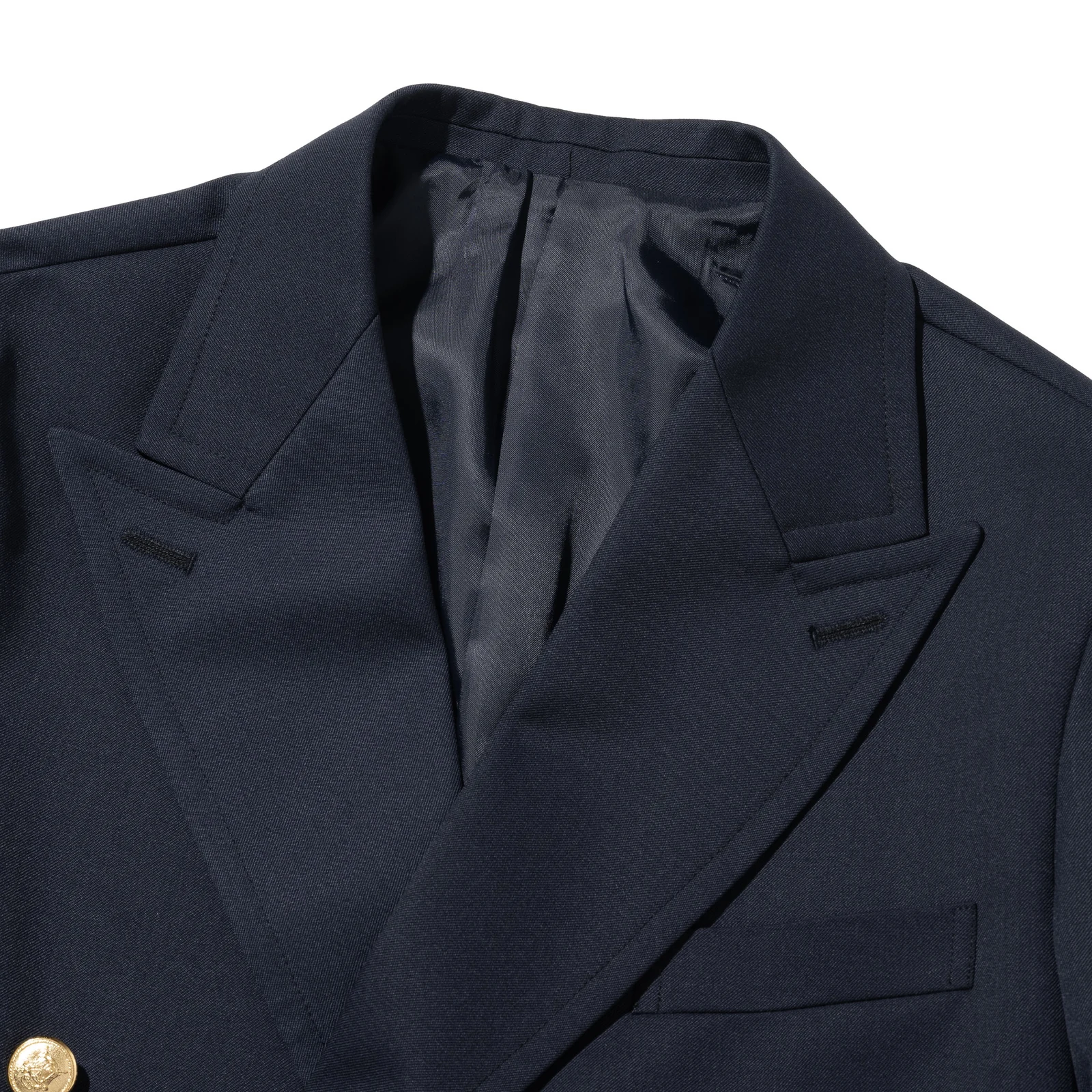
On the double-breasted version, the lapel is peaked rather than notched — peaked lapels balance the wider button stance of the 6×2 arrangement. The peak angle is conservative (not the exaggerated 1980s peak) — this is a 1930s-1960s English peaked lapel adapted to American sack construction.
3. Gold Buttons (Two on Single, Six on Double)
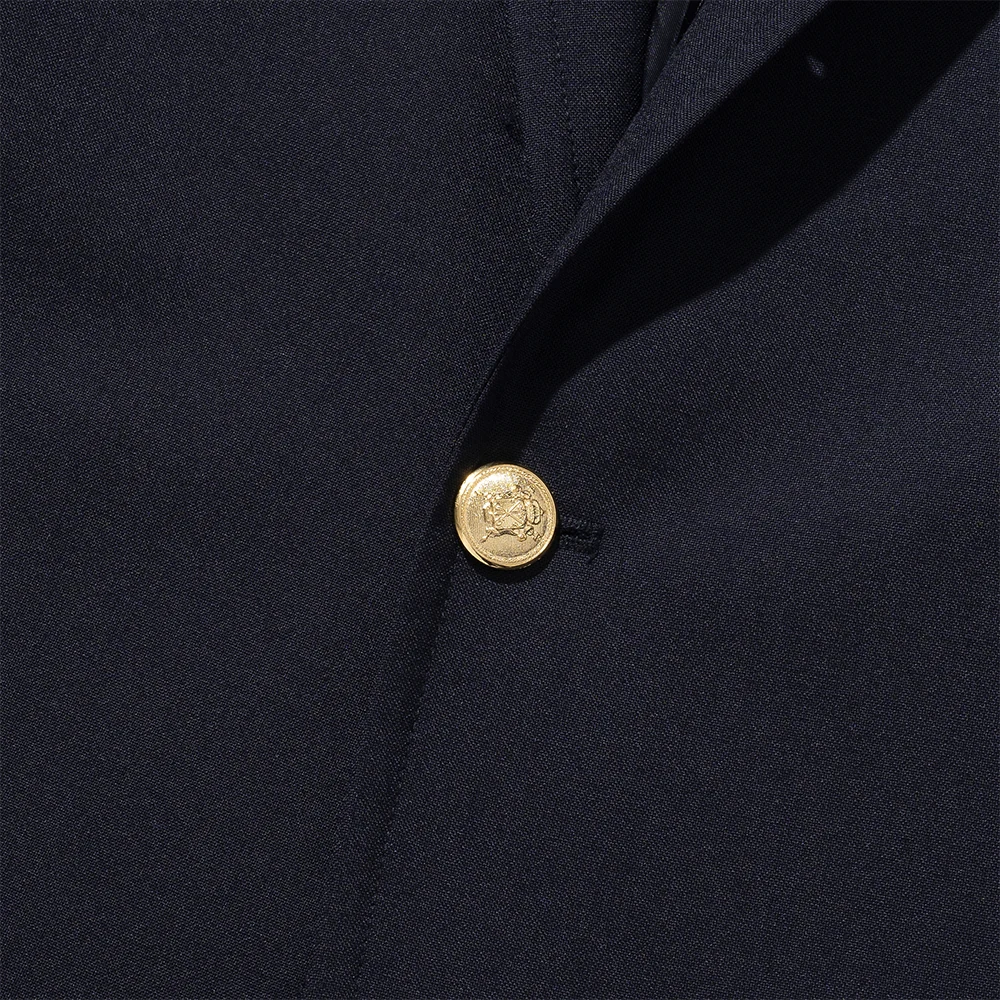
The gold buttons are the entire point of the gold-button blazer name. Renacts uses a classic profile-portrait stamping on brushed gold metal — the same iconography American Ivy inherited from British rowing and naval blazers in the 1890s. On the single-breasted version, two visible gold buttons sit on the front. On the double-breasted version, six gold buttons in a 3×2 row arrangement.
4. Patch Pockets
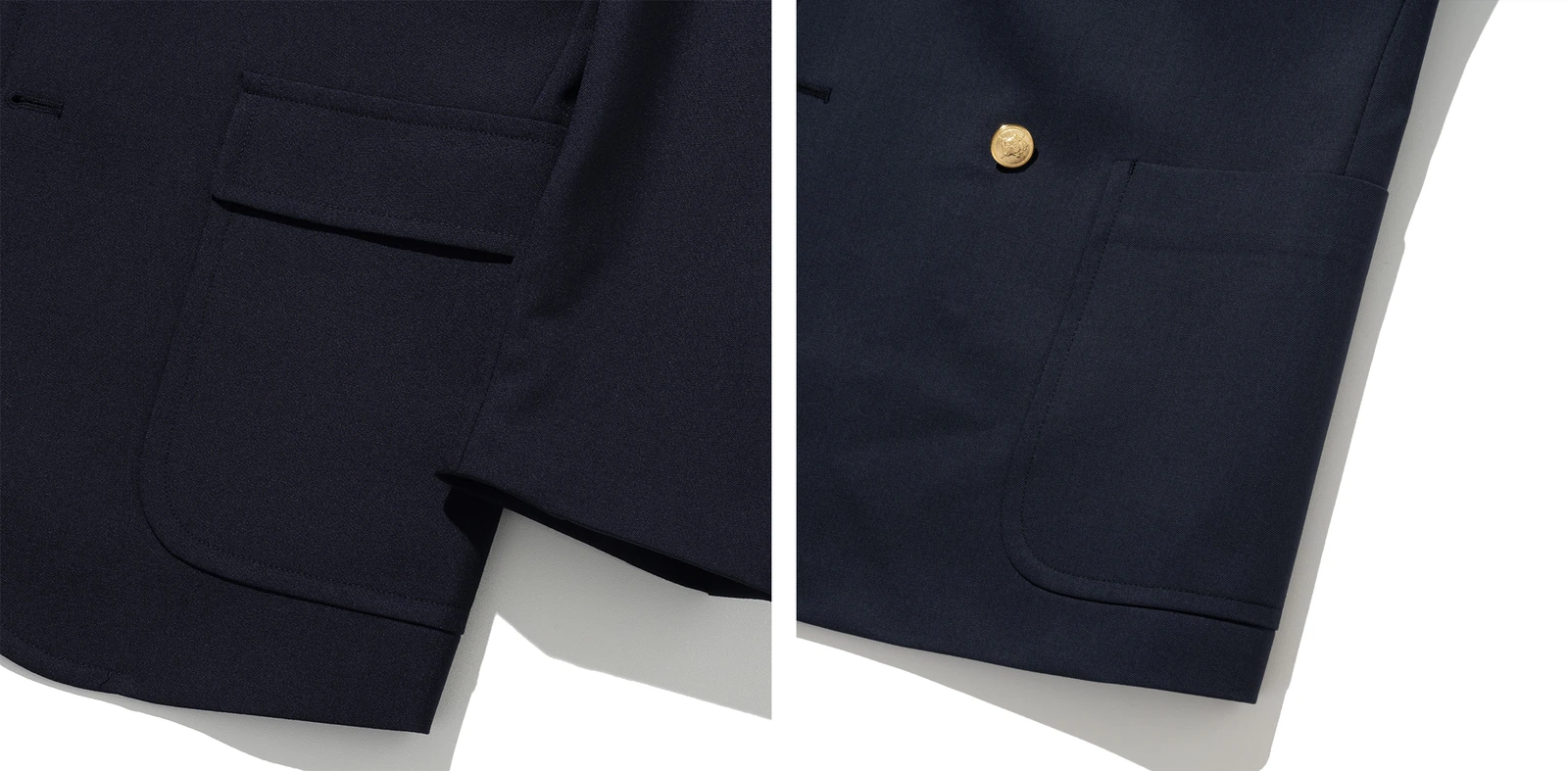
Both Renacts versions use patch pockets at the hip, not jetted or flapped pockets. Patch pockets are the canonical American sack-cut detail — they push the blazer one register more casual than a suit jacket and signal the garment’s separates origin. Brooks Brothers and J.Press both spec patch pockets on their sack-cut blazers; Renacts follows the same rule.
5. Functional Sleeve Buttons (Two on Each Cuff)
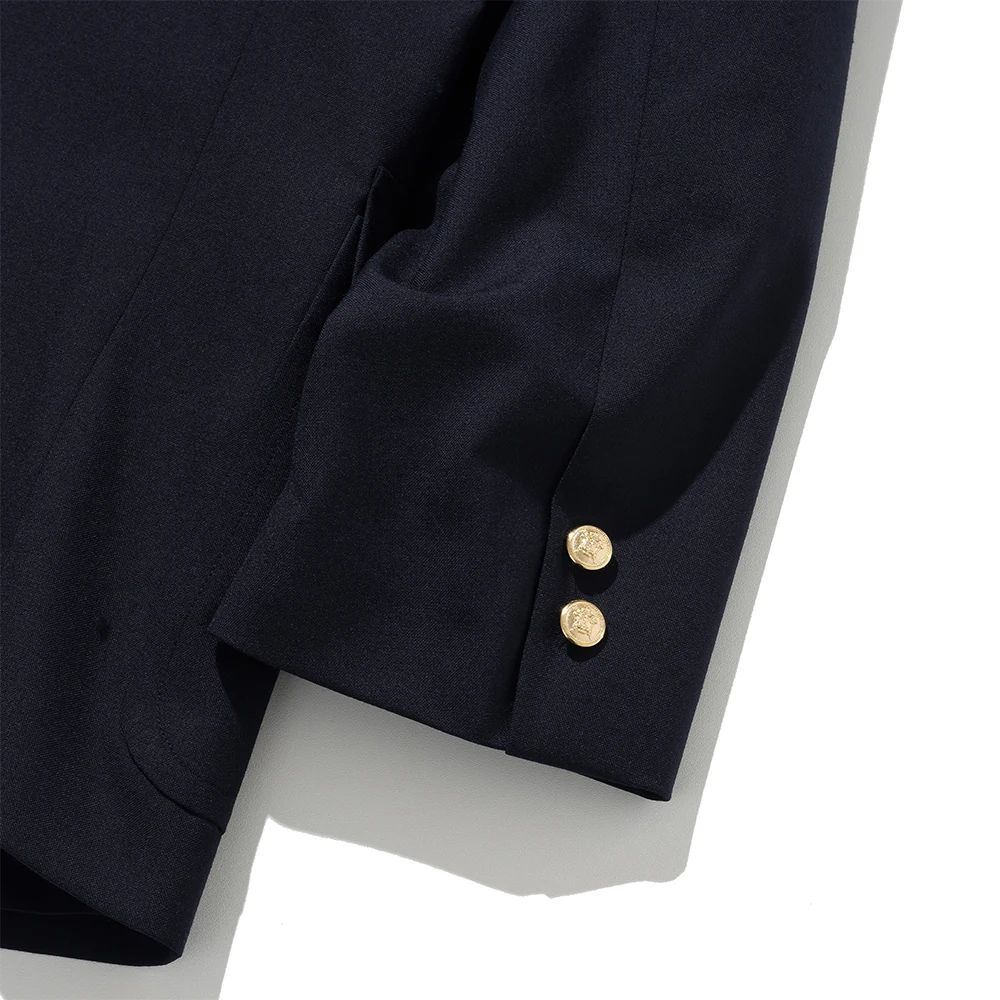
Two gold buttons on each sleeve cuff with functional buttonholes. The buttons match the front buttons in the same metal and stamping; the consistency is part of the look. Functional buttonholes are the construction marker that separates a tailored garment from a fast-fashion blazer — they let an alterations tailor let out or shorten the sleeve correctly.
6. Hook Vent (Single) / Double Vent (Double)
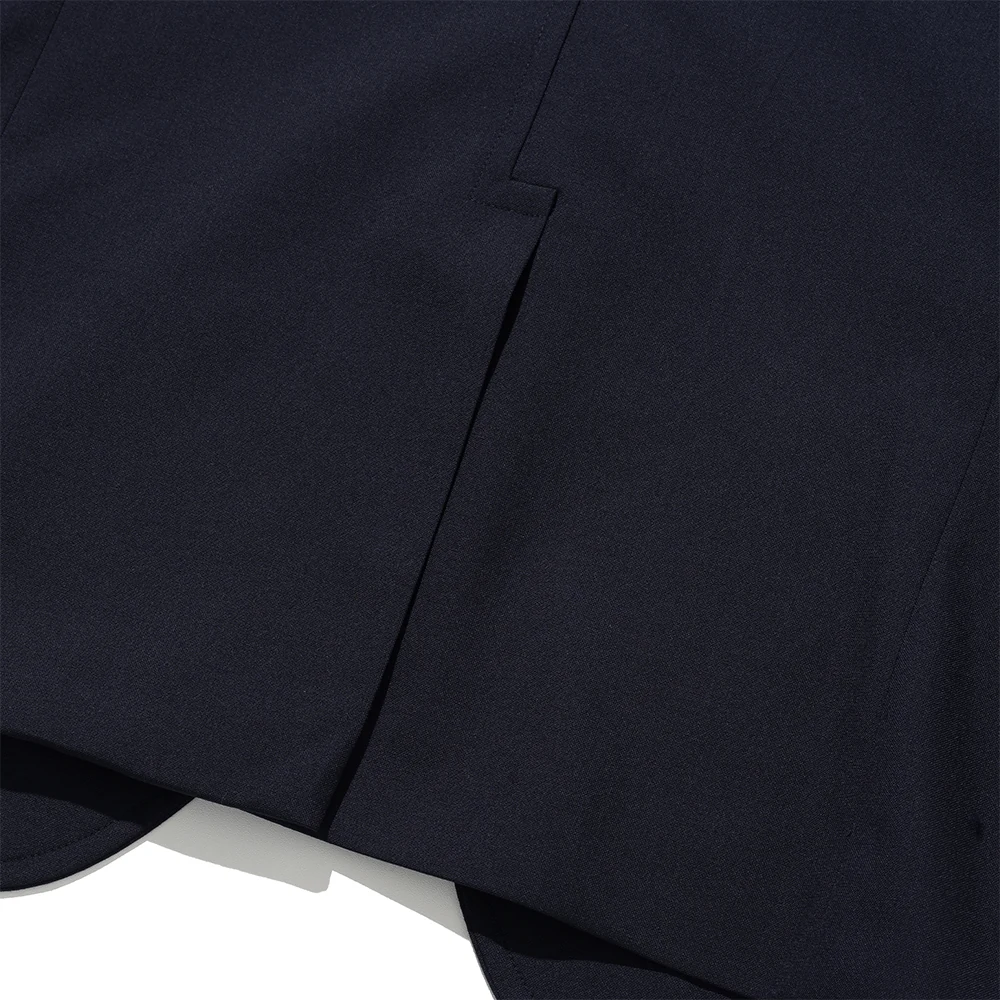
The single-breasted version has a hook vent — a single rear vent with a small angled hook at the top — which is the canonical American Ivy detail. The double-breasted version uses double rear vents (one on each side seam at the back) — the standard for any double-breasted jacket. Both vent styles trace back to 19th-century riding-jacket construction.
What the Navy Gold-Button Blazer Pairs With
The blazer’s versatility depends on the universe of garments it sits inside. The canonical American trad pairings, working from most-formal to most-casual:
- Grey wool flannel trousers — the most formal pairing. The Renacts grey Wool Two Tuck Trousers worn with the navy single-breasted Wool Sack Cut Blazer make the canonical Configuration B documented across the Renacts Legacy Suits 2023 campaign on sixteen real customers.
- Mid-weight grey wool trousers + white OCBD + regimental rep tie — academic register. The Yale Friday-lecture reading.
- Khaki cotton chinos + OCBD (open or with knit tie) — preppy weekend.
- Dark indigo denim + OCBD — modern casual. The jacket’s low-slung patch pockets and natural shoulder accept dark denim more cleanly than a structured British blazer would.
- Plain charcoal flannel + black knit tie — evening register, especially for the double-breasted version.



The shirt is always an OCBD — oxford cloth button-down, white or blue. The tie is always either regimental rep, black silk knit, or open collar. The shoes are black penny loafers or black plain-toe derbies (the same footwear policy the Legacy Suits campaign codified). Brown is allowed for warmer outfits but black is the default.
Layering Registers: Cricket, Vest, Fair Isle
The pairings above change the trouser. These change what sits between the shirt and the jacket, and they are what carry the blazer through autumn and winter.

Cricket sweater. Cream wool with a navy and burgundy stripe at the V-neck, worn between the OCBD and the blazer. The regimental rep tie shows through the opening and the warmth roughly doubles.
Cricket vest. The sleeveless version. Lighter and more breathable, and the V frames the collar and tie more cleanly than the full sweater does. Khaki chino is the canonical trouser.
Fair isle vest. A patterned Shetland vest in place of the plain cricket one. The texture jumps; everything else stays disciplined. Covered at length in our Fair Isle vest guide.
Madras shirt. The warm-weather reading. A patterned cotton madras replaces the OCBD, the tie disappears, and brown suede penny loafers replace black leather.
Double-breasted. The Renacts Wool Sack Cut Double Blazer sits one register above every single-breasted configuration here — the 6×2 stance, peaked lapels and double vents pull the whole outfit up.
The layers that sit under it come from the same knitwear line.
How to Tell a Correctly-Built Navy Gold-Button Blazer From a Wrong One
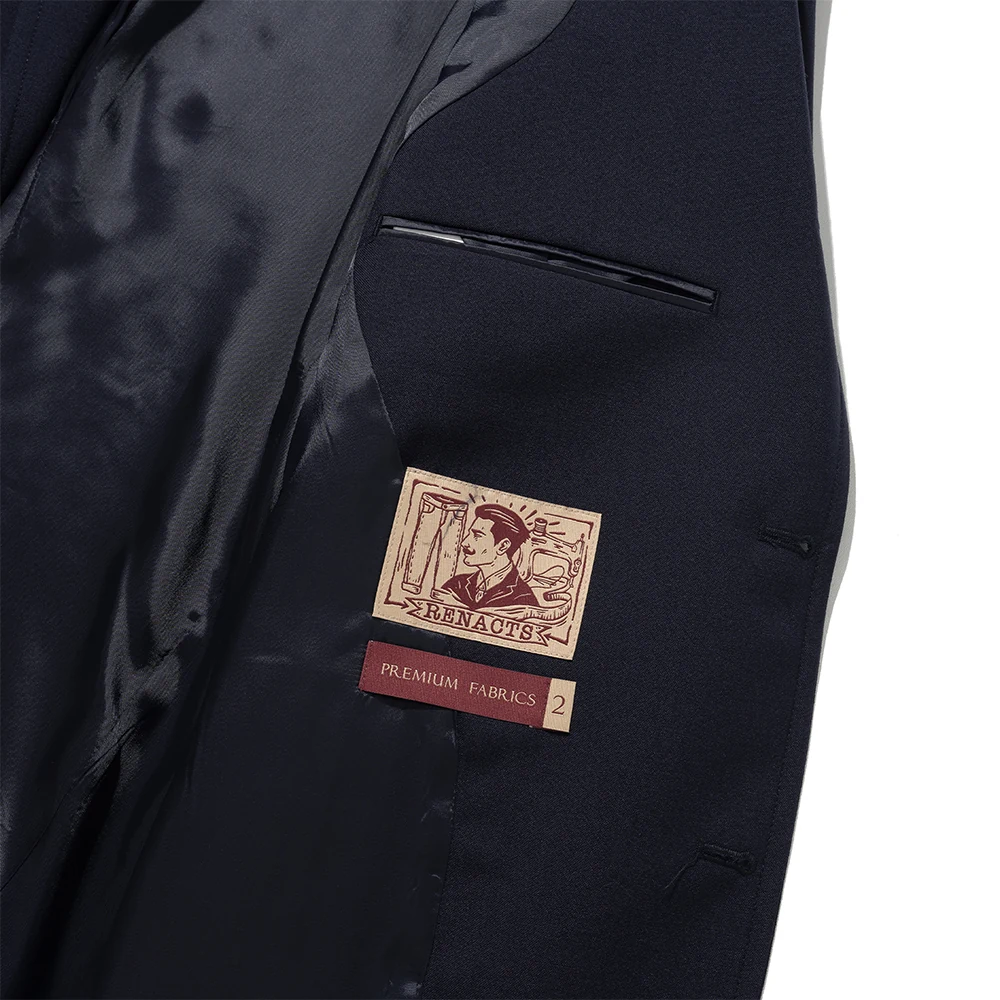
Open the jacket and look at the inside. The navy gold-button blazer done correctly has: a floating canvas through the chest (not fused fabric, which feels stiff and dies after dry cleaning), a full satin lining (or half-lining for warmer versions) cleanly tacked at the seams, a welt interior pocket on the left chest for a phone or notebook, and a brand label with a fabric grade marker — Renacts uses a PREMIUM FABRICS tier system. The current production run uses Oldgate of England cloth — a coarse-thread English suiting blend. The single-breasted runs wool 55% / polyester 45%; the double-breasted runs wool 60% / polyester 40% with a slightly coarser thread for sharper drape under the structured 6×2 stance. At the June 2026 product renewal, both versions transition to 100% wool from a Korean mill with Made-in-Korea construction — the full supply chain repatriated from English wool blends to a domestic Korean wool, cut and tailored in Korea. The architectural decisions stay identical; the cloth and the production country are what change.
Why the Navy Gold-Button Blazer Outlasts Every Trend
The navy gold-button blazer hasn’t been redesigned since 1901. Brooks Brothers spec’d the architecture; Yale, Harvard, Columbia, and Princeton boating clubs adopted it; J.Press and the Andover Shop codified the gold-button rules across the twentieth century; Renacts builds it in Seoul in 2026 on the same architectural blueprint. The garment’s permanence is not coincidental — it’s the consequence of having gotten the six architectural decisions right the first time and never having a structural reason to change them.
Read in this lineage, the Renacts Wool Sack Cut Blazer (navy) and Wool Sack Cut Double Blazer (navy) are not “blazer styles” — they are the navy gold-button blazer, continued. The same garment your grandfather could have bought at a Yale haberdashery in 1955, your father at a Cambridge shop in 1985, you in Seoul today. One wardrobe, three generations.
For the regimental rep tie heritage that pairs with this jacket’s most formal register, see our Drake’s of London history post. For the visual proof of how the jacket reads on actual customers across five decades of age, see the Renacts Legacy Suits 2023 campaign — sixteen Gentlemens Club members in two configurations of this exact wardrobe, photographed side by side. For the broader American trad heritage that this blazer descends from, browse the Seoul Trad heritage series.
