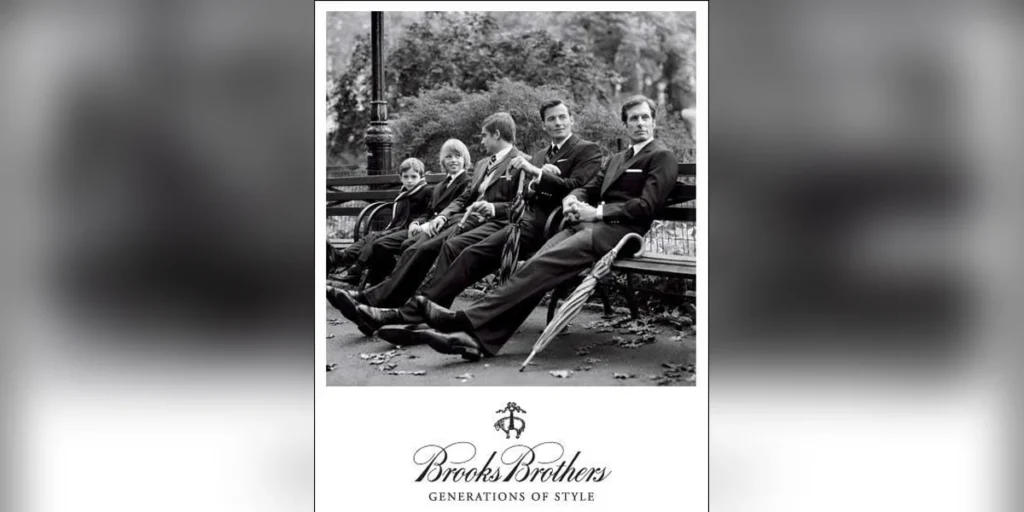
The Natural Shoulder: Why American Tailors Rejected British Structure
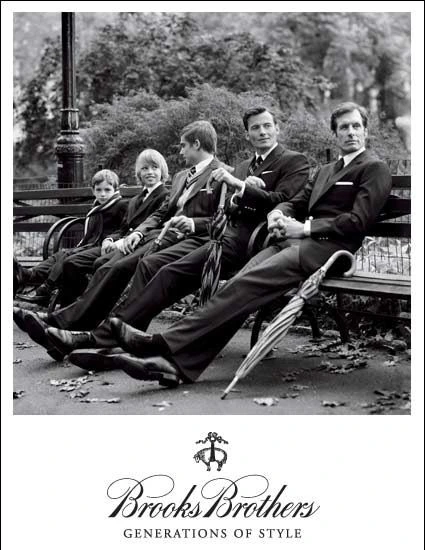
The single most important architectural decision in American trad tailoring is natural shoulder tailoring — the choice to leave the shoulder of a jacket soft, unpadded, and following the wearer’s actual shoulder slope, rather than building it up with canvas and padding the way British Savile Row tailoring does. Every other detail of American Ivy League menswear — the 3/2 roll lapel, the undarted body, the hook vent, the patch pockets, the soft OCBD collar — descends from this one choice. This guide traces natural shoulder tailoring from its 1818 Brooks Brothers origins through the 1901 codification of the No.1 Sack Suit, the 1902 J.Press Yale-shop continuation, and the 2026 Renacts production line in Seoul. A 208-year unbroken structural decision, told as one continuous line.
What Natural Shoulder Tailoring Actually Means
The phrase natural shoulder tailoring describes a specific construction approach in tailored jackets: the shoulder of the garment is built without internal padding, without roping at the sleeve cap, and without architectural shaping that extends beyond the wearer’s actual shoulder line. The result is a shoulder that drapes off the wearer rather than sitting on top of them. Soft. Quiet. Unannouncing.
Three specific construction details define natural shoulder tailoring. First, no shoulder pad — or, in some modern interpretations, an extremely thin pad of one or two millimetres at most. Second, no rope at the sleeve cap — the sleeve meets the shoulder seam flat, not built up into the rounded “epaulette” shape that British military and Savile Row construction produces. Third, the shoulder seam runs along the top of the wearer’s actual shoulder line, not extending beyond it; if the wearer’s shoulders slope, the jacket’s shoulders slope. Together, these three decisions produce the canonical American sack-cut shoulder: visible in every Brooks Brothers No.1 Sack Suit photograph from 1901 onwards, every J.Press 1902 Model jacket, every Andover Shop sack jacket from 1948 to the present, and every Renacts Wool Sack Cut Blazer in 2026.
The British Predecessor — Built-Up Construction
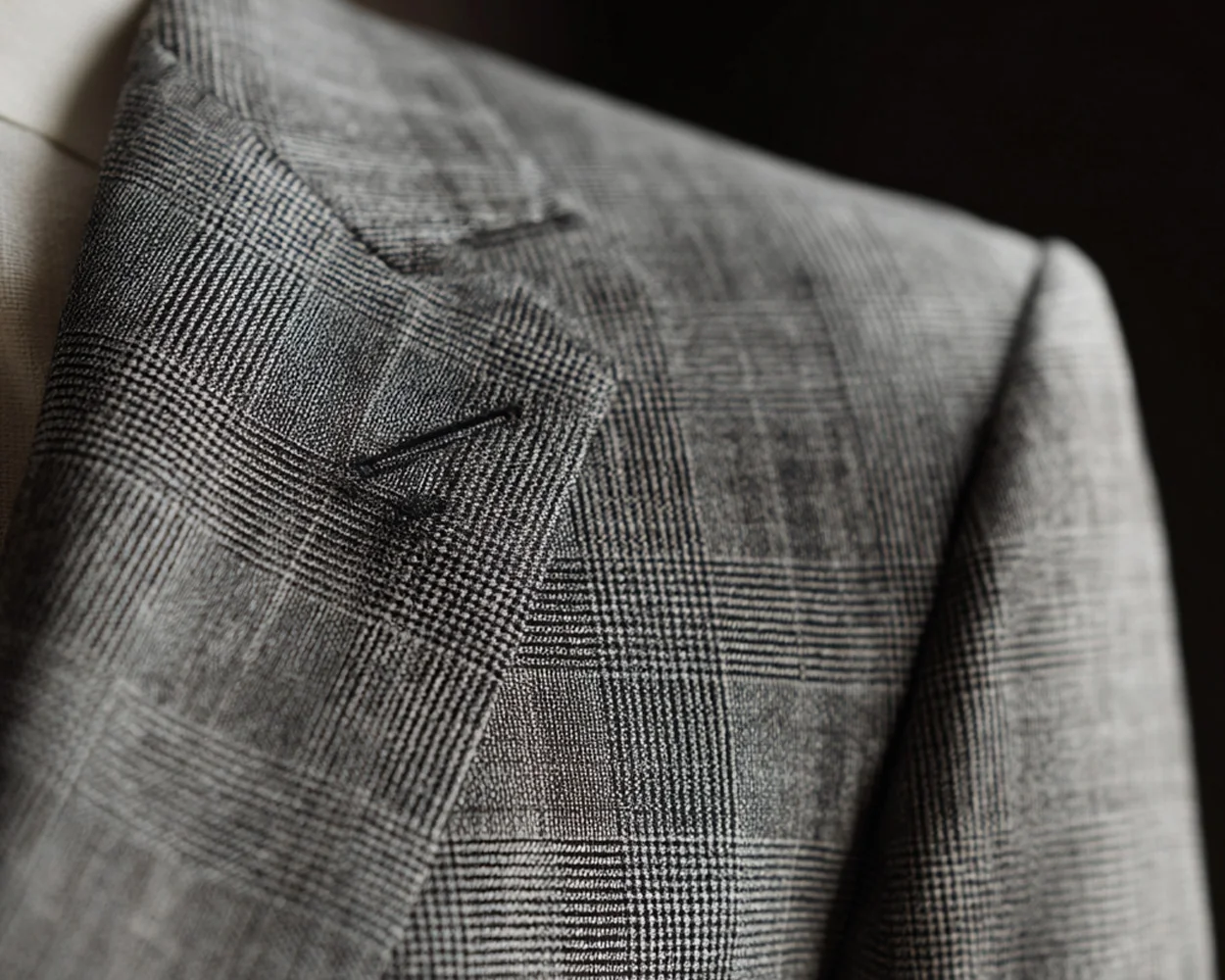
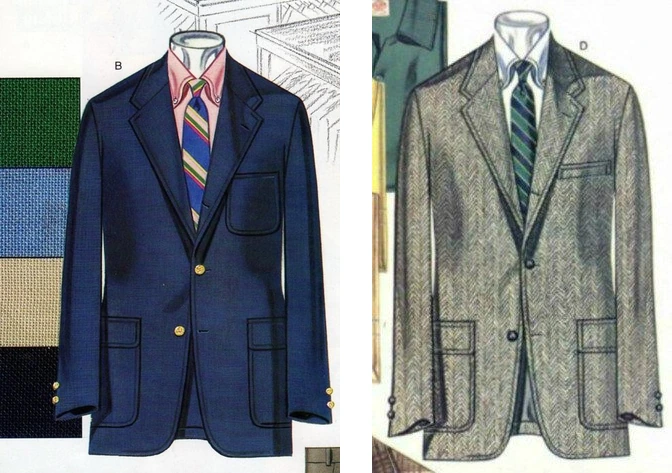
To understand natural shoulder tailoring, the first step is to understand what it deliberately rejected. The British tailoring tradition that American shops descended from — the Savile Row method codified between 1820 and 1890 — was built around structured shoulders. A correctly-built Savile Row jacket has shoulder padding (typically 6 to 12 millimetres thick at the outer edge), a roped sleeve cap (the sleeve crown is gathered into the shoulder seam to produce a slight raised “head”), and a shoulder line that often extends slightly beyond the wearer’s actual shoulder to create a more architectural silhouette. The classic British Glen Check blazer above shows this construction: notice the firmness of the shoulder line, the slight build-up at the sleeve cap, and the defined chest shape pushed forward by canvas.
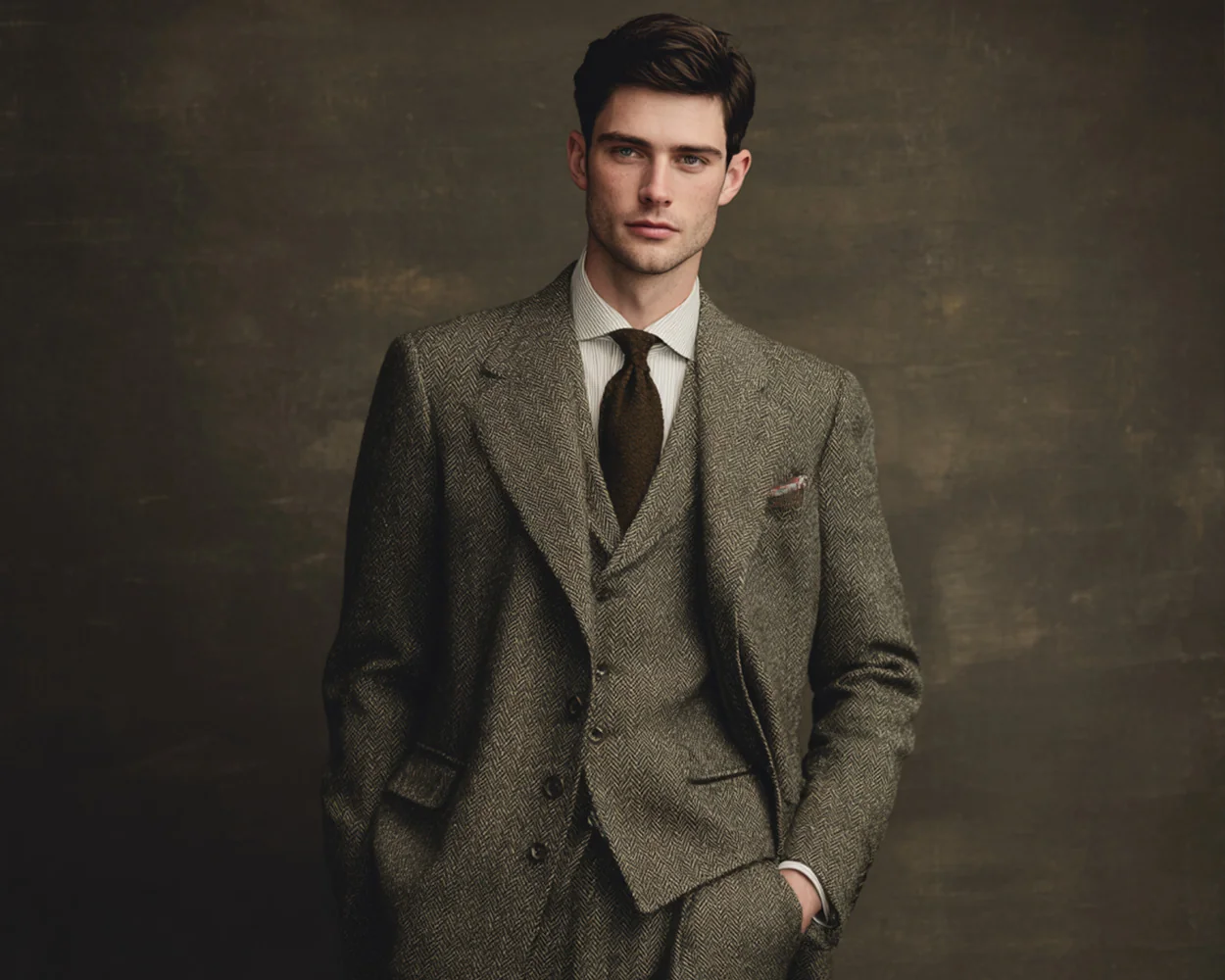
The same construction principles in a British herringbone tweed: structured shoulders, suppressed waist, sharper silhouette. The British approach is correct for its context. It produces a jacket that looks dressed even when worn over casual layers; it carries an inherently formal, military-derived visual code; it suits the body lines of cavalry officers, aristocratic landowners, and city financiers — the original consumer base of Savile Row. What it does not suit is a twenty-year-old American college student in a New England autumn lecture hall.
1818-1890s — Brooks Brothers Reads the Room
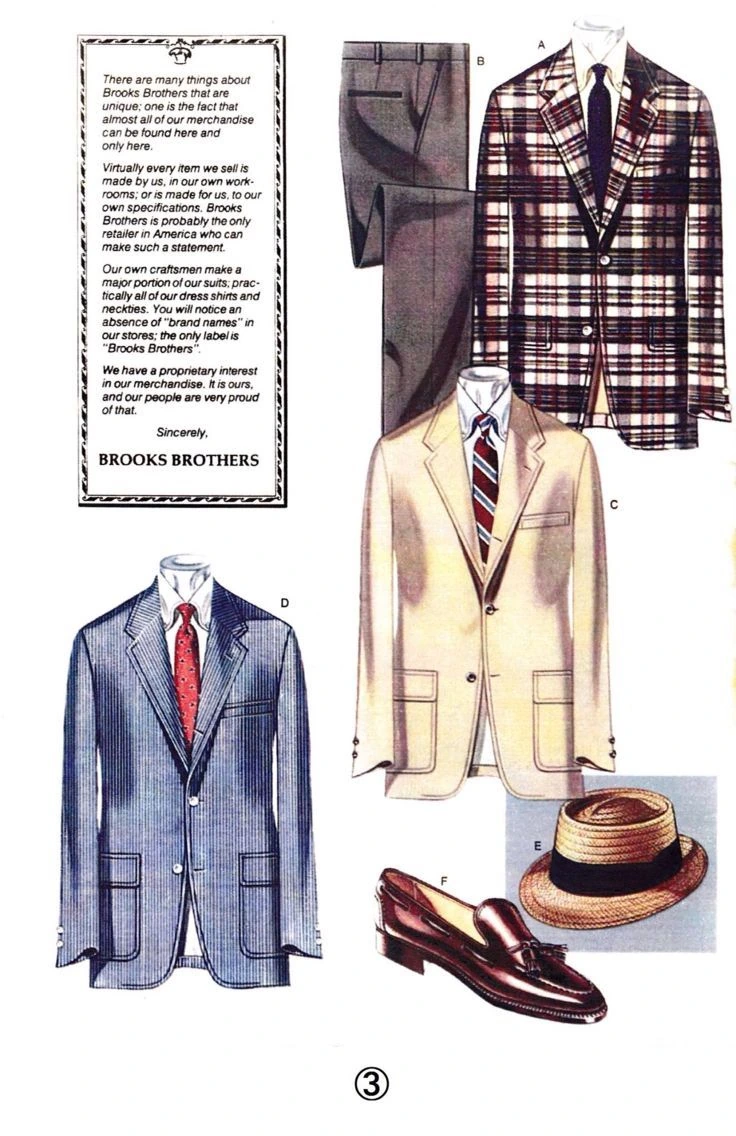
Brooks Brothers, founded in New York in 1818 (covered fully in our Brooks Brothers history), began as a transplant of British tailoring on American soil. For its first six decades the shop made jackets that were essentially British in construction — padded shoulders, structured chests, suppressed waists. By the 1880s, the shop’s clientele had shifted dramatically. Brooks Brothers was no longer dressing only New York merchants and lawyers; it was outfitting the new American university class — Yale, Princeton, Harvard, and Columbia students whose lives centered on lecture halls, libraries, dining halls, and weekend sport rather than the City. These customers wore their tailored jackets all day, every day, in a way British financiers didn’t. Stiff shoulders were uncomfortable in a five-hour reading session. Built-up chests were excessive in a New Haven spring afternoon.
The shop quietly began to soften its construction across the 1880s and 1890s. The shoulder pad got thinner. The sleeve rope got smaller. The waist suppression got less aggressive. By the late 1890s, Brooks Brothers had developed a distinctly American reading of the tailored jacket — softer, looser, more comfortable, still recognisably tailored but no longer architecturally structured. This was the prototype of what would, in 1901, be formalised as the Number One Sack Suit.
1901 — The No.1 Sack Suit Codifies Natural Shoulder
In 1901, Brooks Brothers introduced the Number One Sack Suit — the codified, named, marketed version of the soft American jacket the shop had been gradually developing since the 1880s. The suit’s defining specifications were:
- Natural shoulder — no shoulder pad, no rope, shoulder seam following the wearer’s actual shoulder line.
- 3/2 roll lapel — structurally three-button jacket whose lapel rolls to hide the top button under the lapel break, leaving two visible front buttons.
- Undarted body — no vertical waist seams shaping the front; the body cut from a single panel from chest to hip, falling straight (the “sack” silhouette).
- Single hook vent — one rear vent at the hem with a small angled hook at its top, the canonical American Ivy detail.
- Soft, narrow lapel — typically 3 to 3.25 inches wide, rolled flat rather than pressed crisp.
The Number One Sack Suit was, in 1901, a deliberate architectural rejection of British tailoring. It was the first major American tailoring shop’s public statement that British construction was no longer the default for an American customer. It became, almost immediately, the standard against which every other American shop’s sack-cut jacket would be measured. The suit is still produced by Brooks Brothers today, on essentially the same construction blueprint — 124 years of structural continuity unbroken. The example above shows the current production version in navy pinstripe; cross-section the shoulder construction and you would find the same soft canvas piece, the same absent shoulder pad, the same flat sleeve attachment that the 1901 original specified.
1902 — J.Press Carries Natural Shoulder to Yale
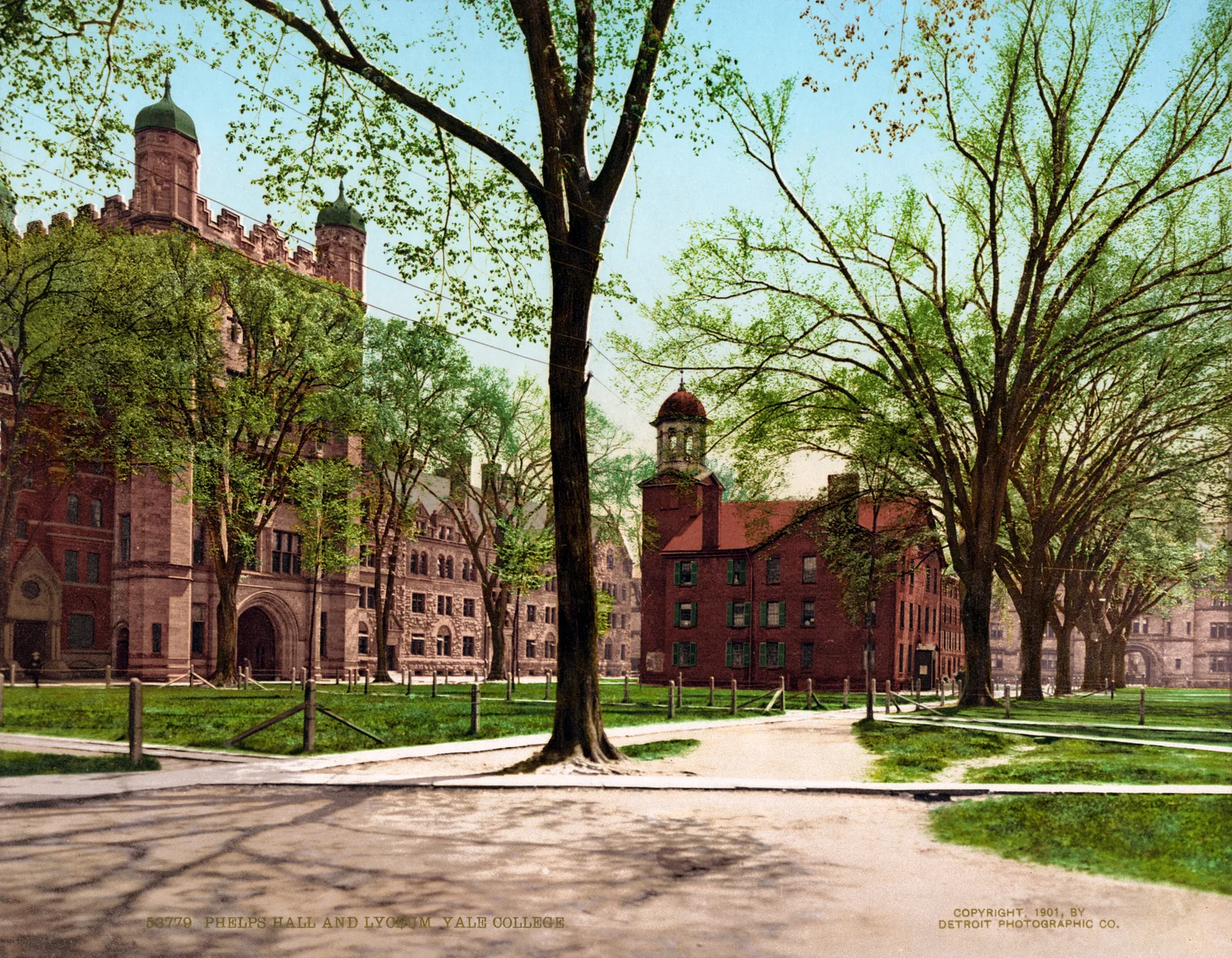
One year after the Brooks Brothers No.1 Sack Suit appeared, a Latvian-born tailor named Jacobi Press opened a small tailoring shop next to the Yale College campus in New Haven, Connecticut. Phelps Hall and the Lyceum (above, 1901) were the campus landmarks adjacent to the shop’s York Street location. The shop was tiny, the staff was Press himself, and the business model was simple: cut and tailor jackets for Yale undergraduates that were softer than what Brooks Brothers in New York was making — even more deliberately American, even less British. (Full story in our J.Press history.)
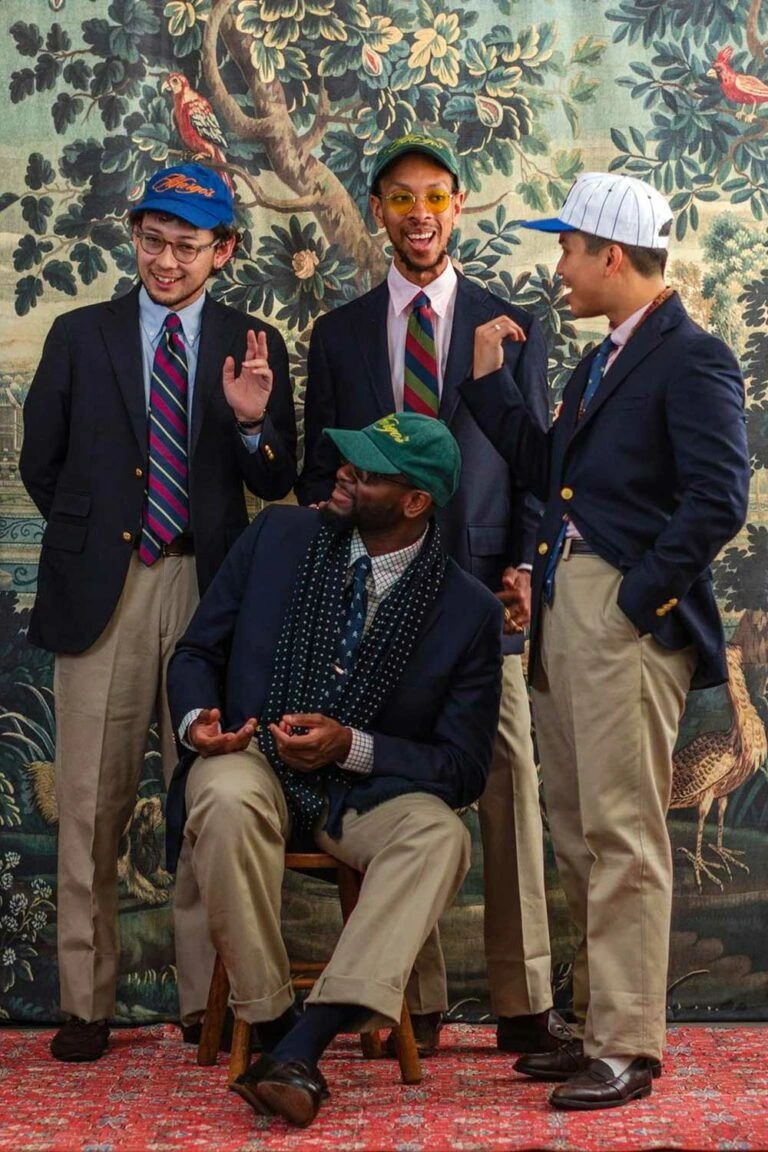
The J.Press 1902 Model in living continuation (above) — modern American Ivy editorial showing four young men wearing the canonical natural-shoulder sack-cut blazer over OCBD and regimental rep tie. The 1902 Model became J.Press’s defining silhouette across the twentieth century: it applied natural shoulder tailoring more aggressively than the Brooks Brothers version — softer canvas, even less shape through the chest, narrower lapel, and a slightly cropped overall length. The 1902 Model was specifically built for the Yale undergraduate body — relatively youthful, relatively athletic, walking around campus all day in a wardrobe that had to function for academic, sporting, and social registers without changing. By the 1920s, every Ivy League school had adopted the J.Press 1902-style sack suit as the campus uniform. By the 1950s, J.Press had opened a second shop next to Harvard, a third in midtown Manhattan for alumni, and a fourth in Washington D.C. The 1902 Model and the natural shoulder construction it represented had become the American Ivy League standard.
1948 — The Andover Shop Locks It In
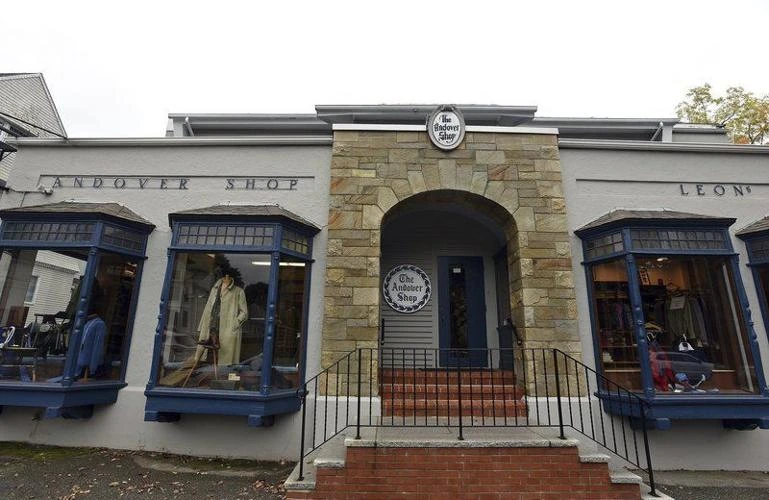
If Brooks Brothers introduced natural shoulder tailoring as a public statement in 1901, and J.Press codified it for Yale undergraduates in 1902, the third shop that locked the construction into a fixed canon was The Andover Shop in Cambridge, Massachusetts, founded in 1948. The shop’s co-founder Charlie Davidson opened the Holyoke Street address in 1953 and ran it for 66 years until his death in 2019, at age 93 — having joined the shop from age 22 in 1948 and given it 71 total years. This makes The Andover Shop, in practice, the longest single continuous expression of American Ivy natural shoulder tailoring in operation. (See our Andover Shop history for full context.)
What Davidson did across his 71 years (1948-2019, taking over Holyoke Street from 1953) was refuse to change the construction. While Brooks Brothers and J.Press both went through corporate ownership transitions in the late twentieth century — Brooks Brothers sold to Marks & Spencer in 1988, then Retail Brand Alliance in 2001, then Brooks Brothers Group in 2020; J.Press acquired by Onward Kashiyama in 1986 — The Andover Shop stayed independent and its construction stayed identical. Davidson’s refusal was not theoretical; it was operational. The shop’s tailoring patterns remained on the same blueprints across seven decades; the shop’s Holyoke Street storefront (above) — opened by Davidson in 1953 — looks today essentially as he left it, and the OCBD colour palette inside maintained the same four colours (white, blue, pink, yellow) across the same period. The result was that, by the time American trad culture entered its current revival cycle in the 2010s, The Andover Shop served as the reference benchmark for “correctly-built” natural shoulder jackets. Other shops calibrated against Davidson; Davidson calibrated against Davidson.
Five Architectural Markers of Natural Shoulder Tailoring
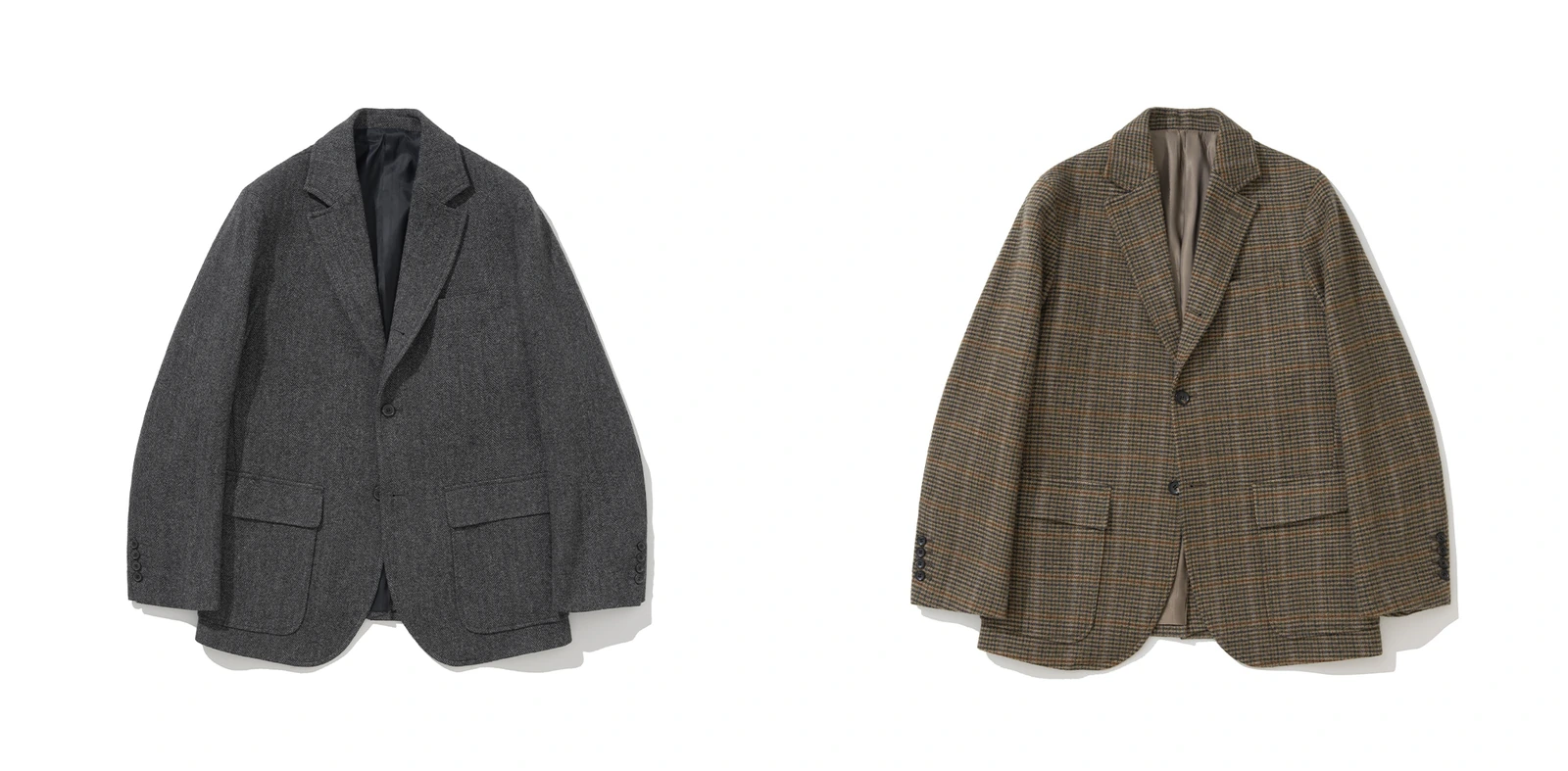
What does correctly-built natural shoulder tailoring look like in 2026? Five architectural markers, all visible across the Renacts sack-cut family above (two earth-tone wool blazers — herringbone and houndstooth — demonstrating the same architecture across different fabrics), and all traceable to specific 1901-1902 Brooks Brothers / J.Press specifications:
1. Soft Shoulder Line
The shoulder line of the jacket follows the wearer’s shoulder slope without architectural extension. If the wearer’s shoulder slopes downward at 18 degrees, the jacket’s shoulder slopes downward at 18 degrees. No build-up, no extension, no attempted “improvement” of the natural body line. This is the first and most important natural shoulder tailoring specification.
2. Soft (Not Roped) Sleeve Cap
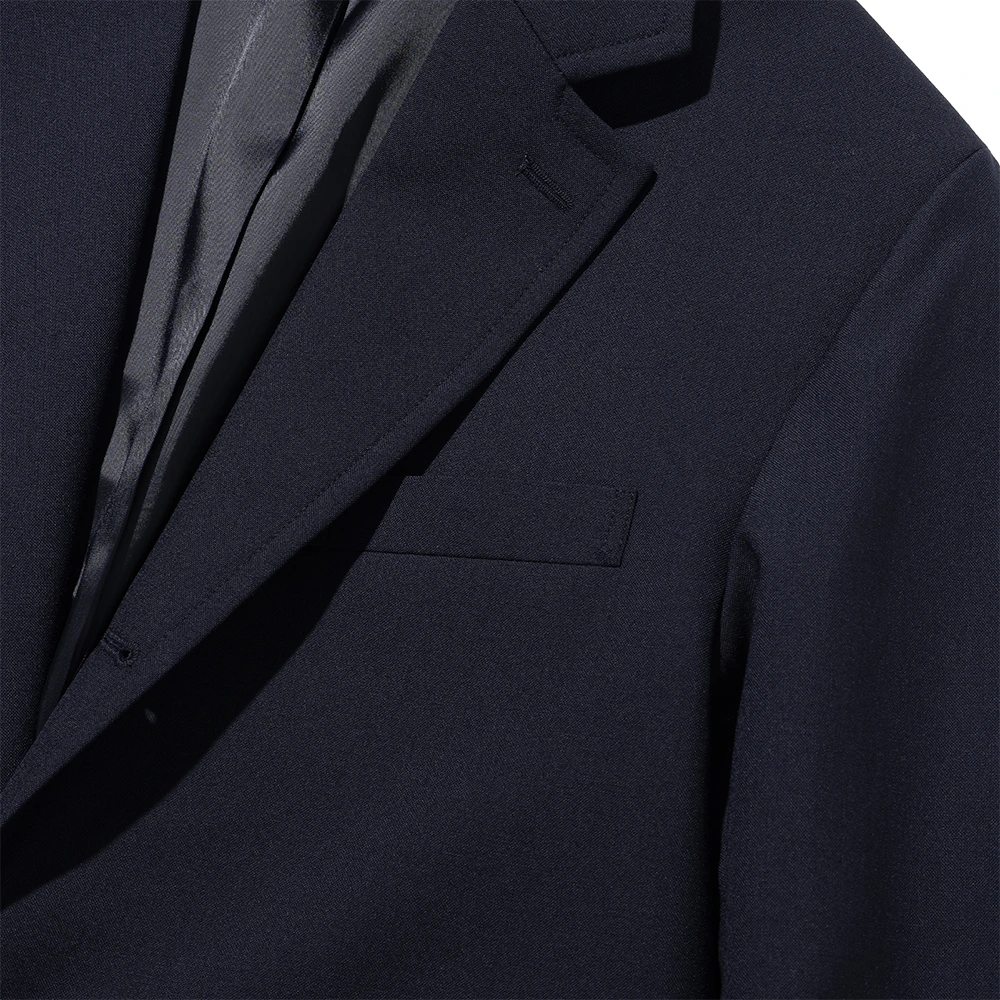
Where the sleeve meets the shoulder seam, the join is flat. The sleeve crown is not gathered into a raised “rope” or “head” the way British construction produces. Run a finger along the shoulder seam from the neck outward to the sleeve attachment, and on a natural shoulder jacket the surface stays continuous; on a roped-shoulder British jacket, your finger encounters a distinct raised ridge.
3. Undarted Body
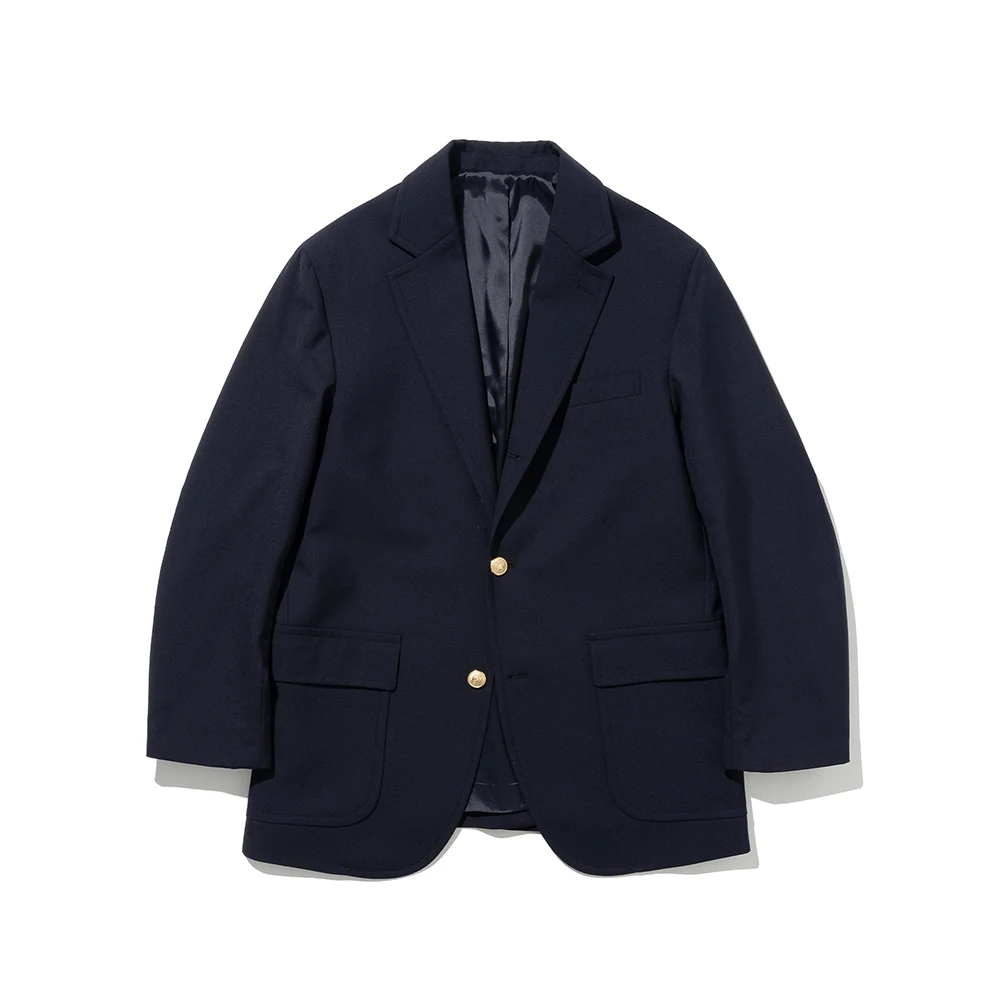
No vertical seams running from chest to waist on the front panels. The body is cut from a single piece of fabric on each side, falling from chest to hip without architectural waist suppression. The result is the canonical “sack” silhouette — the body falls straight, accommodating the wearer rather than shaping them. Modern American natural shoulder jackets sometimes add very subtle side darts for tropical-weight fabrics, but the front of the jacket remains undarted.
4. Hook Vent (Single Rear Vent with Angled Top)
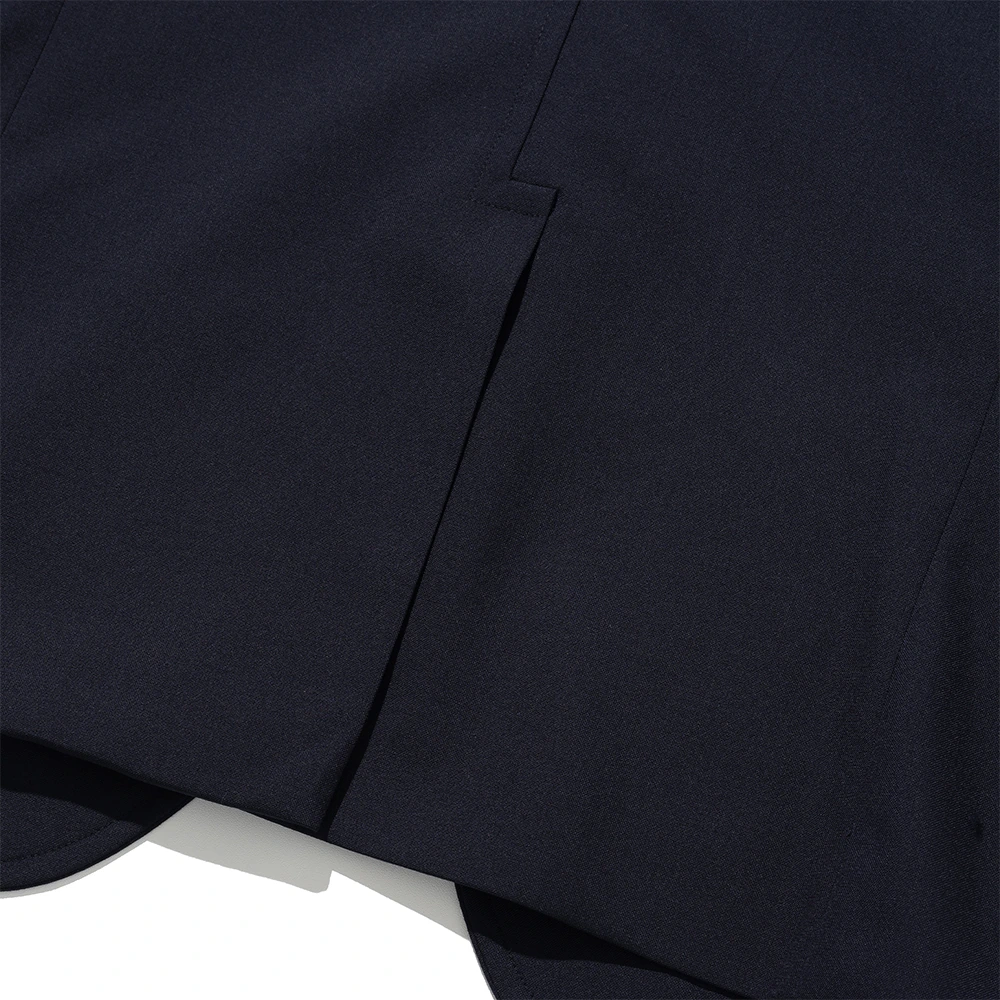
The single rear vent ending in a small angled hook at the top is the canonical American Ivy detail, descended from late 19th century riding-jacket construction. Brooks Brothers, J.Press, and The Andover Shop all spec this vent on their sack jackets. Modern double-breasted versions of natural shoulder jackets use double rear vents instead — but on single-breasted natural shoulder construction, the hook vent is the default.
5. Soft, Narrow Lapel (3/2 Roll)
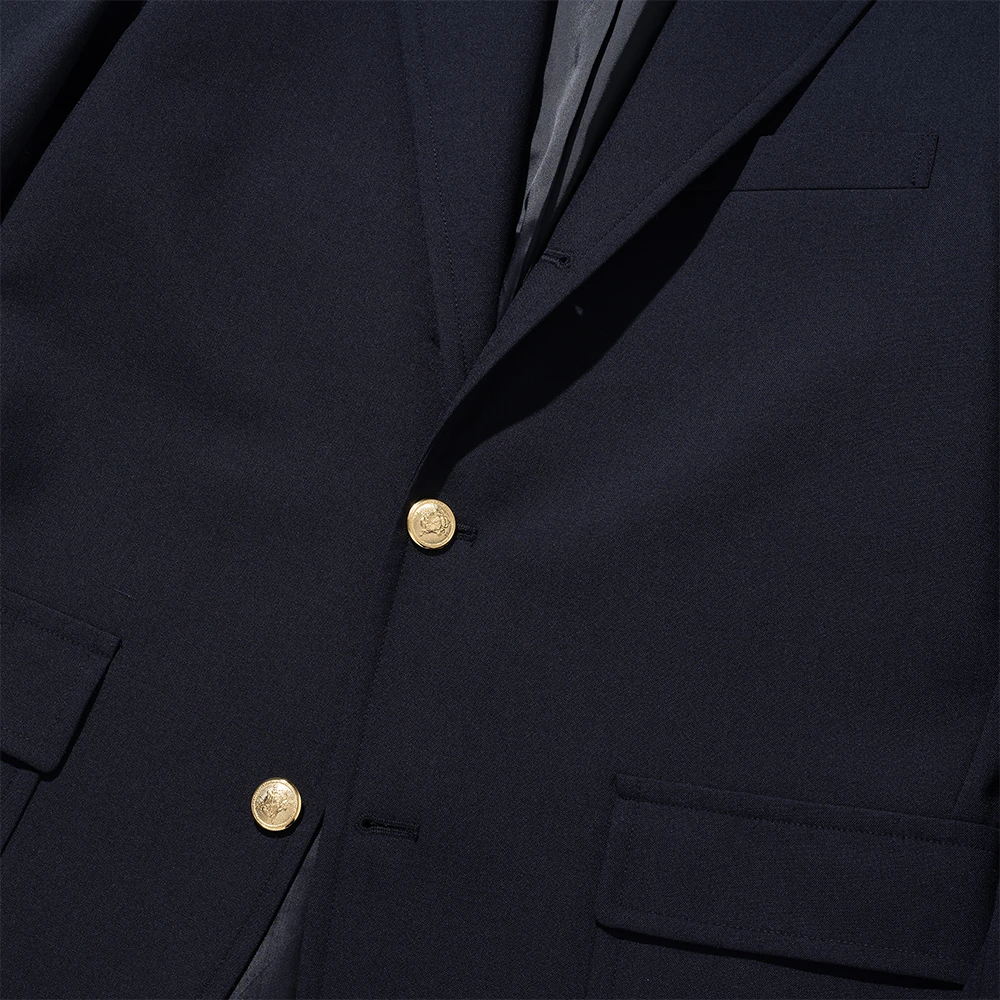
The lapel runs in the 3-to-3.25-inch width range, soft-pressed (not crisp), and rolls naturally so that on a structurally three-button jacket the top button hides under the lapel break — producing the classic “3/2 roll” effect. The narrow soft lapel is a deliberate counter to the wider, crisper British lapel, and it pairs visually with the soft shoulder to produce a consistent natural reading across the entire jacket.
How to Tell Natural Shoulder From Built-Up Construction
Three quick tests separate natural shoulder tailoring from built-up British construction in any jacket on a rack:
- Press the shoulder. A natural shoulder jacket compresses softly under finger pressure — the shoulder is fabric and a thin layer of canvas. A British structured shoulder resists; you feel the shoulder pad and the built-up canvas beneath. The pressure test takes one second per jacket.
- Run a finger along the shoulder seam from neck to sleeve. Natural shoulder = continuous flat surface. Roped British shoulder = distinct raised ridge at the sleeve attachment.
- Check the front body for darts. Vertical seams running from chest to waist = darted (British or modernised cut). No vertical seams = undarted (American sack cut). Darting is not always a disqualifier — modern American natural shoulder occasionally uses tropical-weight side darts — but front darts on a body claiming to be natural shoulder are a red flag.
The Modern Continuation — Renacts in Seoul, 2026
Two hundred and eight years after Brooks Brothers opened in New York in 1818, and one hundred and twenty-five years after the No.1 Sack Suit codified natural shoulder tailoring as a named American convention in 1901, the same construction is being produced in Seoul on sixteen Korean customers (above) — the Legacy Suits 2023 campaign’s titled hero plus the Configuration B group composition. The Renacts Wool Sack Cut Blazer follows every one of the five architectural markers identified above: soft shoulder, soft sleeve cap, undarted body, hook vent, soft narrow lapel with 3/2 roll. Both versions currently use Oldgate of England cloth (an English wool blend); at the June 2026 product renewal both transition to 100% Korean wool with Made-in-Korea construction. The construction is fully canvased, hand-finished at key seams, and structurally identical to a 1955 Brooks Brothers No.1 Sack Suit cross-sectioned at the shoulder.
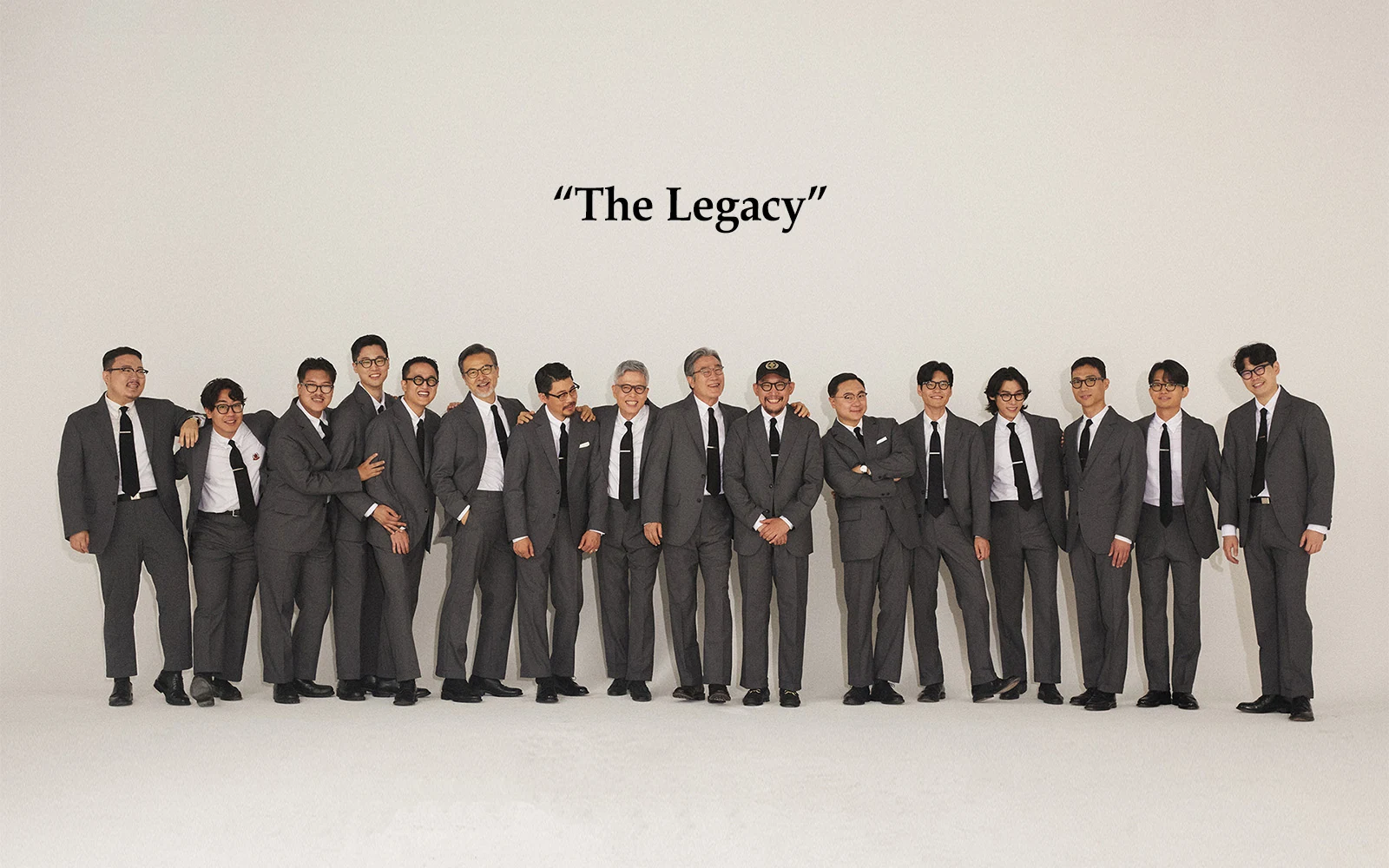
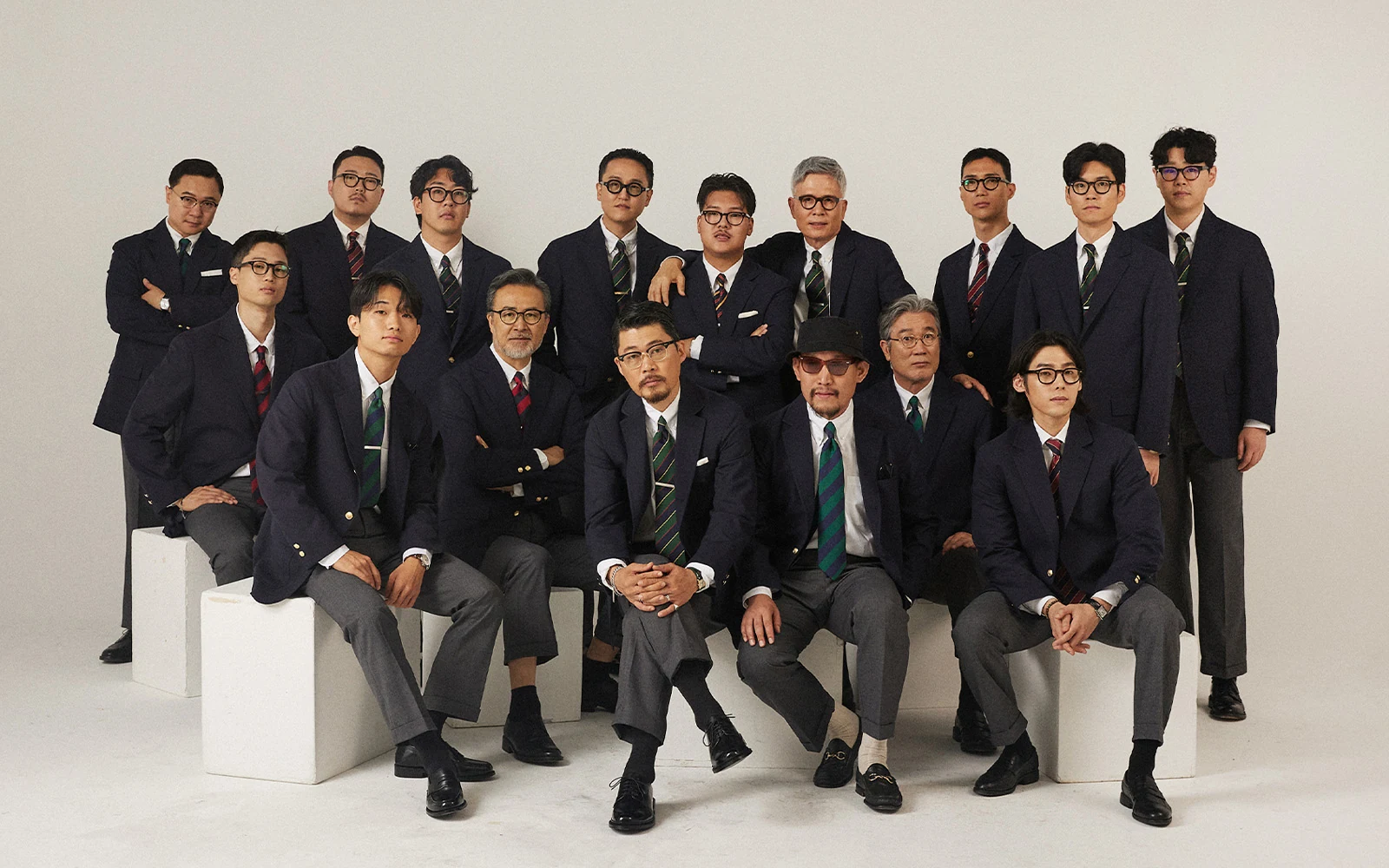
What this continuation proves is that natural shoulder tailoring is not a regional or temporal fashion. It is a structural decision that, once correctly made, produces a garment that works across continents, decades, and body types without modification. The 2023 Renacts Legacy Suits campaign documented this proof on sixteen Korean customers aged 20s to 60s, photographed in two configurations of natural shoulder jackets. The 2026 product line — the Wool Sack Cut Blazer (single and double-breasted versions, both navy with gold buttons) — is the canonical production version. Six outfit registers for the same jacket are documented in our navy gold-button blazer outfit guide; the structural breakdown of why the jacket works is in our essentials guide.
Why Natural Shoulder Tailoring Outlasts Every Other Convention
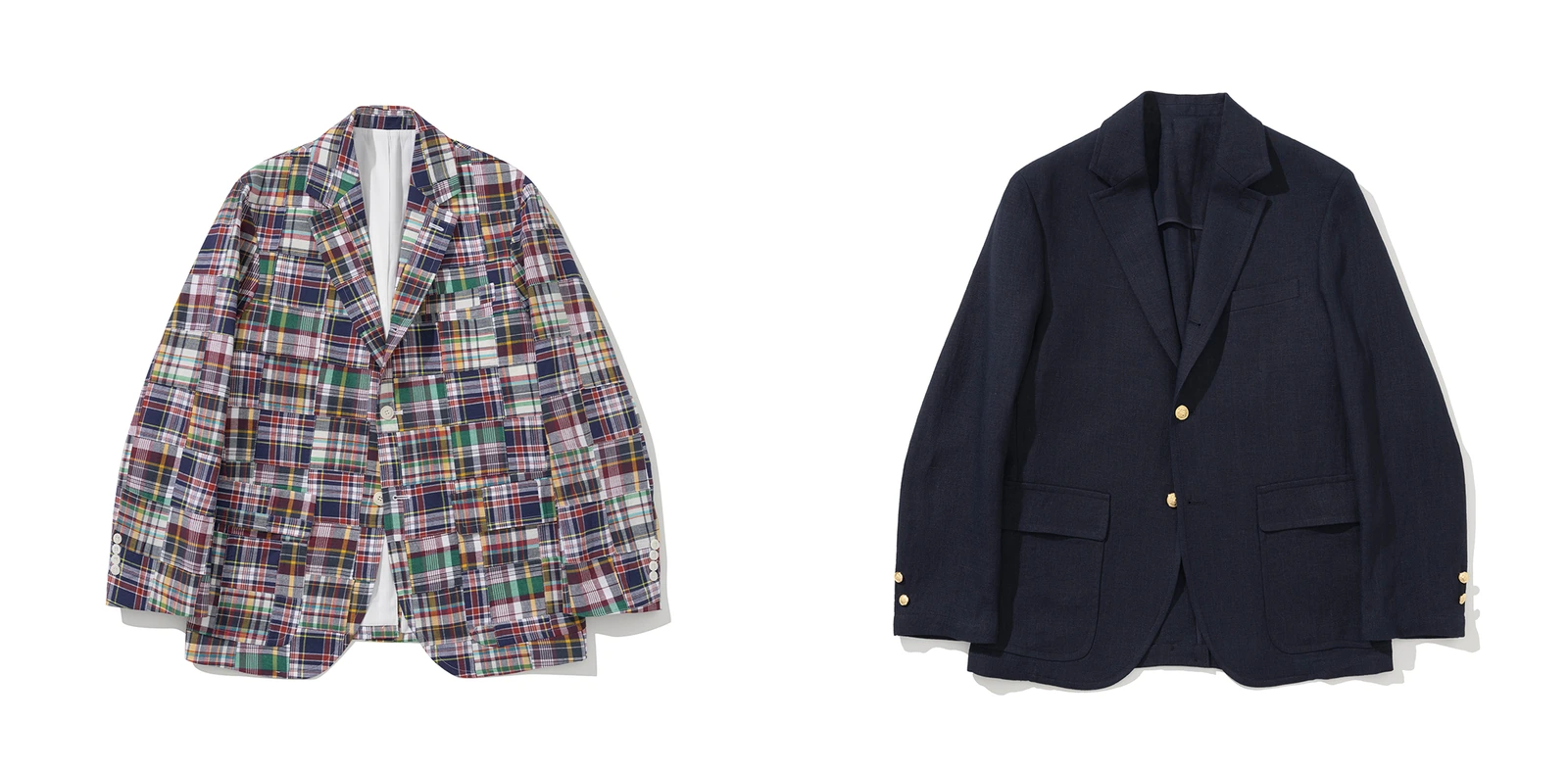
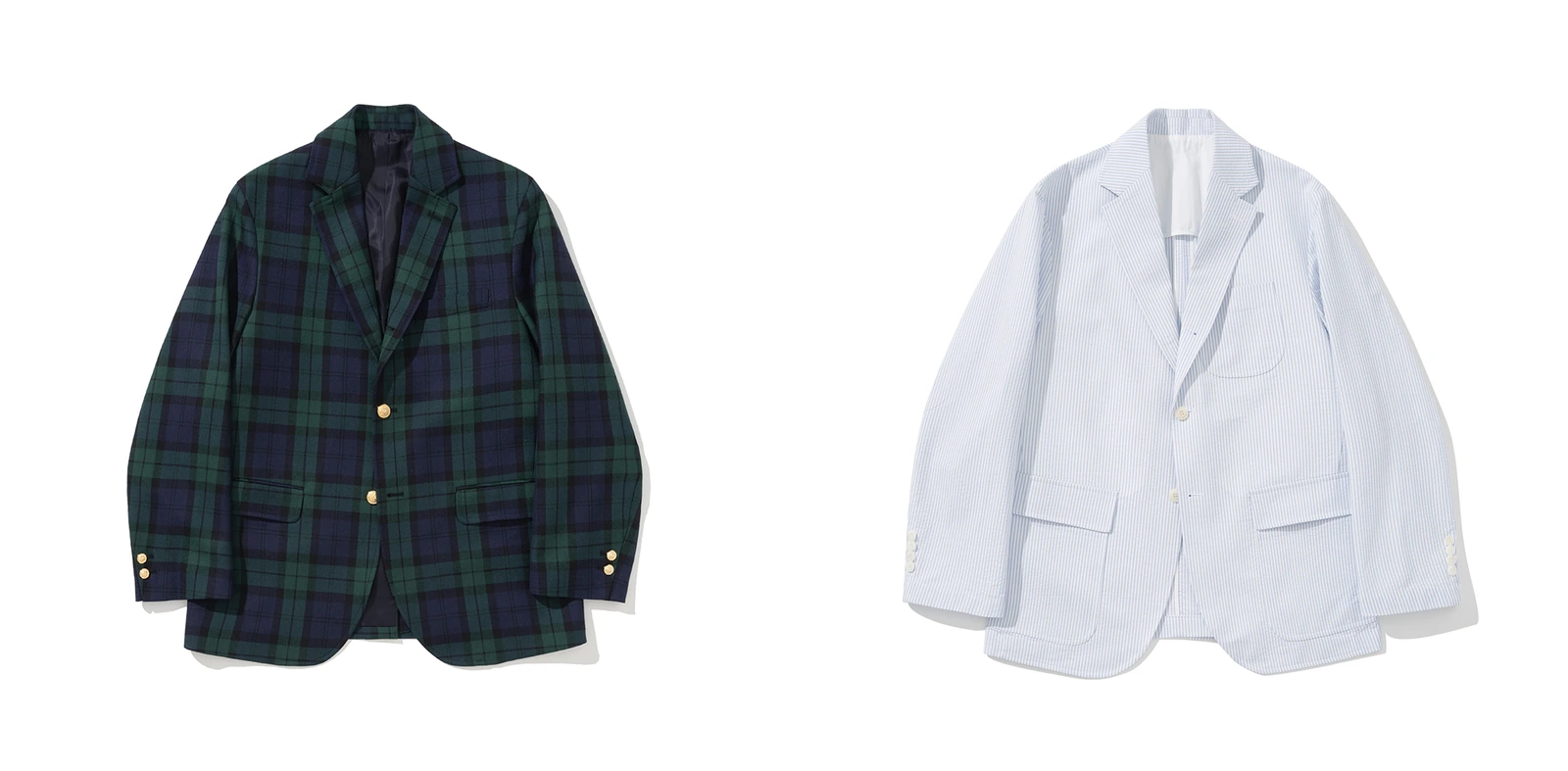
Tailoring fashions come and go. The Italian “spalla camicia” (shirt-sleeve shoulder) flourished in the 1990s and largely receded. The 1980s power-suit shoulder pad came and went and returned briefly and went again. British city tailoring modernised aggressively across the 2000s and pulled back. Natural shoulder tailoring, by contrast, has been continuously produced and continuously worn from 1901 to 2026 without interruption. The cut Brooks Brothers introduced in 1901 is the cut Renacts produces in 2026. No other tailoring convention has held that consistently across that span.
The reason is structural. Natural shoulder tailoring is, more than any other approach, fundamentally comfortable. A soft shoulder does not poke into the wearer’s collarbone; a soft sleeve cap does not bunch when the arm reaches forward; an undarted body does not pinch when the wearer sits. The cut accommodates the wearer rather than imposing a silhouette on them. In a culture where men actually wear tailored jackets all day — at lectures, in offices, at meals, at events — the comfort difference is enormous. American Ivy culture was that culture in 1901, and Korean trad culture is that culture in 2026. Both arrived at the same answer.
The second reason is visual. Natural shoulder tailoring reads as understated. A British structured shoulder makes a statement; a soft American shoulder lets the wearer make the statement. In trad culture — where the explicit goal is correct dress that does not call attention to itself — the natural shoulder is the architecturally correct choice for the underlying philosophy. The two reinforce each other: trad philosophy demands quiet clothes; natural shoulder construction produces quiet clothes; the philosophy and the construction converge.
For the broader American trad context that natural shoulder tailoring sits inside, browse the Seoul Trad heritage series — covering Brooks Brothers, J.Press, The Andover Shop, Yale Ivy Style, Drake’s of London, and the broader American Big Four canon. For the specific 2023 visual proof of natural shoulder construction worn on real customers across four decades of age, see the Renacts Legacy Suits campaign. The construction is 125 years old. The conversation is still active.
Natural-shoulder sack jackets in the line: