Vintage Fireman Jacket Outfit: Seoul Trad Meets Workwear
A Vintage Fireman Jacket Outfit That Actually Works
Here’s the thing about a vintage fireman jacket outfit — it can go wrong fast. Too much workwear and you look like you’re cosplaying a 1940s dock worker. Too preppy underneath and the jacket feels like a costume piece sitting on top of clothes that want nothing to do with it.
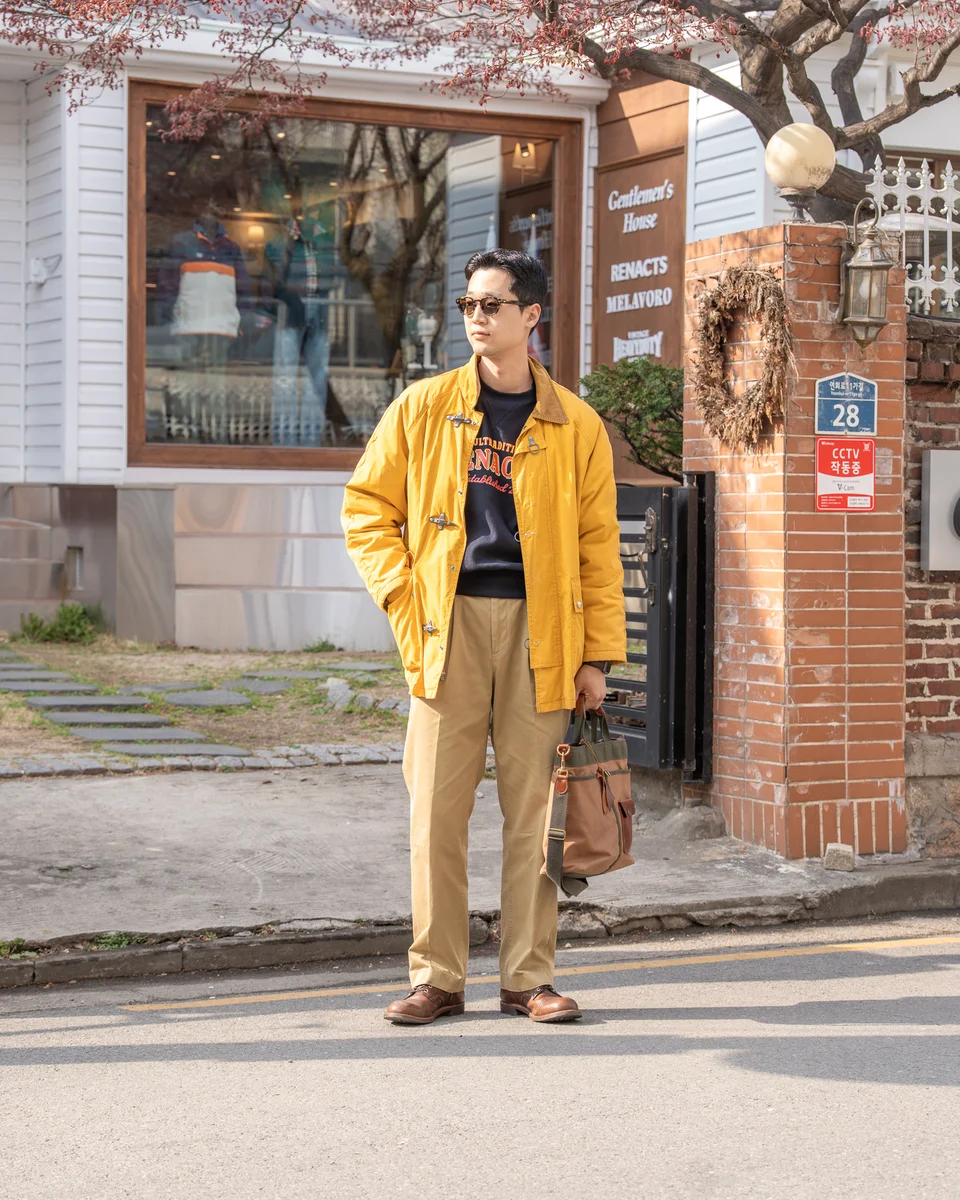
This outfit gets the balance right. Treat the fireman jacket as the statement and keep everything else deliberately quiet.
The Breakdown: What’s Being Worn
For any vintage fireman jacket outfit, The base layer is a Seoul Trad sweatshirt from Renacts — clean, athletic lettering on a classic crewneck body. Over it, a vintage fireman jacket in a shade that picks up the lettering color of the sweatshirt. That color-matching detail is subtle but it’s doing a lot of work. It tells you this outfit was considered, not thrown together.
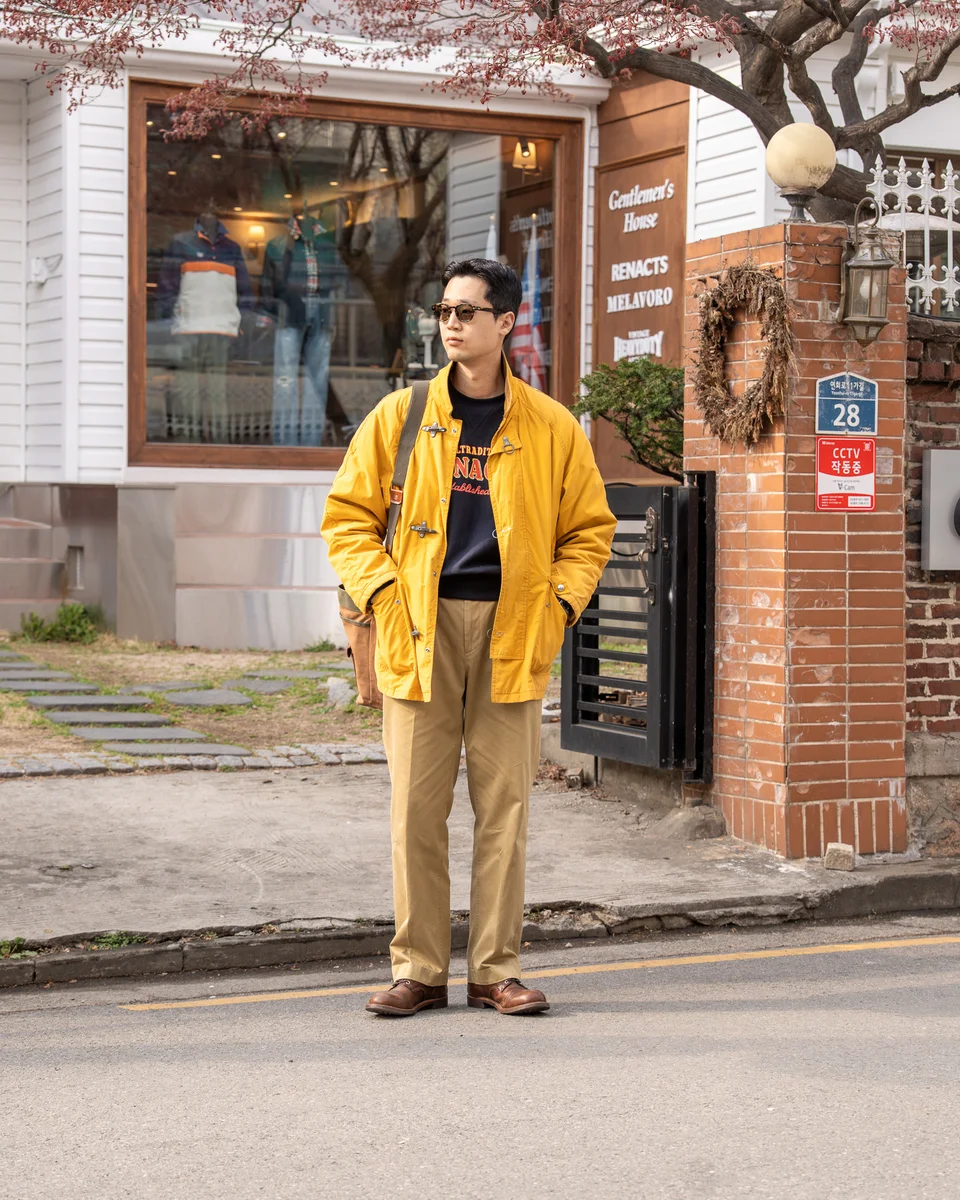
On the bottom, garment-washed two-tuck chinos. The double pleats give enough room through the thigh to balance out the boxy silhouette of the fireman jacket.
On the feet, Red Wing Iron Rangers — the one boot rugged enough to anchor a jacket this heavy without looking mismatched.
Why This Vintage Fireman Jacket Outfit Holds Together
Fireman jackets are loud. The hardware, the reflective striping, the heavyweight canvas — everything about them screams utility. So the instinct to pair them with more workwear (cargo pants, flannel shirts, engineer boots) is understandable. But stacking utility on utility just makes the outfit one-note.
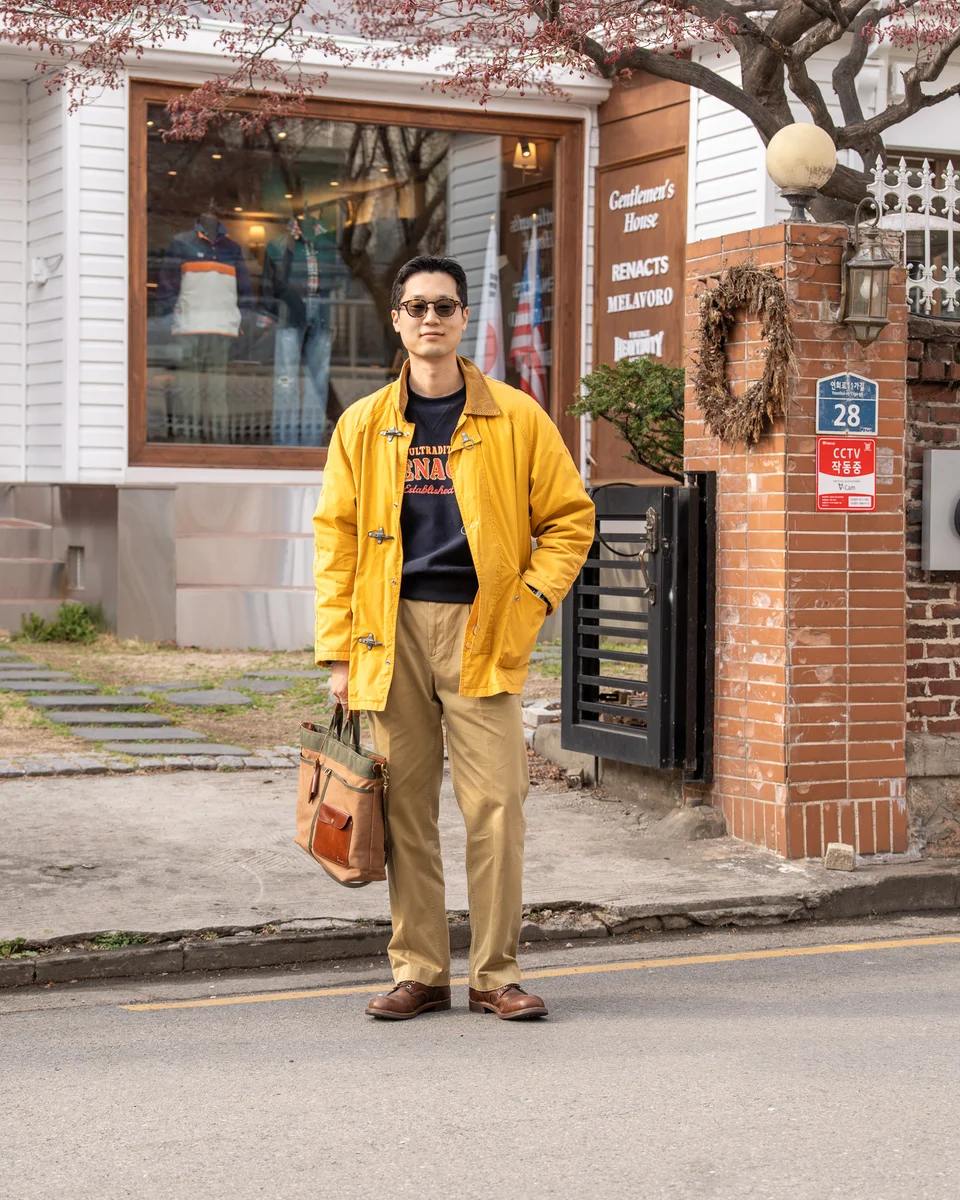
What works here is the tension. A collegiate sweatshirt is about as far from a fire station as you can get. The chinos read Ivy, not industrial. But the Iron Rangers bridge the gap — they’re refined enough to sit with chinos, tough enough to hold their own next to turnout gear.
That push and pull between campus and workshop is what makes this outfit interesting instead of obvious.
The Color Matching Trick Worth Stealing
Notice how the jacket color connects to the sweatshirt lettering. This is a move you can apply to any statement outerwear piece. Find one color in your outer layer and echo it somewhere underneath — a logo, a stripe, a pocket square if you’re wearing a blazer.
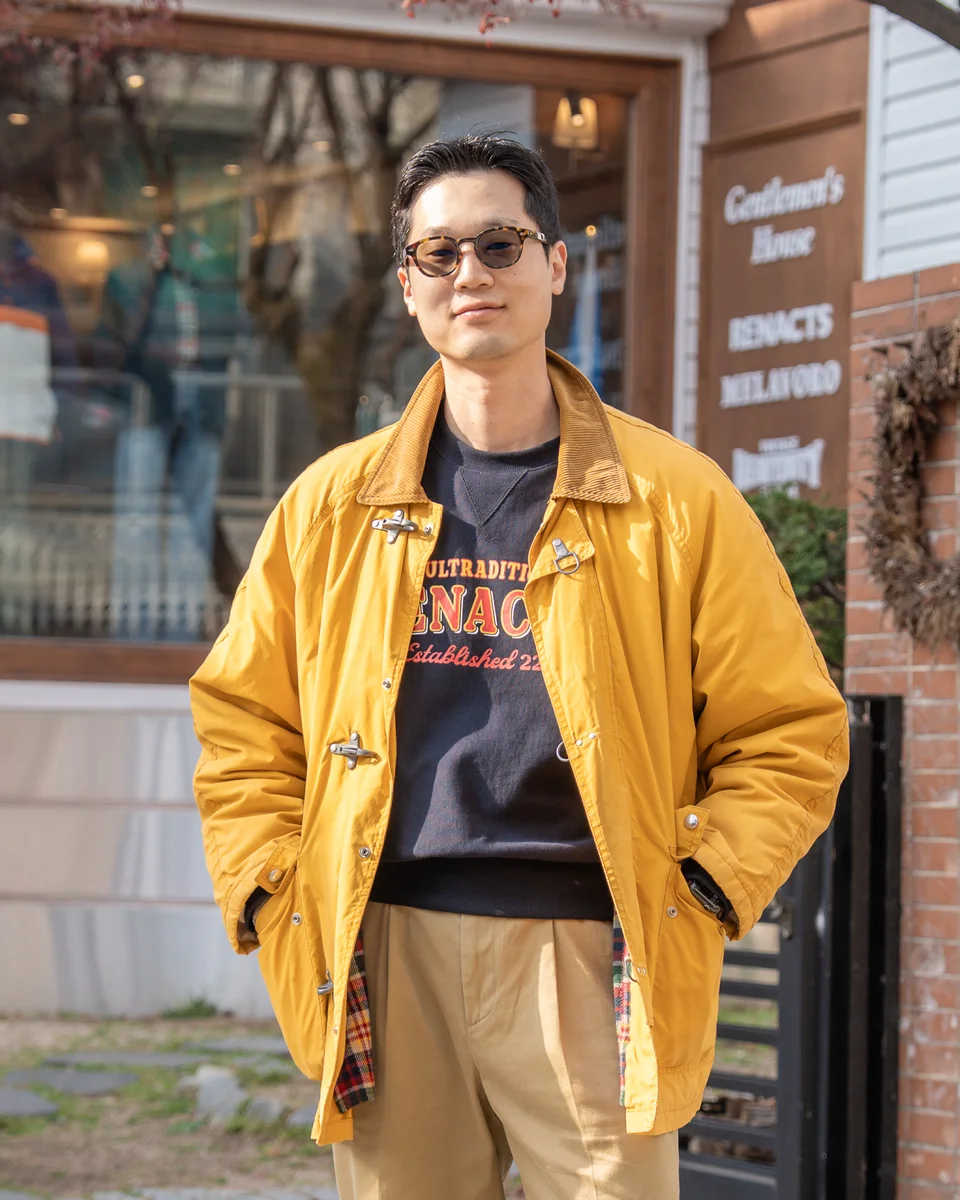
It doesn’t need to be an exact match. Close enough works. The point is creating a visual thread that ties the layers together so the outfit reads as one idea, not a jacket thrown over random clothes.
What Makes the Chinos Work Here
Slim chinos would be a mistake with this jacket. The fireman jacket has a wide, boxy cut — it’s designed to fit over gear, not to flatter your shoulders. Skinny pants underneath give you an ice cream cone silhouette: big on top, tiny on the bottom.
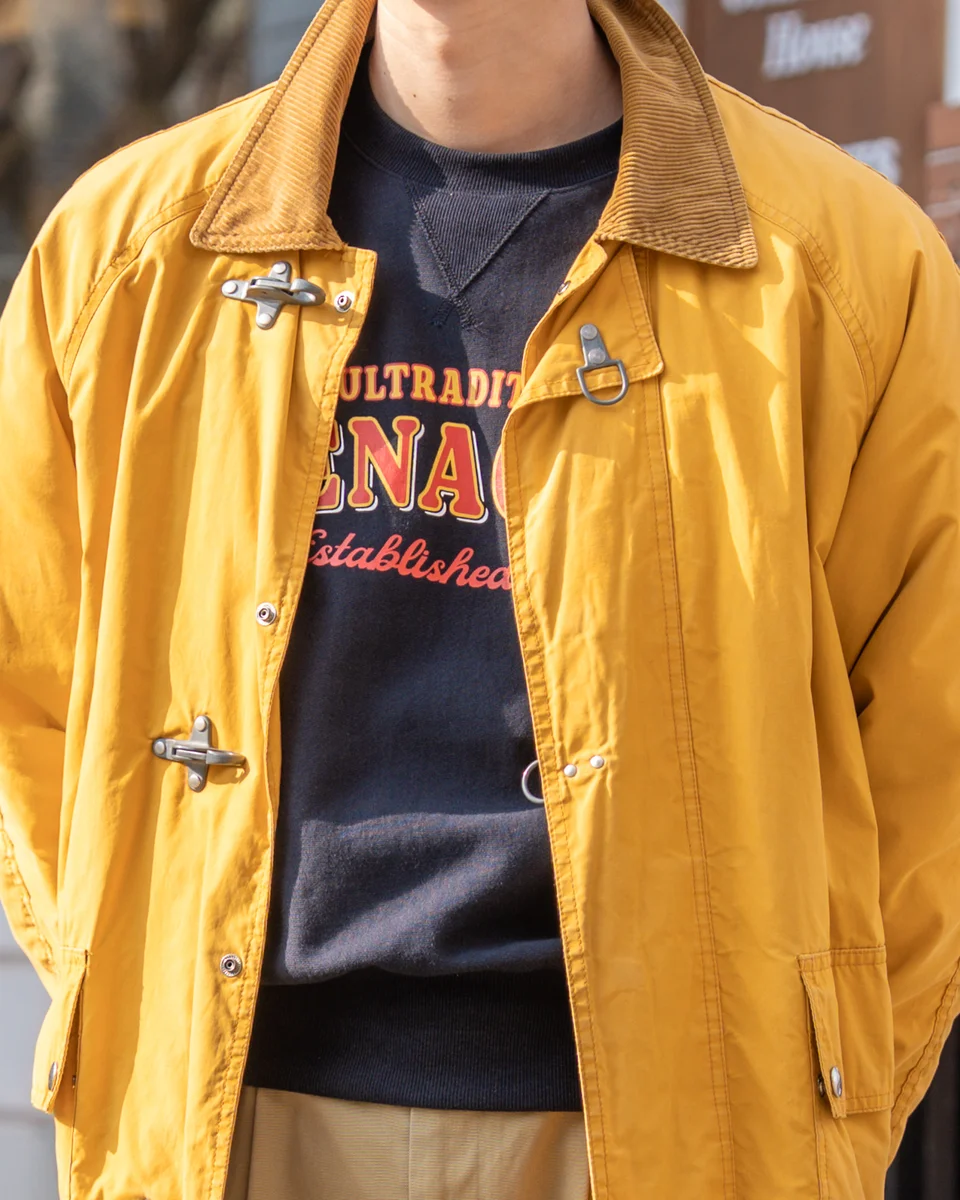
The two-tuck chinos solve this. The pleats add volume through the hip and thigh, then taper toward the ankle, creating a proportional line from the jacket’s width down through the leg. Garment washing helps too — it softens the fabric so the chinos don’t look too crisp or formal next to a beat-up vintage jacket.
For outfits like this, a relaxed fit with pleats is the silhouette to prioritize.
On the Iron Rangers
Boots aren’t the usual Seoul Traditional move. Loafers and derbies are the everyday territory. But this outfit demands something heavier — a penny loafer under a fireman jacket would look genuinely strange, like wearing a tuxedo jacket with hiking shorts.
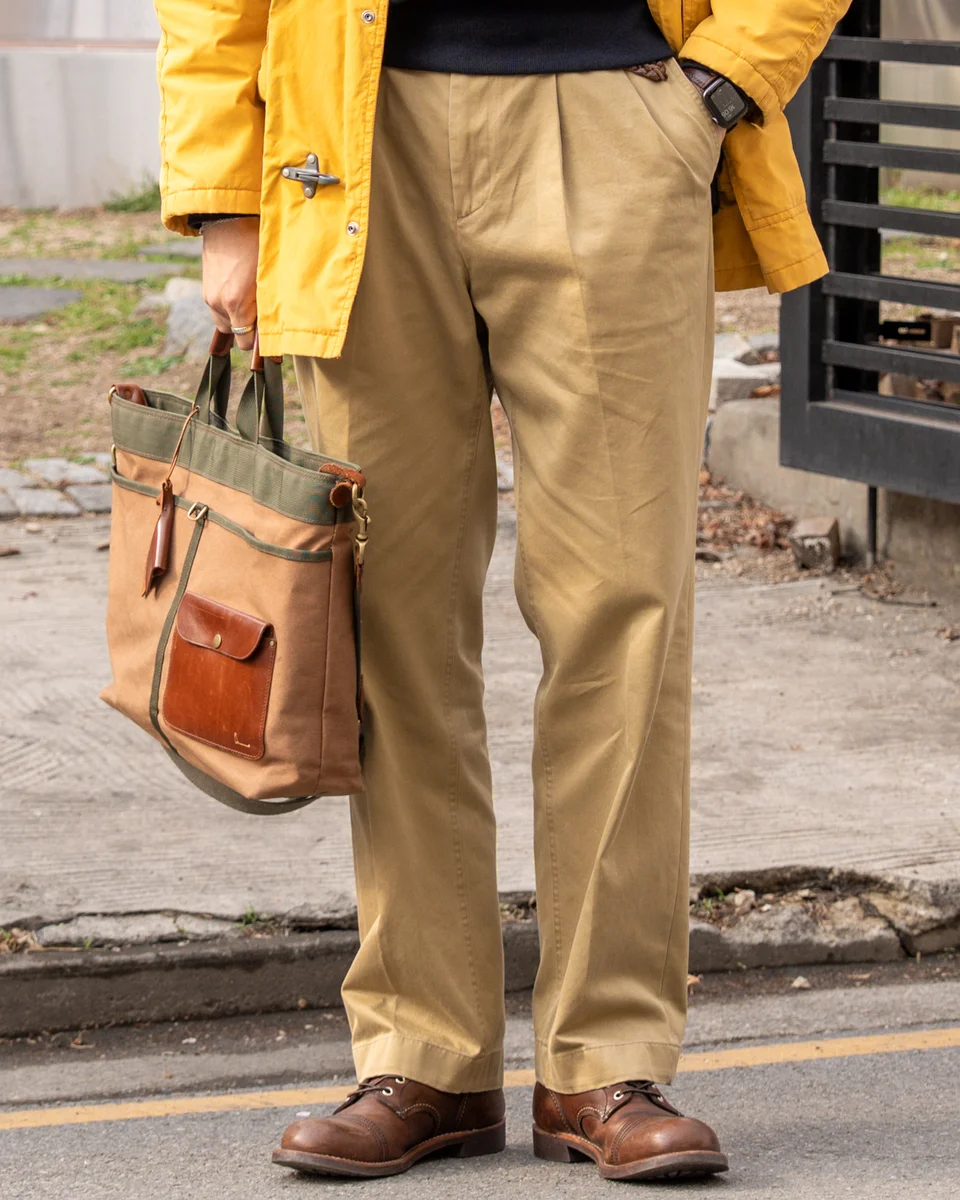
The Iron Rangers work because they match the jacket’s weight class. Both are built for hard use. Both develop character with age. When your outerwear has this much visual mass, your shoes need to be able to hold the frame.
How to Build Your Own Version
Start with the jacket. Vintage fireman jackets show up on eBay, at flea markets, and in curated vintage shops. Look for one with interesting color — the yellow and black ones get a lot of attention, but tan, red, and olive versions exist too. Check for a color detail you can echo in your base layer.
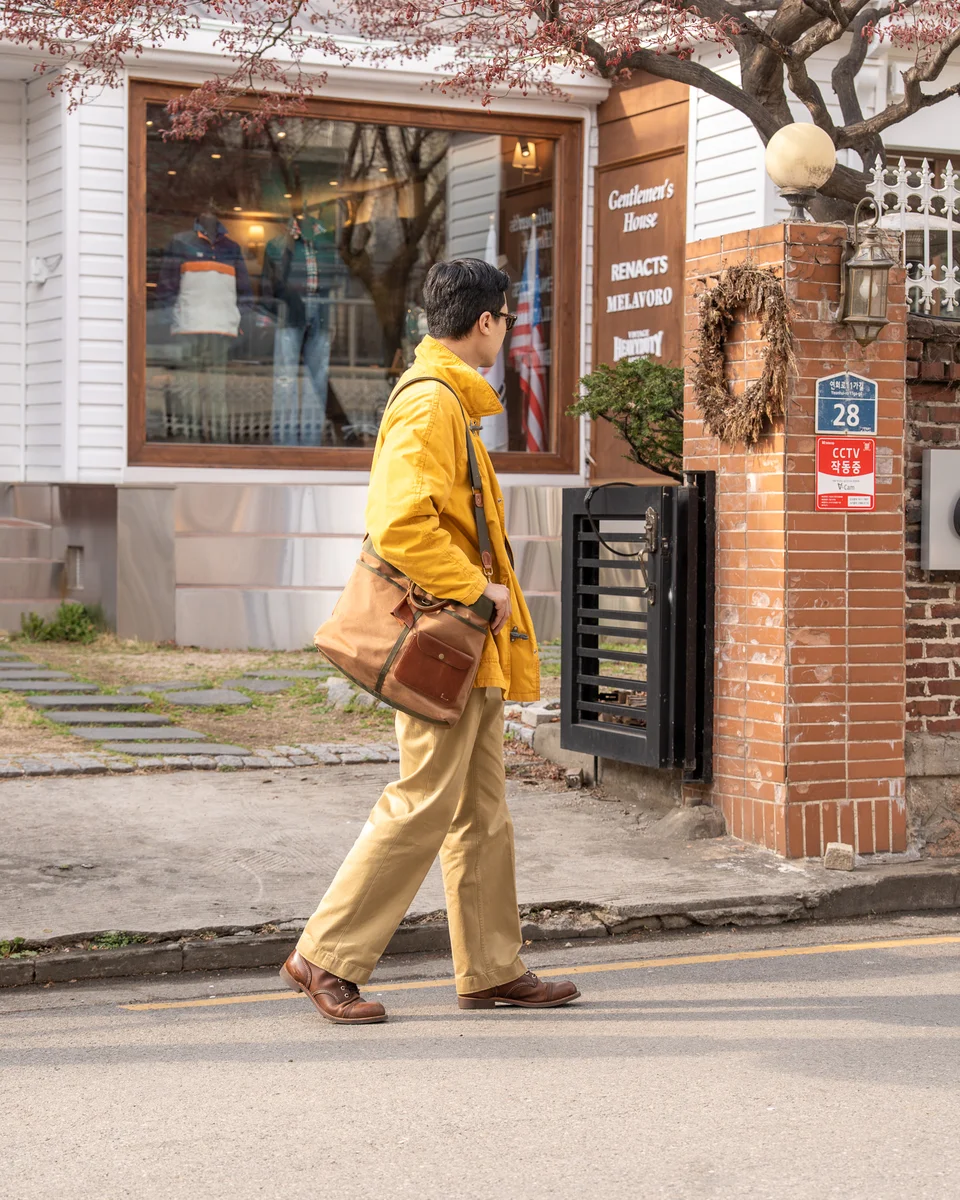
For the sweatshirt, pick something with simple graphic lettering in a color that connects to the jacket. A plain crewneck works too, but you lose that specific color-matching detail that ties the whole thing together.
Chinos should be relaxed. Pleated, garment-dyed, slightly broken in — skip anything with a sharp crease. You want soft texture to complement the rugged jacket. For shoes, go with a sturdy boot: moc-toe, plain-toe, cap-toe, whatever you have that reads workwear without being too chunky.
The formula is simple: one loud vintage piece, quiet Ivy basics underneath, and footwear that bridges both worlds.
What Not to Pair with a Vintage Fireman Jacket
A vintage fireman jacket is heavy. Heavy fabric, heavy proportions, heavy heritage. Pair it with anything else heavy and the outfit collapses under its own weight. Skip thick cargo pants, heavy moto jeans, and chunky lug-sole boots all at once. Pick one heavy piece (the jacket) and let everything else stay lean — slim raw denim, mid-weight cotton chinos, or a clean wool trouser.
Avoid logo-heavy basics underneath. The fireman jacket already has a story — the patches, the weathering, the cut. A graphic tee or a printed sweatshirt under it competes for attention. Plain crewneck tees, ribbed knit henleys, cream cotton oxfords all sit quietly enough to let the jacket speak.
Skip overly polished footwear. Cap-toe oxfords with a fireman jacket reads costume — like you couldn’t decide between dressing up and dressing for a barn raise. Worn leather work boots, suede chukkas, or scuffed white sneakers all feel right. The shoes should look lived-in, the way the jacket does.
Vintage Fireman Jacket Outfit FAQ
Are vintage fireman jackets the same as chore jackets?
Closely related but not identical. Both come from American work heritage. Fireman jackets typically have heavier construction, deeper pockets, and reinforced shoulders for actual fire-line use. Chore jackets are lighter — French cotton drill or American duck canvas, designed for general labor. Both layer well over trad pieces.
What pants work with a vintage fireman jacket?
Raw or rinse denim is the most natural pairing. Beyond that, cotton chinos in olive, khaki, or stone. Avoid dressy wool trousers (too formal) and bright pants (the jacket is the hero — keep the bottom quiet). A cinch-back chino is a great match if you want to lean even further into heritage.
Can I wear a vintage fireman jacket year-round?
Mostly fall through early spring. The thick fabric makes it warm — usable from about 10°C down to -5°C with proper layering. In summer, swap for a lighter chore coat or a bedford cord jacket with similar silhouette but lighter construction.
How do I clean a vintage fireman jacket without ruining it?
Spot clean as much as possible. The patina is part of the value. For deep cleaning, take it to a dry cleaner who specializes in vintage workwear. Never machine wash — the fabric, the patches, and the seams won’t survive modern detergent and tumbling.
Worn by @yang_sinnae