The Reverse Weave Sweatshirt: Construction, Fabric, and Fit Guide
What Makes a Reverse Weave Sweatshirt Different
The reverse weave sweatshirt is not just a heavyweight crewneck with a logo. It’s a specific construction patented by Champion in 1938 that solves a problem ordinary sweatshirts can’t: shape retention through hundreds of washes. Three structural details make a reverse weave a reverse weave — and once you know what to look for, you can spot one across a room.
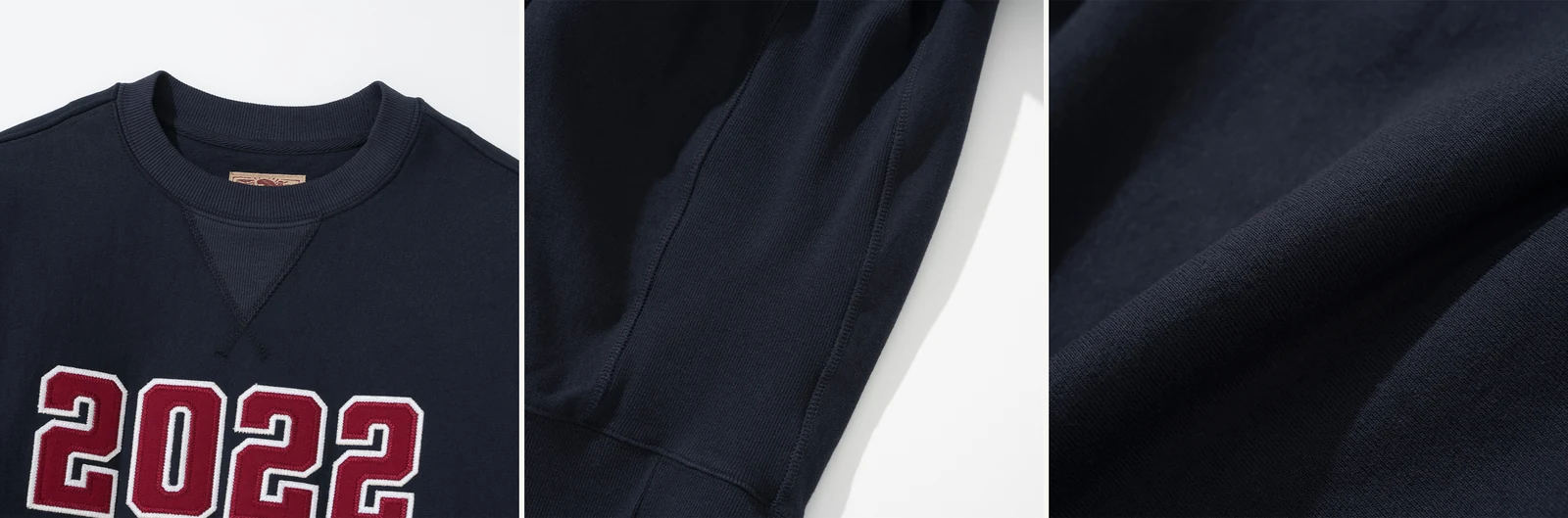
Those three details — V-stitch at the neck, side gussets along the body, and cross-grain construction throughout — are the structural answers Champion arrived at over four years of workshop experimentation. Every other detail in a reverse weave sweatshirt outfit follows from these three.
The Construction: How Reverse Weave Actually Works
The reverse weave sweatshirt was developed starting 1934 by Samuel N. Friedland, a former Hickey Freeman fabric cutter who had joined Champion. The problem he was asked to solve came from college football coaches: their team’s sweatshirts kept getting shorter after every wash, until they couldn’t be tucked into shorts anymore. The garments were unwearable within a single season.
Friedland’s solution was conceptually simple. Cotton sweatshirt fleece shrinks far more lengthwise than crosswise. Where every other knit mill in America ran the grain of the fleece vertically, he rotated it 90 degrees — running the grain horizontally across the body. Vertical shrinkage now meant the chest measurement gave a fraction; the shoulder-to-hem length stayed where it was bought.
On August 9, 1938, the U.S. Patent Office issued the first reverse weave construction patent to Friedland (assignor to Champion Knitwear Co. of Rochester, NY). On October 14, 1952, Friedland and William Feinbloom received a second patent — “Athletic Garment Or The Like” — refining the construction with the side gussets and reinforced neck that became standard. Both patents are still the foundation of every heritage reverse weave sweatshirt made today.
Fabric Weight and Hand Feel

Heritage Champion reverse weave standard weight is 12 oz cotton fleece minimum. That’s roughly 50% heavier than mass-market sweatshirts (typically 7-9 oz). The weight is what gives the garment its drape — a reverse weave doesn’t bunch at the armhole the way lighter fleece does, and it holds a structural line under a blazer.
The hand feel develops over time. New, a reverse weave is dense but slightly stiff. After fifty washes, the fleece softens into a brushed cotton hand without losing structure. After a year of regular wear, the surface picks up a low pile that ordinary sweatshirts can’t replicate — that’s the patina vintage collectors prize. None of this happens with lightweight fleece, no matter how good the cotton.
Why Ivy League Students Wore Sweatshirts Like Blazers
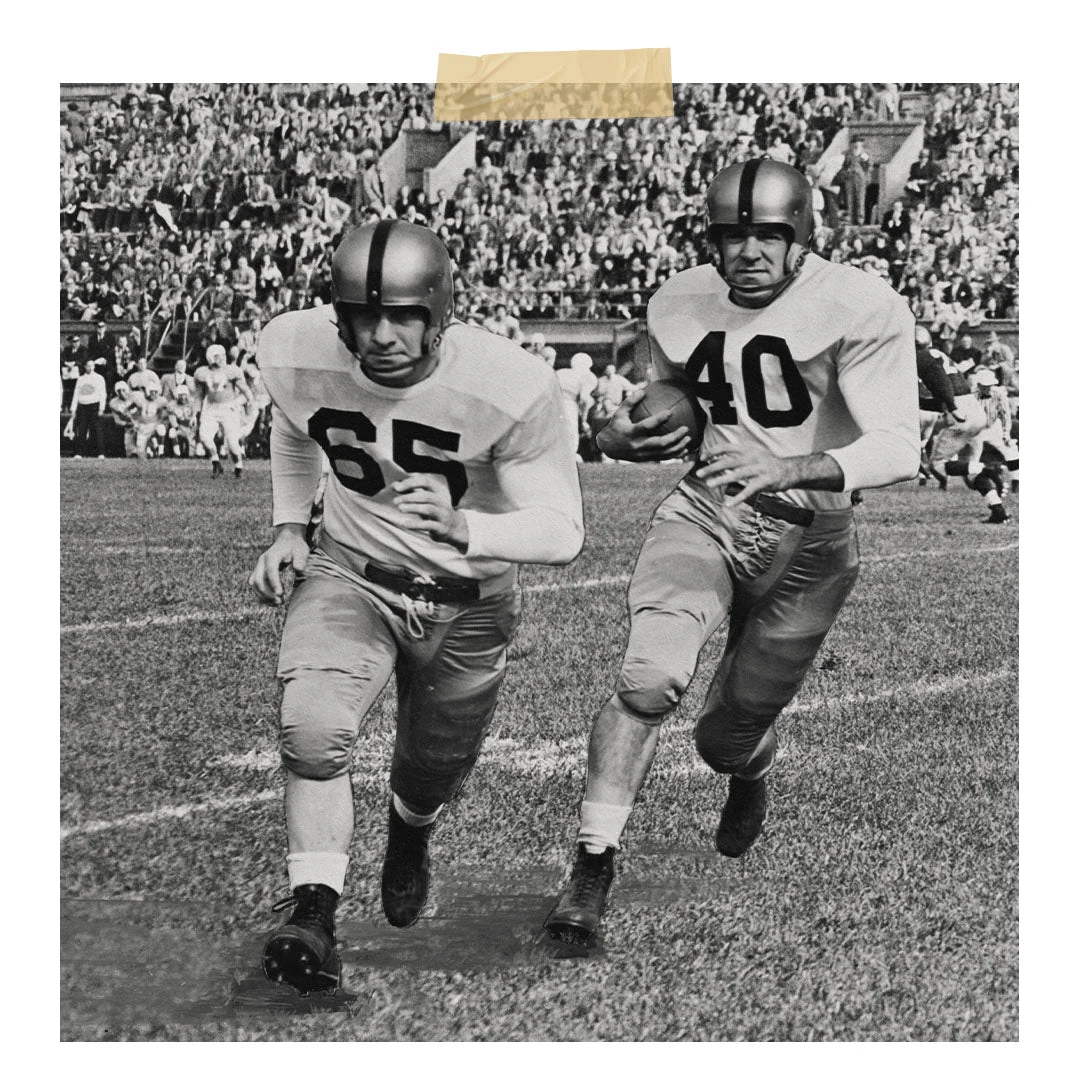
By the late 1930s and into the 1940s, Champion had quietly become the supplier of choice for varsity athletics across American colleges — Ivy League and beyond. Yale, Harvard, Princeton, and Cornell were on the customer list, but so were Michigan, Notre Dame, and the U.S. Military Academy at West Point. If a team needed sweats, the order went to Champion. The reverse weave sweatshirt was already in collegiate locker rooms before the broader American public had heard of it.
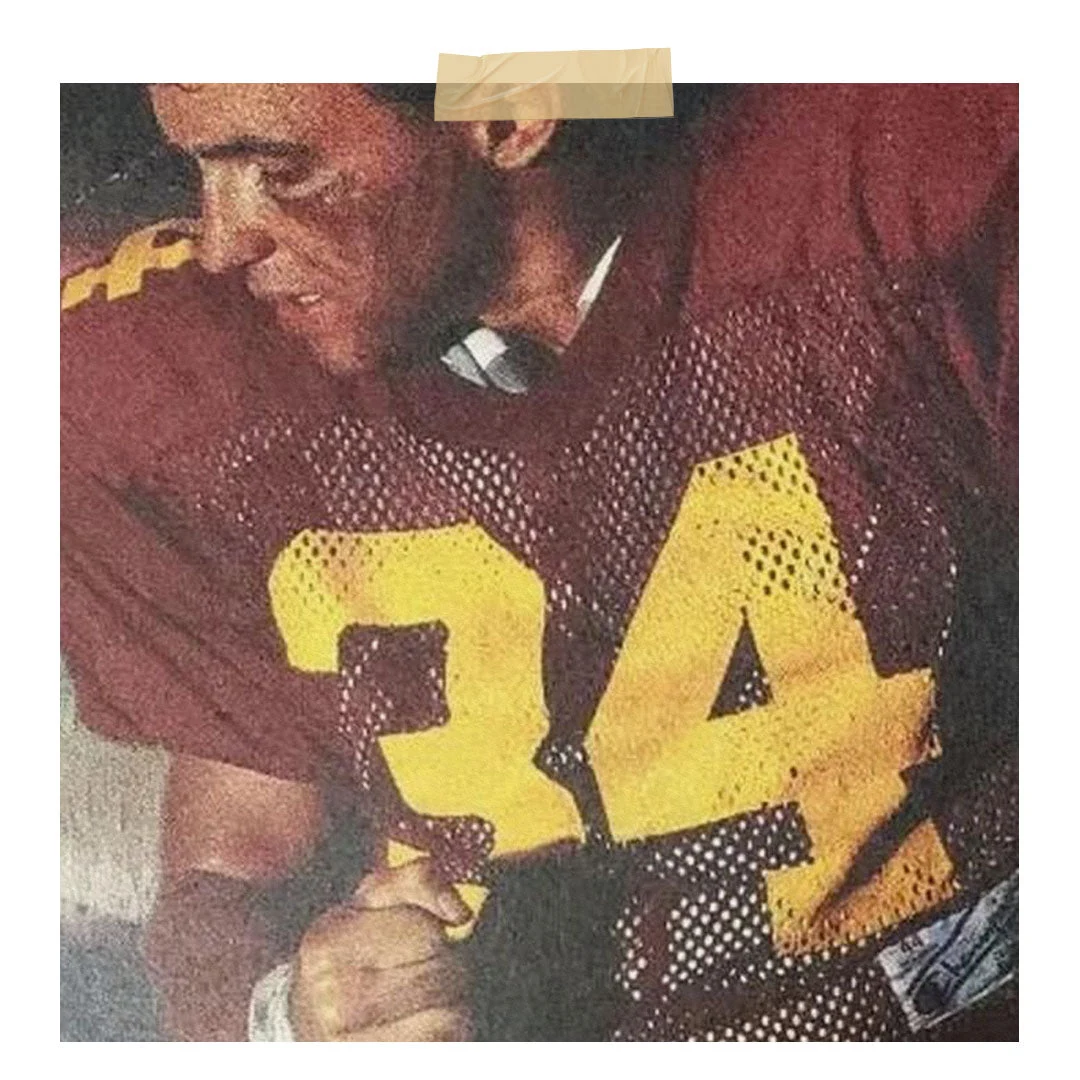
The crossover from locker room to dorm room happened the way it usually does — slowly, by accident, through students who liked how the garment wore. By the 1960s, the heavyweight crewneck (typically a Champion reverse weave with a university name across the chest) was as much a part of campus dress as the OCBD or chinos. Students wore it under a sport coat to class, over an OCBD with khakis on the weekend, with denim and white sneakers walking between dorm and dining hall. The garment carried each register without strain — that’s still the reverse weave sweatshirt’s defining trick.
For the longer trousering and tailoring lineage, see our cinch-back chino outfit guide and sack suit history — both pieces document the same campus formula the reverse weave operates within.
The Reverse Weave Sweatshirt Fit Guide
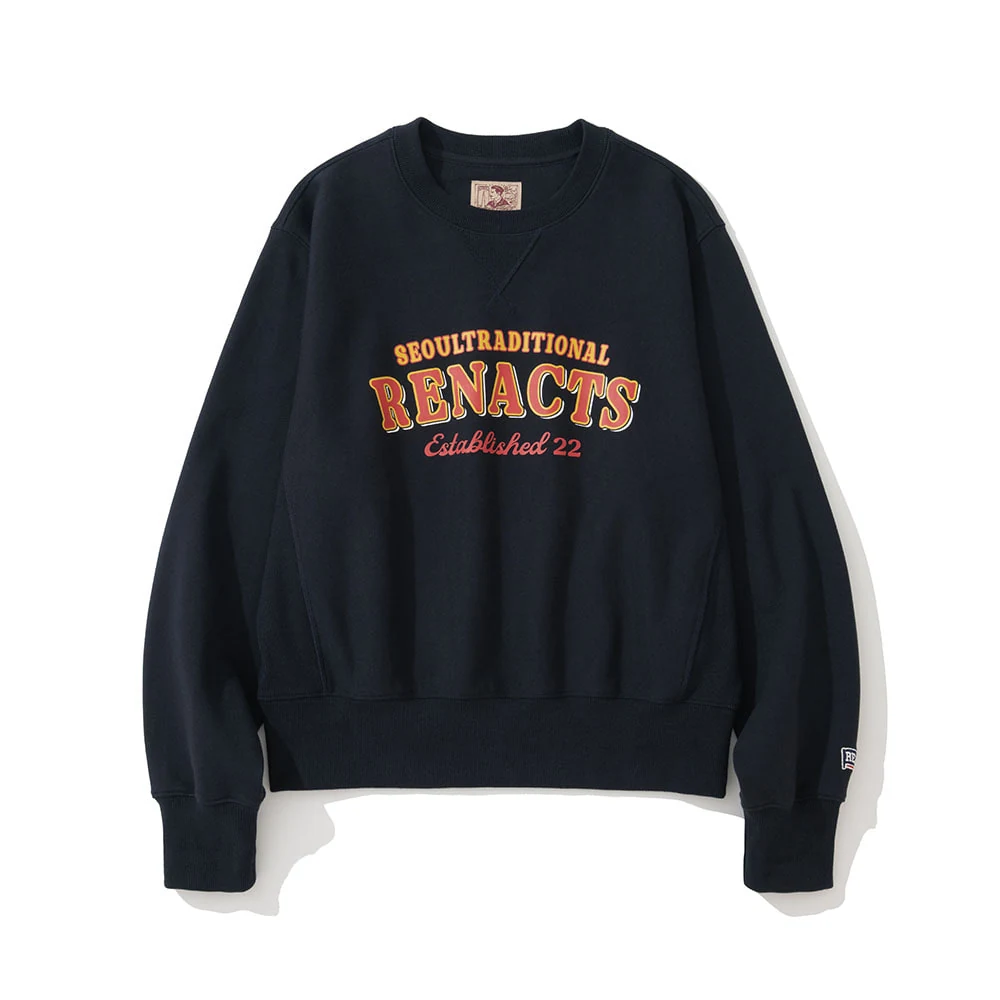
A correct reverse weave sweatshirt fit is not a streetwear fit. The shoulder seam should sit at your shoulder bone, not past it. The body length should hit just below the natural waistband — not over the seat. The sleeves should reach the wrist with about a centimeter of cuff turn-back available. These are 1950s campus proportions, and they’re what make the garment work under a blazer or over an OCBD.
What you don’t want: the modern oversize cut. A reverse weave sweatshirt fit that drops past the seat with sleeves covering the hand is a different garment doing different work. It can’t be tucked, it can’t be layered cleanly, and it loses the structural drape that the cross-grain construction was designed to provide. If you’re choosing a size, err toward the smaller of two options — the heritage cut runs slightly relaxed, not oversized. As a rough guide: if you wear a 38R or M in tailored jackets, take the M reverse weave. If between sizes, size down.
How a Reverse Weave Sweatshirt Should Be Styled
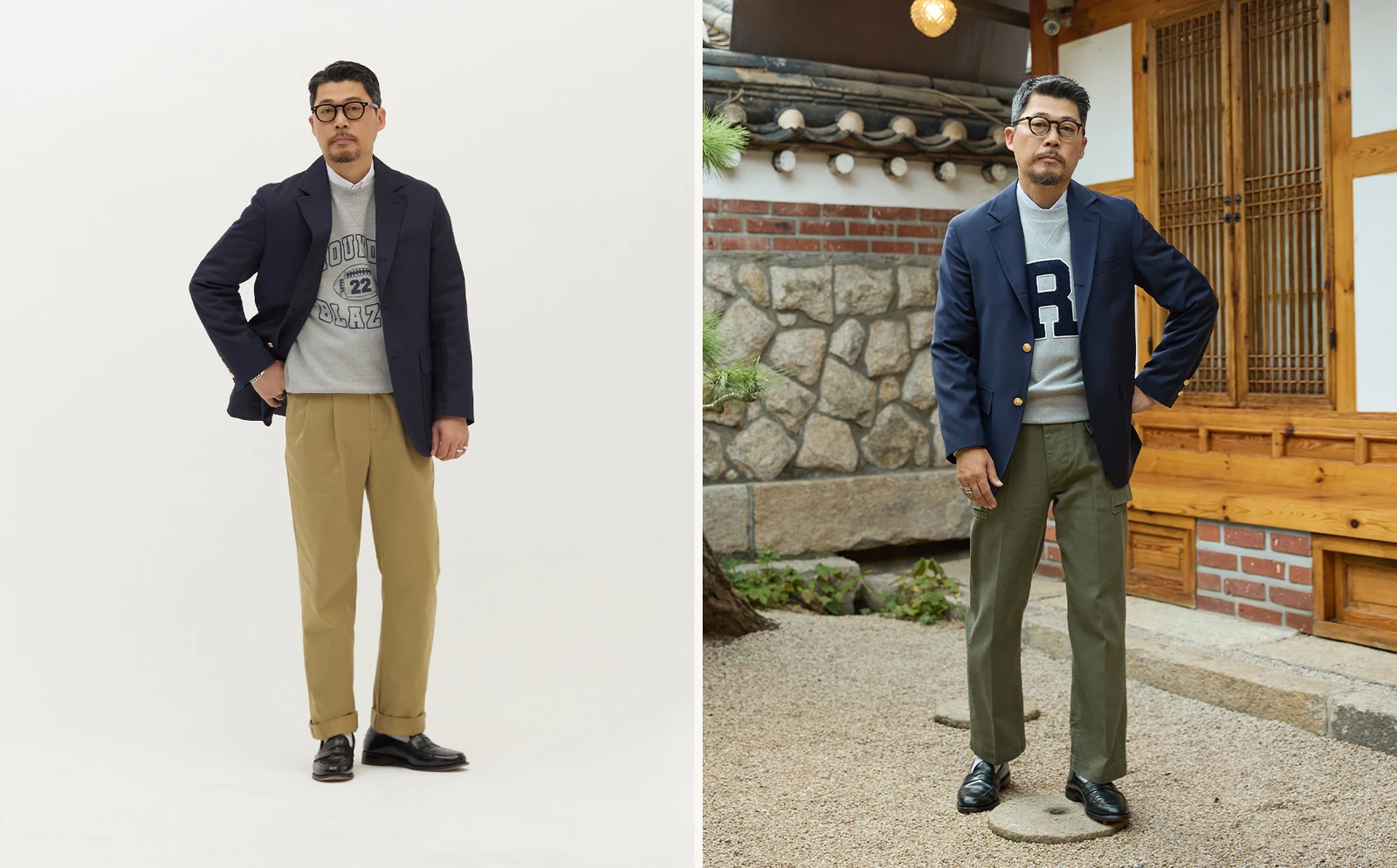
Three core formulas cover most of what you need. First — under a blazer, over a tucked OCBD, with khaki chinos and penny loafers. This is the maximum-layered Ivy version, and it’s where the construction earns its keep (the structural drape lets the sweatshirt sit cleanly under a blazer without bunching).
Second — sweatshirt over a tucked OCBD with khakis and a ball cap, no blazer. This is the version of a reverse weave sweatshirt outfit that does the most work in actual life. The OCBD’s collar provides the structural break a crewneck tee can’t match; without it, the look slides into laundry-day territory.

Third — with denim, the historical default. The reverse weave grew up paired with denim on college campuses, and the formula still reads as the most casual correct register. For seven full outfit formulas, see our companion styling guide.

Caring for Your Reverse Weave Sweatshirt
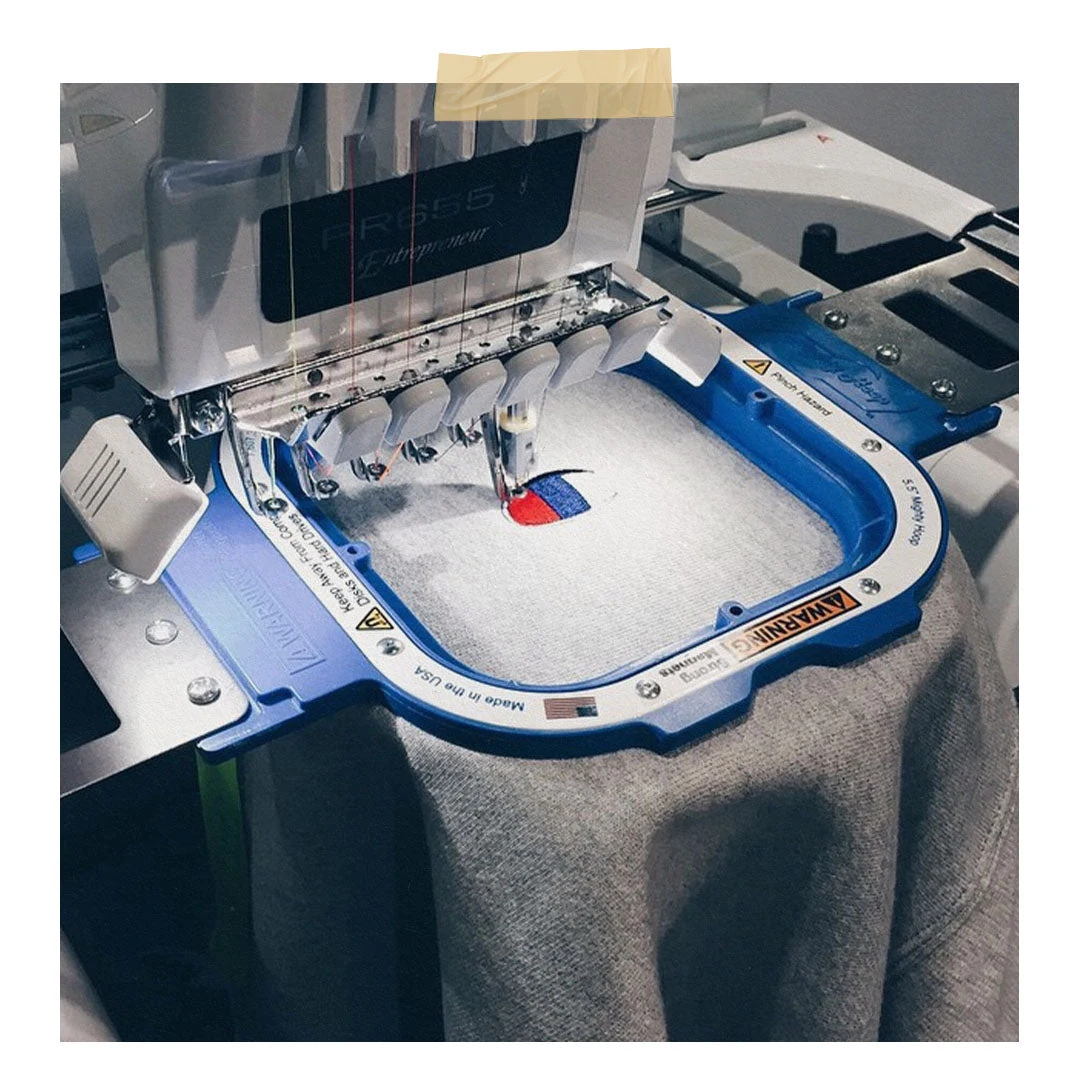
The reverse weave construction was designed for repeated washing — that was the whole point of Friedland’s experiment. In 1950, Champion’s PE uniforms received American Institute of Laundering certification, formalizing the brand’s shape-retention reputation. The garment is more durable than ordinary sweatshirts, not more fragile. Through the 1990s, Champion was the exclusive NBA uniform supplier for seven straight seasons (1990-91 through 1996-97) — the construction that had survived college laundromats since 1938 was now the foundation of professional basketball uniforms.
That said, a few rules. Wash cold or warm, never hot. Tumble dry low or hang dry — high heat is the one thing that can defeat the cross-grain construction (extreme heat can shrink even the rotated grain). Wash inside out — sweatshirt graphics, especially chenille letters and screen prints, last longer when the friction inside the washer hits the lining rather than the face. A small thing that adds years to a heritage graphic. Skip the iron — the slightly relaxed surface is part of the garment’s character, and pressing it flat undoes the texture. Don’t dry clean unless the graphic explicitly requires it (most don’t). Treated this way, a reverse weave sweatshirt outlasts almost everything else in your wardrobe by a factor of three or four.
What to Look for When Buying
Three construction signals matter more than the brand on the tag. First, heavyweight cotton — 12 oz minimum. Lift the garment; if it feels light, it isn’t the right construction. Second, real side gussets running from underarm to hem. Faux panel stitching that mimics gussets is a different garment. Third, V-stitched (or single-bar tack) neck reinforcement at the front of the collar.
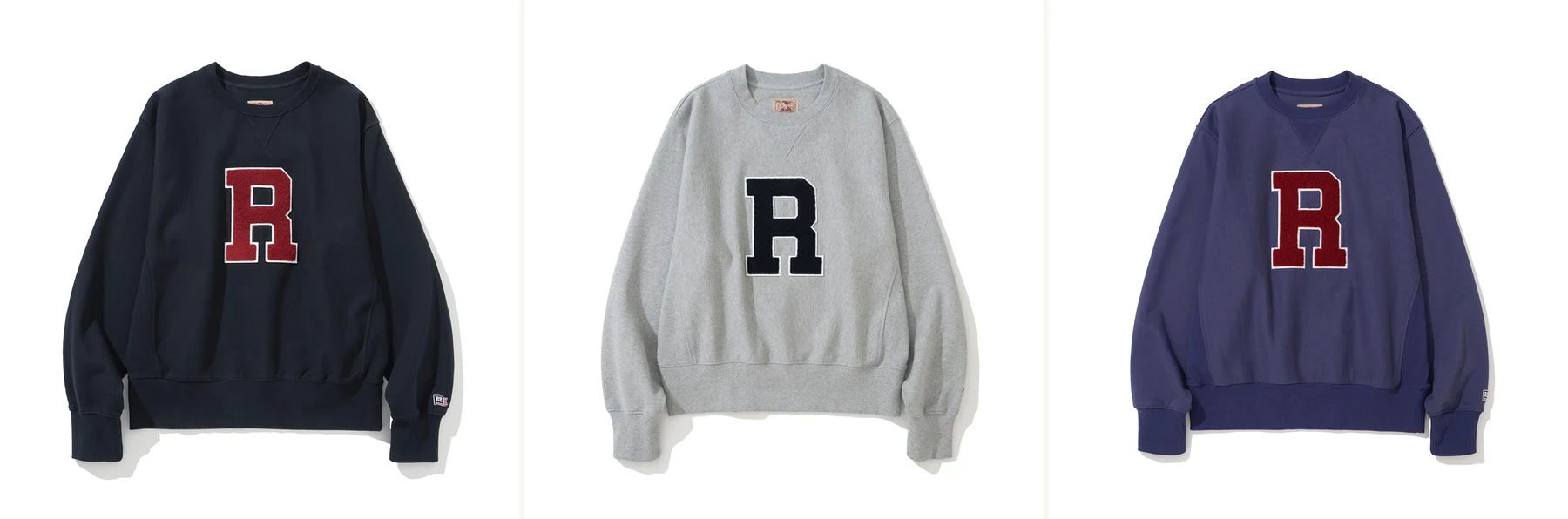
Beyond construction, the graphic vocabulary matters. Period-correct collegiate graphics — letters, athletic department names, year tags, university references — read correctly because they sit in the heritage tradition. Streetwear-influenced graphics (oversized logos, abstract typography, art prints) belong to a different category, regardless of whether the underlying construction is reverse weave.
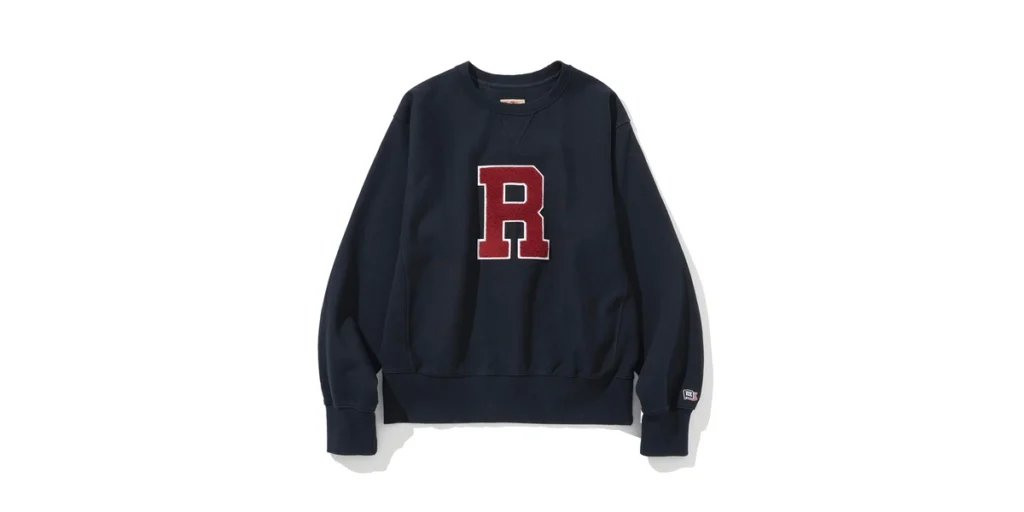
The Renacts Collegiate Sweatshirt line breaks into three graphic series, each on the same construction base. The Letterman series uses the house “R” mark — shown above in three colorways.
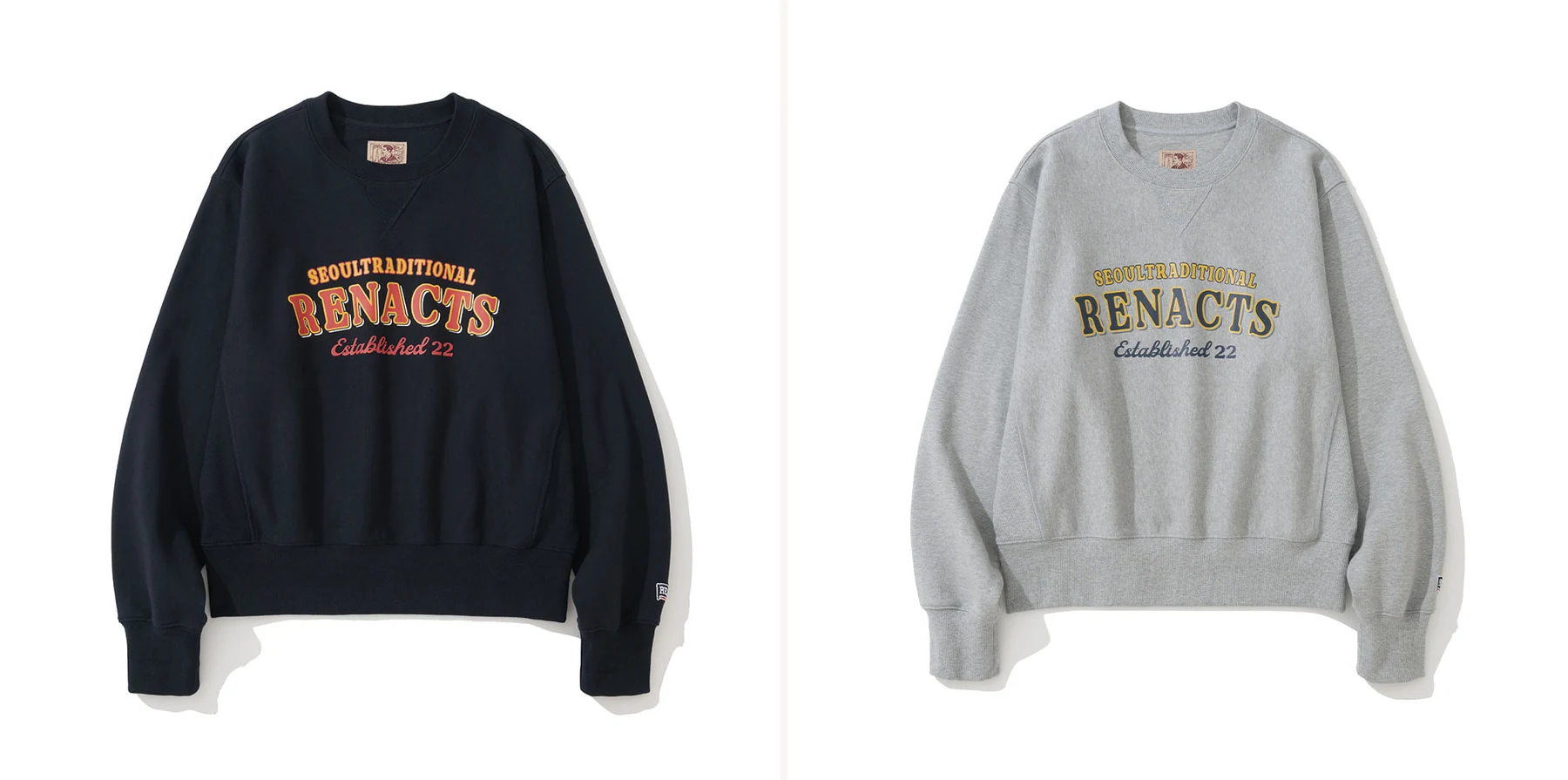
The Seoul Trad series renders the brand identity in full as a varsity script — “SEOULTRADITIONAL · RENACTS · Established 22” reads across the chest. Available in Navy and Grey:
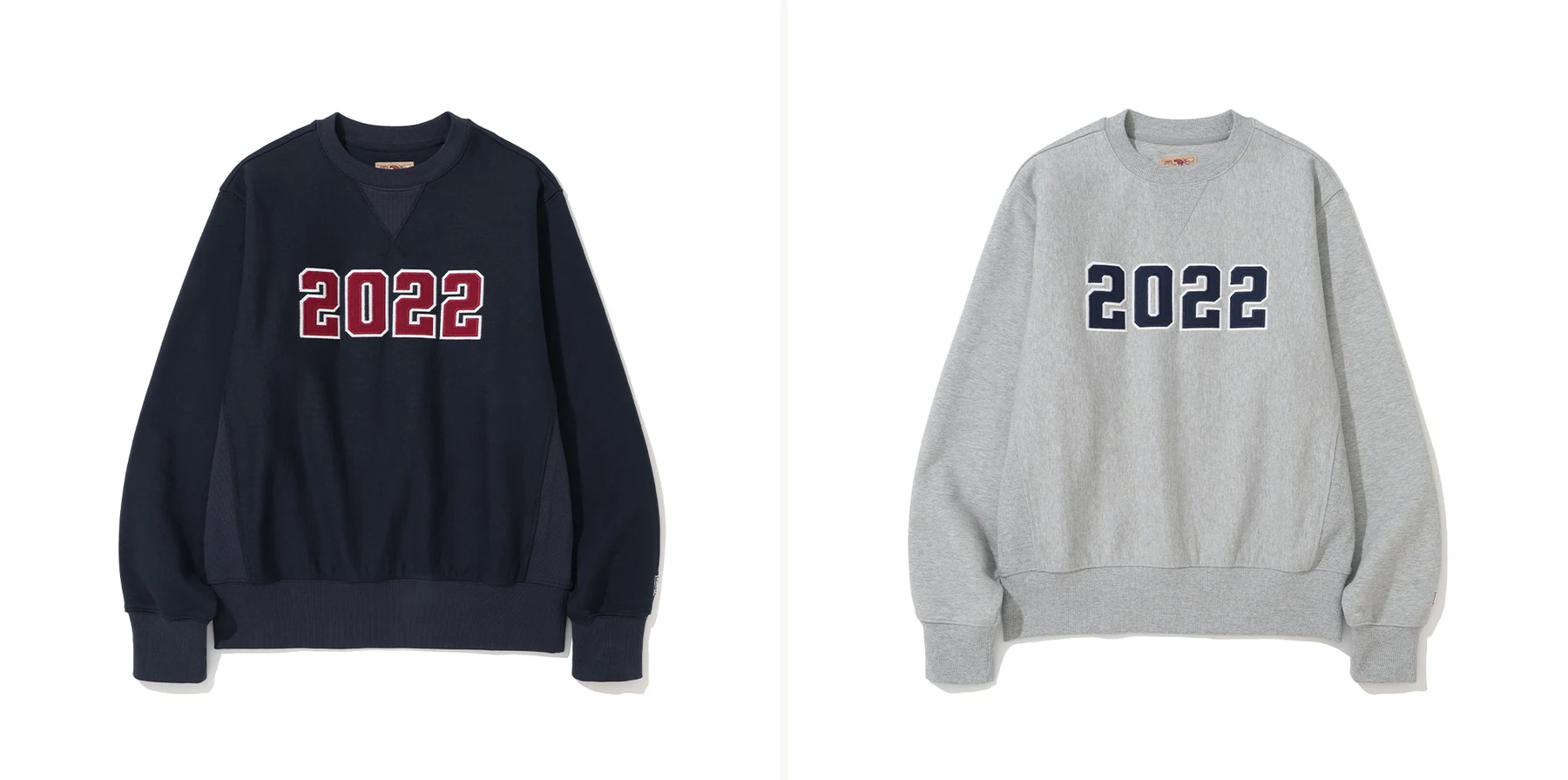
The 2022 series uses the chenille year tag — a period-correct convention with brand-personal meaning (2022 is Renacts’ founding year). The numerals follow the standard collegiate class-year format that defined varsity sweatshirts through the 20th century. Available in Navy and Grey:
All three series apply the same heritage construction; only the graphic vocabulary varies.
The Reverse Weave Sweatshirt in Seoul Today
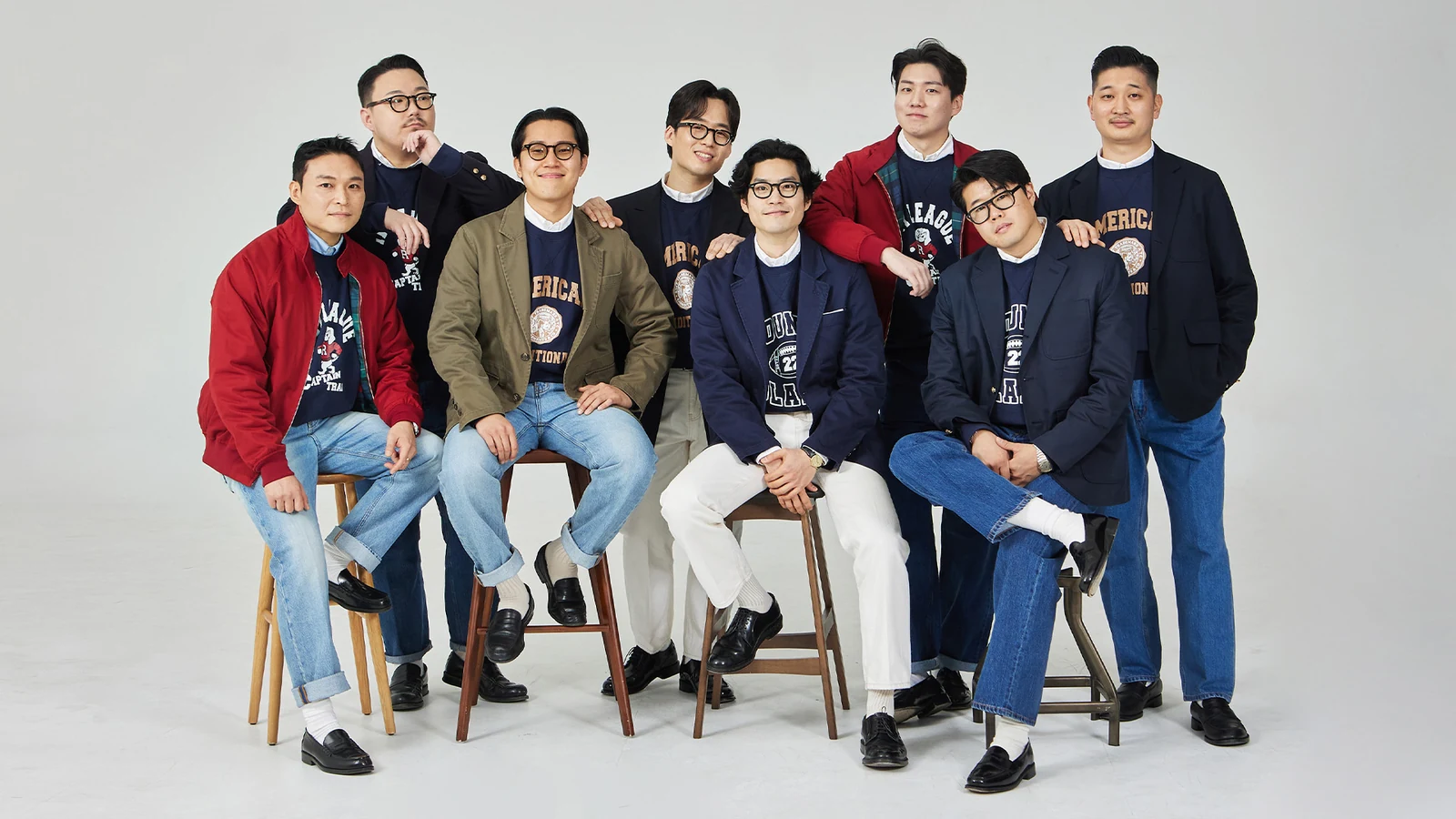
In Seoul today, the reverse weave operates the same way it did on a 1965 New Haven campus — as a structurally honest garment that fits a wardrobe rather than dominating it. Different city, different climate, different daily rhythms — but the same garment principles work because they were always about construction rather than context.
For the full historical lineage, see our reverse weave history piece. For broader context across the entire Ivy wardrobe, see the ivy style guide. The reverse weave sweatshirt isn’t a single piece you can ship — it’s a small example of a larger principle. Heritage menswear doesn’t belong to one country. It belongs to whoever bothers to learn how the clothes were built and why.