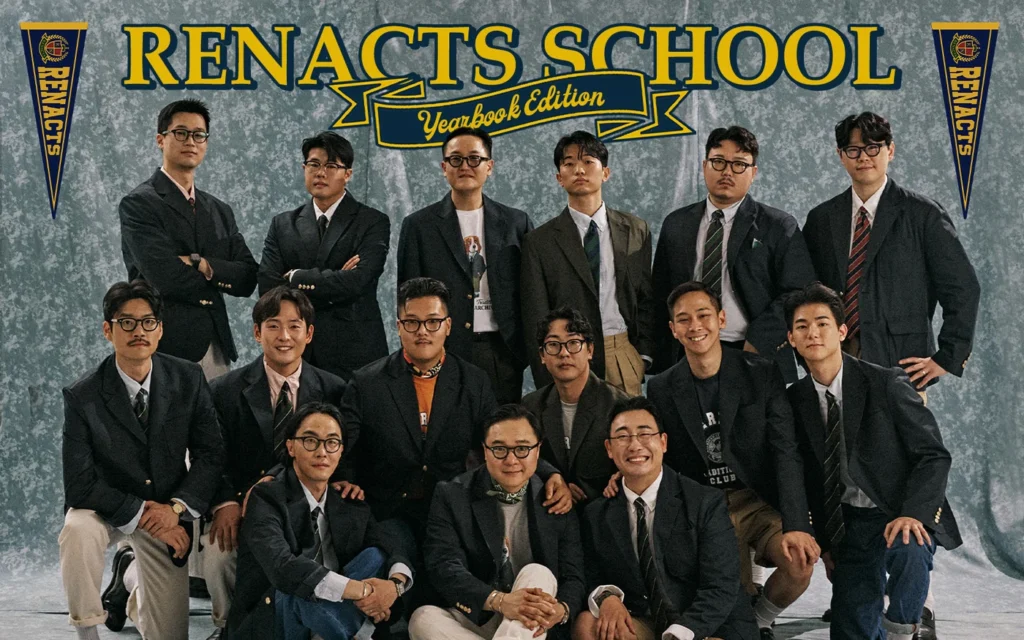
5 Ways to Wear Cinch-Back Chinos: The Ivy Style Revival
Why a Cinch Back Chino Outfit Hits Different
Most chinos you’ll find today are stiff, over-pressed, and about as interesting as a spreadsheet. A cinch back chino outfit solves that problem before you even button them up. The washing process softens the cotton, relaxes the hand, and gives the fabric a lived-in character that raw chinos need six months of wear to develop.
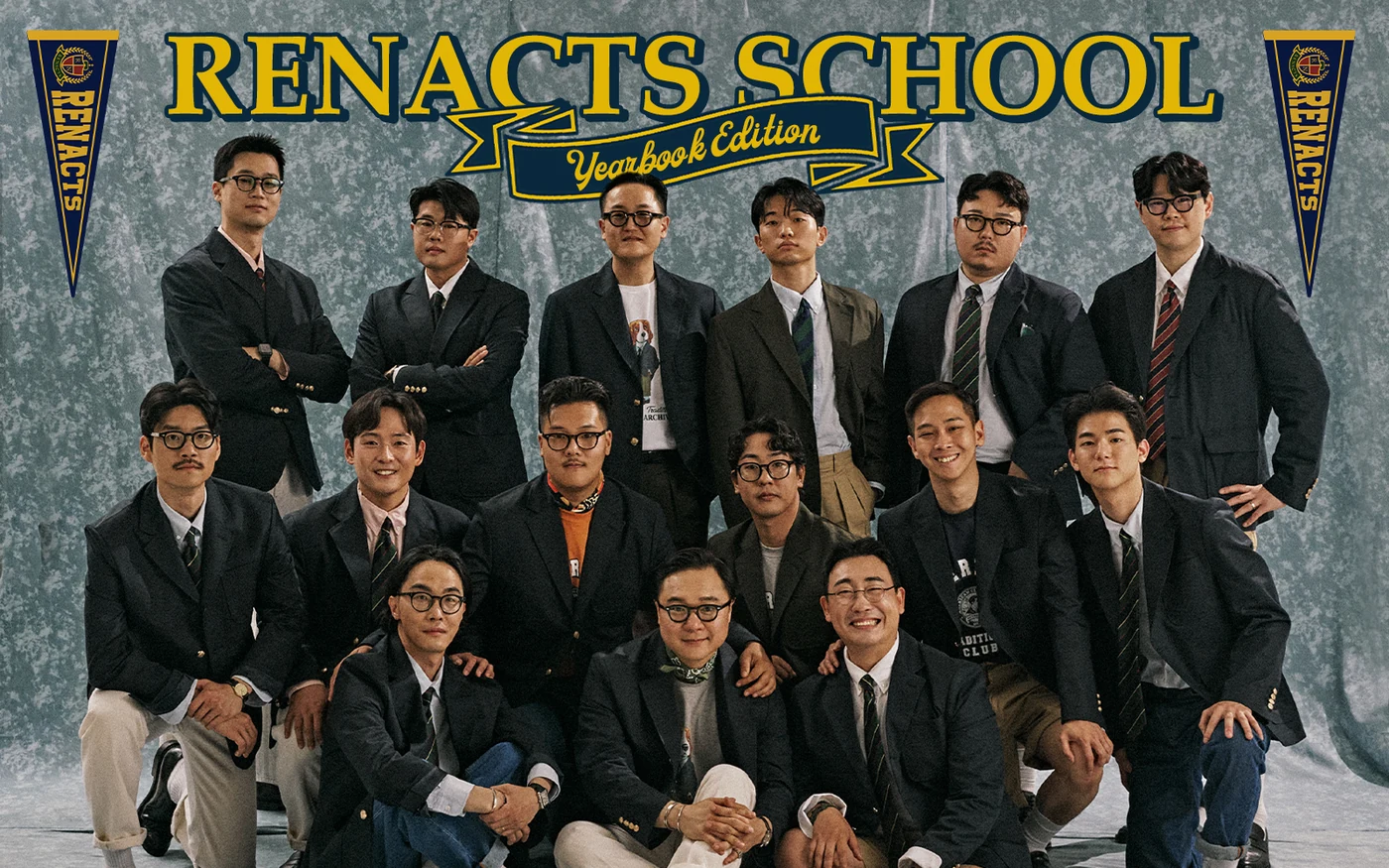
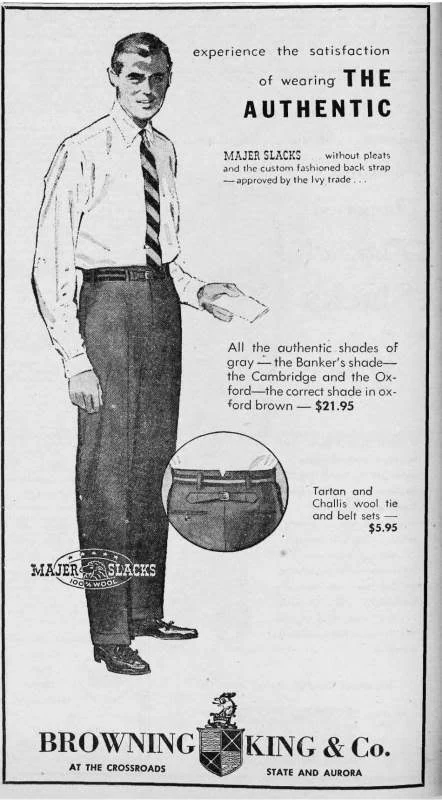
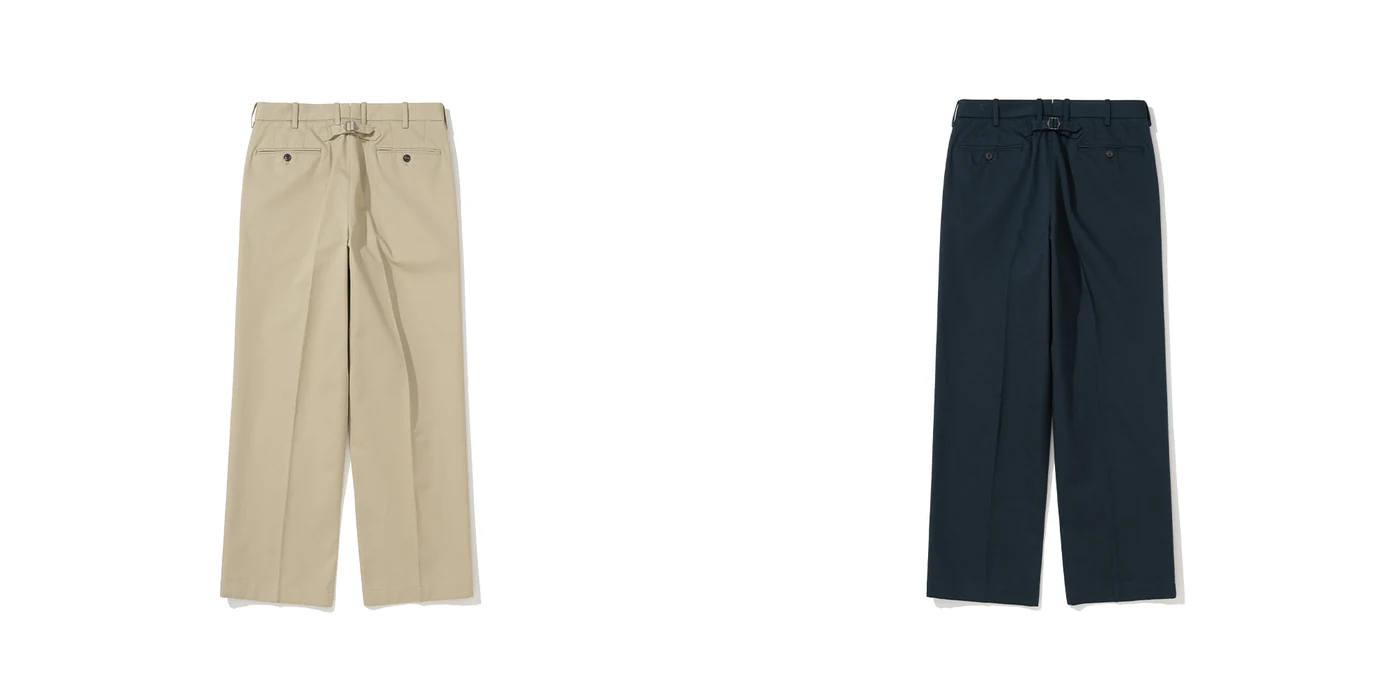
But here’s the thing — what makes a cinch back chino outfit work isn’t the wash alone. What makes the Renacts Garment Washed Pipe Stem worth paying attention to is the cinch-back detail at the waist. That small adjustable strap across the rear waistband is a direct reference to 1950s Ivy trousers, back when Ivy campuses still preferred the cinch-back’s clean line over a belted waist. It’s a functional detail that also happens to look great.
Available in Light Beige and Navy at $155, the Pipe Stem cut runs slim through the thigh and tapers cleanly to the ankle — the silhouette that defined Ivy League style before everything went wide in the ’70s. For context, comparable garment-washed cinch-back chinos from heritage brands typically run $200–400; the Pipe Stem at $155 sits between mass-market chinos and full heritage pricing, reflecting Korean manufacturing applied to archive-faithful patterns. Below are five cinch back chino outfit combinations that put the cinch-back front and center.
1. Blazer + Crewneck + Pipe Stem Chino + Penny Loafer
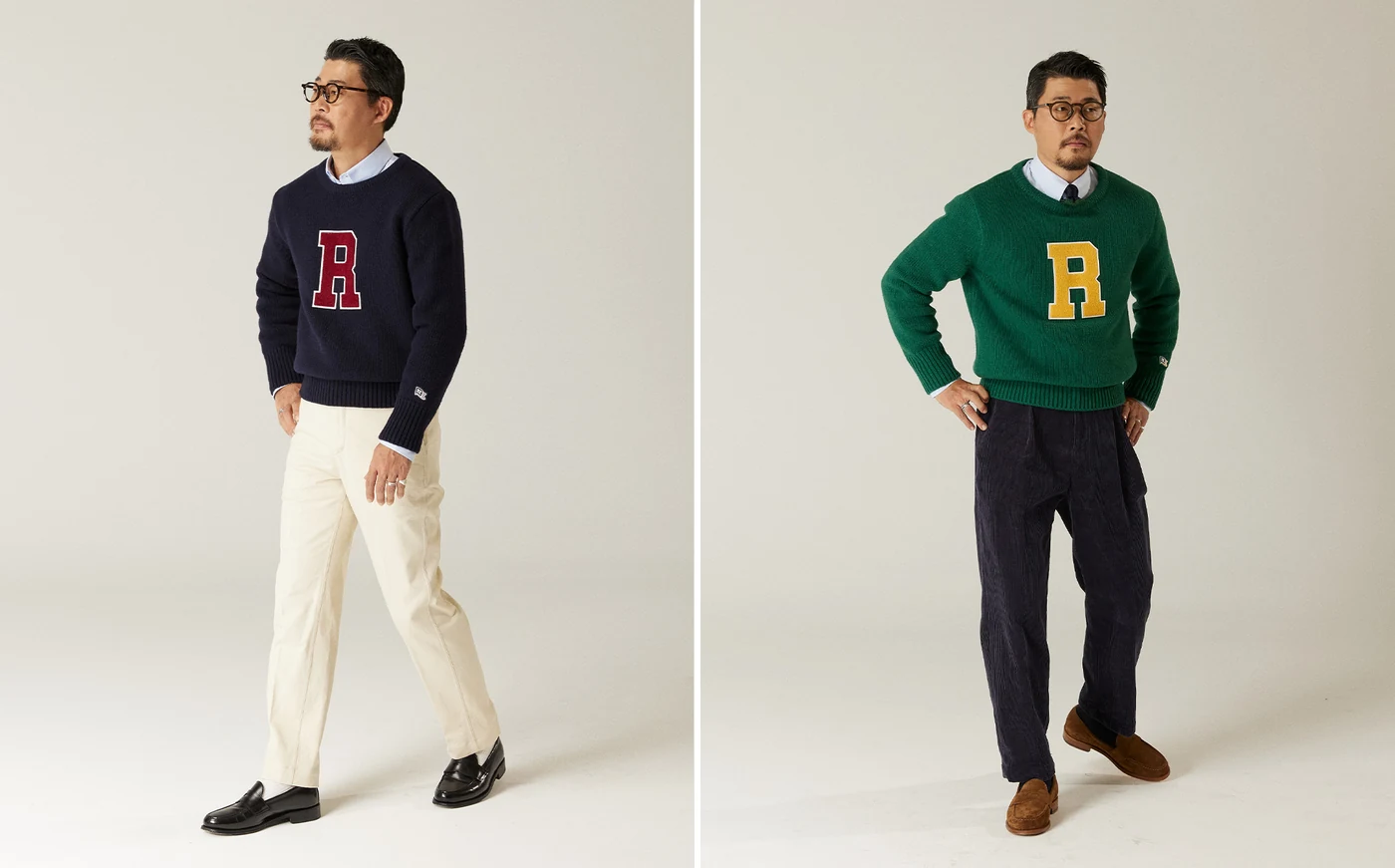
Call this the Tea and Sympathy look. In the 1956 film, the young prep school characters wore exactly this formula — soft-shouldered blazer over a crewneck sweater, trim chinos, and loafers. Nothing has changed because nothing needs to.
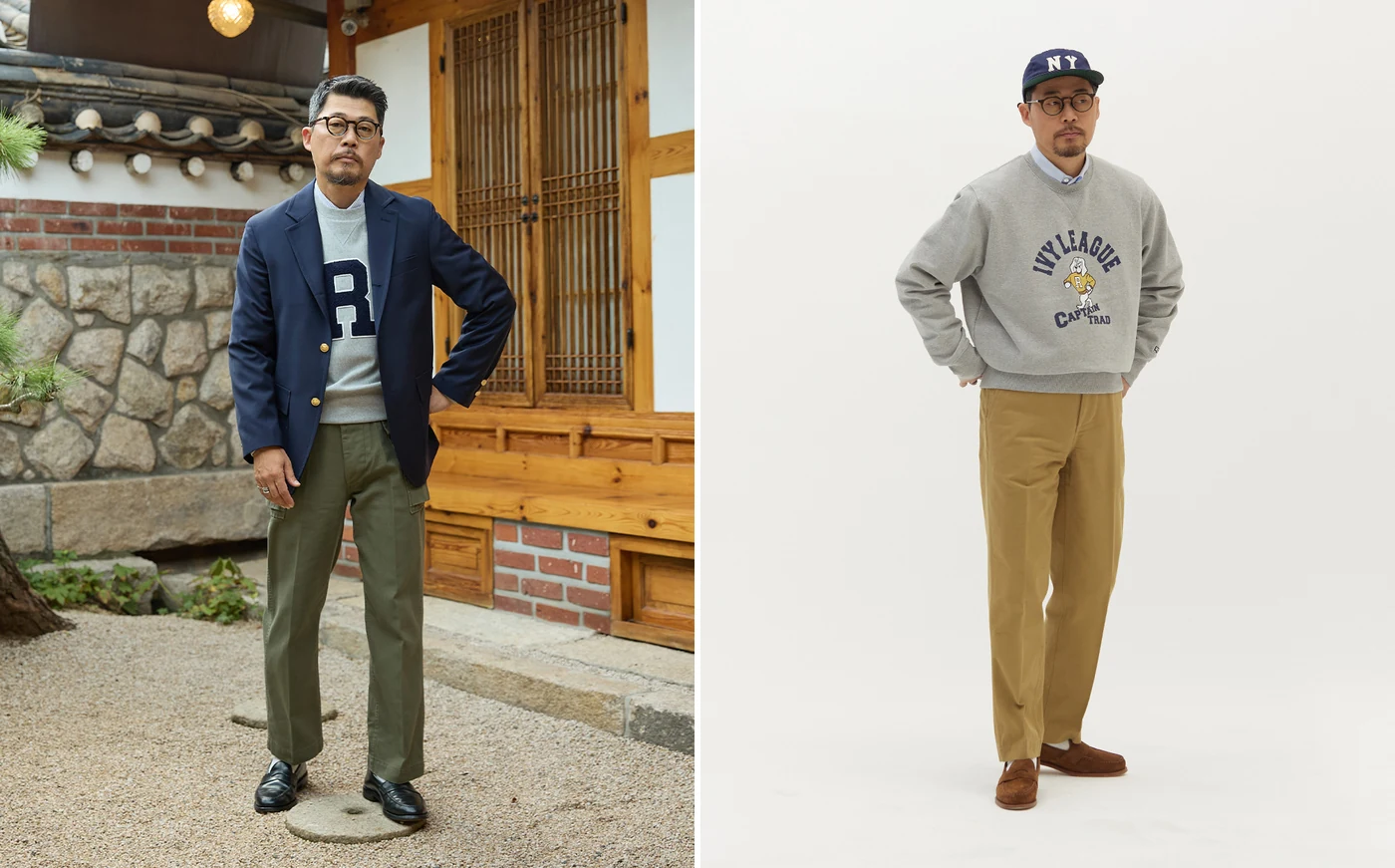
Start with a navy blazer — gold buttons optional but encouraged. Layer a cotton crewneck sweater underneath in cream or grey. The sweater adds a soft middle layer that makes the blazer feel less corporate and more campus. Tuck a white OCBD under the crewneck if you want the collar showing, or skip the shirt entirely for a cleaner look.
The Light Beige Pipe Stem is the obvious choice for this cinch back chino outfit. The garment-washed softness pairs naturally with the relaxed blazer shoulder. And because you’re wearing a cinch-back, you can ditch the belt entirely — which is actually the period-correct move.
Finish with penny loafers, no socks if it’s warm enough. This cinch back chino outfit works for dinners, gallery openings, and any situation where a suit is too much but jeans are too little.
2. OCBD Tucked In + Chino + Derby Shoes — The Campus Classic
The simplest outfit on this list, and honestly one of the hardest to get wrong. An oxford cloth button-down shirt tucked into chinos with a clean pair of derbies. Three pieces. That’s it.

Why it works: the garment-washed texture of the Pipe Stem chinos matches the slightly rumpled nature of a good OCBD. Both fabrics have character without trying too hard. A blue university-stripe shirt with the Navy Pipe Stem chinos is a combination that’s been working since Eisenhower was president.
Keep the shirt tucked in — the cinch-back detail disappears under an untucked shirt, and you lose the whole point of wearing it. The strap sits right at the small of your back, and when visible, it signals that you actually thought about what you put on this morning.
Derby shoes in brown or burgundy ground the look without making it stuffy. Office, lecture hall, coffee meeting — this cinch back chino outfit handles all of them without breaking a sweat.
3. Crewneck Sweater Over OCBD + Chino + Derby — Cool Weather Ivy
Seoul gets cold. Not Midwest cold, but that damp 8°C in November that cuts right through a single layer. This is where the sweater-over-shirt combination earns its keep.
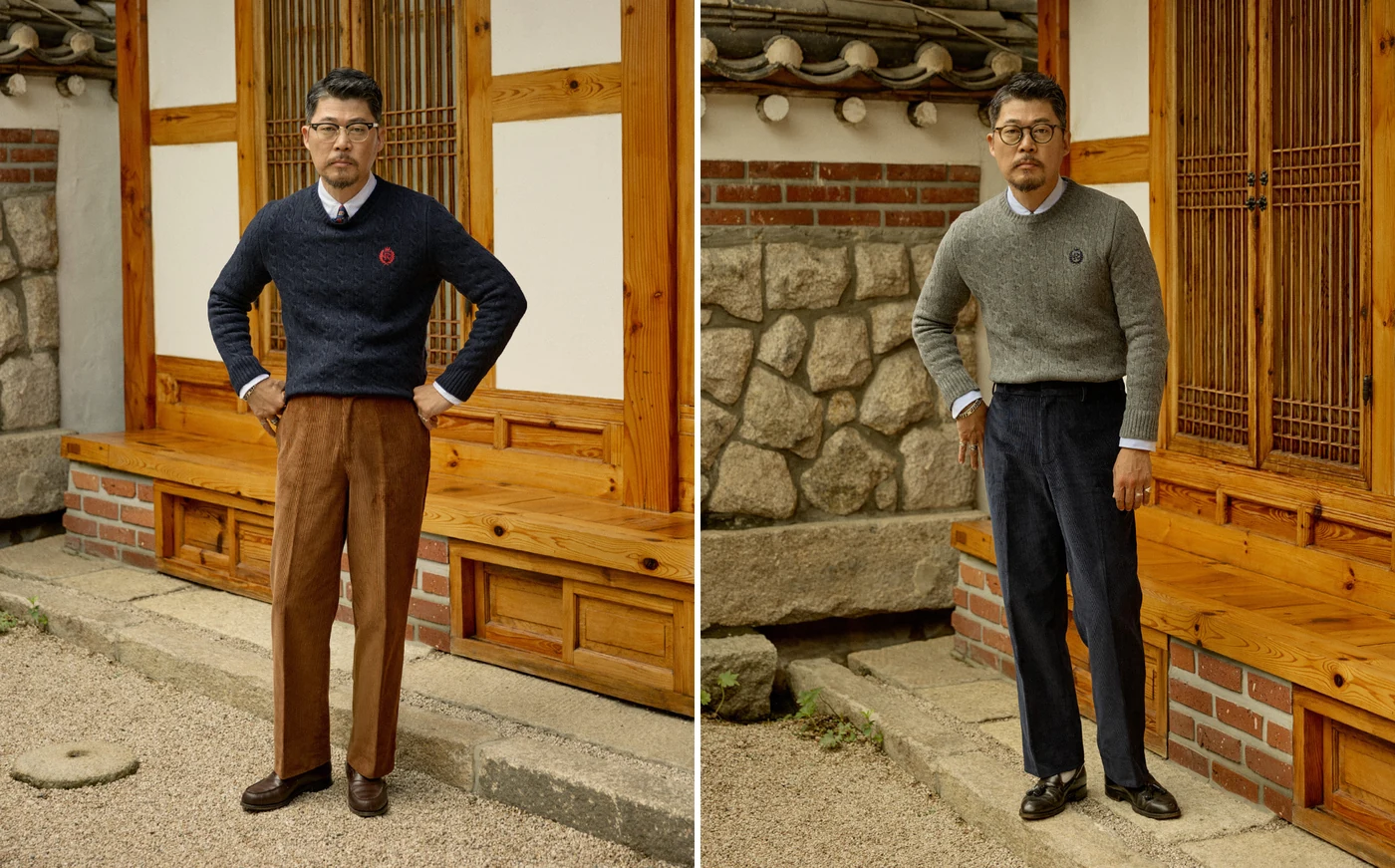
Layer a Shetland-weight crewneck sweater over your OCBD. Let the collar and shirt cuffs peek out — about a centimeter of cuff is ideal. The contrast between the sweater’s knit texture and the oxford cloth’s basket weave creates visual interest without adding a single accessory.
Pair this with the Light Beige Pipe Stem chinos and brown derby shoes. The color flow — blue sweater, white shirt collar, beige chinos, brown leather — is classic for a reason. Balanced, warm-toned from the waist down, cool-toned up top.
Fair warning: this is the outfit that gets the most compliments in my experience. People can’t always articulate why it looks good. It just does. The textures do all the talking. This sweater-over-OCBD cinch back chino outfit is what Seoul winters were made for.
4. Sport Coat + Chino + Loafer — Smart Casual Done Right
A sport coat is not a blazer. Blazers are solid — usually navy. Sport coats have pattern, texture, or both: a tweed herringbone, a cotton hopsack, a linen windowpane. The pattern makes it inherently casual, which is why it pairs so naturally with chinos instead of dress trousers.
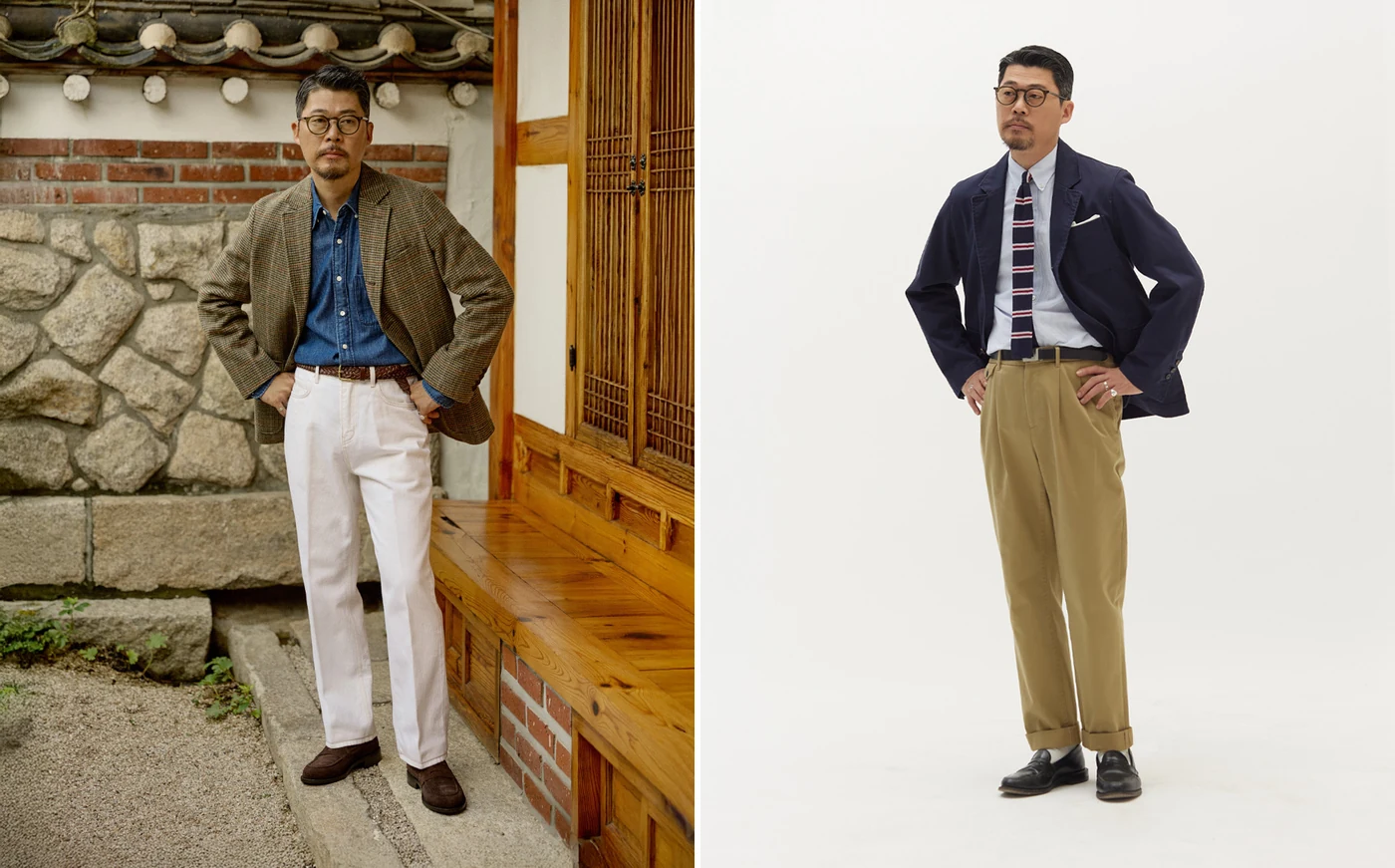
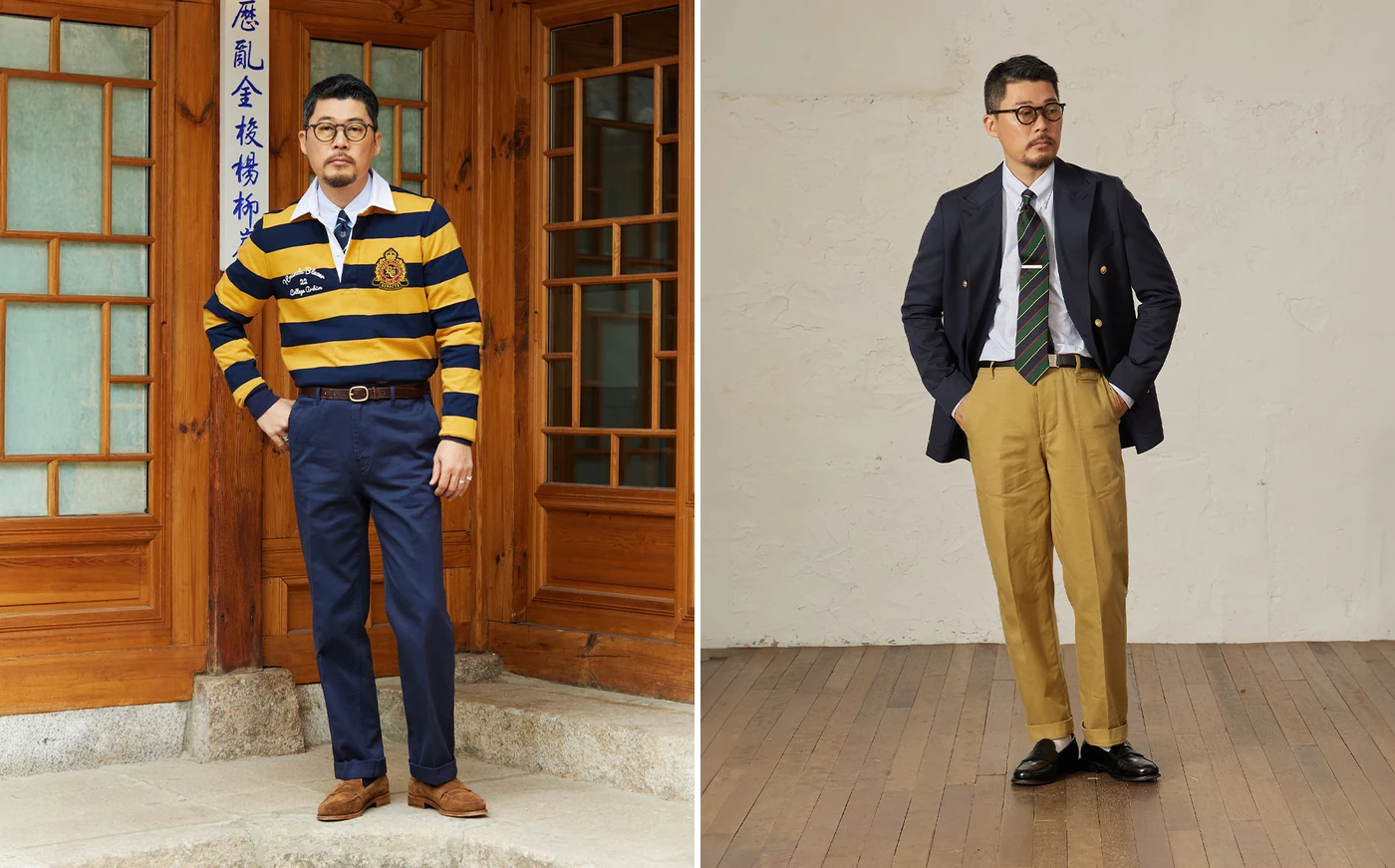
Try an unstructured sport coat in brown or olive over a plain white OCBD, tucked into the Navy Pipe Stem chinos. The dark chino grounds the outfit while the sport coat adds personality up top. A knit tie in burgundy or forest green ties it together.
Loafers are the right shoe here. Tassel loafers if you can find a good pair, or penny loafers if you prefer the cleaner line. No socks or subtle merino socks in a matching trouser tone. The cinch-back on the chinos keeps your waistline clean without a belt competing with the sport coat’s button stance.
Wear it to a client lunch, then walk straight into a bar without changing a thing. Smart-casual cinch back chino outfit done right.
5. Anorak + Chino + Sneaker — Modern Seoul Layering
Here’s where Seoul style diverges from the 1960s playbook. In the original Ivy context, outerwear meant a camel polo coat or a Burberry trench. In Seoul today, it means an anorak.
Anoraks aren’t an outsider here — military-spec anoraks made their way onto Ivy campuses in the 1960s through surplus stores, the same path that brought chinos. What’s new is how Seoul wears them.
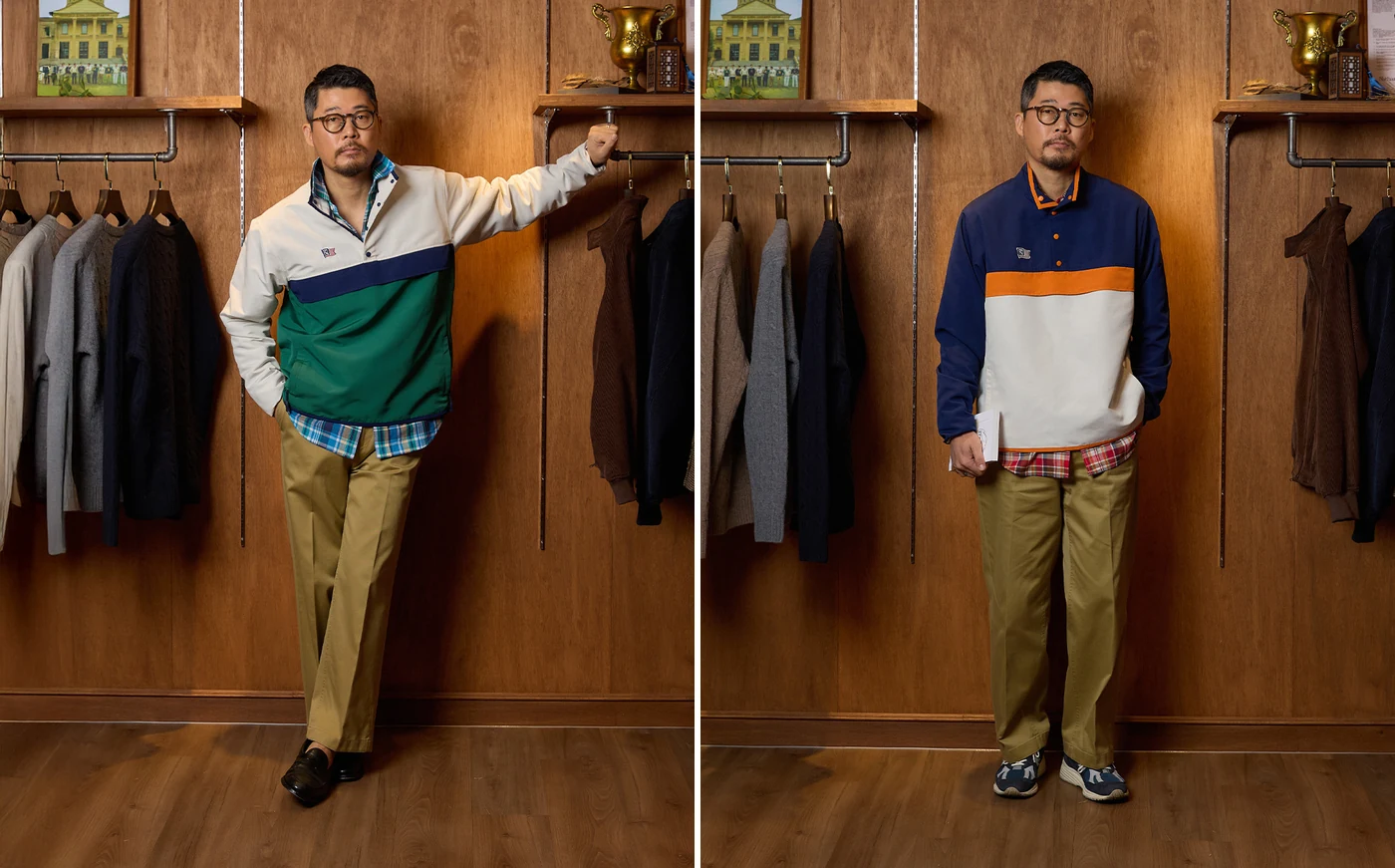

The anorak-over-chinos combination is everywhere in Gangnam and Seongsu-dong, and for good reason. The half-zip pullover silhouette of a military-inspired anorak creates a relaxed top block that balances the tapered Pipe Stem cut below. It’s practical for Seoul’s sudden rain showers, compact enough to stuff in a bag, and looks better the more you beat it up.
Layer the anorak over a rugby collar sweatshirt or a simple crewneck tee. The Light Beige Pipe Stem chino keeps the lower half classic while the anorak adds functional edge. For shoes, a clean pair of New Balance 993s or similar retro runners works perfectly.
This is the outfit that non-menswear people notice. It doesn’t scream “Ivy League.” It whispers it. The cinch-back is hidden under the anorak, the chinos look casually perfect, and the whole thing reads as modern Seoul dressing that happens to have deep roots. If a single cinch back chino outfit captures the Seoul Trad sensibility, this is it.
The Cinch-Back Detail: Why It Matters
Let’s talk about that strap for a second. The cinch-back — also called a buckle-back — was standard on Ivy League trousers through the 1950s and early 1960s. It let you adjust the waist without a belt, which kept the trouser front clean and flat.

By the early 1960s, the detail had largely disappeared from mainstream production — pushed out by permanent-press fabrics, slimmer trouser silhouettes, and the rise of the leather belt as a style element. For decades after, it survived only in vintage shops and specialty makers.
Bringing it back on the Pipe Stem isn’t nostalgia for nostalgia’s sake. The cinch-back genuinely improves how chinos sit on your body. Without a belt bunching up the waistband, the front drape falls cleaner. The side profile looks sharper. And the back of the trouser gets a visual anchor that breaks up what’s usually just a flat expanse of fabric. That structural payoff is the reason a cinch back chino outfit reads sharper than a belted alternative. If you’re exploring the broader world of cinch-back styles, our pillar guide on this heritage detail covers the full history and how to integrate it into a modern wardrobe.
Quick Styling Rules for Cinch-Back Chinos
For this cinch back chino outfit, a few practical notes before you go.
Skip the iron. The whole point of garment washing is the relaxed texture. If you press them flat, you’ve just made expensive regular chinos. Especially avoid pressing directly over the cinch-back strap — the buckle can leave permanent impressions on the fabric, and the strap itself doesn’t take well to high heat. A light steam to remove deep creases is fine. Anything more defeats the purpose.
Cuff or no cuff? The Pipe Stem’s tapered leg looks great with a single 1.5-inch cuff. It shortens the visual line slightly and shows off your shoe choice. No cuff works too — just make sure the break is minimal. No pooling at the ankle.
Tuck your shirt in. Always. The cinch-back detail is a conversation piece, and it lives at your waistline. Covering it with an untucked shirt is like buying a watch and wearing it under your sleeve. Let the detail breathe.
Color pairing matters. Light Beige chinos work with almost everything — navy, white, green, burgundy. Navy chinos are slightly dressier and pair best with lighter tops — white, cream, pale blue, light grey. Own both if the budget allows. Either way, the cinch back chino outfit framework holds.