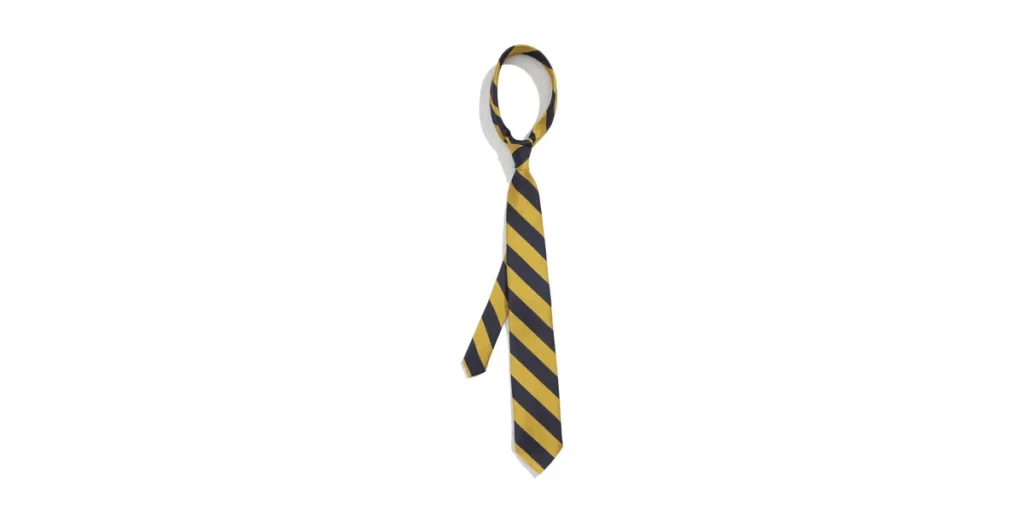
Necktie History & Origin: From Croatia to Wall Street
A strip of silk knotted around your neck. Functionally useless. Yet for four centuries, men have reached for it every morning like a ritual. The necktie history origin story starts not in a boardroom or a haberdashery — but on a battlefield.
Necktie Origins: Croatian Soldiers and the Birth of the Cravat
In the 1630s, Croatian mercenaries fighting in France’s Thirty Years’ War wore knotted neckcloths as part of their uniform. Parisians noticed — because of course they did. They called the look “à la croate” — which became “cravate” — and within a decade, every man at the French court was copying soldiers.

Louis XIV, never one to underdo anything, made the cravat mandatory at Versailles. His were lace, massive, and tied by a dedicated valet each morning. The Sun King turned a soldier’s practical neckcloth into pure theater — and honestly, that’s been the tie’s story ever since.
That’s the essential necktie history origin: a military garment hijacked by aristocrats, then slowly democratized over the next three centuries until your accountant started wearing one.
From Cravat to Four-in-Hand
The cravat kept evolving because men get bored. By the 1800s, Beau Brummell in London had stripped away the lace and extravagance, insisting on simple white linen tied in a clean knot. His philosophy — studied plainness over flashy nonsense — basically invented modern menswear. The man had taste.

The four-in-hand necktie, the shape we’d recognize today, emerged in the 1880s. Named after a London gentlemen’s club (or a carriage-driving style — historians can’t agree on anything), it was narrower, longer, and easier to tie than the fussy cravats that came before.
By 1900, the four-in-hand had crushed the competition. Bow ties retreated to black-tie events. Ascots survived at the races and nowhere else. For everyday wear, the long necktie owned the field.
Repp Stripes and the Ivy League Connection
Here’s the thing — this is where the necktie gets interesting for us. In British regiments, striped ties were like name tags — your colors, your unit, your entire identity. Stripes ran from left shoulder down to right, and you didn’t mess with tradition.
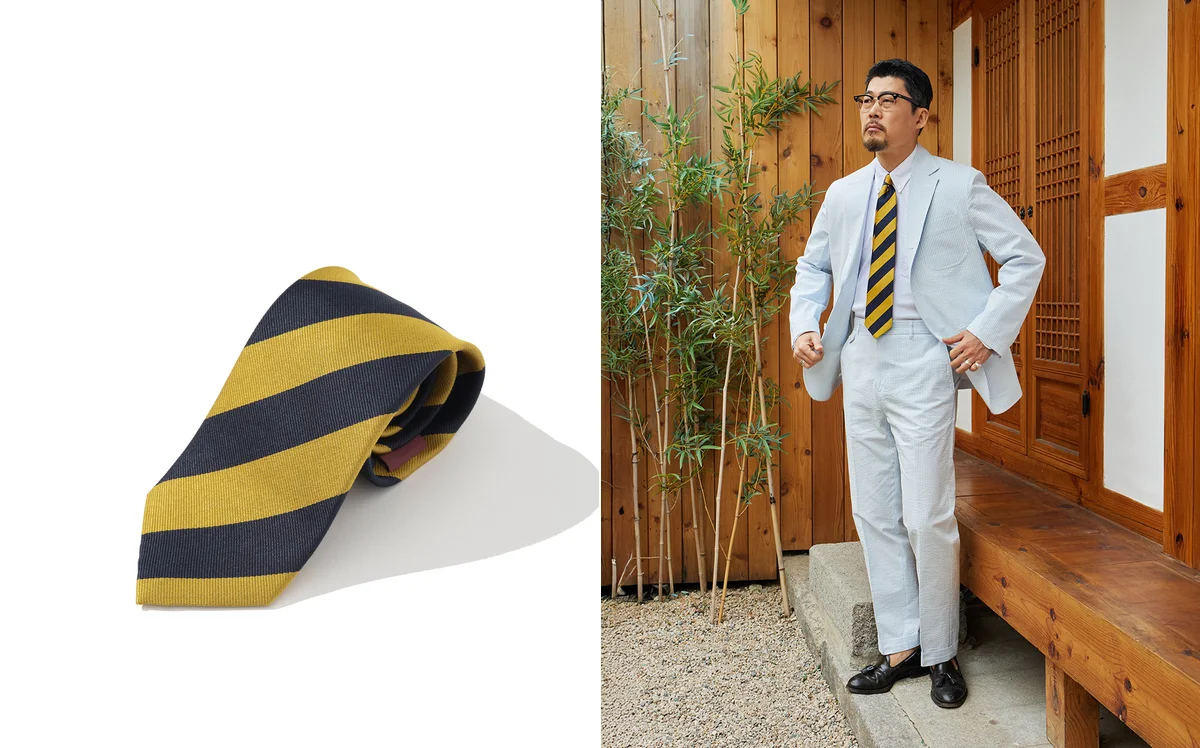
When Brooks Brothers introduced repp ties to America in the early 1900s, they flipped the stripe direction. Right shoulder down to left. This wasn’t an accident — it was a middle finger to the British. We’ll take your style, but we’ll do it our way.
That reversal tells you everything about American Trad style. Borrow shamelessly, then make it yours. By the 1950s, repp ties were glued to the Ivy League uniform like the button-down oxford shirt. Princeton men wore them with sack jackets. Harvard men wore them to bore students in lecture halls. The necktie was the one piece where you could show personality without the dean writing you up.
The Tie’s Wild Ride: 1960s to Today
Tie widths are a seismograph for cultural shifts. Narrow in the early ’60s — those clean, 2.5-inch Ivy ties. Wide and loud in the ’70s, some hitting 5 inches. Skinny again in the ’80s new wave scene. Power-wide on Wall Street. Then the cycle repeated.
The real crisis came in the 2000s. Casual Fridays became casual every day. Silicon Valley CEOs wore hoodies to board meetings. The necktie, people said, was dead.
The necktie wasn’t dead. The necktie just stopped being mandatory, which is actually better. When you choose to wear a necktie now, the necktie means something — a deliberate act, not a dress code requirement. That shift from obligation to intention is exactly what makes ties relevant again, especially in a place like Seoul, where dressing with care is a conscious choice, not corporate compliance.
Anatomy of a Good Tie
Not all ties are created equal. Here’s what separates a good one from a gas station rack special.
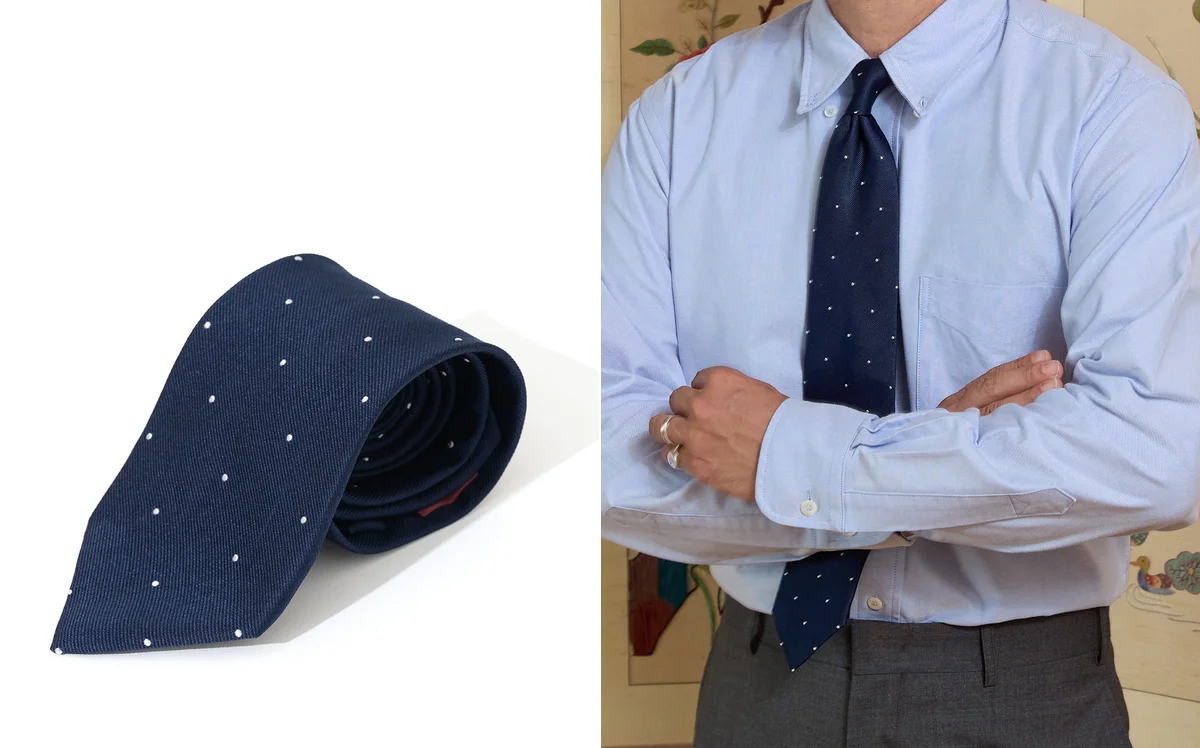
Fabric. Silk is the standard for a reason — it knots beautifully and has a natural luster without looking shiny. Wool and linen work for casual ties. Polyester holds a knot like wet cardboard. Avoid it.
Construction. A quality tie is cut on the bias — at a 45-degree angle to the fabric’s weave. This allows it to drape properly and recover its shape after being knotted. Look for a tie that springs back when you stretch it gently lengthwise.
Width. Between 3 and 3.25 inches is the sweet spot right now. Wide enough to look substantial with a blazer’s lapels, narrow enough to not look like your dad’s power tie. The rule: your tie width should roughly match your lapel width.
Lining. A good tie has a wool interlining that gives it body. Cheap ties use fused interfacing, which makes them stiff and lifeless. You can feel the difference immediately.
The Repp Tie in Seoul: Why It Still Works
On old Ivy campuses, the repp tie was practically a uniform — stocked by J. Press, Brooks Brothers, and every campus haberdasher, it went with everything and offended no one. That same logic applies in Seoul today, just in a different context.

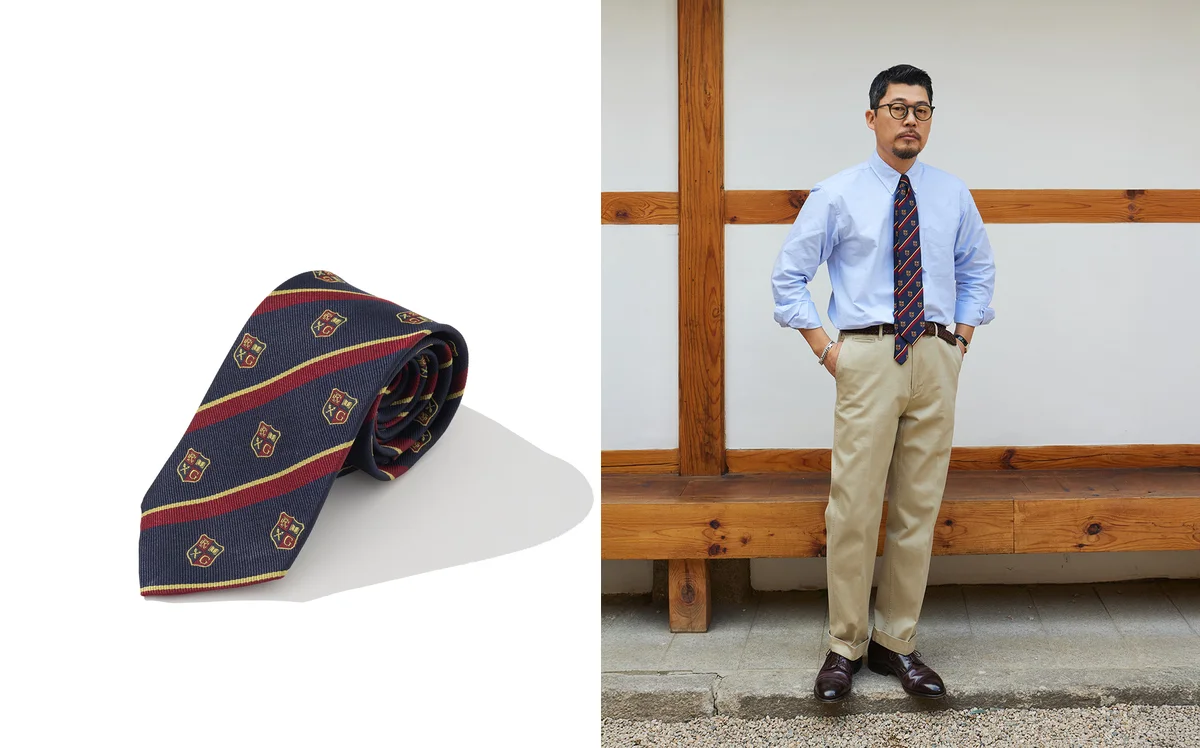
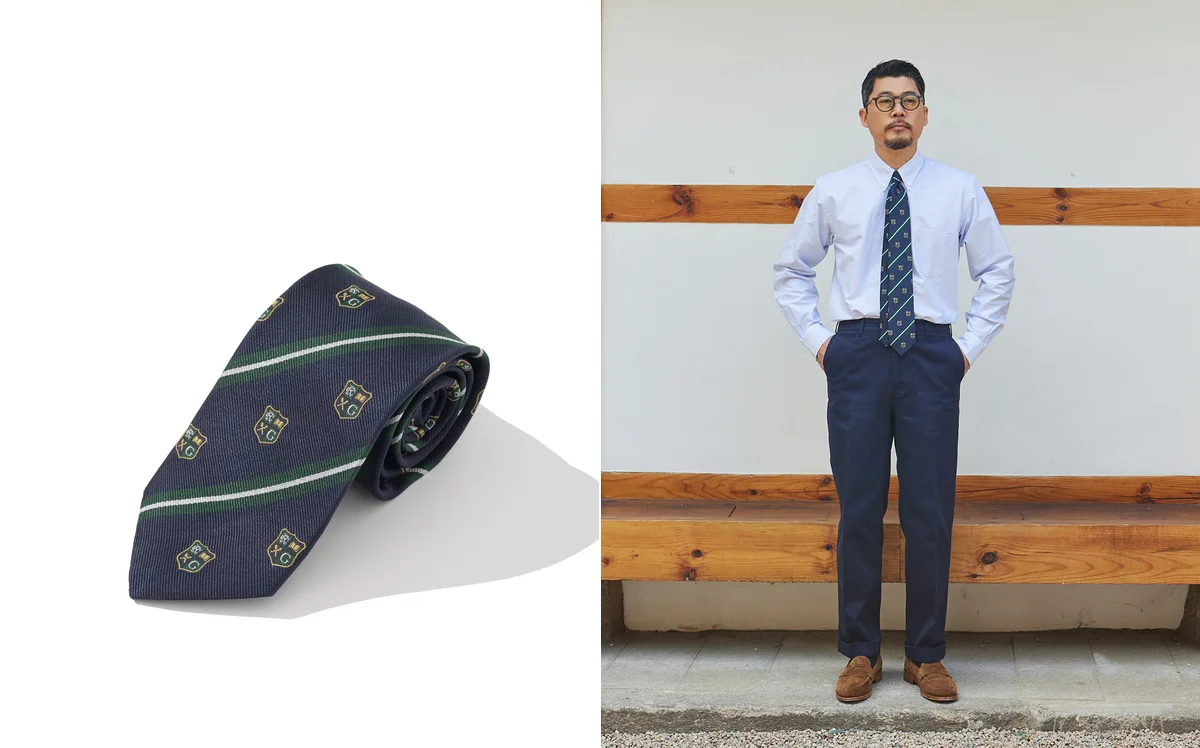
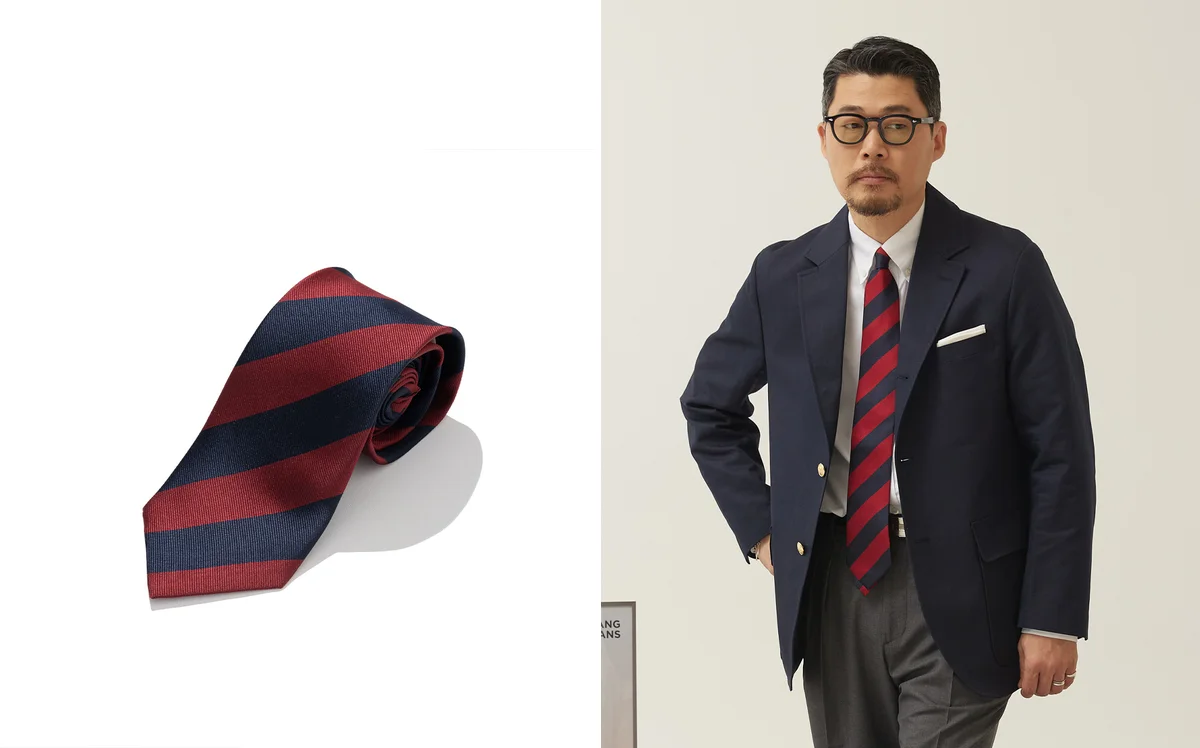
The repp stripe is simply the most versatile tie pattern out there. Navy and burgundy stripes with a grey crewneck sweater and oxford shirt underneath. Green and gold stripes with a navy blazer for a more deliberate look. The combinations are nearly infinite because the pattern is structured enough to feel intentional but not so loud that it overwhelms.
In the Seoul Traditional approach, a tie isn’t about corporate formality. It’s about completing a look with one more layer of thought. The same way you’d choose a specific crewneck sweater for its weight and color, you’d choose a tie for how it pulls an outfit together.
The repp ties in the Renacts lineup reference classic American stripe patterns with that reversed direction, keeping proportions right for contemporary wear — around 3.25 inches wide, with a substantial hand from proper wool interlining.
How to Care for Your Ties
Ties are surprisingly fragile. A few rules will keep them lasting years.
Never leave them knotted. Untie after every wear. Pull the narrow end through — don’t yank the knot apart. Roll the tie loosely or hang it, and the wrinkles from the day’s knot will fall out within 24 hours.
Don’t dry clean unless absolutely necessary. Dry cleaning strips the natural oils from silk and eventually destroys the fabric. For small stains, blot gently with a damp cloth. For serious damage, take it to a specialist, not a regular cleaner.
Rotate. Don’t wear the same tie two days running. Silk needs time to recover its shape. Three or four ties in rotation will each last five times longer than one tie worn every day.
Store properly. A tie rack works. So does loosely rolling ties and keeping them in a drawer. What doesn’t work: folding them, cramming them into a packed closet, or leaving them draped over a doorknob for three weeks. We’ve all done it. Stop.
Knots Worth Knowing
You need exactly two knots. Maybe three.
The four-in-hand is the only knot you truly need. Slightly asymmetrical, which gives it character. It works with every collar type and every tie width. If you learn one knot, this is it.
The half-Windsor is useful when you’re wearing a spread collar and want a more symmetrical triangle. It’s bigger than a four-in-hand but not the massive full Windsor — which looks like a dinner roll under your chin and should be retired permanently.
That’s it. The Pratt, the Eldredge, the Trinity — these are YouTube novelties. A four-in-hand tied well, with a slight dimple below the knot, is more elegant than any fancy knot ever attempted.
Why the Tie Endures
The necktie history origin story spans four centuries and a dozen countries. Croatian soldiers to French courts to British regiments to American campuses to Seoul streets. The form factor barely changed — it’s still just a strip of fabric around your neck.
What changed is the meaning. A tie today is the single most voluntary piece of men’s clothing. Nobody makes you wear one. Every person who knots a four-in-hand in the morning is making a statement: I thought about this. I chose this.
In Seoul’s version of Ivy style, where an anorak might sit over a shirt-and-tie combination, that intentionality is the whole point. The tie isn’t formal. It isn’t corporate. It’s personal — the smallest, most visible way to show you give a damn about how you present yourself to the world.