Oxford Cloth: The Weave That Made the OCBD
Most Guys Own an OCBD — Few Know What Makes the Fabric Special
You’ve probably owned an oxford cloth fabric shirt at some point. Maybe several. It’s the shirt that shows up in every menswear starter guide, every “build a capsule wardrobe” list, every college freshman’s suitcase. But here’s what almost nobody talks about: the cloth itself.
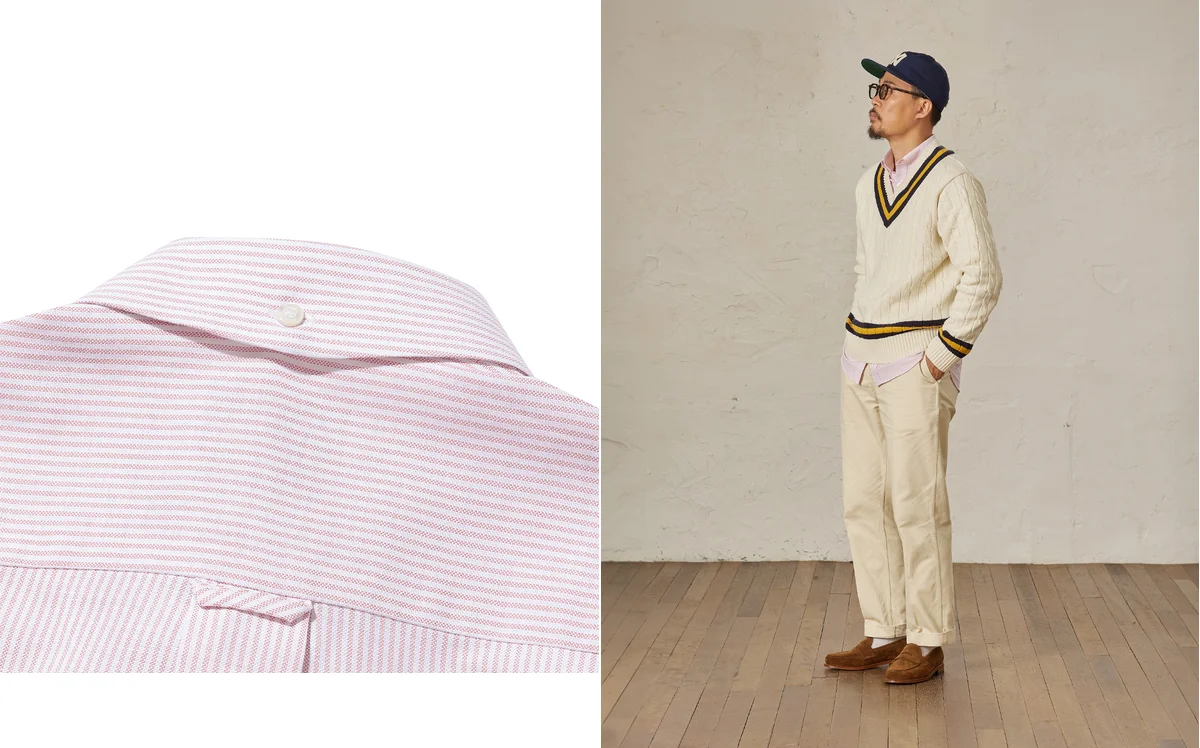
Not the collar. Not the button-down points. The actual weave. Oxford cloth fabric is the reason the OCBD feels the way it does — that slightly rough, substantial hand that softens with every wash but never goes limp. Understanding the fabric changes how you buy shirts, how you care for them, and honestly, how much you’re willing to spend.
This guide covers what oxford cloth fabric actually is, how it’s made, why it behaves differently from every other shirting, and what to look for when you’re shopping.
What Is Oxford Cloth Fabric, Exactly?
Oxford cloth fabric is a cotton textile woven in a basket weave pattern. That’s the short answer. The longer answer matters more.
In a traditional oxford weave, two warp yarns are paired and woven as a single unit, crossing over and under a single, slightly heavier weft yarn. This 2×1 structure is technically an irregular basket weave — distinct from the symmetrical 2×2 baskets used in some upholstery fabrics. Compare it to a plain weave (like broadcloth), where single yarns alternate one-over-one. The asymmetric basket structure creates a fabric that’s thicker, more textured, and more porous than plain-weave alternatives.
The name supposedly comes from a Scottish mill in the late 19th century that named four fabrics after prestigious universities: Oxford, Cambridge, Harvard, and Yale. The mill’s identity is lost to time, and the story may be apocryphal — but the name stuck, and only Oxford survived in the market. Make of that what you will.
The Basket Weave: Why It Changes Everything
The basket weave isn’t just a production detail. It determines nearly every quality people love about oxford cloth fabric.
Texture. Run your fingers across an oxford shirt and you feel a slight grain, almost like very fine canvas. That’s the doubled yarns creating a miniature grid on the surface. Broadcloth feels smooth and papery by comparison. Twill feels diagonal. Oxford feels honest.
The two-tone signature. Look closely at a blue oxford shirt and you’ll see something that isn’t visible in any other shirting: the warp yarns are dyed (blue, in this case) while the weft yarns are left white. At three feet, the shirt reads as solid blue. At three inches, it reads as a tiny blue-and-white grid. Oxford cloth fabric has visual depth that flat-color broadcloth doesn’t — the colour is built from contrast, not pigment.
Breathability. The basket structure leaves tiny gaps between yarn groups. Air moves through. This is why an oxford shirt in July, while not as cool as linen, breathes far better than a tightly woven poplin. It’s the fabric that works nine months of the year in a city like Seoul, where summers are brutal but spring and fall are long.
Durability. Those doubled yarns reinforce each other. Oxford cloth pills less, tears less, and holds its shape longer than finer weaves. There’s a reason vintage OCBDs from the 1960s still show up in thrift stores in wearable condition — the fabric simply lasts.
From Scottish Mill to Polo Field to Ivy Quad
Oxford cloth fabric’s path to the Yale dorm room runs through India. By the early 1900s, British Raj polo players had adopted oxford cloth as their playing-shirt fabric — durable enough for hard contact on the field, breathable enough for the heat. John E. Brooks of Brooks Brothers reportedly noticed those shirts at a polo match in England in 1896, where the players had pinned their collar points down with small buttons to keep them from flapping in the wind. He brought the idea back to New York, and in 1900 Brooks Brothers launched the Original Polo Button-Down Oxford — the first OCBD. By the 1920s it was the canonical Yale shirt; by the 1960s it was the canonical Ivy League shirt, period. The fabric’s athletic-yet-tailored DNA — equally at home on a polo pony or under a sack jacket — is why it became the Ivy uniform.
Oxford Cloth vs. Pinpoint Oxford vs. Royal Oxford
Not all “oxford” fabrics are the same. The differences matter when you’re choosing between shirts.
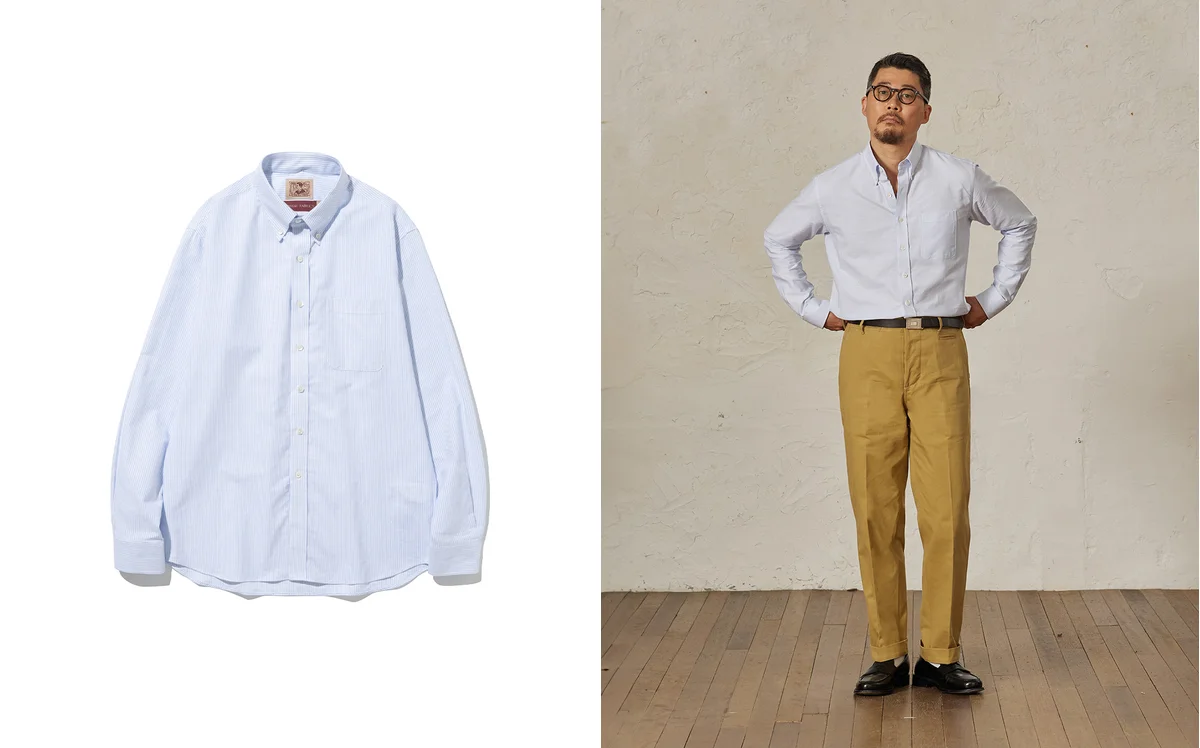
Standard oxford cloth fabric uses a relatively thick yarn (typically 20s-40s yarn count) in the basket weave. It’s the most textured, the most casual, and the most durable of the three. This is what you want for a button-down collar shirt worn without a tie. Weight typically runs 4.5–6 oz per square yard.
Pinpoint oxford uses finer yarn in a tighter, more balanced basket weave — the warp and weft yarns are typically the same count (60s-80s), unlike standard oxford’s asymmetric 2×1 construction. The result is smoother, lighter, and slightly dressier. It works better under a suit. But it loses that characteristic roughness — and it pills faster because thinner yarns are more fragile. If you want a dress shirt, just buy broadcloth. Pinpoint sits in an awkward middle ground.
Royal oxford uses even finer yarn with a subtle sheen. It’s essentially a dress fabric that borrows the oxford name. Beautiful under a spread collar with a tie. But it has nothing to do with the OCBD tradition, so we’ll leave it there.
For the Seoul Traditional approach — where the shirt is the workhorse of your wardrobe — standard oxford cloth fabric is the only real choice.
Weight Matters More Than Thread Count
Here’s the thing most shirt guides get wrong: they obsess over thread count and ignore weight. With oxford cloth fabric, weight is the spec that actually predicts how the shirt will feel and perform.

Skip anything under 4.5 oz. It pills after a few washes and the collar goes limp. The sweet spot is 5–5.5 oz per square yard — enough heft to hold a collar roll, but not so heavy it feels like a jacket.
At this weight, the shirt has body. Tuck it into chinos and it stays put. The collar stands up on its own without fusing or heavy interlining. It drapes without clinging. A good weight oxford cloth fabric shirt is the rare garment that looks better slightly rumpled than freshly pressed.
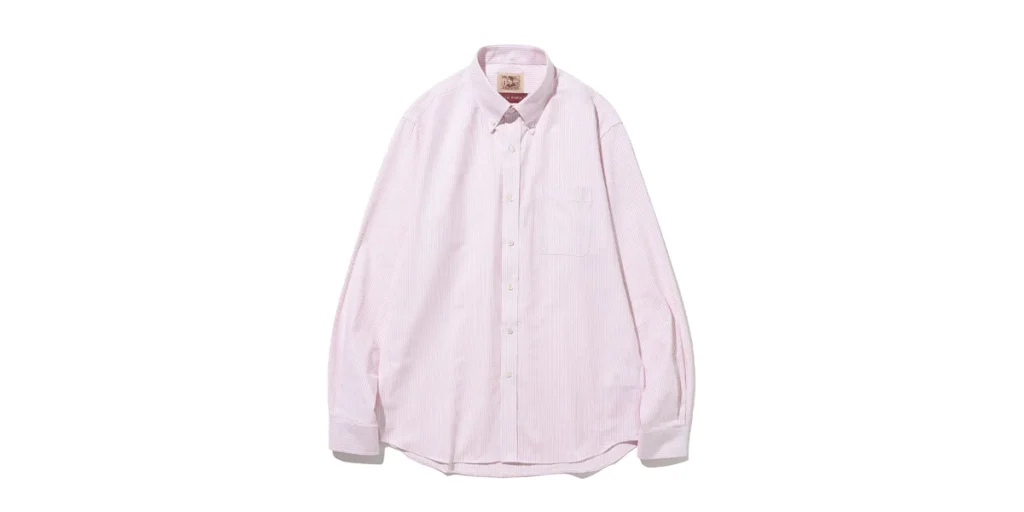
The Renacts Ivy OCBD Shirt sources oxford cloth in this 5–5.5 oz range — essentially the same weight specification J.Press and Brooks Brothers have used for over a century. The collar is unfused, the seams are single-needle, the body is cut full enough to tuck and layer without bunching. It’s the canonical OCBD silhouette translated for a Seoul wardrobe — substantial enough for a clean collar roll, light enough for transitional seasons when you’re layering under a crewneck sweater or blazer.
How Oxford Cloth Fabric Ages (And Why That’s the Point)
Most dress fabrics look their best the day you buy them. Oxford cloth fabric works the opposite way.
After five or six washes, the fibers soften. The weave relaxes slightly. The shirt starts to conform to your shoulders and arms. After twenty washes, you have something that feels custom — broken in without being broken down. The Japanese call this concept aji (味) — literally ‘flavor,’ but used in menswear and craft contexts to describe the beauty that emerges from use and time. The closest broader Japanese aesthetic concept is wabi-sabi — the appreciation of impermanence and imperfection. It’s one reason the OCBD became the signature shirt of American Ivy style: students wore the same shirts for years, and the fabric rewarded that loyalty. Yale undergraduates in the 1960s typically owned five identical OCBDs at minimum — a number documented in our Yale Ivy Style post. That isn’t consumerism; it’s recognizing that the right shirt should last long enough to need replacements only when the previous ones literally wear through.
A word of caution: this aging process only works with quality oxford cloth. Cheap versions — the kind with loose, thin yarns — just deteriorate. They get holes at the elbows, the collar frays unevenly, and the basket weave starts to separate. Good oxford cloth fabric develops patina. Bad oxford cloth just dies.
The Seoul Angle: Why Oxford Cloth Works Here
Seoul’s climate is more extreme than most American East Coast cities. Summers hit 35°C with 80% humidity. Winters drop to -10°C with a dry bite. Spring and fall are gorgeous but short.
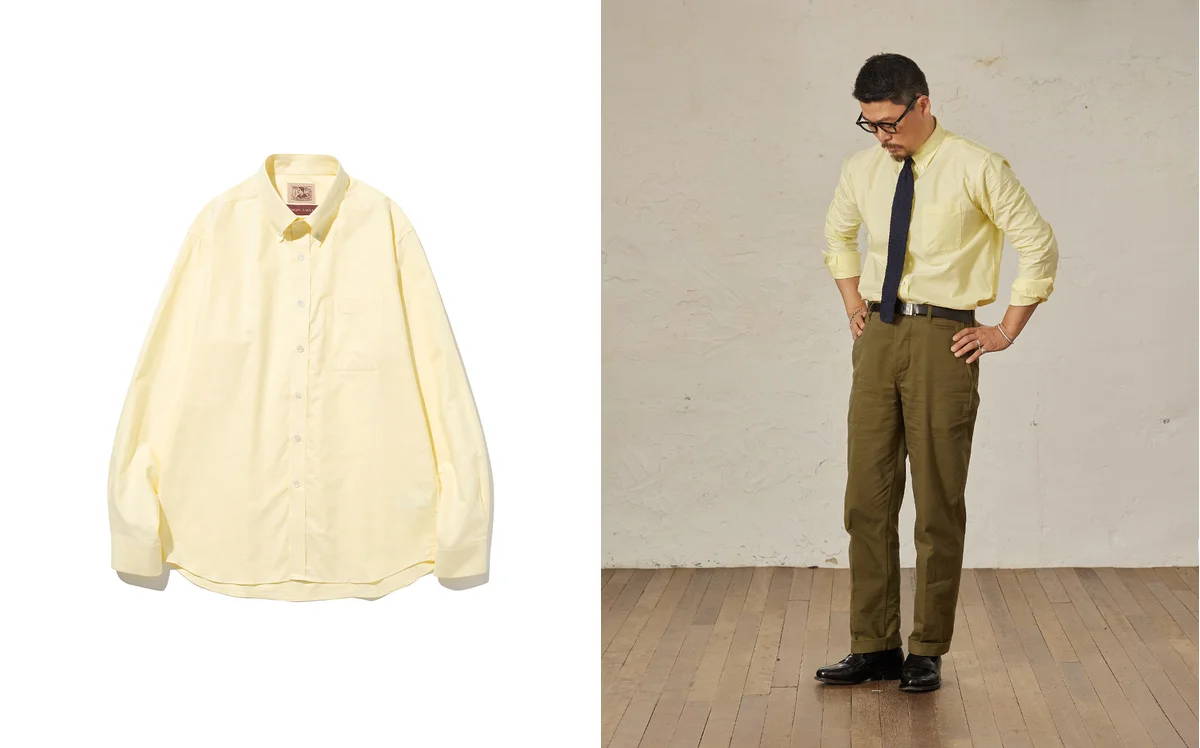
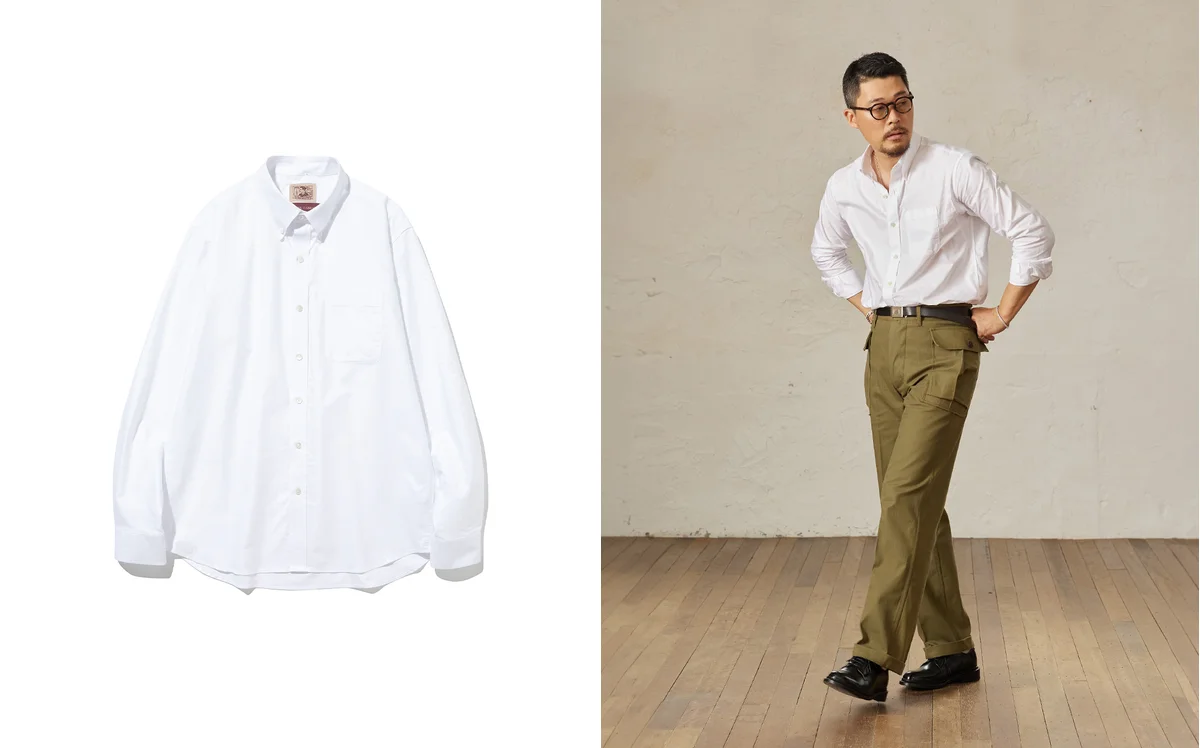
Oxford cloth fabric handles this range better than almost any shirting. In spring and fall — which is when most Seoul style actually happens — it’s perfect on its own, tucked into chinos with a belt and loafers. When October arrives, you layer a crewneck sweater over it, and the oxford cloth’s texture peeks out at the collar and cuffs. By November, add a blazer or anorak.
In Seoul’s context, the OCBD isn’t a preppy costume piece. It’s the most practical shirt in your closet. The oxford cloth fabric weave gives it enough structure to look sharp tucked in, enough breathability for packed subway commutes, and enough durability for daily wear. Practical roots, intentional choices, no waste.
Together with madras, oxford cloth fabric makes up the two-fabric foundation of the Seoul Traditional shirt rotation. Madras handles July and August humidity (covered in our Madras Fabric History post). Oxford cloth covers the other nine months. Two textiles, both with foreign-mill origins, both translated through Ivy League adoption, both arriving in Seoul with the same underlying logic: the answer was settled a long time ago and didn’t need to be re-asked.
How to Care for Oxford Cloth Fabric
Good news: oxford cloth is low maintenance. That’s part of its appeal.
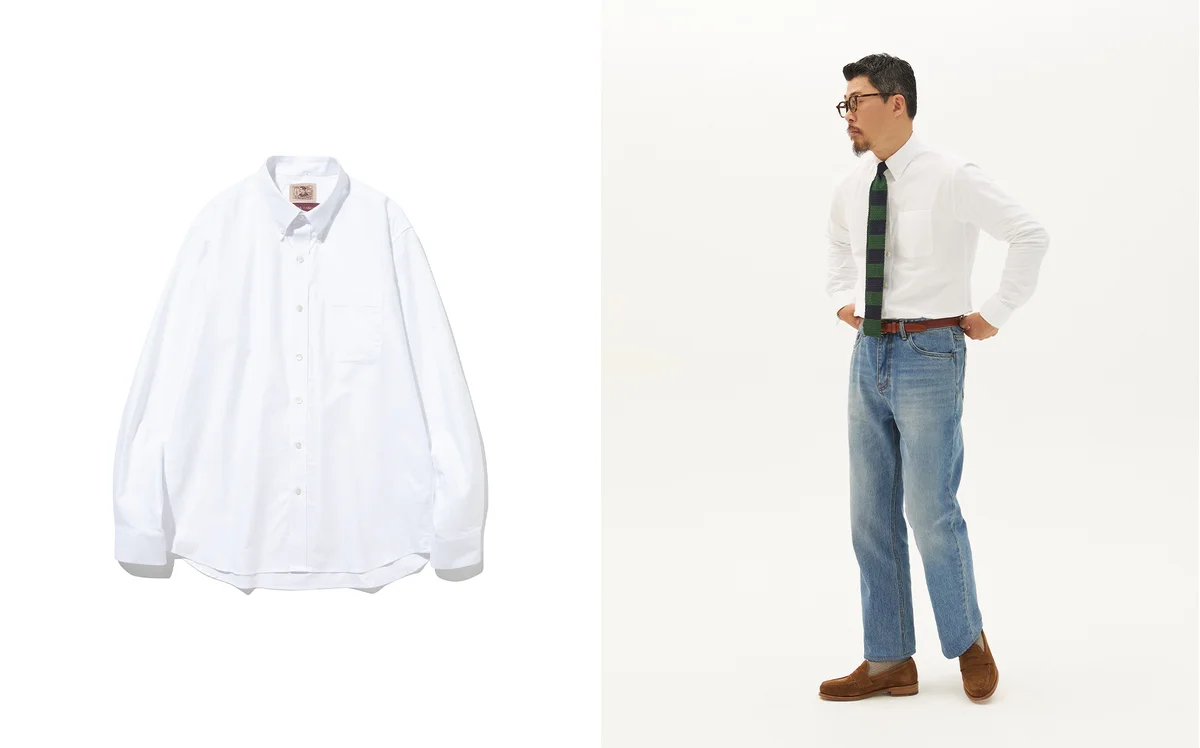
Washing. Machine wash cold, gentle cycle. Oxford cloth can handle regular washing — it’s not delicate. But cold water prevents shrinkage and preserves color. Avoid bleach, even on white shirts. It weakens the basket weave structure over time.
Drying. Tumble dry on low or hang dry. My actual recommendation: pull the shirt out while still slightly damp, hang it on a good hanger, smooth the collar and placket by hand, and let it air dry. You’ll never need to iron it. The slight wrinkle is the point.
Ironing. If you must, use medium heat with steam. A perfectly pressed oxford cloth fabric shirt looks wrong — it kills the texture. A light pass to clean up the collar is fine. Leave the body alone.
Storage. Hang, don’t fold. Oxford cloth’s weight means it creases deeply when folded. A wooden or padded hanger keeps the shoulders right.
What to Look for When Buying
Shopping for oxford cloth fabric shirts is simpler than most guides make it. Focus on four things.
Weight. Pick the shirt up. Does it feel substantial? Can you feel the texture? If it feels thin or papery, put it back.
Collar. An unlined or lightly lined collar that rolls naturally. If the collar is fused stiff, the maker doesn’t understand why people buy oxford cloth in the first place.
Single-needle stitching. Check the side seams. Single-needle construction lies flatter and lasts longer. It’s a sign the manufacturer cares about longevity, not just price.
Fit. The shirt should be roomy enough to tuck comfortably but not billowy. Traditional Ivy fit means a slightly fuller body — you’re tucking this in, layering a sweater over it, maybe adding a tie. You need room.
The right oxford cloth fabric shirt should feel like it could last five years of weekly wear. Because it can.