Sport Coat Essentials: A Trad Guide to 8 Fabrics, Patterns, and Cuts
The Trad wardrobe distinguishes three jackets that look almost the same to outsiders: the suit jacket (matched to its trousers), the blazer (solid color, military or club lineage, often with metal buttons), and the sport coat — odd jacket, patterned cloth, country sport origins. The sport coat is the most useful of the three for modern wear because it does the most with the fewest pieces: pair with chinos, with trad denim, with grey flannel trousers, with corduroys, and the result reads as considered without ever crossing into matching-suit formality.
What follows is the sport coat essentials guide as we use it in Seoul: what it is, where it came from, how it’s built, the fabrics and patterns that define it, and which versions earn shelf space in a Trad wardrobe. Eight axes — three construction, three fabric, two pattern — and a sport coat that handles 70% of weekend dressing above the waist.
What Is a Sport Coat — vs Blazer vs Suit Jacket
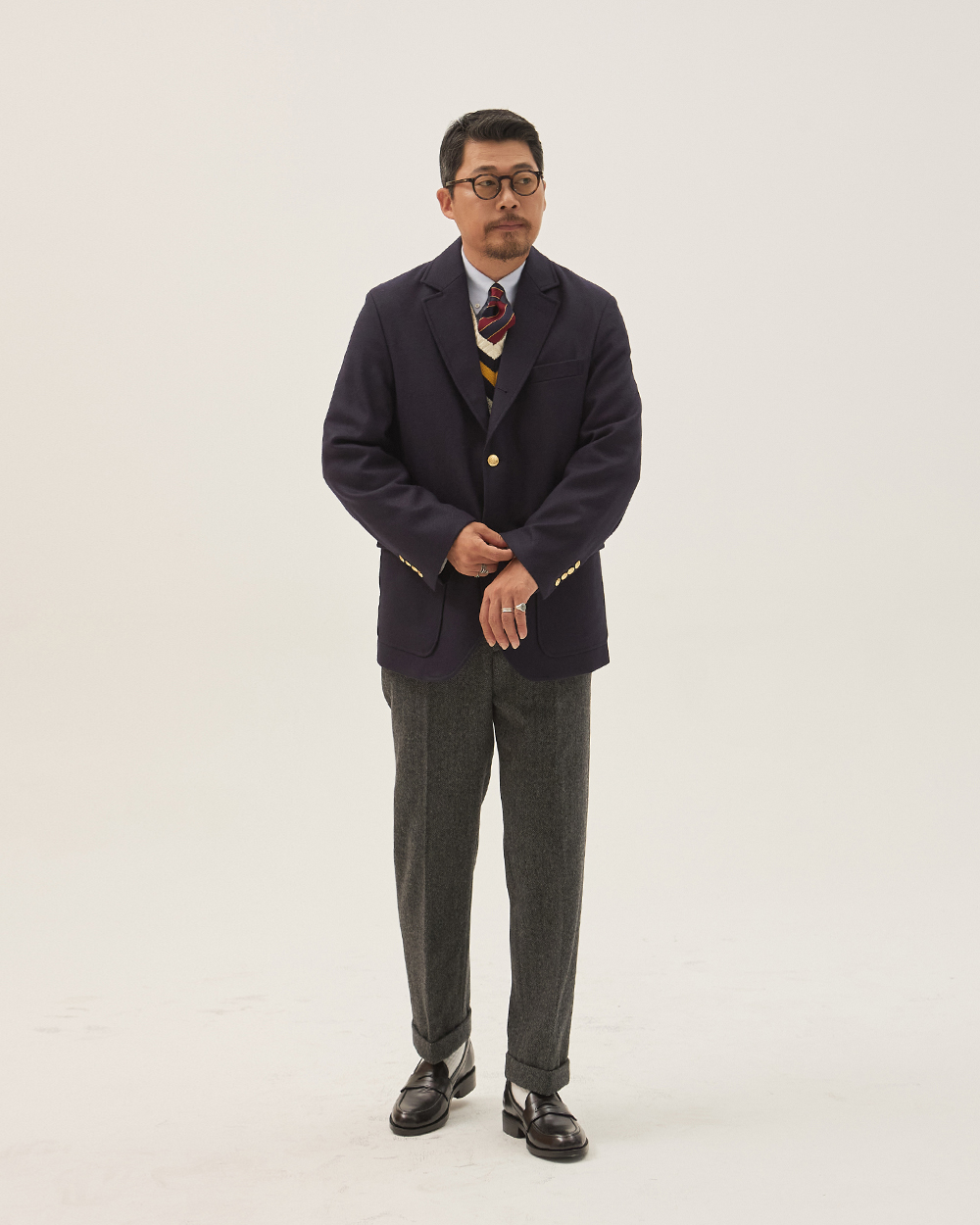
The three categories overlap visually but differ in lineage and rule-set. Suit jacket is one half of a two-piece matched suit, cut from the same cloth as its trousers, rarely worn with odd trousers in business or evening register. There is, however, an explicit Trad exception worth naming up front: tweed suits (herringbone, Donegal, glen check), corduroy suits, and other country-cloth suits are actively designed to break apart. The English country house tradition that gave us the sport coat in the first place treats tweed cloth as wear-it-three-ways — matched suit, jacket alone with grey flannel or trad denim, or trouser alone with a knit. The ‘never break the suit’ rule applies to modern business worsted in solid dark colors; it does not apply to country tweed. Blazer is solid-color (almost always navy), often with metal buttons, with a club or military lineage — the navy hopsack gold-button blazer is the canonical American Trad version.
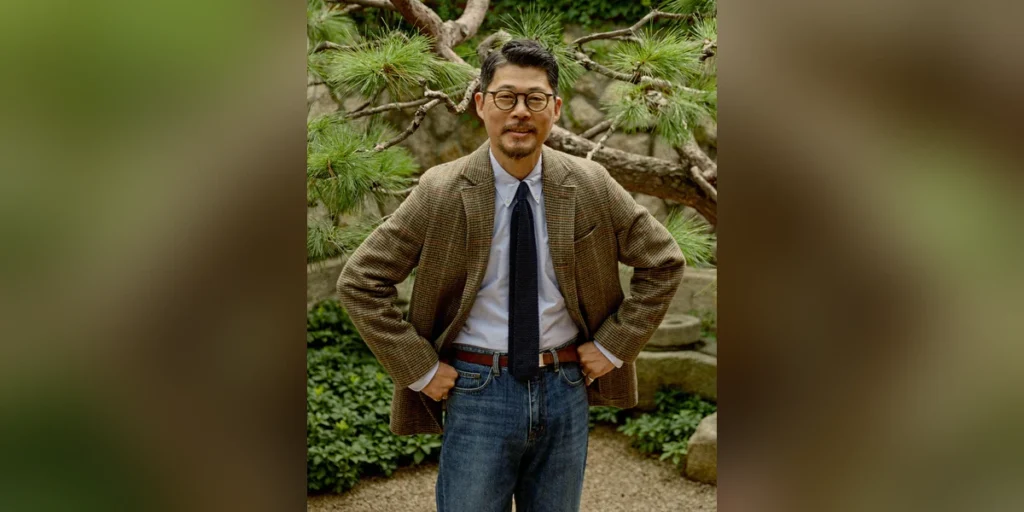
Sport coat is the odd jacket — patterned or textured cloth, country-sport lineage, designed to be worn with trousers cut from a different fabric. Where a blazer signals club or formal-occasional, a sport coat signals weekend, country, academic, or restaurant-without-tie. Sport coat essentials begin with that distinction: if the cloth is solid wool flannel, you’re likely looking at a blazer; if it’s tweed, hopsack pattern, houndstooth, or glen check, you’re looking at a sport coat. Same construction philosophy, different occasion.
Origin: From Sandringham 1860s to American Trad
The sport coat traces to the late-1860s English country house. The Norfolk jacket — typically attributed to either Edward, Prince of Wales (later Edward VII) at his Sandringham estate or to the Duke of Norfolk’s shooting parties of the same period — was designed as a hunting and shooting coat that did not bind when the elbow raised to fire. Box pleats front and back, a half-belt, patch pockets, and tweed cloth. The construction was loose enough for movement, structured enough to read as a proper jacket.
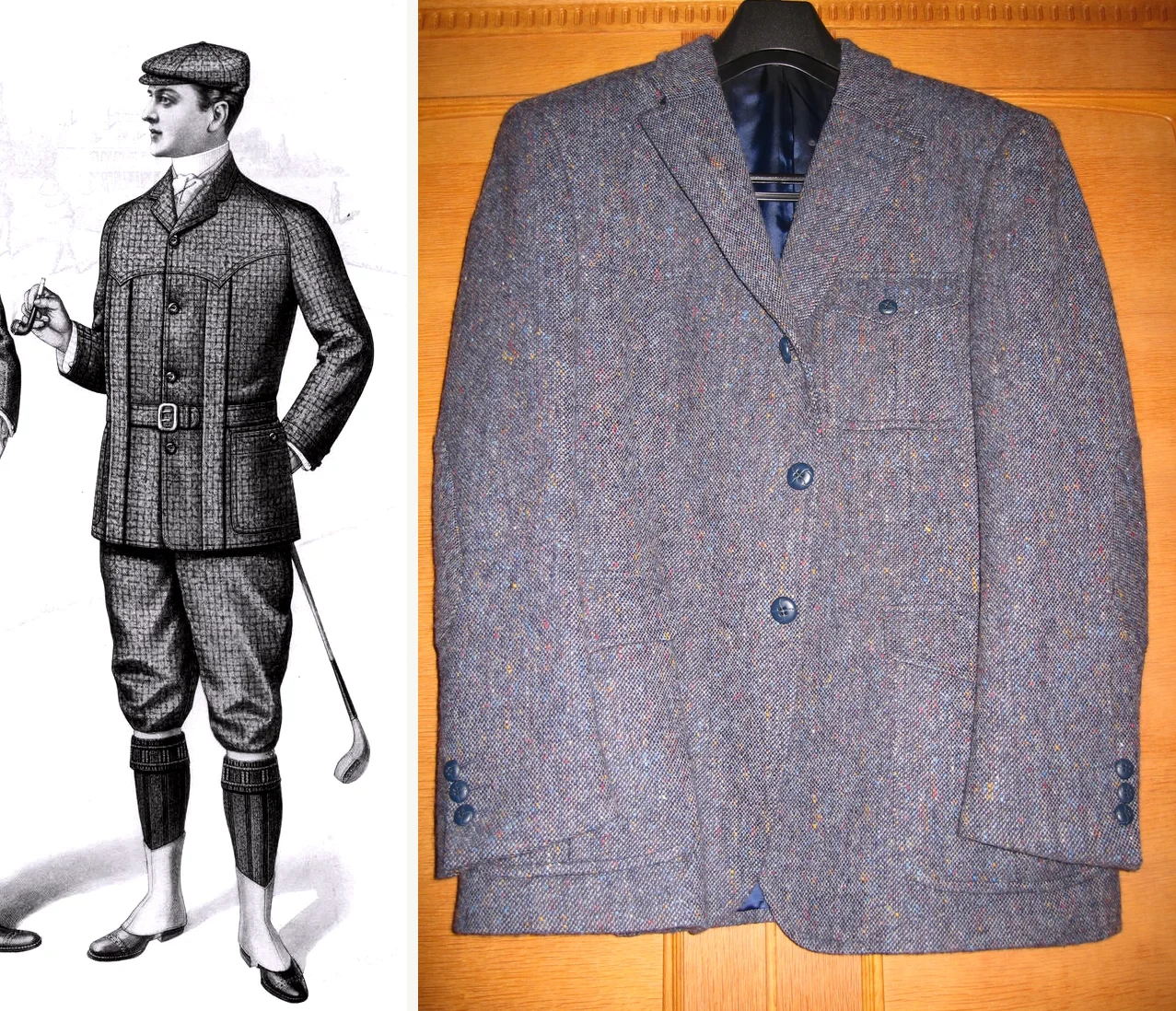
Through the late nineteenth century the Norfolk jacket spread from country estates to golfing, cycling, and ultimately to American campuses. By the 1920s American tailors had simplified the silhouette — the pleats and half-belt dropped away, the patch pockets stayed, and the cloth shifted from heavy estate tweed to lighter herringbones, glen checks, and gun club patterns. What remained was the country-sport register — a register that J.Press, Brooks Brothers, and The Andover Shop spent the next century refining for the American Trad customer.
The Trad Sport Coat Construction
Natural shoulder. The American Trad sport coat honors the natural shoulder line — minimal padding, soft canvas, the sleeve attached without the rope-roll headed shoulder of British or Italian tailoring. (For depth, see our natural shoulder piece.) The result is a jacket that follows the wearer’s actual shoulder rather than imposing a constructed geometry on top of it.
3/2 roll. Three buttons, but the lapel rolls to the middle button — the top button hides under the lapel and is functionally decorative. The 3/2 roll is the canonical American Trad button arrangement, more relaxed than a strict two-button and more elegant than a fully-buttoned three-button.
Undarted front. The Trad sport coat omits the front darts that European tailoring uses to shape the chest. The undarted (or ‘sack’) silhouette gives a softer line through the torso, more forgiving of body variation, and a less assertively shaped chest. The sack suit uses the same architecture; the sport coat is its odd-jacket cousin.
Patch pockets, side vents, hooked vent. Patch pockets (sewn onto the outside of the jacket rather than slit into the cloth) are the country-sport detail that distinguishes sport coat from suit. Side vents (one on each side, rather than the single center vent of older British military tailoring) allow movement and read as American. The hooked center vent — a small vertical extension at the bottom of the rear seam — is a Brooks Brothers signature dating to the early 20th century.
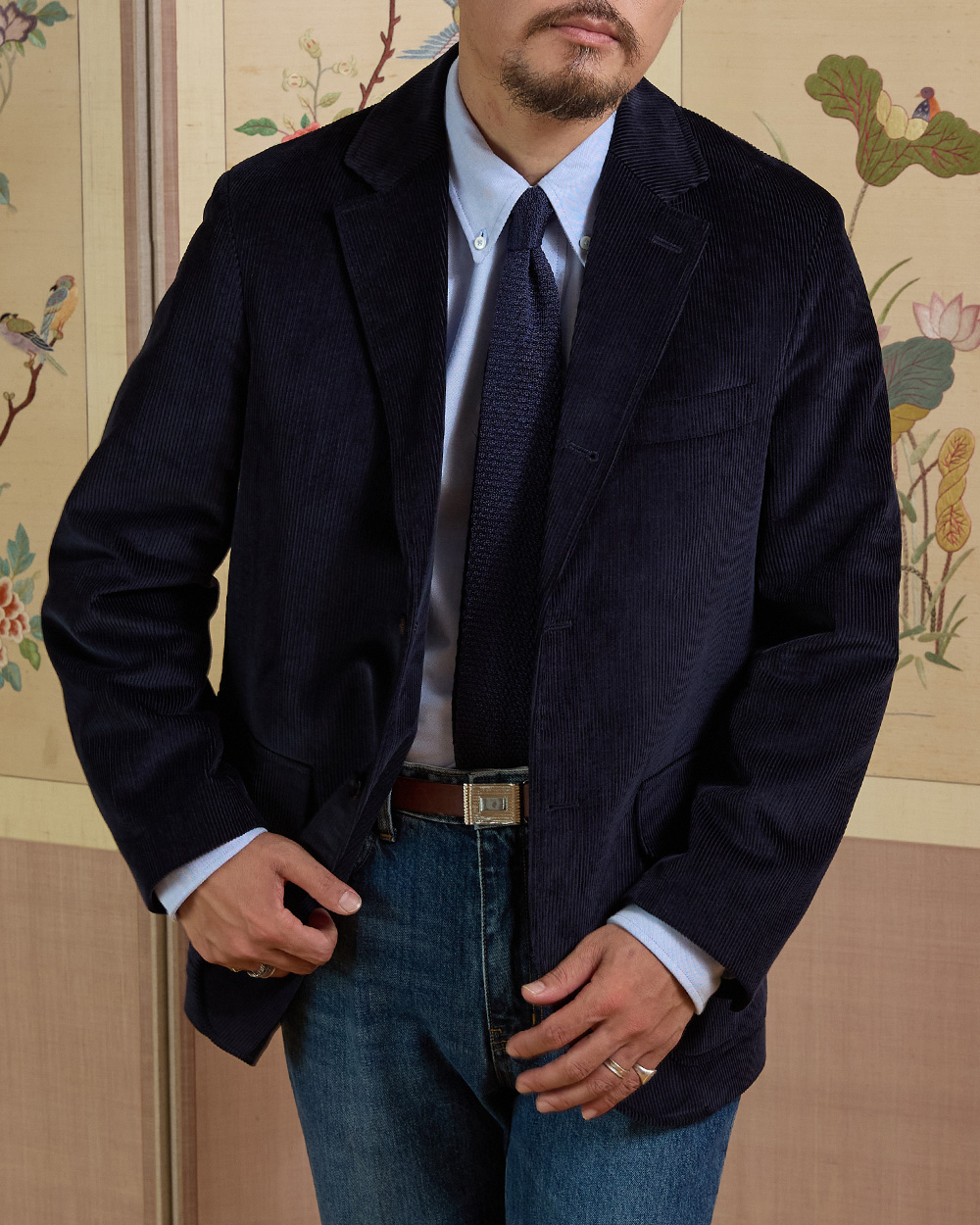
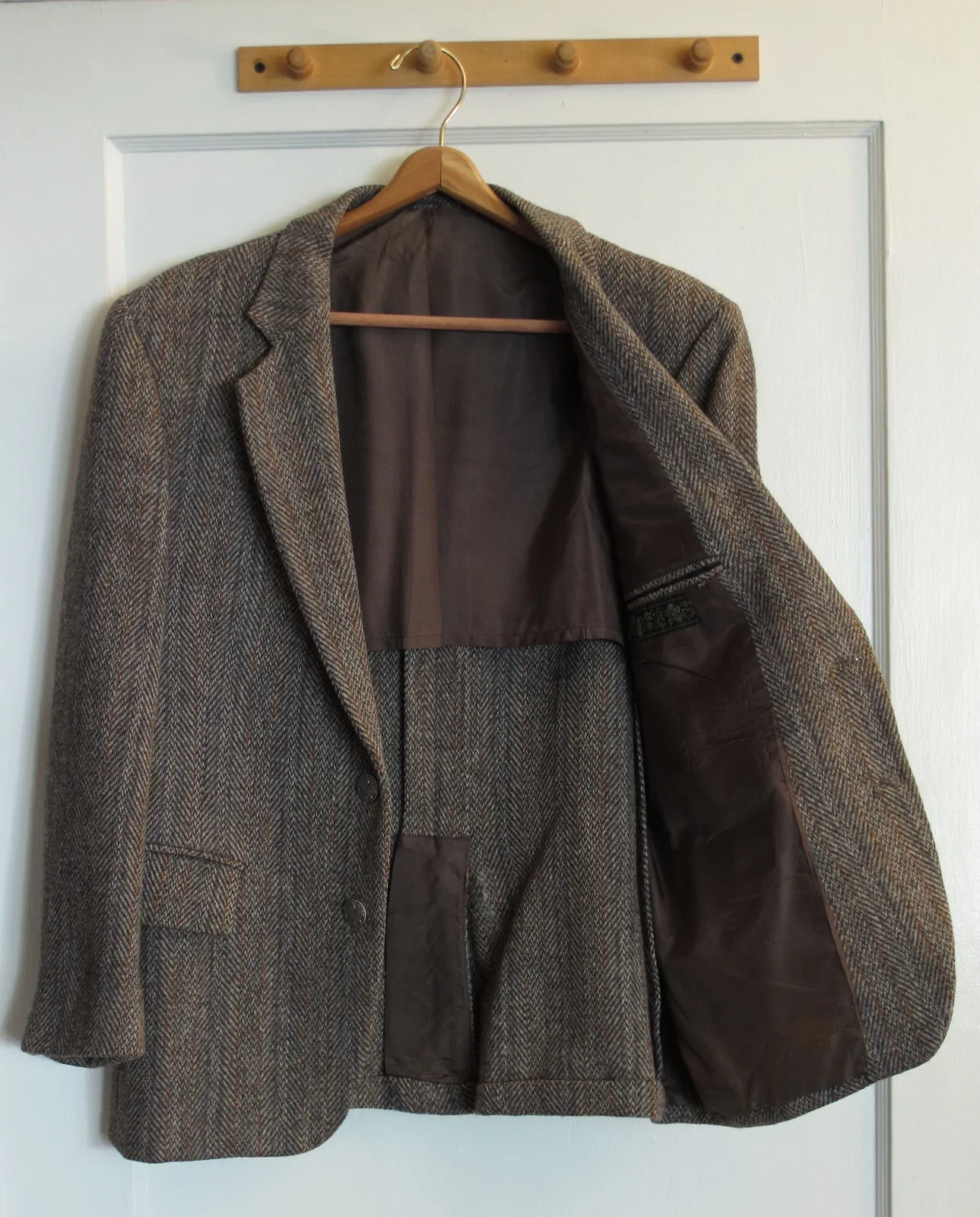
Lining. Three options. Fully lined — the standard American Trad construction. Anchors the silhouette, blocks the cloth’s interior texture from catching on the shirt, adds warmth. The default for tweed sport coats and the construction Renacts uses across the Gun Club and Glen Check lines. Half-lined — Italian-influenced; only the upper body is lined, lower half left open for breathability. Common on hopsack and lighter spring/autumn jackets. Unlined — summer-weight linen and casual cotton sport jackets, where the absence of lining is the point.
Sport Coat Fabrics: The Eight Worth Owning
Tweed is the autumn-and-winter sport coat default. Heavy, often flecked with multiple colors of yarn, woven from coarser wool. The two named tweeds Trad customers should know: Harris Tweed (handwoven on the Outer Hebrides since 1846, certified since 1909) and Donegal Tweed (woven in County Donegal, characterized by its colored neps — small dots of contrasting yarn).
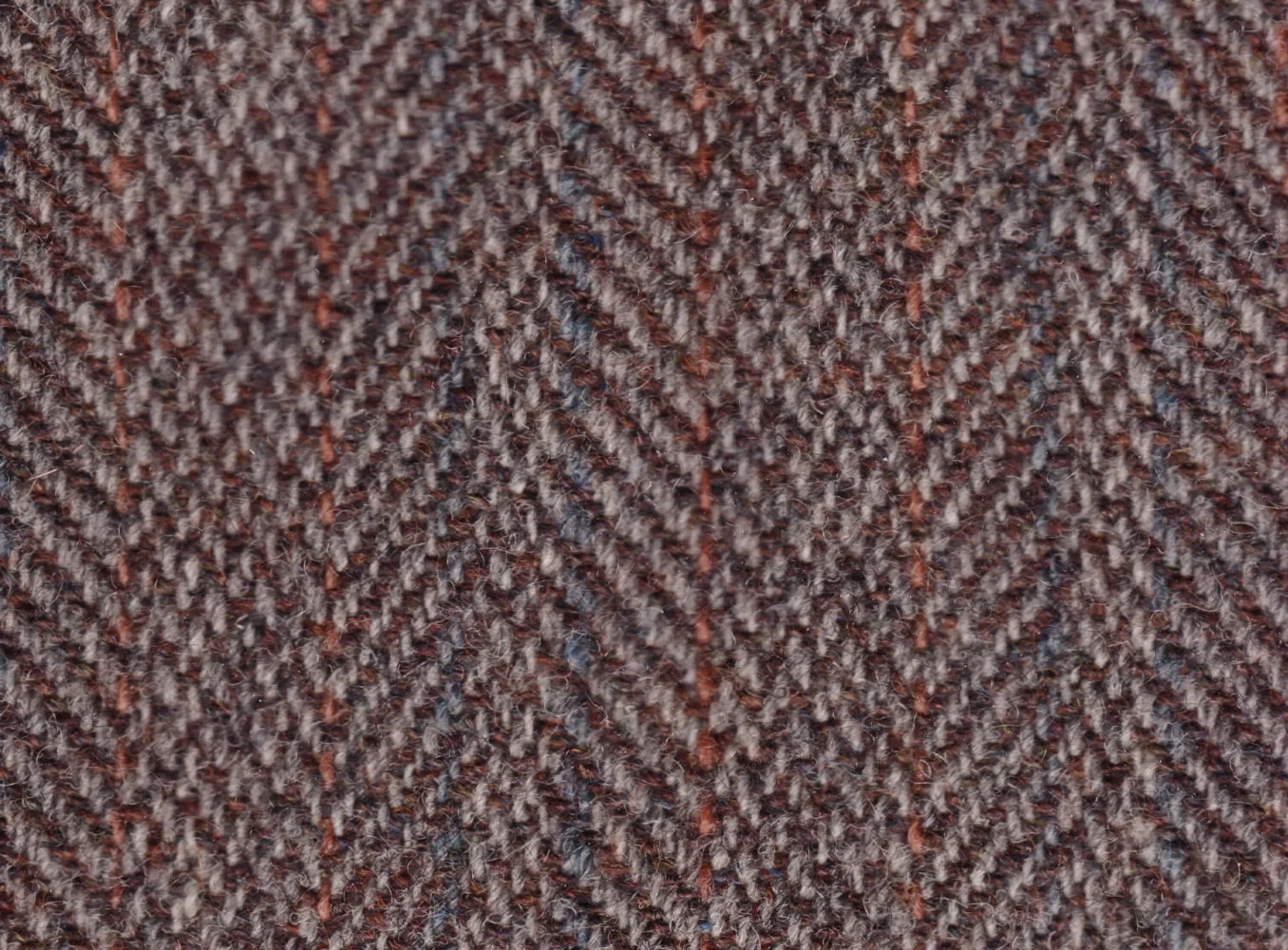
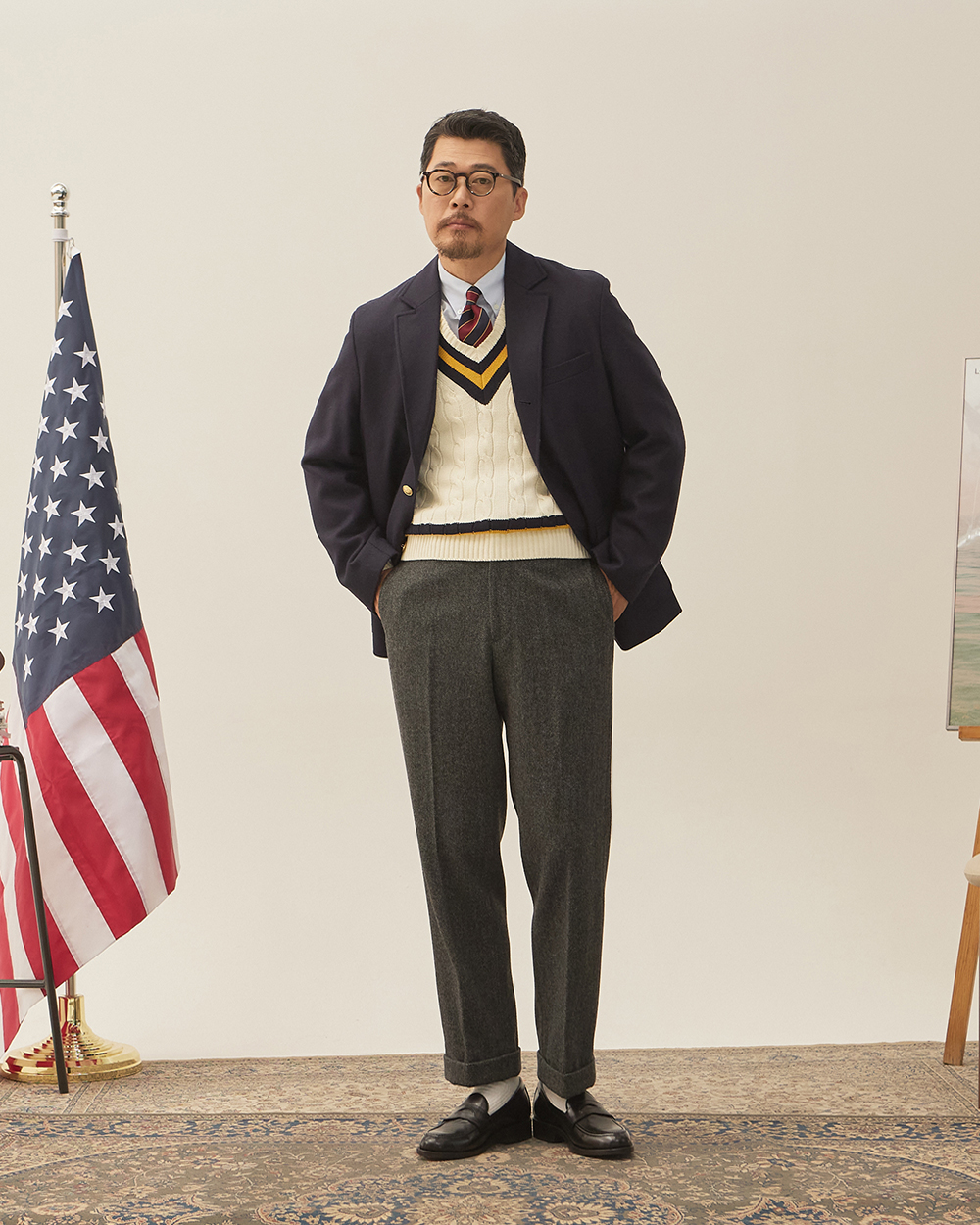
Hopsack is the sport coat’s three-season answer. An open basketweave construction in worsted wool, lighter than tweed, more breathable, more elegant. Most American Trad customers own a navy hopsack as a blazer (with metal buttons) and a hopsack pattern (glen check, gun club) as a sport coat. Pair hopsack with grey flannel for autumn or with tropical wool for late spring.
Herringbone is technically a weave (broken twill in V-shapes) rather than a fabric — most tweeds are herringbone unless otherwise specified. The pattern is fine enough to read as ‘textured solid’ from across the room, specific enough to register as a sport coat up close. Grey herringbone tweed is the single most versatile sport coat in the Trad wardrobe.
Flannel is occasionally cut as a sport coat — usually charcoal, navy, or grey — but flannel sport coats overlap with blazer territory. If you want one solid jacket and one patterned jacket, the solid is the blazer; the flannel sport coat is a duplicate slot. Linen sport coats earn a slot for summer (high-twist tropical-weight wool also does the job, more durably). Solid cotton garment-washed jackets — including Renacts’s own Garment Washed Sports Jacket — fall outside the strict Trad sport coat definition; they are closer to soft cotton suits or casual sport setups, sharing the construction philosophy without the patterned-cloth identity.
Corduroy
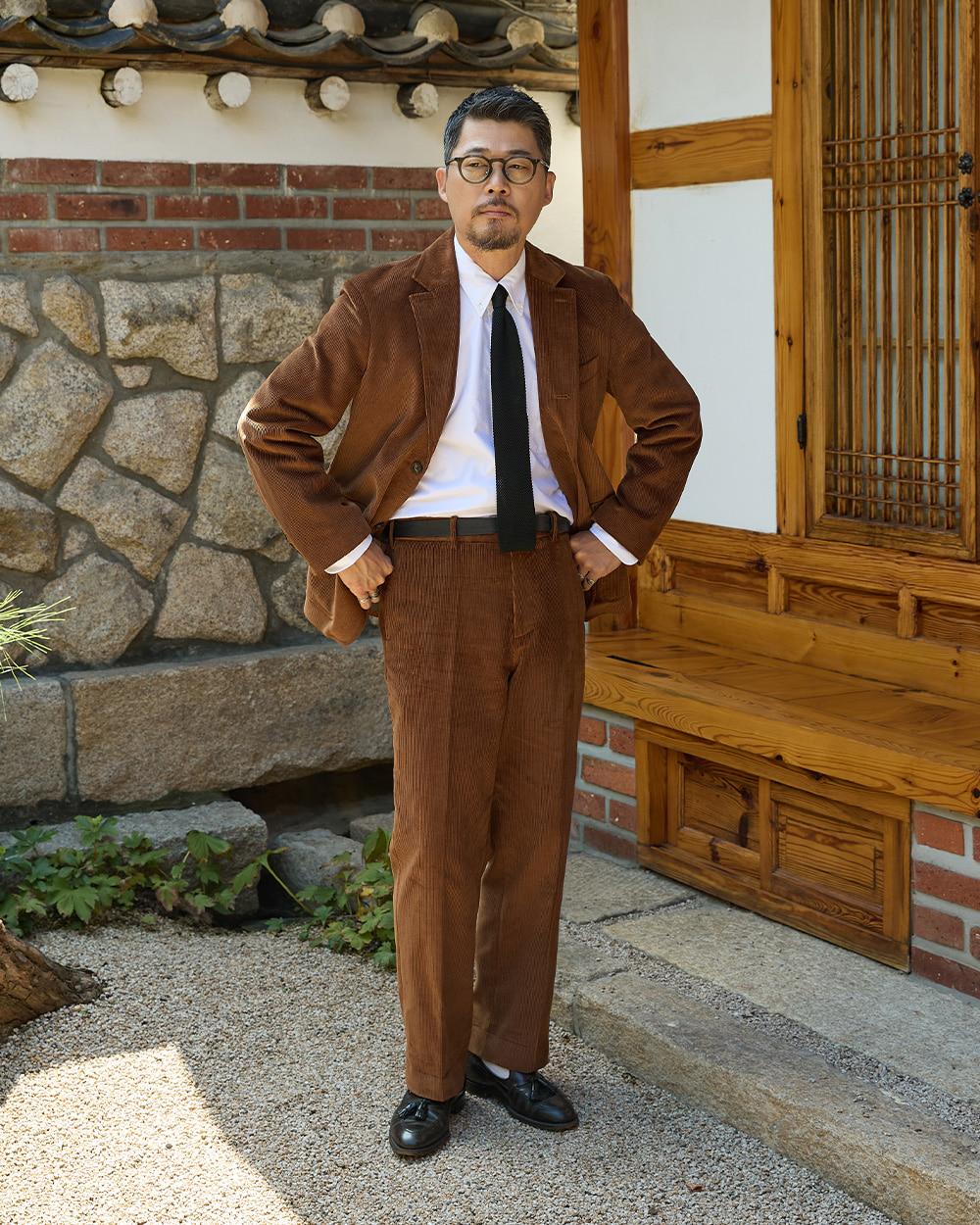
Corduroy is the fabric the Trad canon keeps under-rating, and I’ll be blunt: that’s a mistake. It’s the only cloth that reads rugged and academic at the same time.
The number that matters is the wale count — how many ridges per inch. Eight-wale is wide, casual, and photographs beautifully. Fourteen-wale is fine, dressier, and closer to flannel in feel.
Go wide. A fine-wale corduroy jacket just looks like a slightly odd wool one.
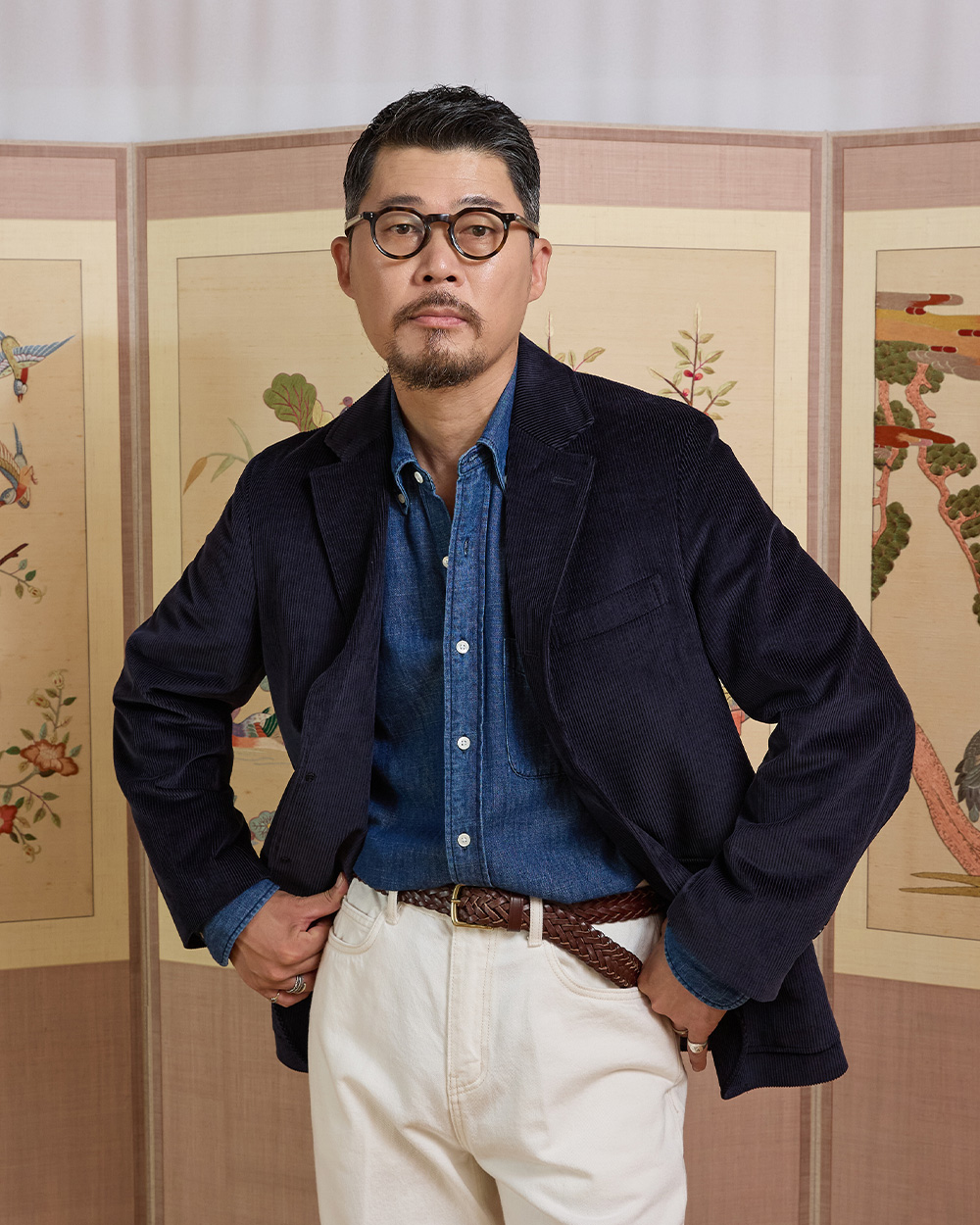
Corduroy also survives the one thing tweed can’t: an overheated Seoul interior. It breathes better than 14-oz Donegal and doesn’t hold cigarette smoke the same way.
Renacts cuts theirs in navy and tobacco brown, both with matching trousers — so it works as a jacket in September and a country suit in December.
Linen
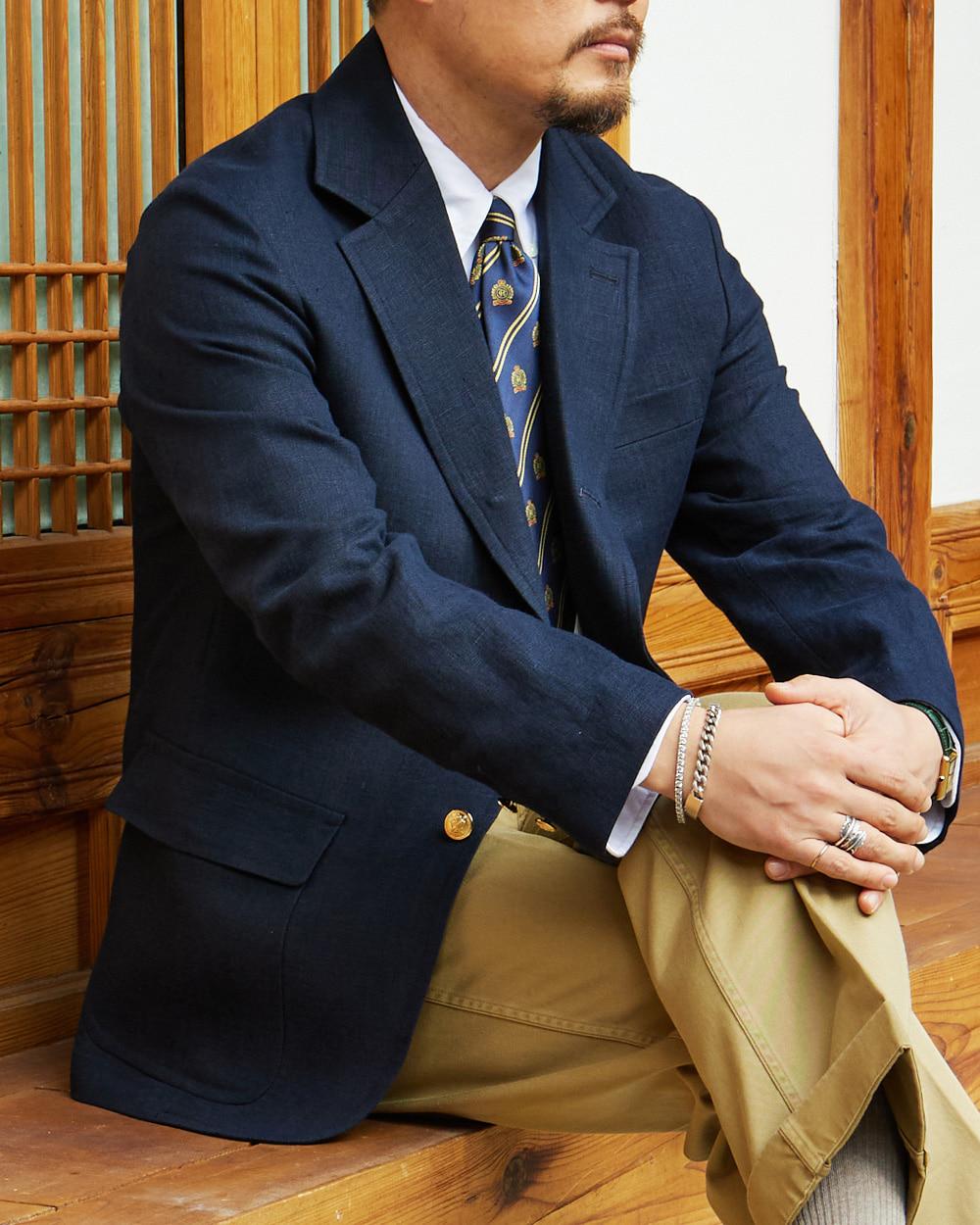
Linen wrinkles. That’s not a defect to be managed — it’s the entire point, and anyone selling you wrinkle-free linen is selling you a blend.
Look for slub: the thick-and-thin irregularity in the yarn. It’s what separates real linen from the flat, papery stuff.
Navy is the only linen sport coat colour I’d buy first. Cream and tan look wonderful in Positano and slightly costume-y on a Tuesday in Jongno.
Seersucker
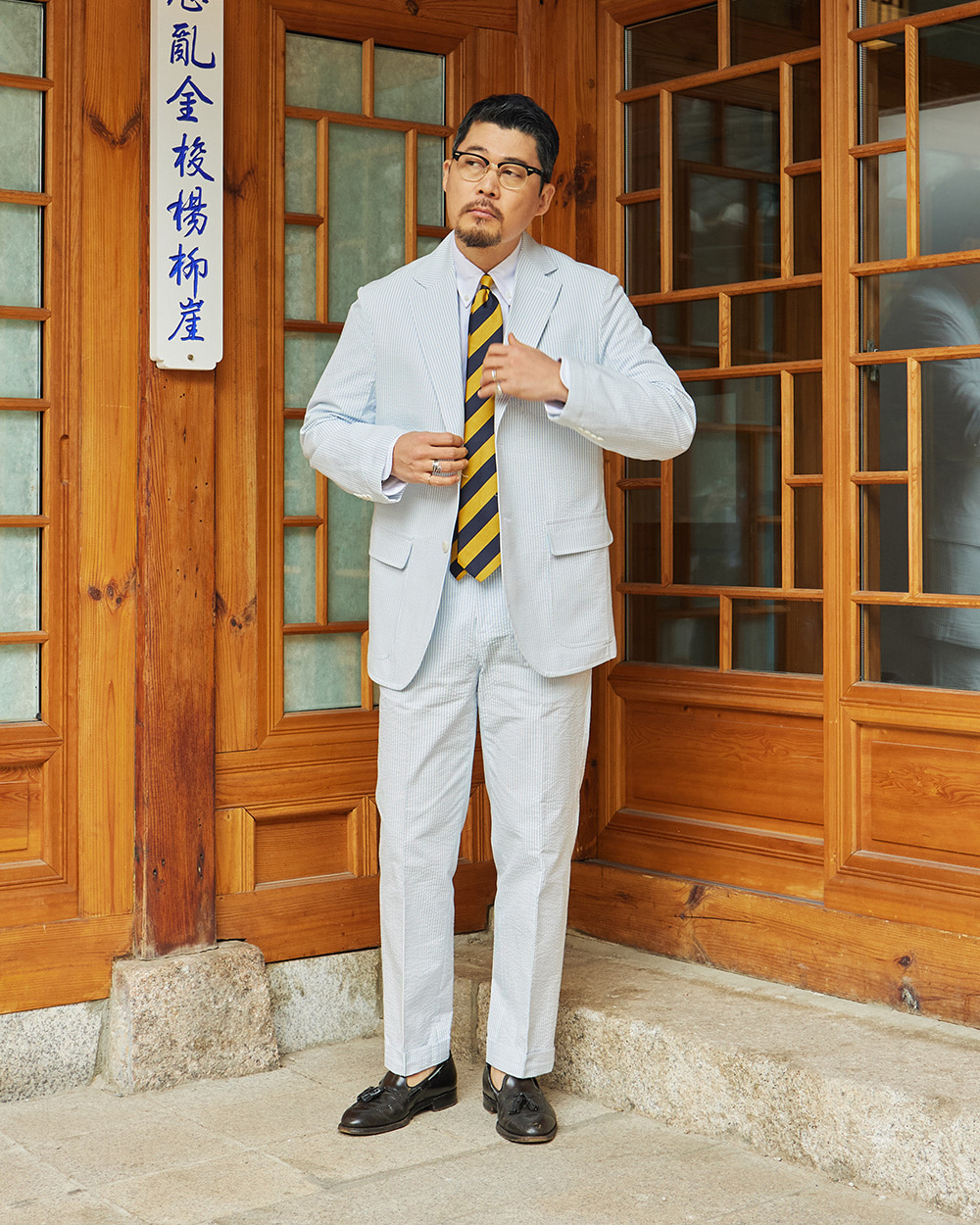
Seersucker is woven under slack tension, so some threads pucker and the cloth stands off the skin. That air gap is the whole technology.
It’s the most casual thing you can still call tailoring. In Seoul’s July it’s also about the only honest answer.
One rule: stripes only. Solid seersucker defeats the point and looks like a hospital uniform.
Tartan Wool
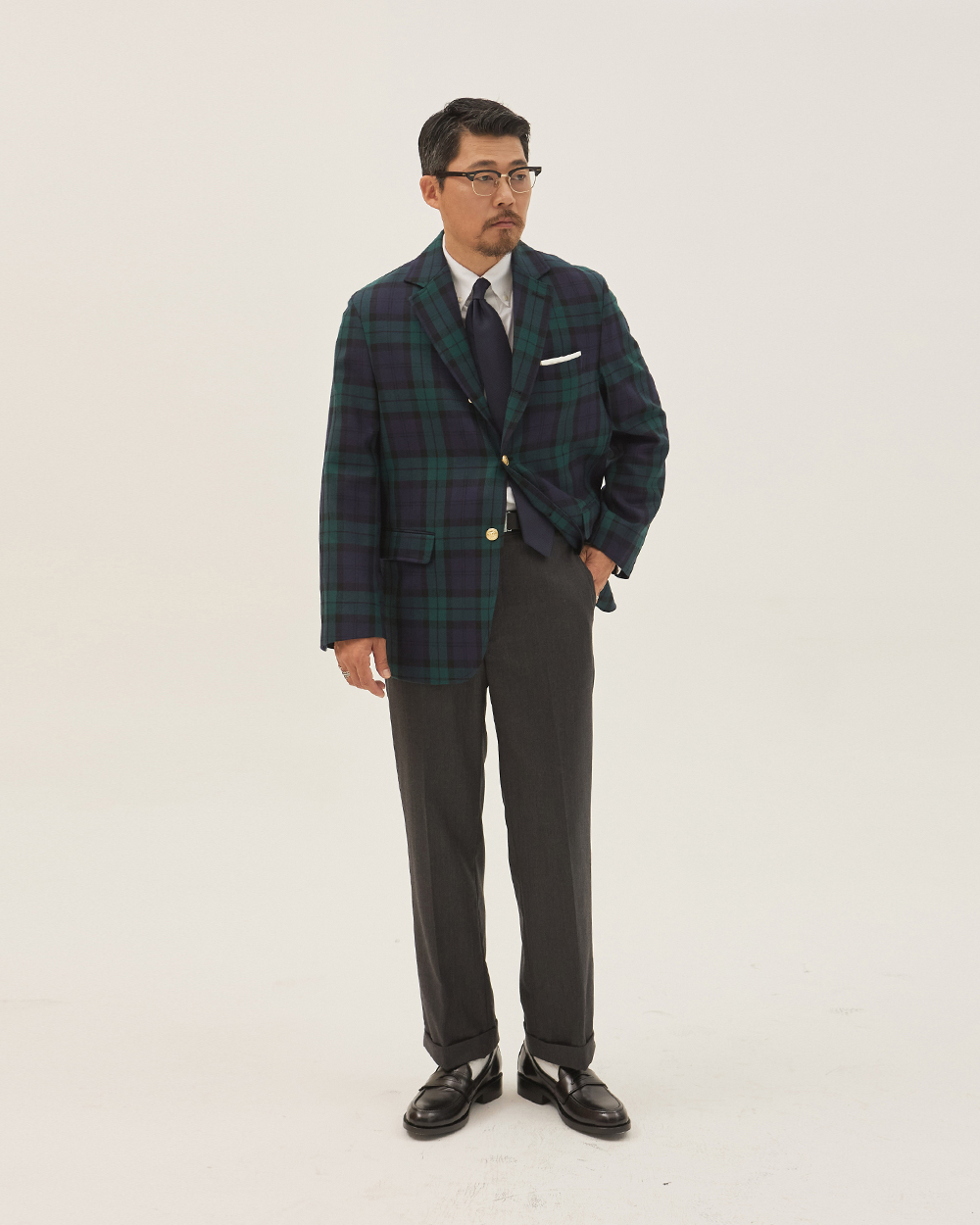
Tartan is the loudest jacket in the Trad wardrobe, so pick the quiet one. Black Watch — the 42nd Highland Regiment sett, navy and green and black — reads almost as a solid from across a room.
Then it resolves into a check when someone gets close. That’s the trick no other pattern pulls off.
Wear it with grey flannel. Not with another pattern, not with denim, and please not in December with anything red.
Patterns: Glen Check, Gun Club, Houndstooth, Solid
The four patterns a Trad sport coat customer rotates through. Each has a season-and-formality register.
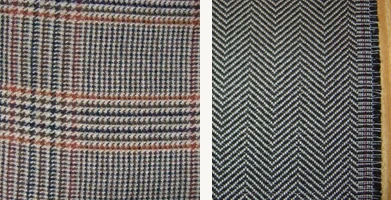
Glen plaid (also called Glenurquhart check) is the most reliable Trad sport coat pattern. The 19th-century Scottish estate weave layers small and large checks; from across the room it reads as textured grey, up close as quietly patterned. Pair glen plaid sport coat with navy chinos, grey flannel, or trad denim. Year-round wearability if cut in lightweight worsted; winter-only in heavy tweed.
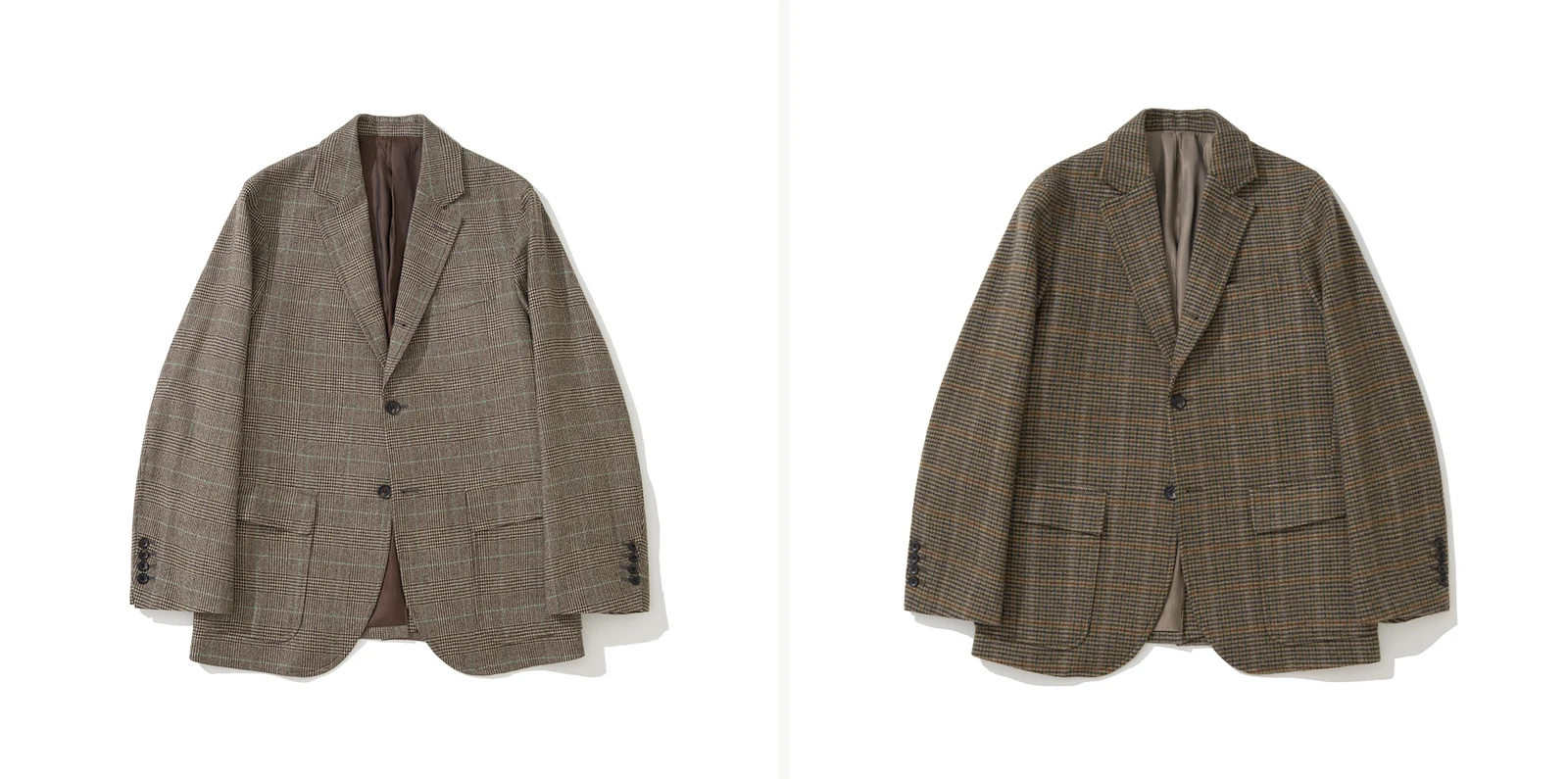
Gun club is the multi-color check pattern — small overcheck of typically four colors (often olive, brown, rust, cream) on a tweed base. Named for the American gun clubs of the 1870s. Bolder than glen plaid, more autumn-specific, but the most emphatic American-Trad sport coat pattern when you want the jacket to do the work. (Note: Renacts retails their Glen Check and Gun Club jackets — patterned wool, fully lined, natural shoulder, 3/2 roll — as 블레이저 to match Korean menswear convention. They are Trad sport coats by every Anglo-American measure; only the retail label localizes. See the Naming Convention note further below.)
Houndstooth (and its larger cousin shepherd’s check) is the small-checkerboard pattern — typically black-and-white or brown-and-cream. Houndstooth sport coats lean more academic than country, more European than American Trad. Earn shelf space if you already own glen plaid and gun club; otherwise skip.
Solid (or near-solid herringbone) is the fourth slot. A grey or brown herringbone tweed reads as essentially solid from the right viewing distance. The solid sport coat is the most flexible across pairings — works with every trouser color the Trad wardrobe carries, every shirt and knit.
Sport Coat Fabric Weight by Season
Most fabric guides skip the numbers. Here they are — cloth weight in ounces per yard, which is what a tailor or a good product page will actually tell you.
| Cloth | Weight | Season in Seoul | Register |
|---|---|---|---|
| Seersucker | 6–8 oz | Jul–Aug | The most casual tailoring there is |
| Linen | 7–12 oz | Jun–Aug | Casual, wrinkles included. Heavier Irish linen at 11–12 oz still breathes because the weave is open, and it carries into the shoulder seasons |
| Tropical wool | 7–9 oz | Jun–Sep | Summer’s dressy option |
| Hopsack | 9–11 oz | Apr–May, Sep–Oct | The three-season workhorse |
| Worsted glen check | 9–11 oz | Apr–May, Sep–Oct | Dressiest pattern you can own |
| Light tweed | 11–12 oz | Oct–Nov, Mar | Everyday autumn |
| Corduroy | 11–14 oz | Oct–Feb | Rugged, academic |
| Tartan wool | 11–13 oz | Nov–Jan | Loud on purpose |
| Flannel | 12–14 oz | Nov–Feb | Soft and warm without bulk |
| Heavy tweed (Harris, Donegal) | 13–16 oz | Dec–Feb | The coldest six weeks |
Here’s the part the American and British guides get wrong for us. Seoul’s shoulder seasons are short — roughly six weeks in spring, six in autumn.
That means hopsack, the cloth every Western guide calls a three-season workhorse, gets about twelve wearable weeks a year here. New England gives it twenty.
So if you’re building a Seoul rotation and can only buy two jackets, don’t start with hopsack. Start at the ends: one 11-oz tweed and one 8-oz linen. Those cover the months we actually have.
One more rule worth stealing from the tailors: match the weight of the jacket to the weight of the trousers. A 14-oz tweed jacket over thin cotton chinos looks seasonally confused, and everyone can see it even if they can’t name it.
Autumn-winter (October-March in Seoul): heavy tweed (12-14 oz), patterned (gun club, large glen plaid), warmer tones (rust, olive, brown, charcoal). Pair with grey flannel, tobacco corduroy, or dark indigo trad denim. Wool tie or knit tie if any.
Shoulder seasons (April, late September): lighter tweed (9-11 oz) or hopsack pattern (glen plaid in worsted, small overcheck). Cooler tones (grey, navy mix, blue herringbone). Pair with chinos, mid-weight wool, or cat-brushed trad denim.
Late spring through early autumn (May-September): summer-weight cloth — high-twist tropical wool, linen, linen-and-silk blends. Lighter colors (cream, tan, light grey, summer navy). The summer sport coat is the hardest to do well — easy to read as too-casual or too-tropical-resort. Stay in solid or very small pattern; let the cloth speak.
For a deeper look at the two patterns that carry most Trad sport coats, see Glen Check and Gun Club: The Trad Pattern Essentials.
A Note on Naming — Why Korean Menswear Calls Sport Coats “Blazers”
The terminology in this guide follows Anglo-American convention: sport coat for the patterned odd jacket discussed above, blazer for solid (especially navy with metal buttons), suit jacket for matched. Korean menswear retail mostly collapses these distinctions — 블레이저 is used as a near-universal label for any tailored jacket, sport coat included. The Korean market is more familiar with the simpler nomenclature, and forcing English-style distinctions in retail copy creates customer friction without commercial benefit.
The same localization pattern runs through Korean chino color naming. Anglo-American technical beige is retailed in Korea as 카키; technical khaki / olive is retailed as 올리브. The reason: 카키 is the Korean common-use word for an off-white tan trouser, while the technical English khaki (which actually denotes the duller olive-tan of military origin) doesn’t have a clean Korean equivalent that the average customer reaches for. The labels are localized to match what customers search and recognize; the products themselves are unchanged.
Renacts applies this consistently across the catalog. The Gun Club and Glen Check jackets are, by every Anglo-American measure, Trad sport coats — patterned wool, fully lined, natural shoulder, 3/2 roll, undarted front, side vents. Renacts retails them as 블레이저 to match Korean convention.
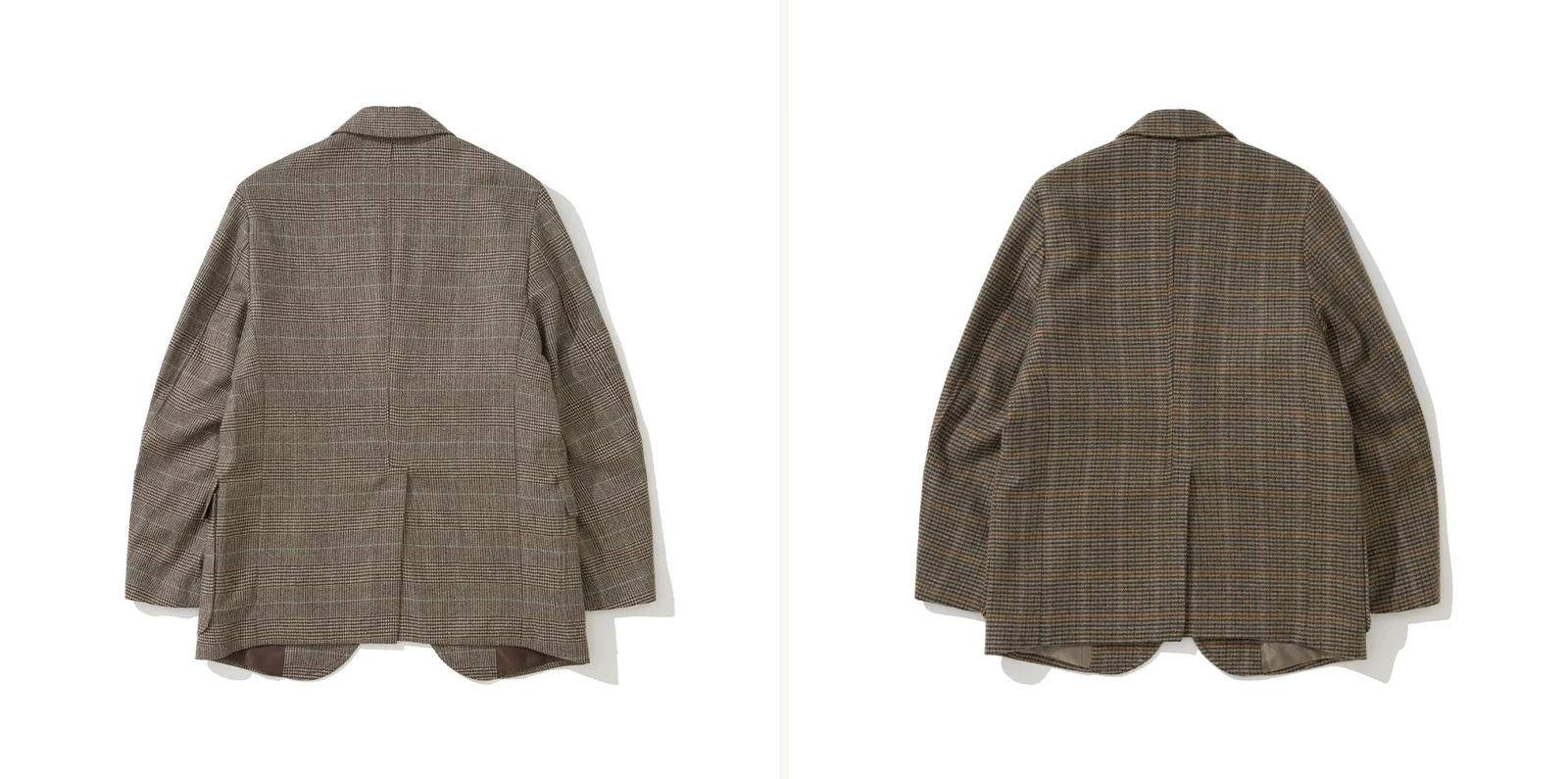
By contrast, the Garment Washed Sports Jacket ($275, available in Navy and Khaki) is a different category — solid 100% cotton, garment-washed, sold as a setup with matching trousers. It’s closer to a soft cotton suit or casual sport setup than a Trad sport coat as defined above. The ‘Sports Jacket’ in that name describes the silhouette philosophy (natural shoulder, patch pockets, undarted front) rather than the cloth category — the cloth is solid cotton, which falls outside the patterned-wool definition that anchors the sport coat tradition.
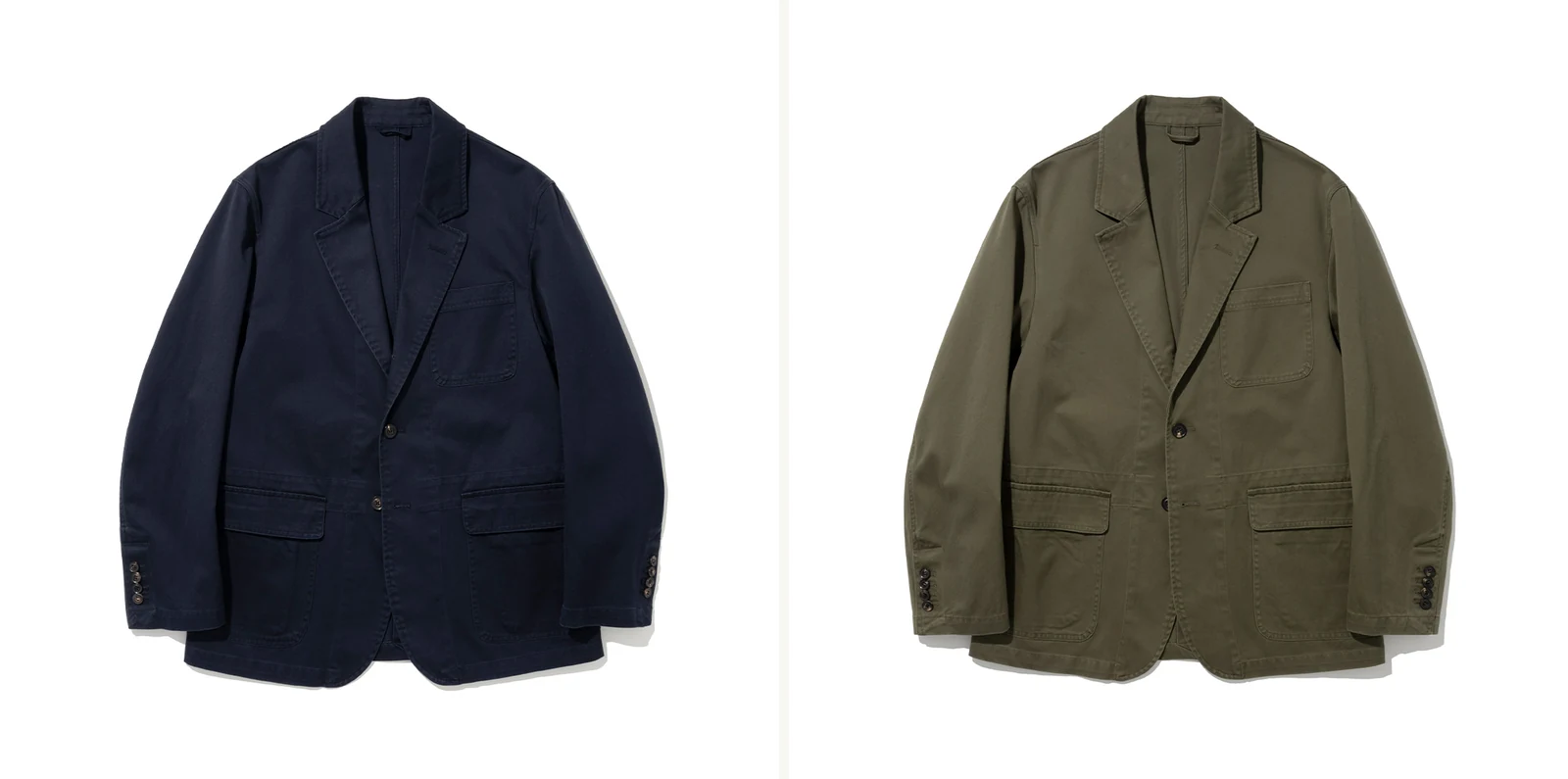
Renacts also retails a herringbone tweed suit — jacket and matching trouser sold as a set — which sits in a third Trad category: a matched country suit whose jacket functions as a Trad sport coat when worn separately. By the strict definition above the cloth is sport coat fabric (herringbone tweed, fully lined, natural shoulder, patch pockets, 3/2 roll, undarted front, side vents) — only the matched-trouser configuration distinguishes it from a standalone sport coat. American Trad tradition explicitly permits — and historically encourages — breaking such country suits to wear the jacket with grey flannel, trad denim, or chinos. Buy the matched suit; wear it three ways. This is the same dual-use tradition that produced the sport coat itself at Sandringham in the 1860s, only in retail packaging.
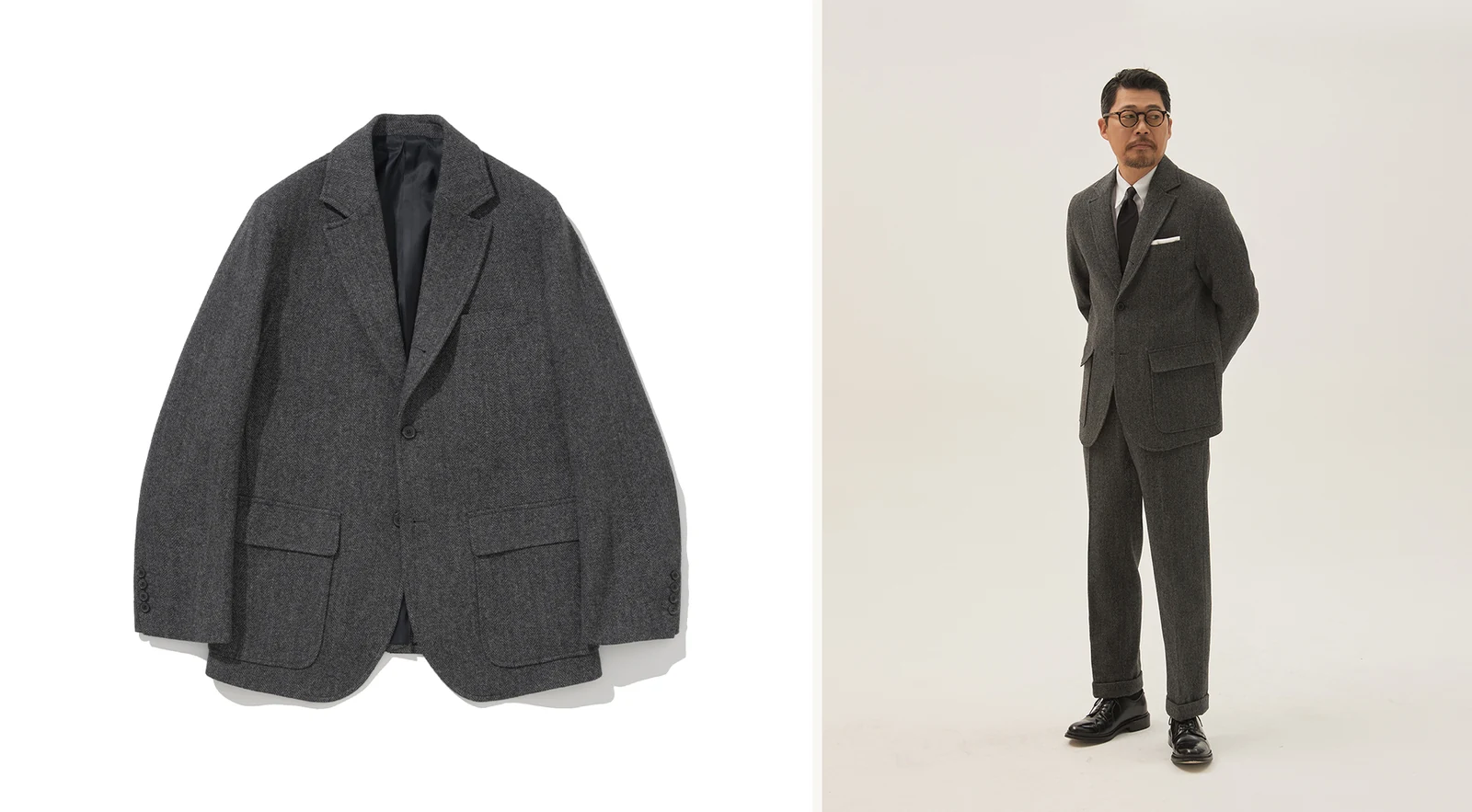
The reader’s takeaway. If a Korean menswear retailer labels something 블레이저 with patterned wool (gun club, glen check, herringbone, houndstooth) and fully lined construction, you’re looking at a Trad sport coat by the definition in this guide. If they label something Sports Jacket with solid cotton and setup-capable finishing, you’re looking at a soft cotton suit — same construction DNA, different cloth category. The naming is localized; the construction philosophy is the same American Trad lineage either way. When in doubt, look at the cloth: pattern and texture make the sport coat, regardless of what the retail label says.
Why It Still Matters in Seoul
The sport coat in Seoul fills the gap between the sack suit (too formal for most days) and the OCBD-and-knit register (too casual for some). It’s the jacket you wear walking from Hannam-dong to a restaurant, sitting on a Cheongdam patio in late September, attending an opening at Gentlemen’s House on a Saturday afternoon. Cut from glen plaid in worsted wool, September; from Donegal tweed, December; from linen-and-silk blend, July.
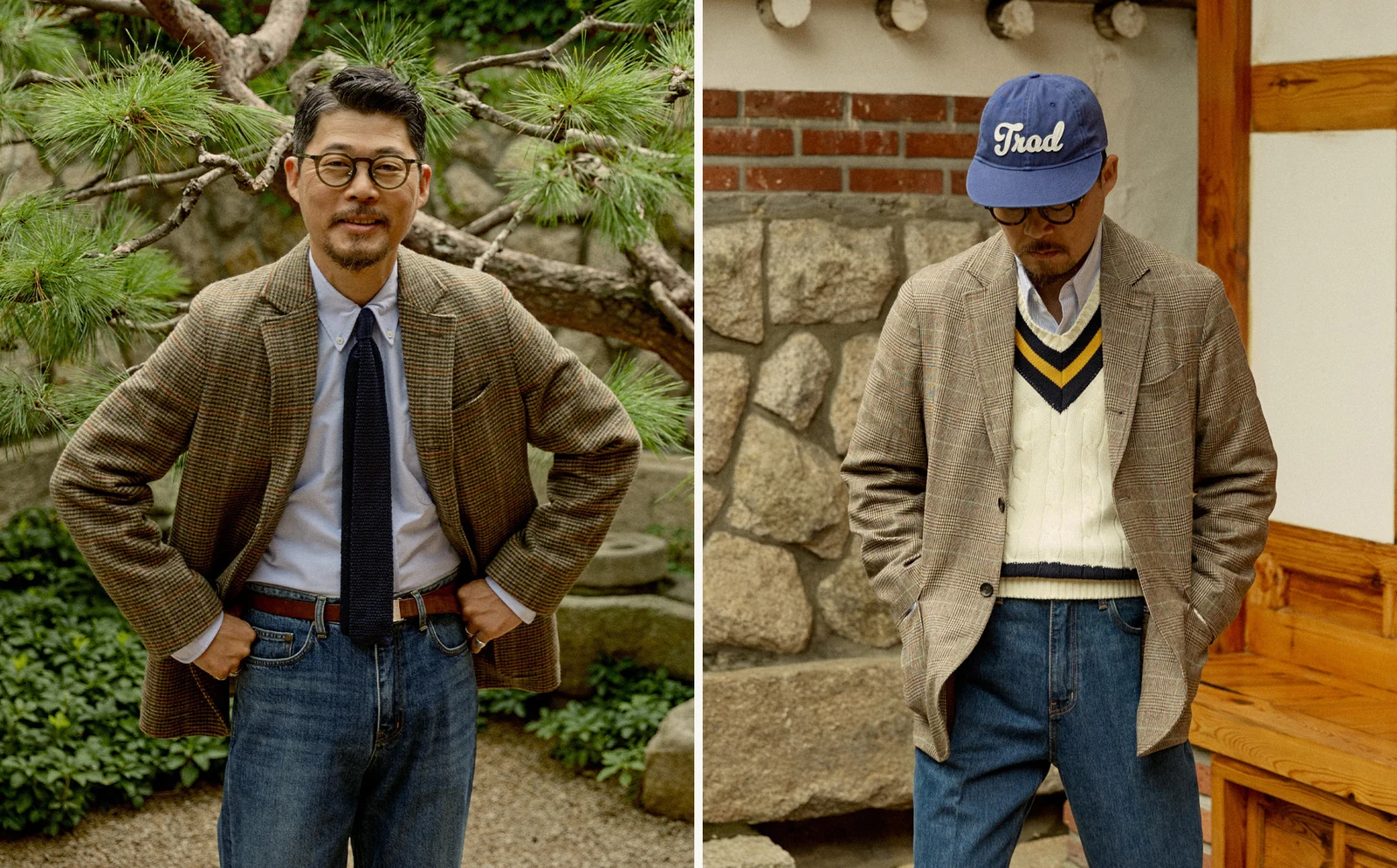
The construction Korean tailors and the American Trad register share — natural shoulder, 3/2 roll, undarted front, side vents, patch pockets — comes naturally to Korean tailoring traditions as well, which is why properly-cut Korean sport coats wear well in Trad register. Buy fewer, cloth-correct, country-origin-correct jackets rather than many fashion-cycle ones; rotate them across the seasons; let them age. A good tweed sport coat takes ten years to look right and lasts another twenty.
For pairings, see Blazer + Chinos: The Smart-Casual Formula (the rules translate), the Trad Denim Lookbook (sport coat sections), and How to Wear a Sack Suit (the construction parallel). For the broader Ivy register start at the Ivy Style Guide.
Sport Coat Fabrics: Common Questions
What is the best all-round sport coat fabric?
Hopsack, if you only own one. The open basketweave breathes in spring, holds shape in autumn, and resists wrinkling on a plane. In Seoul specifically, a light tweed earns more wears — our shoulder seasons are too short to reward a three-season cloth.
What weight should a sport coat be?
Between 9 and 12 oz covers most of the year. Under 9 oz is summer-only. Over 13 oz is a December jacket that will cook you indoors.
Is a wool sport coat good year-round?
Only if you name the wool. Tropical wool at 8 oz is a summer cloth; flannel at 13 oz is a winter one. Both are wool, and they share almost nothing.
What is the difference between a sport coat and a blazer?
Cloth and buttons. A blazer is solid — usually navy — with metal buttons. A sport coat is patterned or textured with horn, corozo or leather buttons. Same construction, different job.
Which sport coat patterns are safest?
Glen check first, herringbone second. Both read as textured solids from a distance, so they pair with almost any trouser. Gun club and tartan are the ones that need the rest of the outfit to stay quiet.
Can you wear a sport coat with jeans?
Yes, with two conditions. The denim should be dark and unwashed-looking, and the jacket should be textured — tweed, corduroy, hopsack. A smooth worsted jacket over jeans reads as an orphaned suit coat.
Is corduroy too casual for a sport coat?
No, and this is the most under-used cloth in the category. Wide-wale corduroy in navy or tobacco sits exactly where a Trad sport coat should — dressier than a field jacket, easier than a suit.
How many sport coats do you actually need?
Three covers a Korean year. One light tweed or glen check for autumn and spring, one heavier tweed or corduroy for winter, one linen for summer. Buy those before you buy a fourth pattern.