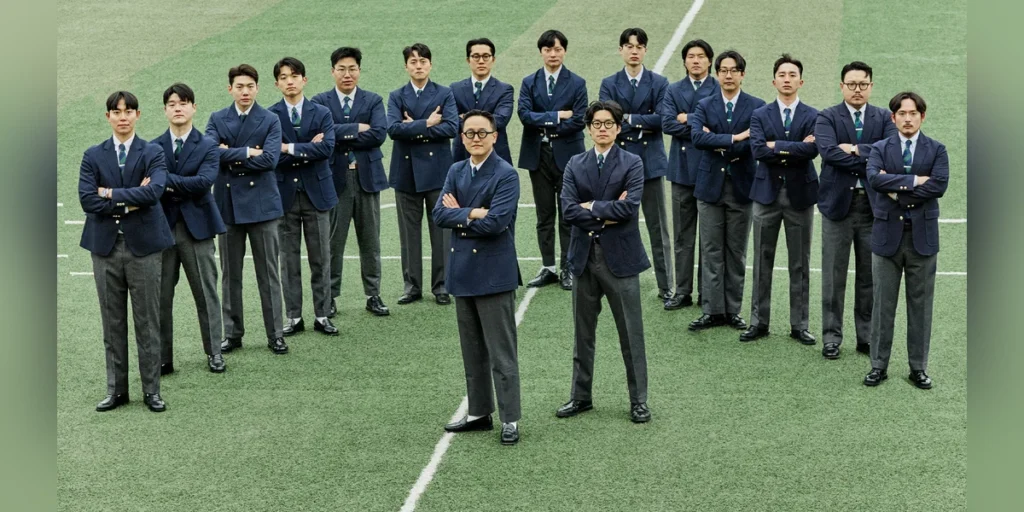
Gentlemens Football Club — Sound Mind Sound Body, the 4th Campaign at Guri Wangsuk
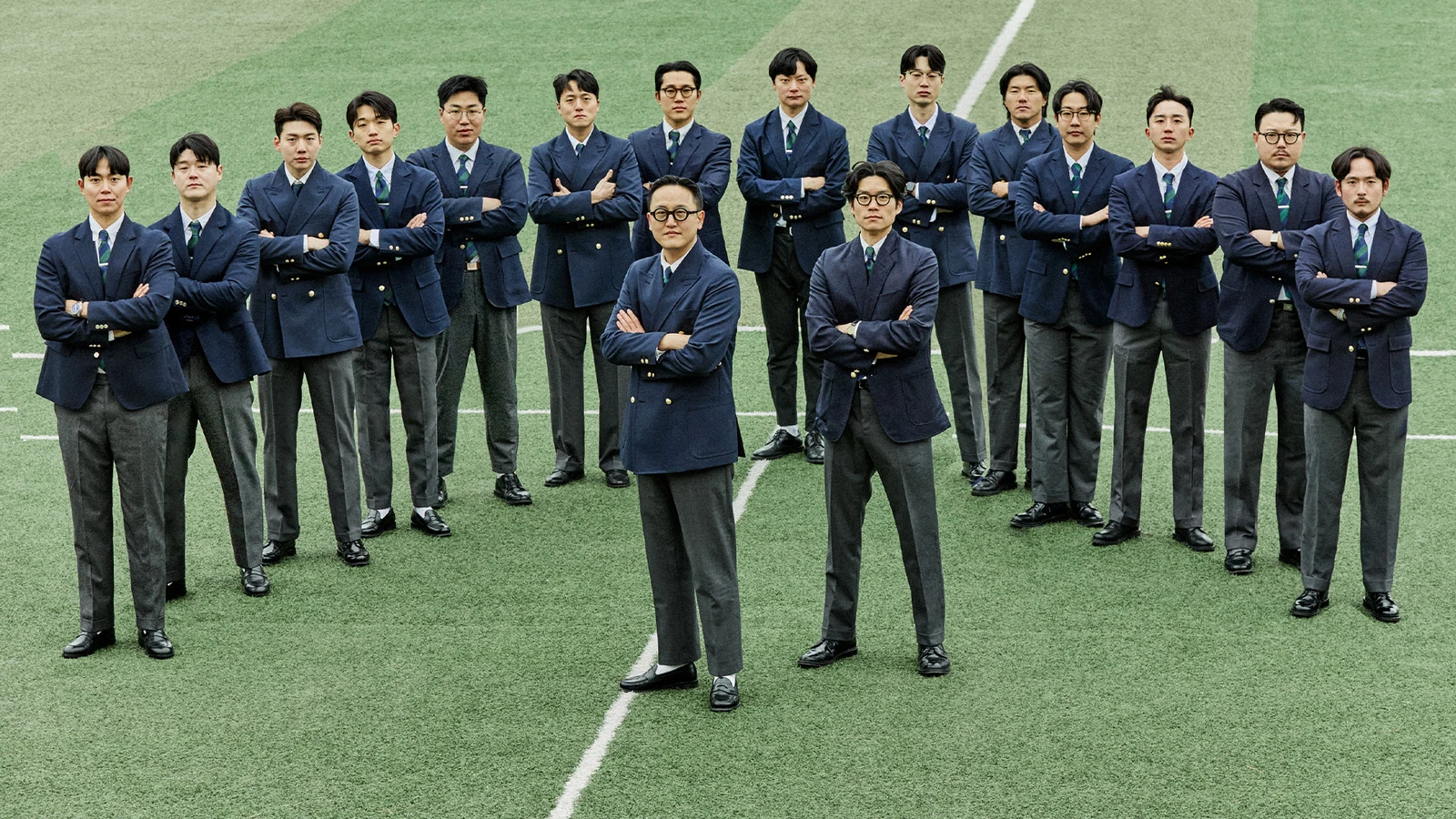
The Gentlemens Football Club is the athletic half of SEOUL Traditional‘s lifestyle — what we do when we put down the tailoring and pick up a ball. The fourth campaign editorial, “Sound Mind Sound Body,” was photographed in the autumn of 2024 at Guri Wangsuk Sports Park, the public ground east of Seoul where our team actually trains and plays. The Gentlemens Football Club: sixteen members. One match. One sentence from Juvenal that English-language schools have repeated for two thousand years.
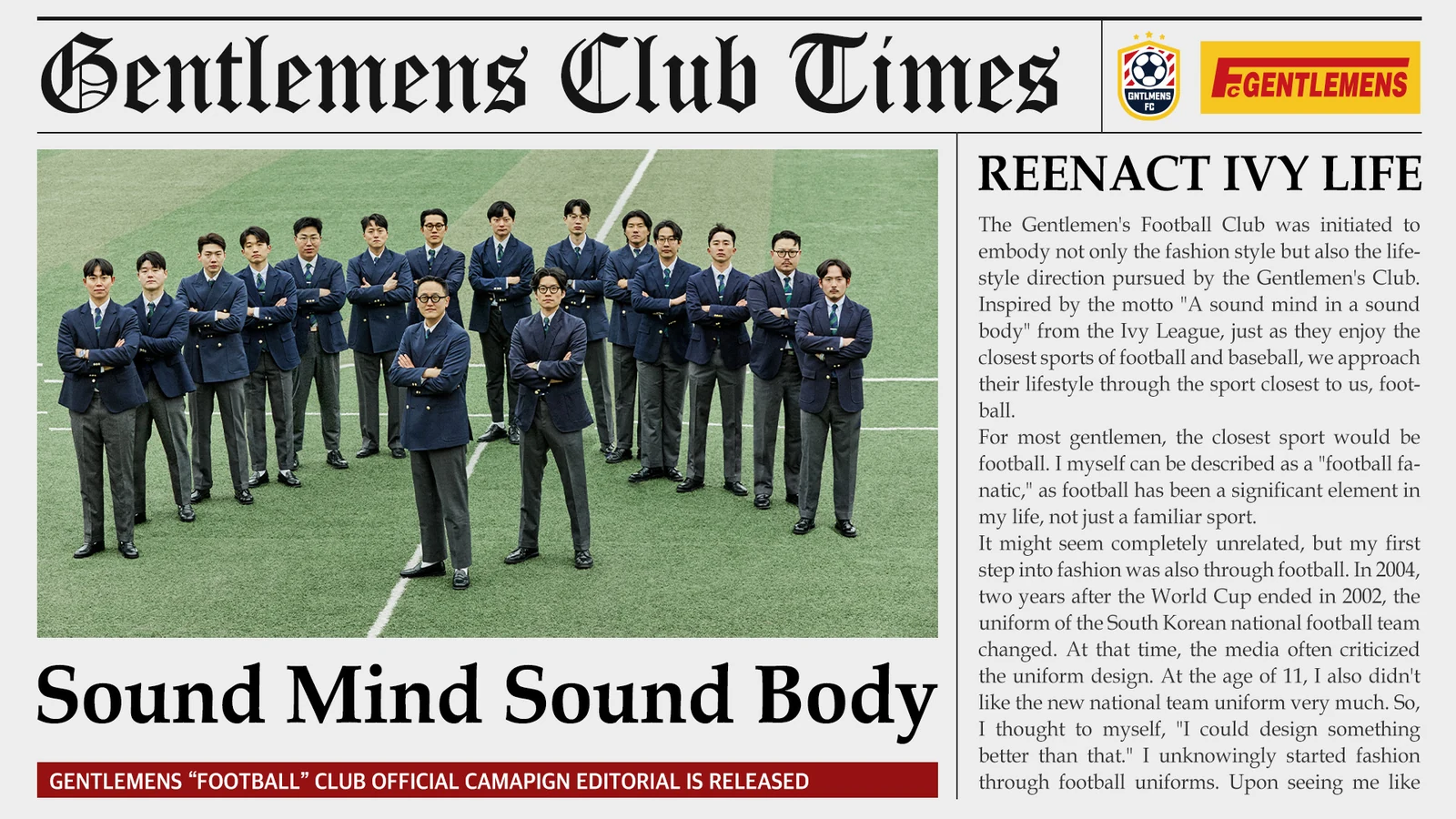
What follows is the campaign editorial in long form: the Latin motto we borrowed, the Ivy League athletic tradition we reinterpreted, the cultural translation we made (American football and baseball became Korean football for us), and the personal story that put me — Lee Tae-yeol, captain of the club, founder of Renacts — on a football field with a tailored blazer in the first place.
Mens Sana in Corpore Sano — The Latin Motto We Borrowed
Mens sana in corpore sano — “a sound mind in a sound body” — comes from the Roman satirist Juvenal, specifically Satires 10.356, written sometime in the early 2nd century CE. Juvenal was being sardonic — his original line argued that praying for a sound mind in a sound body was about all an honest man could reasonably ask of the gods, given the venality of public life. The phrase outlived its irony. By the nineteenth century, English boarding schools and American colleges had stripped Juvenal’s cynicism off and adopted the Latin sentence as a wholesale endorsement of athletic education. Schools like Eton, Harrow, Yale, Princeton, and Harvard built extensive sporting programmes on the premise that intellectual and physical cultivation were halves of the same project.
The Ivy League athletic tradition that grew from this motto is older than most American sports as we know them. The first intercollegiate football match in the United States — Princeton versus Rutgers, played 6 November 1869 — was a soccer-style game (the modern American football diverged in the 1880s under Walter Camp at Yale). The Yale–Harvard Boat Race began in 1852, predating both intercollegiate football and the founding of the NCAA. American collegiate baseball traces to the same mid-nineteenth-century moment. The point — repeated in school mottos, gymnasium architecture, and admissions essays for generations — was that the same students who read Greek, Latin, and rhetoric in the morning would row, run, throw, and tackle in the afternoon. Mens sana in corpore sano.
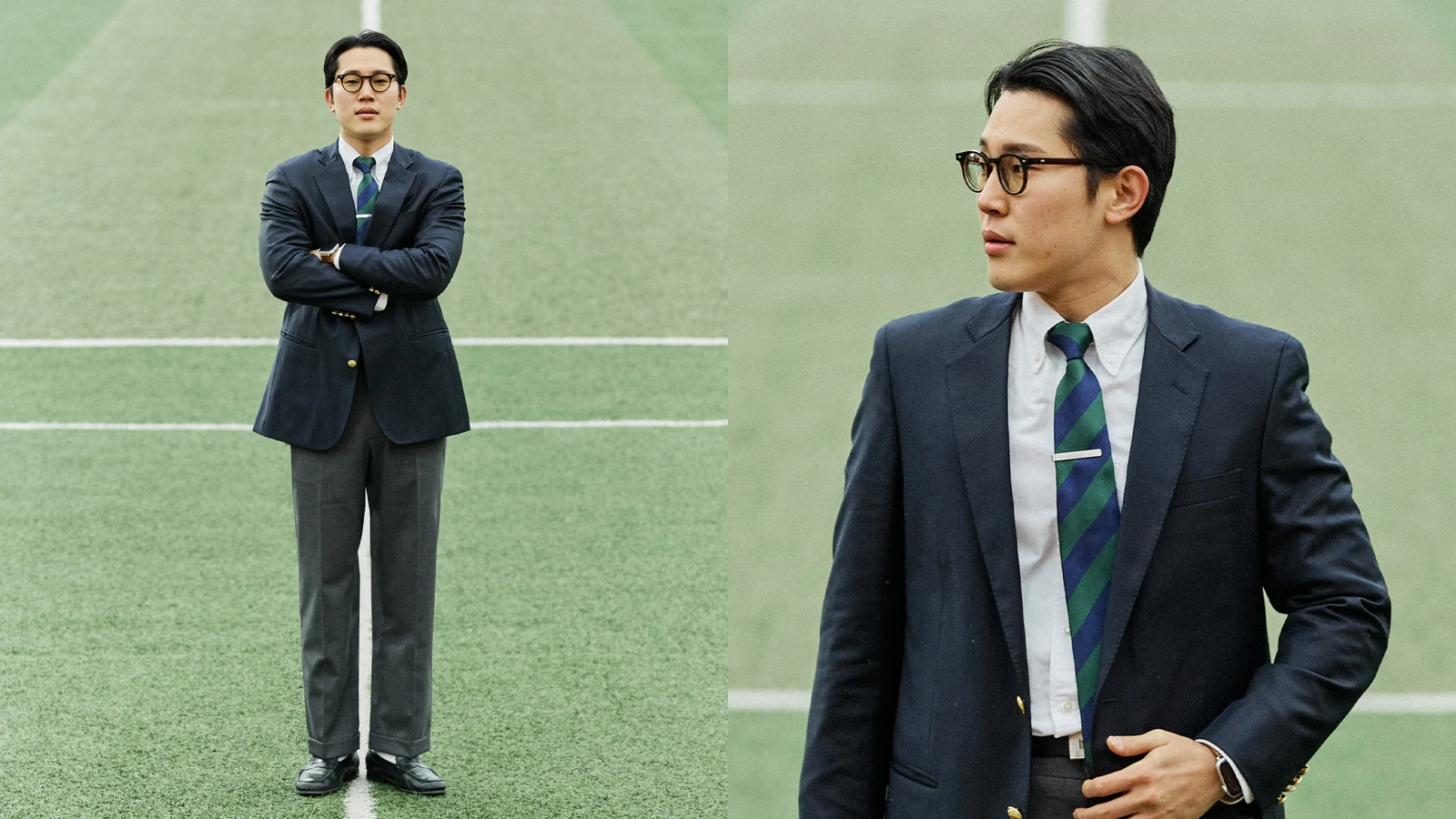
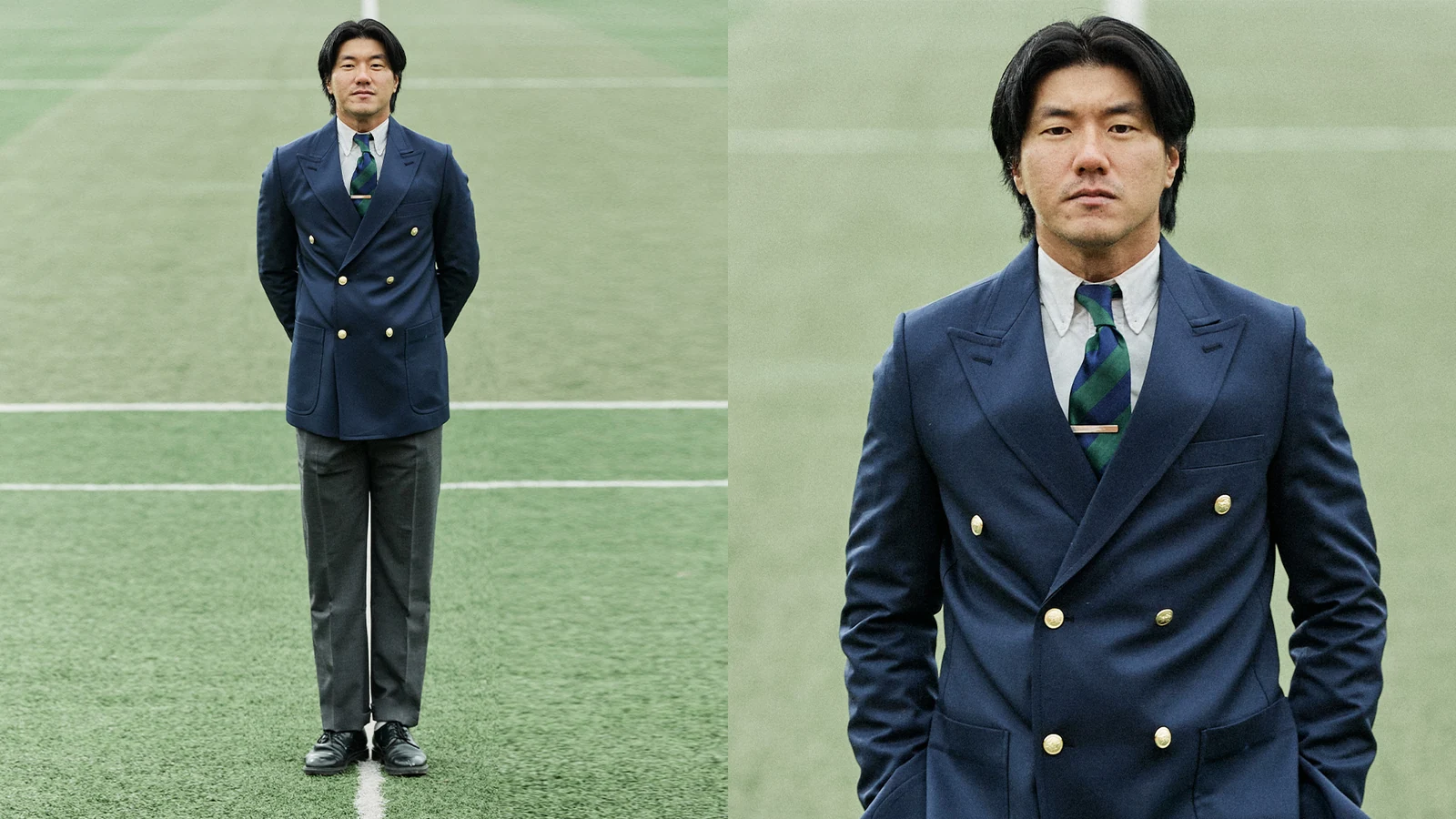
Our club takes this seriously enough to wear blazers to a football match. Not because the blazer is the kit — the kit is navy short-sleeve jersey, jersey shorts, navy socks; designed in-house at Renacts — but because the register that produced the motto (Yale 1860s, Princeton 1880s, prep schools across New England) produced the blazer too. Both come from the same ground. The Gentlemens Football Club wears the tailoring on the way in and the kit on the field, and the two registers stay continuous in our heads. Single-breasted navy hopsack, regimental ties, hand-welted leather — the match arrival kit.
Why Football, Why Korea — The Cultural Translation
The Ivy League athletic tradition runs primarily on three sports: American football, rowing, and baseball. None of these are the closest sport to most Korean men’s daily life. American football has almost no presence here outside niche fan communities. Rowing is functionally invisible. Baseball exists and is popular, but it lives in a different cultural register than weekend amateur play.
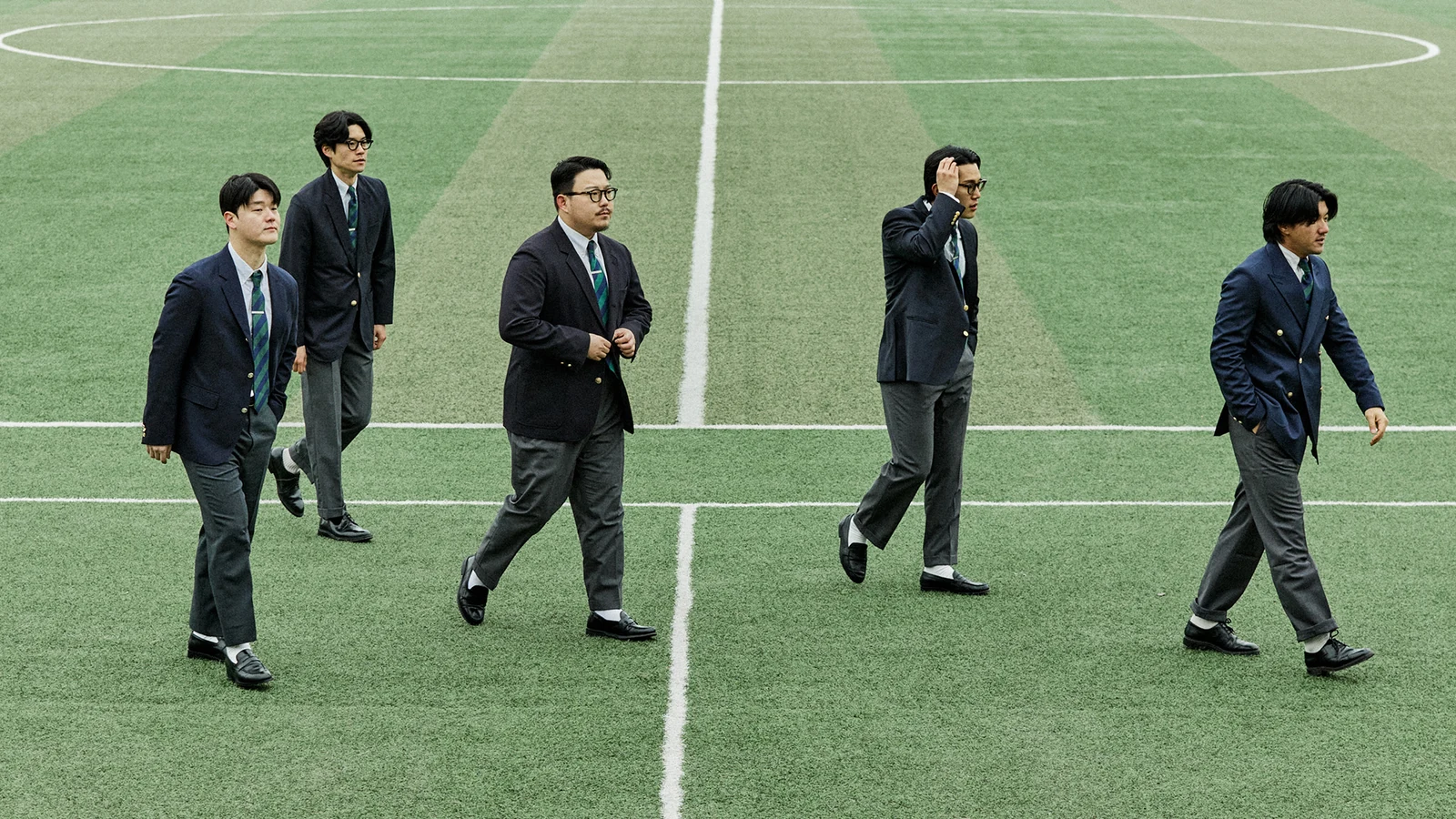
The closest sport to most Korean men is football. Sunday amateur leagues, school-team memories, the universal bond of the 2002 World Cup. If we were going to translate the Ivy League athletic tradition into a Korean register honestly — rather than cosplay an unfamiliar American sport — football was the only correct answer. The cultural translation is the work, not the betrayal. Korean Trad in clothing is the same project: borrow the American Trad register, render it in Korean retail and Korean weather and Korean weekend life, let the translation hold the philosophy intact while the specifics localise.
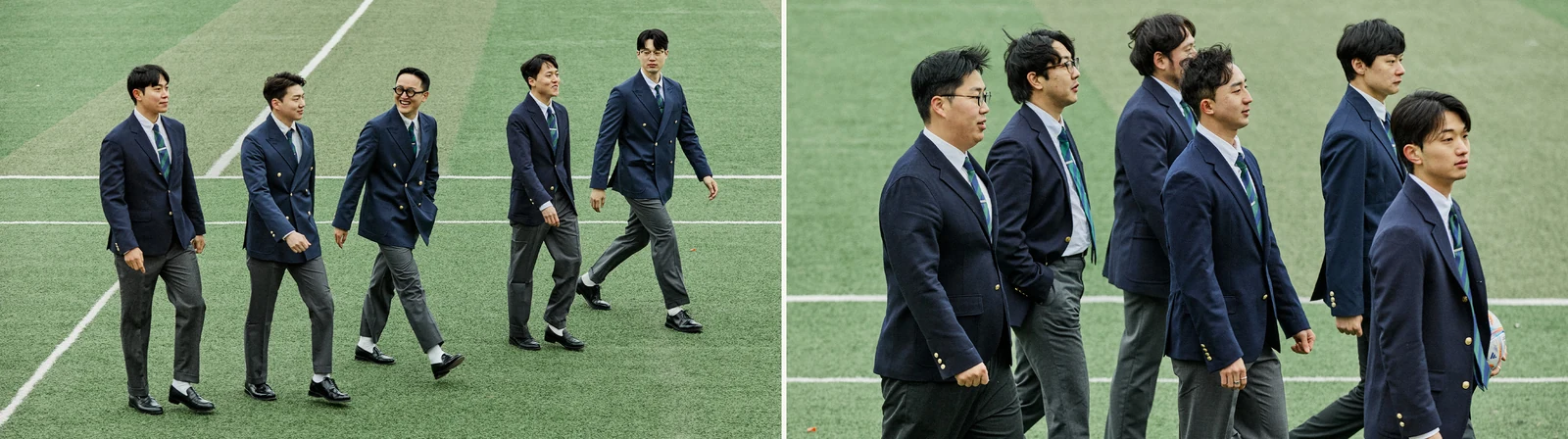
What gets preserved across the translation: the shared premise that physical and intellectual life inform each other; the school-tied register where teams form around shared education or trade rather than just talent; the long-form amateurism that prefers ten years of weekend play over one moment of professional brilliance. What the Gentlemens Football Club translates: the specific sport (American football → Korean football), the specific calendar (Saturday afternoons → Sunday mornings), the specific public ground at Guri Wangsuk rather than a private campus pitch.
The Captain’s Story — A Personal Note from Lee Tae-yeol
I should explain how a fashion brand founder ended up captaining a football club. The short answer is that football is what made me notice clothing in the first place.
The 2002 FIFA World Cup, jointly hosted by Korea and Japan, is a generational marker for everyone in this country who was old enough to remember it. South Korea reached the semifinals — an outcome no one had predicted and no one has matched since. I was nine. Two years later, in 2004, the Korean national team rolled out a new kit (Nike had been the official kit supplier since 1996). The design drew mixed press. I was eleven, watching a press segment about the new uniform criticism, and decided I preferred my own version of the kit. I went and got felt-tip pens and coloured pencils and drew my version of the new uniform on a piece of paper.
That was the first time I designed clothing. Or — more honestly — the first time I noticed that clothing could be designed at all, that the thing on the television was a choice someone had made and that other choices were possible. My father walked past me at the desk, looked over my shoulder, and said, almost casually: “This kid is going to be a fashion designer.” He didn’t mean it as a prediction. He meant it as a reading of what was visible on the page in front of him. Twenty years later I’m running a Trad menswear brand in Seoul. Strictly speaking, my father was wrong about the title — I don’t design from sketches the way he was imagining. But he was right that the road I was walking out of that moment ran through clothes.
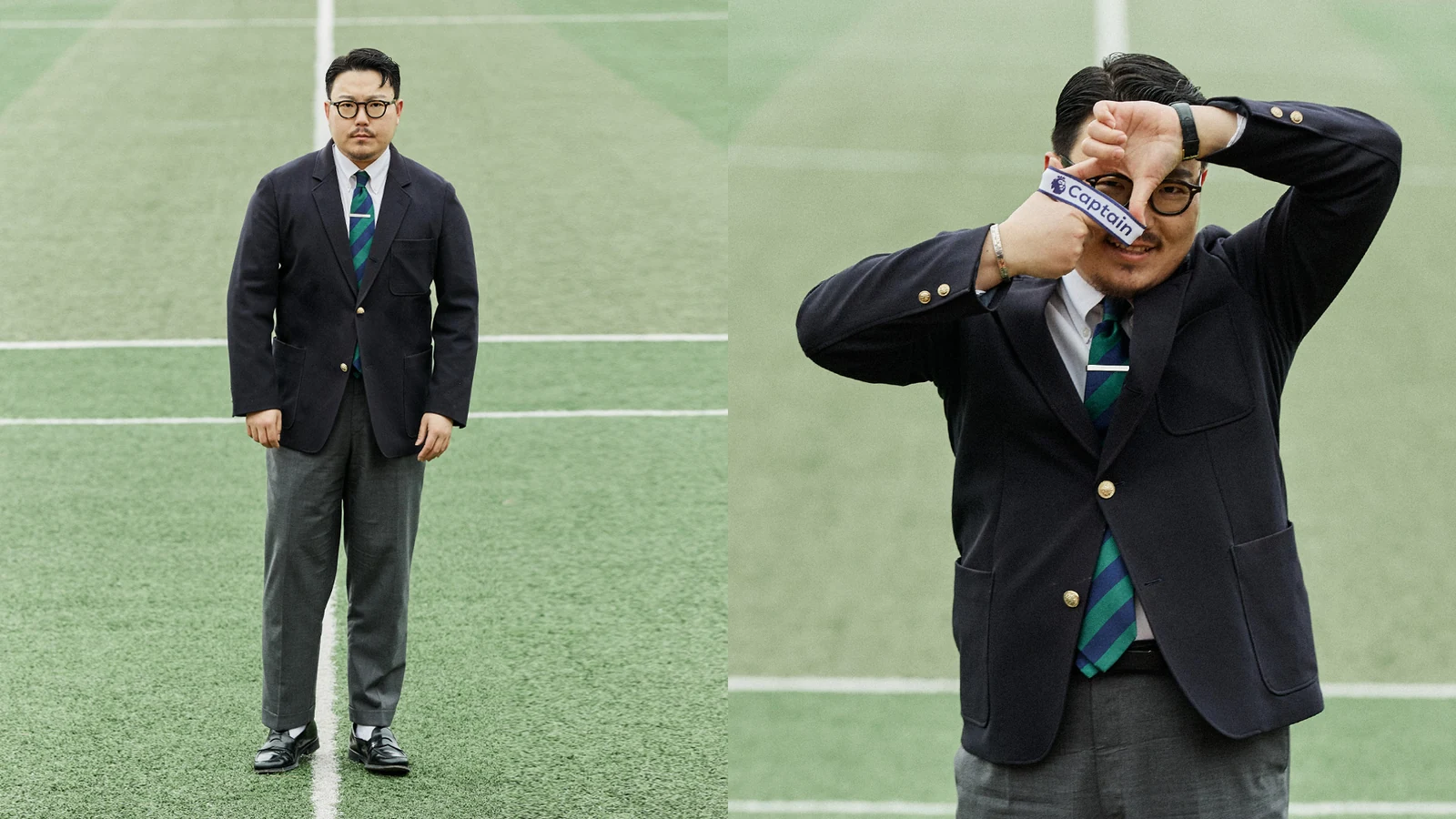
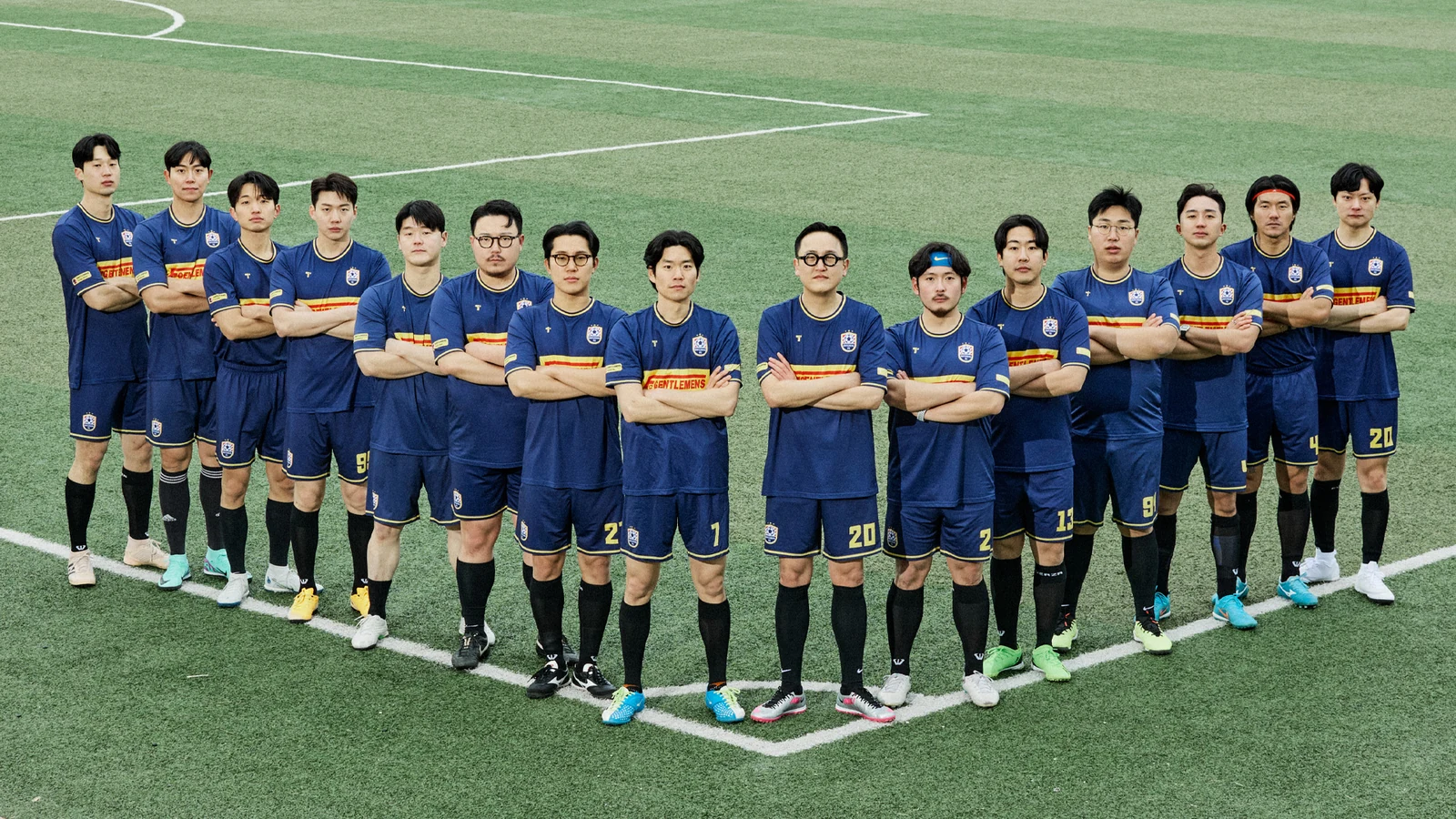
I never made it as a footballer. I tried. The fact that I ended up running a fashion brand instead of starting at centre-back somewhere in the K League is, in retrospect, merciful for everyone involved. But the through-line stayed. Football is still the sport closest to my body; clothing is still what I do for work. The Gentlemens Football Club is where the two finally meet — sixteen of us in tailoring on the way in, sixteen in club kit on the field, the same people, same ground, same project. The white captain’s armband on my right arm in the second photograph above is the visible signal of the role I get to play on match day.
The Team — Sixteen Members at Guri Wangsuk Sports Park
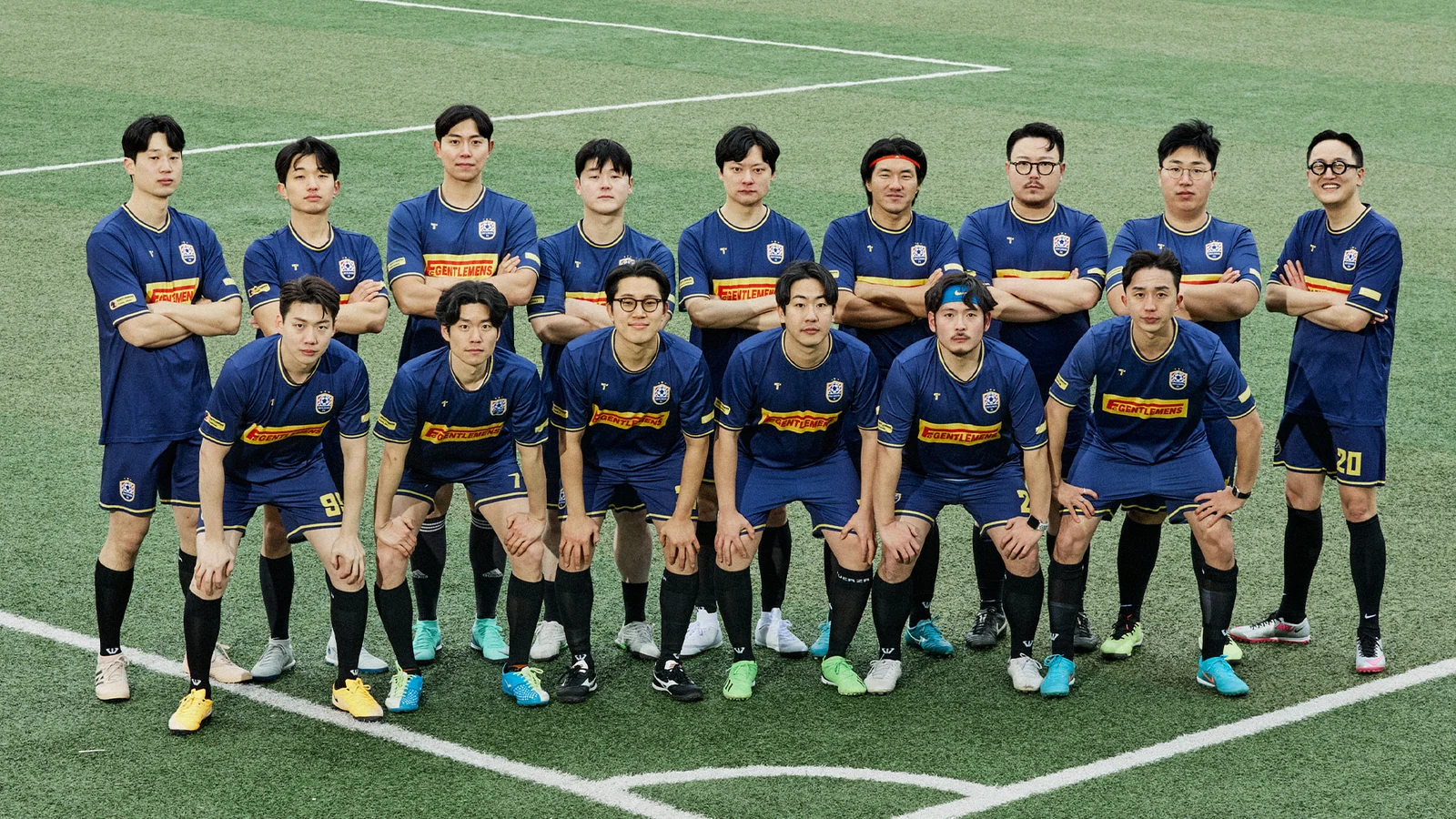
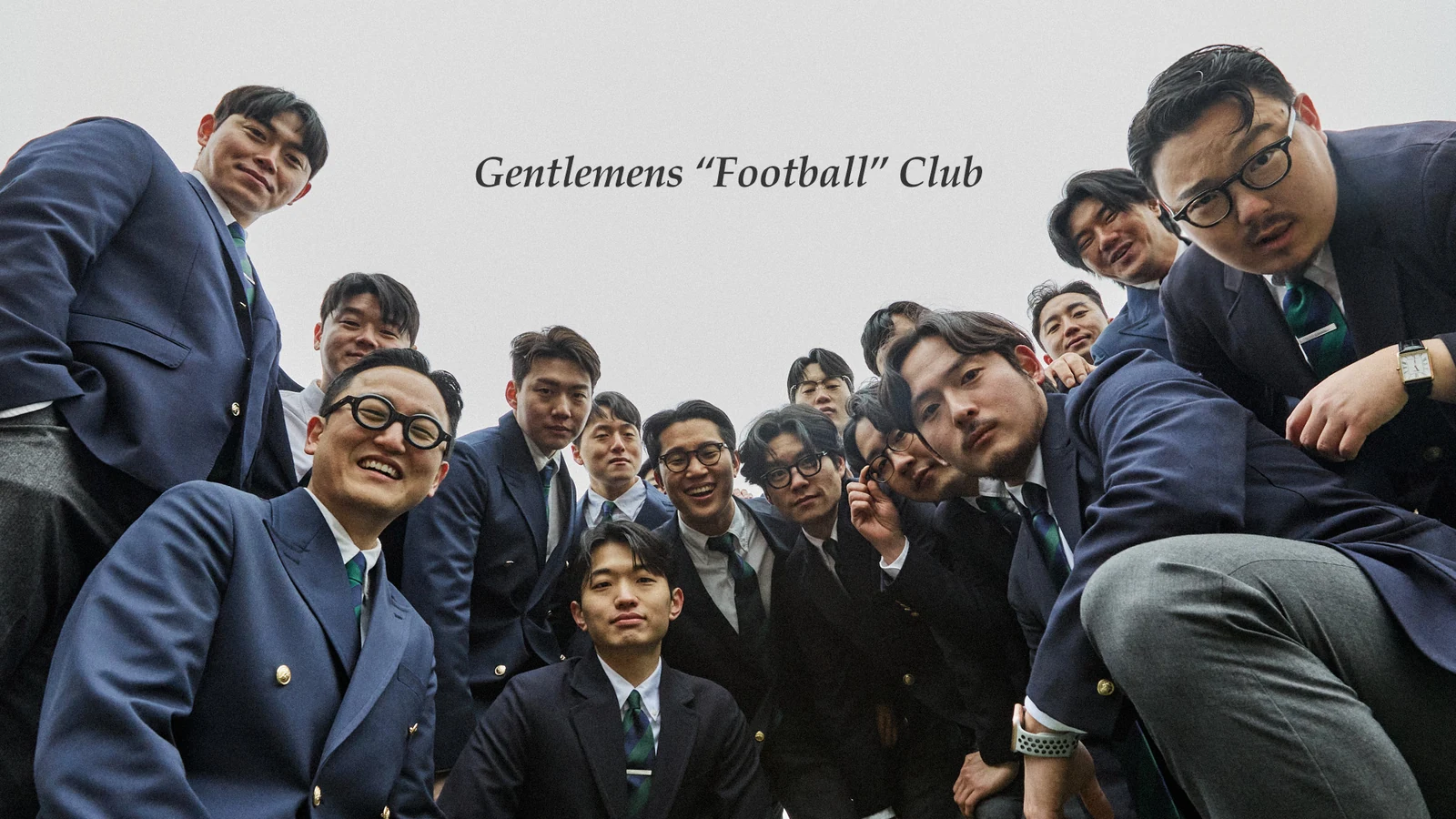
The Gentlemens Football Club roster currently has sixteen members, drawn from the broader SEOUL Traditional community — readers, customers, friends-of-friends, men who care about both the way they dress on a Saturday morning and the way they move on a Sunday afternoon. We train and play at Guri Wangsuk Sports Park (구리왕숙체육공원), the public sports complex east of Seoul on the Gyeongchun Line. The pitch is artificial turf, the membership fee is a couple of beers and the willingness to actually run, and the matches are mostly fixtures we organise among ourselves and with sister teams from neighbouring clubs.
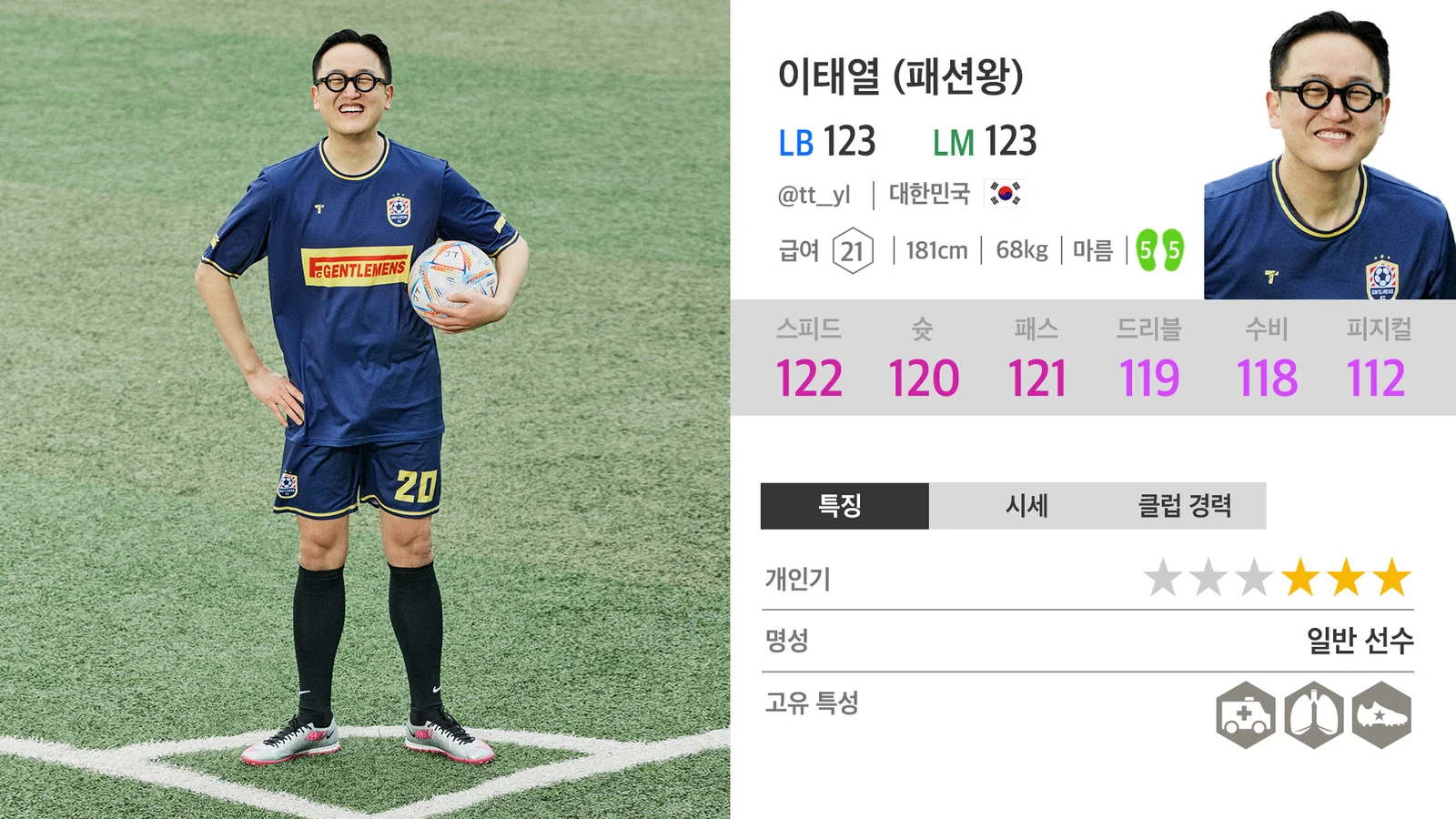
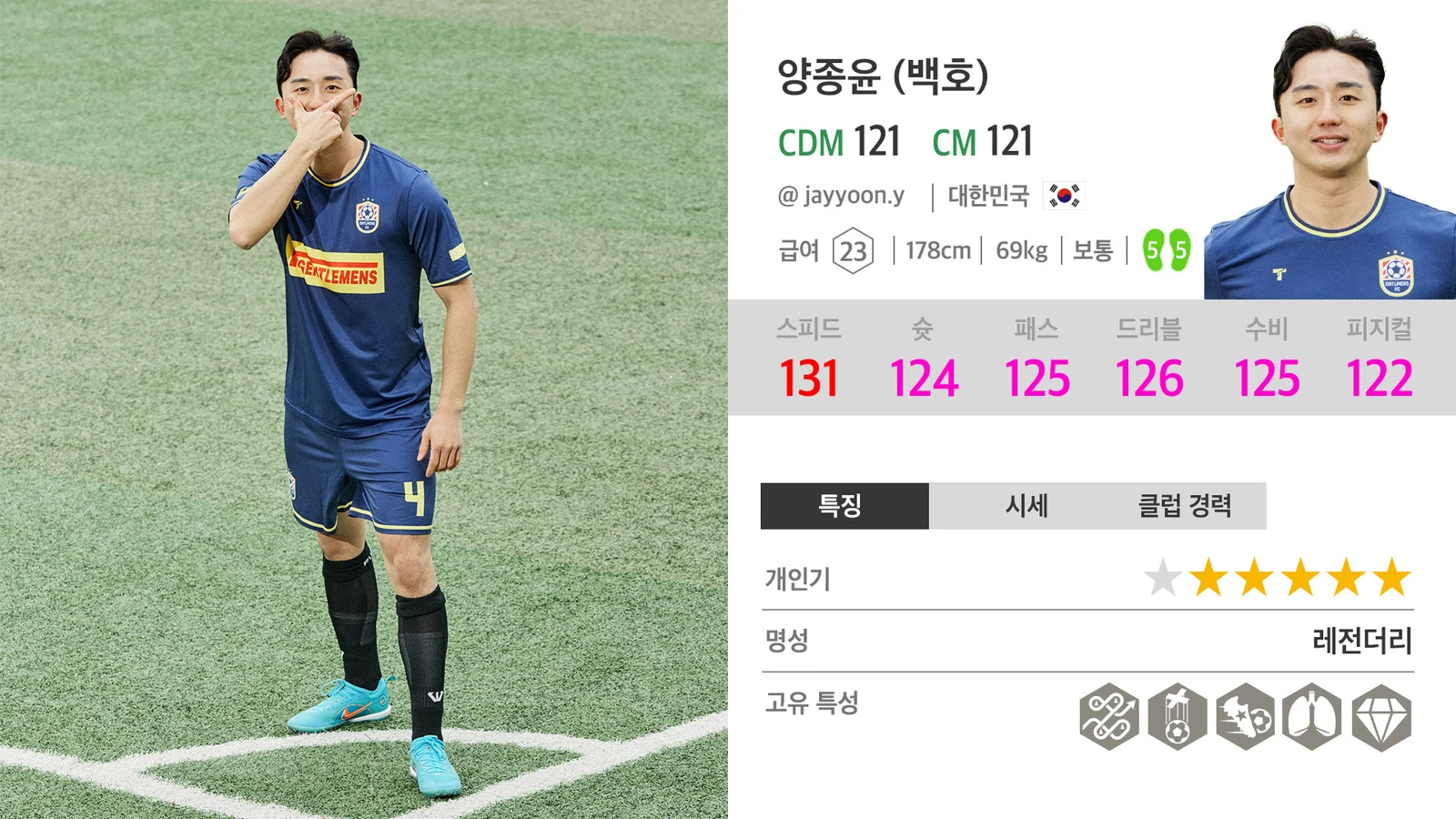
Each member earns a club nickname, a position assignment, and — in the campaign editorials — a FIFA-style player card. The cards are an inside joke that took on its own life. The nicknames trace personalities and inside histories: Cocomong (the studious right-back), Hyungryong-ine (the winger with the cleanest first touch), Mosiki (the central midfielder with the highest dribble stat), Jindalorian (the anchoring CDM with the calmest pass under pressure).
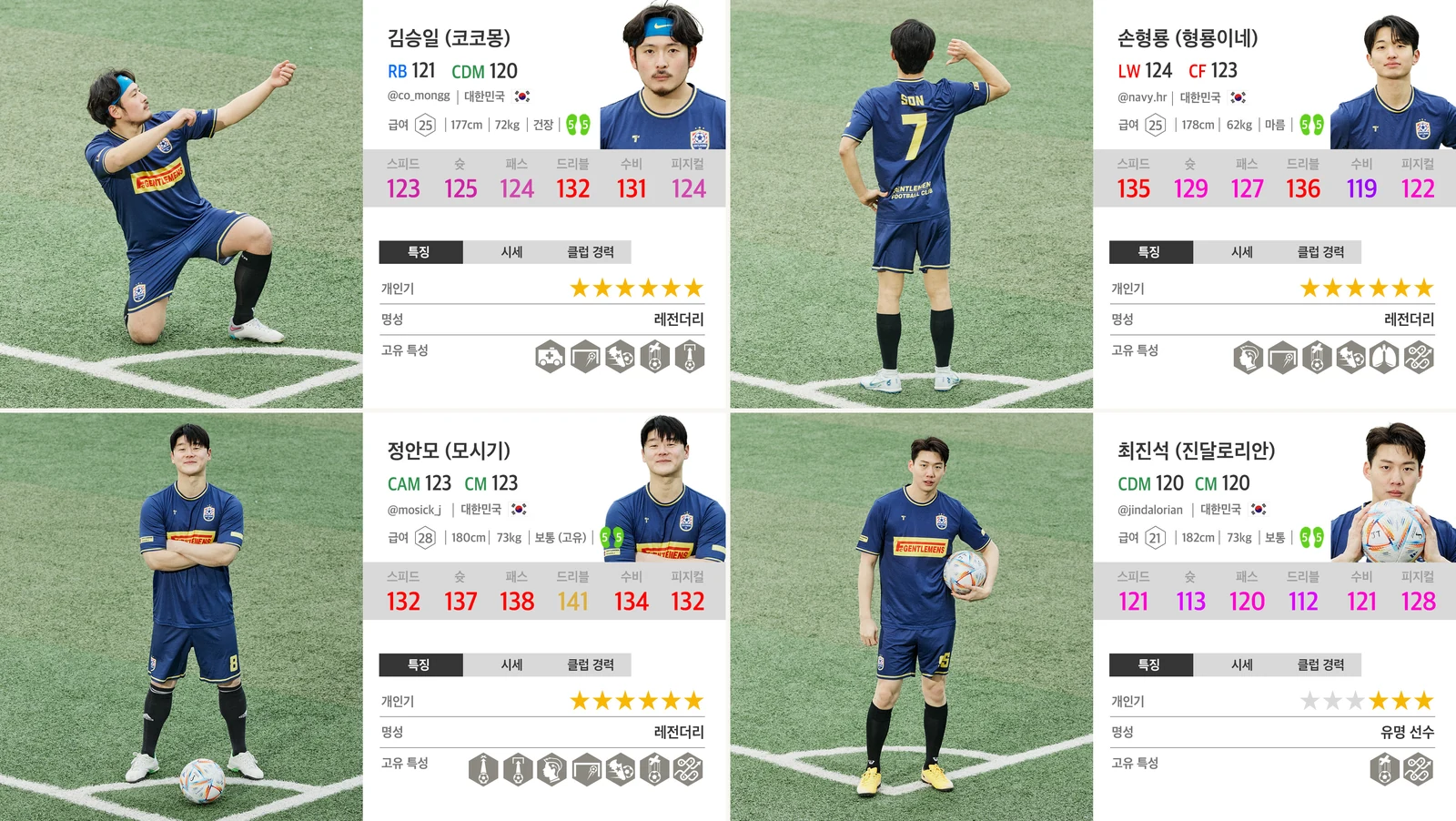
The cards stat us against an absurd standard — most of us hover in the high 110s and 120s on a scale where a real top-flight professional would be in the 180s — and the absurdity is the point. We’re playing to play, not to win. The captain — me — gets Fashion King (패션왕), which is funny in the context of a club where two members can play me off the pitch without breathing hard.
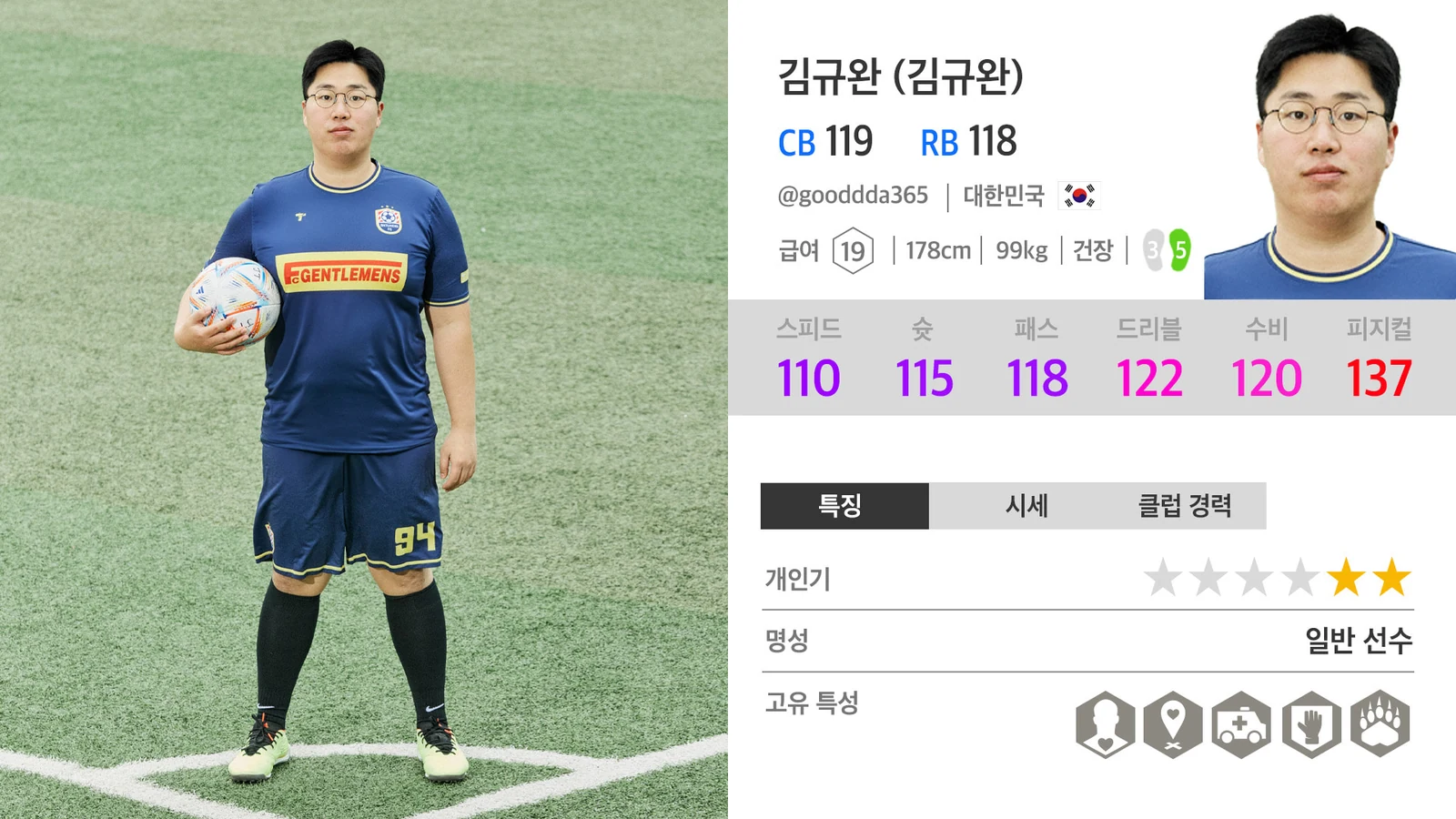
The roster spans personalities the SEOUL Traditional community already recognises and faces our regular readers have not seen before. Some members are public — Renacts staff, longtime customers visible in our previous Gentlemens Club yearbook and 2ND Magazine feature. Others are quieter: a doctor, a designer at a different studio, an engineer who reads Wittgenstein. The Gentlemens Football Club coheres because the shared interest is narrow enough — Trad menswear plus weekend football — that the rest of life can vary widely without it mattering.
From Suits to Jerseys — The Match Itself
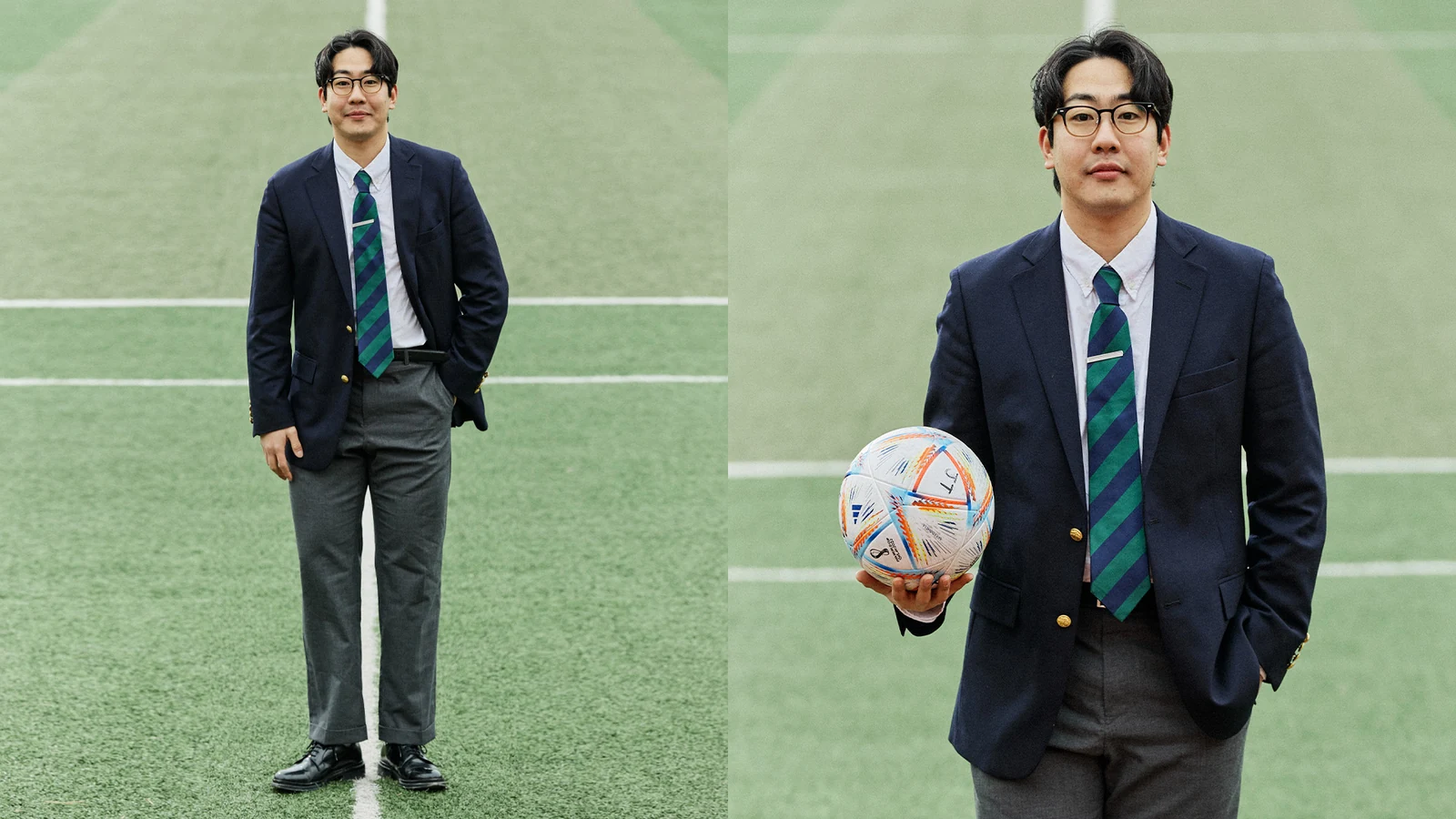
The campaign editorial frames the day as a sartorial transition. We arrive at the ground in tailoring — navy wool sack-cut blazers in single-breasted form, a few of us in double-breasted, paired with grey wool pipe-stem trousers or charcoal herringbone, and either hand-welted black penny loafers or plain derbys on our feet.
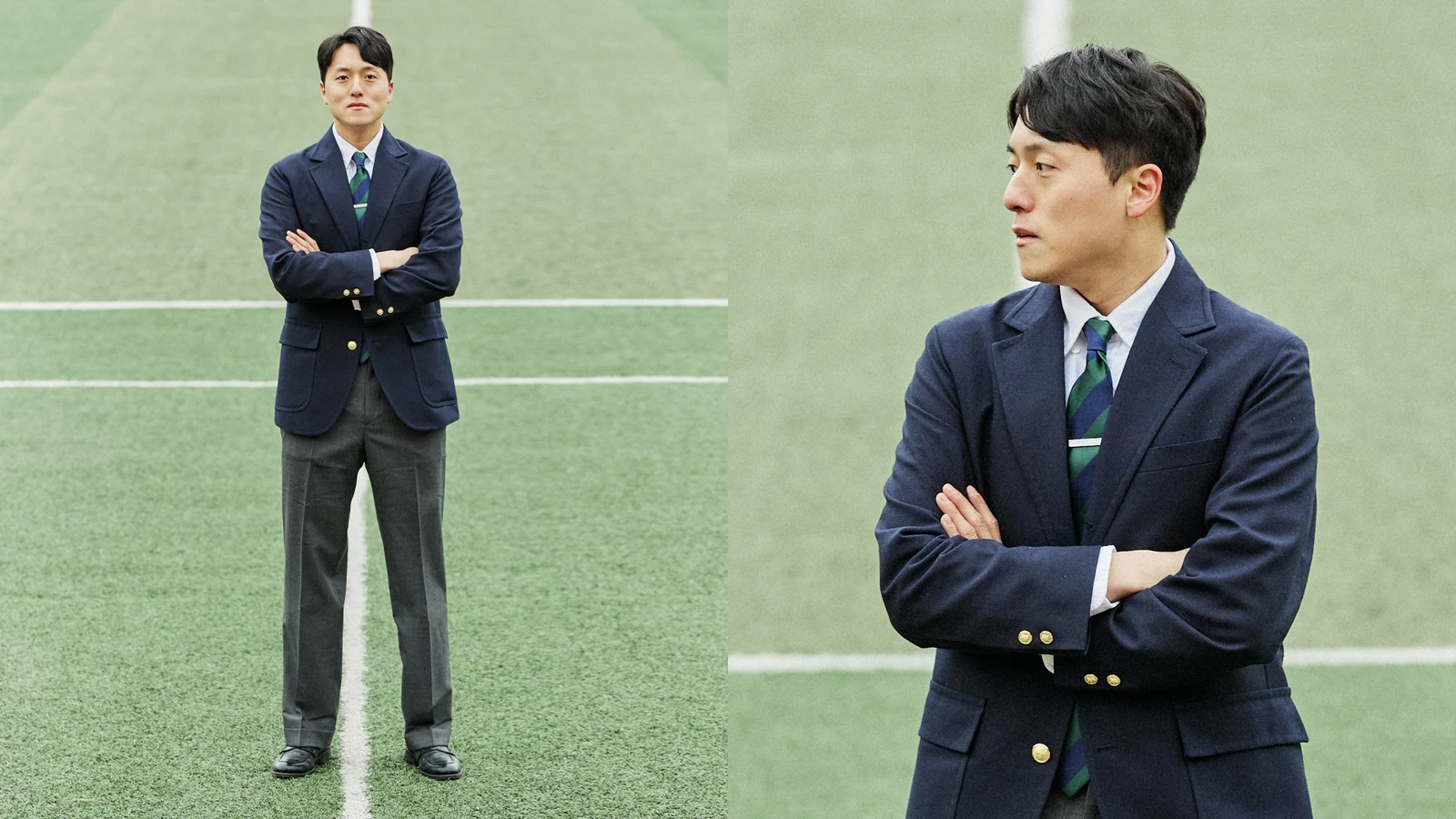
The walking shots — across the centre line, blazers buttoned, regimental ties at the throat — are the half of the campaign that links to the rest of the Renacts catalogue. It’s also the half that explains why our club is called Gentlemens Football Club rather than just a football club. The register is the point.
Then we change. Navy short-sleeve jerseys with the GENTLEMENS wordmark across the chest in orange (no specific concept — just a cleanly-translated club kit), navy shorts, navy long socks, white football boots for those of us with white boots and whatever each member wears for those of us without. The match runs ninety minutes regulation, sometimes with a small break for water, sometimes without. We score, we concede, we argue softly about offside calls. After the final whistle the team lines up at the centre line, raises hands, and salutes — a habit we picked up early and kept because it gives the match a clean ending.
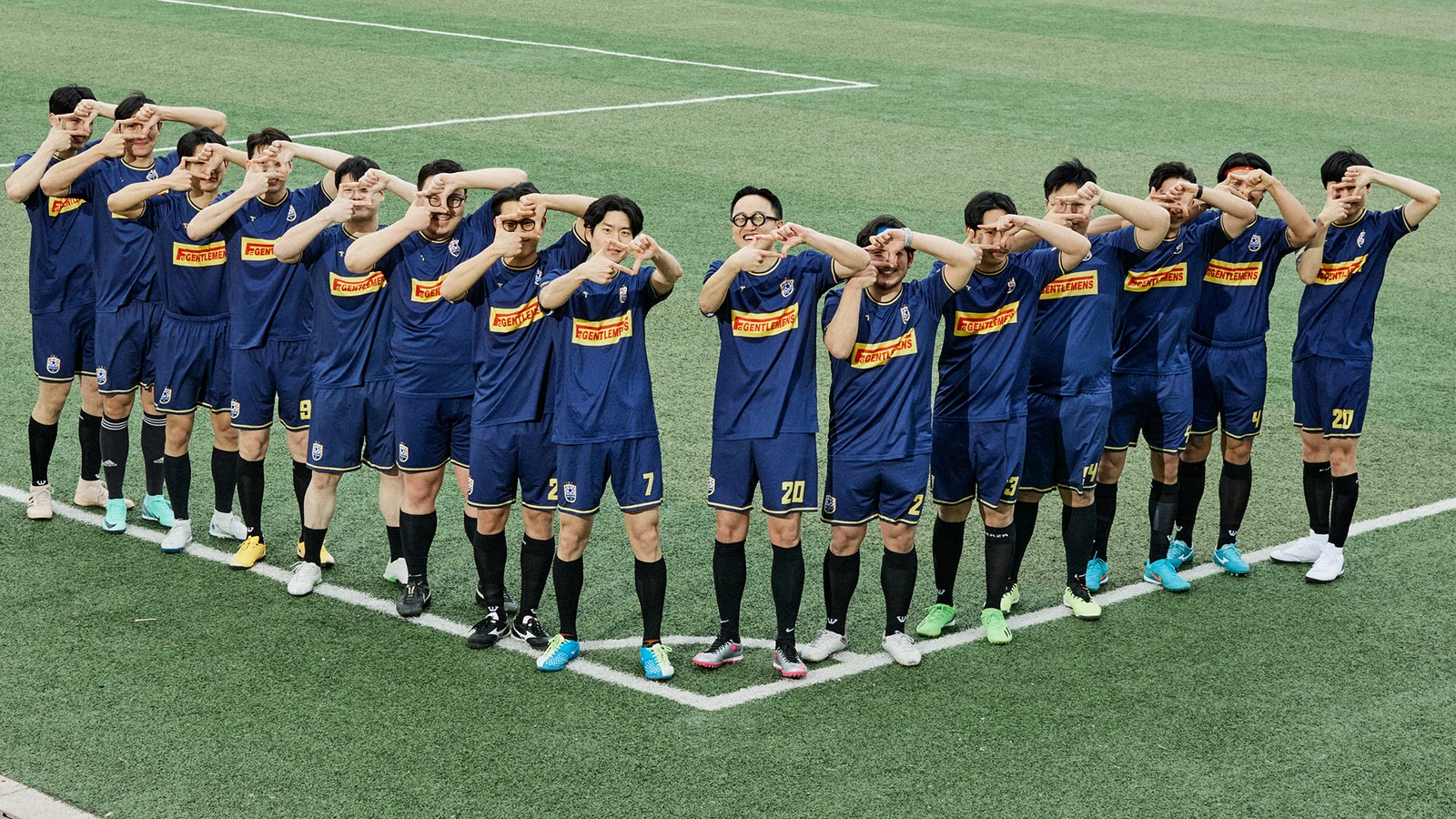
What you see in the editorial is the residue of all of this compressed into a single afternoon’s photo session. The transitions look smooth in the cuts; in real life there’s perpetual delay around finding the right boot, fielding a phone call from a member running late, and locating the one member who always disappears for ten minutes between the team shot and the kit shot to take a phone call from work. We are weekend amateurs. The campaign acknowledges this; the campaign does not pretend otherwise.
Sound Mind Sound Body — The Philosophy in Practice
The “Sound Mind Sound Body” framing of the campaign is earnest. Not all of our editorials are. The Yangpyeong English Village autumn 2023 campaign was a stylised reconstruction of an imagined American campus moment in Korean countryside. The fifth Gentlemens Social Club with J.Press Tokyo was a structured cross-Pacific tailoring conversation. The sixth club night, Wild Turkey, was a Korean New Year toast set inside a Seoul speakeasy. Each of those campaigns had thematic frames more elaborate than the football one.
This campaign is simpler. The frame is just: we like football, we like Trad menswear, both come from the same premise about how to live. The Latin motto — mens sana in corpore sano — was the most honest available label for what we already do. We didn’t borrow it to claim Ivy League lineage; we borrowed it because two-thousand-year-old phrases are useful when you want to compress a complicated daily habit into something you can write on a campaign cover.
The deeper philosophy under the campaign — the part the editorial does not quite spell out, because the photographs are doing the work — is that what holds a community together is the small fraction of overlap, not the bulk of difference. Sixteen members vary in profession, age, taste, family history, religion, politics. The fraction we share — Trad menswear plus weekend football — is genuinely small. The campaign argues (without arguing) that the small fraction is enough, that one well-tended overlap can hold a community more reliably than ninety-nine areas of agreement loosely held. One real common point exerts more force than ninety-nine surface similarities. The Gentlemens Football Club is the lab where we test that hypothesis week to week.
Why It Still Matters in Seoul
The Gentlemens Football Club exists because Seoul Trad as a register — clothing first, lifestyle second — needs a physical practice to keep it from collapsing into pure consumption. If you only buy the tailoring and never put your body through the registers it grew from, eventually the tailoring stops carrying any weight. The Ivy League schools knew this. They wrote it in Latin on stadiums. We wrote it on a campaign cover and translated it into a Korean public sports park, the Gentlemens Football Club ground at Guri Wangsuk.
For the rest of the SEOUL Traditional community calendar around the Gentlemens Football Club, see the previous Gentlemens campaigns: the Yearbook 2023, the fourth Social Club with 2ND Magazine, the Legacy Suits campaign, the fifth Social Club with J.Press Tokyo, the Yangpyeong English Village autumn 2023 campaign, and the sixth Social Club at Wild Turkey. For the broader Trad register the club sits inside, start at the Ivy Style Guide; for the Yale tradition specifically, Yale Ivy Style: The Definitive 60-Year Guide; for the Renacts denim, suits, and sport coats we wore to the match, the Trad Denim Lookbook and Sport Coat Essentials.
The next campaign is in planning. The fifth Gentlemens Football Club season — our fifth full year of rotation — starts in spring. If you read this editorial, recognise the register, and want to join the Gentlemens Football Club — find the Gentlemens Football Club at Guri Wangsuk Sports Park. We’re the ones in tailoring on the way in.